
Hue is a strong choice for travellers who want imperial history, distinctive food and a slower riverside stay in Central Vietnam. Allow two full days for the Imperial City and a selection of royal tombs; a third day gives you more room for food, pagodas and relaxed exploration. Stay in the central river area for a convenient first visit, and arrange transport for the monuments outside the centre.
Images in this guide are AI-generated illustrations, not on-site photographs. They do not establish current access, facilities or conditions.
This Hue travel guide helps you decide what fits your time and how to group the sights. For the journey from Da Nang, use our Da Nang to Hue by train guide. The plans below are editorial suggestions rather than fixed tour schedules.
Source check: 4 October 2026. This guide is based on the official tourism, heritage and railway sources listed below. It does not claim a personal inspection of attractions, accommodation or transport services.
Planning a first visit to Hue
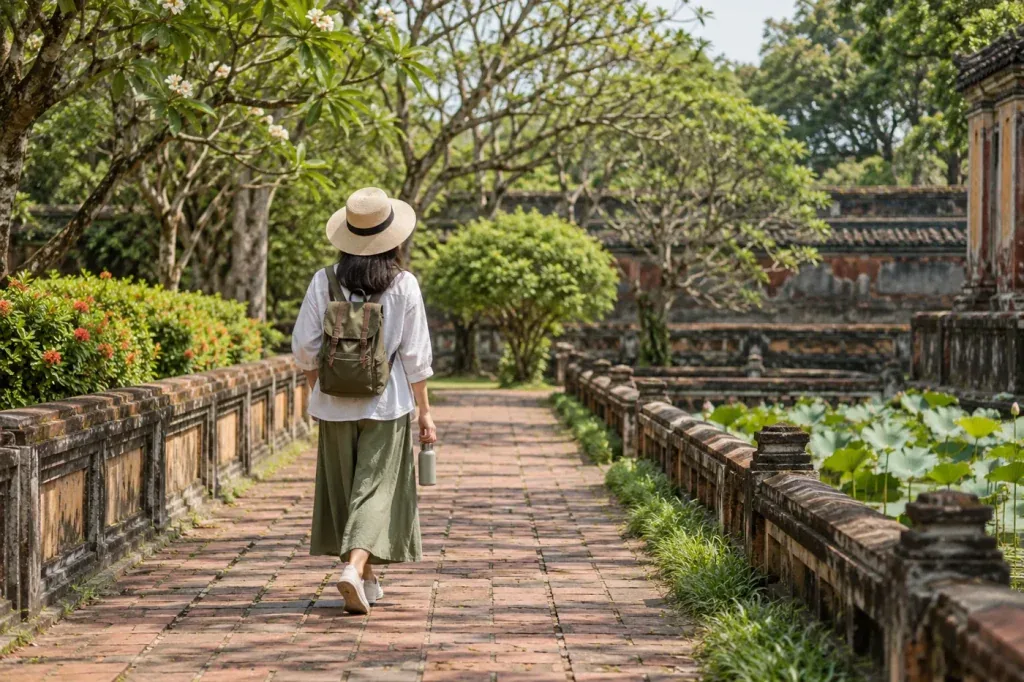
Hue’s sights are spread across the city and surrounding countryside. Start with the Imperial City as your main heritage visit, then choose the tombs that most interest you. A long list of monuments can look manageable on a map but becomes tiring once you add walking, stairs, heat and travel between sites.
UNESCO’s Complex of Hue Monuments listing explains the wider imperial landscape. The heritage property includes more than a single palace enclosure, which is why a stay works better when you divide city sightseeing and outlying monuments into different parts of the trip.
Tickets, budget and practical preparation
Set aside separate amounts for accommodation, arrival transport, monument entry, meals and any guide or river experience. Compare individual and combined tickets only after deciding which sites you will actually visit. A package is useful when its inclusions match your route, not simply because it lists more monuments.
Use the Hue Monuments Conservation Centre’s ticket portal and its current notices to check the named sites, validity, eligibility and visiting arrangements. Keep your booking confirmation accessible. This overview deliberately avoids copying a fixed ticket price or opening schedule that may change before your visit.
When is the best time to visit Hue?
February to April is a sensible starting window for outdoor sightseeing. Vietnam Tourism describes hotter conditions in June and July, with rains extending from around August into January and a risk of late-year flooding. Its Hue destination overview is seasonal guidance, not a forecast.
Plan a break between long walking visits in hot weather. During a wet-season trip, check local notices before taking a riverside outing or travelling to outlying monuments. Do not transfer a beach-weather assumption from Da Nang to Hue: verify conditions for the destination you will actually be visiting.
How many days do you need in Hue?
- One full day: concentrate on the Imperial City and one additional stop. Keep expectations narrower if arriving from Da Nang that morning.
- Two full days: separate the central heritage visit from a tomb outing, with room for local food and the river.
- Three full days: add another tomb, more time at a pagoda or a less hurried food-and-city day.
These are suggested allocations, not minimum entry times. Travellers who like detailed historical interpretation may want longer. If you are coming for one day by train, work backwards from the confirmed return departure and include the journey to the station.
Getting to Hue and getting around
From Da Nang by train or road
Our Da Nang to Hue by train guide is the detailed starting point for the rail journey. Check travel-date departures, seat availability and fares through Vietnam Railways’ booking website before relying on an older timetable. Confirm both directions if you plan to return the same day. This hub does not reproduce train numbers or departure times.
If choosing a road transfer, agree the pickup, destination, luggage allowance and whether sightseeing stops are included. A direct journey and a scenic transfer over the Hai Van Pass are different products. Ask which route you are buying and allow extra time for any stops.
Arriving by air
Phu Bai is Hue’s airport. Check current flights with the airline and arrange onward transport to your exact accommodation address. Leave a margin between arrival and any timed activity; baggage collection and road conditions can alter the usable part of your first day.
Moving between the monuments
Walking works for selected central areas, but the major royal tombs are not all clustered beside the Imperial City. A taxi or booked driver can make a tomb day easier to organise. Agree the sequence, waiting time, return point and total charge before leaving. If choosing a cyclo for a central outing, agree the duration and price in advance.
For travellers with limited mobility, confirm walking distances and step access at each site rather than assuming that vehicle access to the entrance makes the whole visit accessible. Carry water and choose footwear suitable for outdoor paths.
Where to stay in Hue
- Central south bank near the Perfume River: a practical first-visit base if you want to combine dining, river walks and booked transport to monuments. Check the hotel’s exact location and nearby evening noise.
- Citadel-side neighbourhoods on the north bank: consider these if the historic area is the focus, while checking your route to restaurants and onward transport.
- Garden or resort-style stays outside the centre: consider these for a quieter accommodation-led break, allowing for transfers each time you go sightseeing.
These are planning choices, not inspected hotel recommendations. Compare room access, air conditioning, breakfast, transfer arrangements and cancellation terms. For a rainy-season booking, ask the property about the immediate access route as well as the room.
Which Hue attractions should you include?
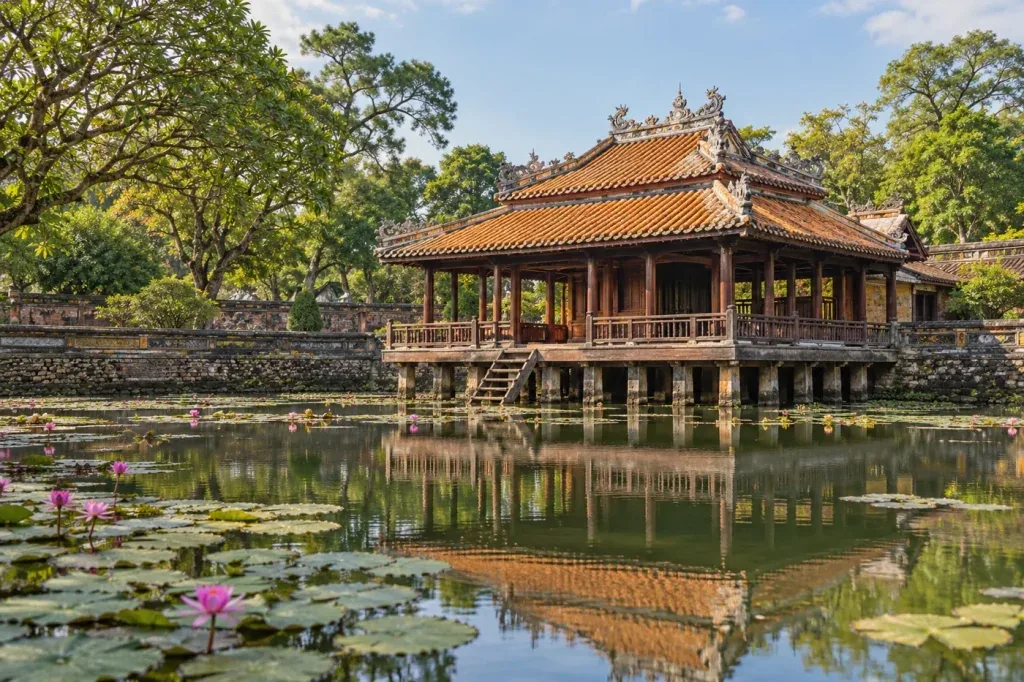
Hue Imperial City
Make the Imperial City your anchor visit if this is your first time in Hue. It sits within the broader Citadel and contains the core imperial palace area. Give it a substantial part of a day rather than rushing through on the way to several tombs. Check the official monument portal for current tickets and visitor information.
Thien Mu Pagoda
Thien Mu is known for its seven-storey tower beside the Perfume River. Choose it as a focused pagoda visit, allowing time for the setting rather than treating it only as a photo stop. Respect worshippers, dress appropriately and follow local access signs. Arrange a return ride if your transport only drops you off.
Khai Dinh Tomb
Khai Dinh suits travellers interested in richly decorated interiors and a combination of architectural influences. Its ascending terraces make steps part of the planning decision. Choose it for contrast with the Imperial City or a more landscape-focused tomb. Vietnam Tourism’s royal tomb overview explains those differences.
Minh Mang Tomb
Minh Mang offers a formal, ordered composition of monuments, water and landscape. Consider it when the relationship between royal architecture and its setting interests you. Allow for walking through the grounds instead of judging the visit solely by the distance from the car park. It is one option for the separate tomb day below.
Tu Duc Tomb
Tu Duc is associated with a landscaped setting of water and pavilions. It is another choice for travellers who enjoy gardens alongside imperial history. If you are short on time, select Tu Duc or Minh Mang according to your interests instead of assuming that all three major tombs must be covered in one outing.
Perfume River
The Perfume River can provide a slower interval between monument visits. A walk may be enough; a boat trip is optional. If booking a boat, confirm the boarding point, route, length, inclusions, safety equipment and return arrangements. Do not assume that every river trip includes Thien Mu, live music or a meal.
Dong Ba Market
Dong Ba is a useful stop for travellers interested in everyday commerce and food. Keep it flexible rather than making a particular stall or dish essential to your schedule. Confirm prices before ordering or buying, carry small cash and ask permission before photographing people at close range.
What to eat in Hue
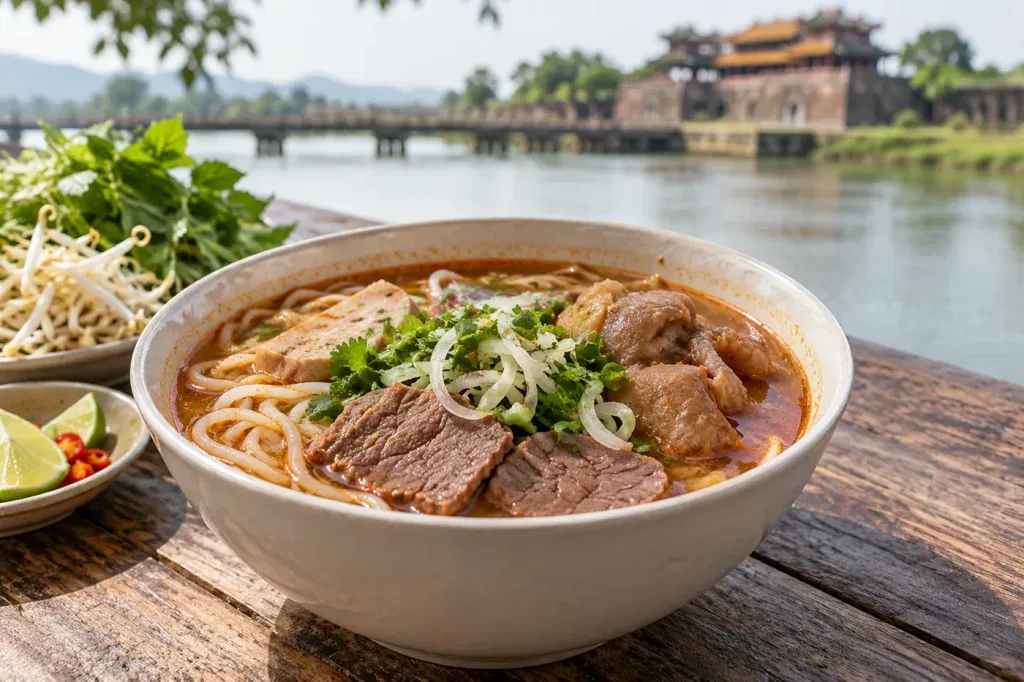
Look for bun bo Hue, small dishes such as banh beo, the pancake-style banh khoai and clam-based com hen. Vietnam Tourism’s Hue food overview introduces the dishes. You do not need a formal banquet to make food a meaningful part of the trip.
Keep meals near the day’s route: a noodle breakfast, a break after the Imperial City and a dinner chosen for what you want to taste. Ask about spice and ingredients before ordering; broths, sauces and toppings may contain meat or seafood even when the name is unfamiliar. If booking a set menu, check dietary adaptations and exactly what the price includes.
Suggested Hue itineraries
One day: the Imperial City plus one stop
Give the main sightseeing block to the Imperial City, pause for a meal, then choose Thien Mu or a short river-and-market visit. If you also have a same-day return journey, drop the extra stop when needed. Visiting all three major tombs on top of this is not the plan recommended here.
Two days: a balanced first visit
Day 1: Imperial City, a food break, then Dong Ba or the river according to your energy. Day 2: choose two royal tombs and agree a practical route with your driver. Khai Dinh plus Minh Mang or Tu Duc gives contrasting settings. Add Thien Mu only if transport, opening arrangements and your pace make it comfortable.
Three days: more context and less rushing
Spread the two-day outline over three days, with a dedicated pagoda-and-river interval and more time for meals. Alternatively, keep a third tomb for its own unhurried visit. If weather disrupts the schedule, rearrange the outdoor-heavy day rather than trying to recover every missed stop in a single afternoon.
For a longer regional route, use our Da Nang travel guide and Hoi An travel guide to divide your nights between the coast and heritage destinations. Plan transfers as part of the trip, not as time that disappears from the calendar.
Hue travel FAQ
Is one day in Hue enough?
One day gives you a focused introduction, especially to the Imperial City. Two full days are a more comfortable recommendation if you also want royal tombs and time for food.
Can I visit Hue as a day trip from Da Nang?
Yes, provided the confirmed transport schedule leaves enough usable time. The Da Nang to Hue by train guide covers that decision. An overnight stay offers more flexibility if history is a main interest.
Which royal tomb should I visit first?
Choose Khai Dinh for elaborate decoration and architectural contrast, Minh Mang for a formal landscape, or Tu Duc for a garden-and-pavilion setting. Your walking needs and available time matter as much as the shortlist.
Are the Imperial City and Citadel the same thing?
The terms are often used loosely in visitor descriptions. The Imperial City is the inner imperial enclosure within the larger fortified Citadel, so check the exact site named on your ticket or tour.
Do I need a guided tour?
A guide is optional. Consider one if historical interpretation is central to the visit, and confirm the language, duration, itinerary and whether monument tickets are included.