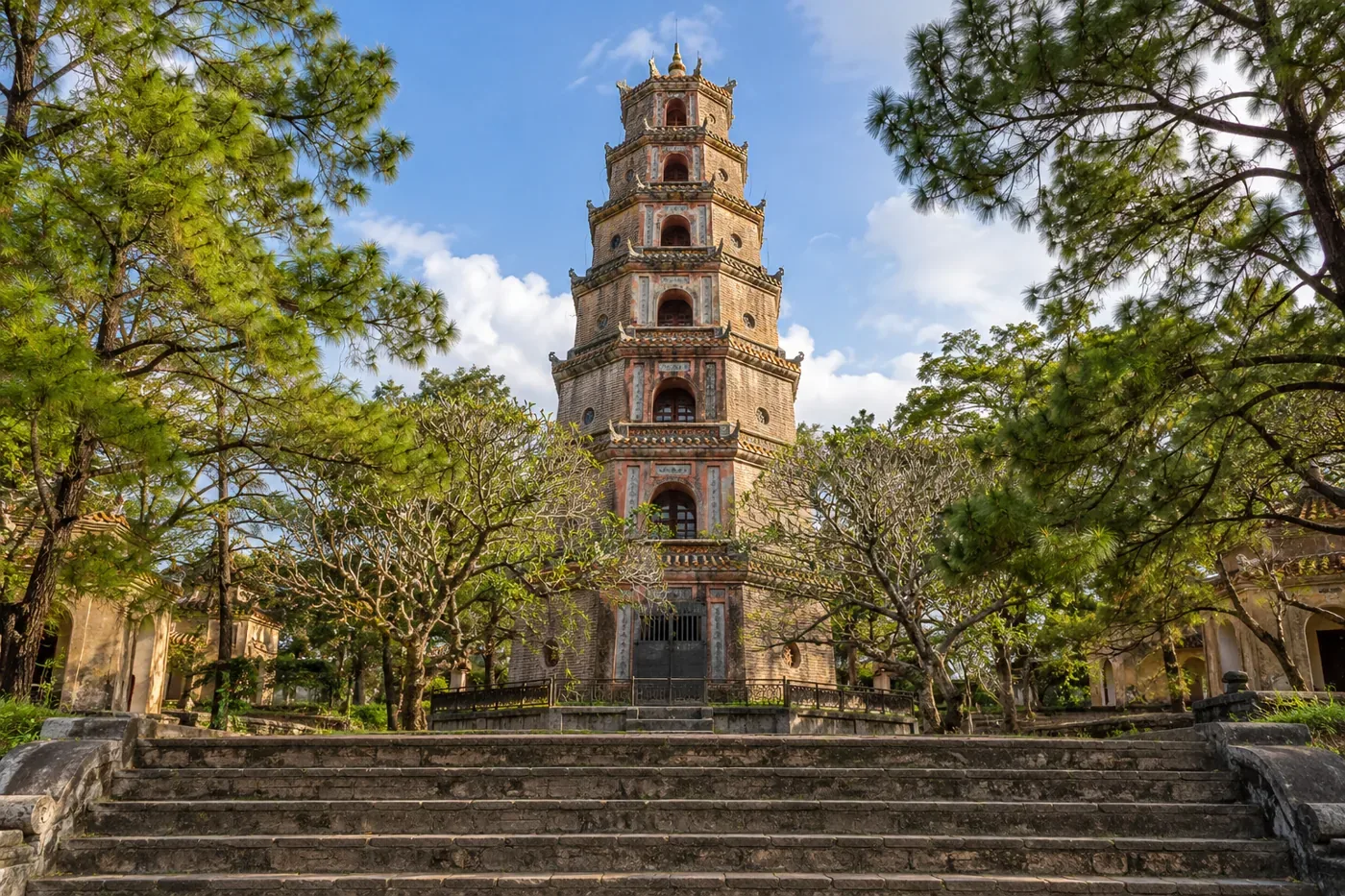
Thien Mu Pagoda is a working Buddhist temple overlooking Hue’s Perfume River, recognised by its seven-tier Phuoc Duyen tower. Allow around 45–60 minutes for a respectful visit to the open grounds and halls. You can arrive by road or include it in a specifically confirmed river-boat itinerary.
Images in this guide are AI-generated illustrations, not on-site photographs. They do not establish current access, facilities or conditions.
For the wider city, use our Hue travel guide.
What makes Thien Mu different?
The setting above the river and the tower at the approach distinguish Thien Mu from Hue’s palace and royal-tomb visits. It is a religious site in active use, so the experience should centre on the open grounds, architecture and quiet observation rather than treating the entire complex as a public museum.
Hue’s official heritage descriptions place the temple in the Kim Long area and describe a long history of rebuilding and repair. The tower and halls belong to different stages of that history. Avoid assuming that every visible structure dates from the temple’s foundation.
What to look for
The tower and approach
The seven-tier tower is the best-known landmark. Take time to see how it sits above the river before walking farther into the grounds. Do not expect to climb it: an exterior visit is the appropriate planning assumption unless staff explicitly allow more.
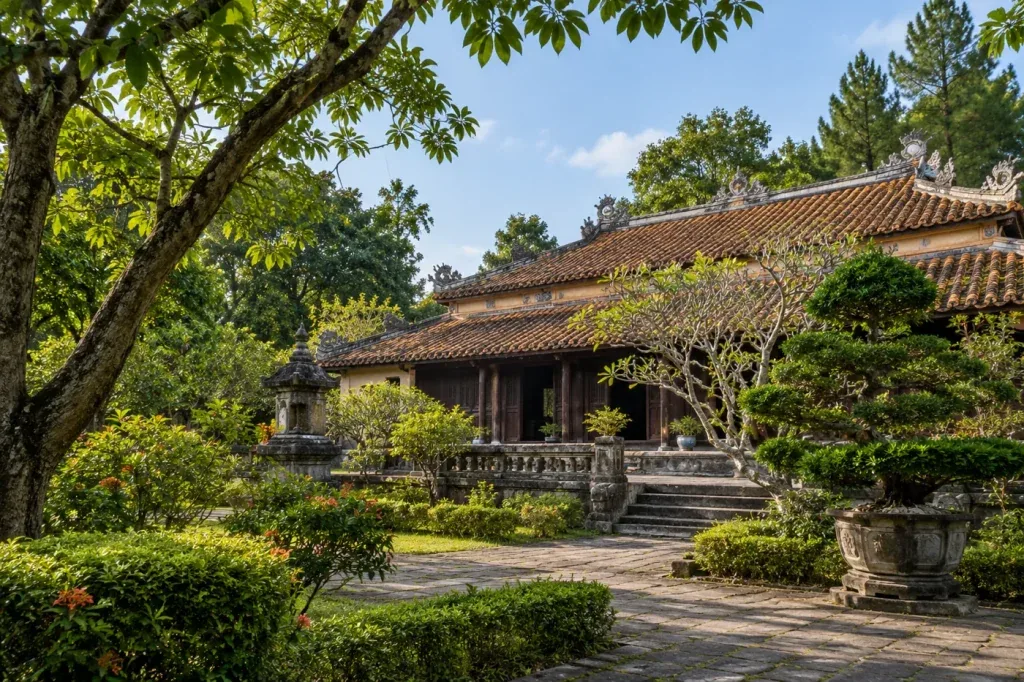
The halls and garden areas
Continue only into areas open to visitors. Notice the transition from the public approach to quieter religious spaces, and follow any signs about shoes or photography. Monastic living areas and closed doors are not invitations to explore.
Arriving by road or river
A taxi or arranged car gives you a direct trip from central Hue and makes it easier to control the visit length. Agree whether the driver will wait and where you will meet afterwards. A bicycle is an option only if the route, traffic and weather match your confidence.
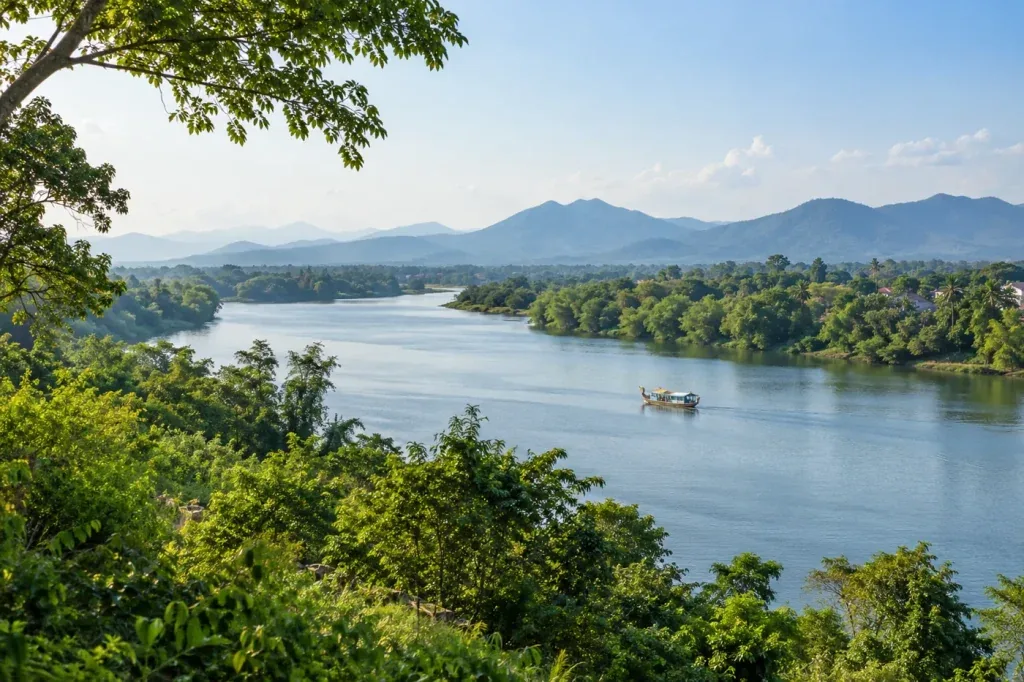
For a boat visit, ask whether Thien Mu is an actual landing stop, how long you can stay and whether the boat waits or finishes there. A sightseeing cruise that passes the riverbank is not the same as a temple transfer. See our Perfume River guide for booking questions.
Hours, fees and timing
A current official visitor-hours notice or complete fee notice was not confirmed for this guide. Check with the temple or your operator before an early or late visit. Ask separately about parking and boat charges; a transport charge should not be confused with temple admission.
Morning or later afternoon may be more comfortable than the hottest part of the day. Leave flexibility for religious services and any access restrictions. A short visit is enough to see the principal public areas; allow more time if you want to sit quietly or use a guide.
Dress and behaviour
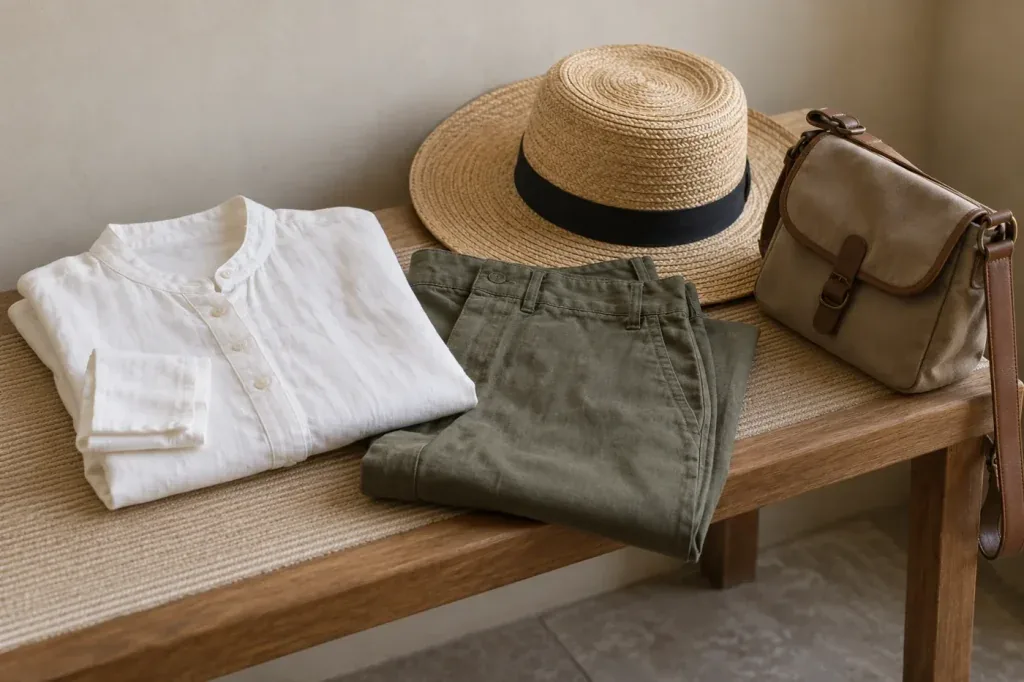
- Cover shoulders and knees and remove shoes where requested.
- Speak softly, silence loud phone audio and avoid interrupting worship.
- Ask before photographing people closely and follow restrictions inside halls.
- Keep food, drinks and smoking away from sacred spaces.
- If donating, use a designated donation point rather than leaving money on historic objects.
Accessibility and weather
The approach from the river involves a change in level, and steps or thresholds can limit access within the complex. Confirm the most suitable road drop-off and current accessible route if you have mobility needs. Arriving by boat can add boarding gaps and steps before the temple approach even begins.
Wear secure shoes, take care on wet surfaces and follow closures during storms or flooding. Do not stand close to an unprotected river edge for photographs. If conditions worsen, use a road return rather than assuming a boat will continue operating.
What to combine with the visit
Thien Mu can complement the Imperial City on a day focused on central Hue and the river. Keep time for transport and a meal. It should not become an automatic extra after a packed circuit of distant tombs.
A respectful route for a first visit
Begin by taking in the tower and the river setting from an area where you are not blocking people arriving or leaving. Then move towards the public grounds and check which halls welcome visitors. Spend time in one open space rather than moving quickly from doorway to doorway. If a service is taking place, wait outside or adjust your route instead of treating access as an entitlement.
For a mixed group, agree a meeting place before anyone enters a worship hall. Someone who wants only the exterior view can wait comfortably while others read the interpretation or spend more time inside. Keep photography separate from observation: put the camera away for part of the visit and notice how the temple is used, rather than looking only for an empty frame.
Understanding the tower and temple as different spaces
The tower makes a memorable landmark, but the whole visit should not depend on entering or climbing it. The surrounding halls and grounds provide the context of an active religious site. Ask a guide which structures belong to different building or repair phases and how they relate to current worship. A temple’s foundation date does not automatically date every feature you see.
Local accounts may combine documented history, religious tradition and legend. Ask which kind of account you are hearing, especially before repeating a story as a factual explanation. You can appreciate a belief’s cultural meaning without presenting it as proof of an event. When information is unclear, the temple’s own interpretation or a qualified guide is a better starting point than an unlabelled social-media caption.
Boat one way, road the other?
A mixed journey can be useful when you want time on the Perfume River without making your whole afternoon depend on a return cruise. Before booking, ask whether the boat trip genuinely ends at a usable landing for the pagoda and where a car can meet you afterwards. Establish who arranges that car and whether its cost is included. Do not assume the boat operator will solve the onward journey automatically.
If mobility is a concern, compare the complete approach from both transport options. Road travel may avoid boat boarding, but you still need to check the drop-off and temple route. River travel adds its own steps and gaps. Describe the assistance required in practical terms, such as avoiding stairs or needing a stable place to sit, so the operator can give a useful answer.
Keep the rest of the day proportionate
After a long palace visit, Thien Mu can provide a change of setting, but it still involves transport and time outdoors. Leave a meal or rest break between the two if needed. If your day already includes several distant tombs, choose which visit matters most rather than adding the pagoda simply because it appears on every tour list.
Frequently asked questions
Is Thien Mu inside the Imperial City?
No. It is a separate riverside temple, requiring a separate journey.
Can I visit by dragon boat?
Yes, when the operator confirms a suitable route and landing stop. Check whether your trip includes time at the temple and a return journey.
Can visitors enter every building?
No. Follow signs and staff instructions; some areas serve religious or residential purposes.