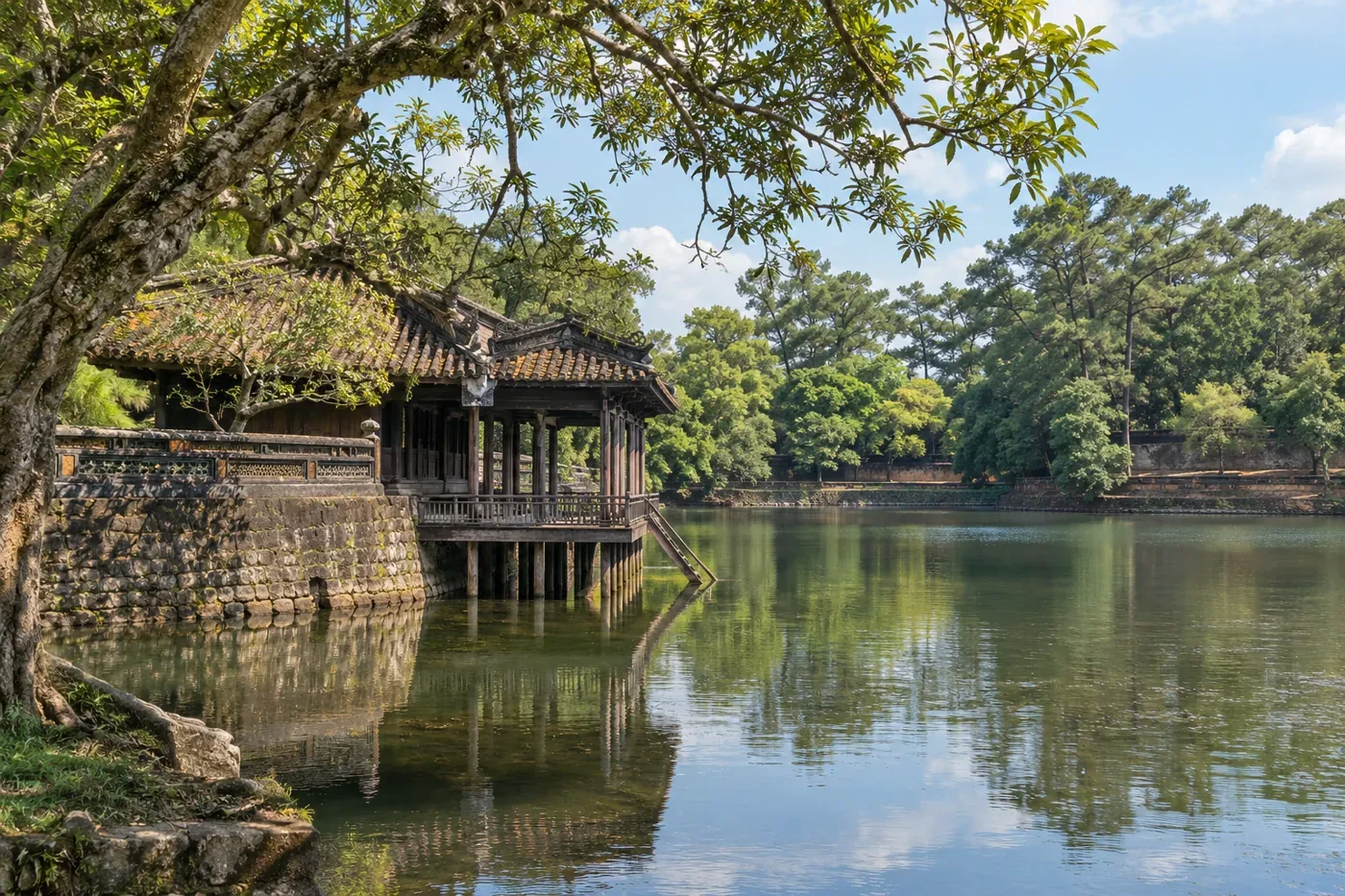
Tu Duc Tomb is a landscape-focused royal site in Hue, with water, pavilions and ceremonial spaces that reward a slower visit. Allow about 60–90 minutes, excluding transport, and choose a route that suits the heat and your walking ability. It is a strong option for visitors interested in the relationship between royal life, architecture and gardens.
Images in this guide are AI-generated illustrations, not on-site photographs. They do not establish current access, facilities or conditions.
Use the Hue travel guide to plan your wider stay.
A tomb complex also used during the emperor’s life
Vietnam Tourism explains that Tu Duc used the complex before his death, spending time there writing poetry and enjoying the landscape. That helps explain why the site feels like a retreat as well as a funerary monument. Treat stories about a hidden burial place as unconfirmed accounts, not a reason to expect access to a secret grave.
The visitor experience is different from Khai Dinh’s steep, concentrated architectural display. Tu Duc invites you to pay attention to the spaces between buildings as well as the buildings themselves.
What to prioritise
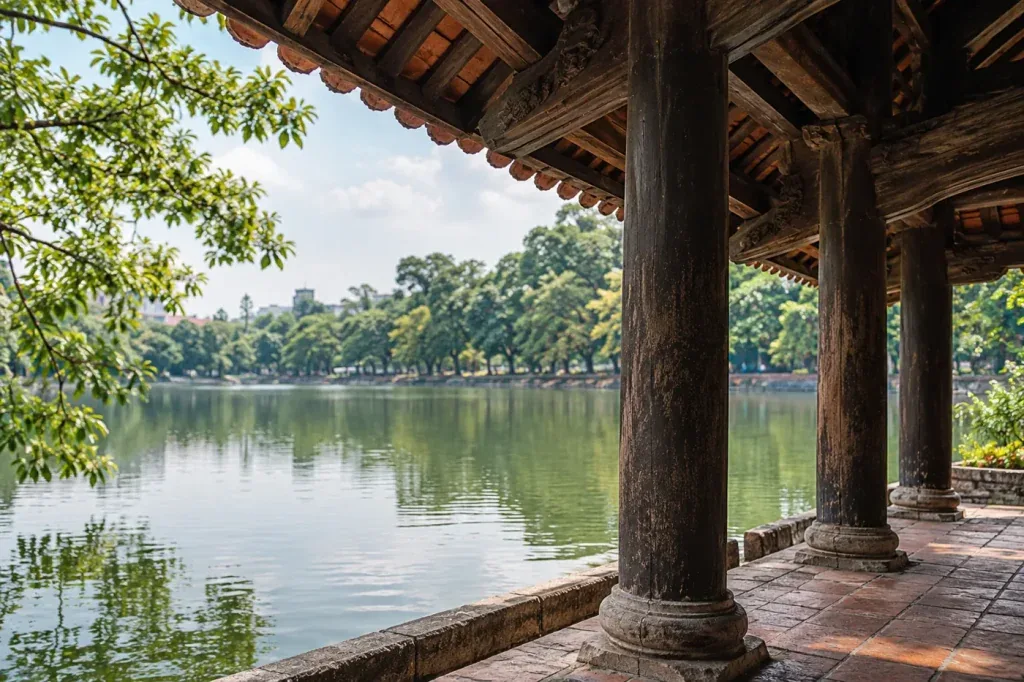
The lake and pavilions
Pause around the permitted waterside areas to see how the pavilions relate to the lake. Use marked paths and do not step onto fragile edges for photographs. Light, water level and maintenance can change the appearance; no season guarantees the scene in a promotional picture.
The ceremonial and memorial spaces
Follow the signed circuit into the areas open to visitors. Read the interpretation to distinguish spaces used during the emperor’s life from later commemorative functions. A qualified guide can make these distinctions easier to understand.
Leave room for a slower finish
Rather than rushing to the next tomb, allow time to retrace part of the route, sit where permitted and look at details you missed. A calm visit depends partly on your schedule, not simply on choosing a supposedly quiet hour.
Tickets and hours
The official monument portal displayed Tu Duc admission from 150,000 VND per person on 4 October 2026. Check the category and final price for your date. If comparing combined tickets, read the exact site names and validity before purchase.
Consult the official seasonal timetable, which distinguishes ticket-sales hours from the later visitor closing time. Give yourself a full visit window rather than arriving just before sales stop. Individual areas may close for conservation or operations.
Transport and a sensible combination
Arrange a taxi or car with a clear waiting and pickup agreement. If using separate rides, confirm your return option before entering. The tombs are outside the central palace precinct and require travel between them.
Combine Tu Duc with one other tomb if you want a half-day comparison. Minh Mang is useful for another approach to formal landscape; Khai Dinh offers a more pronounced architectural contrast. Add lunch and rest time rather than filling every gap with an extra stop.
Walking, access and weather
Wear comfortable shoes and expect changes of level, uneven paths and raised thresholds. Bring water and protection from sun or rain. The landscape includes shaded areas, but that does not make the entire circuit sheltered.
Visitors who need step-free access should ask about a suitable route and toilets in advance. A stroller or wheelchair may encounter obstacles between otherwise usable sections. After heavy rain, follow closures and avoid slippery edges near water.
Dress respectfully in worship and memorial areas, observe photography signs and do not touch historic objects. Keep voices low when other visitors are reflecting or worshipping.
Follow the relationship between retreat and memorial
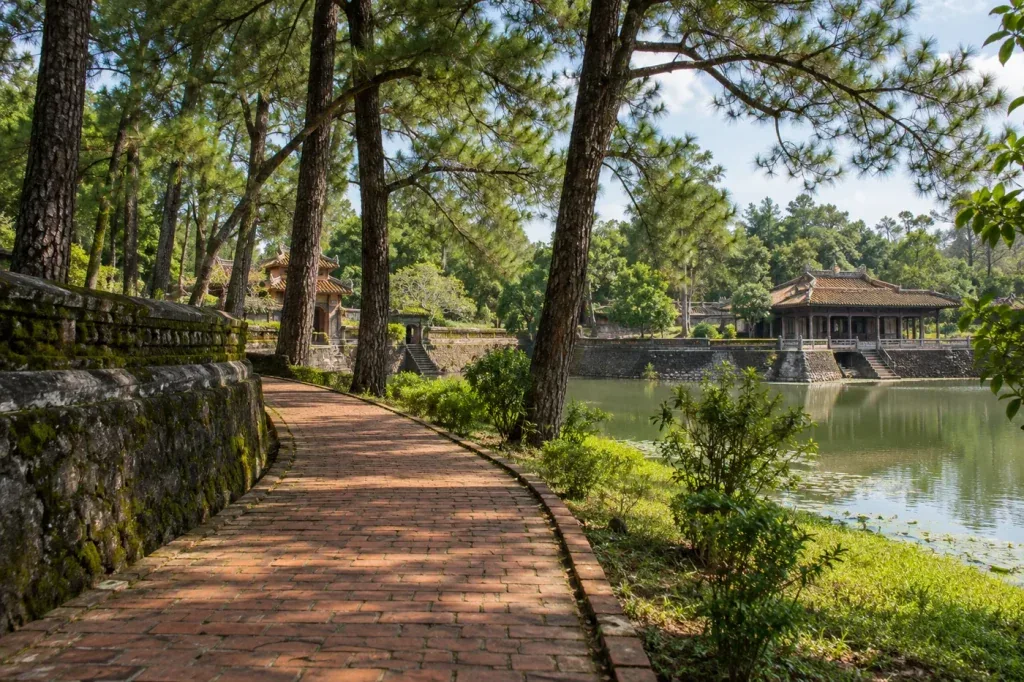
One useful way to approach Tu Duc is to ask how the landscape served the emperor during his life and how the complex also functions as a royal memorial. Use the site interpretation to distinguish those roles as you move between spaces. The lake and pavilions should be understood alongside the ceremonial buildings, rather than treated as a pleasant background to one supposedly essential tomb photograph.
Begin with the current visitor map and follow an open route that combines a waterside section with a ceremonial or memorial area. Leave time to look back across the landscape from a permitted viewpoint. If a section is closed, ask which public route offers a useful alternative instead of trying to follow an older online itinerary through a barrier.
Choose the depth of your visit
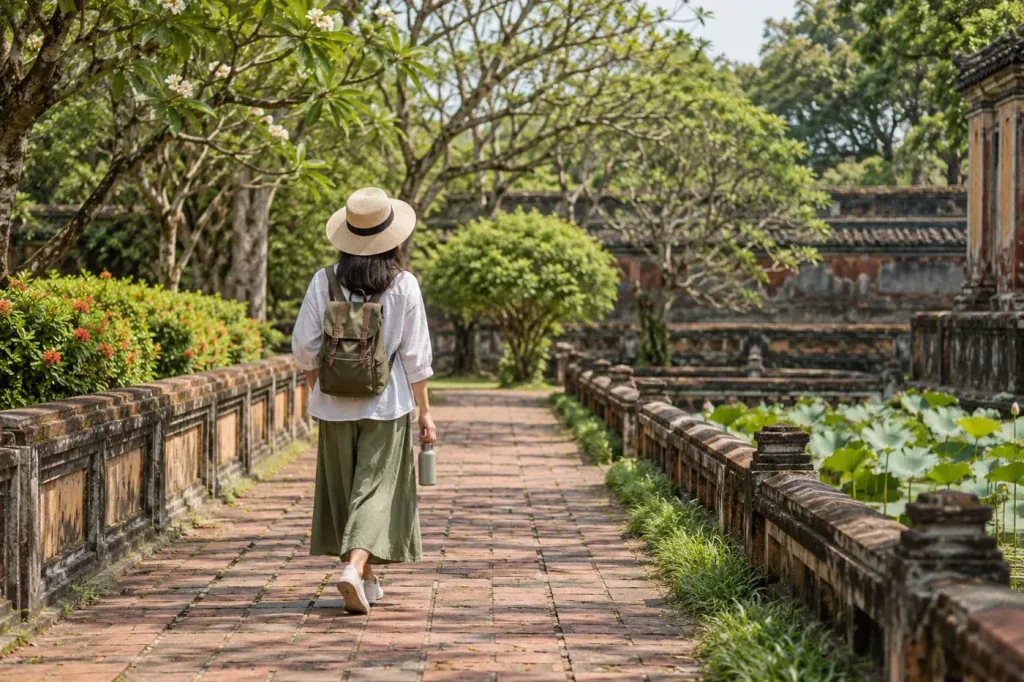
A selective landscape walk
This suits visitors who want an introduction without a long guided circuit. Choose a small number of stops, read their interpretation and leave enough time for the return path. Make additional buildings optional. If the group is tiring, a shorter visit with attention to the lake and one significant interior is preferable to hurrying through the entire grounds.
A visit with historical interpretation
Ask a guide to explain the site’s uses and how the different structures relate, not simply name each building. Questions about the emperor’s retreat, memorial functions and later conservation can provide a coherent story. Agree the language and duration, and make clear if you want time for reading or photography. A guided visit can still be paced slowly and need not include every accessible corner.
Compare Tu Duc with the other major tombs
Choose Tu Duc when the mix of landscape, pavilions and royal-life context is your main interest. Minh Mang offers another formal landscape to compare, while Khai Dinh provides a more concentrated decorative interior and a prominent stair approach. These descriptions help with choosing a visit; they are not a ranking of which monument is objectively best.
If you have one short day in Hue, decide whether the tomb outing or the Imperial City is the priority before buying a multi-site ticket. If staying longer, splitting them across different sessions can make the walking easier. Include the return journey, not just arrival, when calculating how much time a tomb visit takes away from other plans.
Keep photography compatible with a working heritage site
Wait for a clear view from a permitted path instead of stepping onto a waterside edge or moving barriers. Avoid asking others to stand on fragile features for a photograph. A quiet-looking picture does not establish that a place is deserted or open to unrestricted access. Let other visitors pass, follow any interior restrictions and keep the camera away from surfaces that could be damaged by equipment.
Frequently asked questions
Is Tu Duc a quick photo stop?
It can be visited selectively, but an hour or more gives the landscape and historical context room to make sense. Include transport separately.
Can I walk here from another royal tomb?
Do not plan the tomb circuit as one continuous pedestrian attraction. Check the actual road distances and conditions, and arrange suitable transport.
Is a guide essential?
No, but a guide can help explain the site’s different uses and symbolism. Agree the service and price first.