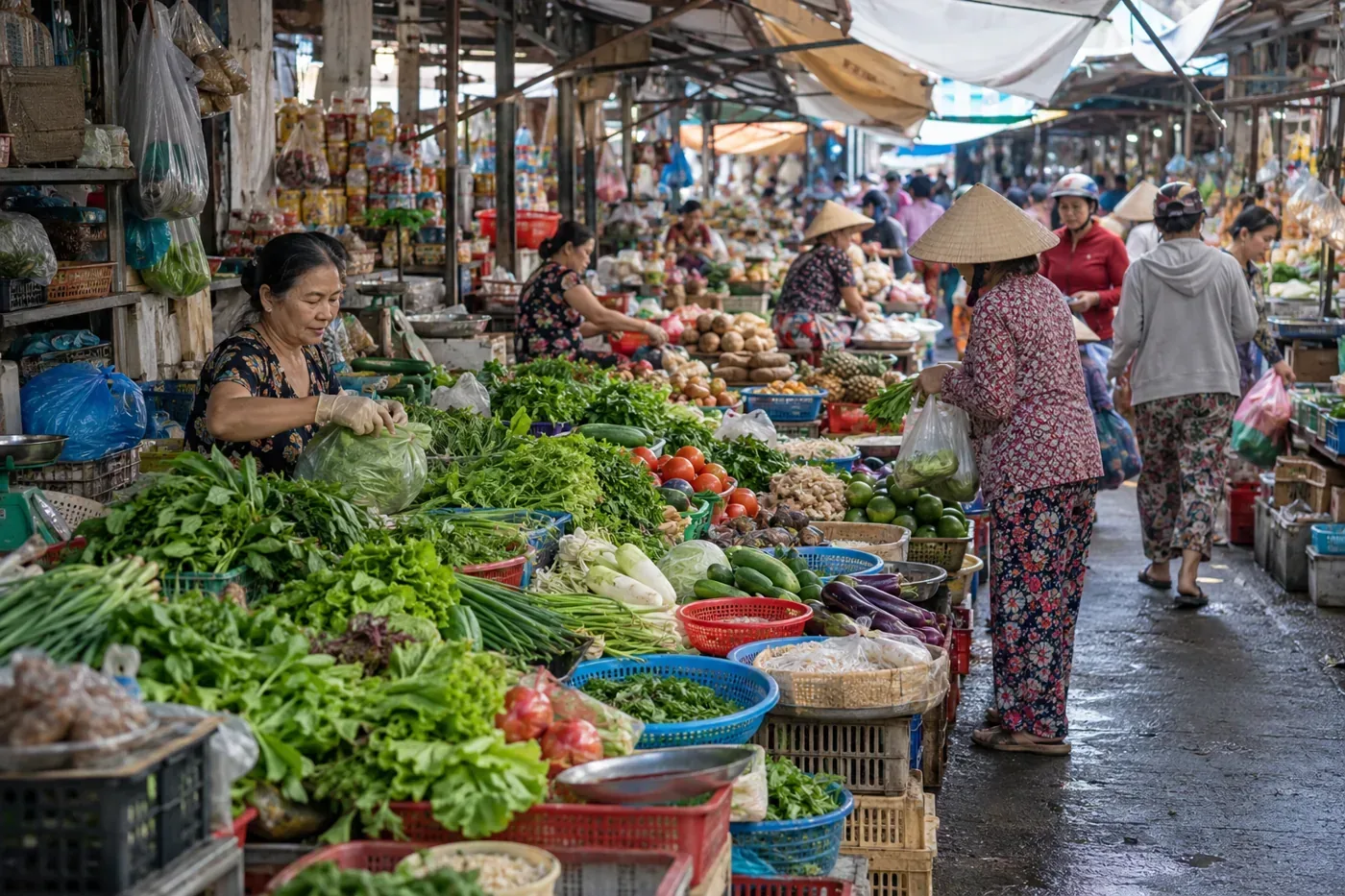
Dong Ba Market is a working market in central Hue, useful for a short look at produce, everyday shopping and local food. Allow around 45–90 minutes depending on whether you eat or shop. Arrive with a few interests in mind, ask prices before ordering and leave room for traders and customers to work.
Images in this guide are AI-generated illustrations, not on-site photographs. They do not establish current access, facilities or conditions.
Use the Hue travel guide to place it alongside the palace, river and your meals.
Why visit Dong Ba?
The market offers a different perspective from Hue’s royal monuments: food and household trade rather than a curated heritage circuit. Vietnam Tourism recommends it for exploring local produce and the city’s food culture. Treat it as a business environment where people earn a living, not as a performance staged for visitors.
It suits travellers who enjoy browsing ingredients, comparing everyday goods or trying a simple food stop. If you dislike busy, narrow spaces or need a quiet sit-down meal, a restaurant may be a better choice for eating.
What to look for
Produce and ingredients
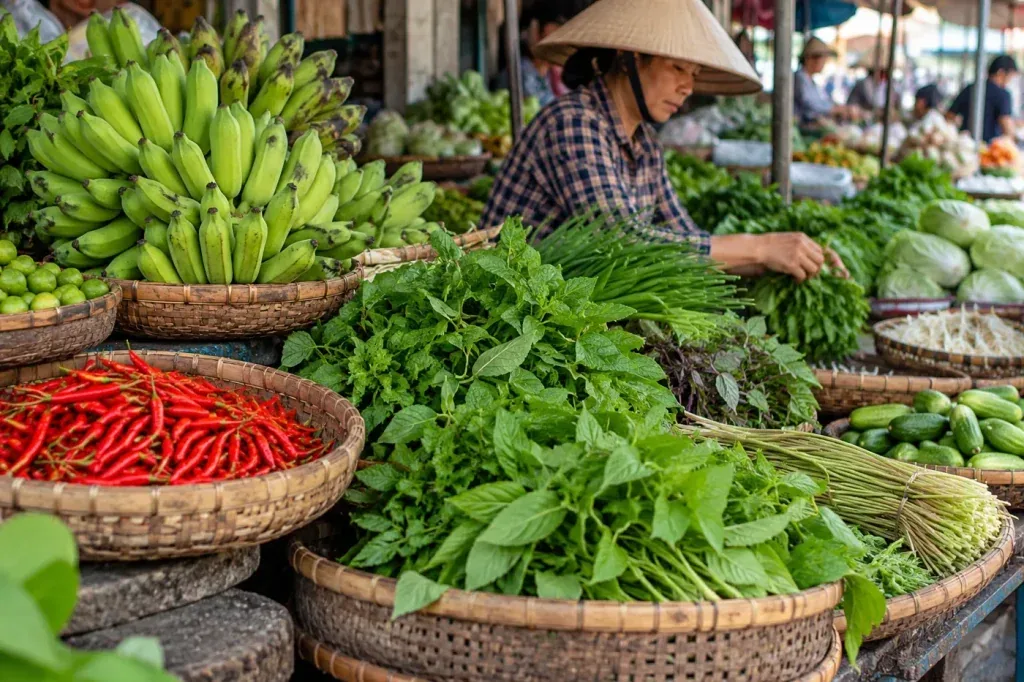
Walk slowly enough to notice the range of herbs, vegetables and prepared ingredients, but step aside when a delivery or customer needs to pass. Ask a seller or guide before touching produce or photographing someone at close range.
A food stop
Look for a stall whose menu and preparation you can understand. Ask what a dish contains, whether the listed price is for the portion you want, and which extras cost more. If you have allergies or dietary restrictions, clear communication matters more than choosing the busiest stall.
Small purchases and souvenirs
Inspect the item, agree the final price and check the change before leaving. If bargaining is appropriate for the product, keep it friendly and be prepared to walk away politely. Do not assume every stall negotiates or that every higher quote is dishonest.
Food expectations and useful questions
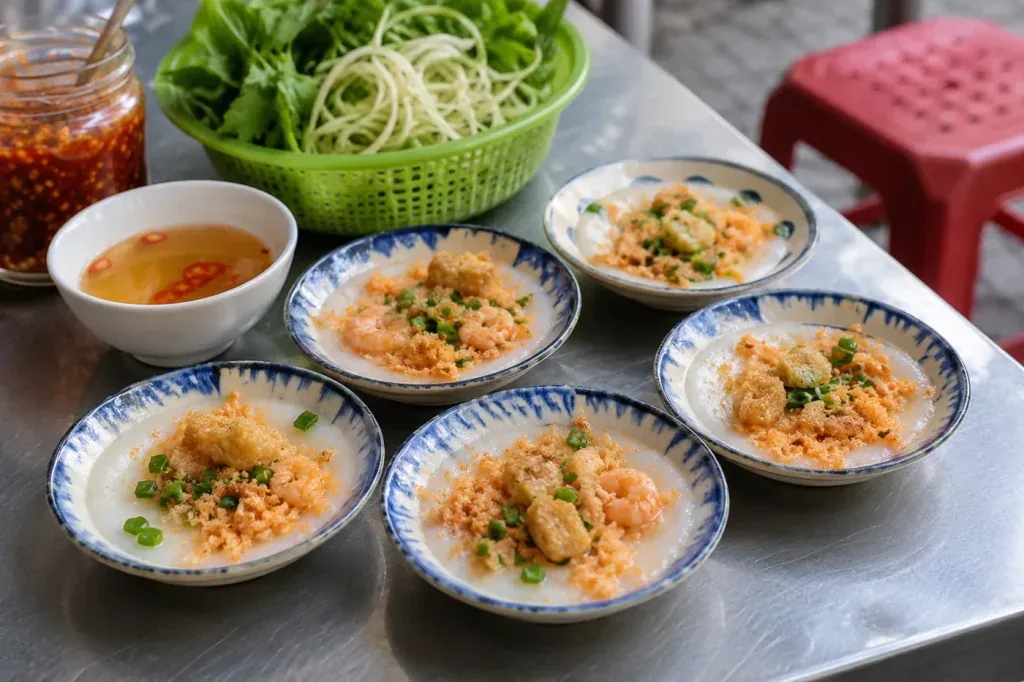
Hue’s food traditions include dishes such as bun bo Hue, banh beo and banh khoai, but no individual stall’s menu or opening status is guaranteed here. Ask what is freshly available at the time of your visit.
For a snack, start with one portion before ordering more. Clarify condiments and fillings if you avoid particular ingredients. A guide can help explain dishes, but ask whether food costs are included in the guide’s fee.
When to go and how long to allow
Choose the time according to your purpose: food trading, souvenir browsing and a cooked meal may follow different routines. No current official, market-wide opening notice was confirmed for this guide, so check with your accommodation or a local guide before a very early or late visit.
An hour is a useful planning allowance for browsing with a short stop. Add more time if you want to compare purchases or eat, and shorten the route if the heat or crowding becomes uncomfortable.
Getting there and moving around
Use Dong Ba Market’s specific entrance or a clearly named nearby meeting point when arranging a taxi or pickup. Save the location before entering; similar-looking exits can make meeting a driver confusing. Keep the road crossing separate from browsing your phone for directions.
A central market stop can fit with the Imperial City and a Perfume River walk, but allow for the actual route between them and a rest break. Do not assume every entrance connects conveniently to your next destination.
Access and everyday practicalities
Narrow aisles, uneven or wet surfaces and changes of level can complicate access for wheelchairs and strollers. Ask about a suitable entrance and choose a short route if necessary. Do not assume that all levels and food areas are step-free.
Carry small amounts of cash for purchases, keep valuables secure and avoid blocking stalls with a large backpack. Ask before taking close photographs, especially when someone is serving a customer. Taking a general market photograph should not interrupt trade.
Choose a purpose before entering the market
Decide whether you are coming mainly for a meal, ingredients or shopping. For a food visit, ask about suitable stalls and their serving times before walking around for so long that your intended meal becomes an afterthought. For shopping, have a short list and a budget. For simple observation, a compact route with a few pauses can be more enjoyable than trying to cover every aisle.
Keep your first circuit exploratory. Notice where people are moving goods and leave those routes clear. If you become disoriented, return to the entrance or meeting point you saved rather than continuing deeper in the hope of finding a familiar exit. Travelling with a companion also works better when you agree where to reconnect before separating to browse.
Make food ordering clear
Point to the item or ask for the dish name, then confirm the portion and price before preparation begins. If several people are sharing, establish how many portions you want instead of assuming one order will be divided automatically. Ask whether drinks or additional plates are separate charges. A simple written amount or calculator display can help when language makes a verbal price unclear.
If ingredients matter to you, ask about the stock, sauce and garnish as well as the main item. A photograph can show what a dish looks like without explaining everything it contains. For a serious dietary constraint, choose a place that can give a clear answer rather than relying on gestures or the appearance of a bowl. A food guide may help with communication, but should still confirm with the actual seller.
Buy something you can use or carry
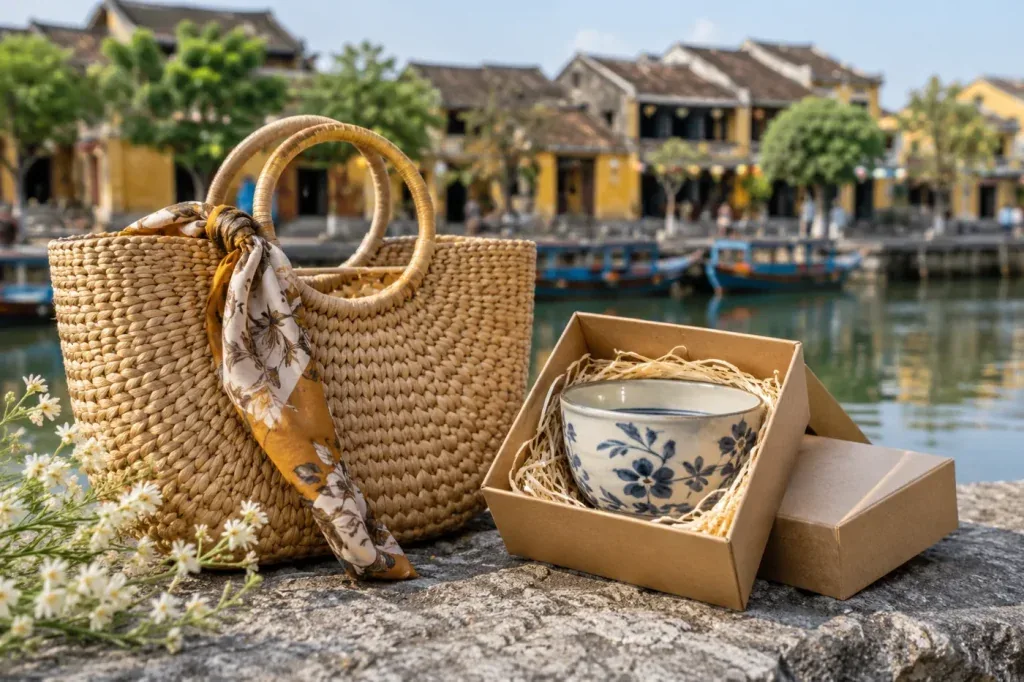
Inspect the specific item you will receive, not just a display sample. For clothing or household goods, check dimensions, materials and condition before agreeing the price. For a fragile souvenir, ask how it can be packed and whether you can carry it safely through the rest of the day. Avoid buying a large item early in a walking itinerary if you have nowhere to leave it.
For food intended to travel with you, consider storage and your onward journey before purchasing. Ask the seller about handling, but check any destination entry rules independently rather than treating a market sale as permission to carry an item across a border. If the product needs conditions you cannot provide, choose something else.
Use a guide for a specific reason
A guide is most useful when you want explanations, help finding a particular ingredient or assistance ordering. Agree whether the fee includes food and purchases, and whether you can decline shopping stops. You do not need a long market tour simply to have one snack. Conversely, if food culture is your main interest, allow time for questions and tasting instead of attaching the visit to the end of an already crowded monument itinerary.
Frequently asked questions
Do I need a tour?
No. An independent short visit can work, while a guide may help with food explanations, language and finding a specific item.
Are prices fixed?
It depends on the stall and product. Ask for the price and portion or quantity before agreeing to buy.
Is every stall open all day?
Do not assume so. Check locally if you are travelling for a specific meal, product or trader.