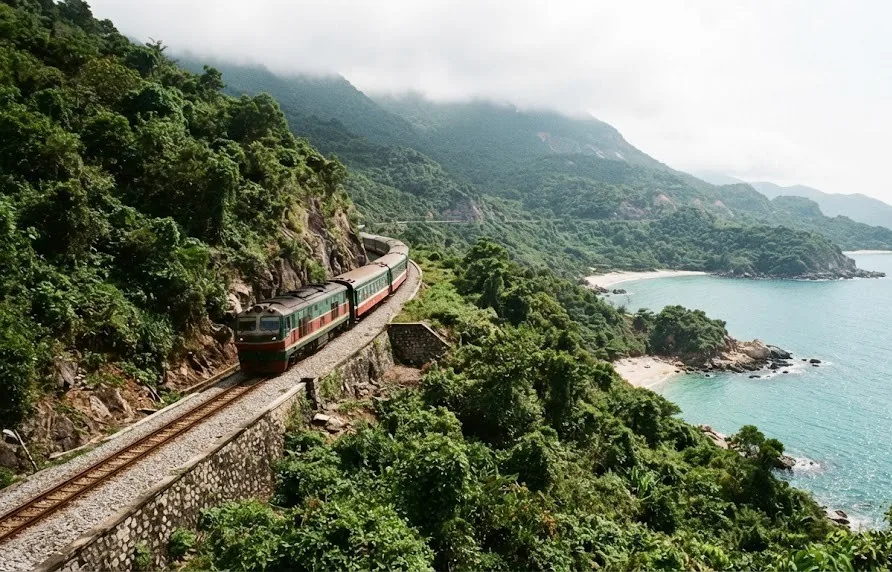
Taking the train from Da Nang to Hue gives you a coastal journey around Hai Van and a central-city arrival. Choose a daytime departure for the scenery, compare the Heritage service with the regular trains available on your date, and book the return before committing to a day trip. Allow roughly three hours for the rail journey as a starting estimate; the selected train’s timetable is what matters.
For the destination itself, use our Hue travel guide. This page focuses on booking, boarding and deciding how rail fits your trip.
Heritage train or regular train?
The “Connecting Central Heritage” tourist service links Da Nang and Hue via Lang Co. Vietnam Railways launched it in March 2024. Regular long-distance trains also serve the route, with the bookable departures and seat classes shown in the official journey search.
| Your priority | What to compare |
|---|---|
| Scenery and an outing on the train | A daylight Heritage service; confirm the onboard programme and any stop arrangements for that departure. |
| Useful arrival time in Hue | All available trains, comparing arrival time rather than the service name alone. |
| Lowest total cost | The final fare for your date and seat, including any reseller service fee. |
| More time at the monuments | An overnight stay in Hue, or a confirmed early road transfer with a train in the other direction. |
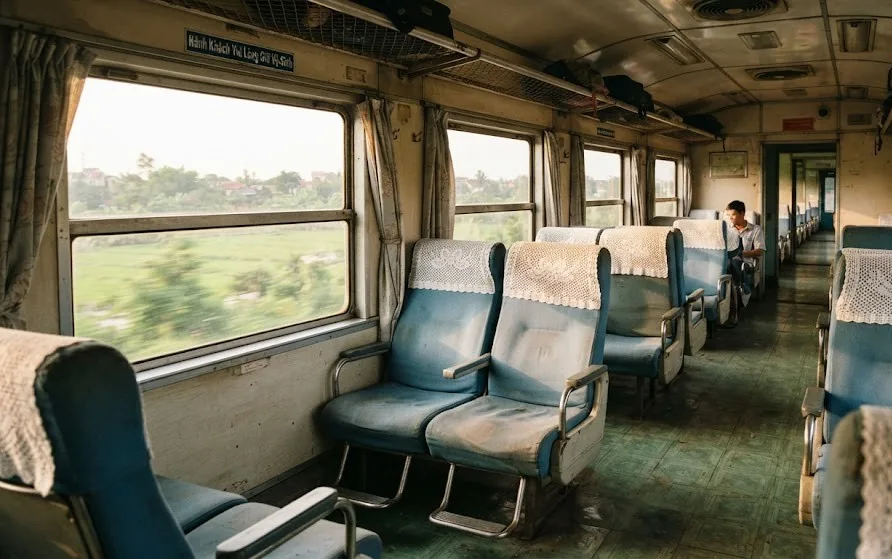
A tourist train does not automatically include a meal, live performance, reserved sea-facing seat or permission to leave the station during a stop. Check the ticket description. A regular train may be the better fit when its timing suits your plans.
Current times and fares: check the travel date
Use Vietnam Railways’ official booking site or its Heritage train page, select Da Nang and Hue, then enter your actual travel date. Search the reverse journey separately. Compare the departure, arrival, train number, carriage, seat class and final payable amount.
At the 4 October 2026 source check, the Heritage landing page displayed inconsistent times in different sections. For that reason, this guide does not reproduce a static timetable as a confirmed schedule. Use the dated booking result and issued ticket, and contact the railway if they disagree.
No single fare applies to every train, date, age category and seat. This page therefore does not promise an old weekday price or a fixed US-dollar equivalent. Look at the full payable total and the change/refund rules before purchasing. A reseller may add a service charge or apply different support conditions.
Booking step by step
- Search both directions before deciding whether Hue will be a day trip or an overnight stay.
- Select a departure that reaches the coast in daylight if scenery matters. A night train can still provide transport, but not the same view.
- Check the passenger-name and identification requirements carefully. Enter details matching the document you will carry.
- Review the carriage and seat plan, luggage conditions, passenger discounts and cancellation terms shown for that ticket.
- Save the ticket offline and keep the booking reference and operator contact details available.
- Arrange the station transfer separately unless your package explicitly includes it.
If online payment fails, use an official station counter or a clearly identified agent. Do not repeatedly submit payment without checking whether an earlier transaction created a booking. Ask the seller to distinguish the railway fare from any service fee.
Which side has the sea view?
For the coastal stretches, favour the right-hand side in the direction of travel from Da Nang to Hue, and the left when returning south. Seat orientation and carriage diagrams can be confusing, and the line curves: a seat number alone is not a reliable promise. Ask the railway or ticket seller if the view is a priority.
Keep your assigned seat unless staff permit a change. Do not lean out, open a restricted door or stand where you obstruct a carriage passage to take photographs. Reflections and weather affect photography; a window seat cannot guarantee clear views.
At the station and on board
Use the station printed on your ticket and check its map pin before leaving your hotel. Allow a boarding buffer rather than arriving at the exact departure time; around 30 minutes early is a practical planning allowance, with more time if you need assistance or are unfamiliar with the station.
Have your ticket and the required identification ready. Keep passports, medication, money and electronics with you, and keep baggage out of aisles and doors. Confirm the current allowance for large luggage, bicycles or surfboards directly with the railway instead of assuming they can travel for a small extra fee.
Rail carriages can have steep boarding steps and narrow passages. If you need a ramp, boarding assistance or an accessible toilet, discuss the specific train and both stations with the operator before paying. A soft seat or tourist-service label does not establish step-free access.
Can you visit Hue and return the same day?
Yes, when the confirmed trains leave enough time in Hue, but it is easy to overfill the day. First subtract station transfers, boarding time and meals from the gap between arrival and departure. That remaining time is your sightseeing window.
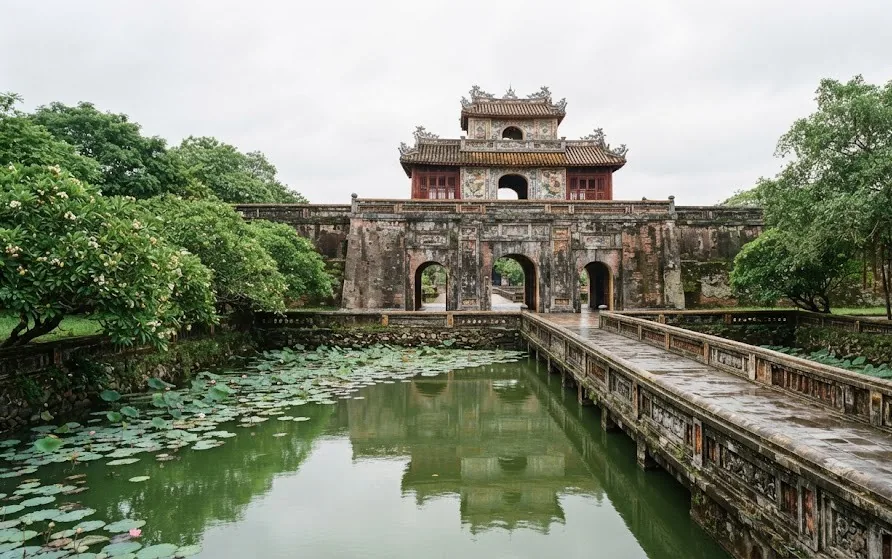
With only a short window, choose the Imperial City and a meal nearby. If you have a longer afternoon, consider one additional destination with a prearranged driver. Do not assume that the citadel, several royal tombs, Thien Mu and dinner will all fit before the train.
For a more relaxed visit, stay overnight. You can use one day for the Imperial City and riverside, then visit selected tombs before returning. The Hue guide explains the neighbourhoods and attraction choices without tying them to an unconfirmed train schedule.
Returning to Da Nang or mixing road and rail
A reserved return seat is more dependable than hoping to buy one at the end of the day. Recheck the date carefully if the service arrives after midnight. If your trip depends on a flight connection, allow a substantial buffer or return the previous day; rail delays can affect onward plans.
You can travel one direction by road and the other by rail. A car over Hai Van Pass offers road viewpoints, while a transfer through the tunnel prioritises the journey to Hue. Ask the driver to specify the route, stops and total price. These are different products, even when both are advertised as “Da Nang to Hue.”
Frequently asked questions
How long does the train take?
Use about three hours as an initial planning estimate, then replace it with the duration of your selected departure. Different trains and schedules can take longer or shorter.
Is the Heritage train always better?
No. Choose it for its tourist-service offering if that interests you; choose another train when its schedule or ticket conditions fit better.
Should I buy the return ticket first?
Check and reserve both directions together when planning a same-day visit. An attractive outward departure is not enough if no suitable return is available.
Are monument tickets included?
Do not assume so. Read the booking inclusions; rail transport and admission to Hue’s monuments are normally separate purchases unless a specific package states otherwise.