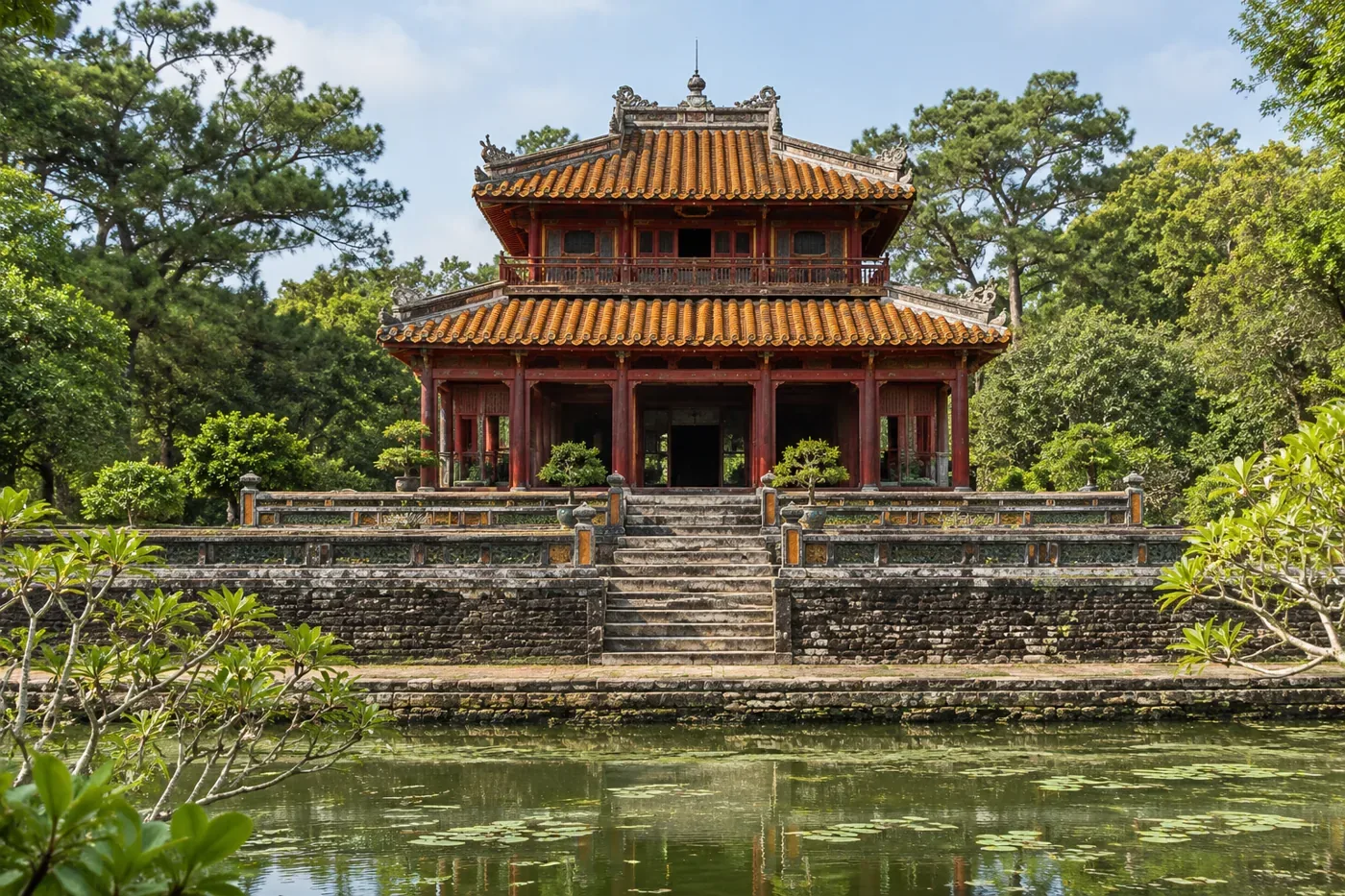
Minh Mang Tomb is a good Hue choice for visitors interested in formal royal architecture set among lakes and gardens. Allow around 60–90 minutes for a selected walk, more if you want to study the layout. Arrange transport and the return pickup before entering: the tomb is a separate excursion from central Hue.
Images in this guide are AI-generated illustrations, not on-site photographs. They do not establish current access, facilities or conditions.
Use our Hue travel guide to compare it with the palace and other tombs.
What makes Minh Mang distinctive?
Vietnam Tourism describes Minh Mang’s tomb as a large, orderly complex completed in 1843. Its appeal is the relationship between ceremonial buildings, water and the surrounding landscape. The sequence of spaces is as important as any single photograph.
This is a better fit for a slower walk than for a rushed stop between transfers. If you want a contrasting interior-focused visit, Khai Dinh Tomb has a different character. Choose according to your interests rather than treating the royal tombs as interchangeable.
How to read the landscape
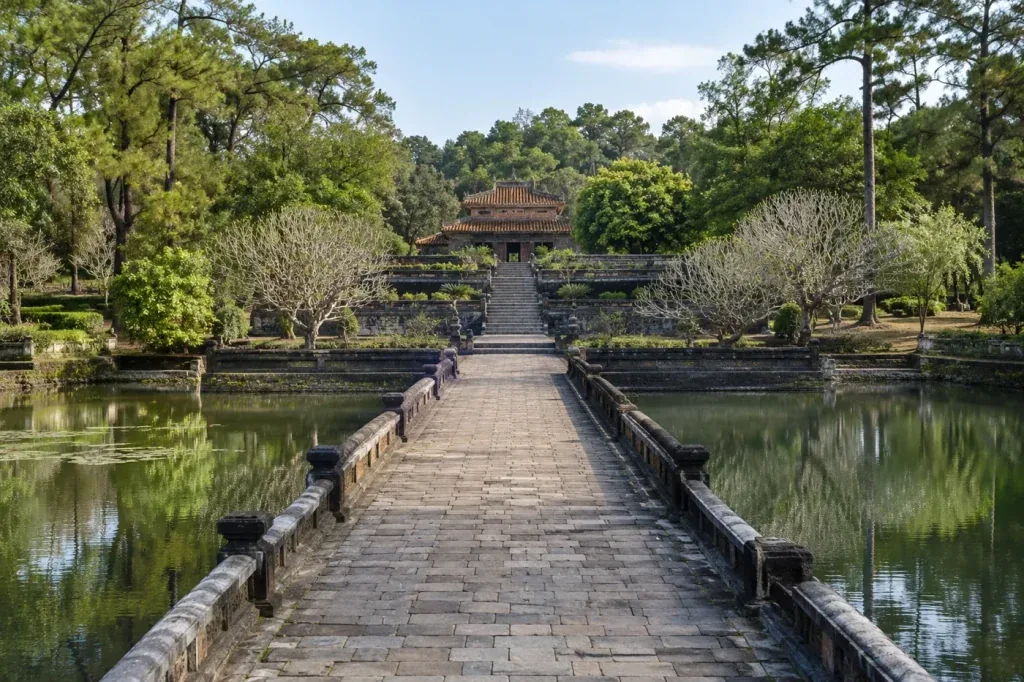
Follow the main sequence
Collect or photograph the visitor map at the entrance and follow the signed public route. Notice how gates, courtyards and buildings align. Stop occasionally to look back: the relationships between spaces become clearer when you see the route from both directions.
Make time for water and quieter views
The lakes and planting are part of the design, but seasonal vegetation and maintenance affect what you see. Do not plan a visit around guaranteed lotus flowers or a specific foliage photograph. Stay on permitted paths and keep away from unprotected water edges.
Respect closed burial areas
Public access does not extend to every part of a royal tomb. Gates and barriers can separate ceremonial visiting areas from restricted spaces. Do not attempt to reach a closed burial enclosure or follow an unofficial shortcut through the grounds.
Tickets and visit timing
The official Hue monument portal displayed Minh Mang admission from 150,000 VND per person on 4 October 2026. Recheck the applicable ticket category and date. A combination product may be useful if its named sites and validity match your route; do not assume every multi-site ticket includes Minh Mang.
Consult the centre’s seasonal hours before departure. Leave enough time for the walking circuit and return to your meeting point rather than arriving near the end of ticket sales.
Getting there and combining tombs
A prearranged car is a practical option when visiting multiple sites. Give the driver the tomb name and agree the full route, waiting time and return destination. Check whether admission, parking or a guide is included in the quote.
Allow for transfers between stops. Minh Mang, Khai Dinh and Tu Duc are not one walkable attraction. Two selected tombs with time to understand them can make a more rewarding half-day than racing through every entrance.
If you have only one short day in Hue, choose between a substantial tomb outing and the Imperial City rather than assuming both fit around any train departure.
Walking conditions and accessibility
Expect outdoor walking, uneven surfaces and steps or changes in level. Shade does not cover the whole route. Bring water, sun protection and shoes with grip, and take extra care after rain.
Ask the conservation centre about a currently usable step-free route and toilets if needed. A large landscaped site may look accessible from photographs while still having barriers at bridges, gates or building thresholds. Confirm the distance you can comfortably cover before committing to the full circuit.
A walking plan that leaves room to understand the site
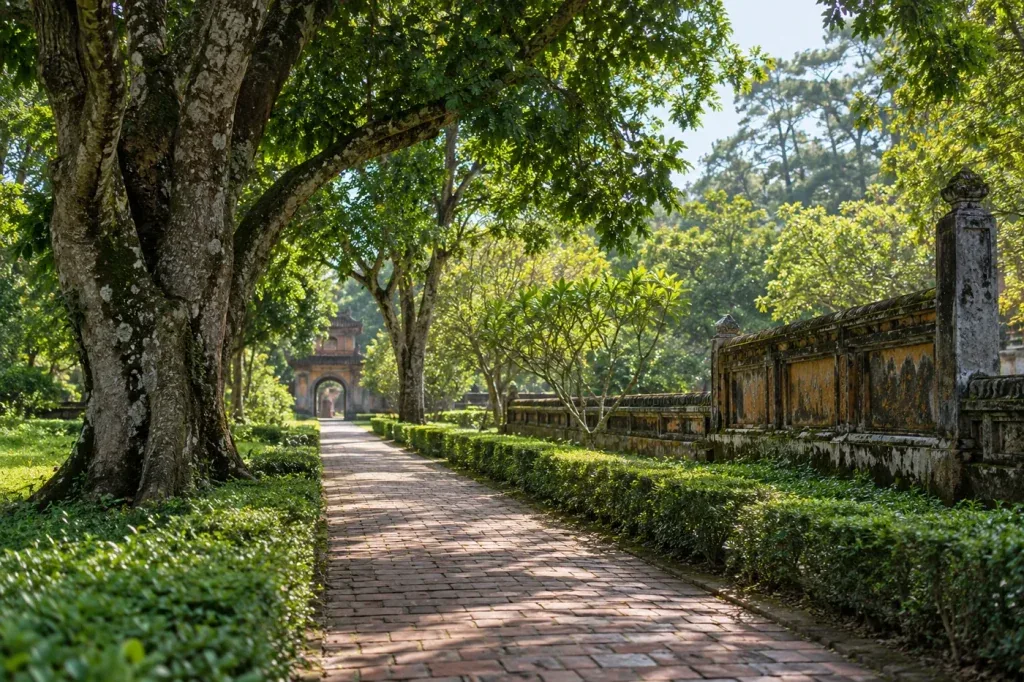
Use the entrance map to identify the public route and decide how far you want to walk before beginning. Follow the principal sequence first, pausing where a gate or courtyard changes the view ahead. Look back occasionally so that the alignment of spaces becomes visible. Only add a side route if it is open and your group still has enough time and energy to return comfortably.
For a shorter visit, choose a few architectural stops and one waterside viewpoint rather than trying to cover every path. For a longer visit, allow time to read the interpretation and compare the formal central sequence with the surrounding landscape. These are suggested approaches, not assurances that every named section will be accessible on the day.
Questions that make the architecture easier to follow
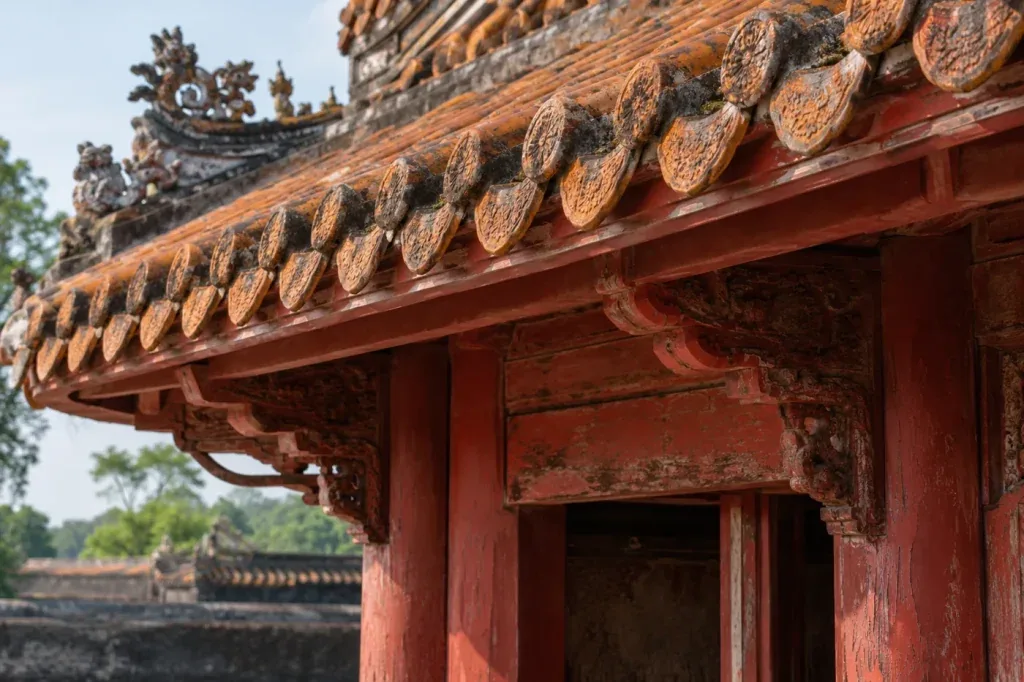
Ask what each public space was intended to do and how visitors or ceremonies would move through the complex. The relationship between buildings can be more revealing than memorising a list of names. A guide can also help distinguish the areas used for commemoration from the restricted burial spaces; do not assume that a ticket permits entry through every gate visible on the map.
When looking at symmetry, water and planting, separate what you can observe from a claimed symbolic meaning. If interpretation or a guide explains a particular design choice, ask how that explanation is supported. This avoids turning every bridge or tree into an invented legend. The landscape remains interesting even when a precise explanation for an individual detail is unavailable.
Make a transport booking that matches your walking pace
Tell the driver whether you expect a selective walk or a longer visit with a guide. Agree what happens if you need extra waiting time and where you will meet after leaving the grounds. Keep the driver’s contact information available offline. If different members of your group may leave at different times, discuss that before setting off rather than assuming one vehicle can serve several return plans.
For a two-tomb outing, choose the second site for contrast or a specific interest. Khai Dinh can provide a different architectural experience, but it adds a stair climb after your outdoor walk here. Tu Duc may suit a landscape-focused day, although two substantial outdoor visits still require breaks. Avoid making the second stop compulsory if heat or rain has already shortened the first.
Planning with a slower walker or photographer
Agree on the visit’s pace before buying transport or a timed tour. Someone studying architectural details may need longer than someone making a quick circuit, while a slower walker may prefer a shorter route with more rests. Select an easy-to-recognise meeting place and allow those preferences to shape the plan. A successful visit does not require everyone to cover the same distance or produce the same photographs.
Frequently asked questions
How long should I allow?
About 60–90 minutes is a practical starting allowance for a selected visit, excluding transport. Add time for a guide, rest breaks or detailed photography.
Is it mostly an indoor attraction?
No. The outdoor layout and landscape are central to the visit, so weather and walking comfort matter.
Which tomb pairs well with it?
Khai Dinh provides a contrast in scale and decoration. Tu Duc is another landscape-oriented choice if that is your main interest.