Short answer: Yes. Da Nang is a safe, easygoing city for most visitors, and violent crime against foreigners is rare. The real risks are everyday ones: phone and bag snatching from passing motorbikes, chaotic traffic, strong currents at the beach, and storms in the rainy season. Handle those five things and most trips here are uneventful in the best way.
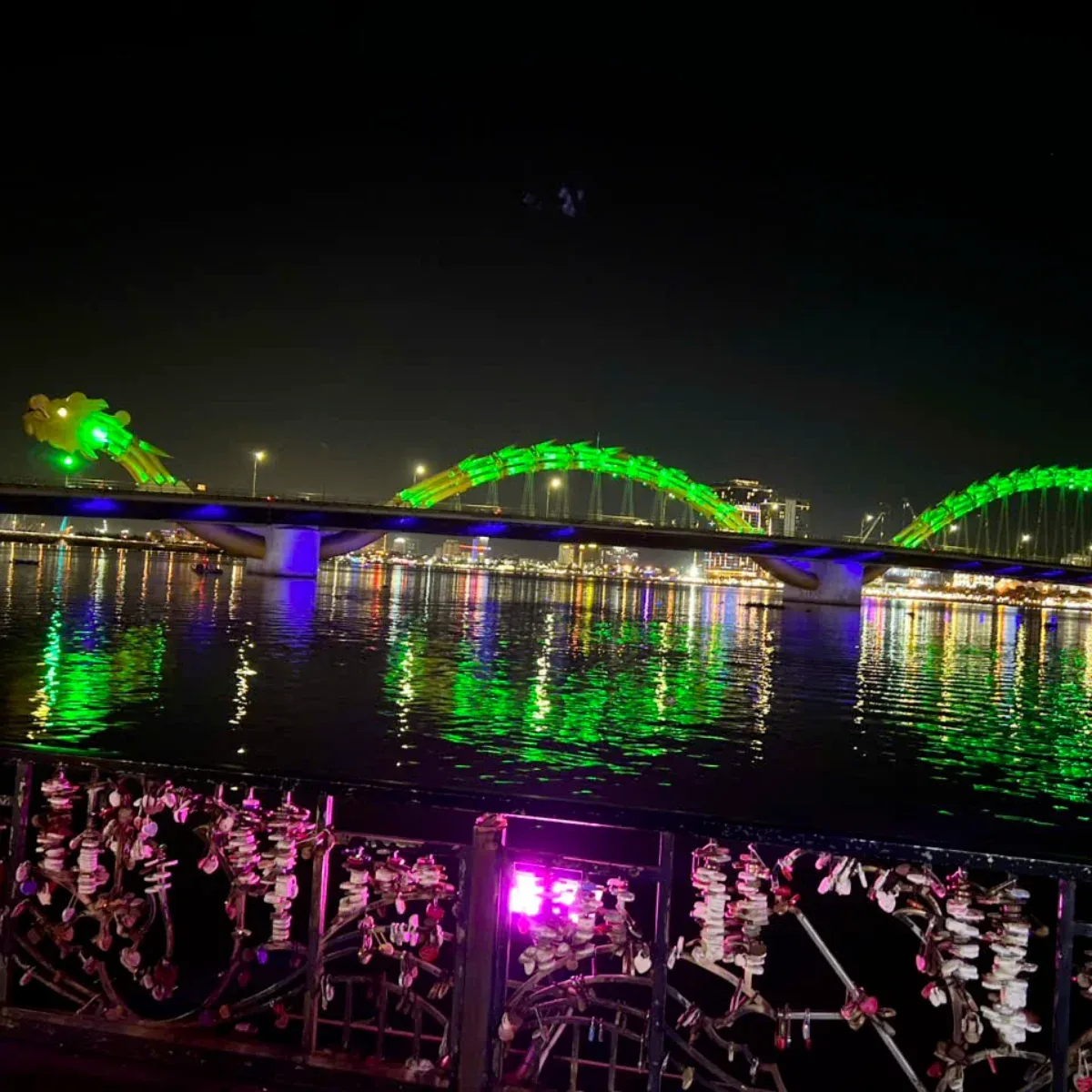
How safe is Da Nang, really?
Da Nang is a low-crime city for travellers. The UK Foreign Office says violent crime against foreigners in Vietnam is rare, while petty theft and pickpocketing do happen regularly (GOV.UK, checked November 2026).
In practice, the city feels relaxed: families walk the Han River promenade late into the evening and the beachfront along Vo Nguyen Giap stays lit and busy. What catches people out is not crime but complacency: a phone held loosely at the roadside, a swim outside the flags, or a scooter rental without a licence or insurance.
| Risk | How likely | What to do |
|---|---|---|
| Bag or phone snatching | Occasional, mostly at night near busy roads | Hold your phone away from the kerb; use a cross-body bag |
| Traffic accidents | The most common serious risk | Use a car with a driver, a taxi or Grab rather than riding a scooter yourself |
| Rip currents at the beach | Real, especially October to February | Swim only inside the buoys where lifeguards are on duty |
| Storms and flooding | Seasonal, mainly autumn | Watch forecasts and follow closures |
| Scams and overcharging | Common but small | Use apps with fixed prices; agree prices first |
| Violent crime | Rare | Normal city sense; avoid arguments late at night |
Petty theft: phones, bags and motorbike snatchers
The crime you are most likely to meet in Da Nang is a snatch-and-go theft from a passing motorbike. GOV.UK describes motorbike bag-snatching as common in Vietnam and advises carrying bags on the side away from the traffic (checked November 2026).
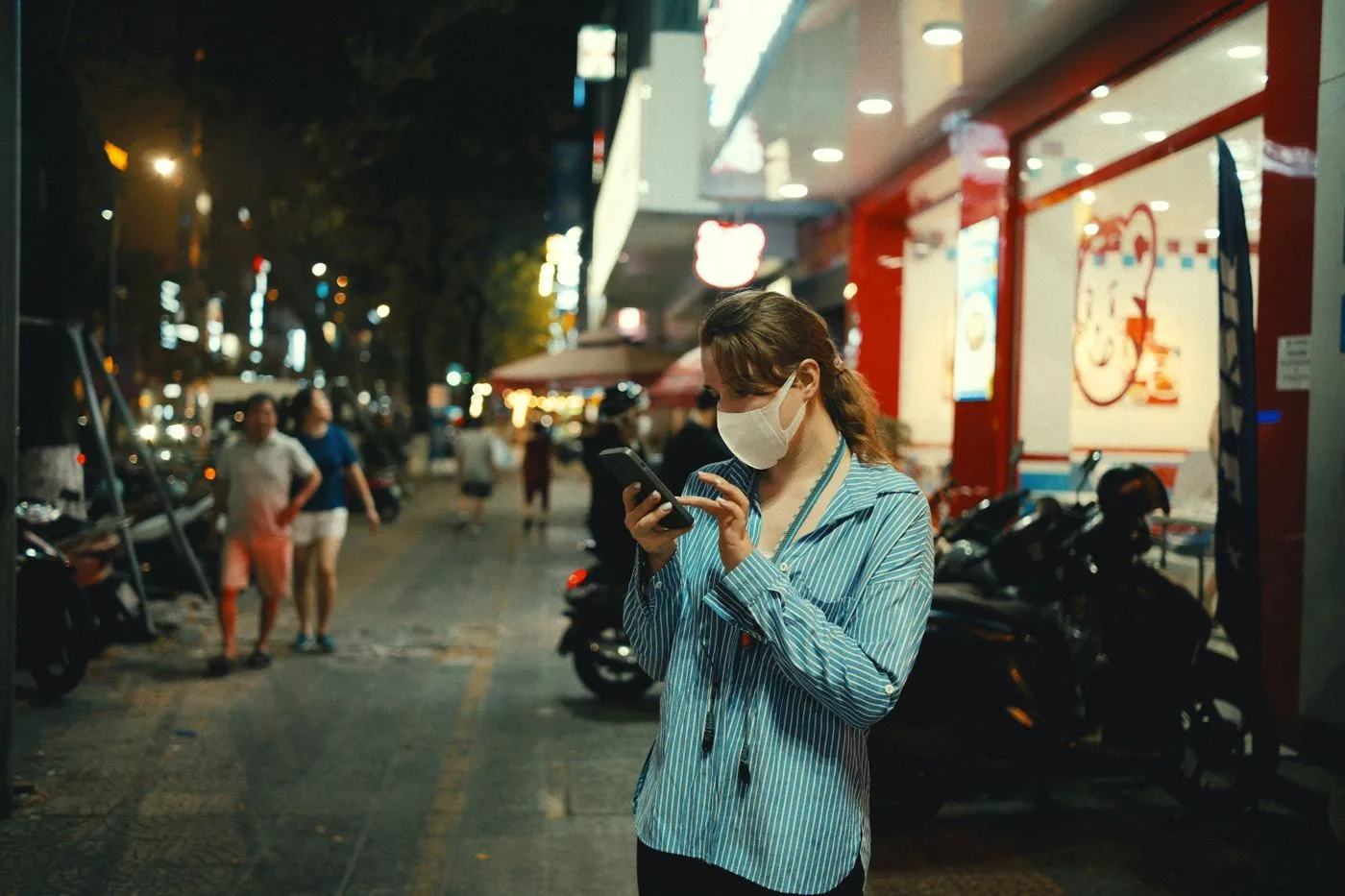
Snatchers look for a phone held out at the edge of the road, often while someone is waiting for a Grab or taking a photo. A few habits remove most of the risk:
- Step back from the kerb when you check your phone, and hold it with both hands.
- Wear a cross-body bag on the shoulder away from traffic, zip closed.
- Leave your passport in the hotel safe and carry a photo of it instead.
- Do not leave phones and wallets on the sand while you swim. Beach theft is a known problem, so bring a dry bag or take turns.
- If someone grabs your bag, let go. Being dragged by a motorbike is far worse than losing a phone.
Traffic: the biggest real danger
For most visitors, the road is the riskiest part of a Da Nang trip. GOV.UK notes that motorbike travel in Vietnam is much riskier than at home (checked November 2026).
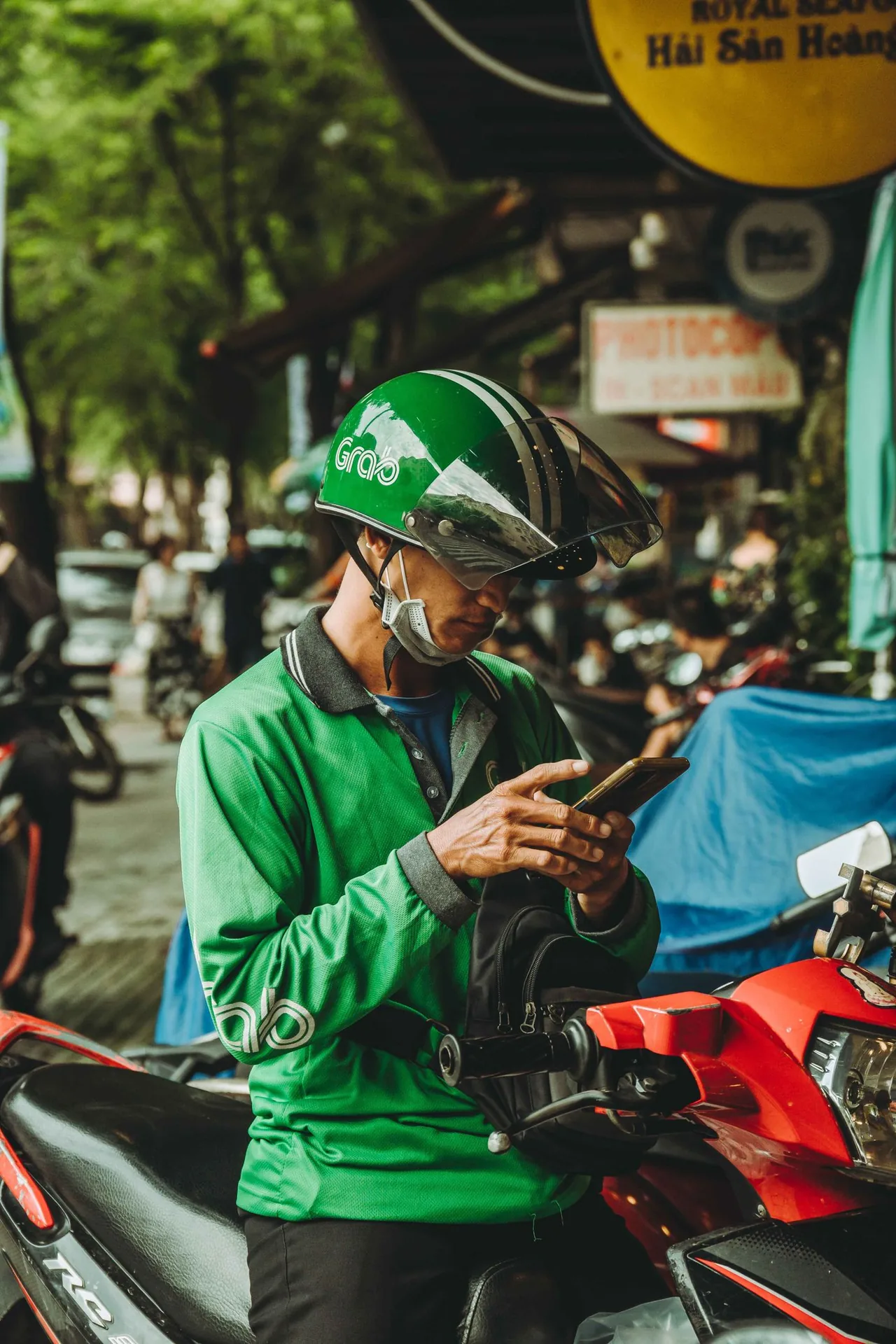
Many travel insurance policies also exclude scooter accidents. The simplest way to avoid that risk is not to ride at all: use Grab, a metered taxi or a private car with a driver instead.
Crossing the street
Walk at a slow, steady pace and do not stop or run suddenly. Riders steer around predictable pedestrians. Raise a hand, make eye contact, and cross with a local if you can. Use the traffic lights on big roads like Bach Dang and Vo Nguyen Giap, but still look both ways: bikes often turn right on red and some ride against the traffic.
Safer ways to get around
Ride-hailing apps such as Grab, Be and Xanh SM show the price, the driver's name and the plate number before you get in, so there is nothing to haggle over. Our guide to the apps you need in Da Nang explains how to set them up. For trips out of town, a car with a driver is the calm option.
Beach and sea safety
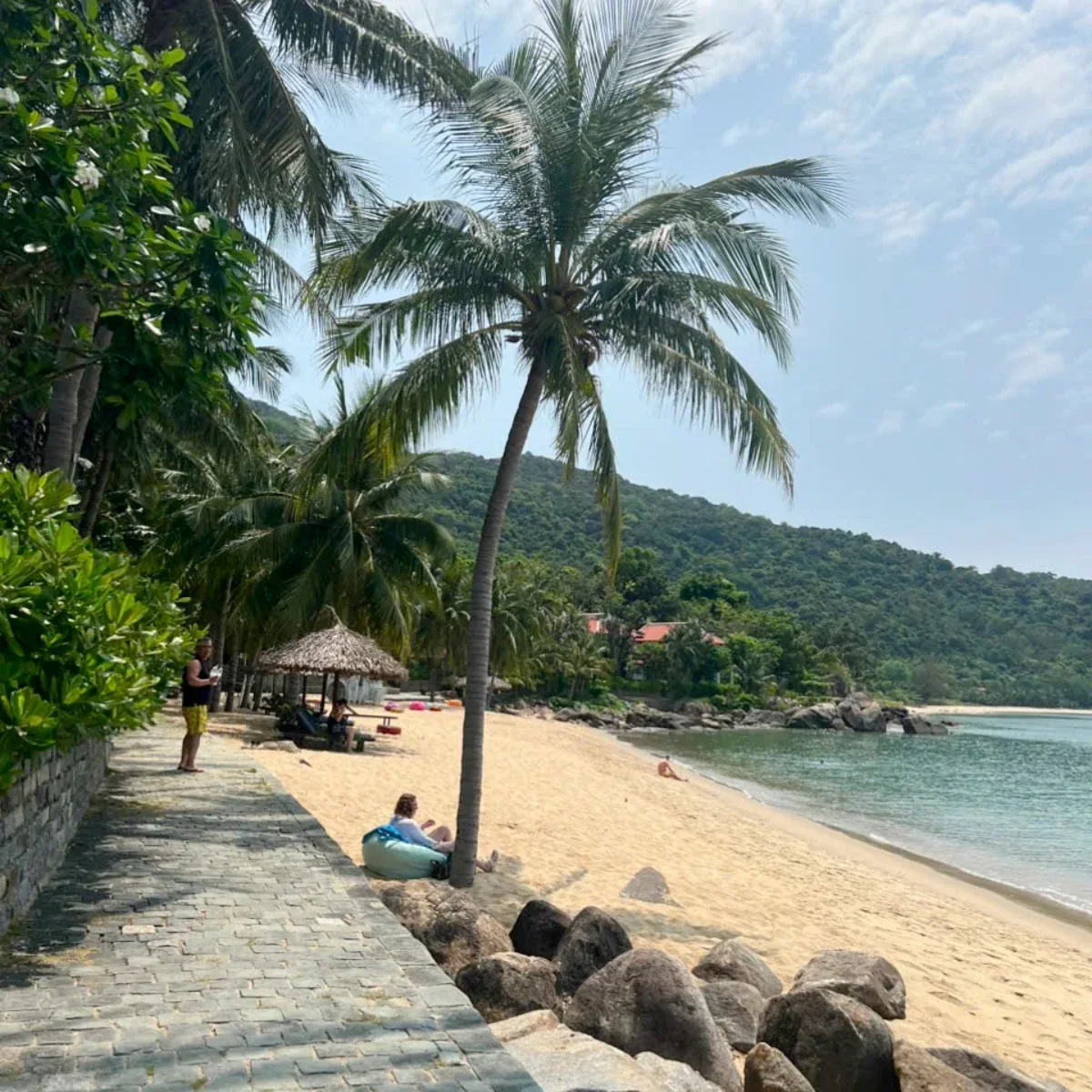
The sea is beautiful but not always gentle. Swim only in the zones marked by buoys where lifeguards are on duty, and stay out when red flags are up.
Da Nang's lifeguard teams have worked daily from about 5:00 a.m. to 6:30 p.m., and ropes limit the swimming area to roughly 100 metres from shore; red flags and warning signs mark spots where currents make swimming unsafe (Bao Da Nang). Early mornings are a popular swim time, but they are not risk-free: on 27 April 2026, two tourists swimming outside the buoy zone at Tan Tra Beach around 6:15 a.m. were pulled out by strong waves and had to be rescued by a lifeguard (Tuoi Tre News). The beach management board's advice is simple: follow the lifeguards, watch the flags and whistles, and stay inside the buoys.
- Waves and rip currents are strongest in the rainy months, roughly October to February.
- If a current pulls you out, swim parallel to the shore, then back in. Do not fight it head on.
- Keep children in arm's reach and in life jackets if they are not strong swimmers.
- Avoid swimming after drinking, after dark, or on empty stretches with no lifeguard tower.
For the main beach, see our My Khe Beach guide.
Weather: storms, floods and road closures
Central Vietnam's storm season is the main natural risk. GOV.UK says tropical cyclones normally affect the coast from May to November and can bring strong winds, flooding and transport disruption (checked November 2026); in Da Nang, the heaviest rain usually falls from September to December.
Closures are real, not theoretical. In October 2026, the city suspended sightseeing on the Son Tra peninsula until further notice because of heavy rain and the risk of landslides and flash floods on its steep, winding roads (VnExpress, October 2026). Low-lying streets can also flood quickly after a downpour.
- Check the forecast daily in autumn and follow local announcements and your hotel's advice.
- Do not walk or drive through flooded streets; the water hides potholes and open drains.
- Keep a flexible day or two if you plan Hai Van Pass, Ba Na Hills or Hoi An during storm season.
Our month-by-month weather guide shows when storms are most likely.

Is Da Nang safe at night?
Yes, in the central and tourist areas. The Han River banks, the Dragon Bridge area, the night markets and the An Thuong backpacker streets near My Khe stay busy until late.
The night-time risks are drinks, not dark alleys. GOV.UK warns about drink spiking and about methanol poisoning from drinks served in bars, noting that methanol cannot be detected by taste or smell (checked November 2026). Buy your own drinks, keep them in sight, avoid very cheap spirits and buckets, and go home by app or pre-booked car rather than with someone you just met.
Is Da Nang safe for women and solo travellers?
Generally yes. Solo women commonly describe Da Nang as relaxed, with little street harassment compared with many big cities.
Use the same judgement you would at home: share your live location with a friend, choose accommodation with good recent reviews from solo guests, and use app rides with tracked trips late at night. Booking an airport transfer in advance is sensible if you land after dark; our guide to arriving at Da Nang Airport at night covers the options.
Scams, health and the law
Scams in Da Nang are mostly small overcharges, not dangerous cons. Rigged taxi meters, unpriced seafood and "no change" tricks are the usual ones; our Da Nang tourist scams guide lists them with fixes.
For health, the main issues are heat, sun and stomach upsets. Drink bottled or filtered water (see can you drink tap water in Da Nang), use sunscreen, and carry some cash for pharmacies (our money guide explains ATMs and QR payments).
A few laws matter a lot. Penalties for drugs, including cannabis and small amounts, are severe and can include long prison terms; the death penalty may apply (GOV.UK, checked November 2026). Avoid political protests, and do not assume your online activity is private.
Emergency numbers in Da Nang
Save these before you need them. Operators usually speak Vietnamese only, so ask your hotel, a Vietnamese speaker or your driver to call for you if possible (GOV.UK, checked November 2026).
| Service | Number |
|---|---|
| Police | 113 |
| Fire | 114 |
| Ambulance | 115 |
| National search and rescue | 112 |
| Da Nang tourist support hotline (listed on the city's official tourism site) | 1022 |
If something is stolen, report it at the local police station and ask for a written police report, which your insurer will need. Bring a translator if you can. Your embassy or consulate can help with a lost passport.
Before you go
For the rest of your pre-trip prep (SIM cards, money, apps and plugs), start with our Da Nang travel essentials guide. If you would rather not deal with taxis after a late flight, you can book a private airport transfer with a fixed price per car, paid to the driver at the end.
If something does go wrong, keep our page of Da Nang emergency numbers saved on your phone. It lists 113, 114 and 115, the private hospitals with English-speaking emergency rooms, and what to tell the operator.
FAQ
Is Da Nang safe for tourists right now?
Yes. Da Nang is a popular, low-crime destination. The main things to plan around are petty theft, traffic and the autumn storm season. Check current weather warnings if you travel between September and December.
Is it safe to swim at My Khe Beach?
Yes, inside the buoy-marked zones while lifeguards are on duty and when no red flags are flying. Currents get stronger in the rainy months.
Is it safe to rent a scooter in Da Nang?
We do not recommend it. Accidents are the most common serious problem for visitors, and many insurers refuse claims from unlicensed riders. Grab, metered taxis or a private car with a driver are safer ways to get around.
What should I do if my phone is stolen?
Lock and locate it from another device, report it at the nearest police station, and get a written report for insurance. Use your hotel to help translate.
Can I drink the tap water in Da Nang?
It is not recommended to drink it straight from the tap. Use bottled or filtered water; hotels usually provide it free.
Sources: GOV.UK Vietnam travel advice (safety and security; getting help), checked November 2026; Bao Da Nang on beach lifeguards; Tuoi Tre News, 28 April 2026; VnExpress International, October 2026; Da Nang Fantasticity (official city tourism site).