Da Nang’s Com Tam offers a distinct coastal interpretation of a beloved Vietnamese classic. Unlike the sweeter, richer versions found elsewhere, Da Nang’s rendition prioritizes a lighter, more savory flavor profile, often incorporating fresh, locally sourced herbs and a preference for seafood-adjacent freshness. While the dish is strongly associated with Ho Chi Minh City, Da Nang’s adaptation has cultivated its own dedicated following. The core differences lie in a less sugary, more umami-rich fish sauce and a noticeably fluffier rice texture. This guide delves into what makes Da Nang’s broken rice unique, where to find the best establishments, and how to savor it like a local.
Da Nang’s Com Tam distinguishes itself from its Saigon counterpart through a lighter, more savory fish sauce and a greater emphasis on fresh, local herbs like mint and basil, moving away from heavier Southern-style toppings. The rice, often sourced from central Vietnam’s coastal plains, possesses a distinctly fluffier texture. A typical plate featuring grilled pork, shredded pork skin, and egg meatloaf generally costs between 30,000 and 50,000 VND. This article explores six essential eateries, the components of an ideal plate, and the local customs for ordering and enjoying this iconic dish.
What Makes Da Nang’s Com Tam Unique Compared to Other Regions?
Da Nang’s Com Tam is characterized by a lighter, more savory flavor profile and a fluffier rice texture, a direct result of the central coast’s climate and local ingredients.
For another view of the city’s dining scene, the Michelin Guide’s Da Nang restaurant selection is worth scanning before you map out your food route.
The Central Coast’s Take on Broken Rice: Lighter, Fresher, and More Seafood-Forward
While Saigon’s Com Tam is renowned for its robustly sweet and salty caramelized pork, Da Nang’s version adopts a more restrained approach. The marinade for the grilled pork chop (suon) leans more heavily on fish sauce and lemongrass, with reduced sugar, yielding a more savory, umami-forward taste. There is also a greater incorporation of fresh herbs. Instead of standard cucumber and tomato slices, Da Nang plates frequently include a generous portion of mint, basil, and lettuce.
This preference reflects the central coast’s abundant seafood culture, which has shaped the local palate to favor cleaner, brighter flavors that complement, rather than overpower, the ingredients.
How the Local Climate and Rice Varieties Shape the Grain’s Texture
The rice itself is a significant differentiator. The broken rice grains used in Da Nang are often sourced from rice paddies in the central coastal plains. The local climate and soil composition contribute to a grain that is less sticky and more separate when cooked. This results in a fluffier, drier bed of rice that absorbs the savory fish sauce (nuoc mam) without becoming mushy. In contrast, Saigon’s broken rice can sometimes be stickier and more compact, reflecting different varieties preferred in the Mekong Delta.
Key Differences: Da Nang Style vs. Saigon vs. Hoi An Com Tam
Understanding these distinctions is crucial for appreciating Da Nang’s unique culinary position. Here is a comparative overview:
| Feature | Da Nang Style | Saigon Style | Hoi An Style |
|---|---|---|---|
| Flavor Profile | Savory, umami-forward, less sweet | Sweet, salty, caramelized | Balanced, often with more herbs and a lighter fish sauce |
| Rice Texture | Fluffier, less sticky, more separate | Stickier, more compact | Similar to Da Nang, but often served with more local greens |
| Key Herbs | Mint, basil, lettuce, cilantro | Cucumber, tomato, pickled carrots | Mix of both, with emphasis on local, wild herbs |
| Grilled Pork | Marinated with more lemongrass and fish sauce | Marinated with more sugar and soy sauce | Often grilled over a wood fire for a smokier flavor |
| Price Range | 30,000 – 50,000 VND | 35,000 – 60,000 VND | 25,000 – 45,000 VND |
The Essential Anatomy of a Da Nang Com Tam Plate
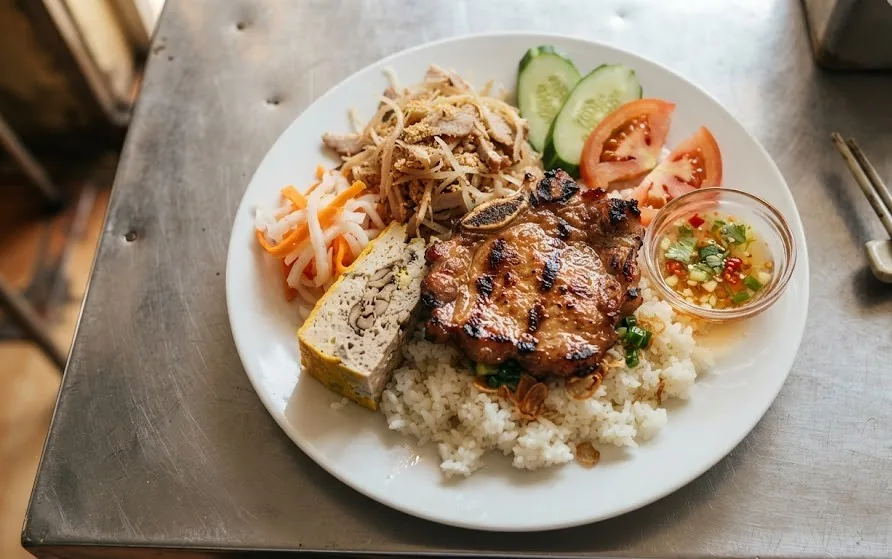
A perfect Da Nang Com Tam plate is a carefully balanced composition of fluffy broken rice, savory proteins, and bright, pickled accompaniments.
The Foundation: Broken Rice (Tam) – Why It’s Not Just “Cheap” Rice Anymore
Historically, broken rice was an affordable byproduct of rice milling—the grains that fractured during processing. Today, it is considered a specialty. The broken grains cook more rapidly and absorb flavors more readily than whole grains, making them an ideal base for rich toppings. In Da Nang, the rice is steamed to achieve a perfect fluffiness, with each grain distinct and ready to be coated in savory fish sauce.
The Protein Lineup: Grilled Pork Chop (Suon), Shredded Pork Skin (Bi), and Egg Meatloaf (Cha)
The protein components are central to the dish, and a classic Da Nang plate typically features a combination of three elements:
- Suon (Grilled Pork Chop): This is the centerpiece. A thin, marinated pork chop is grilled over hot charcoal until slightly charred and smoky. In Da Nang, the marinade is savory with a strong fish sauce and lemongrass base.
- Bi (Shredded Pork Skin): Thinly shredded pork skin, mixed with roasted rice powder for a nutty flavor and a slightly chewy texture. It adds a unique, savory crunch to each bite.
- Cha (Egg Meatloaf): A steamed, omelet-like meatloaf made from ground pork, eggs, and wood ear mushrooms. It is light, fluffy, and contributes a soft, savory element to the plate.
The Accompaniments: Scallion Oil (Mo Hanh), Pickled Vegetables (Du Chua), and the Perfect Dipping Fish Sauce (Nuoc Mam)
These supporting elements are essential for the complete flavor experience:
- Mo Hanh (Scallion Oil): A generous drizzle of hot oil over chopped scallions. It imparts a rich, aromatic flavor and a silky texture that coats the rice and meat.
- Du Chua (Pickled Vegetables): Thinly sliced carrots and daikon radish, pickled in a sweet and sour vinegar solution. They provide a crucial acidic crunch that balances the richness of the pork.
- Nuoc Mam (Dipping Fish Sauce): This is the soul of the dish. Da Nang’s version is typically lighter, more savory, and less sweet than Saigon’s. It is a simple mixture of fish sauce, lime juice, sugar, garlic, and chili, with proportions being key to its taste.
Where to Find Da Nang’s Best Com Tam: 6 Must-Try Eateries
These six establishments represent the pinnacle of Da Nang’s Com Tam scene, from time-honored family recipes to contemporary, refined dining experiences.
1. Com Tam Sai Gon – My (Mai Thuc Lan): The Best Saigon-Style Com Tam in Ngu Hanh Son
If you eat com tam only once in Ngu Hanh Son, eat it here — Com Tam Sai Gon – My is the best Saigon-style broken rice in the district. While most Da Nang kitchens serve the lighter Central-coast plate described above, this one sticks to the southern original: charcoal-grilled suon, shredded pork skin (bi) and steamed egg meatloaf (cha) piled onto the same plate, with the sweeter, rounder Saigon-style nuoc mam poured over the rice rather than served on the side. That makes it the obvious stop for anyone based around My Khe, Non Nuoc or the Marble Mountains who wants the real Saigon version without crossing the river into Hai Chau. Lunch is when the full spread is out. Address: 100 Mai Thúc Lân, Ngu Hanh Son, Da Nang — view on Google Maps.
2. Com Tam Ba Luan (Nguyen Chi Thanh) – The Local Favorite for Grilled Pork
This eatery is celebrated for its exceptionally thick, charcoal-grilled pork chop. The meat is remarkably tender and deeply flavorful, attributed to a secret family marinade. The rice is perfectly fluffy, and the service is notably swift. It offers a straightforward, authentic local experience. Address: 83 Nguyen Chi Thanh, Hai Chau. Price: 35,000 – 45,000 VND.
3. Com Tam Ba Phien (Hoang Dieu) – A Legendary Family Recipe
Ba Phien is a well-established name in Da Nang. Their specialty lies in the perfectly balanced nuoc mam and exceptionally tender suon. The lunchtime queues are a testament to its popularity. Address: 223 Hoang Dieu, Hai Chau. Price: 35,000 – 50,000 VND.
4. Com Tam Co Tam (Le Duan) – Best for Late-Night Cravings
Operating until late, this is a preferred destination for a post-evening meal or a late dinner. The portions are substantial, and the grilled pork boasts a fantastic smoky char from the constantly fired charcoal grill. Address: 74 Le Duan, Hai Chau. Price: 30,000 – 40,000 VND.
5. Com Tam Moc (Nguyen Van Thoai) – The Modern, Clean-Line Experience
For those who prefer a cleaner, more contemporary setting, Com Tam Moc provides a refined experience. The presentation is more elegant, the ingredients are of high quality, and the atmosphere is air-conditioned and comfortable. Address: 8 Nguyen Van Thoai, Son Tra. Price: 40,000 – 55,000 VND.
6. Com Tam Ba Phien 2 (Ha Huy Tap) – The Spinoff That Perfected the Formula
As a successful offshoot of the original Ba Phien, this location has refined the established formula, consistently delivering an excellent product. The bi and cha are particularly well-executed here, and the dining area is somewhat more spacious. Address: 100 Ha Huy Tap, Thanh Khe. Price: 35,000 – 45,000 VND.
How to Order and Eat Com Tam Like a Local in Da Nang
Mastering the menu and the eating ritual is essential for fully appreciating the Com Tam experience.
Decoding the Menu: “Com Tam Suon,” “Com Tam Bi,” “Com Tam Suon Bi Cha” – What’s the Difference?
Menus can appear complex. Here is a straightforward explanation:
- Com Tam Suon: Broken rice with a grilled pork chop.
- Com Tam Bi: Broken rice with shredded pork skin.
- Com Tam Cha: Broken rice with egg meatloaf.
- Com Tam Suon Bi Cha: The complete offering: broken rice with grilled pork chop, shredded pork skin, and egg meatloaf. This is the most commonly ordered combination.
The Art of Customization: Asking for Extra Scallion Oil, a Fried Egg (Op La), or More Pickles
Feel free to customize your plate. Locals frequently add a fried egg (op la) for added richness. You can also request additional mo hanh (scallion oil) or du chua (pickles). A simple request like “Cho toi mot dia com tam suon bi cha, them mot cai trung op la” (Give me a plate of com tam suon bi cha, with an extra fried egg) demonstrates familiarity.
The Proper Eating Ritual: Mixing, Dipping, and the Perfect Bite
The method of eating is as integral to the experience as the food itself. Begin by drizzling the nuoc mam over the rice. Then, use your chopsticks and spoon to combine all the elements—rice, meat, pickles, and scallion oil. This ensures a balanced flavor in every mouthful. Subsequently, take a piece of pork, dip it in the remaining fish sauce, and enjoy it with a spoonful of the mixed rice.
What to Drink and What to Eat After Your Com Tam in Da Nang
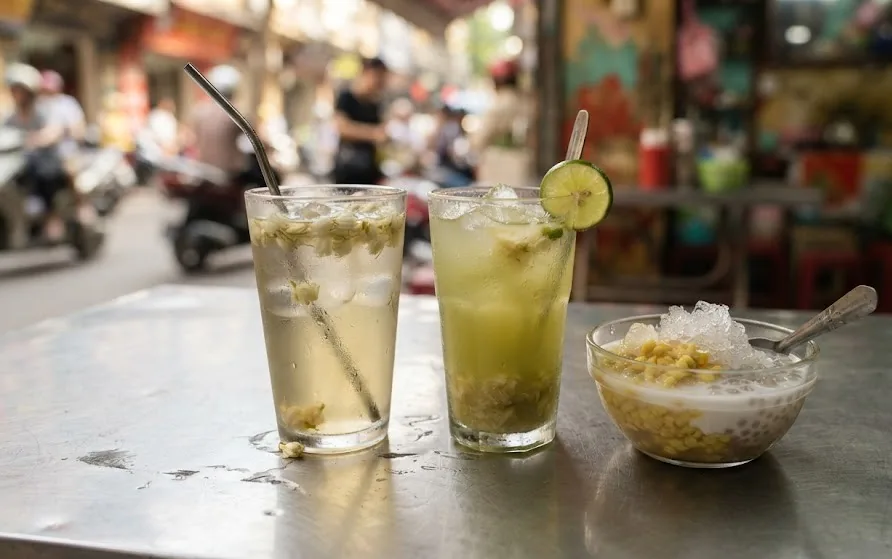
A cold, refreshing beverage serves as an ideal complement to the savory richness of Com Tam.
The Perfect Pairing: Iced Jasmine Tea (Tra Da) or a Sugarcane Juice (Nuoc Mia)
The traditional accompaniment is a glass of iced jasmine tea (tra da). It is often provided free of charge at most stalls and its subtle bitterness helps cleanse the palate between bites. For a sweeter option, a freshly pressed sugarcane juice (nuoc mia) is exceptionally refreshing and effectively cuts through the savory flavors. Seek out a nuoc mia vendor near your chosen eatery.
A Sweet Finish: Local Da Nang Desserts to Try After a Savory Meal
Following a substantial plate of Com Tam, a light dessert provides a pleasant conclusion. Consider trying a bowl of che (Vietnamese sweet soup) from a local vendor. Popular choices include che ba mau (three-color dessert) or che khoai mon (taro sweet soup).
Key Tips for the Best Com Tam Experience in Da Nang
These practical recommendations will assist you in identifying superior stalls and enjoying an optimal plate each time.
- Timing is Crucial: Visit during lunch hours (11:00 AM – 1:00 PM) for the freshest rice and grilled pork, or in the late afternoon (4:00 PM – 6:00 PM) to experience the best charcoal-grilled flavor.
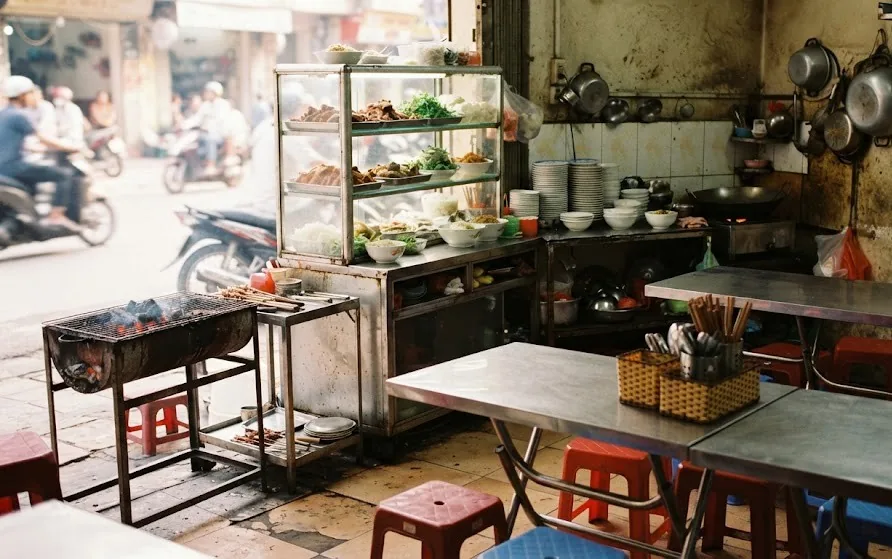
- Look for the Smoke: An excellent Com Tam stall is easily identifiable. Observe for a visible plume of smoke emanating from a charcoal grill on the sidewalk, indicating freshly grilled, smoky pork.
- Price Verification: A standard plate of Com Tam Suon Bi Cha in Da Nang should range between 30,000 and 50,000 VND. Exercise caution with prices significantly higher in areas frequented by tourists.
- Observe the Queue: A line of local patrons is generally a positive indicator. The busiest stalls are typically the most reputable.
- Embrace the Herbs: Incorporate the fresh herbs into your meal. They are not merely decorative but are an integral component of the Da Nang flavor profile.
Related on this site
- Da Nang’s Must-Try Chao: Comforting Rice Porridge Varieties 2026
- Da Nang’s Best Xoi: Sticky Rice Delights for Every Meal 2026
- Da Nang’s Best Banh Trot: Savory Rice Dumplings Explored
- Cooking classes in Da Nang
Frequently Asked Questions
Is Com Tam gluten-free?
Broken rice is naturally gluten-free. However, the pork marinade and fish sauce may contain soy sauce, which often includes wheat. For certainty, inquire if the marinade uses gluten-free fish sauce.
What’s the best time to eat Com Tam in Da Nang?
Com Tam is predominantly consumed as a breakfast and lunch meal. Most stalls operate from 6:00 AM to 1:00 PM, although certain popular establishments, such as Com Tam Co Tam, remain open into the late evening.
Can I find vegetarian Com Tam in Da Nang?
While the traditional dish is meat-centric, some stalls offer a vegetarian variant featuring tofu, vegetables, and the characteristic broken rice and accompaniments. You can request “com tam chay” (vegetarian broken rice).
How do I order Com Tam in Vietnamese?
A standard order is “Cho toi mot dia com tam suon bi cha” (Give me one plate of com tam with pork chop, shredded skin, and egg meatloaf). You can add “them mot cai trung op la” (with an extra fried egg).
What is the difference between Com Tam and regular rice?
Com Tam utilizes broken rice grains, which are fragments of whole grains. They cook more quickly, possess a fluffier texture, and absorb sauces more effectively than standard long-grain rice.
Is Com Tam a breakfast or lunch dish?
In Da Nang, Com Tam is most commonly enjoyed as a substantial breakfast or a quick, satisfying lunch. It is a staple for workers and students.
What’s the best way to eat Com Tam to avoid a mess?
Utilize a spoon in your dominant hand and chopsticks in the other. Use the chopsticks to guide food onto the spoon, then consume from the spoon. This method is efficient and minimizes mess.
Conclusion
Da Nang’s Com Tam represents a culinary expression of the city’s coastal identity. The lighter, more savory fish sauce, the fluffier rice, and the abundance of fresh herbs contribute to a version of this classic dish that is distinctly its own. Your next step is to visit one of the six recommended eateries, order a com tam suon bi cha with a fried egg, and experience the perfect bite. Remember to pair it with a glass of tra da and mix all the components before you begin eating.
Part of our guide to what to eat in Da Nang.