Da Nang’s Must-Try Chao: Comforting Rice Porridge Varieties 2026 isn’t just about finding a warm bowl of congee. It’s about discovering how a single dish transforms into six distinct experiences, each reflecting the city’s coastal soul and central Vietnamese culinary identity. From the silky chicken porridge at a Han Market street stall to the briny clam porridge found near An Bang Beach, this guide breaks down every must-try variety, the best spots to find them, and how to order like a local in 2026.
Chao in Da Nang is a category, not a single dish. Six distinct varieties dominate the city’s food scene in 2026: chicken, duck, shrimp, fish, beef, and clam. Each relies on a different broth base and topping combination, from crispy fried dough sticks with duck porridge to fresh dill in fish porridge. The key difference from Hanoi or Saigon versions is the intensity of the central Vietnamese flavor profile — more salt, more pepper, and a heavier reliance on fresh herbs over pickled vegetables. Knowing which variety to order and when to visit a stall separates a tourist meal from an authentic local experience.
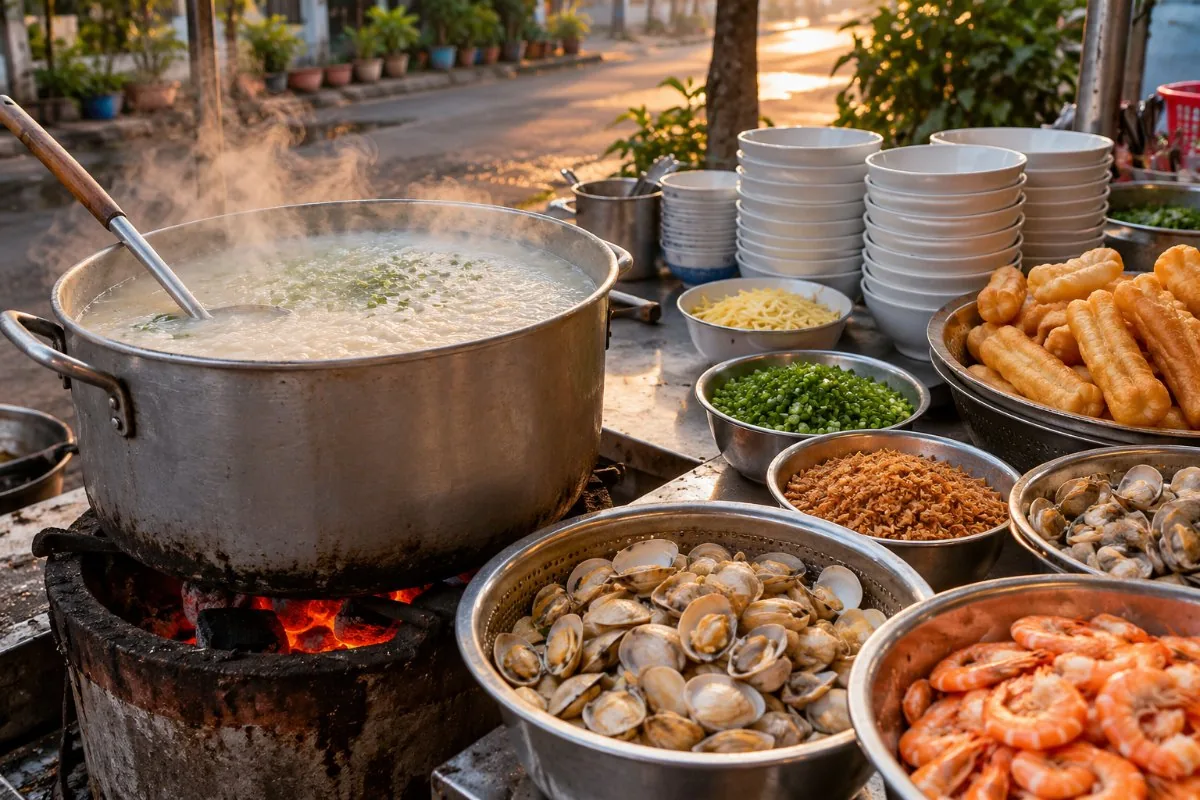
What Makes Da Nang’s Chao Unique in 2026?
Da Nang-style chao stands apart because of its bold, savory broth and herb-forward toppings, a direct result of the city’s central Vietnamese location. Unlike the milder, more neutral porridge found in Hanoi or the sweeter versions popular in Saigon, Da Nang’s chao is built on a foundation of intense umami. The broth is typically simmered for hours with roasted bones, dried shrimp, or seafood shells, creating a deeply savory base that doesn’t need heavy seasoning adjustments at the table.
The Central Vietnamese Flavor Profile: More Than Just Plain Congee
Central Vietnamese cuisine is known for its assertive use of salt, spice, and fresh herbs, and chao is no exception. A bowl of Da Nang chao is rarely plain. It arrives topped with a generous amount of fresh herbs — sawtooth herb, mint, cilantro, and dill — along with a side of sliced chili and a wedge of lime. The broth itself is often seasoned with fish sauce and white pepper during cooking, not just added at the end. This approach creates a layered flavor profile that makes each spoonful distinct, rather than relying solely on condiments to add taste.
Key Ingredients That Define Da Nang-Style Rice Porridge
The rice-to-water ratio in Da Nang chao leans toward a thicker, more substantial consistency compared to the thinner, soup-like porridge of northern Vietnam. Key ingredients include high-quality fish sauce from Phu Quoc, fresh turmeric for color in some varieties, and roasted rice for a nutty aroma. The use of “quay” — crispy fried dough sticks — is almost universal, providing a textural counterpoint to the silky porridge. Pickled garlic and chili, rather than the pickled cabbage common in Hanoi, are the standard accompaniments.
How Da Nang’s Chao Differs from Hanoi or Saigon Variations
The table below highlights the key regional differences that make Da Nang’s chao a unique experience compared to its northern and southern counterparts.
| Feature | Da Nang (Central) | Hanoi (North) | Saigon (South) |
|---|---|---|---|
| Broth Base | Roasted bones, dried seafood, intense umami | Chicken or pork bones, lighter, more neutral | Pork bones, sweeter, often with coconut water |
| Toppings | Fresh herbs (dill, mint, sawtooth), fried dough sticks | Pickled vegetables, fried shallots, pork floss | Fresh herbs, bean sprouts, fried garlic |
| Consistency | Thick, substantial, almost stew-like | Thinner, soup-like, more liquid | Medium consistency, often with mung beans |
| Key Seasonings | Fish sauce, white pepper, fresh turmeric | Fish sauce, black pepper, shrimp paste | Sugar, coconut milk, tamarind |
| Typical Accompaniments | Pickled garlic and chili, lime, fresh chili slices | Pickled cabbage, green chili, shrimp paste | Sweet chili sauce, hoisin sauce, lime |
1. Chao Ga (Chicken Porridge) — The Universal Comfort Bowl
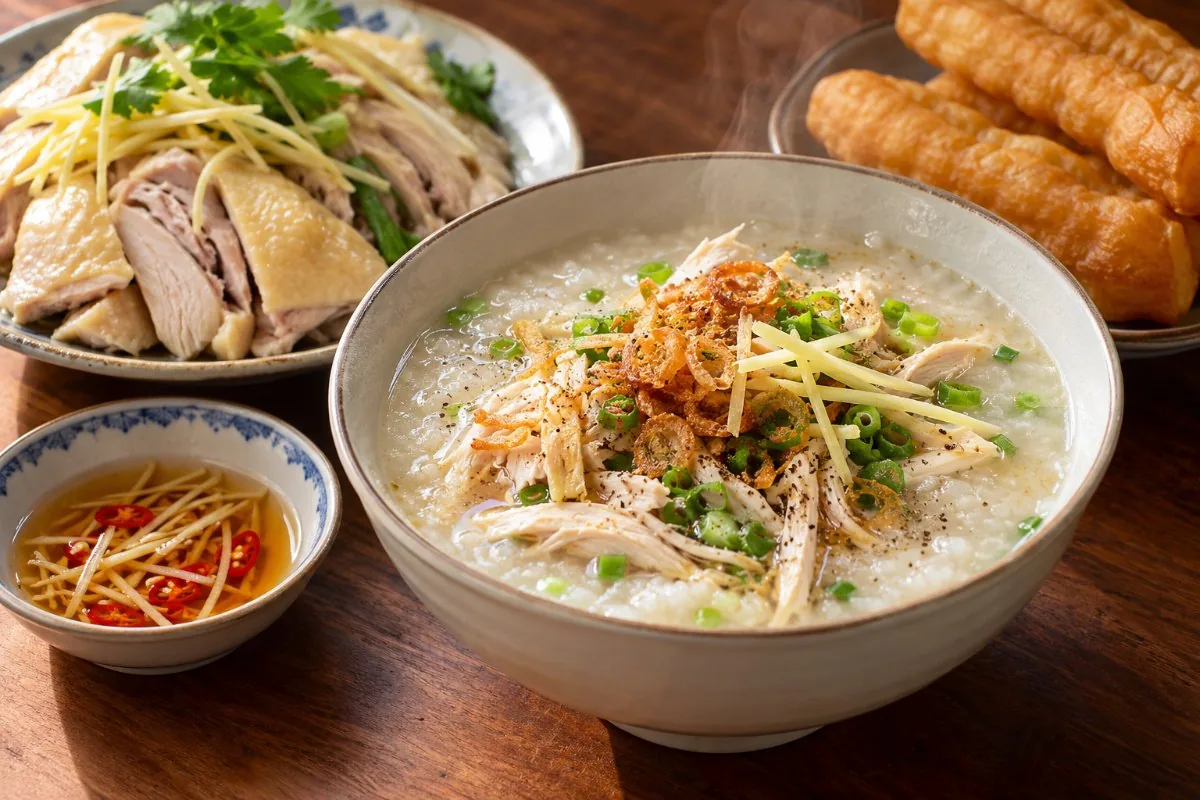
Chao ga is the entry point for most visitors, offering a familiar protein in a distinctly Da Nang style that balances rich broth with fresh, aromatic toppings. The chicken is poached whole, then shredded by hand, ensuring each piece remains moist and tender. The key to Da Nang’s version is the ginger-scallion oil that gets drizzled over the top just before serving, adding a sharp, fragrant kick that cuts through the richness of the broth.
Where to Find the Best Chao Ga in Da Nang: Street Stalls vs. Restaurants
For the most authentic experience, head to the street stalls that line the sidewalks near Han Market in the early morning. These stalls, often operating from 6:00 AM to 10:00 AM, offer a bowl of chao ga for around 30,000 to 40,000 VND. The broth here is typically richer because the pots are small and the turnover is high, meaning the bones are simmered continuously.
Restaurant versions, like those at Quan Com Hue on Nguyen Chi Thanh Street, offer a slightly cleaner presentation and a wider range of toppings, including fried shallots and Vietnamese sausage, but at a higher price point of 50,000 to 70,000 VND.
The Anatomy of a Perfect Bowl: Shredded Chicken, Ginger, and Scallion Oil
A perfect bowl of Da Nang chao ga starts with a thick, creamy porridge made from jasmine rice that has been broken during cooking to release its starch. The shredded chicken is mixed into the hot porridge just before serving, so it warms through without becoming dry. The ginger-scallion oil — made by pouring hot oil over finely minced ginger and scallions — is the defining element. It adds a bright, almost citrusy note that complements the chicken without overpowering it. A final sprinkle of white pepper and a few drops of fish sauce complete the bowl.
2. Chao Vit (Duck Porridge) — A Da Nang Specialty with a Crunchy Twist
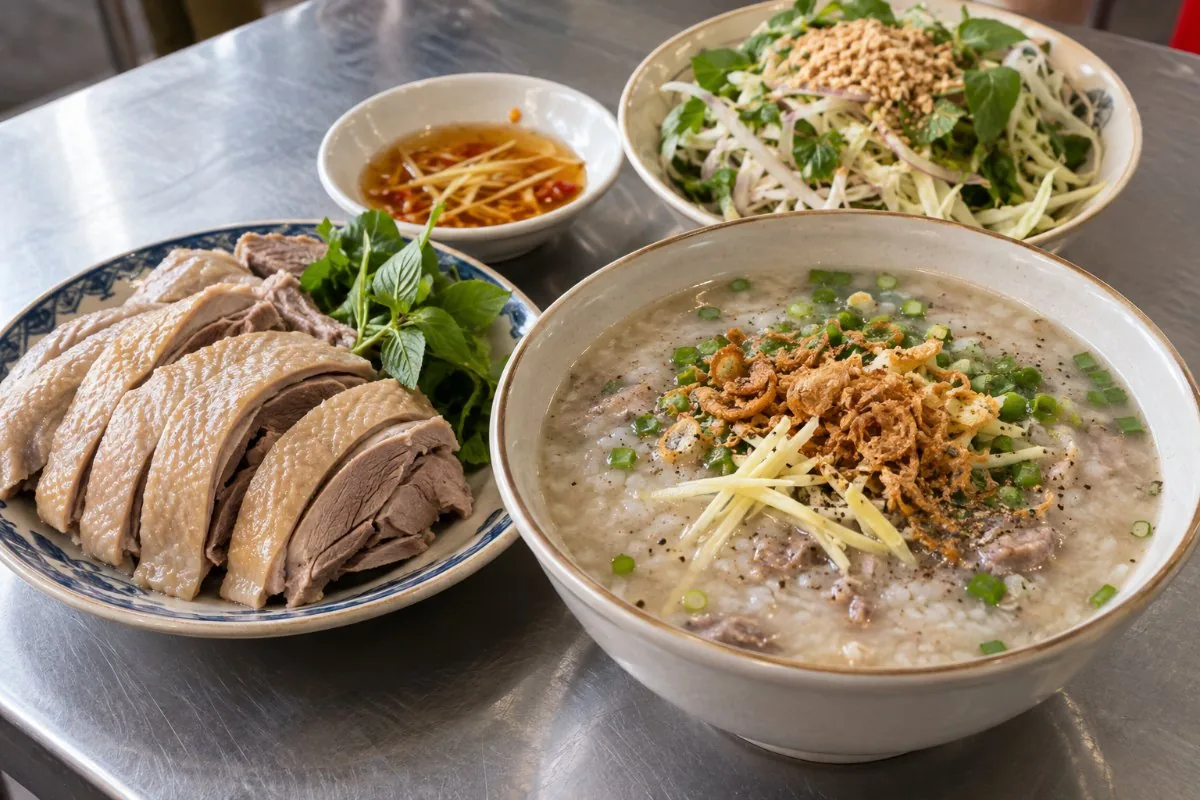
Chao vit is a local breakfast staple that showcases Da Nang’s love for textural contrast, pairing silky porridge with crispy fried dough sticks and pungent pickled garlic. The duck meat is typically braised or roasted before being shredded and added to the porridge, giving it a deeper, richer flavor than chicken. The broth is often darker and more savory, thanks to the addition of roasted duck bones and a touch of five-spice powder.
Why Duck Porridge is a Local Breakfast Staple in Da Nang
Duck porridge is particularly popular during the cooler months in Da Nang, from October to February, when the city experiences its rainy season. The rich, warming broth is considered a natural remedy for colds and fatigue. Locals often start their day with a bowl of chao vit at a stall near the Son Tra night market, where the combination of hot porridge and cool morning air creates a comforting ritual. The duck fat that renders into the broth adds a layer of richness that chicken porridge can’t match.
The Essential Accompaniments: Quay (Fried Dough Sticks) and Pickled Garlic
The experience of eating chao vit is defined by its accompaniments. Crispy “quay” — fried dough sticks — are broken into pieces and dipped into the porridge, softening slightly while retaining a satisfying crunch. The pickled garlic, which is sweet and tangy rather than spicy, provides a sharp contrast that cuts through the richness of the duck broth. Some stalls also offer a side of fresh herbs, including cilantro and mint, which add a fresh, clean note. A squeeze of lime and a dash of white pepper are the final touches.
3. Chao Tom (Shrimp Porridge) — Coastal Freshness in a Bowl
Da Nang’s coastal location means the shrimp used in chao tom are often caught the same morning, resulting in a sweetness that dried or frozen shrimp simply can’t replicate. The porridge itself is often infused with the shells of the shrimp, which are simmered in the broth to extract maximum flavor before being strained out. This technique creates a delicate, briny base that pairs perfectly with the natural sweetness of the fresh shrimp.
How Da Nang’s Coastal Location Elevates Seafood Chao
The proximity to the sea gives Da Nang an advantage over inland cities when it comes to seafood-based chao. The shrimp used in chao tom are typically from the waters off the Son Tra Peninsula, where the cold currents produce smaller, sweeter shrimp than those found in the warmer waters of the Mekong Delta. Many stalls near the My Khe Beach area source their shrimp directly from the Tho Quang fishing port, which opens at 4:00 AM. This direct supply chain means the shrimp are often still alive when they reach the kitchen.
Topping Variations: Fresh Shrimp, Dried Shrimp Floss, and White Pepper
The toppings for chao tom are simple but deliberate, designed to highlight the shrimp’s natural flavor rather than mask it.
- Fresh Shrimp: Whole, peeled shrimp are added to the porridge just before serving, cooking in the residual heat. They remain plump and juicy.
- Dried Shrimp Floss: A sprinkling of finely shredded, dried shrimp adds a concentrated burst of umami and a slightly chewy texture.
- White Pepper: Freshly ground white pepper is essential, adding a floral heat that complements the shrimp’s sweetness.
- Scallions and Cilantro: A generous handful of chopped scallions and cilantro adds freshness and color.
- Fried Shallots: Crispy fried shallots provide a savory crunch that contrasts with the soft porridge.
4. Chao Ca (Fish Porridge) — A Lighter, Broth-Forward Option
Chao ca is the lightest of Da Nang’s porridge varieties, focusing on a clear, fragrant fish broth that is both nourishing and refreshing. Unlike the heavier duck or beef versions, this bowl is designed to be eaten as a mid-morning snack or a light dinner. The fish is typically steamed or poached separately to preserve its delicate texture, then added to the porridge just before serving.
Best Fish Varieties Used in Da Nang’s Chao Ca
Snakehead fish (ca loc) is the most common choice for chao ca in Da Nang, prized for its firm, white flesh and mild flavor. Mackerel (ca thu) is another popular option, especially in stalls near the coast, as its higher fat content adds richness to the broth. Some specialty stalls use red snapper or sea bass, which offer a sweeter, more delicate flavor. The fish is typically filleted and deboned before being cooked, ensuring a clean eating experience without the risk of bones.
How to Eat Chao Ca Like a Local: Dill, Dill, and More Dill
The defining herb for chao ca is dill, which is used in generous quantities. Locals will add a handful of fresh dill to their bowl, stirring it into the hot porridge until it wilts. The anise-like flavor of the dill complements the fish without overpowering it. A squeeze of lime and a few slices of fresh chili are also standard. The porridge itself is often thinner than other varieties, allowing the broth to take center stage. Some stalls also offer a side of fresh rice noodles (banh pho) to add to the bowl for extra substance.
5. Chao Bo (Beef Porridge) — Hearty and Protein-Packed
Chao bo is the most substantial of Da Nang’s porridge options, built on a slow-simmered beef bone broth that is rich, gelatinous, and deeply savory. This is the bowl you order when you need a meal that will keep you full for hours. The beef is typically used in two ways: the bones are simmered for the broth, and the meat is either shredded or served as rare slices that cook in the hot porridge.
The Role of Beef Bones in Creating a Rich, Savory Broth
The foundation of a great chao bo is the bone broth. Beef knuckles and marrow bones are roasted before being simmered for at least four hours with charred onion, ginger, and a touch of fish sauce. The roasting process caramelizes the natural sugars in the bones, adding a deep, almost smoky flavor to the broth. The resulting liquid is thick and gelatinous, coating the spoon with a silky texture that carries the flavor of the beef into every grain of rice.
Toppings That Make a Difference: Rare Beef Slices, Fresh Herbs, and Lime
The toppings for chao bo are designed to add freshness and texture to the rich broth. Thinly sliced rare beef is placed on top of the hot porridge, where it cooks gently in the residual heat, remaining tender and pink in the center. A handful of fresh herbs — including cilantro, mint, and sawtooth herb — adds a bright, clean note. A generous squeeze of lime juice cuts through the richness of the broth, while a sprinkle of black pepper adds a final layer of warmth.
6. Chao Ngheu (Clam Porridge) — A Central Coast Treasure
Chao ngheu is a specialty of the central coast, with Da Nang and nearby Hoi An sharing a tradition that relies on the small, sweet clams found in the region’s sandy beaches and estuaries. This porridge is lighter than the beef or duck versions, but the briny, oceanic flavor of the clams makes it incredibly satisfying. The clams are typically steamed open, and both the meat and the steaming liquid are used to flavor the porridge.
Why Clam Porridge is a Must-Try for Seafood Lovers
For seafood enthusiasts, chao ngheu offers a pure, unadulterated taste of the ocean. The clams used are small — about the size of a fingernail — and incredibly sweet. The porridge is often cooked with a small amount of mung bean, which adds a subtle creaminess without masking the clam flavor. The broth is seasoned simply with fish sauce and white pepper, allowing the natural taste of the clams to shine. A bowl of chao ngheu is often served with a side of fresh herbs and a wedge of lime.
The Da Nang-Hoi An Connection: Shared Clam Porridge Traditions
The clam porridge tradition is shared between Da Nang and Hoi An, with An Bang Beach in Hoi An being a particularly famous hub. According to local food tours and day trip operators, the clams used in both cities are often harvested from the same coastal areas, including the estuaries near the Marble Mountains. The preparation methods are nearly identical, though Da Nang versions tend to be slightly thicker and more heavily seasoned with white pepper.
Many visitors who take a day trip from Da Nang to Hoi An make a point of stopping at An Bang Beach for a bowl of chao ngheu, making it a shared culinary experience that connects the two destinations.
Key Tips for Ordering Chao Like a Local in Da Nang
Ordering chao in Da Nang requires a few key phrases and an understanding of stall etiquette to ensure you get the freshest bowl possible. The process is straightforward once you know what to say and when to go. Most stalls operate on a first-come, first-served basis, with no formal menu or ordering system.
Navigating a Chao Stall: How to Communicate Your Order
When you approach a stall, simply say “Mot to chao ga” (one bowl of chicken porridge) or “Mot to chao vit” (one bowl of duck porridge). The stall owner will ask if you want it “voi long” (with innards) or “khong long” (without innards), especially for duck and beef porridge. If you want extra toppings, say “Them quay” (add fried dough sticks) or “Them trung” (add an egg). Most stall owners understand basic English, but using these phrases will earn you a smile and ensure you get exactly what you want.
Timing is Everything: Best Hours for the Freshest Chao
The best time to eat chao in Da Nang is between 6:00 AM and 9:00 AM, when the broth has been simmering overnight and is at its most flavorful. By 10:00 AM, many stalls have sold out of their most popular varieties, especially chao vit and chao ngheu. Evening stalls near the Son Tra night market start serving at around 6:00 PM and continue until midnight, but the broth is typically not as rich as the morning versions.
Customization 101: Adjusting Salt, Pepper, and Herbs to Your Taste
Each stall will have a condiment tray with fish sauce, white pepper, fresh chili slices, lime wedges, and pickled garlic. Start with a small amount of fish sauce and white pepper, then adjust to taste. Add the fresh herbs in generous handfuls — they are meant to be eaten, not just used as garnish. If the porridge is too thick, ask for “them nuoc” (more broth). If it’s too thin, ask for “them chao” (more porridge solids).
Related on this site
- Da Nang’s Must-Try Com Tam: A Guide to Delicious Broken Rice
- Da Nang’s Must-Visit Museums: Art, History, and Culture 2026
Chao is one of two classic Vietnamese breakfasts you can eat one-handed; the other is covered in our guide to the best banh bao in Da Nang.
Frequently Asked Questions
What is the difference between chao and regular congee?
Chao is the Vietnamese term for rice porridge, which is essentially the same as Chinese-style congee. However, Da Nang-style chao is typically thicker and more heavily seasoned with fish sauce and white pepper than congee found in other Asian cuisines.
Is chao in Da Nang spicy?
Da Nang chao is not inherently spicy, but it is often served with fresh chili slices and white pepper. The heat level is customizable, and you can choose to add as much or as little chili as you like.
What is the average price of a bowl of chao in Da Nang in 2026?
A bowl of chao at a street stall typically costs between 30,000 and 50,000 VND (approximately $1.20 to $2.00 USD). Restaurant versions are slightly more expensive, ranging from 50,000 to 80,000 VND.
Can I find vegetarian chao in Da Nang?
While most chao varieties are meat or seafood-based, some stalls offer “chao chay” (vegetarian porridge) made with vegetable broth and tofu. These are less common but can be found near Buddhist temples or in dedicated vegetarian restaurants.
What is the best chao for first-time visitors?
Chao ga (chicken porridge) is the safest choice for first-time visitors, as the flavor is familiar and the protein is mild. It’s a great introduction to the Da Nang style before moving on to more adventurous options like duck or clam porridge.
Are there any food tours that focus on chao in Da Nang?
Yes, several local food tour operators offer morning walking tours that focus on breakfast dishes, including chao. These tours typically visit 3-4 stalls in the city center and provide context on the history and preparation of each dish.
Conclusion
Da Nang’s chao scene in 2026 offers a nuanced exploration of a single dish through six distinct varieties, each tied to the city’s coastal geography and central Vietnamese culinary traditions. From the familiar comfort of chicken porridge to the briny depth of clam porridge, each bowl tells a story about the ingredients, the people, and the place. The key to experiencing it like a local is to visit the street stalls in the early morning, use the right phrases when ordering, and embrace the fresh herbs and condiments that define the Da Nang style.
Start with a bowl of chao ga near Han Market, then work your way through the list.
Part of our guide to what to eat in Da Nang.