Da Nang’s Best Xoi: Sticky Rice Delights for Every Meal 2026 is more than a list of street food stalls—it’s a guide to a culinary tradition that fuels the city from dawn until after midnight. From the breakfast champion Xoi Ga to the late-night snack Xoi Ngheo, Da Nang’s xoi scene in 2026 offers a unique blend of coastal ingredients, local innovation, and timeless techniques that you won’t find anywhere else in Vietnam.
Da Nang’s xoi scene in 2026 is defined by two forces: its coastal location, which brings fresh seafood toppings like shrimp and squid, and the influence of the 2026 Ngoc Linh Ginseng and International Medicinal Herbs Festival, which has inspired ginseng-infused sticky rice variations. Unlike Hanoi or Hoi An, Da Nang’s xoi stalls prioritize savory, all-day meals over sweet versions, with a price range of 15,000 to 40,000 VND per bowl. This guide covers the five essential types of xoi, a 4-step method for choosing the best stall, and local tips for ordering like a true Danangian.
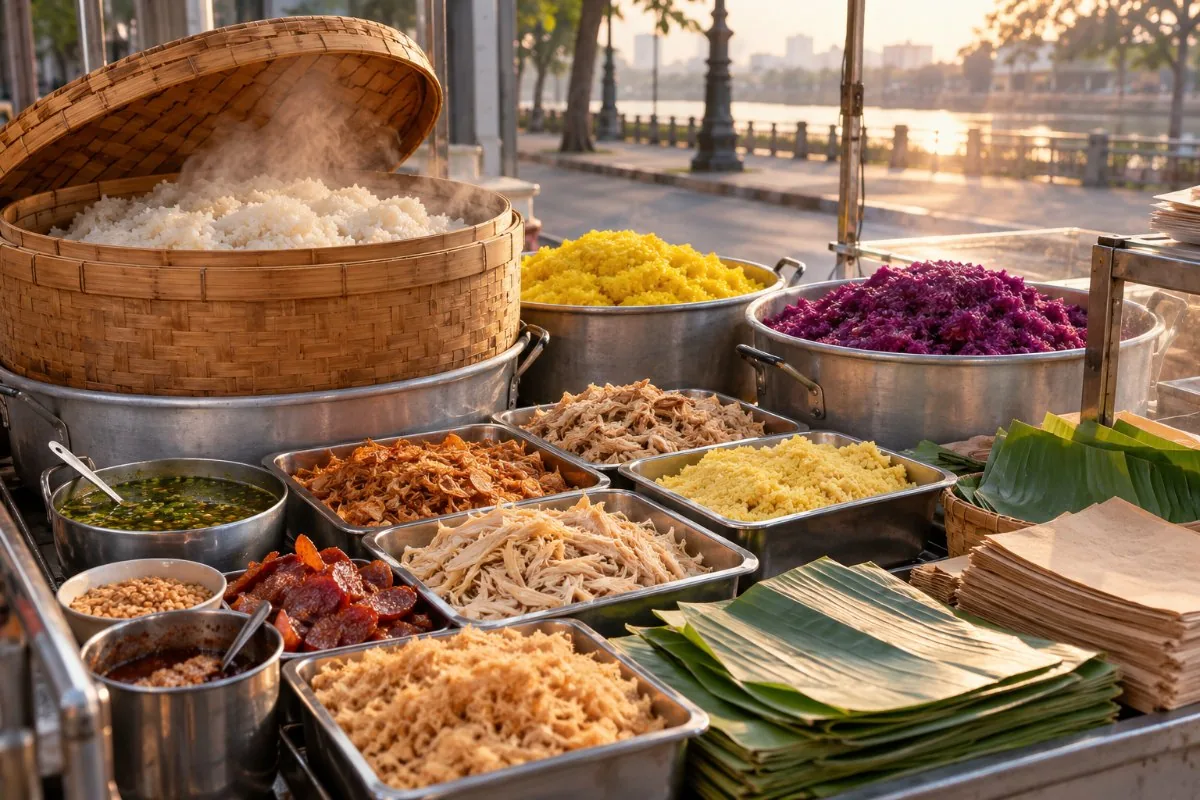
What Makes Da Nang’s Xoi Scene Unique in 2026?
Da Nang’s xoi scene stands apart because of its coastal influence and the city’s openness to culinary experimentation in 2026. Unlike the sticky rice in Hanoi, which leans heavily on mung bean and coconut-based sweet toppings, or Hoi An’s more tourist-oriented versions, Da Nang’s xoi is built around the sea and the soil of central Vietnam.
Da Nang’s coastal location and its influence on sticky rice toppings
The city’s position on the South China Sea means that fresh seafood isn’t just a restaurant dish—it’s a street food topping. You’ll find xoi stalls near the Han River or along Bach Dang Street offering sticky rice topped with stir-fried shrimp, squid, or even small anchovies. These seafood toppings are often seasoned with a simple mix of fish sauce, pepper, and scallion oil, letting the natural sweetness of the ocean shine through. The result is a xoi that feels lighter and more briny than the heavier, meat-focused versions found inland.
How the 2026 Ngoc Linh Ginseng and International Medicinal Herbs Festival is shaping new xoi variations
Da Nang hosted the 2026 Ngoc Linh Ginseng and International Medicinal Herbs Festival, and its impact is visible on the city’s breakfast carts. Several stalls near the festival grounds and along Hoang Dieu Street have started offering “Xoi Sam” (ginseng sticky rice), where the glutinous rice is cooked with a small amount of Ngoc Linh ginseng extract. The rice takes on a pale, earthy hue and a subtle, slightly bitter undertone that balances the savory toppings. It’s a 2026-specific trend that adds a health-conscious twist to a classic dish, appealing to both local wellness seekers and curious tourists.
How to Choose the Best Xoi Stall in Da Nang: A 4-Step Guide
Finding the best xoi in Da Nang isn’t about following a map—it’s about reading the stall itself. Here’s a four-step method that works every time, whether you’re on Nguyen Chi Thanh Street or near My Khe Beach.
Step 1: Look for high turnover and fresh ingredients
A good xoi stall has a constant stream of customers. If the vendor is scooping rice from a large pot that’s still steaming, and the toppings are sitting in open trays without a plastic lid, you’re in the right place. High turnover means the rice hasn’t been sitting out for hours. Look for stalls where the shredded chicken is still moist, the fried shallots are crisp, and the scallion oil is a vibrant green—not a dull, oxidized brown.
Step 2: Check the variety of toppings — classic vs. modern
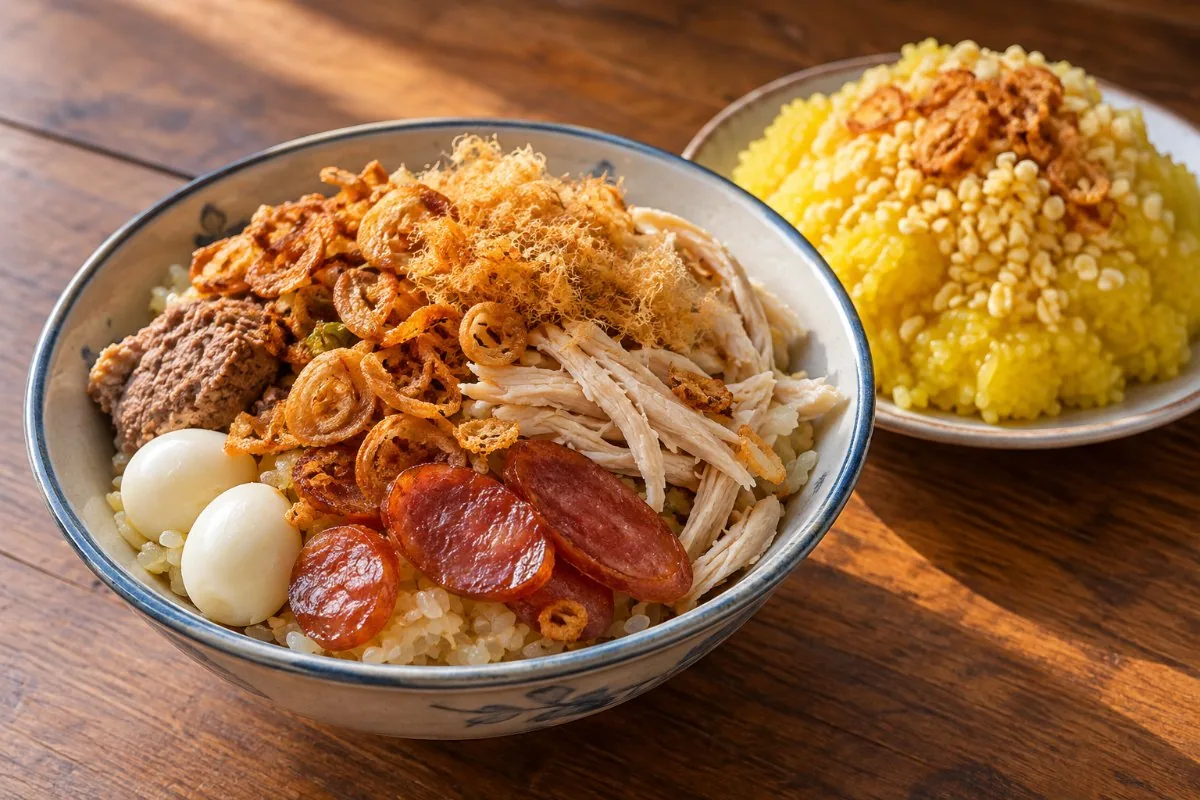
The best stalls offer a balance. A classic xoi man stall will have pate, cha lua (Vietnamese pork sausage), and dried shredded pork. A more modern stall might add options like grilled pork, fried eggs, or even the new ginseng-infused rice. If a stall only has two or three toppings, it’s likely a specialist—which can be great for that specific dish—but for a first-time visitor, look for a stall with at least five topping options to get a full taste of Da Nang’s xoi culture.
Step 3: Observe the locals — where they queue is where you eat
This is the golden rule of Vietnamese street food. If you see a line of motorbikes parked outside a small cart on Le Duan Street at 7 AM, get in line. Locals know which stalls use fresh ingredients and which ones cut corners. Don’t be fooled by a clean, modern setup—some of the best xoi in Da Nang comes from a simple cart with a worn-out sign and a grandmother stirring a pot.
Step 4: Ask about the rice — “nếp cái hoa vàng” is the gold standard
The quality of the sticky rice itself is the foundation of any xoi dish. Ask the vendor, “Nếp gì đây?” (What kind of sticky rice is this?). If they say “nếp cái hoa vàng,” you’ve hit the jackpot. This variety, known for its large, pearlescent grains and naturally sweet flavor, is the gold standard for sticky rice in northern and central Vietnam. It cooks up fluffy and chewy, not mushy or clumpy. Stalls that use nếp cái hoa vàng are serious about their craft.
1. Xoi Ga (Chicken Sticky Rice) — The Breakfast Champion
Xoi Ga is the undisputed breakfast champion in Da Nang, fueling workers and students with a protein-packed start to the day. By 6:30 AM, the best stalls near Han Market are already serving their third batch of the morning. The dish is simple but satisfying: a bed of hot, fluffy sticky rice topped with shredded chicken that’s been poached in a light broth, then finished with a generous drizzle of scallion oil and a heap of crispy fried shallots.
Why Xoi Ga is the go-to morning meal for Da Nang workers
Da Nang’s workforce starts early, and Xoi Ga is the perfect fuel. The combination of carbohydrates from the rice and protein from the chicken provides sustained energy without the heaviness of a pork-based meal. It’s also fast—most stalls can assemble a bowl in under 30 seconds. You’ll see office workers, taxi drivers, and shopkeepers grabbing a plastic bag of Xoi Ga on their way to work, eating it one-handed while balancing a cup of coffee.
Key toppings: shredded chicken, fried shallots, and a drizzle of scallion oil
The magic of Xoi Ga lies in the toppings. The chicken is typically poached with ginger and a bit of salt, then hand-shredded into thin strips. The scallion oil—made by pouring hot oil over finely chopped scallions—adds a fragrant, slightly garlicky note. The fried shallots provide a crunchy texture that contrasts with the soft rice. Some stalls near the Da Nang Cathedral add a sprinkle of black pepper and a dash of soy sauce for extra depth. A good Xoi Ga bowl should have a balance of all these elements, with no single topping overwhelming the others.
2. Xoi Man (Savory Sticky Rice) — The All-Day Power Meal
Xoi Man is the most versatile sticky rice dish in Da Nang, serving as a breakfast, lunch, or dinner option that’s both filling and flavorful. Unlike Xoi Ga, which is a single-dish affair, Xoi Man is a customizable feast. You choose your toppings, and the vendor builds a bowl that’s uniquely yours.
The classic combo: pate, cha lua (Vietnamese pork sausage), and dried shredded pork
The holy trinity of Xoi Man toppings is pate, cha lua, and dried shredded pork. The pate is usually a coarse, pork-based liver pate that’s spread over the rice. The cha lua is sliced thin and laid on top, and the dried shredded pork (often called “ruốc” or “chà bông”) adds a salty, airy finish. This combination is rich, savory, and deeply satisfying. Stalls on Nguyen Chi Thanh Street are known for their house-made pate, which has a smoother texture and a more pronounced peppery flavor than the mass-produced versions.
How Da Nang stalls customize Xoi Man with local pickles and chili
What sets Da Nang’s Xoi Man apart is the customizations. Almost every stall offers a small plate of pickled vegetables—carrots, daikon, and sometimes young leeks—that have been fermented in a vinegar-sugar solution. The acidity cuts through the richness of the pate and pork. Many stalls also serve a bowl of “muối ớt” (salt with chili) for dipping the cha lua. Some vendors on Hoang Dieu Street have started adding a spoonful of pickled mustard greens, a nod to the central region’s love for fermented flavors.
3. Xoi Nghe (Turmeric Sticky Rice) — A Colorful Lunch Favorite
Xoi Nghe, or turmeric sticky rice, is a vibrant yellow dish that’s become a lunchtime favorite in Da Nang, thanks to its health benefits and striking color. The rice is cooked with fresh turmeric juice, giving it a golden hue and a mild, earthy flavor that pairs beautifully with grilled meats.
The health benefits of turmeric and why it’s popular in central Vietnam
Turmeric has been a staple in central Vietnamese cuisine for centuries, prized for its anti-inflammatory properties and its ability to aid digestion. In Da Nang, where the heat can be intense, locals believe that turmeric helps cool the body and prevent stomach issues. The compound curcumin, which gives turmeric its yellow color, is also thought to boost immunity. This makes Xoi Nghe a popular choice for lunch, when the sun is at its peak and people want a meal that’s both satisfying and gentle on the stomach.
Best pairings: grilled pork, fried eggs, and a side of cucumber
The most common pairing for Xoi Nghe is grilled pork—thinly sliced shoulder or belly that’s been marinated in fish sauce, sugar, and garlic, then charred over hot coals. The smoky, caramelized flavor of the pork contrasts with the mild turmeric rice. A fried egg with a runny yolk adds richness, while slices of fresh cucumber provide a cooling crunch. One of the best places to try this combination is a small stall near My Khe Beach, where the vendor grills the pork to order and serves it with a side of tangy dipping sauce made from fish sauce and lime.
4. Xoi Thit Kho (Sticky Rice with Braised Pork) — The Dinner Comfort Dish
Xoi Thit Kho is the ultimate comfort food in Da Nang, a dinner dish that combines tender, caramelized pork with sticky rice for a meal that feels like home. Unlike the lighter breakfast xoi, this version is rich, savory, and deeply satisfying—perfect after a long day of exploring the city.
How the braised pork is prepared — caramelized and tender
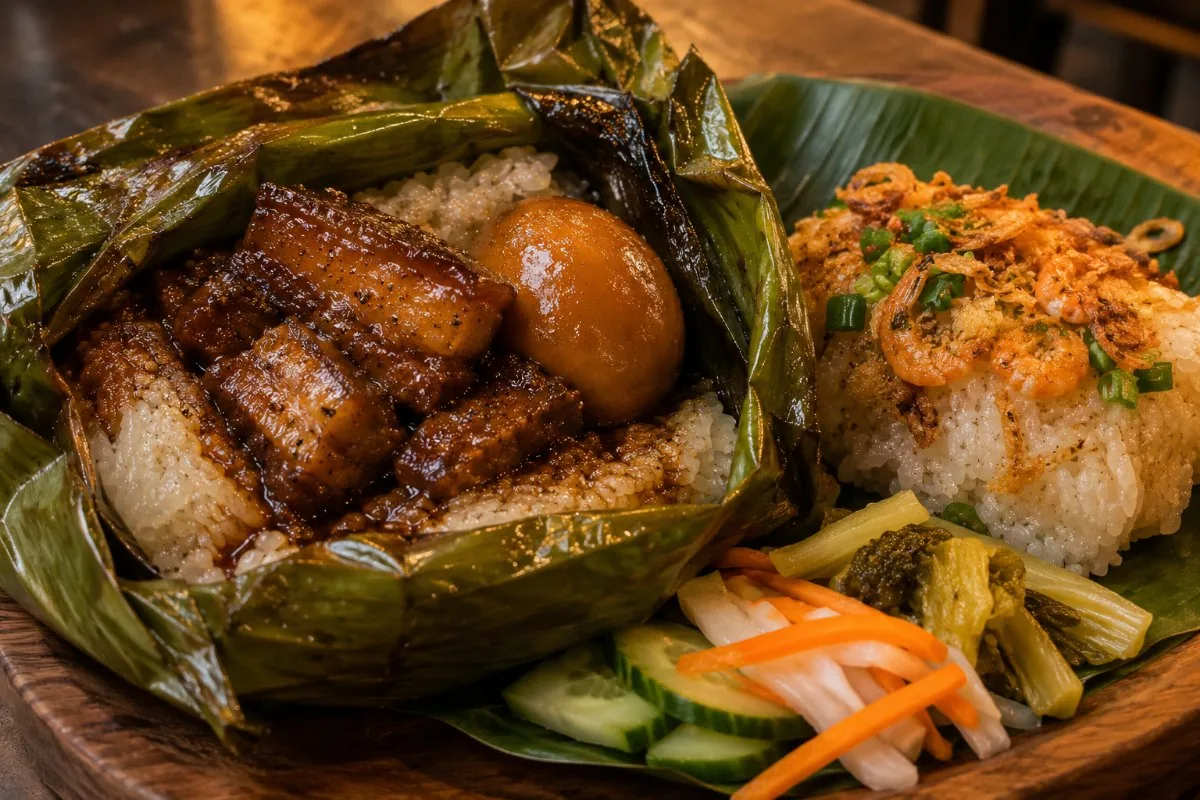
The pork belly is cut into thick chunks and braised in a mixture of fish sauce, sugar, and coconut water. The key is the caramelization—the sugar is cooked until it turns a deep amber color before the pork is added, giving the meat a glossy, dark-brown coating. The braising liquid reduces into a thick, savory sauce that’s spooned over the sticky rice. The pork is cooked until it’s fork-tender, with the fat rendered just enough to be silky but not greasy.
This process takes about two hours, which is why Xoi Thit Kho is typically an evening dish—the stall owners spend the afternoon preparing the pork.
Why this dish is a staple for evening meals in Da Nang
In Da Nang, dinner is a time for family and comfort. Xoi Thit Kho fits this perfectly because it’s a one-bowl meal that’s both hearty and nostalgic. Many locals grew up eating a version of this dish at home, where their mothers would braise pork in a clay pot. The street food version is a direct translation of that home cooking. Stalls that serve Xoi Thit Kho often pair it with a side of pickled vegetables—carrots and daikon in a sweet-sour brine—to cut through the richness of the pork.
The combination of hot rice, tender meat, and tangy pickles is a classic dinner trifecta.
5. Xoi Ngheo (Sticky Rice with Dried Shrimp and Scallion Oil) — The Late-Night Snack
Xoi Ngheo is Da Nang’s answer to the late-night craving—a simple, salty snack that hits the spot after a few beers or a long evening walk along the beach. Unlike the more elaborate xoi dishes, Xoi Ngheo is defined by its minimalism: just sticky rice, dried shrimp, scallion oil, and a sprinkle of pepper.
Simple ingredients, big flavor: dried shrimp, scallion oil, and a sprinkle of pepper
The dried shrimp are the star of this dish. They’re typically small, pinkish-gray shrimp that have been sun-dried and then rehydrated briefly in hot water before being tossed with the rice. The scallion oil—the same fragrant oil used in Xoi Ga—coats each grain of rice, while a generous crack of black pepper adds a subtle heat. Some vendors add a splash of fish sauce and a pinch of sugar to the shrimp before mixing, creating a savory-sweet balance. The result is a dish that’s salty, umami-rich, and incredibly addictive.
Where to find the best Xoi Ngheo after 10 PM in Da Nang
The best Xoi Ngheo is found on Le Duan Street, where a handful of stalls operate from 10 PM until 2 AM. These stalls cater to the post-bar crowd and night-shift workers. One particular cart near the intersection of Le Duan and Nguyen Van Linh is famous for its generous portions of dried shrimp—the vendor doesn’t skimp on the topping. Another spot on Tran Phu Street near the Dragon Bridge offers a version with a fried egg on top, turning a simple snack into a more substantial meal.
The price is usually around 15,000 to 20,000 VND, making it one of the cheapest and most satisfying late-night options in the city.
Essential Tips for Enjoying Xoi in Da Nang Like a Local
Eating xoi in Da Nang isn’t just about the food—it’s about the timing, the ordering, and the budget. Here are three essential tips to help you navigate the city’s sticky rice scene like a true local.
Best times to eat: breakfast (6-8 AM), lunch (11 AM-1 PM), dinner (6-8 PM)
Each type of xoi has its peak hour. Xoi Ga is best between 6 and 8 AM, when the chicken is freshly poached and the rice is at its fluffiest. Xoi Man and Xoi Nghe are available all day, but the best selection of toppings is at lunchtime, between 11 AM and 1 PM. Xoi Thit Kho is an evening dish, best enjoyed between 6 and 8 PM, when the pork has been braising for hours and the flavors are fully developed. Xoi Ngheo is strictly a late-night snack, available from 10 PM onward.
Show up outside these windows, and you might find the stall closed or the ingredients less fresh.
How to order: “Mot xoi ga, khong hanh” (One chicken sticky rice, no scallions) and other key phrases
Knowing a few Vietnamese phrases will make your xoi experience smoother. To order a basic chicken sticky rice, say “Một xoi ga” (one chicken sticky rice). If you don’t want scallions, add “không hành” (no scallions). For Xoi Man, you’ll need to specify your toppings: “Một xoi man với pate và chả lửa” (one savory sticky rice with pate and pork sausage). If you want it to go, say “Mang về” (take away). Most vendors will understand “take away” in English, but using the Vietnamese phrase earns you a smile.
If you’re eating at the stall, simply say “Ăn tại đây” (eat here).
Price range in 2026: what to expect for a bowl of xoi (15,000 – 40,000 VND)
In 2026, a bowl of basic xoi in Da Nang costs between 15,000 and 25,000 VND. A more elaborate version with multiple toppings—like Xoi Man with pate, cha lua, and dried pork—will run you 25,000 to 35,000 VND. The premium options, like Xoi Thit Kho or Xoi Nghe with grilled pork and an egg, can go up to 40,000 VND. These prices are slightly higher than in 2026 due to inflation, but xoi remains one of the most affordable meals in the city. Always carry small bills, as many street vendors don’t have change for large denominations.
Related on this site
- Da Nang’s Must-Try Com Tam: A Guide to Delicious Broken Rice
- Da Nang’s Must-Try Chao: Comforting Rice Porridge Varieties 2026
Xoi is usually sold beside steamed buns; if you want the bun instead, see the best banh bao in Da Nang.
Frequently Asked Questions
Is xoi in Da Nang gluten-free?
Yes, sticky rice is naturally gluten-free. However, some vendors may add a small amount of soy sauce to the toppings, which contains wheat. If you have celiac disease, ask the vendor “Có nước tương không?” (Is there soy sauce?) to be safe.
Can I find vegetarian xoi in Da Nang?
Yes, but it’s less common than meat-based versions. Look for stalls near Buddhist temples or on Tran Phu Street, where some vendors offer Xoi Nghe with tofu and mushrooms instead of pork. You can also request “Xoi chay” (vegetarian sticky rice) at most stalls, and they’ll serve it with just scallion oil and fried shallots.
What’s the difference between xoi in Da Nang and xoi in Hanoi?
Da Nang’s xoi is more savory and seafood-focused, while Hanoi’s xoi leans sweeter with toppings like mung bean paste and coconut. Da Nang also has a wider variety of all-day xoi options, whereas Hanoi’s xoi is primarily a breakfast dish.
Is it safe to eat xoi from street stalls in Da Nang?
Yes, as long as you choose a stall with high turnover. The constant flow of customers ensures the ingredients are fresh. Stick to stalls where the rice is steaming and the toppings are kept in open, clean trays. Avoid stalls where the food looks like it’s been sitting out for hours.
Can I find xoi gac in Da Nang?
Xoi gac (red sticky rice made with gac fruit) is rare in Da Nang outside of Tet (Lunar New Year). It’s a northern specialty. If you’re craving it, your best bet is to visit a Vietnamese grocery store and buy the gac fruit paste to make it yourself, or check specialty restaurants during the Tet season.
What’s the best way to eat xoi on the go?
Vendors will wrap your xoi in a banana leaf or place it in a small plastic bag. To eat it on a motorbike, hold the bag in one hand and use the other hand to steer. Locals often use a small plastic spoon or simply eat it with their hands. It’s messy but part of the experience.
How do I know if the sticky rice is high quality?
High-quality sticky rice should be fluffy, chewy, and slightly sweet. The grains should be separate, not clumped together in a sticky mass. If the rice is mushy or has a sour smell, it’s been sitting out too long. Good rice also has a subtle, nutty aroma.
Conclusion
Da Nang’s xoi scene in 2026 is a living map of the city’s culinary identity—coastal, innovative, and deeply rooted in local tradition. From the breakfast staple Xoi Ga near Han Market to the late-night Xoi Ngheo on Le Duan Street, each dish offers a different window into how Danangians eat, work, and relax. Use the 4-step guide to choose your stall, practice the ordering phrases, and don’t be afraid to try the ginseng-infused rice—it’s a 2026 trend that might not last, but it’s worth tasting while it’s here.
Part of our guide to what to eat in Da Nang.