Bánh trót is a savory rice dumpling from Da Nang that food lovers often overlook in favor of Mì Quảng or bánh xèo. This guide explores what makes it unique, where to find the best versions, and how to eat it like a local. You will learn the differences between bánh trót and its Northern cousin bánh giò, discover the key ingredients behind its signature texture, and get specific vendor recommendations with prices and hours.
Bánh trót is a steamed rice dumpling from Da Nang, distinct from the Northern bánh giò due to its thinner, more translucent wrapper made with a higher tapioca flour ratio. The filling combines ground pork, wood ear mushroom, and shallots, wrapped in banana leaf and steamed to a soft, chewy texture. Vendors at Cồn Market sell fresh batches from 6 AM, with prices starting around 15,000 VND per piece. The key to enjoying it is the dipping sauce — a balanced mix of fish sauce, lime, sugar, garlic, and chili — and eating it while the dumpling is still warm from the steamer.
What Exactly Is Bánh Trót? Defining Da Nang’s Savory Rice Dumpling
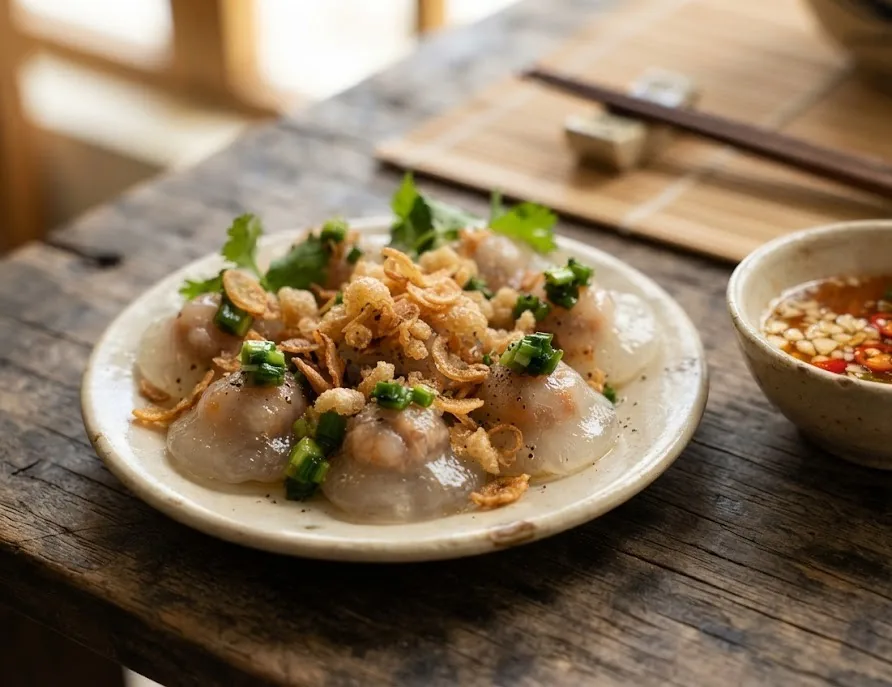
Bánh trót is a steamed rice dumpling from Da Nang with a translucent, chewy wrapper and a savory pork and mushroom filling. Unlike the thicker, more opaque bánh giò from Northern Vietnam, bánh trót uses a higher ratio of tapioca flour to rice flour, which gives it a distinct elasticity. Street vendors in Da Nang have been making this dish for decades, often selling it from metal steamers balanced on bicycles or parked carts near busy intersections.
The Wrapper: Texture, Thickness, and Steaming Method
The wrapper is the defining feature of bánh trót. It is made from a blend of rice flour and tapioca flour — the tapioca creates the signature chewiness that sets it apart from other Vietnamese dumplings. The batter is poured into small banana leaf cups or spread onto a cloth and folded, then steamed for 15-20 minutes until the wrapper becomes semi-translucent. When done correctly, the wrapper is thin enough to see the filling inside but sturdy enough to hold its shape when unwrapped.
How Bánh Trót Differs from Bánh Giò (Northern Vietnam Version)
The most common confusion among visitors is between bánh trót and bánh giò. Both are steamed rice dumplings, but they differ in several ways. Bánh giò has a thicker, more opaque wrapper made almost entirely from rice flour, giving it a denser, cake-like texture. The filling in bánh giò often includes quail egg and more mushrooms, while bánh trót keeps the filling simpler — ground pork, wood ear mushroom, and shallots. The shape also differs: bánh giò is typically cone-shaped, while bánh trót is flatter and wrapped in a neat banana leaf packet.
| Feature | Bánh Trót (Da Nang) | Bánh Giò (Northern Vietnam) |
|---|---|---|
| Wrapper composition | Rice flour + tapioca flour (approx. 70:30 ratio) | Mostly rice flour |
| Texture | Thin, chewy, semi-translucent | Thick, opaque, cake-like |
| Filling | Ground pork, wood ear mushroom, shallot | Ground pork, mushroom, quail egg |
| Shape | Flat, rectangular packet | Cone-shaped |
| Dipping sauce | Sweet-savory fish sauce with garlic and chili | Light fish sauce with pickled vegetables |
The Da Nang Twist: Filling Variations and Local Preferences
While the classic filling is ground pork and wood ear mushroom, vendors in Da Nang experiment with variations. Some add dried shrimp for a saltier bite. Others include a slice of quail egg for richness. The most popular version in Da Nang keeps the filling simple — the focus is on the wrapper texture and the dipping sauce. During my research visits to Cồn Market, I noticed that regular customers often request extra fried shallots on top, a topping that most vendors provide free of charge.
The Key Components That Make Bánh Trót Distinctive
Three elements define the quality of bánh trót: the flour ratio in the wrapper, the balance of the filling, and the banana leaf wrapping technique. Each component requires attention to detail that street vendors have refined over years of practice.
The Wrapper: Rice Flour-to-Tapioca Ratio for the Signature Chewiness
The wrapper is a science of ratios. Most Da Nang vendors use a 70:30 blend of rice flour to tapioca flour. The rice flour provides structure, while the tapioca flour creates the elasticity that makes bánh trót chewy rather than mushy. Too much tapioca makes the wrapper rubbery; too little makes it fall apart when unwrapped. The batter must rest for at least 30 minutes before steaming to allow the flours to hydrate fully. Vendors who skip this step end up with a grainy texture that lacks the smooth, uniform consistency of properly made bánh trót.
The Filling: Ground Pork, Wood Ear Mushroom, and Shallot Balance
The filling is simple but requires precise ratios. Wood ear mushroom adds a subtle crunch and earthy note. Shallots, finely minced and fried before mixing, contribute sweetness. Some vendors season the filling with a small amount of ground pepper and fish sauce. The filling should be compact enough to hold together when bitten but not dense — it should break apart easily against the soft wrapper.
The Banana Leaf Wrapper: Flavor Infusion and Cooking Function
Banana leaf serves two purposes: it gives the dumpling a subtle grassy aroma during steaming, and it creates a steam pocket that cooks the wrapper evenly. The leaves are passed briefly over an open flame to soften them before wrapping. This makes them pliable enough to fold without tearing. Fresh banana leaves are essential — dried or old leaves lack the fragrance and can crack during folding. When you unwrap a properly made bánh trót, the banana leaf should release easily without sticking to the wrapper.
Where to Find the Best Bánh Trót in Da Nang: A Local’s Guide
Da Nang has several reliable spots for fresh bánh trót, with Cồn Market being the most accessible for first-time visitors. The dish is primarily a breakfast item, though some vendors sell it in the late afternoon. Prices range from 15,000 to 25,000 VND per piece, making it one of the most affordable street foods in the city.
Morning Vendors at Cho Con (Con Market) — Stalls and Timing
Cồn Market is the best place to start. The food section on the ground floor has at least three stalls selling bánh trót, with the most popular being Cô Lựa’s cart near the main entrance. She starts selling at 6 AM and is usually sold out by 9:30 AM. Her bánh trót features a slightly thicker wrapper with a generous filling of pork and wood ear mushroom. She serves it with a dipping sauce that has a higher lime-to-fish-sauce ratio, giving it a tangier profile than other vendors. A portion of two pieces costs 20,000 VND.
Evening Street Carts Along Nguyen Chi Thanh Street
For those who miss the morning window, several street carts operate along Nguyễn Chí Thanh Street from 3 PM to 6 PM. The cart near the intersection with Lê Đình Dương is a reliable option. The vendor here uses a 60:40 rice-to-tapioca ratio, resulting in a more elastic wrapper. She tops each piece with scallion oil and fried shallots before serving. The price is 15,000 VND per piece. This cart is popular with local office workers who stop for a quick afternoon snack.
Hidden Gems in Hai Chau and Son Tra Districts
Hai Chau has a small stall near the corner of Nguyễn Văn Linh and Ông Ích Khiêm that sells bánh trót until noon. The vendor here adds a small amount of turmeric to the wrapper batter, giving it a pale yellow color. In Sơn Trà, a cart near the Mân Quang intersection sells bánh trót from 4 PM to 7 PM. This vendor is known for her dipping sauce, which includes crushed peanuts — a variation uncommon in Da Nang but popular in nearby Hội An.
How Bánh Trót Is Served: Dipping Sauces and Accompaniments
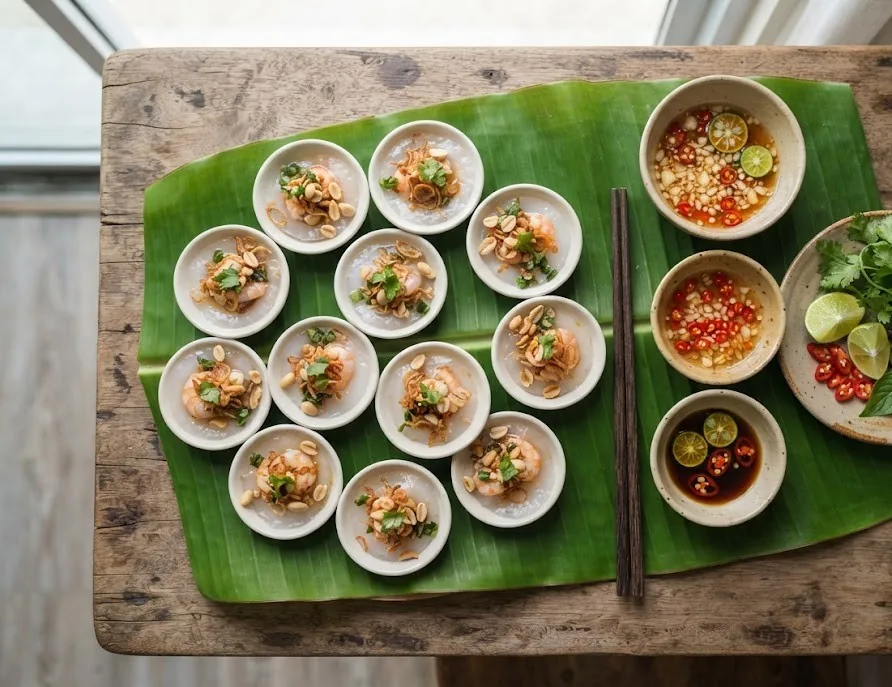
The dipping sauce is the most important part of the bánh trót experience, and Da Nang vendors have their own regional approach. Unlike the heavy, fermented shrimp paste used in some northern dishes, Da Nang’s nước chấm for bánh trót is light, sweet, and tangy.
The Essential Nuoc Cham: Fish Sauce, Lime, Garlic, Chili Ratios
The standard Da Nang dipping sauce follows a 1:1:1:2 ratio — one part fish sauce, one part lime juice, one part sugar, and two parts warm water. Garlic and chili are minced and added to taste. The warm water helps dissolve the sugar completely, creating a smooth sauce. Some vendors add a small amount of grated carrot for color and mild sweetness. The sauce should be balanced — no single flavor should dominate. A good test: dip a piece of the wrapper alone into the sauce. If the wrapper tastes savory with a hint of sweet and sour, the ratio is correct.
Toppings That Complete the Experience: Fried Shallots, Scallion Oil, Fresh Herbs
Most vendors serve bánh trót with a small plate of fresh herbs — typically Vietnamese coriander (rau răm), mint, and lettuce leaves. The herbs provide a fresh contrast to the rich filling. Fried shallots are almost always offered as a topping, adding crunch. Scallion oil, made by pouring hot oil over thinly sliced scallions, is drizzled on top for extra richness. Some vendors also provide sliced chili and garlic in vinegar for those who want more acidity.
Regional Dipping Sauce Variations: Da Nang vs. Hue vs. Hoi An
The dipping sauce varies across the central region. In Huế, the sauce is spicier, with more chili and sometimes a touch of shrimp paste. In Hội An, vendors add crushed peanuts to the sauce, creating a thicker, nuttier dip. Da Nang’s version is the most straightforward — clean, balanced, and designed to complement rather than overpower the dumpling. If you try bánh trót from different vendors in Da Nang, you will notice subtle differences in sweetness and acidity levels, but the basic formula remains consistent.
Bánh Trót Within Da Nang’s Steamed Rice Cake Family
Da Nang is the ideal city to explore the full spectrum of Vietnamese steamed rice cakes, with bánh trót, bánh bèo, bánh nậm, and bánh lọc all available within walking distance of each other. Understanding the differences helps you appreciate what makes bánh trót unique.
Bánh Bèo Chen (Small Plate Version) — Similarities and Differences
Bánh bèo is a small, round steamed rice cake served in tiny ceramic bowls. The wrapper is much thinner than bánh trót — almost like a rice crepe. It is topped with dried shrimp, scallion oil, and fried shallots, then served with a sweet fish sauce. The texture is soft and slippery, while bánh trót is chewier and more substantial. Bánh bèo is typically eaten as a snack or appetizer, while bánh trót can serve as a light meal.
Bánh Nậm (Flat Rice Cake) and Bánh Lọc (Tapioca Dumpling) — How They Compare
Bánh nậm is a flat, rectangular rice cake wrapped in banana leaf, similar in shape to bánh trót but without the filling. It is made entirely from rice flour, giving it a denser, more compact texture. The topping is ground shrimp and scallion oil. Bánh lọc, on the other hand, is a translucent dumpling made from tapioca flour, filled with shrimp and pork belly. Its texture is the most elastic of all four — almost bouncy.
Bánh trót sits between these two: it has the filling of bánh lọc but the wrapper composition of a hybrid between rice and tapioca flours.
| Category | Bánh Trót | Bánh Bèo | Bánh Nậm | Bánh Lọc |
|---|---|---|---|---|
| Wrapper | Rice + tapioca flour | Rice flour crepe | Rice flour, dense | Tapioca flour, clear |
| Texture | Chewy, semi-translucent | Soft, slippery | Firm, compact | Bouncy, elastic |
| Filling | Pork, mushroom, shallot | Dried shrimp, scallion | Ground shrimp on top | Shrimp, pork belly |
| Dipping sauce | Sweet fish sauce with garlic and chili | Sweet fish sauce with chili | Sweet fish sauce | Sweet fish sauce with chili |
| Serving method | Unwrap from banana leaf, dip | Eat from bowl, pour sauce | Unwrap, eat plain with sauce | Unwrap, dip in sauce |
Why Da Nang Is the Perfect City to Try All Three in One Food Tour
Da Nang’s street food scene is concentrated enough that you can try all four rice cakes in a single morning. Start at Cồn Market for bánh trót, then walk to a nearby bánh bèo stall. Bánh nậm and bánh lọc are often sold from the same carts. Many local food tours include all four, but you can easily do it yourself by visiting the food section of any major market. The variety demonstrates how versatile rice flour and tapioca flour can be — the same base ingredients transformed into four completely different textures and experiences.

Key Tips for First-Time Bánh Trót Eaters
Eating bánh trót for the first time requires a few simple techniques to avoid common mistakes. The process is straightforward, but a few tips will help you get the most out of the experience.
How to Eat Bánh Trót Properly: Unwrapping, Dipping, and Eating Technique
- Unwrap carefully — The banana leaf is not edible. Peel it back gently, holding the dumpling from one end. The wrapper should separate cleanly from the leaf.
- Dip, don’t soak — Dip one corner of the dumpling into the sauce. Over-soaking makes the wrapper soggy and dilutes the flavor of the filling.
- Add herbs — Place a small herb leaf (Vietnamese coriander or mint) on top of the dipped dumpling before eating. This adds freshness and balances the richness.
- Eat in two bites — A standard piece of bánh trót is best eaten in two bites. One bite for the first half, then dip the remaining half again for the second bite.
- Use the sauce bowl wisely — If the sauce has chili slices, let them sit for a minute before eating to infuse the heat without making the sauce too spicy.
Best Time of Day to Find Fresh Batches (Morning vs. Late Afternoon)
The best time to eat bánh trót is between 6:30 AM and 8:30 AM, when most vendors have just finished steaming their first batch of the day. The wrappers are at their peak texture — warm, soft, and elastic. Late afternoon batches (3 PM to 5 PM) are also good, but the wrappers tend to be slightly firmer because the batter has been sitting longer. Avoid buying bánh trót after 7 PM, as most vendors have stopped selling, and any remaining pieces have been sitting in the steamer for hours.
What to Look for in Quality: Wrapper Translucency, Filling-to-Rice Ratio, Banana Leaf Freshness
Quality bánh trót has three visual cues. First, the wrapper should be slightly translucent — you should be able to see the outline of the filling through it. An opaque, white wrapper indicates too much rice flour and too little tapioca, resulting in a dense, cake-like texture. Too little filling means you are mostly eating wrapper. Third, the banana leaf should be bright green and flexible. Dried or cracked leaves mean the dumpling was wrapped hours ago and has lost its freshness. Fresh banana leaves also release a grassy aroma when steamed — if you cannot smell it, the dumpling is not fresh.
Related on this site
- Da Nang’s Must-Try Com Tam: A Guide to Delicious Broken Rice
- Exploring Da Nang’s Banh Troi Tau: Sweet Floating Cakes
- Da Nang’s Best Tea Houses: A Calm Retreat in 2026
Frequently Asked Questions
What does bánh trót taste like?
The wrapper is neutral with a subtle rice flavor, while the filling is savory from the seasoned pork and earthy from the wood ear mushroom. The dipping sauce provides sweet, sour, and salty notes. The overall experience is mild and balanced, not spicy or heavily seasoned.
Is bánh trót gluten-free?
Yes. The wrapper is made from rice flour and tapioca flour, both naturally gluten-free. The filling contains no wheat-based ingredients. Bánh trót is safe for people with celiac disease or gluten sensitivity.
Can I find vegetarian bánh trót in Da Nang?
Vegetarian versions are rare but available at some Buddhist vegetarian restaurants in Da Nang. The filling is typically replaced with tofu, mushrooms, and vegetables. Most street vendors sell only the pork version.
How many pieces should I order?
Two to three pieces are sufficient for a light breakfast or snack. Four pieces make a filling meal. Portions are small, so ordering more is better than ordering less — you can always take leftovers.
What is the price range for bánh trót in Da Nang?
Prices range from 15,000 to 25,000 VND per piece, depending on the vendor and location. Cồn Market vendors charge around 20,000 VND. Street carts in residential areas may charge as low as 12,000 VND.
Do I need to tip the vendor?
Tipping is not expected at street food stalls in Da Nang. Vendors do not add service charges. If you enjoyed the food, a simple “cảm ơn” (thank you) is appreciated.
How do I say “bánh trót” correctly?
The pronunciation is “bahn chote” with a rising tone on “bánh” and a falling tone on “trót.” The “tr” sound is similar to the “ch” in “chocolate” but with the tongue curled slightly back.
Conclusion: Your Next Culinary Adventure
Bánh trót is one of Da Nang’s most accessible street foods, offering a genuine taste of local culinary tradition without the tourist markup. Start your exploration at Cồn Market between 6:30 AM and 8:30 AM, order two pieces from Cô Lựa’s stall, and pay attention to the wrapper texture and sauce balance. Afterward, walk through the market’s food section to find bánh bèo and bánh lọc — comparing all three in one morning will give you a deeper appreciation for how Vietnamese cooks transform simple rice flour into vastly different dishes.
- Visit Cồn Market before 9 AM — This is the most reliable spot for fresh bánh trót, with multiple vendors and the widest variety of toppings and sauces.
- Try the dipping sauce first without the dumpling — Taste it alone to understand the vendor’s ratio. A good sauce should be balanced, not too sweet or too sour.
- Pair your bánh trót with a glass of iced coffee — The contrast between the hot, savory dumpling and cold, bitter coffee is a classic Da Nang breakfast combination.
Part of our guide to what to eat in Da Nang.