A cooking class is the one activity in Da Nang that changes how you eat for the rest of the trip. Not because you will recreate mì Quảng at home — you probably will not — but because two hours at a market with someone who shops there daily teaches you what to point at, what things cost, and which stall is worth queueing at.
Most classes here follow the same shape: market first, kitchen second, eat what you cooked. The differences that matter are how long the market half lasts, how many people are in the class, and whether you are cooking Da Nang dishes or a generic Vietnamese set that could be taught in any city.
Quick answer: expect US$24–46 per person for 2.5 to 5 hours. Classes with a market tour cost more and are worth it. Book a morning class — the market is a different place at 7am than at 11am — and check the dish list before you pay.
Updated August 2026 · 8 min read · Local writer, Da Nang
What a class actually costs
| Format | Duration | Typical price |
|---|---|---|
| Kitchen only, no market | 2–2.5 hours | US$24–31 |
| Market tour + class | 3–4.5 hours | US$35–40 |
| Full day with transfers and extras | 5–6.5 hours | US$44–46 |
Prices sit in a narrow band because the model is standardised. What varies is value, not headline cost.
The four questions to ask before booking
1. Does it include a real market visit?
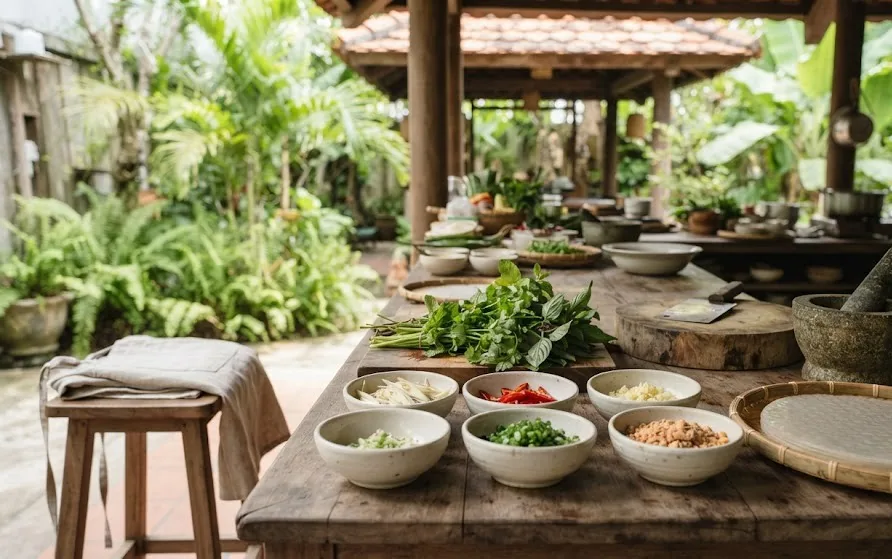
A market tour that is a ten-minute walk past three stalls is a photo opportunity. A good one lasts 45 minutes, involves you choosing herbs and being shown how to tell fresh fish cake from yesterday’s, and ends with you carrying a basket. If you want to know the markets first, our guide to Da Nang’s markets covers Con, Han and Bac My An.
2. What are you actually cooking?
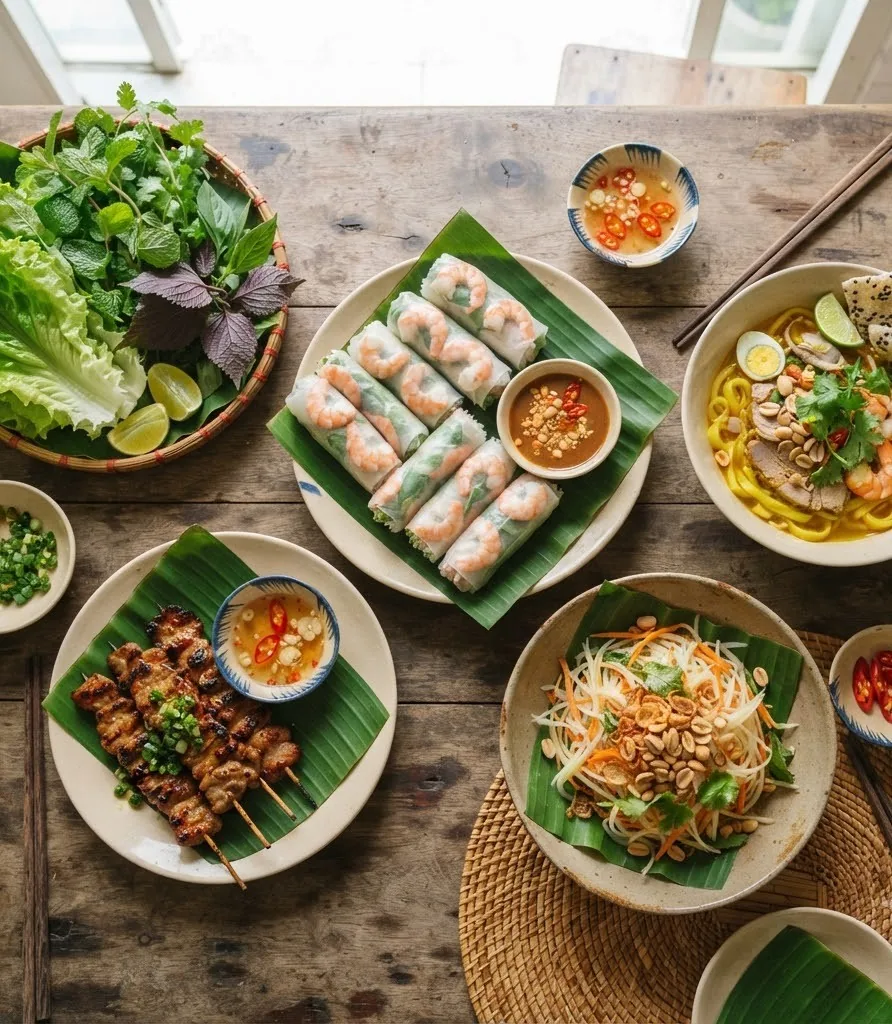
Ask for the dish list. If it is spring rolls, phở and a green papaya salad, you are being taught a national tourist menu. The Da Nang answer is mì Quảng, bánh xèo with peanut sauce, nem lụi on lemongrass stalks, or bánh tráng cuốn thịt heo — the dishes covered in our Da Nang food guide. Those are what you cannot easily learn elsewhere.
3. How many people?
Six to eight is the useful maximum. Above twelve you are watching a demonstration and stirring occasionally.
4. Where is it?
Several “Da Nang” classes are actually in the Hoi An countryside with a free transfer, often bundled with a basket-boat ride. That is a fine day out but it is a different product — and if you were planning a Hoi An trip anyway, you may be paying twice for the same drive.
Morning or afternoon?
Morning, if the market matters to you. Con Market’s food side runs from early and the produce is at its best before the heat; by late morning the good fish has gone. Afternoon classes skip that or visit a much quieter market.
Important note: most classes include the meal you cook, and it is a full meal. Do not book lunch for afterwards.
What you will actually learn
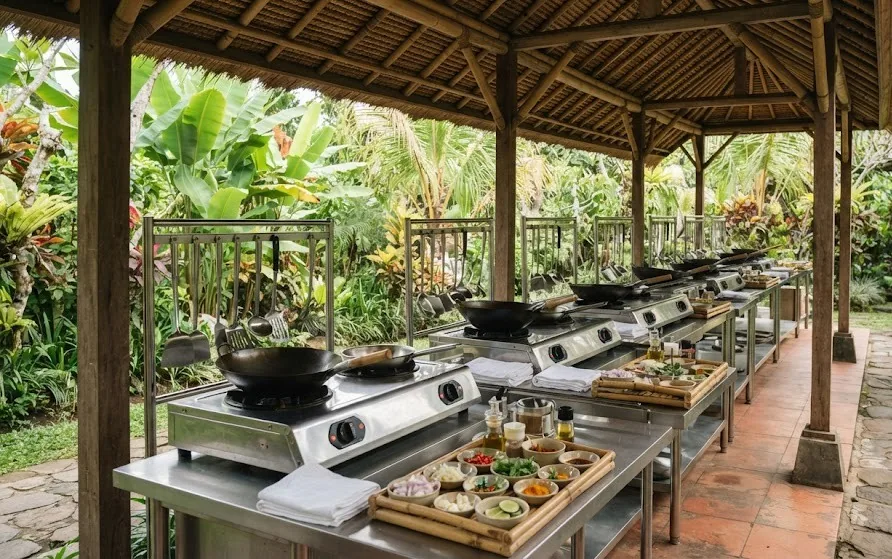
- Nước chấm and mắm nêm. The two sauces that separate Vietnamese cooking from an approximation of it. Ratios, not recipes.
- Herb identification. The plate of green leaves that comes with everything is not garnish, and each one is doing a job.
- Rice paper handling. Harder than it looks, and the single most useful skill you take home.
- Market pricing. Watching someone local pay teaches you what things cost — useful for the rest of your trip, especially with seafood sold by weight.
Is it worth it?
On a short trip, yes — it front-loads everything you need to eat well for the remaining days. On a long stay, it is worth it if you have a kitchen; several serviced apartments here do, and the class pays for itself in a week of not eating out.
If you mainly want to be shown where to eat rather than how to cook, a street food tour costs less and covers more ground.
Frequently asked questions
How much is a cooking class in Da Nang?
US$24–46 per person. The middle of that range, around US$35–37, buys a market tour plus a hands-on class of three to five dishes.
How long do they take?
Two and a half hours for a kitchen-only class, three to four and a half hours with a market tour, and up to six and a half for a full-day version with transfers.
Are vegetarian options available?
Usually, but say so when booking rather than on the day — mắm nêm and fish sauce are structural to most of these dishes, and the substitutions need planning.
Do I need to book ahead?
Yes, at least a day. Class sizes are small and the good ones fill, particularly in the February to May dry season.
The short version
Pick a morning class with a real market tour, check that the dish list is Central Vietnamese rather than generic, and keep the group small. Do it on your first or second day, not your last — the point is what it teaches you about every meal that follows.
Part of our guide to things to do in Da Nang.