Da Nang is famous for its own Central Vietnamese noodles like mì quảng and bún chả cá, but a quieter culinary story is unfolding in its street food scene: the rise of hủ tiếu, a Southern-style noodle soup with roots in Teochew-Chinese and Cambodian cuisine. For travelers asking where to eat hu tieu in Da Nang: noodle soup with a southern flair 2026, the answer is not a single spot but a network of family-run stalls and modern eateries spread across the city.
This guide maps out seven essential addresses, explains the three main hu tieu styles you will encounter, and gives you the local vocabulary to order like a regular.
Hủ tiếu in Da Nang is a distinct fusion — the broth is lighter and the noodles firmer than in Saigon, reflecting Central Vietnam’s preference for clean, savory flavors over sweetness. Three main styles dominate: Nam Vang (pork-and-shrimp soup), Mỹ Tho (sweeter, more herbal), and Kho (dry noodles with broth on the side). Most bowls cost between 30,000 and 55,000 VND ($1.20–$2.20 USD), and the best shops are concentrated around Hải Châu, Hàn Market, and Mỹ Khê Beach. This guide covers seven verified addresses for 2026, plus the ordering phrases and quality markers you need to know.
What Makes Hu Tieu a Southern Noodle Soup Worth Finding in Da Nang
Hu tieu is not pho, and that distinction is exactly why it deserves your attention in Da Nang.
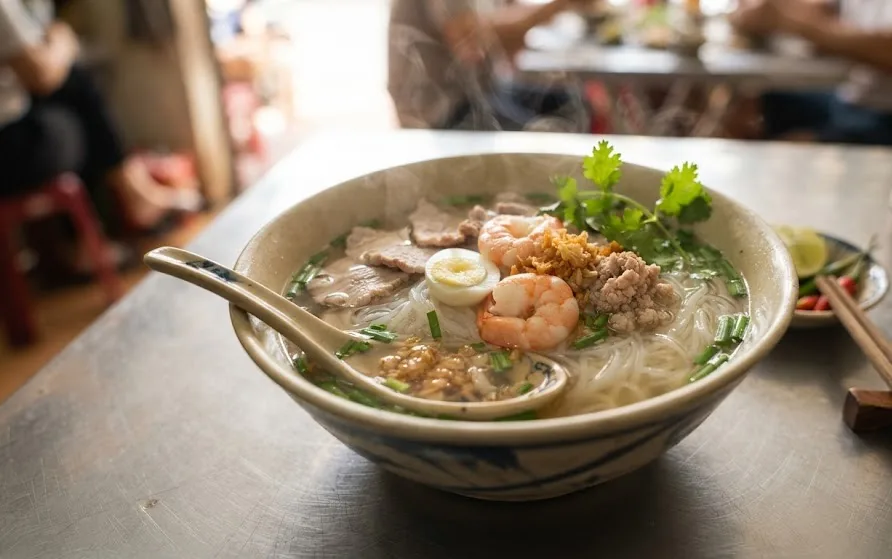
Where pho relies on beef bones and star anise for a deep, earthy broth, hu tieu builds its flavor from pork bones, dried shrimp, and daikon radish — producing a clear, sweet, and savory liquid that tastes lighter on the tongue. The noodles themselves are different too: hu tieu uses medium-thick rice noodles that are slightly chewy (al dente), while pho noodles are flat and soft, and mì quảng noodles are wide and turmeric-stained.
Gordon Ramsay once called Vietnamese noodle soup “one of the world’s greatest dishes” during his Hanoi visit, but he was likely referring to pho. Locals in Da Nang will tell you that hu tieu deserves equal praise — especially when you taste a bowl where the broth has been simmered for eight hours and the fried garlic on top cracks under your spoon. The Southern flair comes from the toppings: fresh shrimp, roasted pork belly, sliced pork liver, quail eggs, and a generous handful of chopped scallions and cilantro.
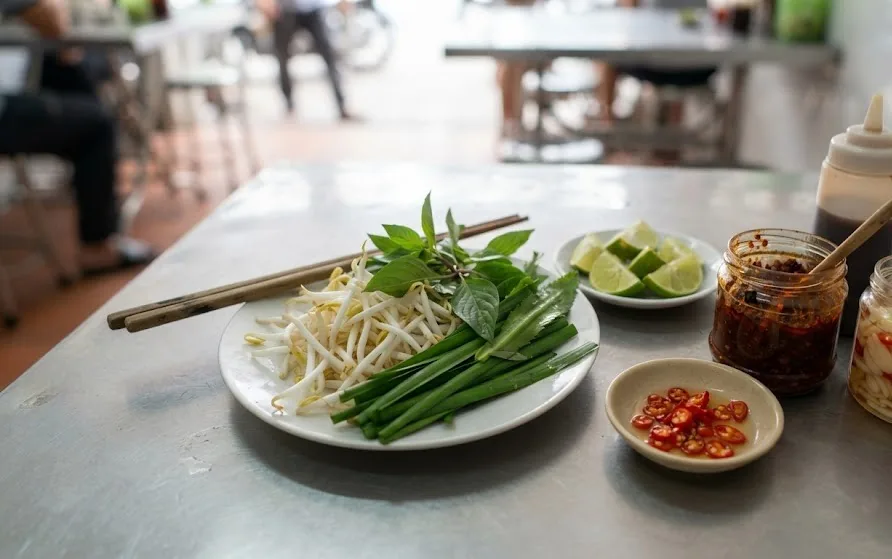
In Da Nang, cooks often add a Central Vietnamese twist by serving it with a side of fresh herbs (rau sống) and chili vinegar, which you will not find in Saigon.
How Hu Tieu Traveled from Phnom Penh to Da Nang’s Street Food Scene
Hu tieu’s journey to Da Nang begins in Phnom Penh, passes through Saigon’s Cholon district, and finally adapts to Central Vietnam’s palate over decades of migration.
The Teochew-Chinese origins and the Nam Vang connection
“Nam Vang” is the Vietnamese name for Phnom Penh, the capital of Cambodia. In the 19th and early 20th centuries, Teochew-Chinese traders migrated from southern China to Cambodia and Vietnam, bringing their noodle-making traditions with them. They created a soup that used pork bones and dried seafood — ingredients available along the Mekong River trade routes — and named it after their new home.
The Teochew influence is visible in the use of fried garlic (tỏi phi), which appears on top of every proper bowl of hu tieu Nam Vang, and in the preference for clear broth over the murky, spice-heavy broths of Northern Vietnam.
Why Da Nang’s port city history made it a natural home for southern noodles
Da Nang has always been a transit hub. During the French colonial period, ships moving goods between Saigon, Phnom Penh, and Da Nang carried not just cargo but cooks and their recipes. By the 1950s, southern-style noodle stalls had appeared near the Hàn River port, serving dock workers who wanted a filling, affordable meal. The dish stayed in Da Nang because it adapted: local cooks reduced the sugar in the broth (Central Vietnamese palates prefer savory over sweet), added more chili, and started serving a dry version (hu tieu kho) that was easier to eat on hot days.
Today, you can find hu tieu at Cồn Market and Hàn Market, where vendors have been selling the same recipe for three generations.
Hu Tieu Nam Vang vs. Hu Tieu My Tho vs. Hu Tieu Kho — Which Version to Order in Da Nang
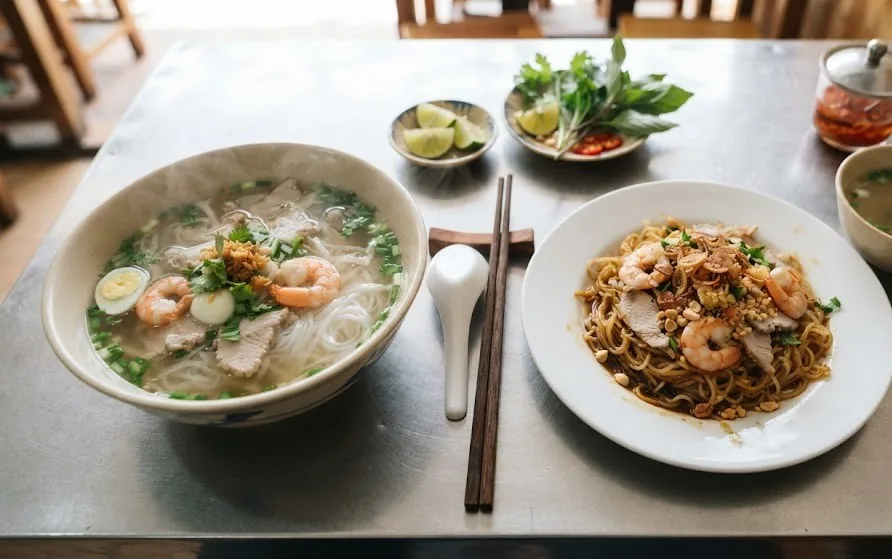
Three distinct styles of hu tieu exist in Da Nang, and knowing the difference determines whether you get the bowl you actually want.
| Feature | Hu Tieu Nam Vang | Hu Tieu My Tho | Hu Tieu Kho (Dry) |
|---|---|---|---|
| Broth base | Pork bones + dried shrimp + daikon — clear amber, savory | Pork bones + dried squid + rock sugar — sweeter, more herbal | No broth in bowl; served separate on the side |
| Toppings | Roasted pork, fresh shrimp, quail eggs, minced pork, fried garlic | Fresh shrimp, squid, pork slices, peanuts, bean sprouts | Same as Nam Vang but tossed in sweet soy + garlic oil |
| Noodle texture | Medium-thick, al dente, slightly chewy | Thinner, softer, almost translucent | Same as Nam Vang but drier — stir-fried briefly |
| Spice level | Mild — add chili vinegar yourself | Mild-sweet — no heat in base | Mild — add chili oil or fresh chili |
| Best for | First-timers who want the classic experience | Those who prefer sweeter, seafood-forward flavors | Hot days or when you want noodles without soup |
Hu Tieu Nam Vang: The classic pork-and-shrimp soup with Da Nang’s Central twist
This is the most common version in Da Nang. The broth is simmered for six to eight hours with pork bones and dried shrimp, then strained until clear. What makes Da Nang’s version different from Saigon’s is the noodle texture — local cooks prefer a firmer, more al dente noodle that holds its shape in the broth. The toppings are generous: slices of roasted pork shoulder, three to four fresh shrimp, halved quail eggs, and a mound of minced pork. The fried garlic on top is non-negotiable.
Hu Tieu My Tho: The sweeter, more herbal variant from the Mekong Delta
Named after the town of Mỹ Tho in the Mekong Delta, this version uses dried squid in addition to pork bones for the broth, giving it a subtle seafood sweetness. The noodles are thinner and softer, almost like angel hair pasta. In Da Nang, only a handful of shops serve authentic Mỹ Tho style — most are run by families who migrated from the South after 1975. Look for stalls that advertise “Hủ Tiếu Mỹ Tho” on their sign; if the sign only says “Hủ Tiếu,” you are likely getting Nam Vang.
Hu Tieu Kho (Dry version): When you want noodles without the broth
Hu tieu kho is the “dry” version — the noodles are tossed in a mixture of sweet soy sauce, garlic oil, and a splash of vinegar, then topped with the same pork and shrimp as the soup version. The broth comes in a small bowl on the side, meant for sipping between bites. This style is particularly popular in Da Nang during the hot season (April to August) when a steaming bowl of soup feels less appealing.
Many locals consider hu tieu kho the true test of a noodle shop: if the noodles are dry and sticky, the shop is cutting corners; if they are glossy and separate easily, the cook knows their craft.
7 Best Places to Eat Hu Tieu in Da Nang (2026 Edition)
These seven addresses cover the full range of hu tieu styles available in Da Nang in 2026, from century-old family recipes to modern farm-to-table interpretations.
Quán Hu Tieu Nam Vang 94: The gold standard for Nam Vang style
Address: 94 Nguyễn Chí Thanh, Hải Châu. Price range: 35,000–50,000 VND ($1.40–$2.00 USD). Standout feature: Eight-hour pork bone broth that is clear amber and never cloudy. Best time to visit: 7:00 AM–10:00 AM for breakfast, or 5:00 PM–7:00 PM for dinner. This is the most famous hu tieu address in Da Nang, operating for over 30 years. The broth is the star — slow-simmered with pork bones, dried shrimp, and a whole daikon radish that adds natural sweetness without sugar.
The noodles are cut fresh daily and cooked to order, so they arrive at your table with the perfect chew. Regulars order the “đặc biệt” (special) bowl, which includes every topping: pork, shrimp, quail eggs, minced pork, and pork liver.
Hu Tieu My Tho 87: Sweet broth and generous toppings near Hàn Market
Address: 87 Trần Phú, near Hàn Market entrance. Price range: 30,000–45,000 VND ($1.20–$1.80 USD). Standout feature: Dried squid broth with a noticeably sweeter finish. Best time to visit: 8:00 AM–11:00 AM before the lunch crowd. This small stall is run by a family originally from Mỹ Tho who moved to Da Nang in the 1990s. Their broth uses dried squid alongside pork bones, creating a flavor profile that is distinctly different from Nam Vang. The toppings are generous — expect four to five shrimp per bowl, plus squid rings and pork slices.
The shop is located just outside Hàn Market, making it a convenient stop after browsing the stalls.
Bà Năm Hu Tieu Kho: The dry noodle specialist in Hải Châu
Address: 122 Hoàng Diệu, Hải Châu. Price range: 35,000–50,000 VND ($1.40–$2.00 USD). Standout feature: Dry noodles tossed in house-made garlic oil with sweet soy. Best time to visit: 10:00 AM–2:00 PM for lunch. Bà Năm has been serving only hu tieu kho for 25 years — no soup version on the menu. The noodles are stir-fried briefly in a wok with garlic oil and a house-made sweet soy sauce, then topped with roasted pork, shrimp, and a fried quail egg. The broth on the side is a concentrated pork bone reduction, rich and savory.
This is the place to go if you want to understand why locals prefer dry noodles on a hot Da Nang afternoon.
Hu Tieu Sa Dec Quán: A hidden gem serving Mekong Delta flavors
Address: 45 Nguyễn Thái Học, near the riverfront. Price range: 30,000–40,000 VND ($1.20–$1.60 USD). Standout feature: Broth made with river shrimp from the Mekong Delta. Best time to visit: 6:30 AM–9:00 AM for the freshest batch. Named after the town of Sa Đéc in Đồng Tháp Province, this tiny shop serves a version of hu tieu that is hard to find outside the Mekong Delta. The broth uses freshwater shrimp instead of dried shrimp, giving it a cleaner, brighter flavor. The noodles are thinner and softer, closer to what you would find in Saigon.
The shop only has four tables and sells out by 9:30 AM most days.
Quán Ẩm Thực Miền Tây: Southern-style hu tieu with Central Vietnamese heat
Address: 200 Lê Duẩn, Hải Châu. Price range: 35,000–55,000 VND ($1.40–$2.20 USD). Standout feature: Southern-style broth with a side of Central Vietnamese chili paste. Best time to visit: 11:00 AM–1:00 PM for lunch. This restaurant specializes in Southern Vietnamese cuisine (Ẩm thực Miền Tây means “Western Region cuisine”), and their hu tieu is a faithful reproduction of what you would find in Cần Thơ or Vĩnh Long. The broth is sweeter and more herbal than Nam Vang, and the toppings include pork rinds (tóp mỡ) and fried shallots.
What makes it unique for Da Nang is the house-made chili paste — a Central Vietnamese condiment that adds serious heat, balancing the sweet broth.
Hu Tieu Cô Ba: Late-night bowl near Mỹ Khê Beach
Address: 10 Võ Nguyên Giáp, opposite Mỹ Khê Beach. Price range: 40,000–55,000 VND ($1.60–$2.20 USD). Standout feature: Open until 2:00 AM for post-beach hunger. Best time to visit: 9:00 PM–midnight. Cô Ba’s stall is a late-night institution for both tourists returning from the beach and locals finishing their evening shifts. The broth is lighter than the Hải Châu shops — intentionally, since it is meant to be eaten late at night without feeling heavy. The toppings are standard Nam Vang, but the portion sizes are smaller (perfect for a midnight snack rather than a full meal).
The stall has plastic stools and tables set up on the sidewalk, with fairy lights strung overhead.
Bếp Nhà 86: Modern take with organic ingredients and craft broth
Address: 86 Nguyễn Văn Linh, Hải Châu. Price range: 50,000–70,000 VND ($2.00–$2.80 USD). Standout feature: Organic pork bones, free-range chicken, and no MSG. Best time to visit: 11:30 AM–2:00 PM for lunch. Bếp Nhà 86 represents the 2026 trend of modern hu tieu shops using farm-to-table ingredients. The owner sources pork bones from a farm in Quảng Nam Province and uses free-range chicken for a second stock that adds depth to the broth.
The result is a cleaner, more refined bowl — the broth is so clear you can see the bottom of the bowl, and the sweetness comes entirely from vegetables (daikon, carrot, and onion) rather than sugar. Prices are higher than street stalls, but the quality justifies the cost. This is the best option for travelers who want a sit-down restaurant experience with air conditioning and table service.
What to Look For in a Great Bowl of Hu Tieu in Da Nang
A great bowl of hu tieu in Da Nang passes three tests: clear broth, al dente noodles, and fresh, varied toppings.
The broth test: Clarity, sweetness, and the absence of MSG overload
The broth should be clear amber — not cloudy, not murky. Cloudiness indicates that the bones were not blanched before simmering, which means the broth will taste greasy. The sweetness should come from daikon radish and dried shrimp, not from added sugar. A proper bowl will have a balanced sweetness that lingers on your tongue for a few seconds after you swallow, then fades. If the sweetness hits you immediately and disappears just as fast, the cook added sugar.
MSG is common in Vietnamese street food, but the best shops use it sparingly — you should taste pork and shrimp first, not chemical umami.
Noodle texture: Why Da Nang’s hu tieu noodles differ from Saigon’s
In Saigon, hu tieu noodles are often soft and slightly translucent because they are soaked in water before cooking. In Da Nang, cooks prefer a firmer noodle that is cooked to order — you should feel a slight resistance when you bite through each strand. If the noodles are mushy or falling apart, the shop either cooked them too long or used a lower-quality dried noodle. The best shops in Da Nang use fresh noodles delivered daily from a local producer and cook them in small batches throughout the day.
Toppings checklist: Fresh shrimp, roasted pork, quail eggs, and the fried garlic crunch
A proper hu tieu Nam Vang bowl in Da Nang should include: three to four fresh shrimp (not frozen — frozen shrimp have a rubbery texture), three to five slices of roasted pork belly with crispy skin, two halved quail eggs, a spoonful of minced pork, and a generous pile of fried garlic on top. The fried garlic should be golden brown and crunchy — if it is pale or soggy, it was fried too long ago.
The pork liver is optional (ask for “gan” if you want it), but if the shop includes it, the liver should be sliced thin and cooked just until firm, not rubbery.
How to Order Hu Tieu Like a Local in Da Nang — Ordering Tips and Customization
Ordering hu tieu in Da Nang requires knowing three key phrases and understanding how to customize your bowl without confusing the cook.
| Vietnamese Phrase | English Translation | Pronunciation Guide |
|---|---|---|
| Cho con một tô hủ tiếu Nam Vang | One bowl of Nam Vang hu tieu, please | Chaw con mot toh hew tee-oh Nam Vang |
| Cho con hủ tiếu khô | Dry hu tieu (no broth in bowl) | Chaw con hew tee-oh koh |
| Ít dầu | Less oil | Eet yow |
| Thêm nước | Extra broth | Tem nook |
| Không bột ngọt | No MSG | Khong bot ngot |
| Cho thêm ớt | Add chili | Chaw them ut |
| Cho con quẩy | Fried dough sticks on the side | Chaw con quay |
Key phrases: “Cho con một tô hủ tiếu Nam Vang” and other essential phrases
Start with “Cho con một tô hủ tiếu Nam Vang” — this tells the cook you want the classic version. If you want the dry version, say “Cho con hủ tiếu khô.” Most shops will ask “Ăn tại đây hay mang về?” (Eat here or take away?). If you are eating at the shop, say “Ăn tại đây.” If you want takeaway, say “Mang về.”
Customization options: Extra broth, less oil, no MSG, add chili vinegar
Da Nang cooks are used to customization. If you want less oil in your broth, say “Ít dầu.” If you want extra broth (common with the dry version), say “Thêm nước.” If you are sensitive to MSG, say “Không bột ngọt” — most shops will accommodate this request without issue. For heat, each table should have a jar of chili vinegar (dấm ớt) and fresh sliced chili. Add them to taste; the chili vinegar is especially good with hu tieu kho because the acidity cuts through the oil.
Side dishes that complete the experience: Fried dough sticks, fresh herbs, and lime
Order “quẩy” (fried dough sticks) to dip into the broth — this is a common addition that adds a crunchy texture contrast. The shop should also bring a plate of fresh herbs (rau sống) including bean sprouts, mint, and cilantro. Squeeze a wedge of lime into the broth just before eating; the acidity brightens the pork and shrimp flavors. Avoid adding fish sauce (nước mắm) — hu tieu broth is already seasoned, and fish sauce will make it too salty.
Related on this site
- Da Nang’s Best Breakfast Noodles: Top Pho and Hu Tieu Stalls in 2026
- Savoring Da Nang’s Mi Quang: A Local Noodle Favorite 2026
- Da Nang’s Best Mi Quang: The Noodle Dish You Can’t Miss in 2026
Frequently Asked Questions
Is hu tieu the same as pho?
No. Hu tieu uses medium-thick rice noodles (chewy texture) while pho uses flat, soft rice noodles. The broth is also different: hu tieu broth is made with pork bones and dried shrimp (clear and sweet), while pho broth uses beef bones and spices like star anise (dark and aromatic). The toppings also differ — hu tieu includes shrimp, quail eggs, and pork, while pho typically features beef slices or chicken.
Can I find vegetarian hu tieu in Da Nang?
Yes, but it is not common. A few shops near Buddhist temples in Hải Châu offer chay (vegetarian) versions that replace pork broth with mushroom stock and use tofu and mock meat instead of pork and shrimp. Bếp Nhà 86 sometimes offers a vegetarian option on request. For the best selection, visit on the 1st or 15th of the lunar month, when many Vietnamese eat vegetarian and shops prepare special menus.
What’s the average price for hu tieu in Da Nang?
Street stalls charge between 30,000 and 45,000 VND ($1.20–$1.80 USD) per bowl. Sit-down restaurants like Bếp Nhà 86 charge 50,000–70,000 VND ($2.00–$2.80 USD). The price difference reflects ingredient quality and portion size — street stalls use standard commercial ingredients, while modern shops use organic pork and free-range chicken.
Is hu tieu available for breakfast?
Yes, hu tieu is primarily a breakfast and lunch dish in Da Nang. Most stalls open between 6:00 AM and 7:00 AM and close by 2:00 PM. The exception is Hu Tieu Cô Ba near Mỹ Khê Beach, which serves late-night bowls until 2:00 AM. If you want hu tieu for dinner, your best bet is Bếp Nhà 86, which stays open until 9:00 PM.
How does hu tieu in Da Nang differ from hu tieu in Ho Chi Minh City?
Three key differences: (1) The broth in Da Nang is less sweet — cooks use less sugar and rely more on daikon radish for natural sweetness. (2) The noodles are firmer and more al dente in Da Nang, while Saigon prefers softer, thinner noodles. (3) Da Nang shops serve hu tieu with fresh herbs (rau sống) and chili vinegar on the side, a Central Vietnamese habit that is rare in Saigon.
What time do hu tieu stalls open and close?
Most stalls open at 6:00 AM–7:00 AM for breakfast and close by 1:00 PM–2:00 PM after the lunch rush. A few stalls (like Quán Hu Tieu Nam Vang 94) also open for dinner from 5:00 PM–7:00 PM. Late-night options are limited to Hu Tieu Cô Ba near Mỹ Khê Beach, which stays open until 2:00 AM.
Conclusion
Hu tieu in Da Nang is a noodle soup that bridges two culinary worlds — the Southern Vietnamese tradition of sweet, seafood-forward broth and the Central Vietnamese preference for clean, savory flavors with a kick of chili. The seven addresses in this guide cover the full spectrum, from the 30-year-old family stall at 94 Nguyễn Chí Thanh to the farm-to-table modernism of Bếp Nhà 86.
Start with Quán Hu Tieu Nam Vang 94 for the classic experience, try Bà Năm for the dry version on a hot day, and end your tour with a late-night bowl at Cô Ba near Mỹ Khê Beach. Use the ordering phrases and quality markers from this guide, and you will eat hu tieu like a local — not a tourist.
Part of our guide to what to eat in Da Nang.