Da Nang coffee culture has quietly become one of the most rewarding reasons to visit the city — and it has very little to do with the beaches. Behind the coastline sits a scene that runs from single-origin pour-overs poured by trained baristas to salt coffee served on low plastic stools spilling onto the pavement. Traditional Vietnamese robusta meets global specialty standards here, which means the cup in front of you changes completely depending on which door you walk through.
Update, August 2026 — Wonderlust has closed. Wonderlust (also listed as Wonderlust Coffee & Souvenir and Wonderlust Bakery & Coffee) is no longer trading. Its entries are left on this page marked as closed so you do not make the trip; every other venue here was re-checked and is still open. Do not confuse it with Bread & Butter Bakery, which is a different business and is still open.
Exploring these coffee havens provides a window into the city’s soul, showcasing local artistry, community hubs, and innovative culinary approaches. And in 2026 there is more ground to cover than ever: following the July 2025 administrative merger with Quang Nam province, Hoi An’s old town and the coastal roasteries south of the Marble Mountains now sit inside the same city limits. Whether you’re a seasoned coffee connoisseur or a curious traveler, knowing where to look — and what to order — is key to unlocking Da Nang’s charm.
Quick Summary: Da Nang’s coffee culture has split into four distinct layers: third-wave roasteries doing single-origin pour-overs, the salt coffee wave that arrived from Hue, laptop-friendly workspaces built for the city’s large remote-work population, and traditional phin cafes that haven’t changed in decades. The city served over 17.6 million — and that demand is what drove the cafe boom. Expect to pay 25,000–60,000 VND for a standard drink and 70,000–150,000 VND for a specialty pour-over.
Earlier editorial update: 22 August 2026 · Reading time: 13 min · Expertise: Coffee Culture & Travel Guide
The Rise of Da Nang Coffee Culture
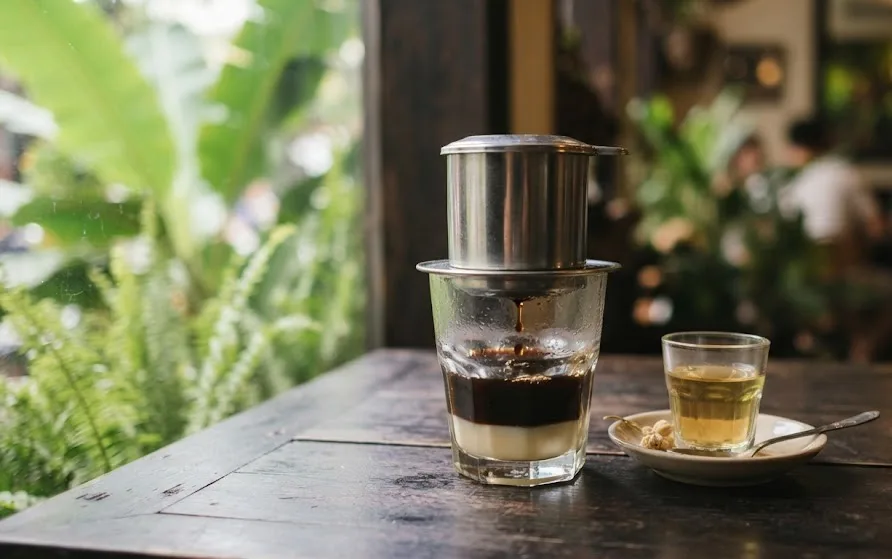
Da Nang coffee culture used to mean one thing: strong phin-brewed robusta, condensed milk, a plastic stool. That version still exists and still thrives, but the city’s transformation into a premier tourist destination has layered several new scenes on top of it, and today Da Nang boasts a complex and competitive array of coffee shops. The shift reflects something broader in Vietnamese society, where coffee is no longer just a morning ritual but a lifestyle choice and a social connector.
What separates 2026 from previous years is the arrival of genuine competition at the top end. Several shops now roast in-house, source green coffee deliberately, and train staff to talk through a flavour profile before you order. At the other end of the market, the salt coffee boom has given every neighbourhood cafe a signature item worth queuing for. The result is a coffee ecosystem that caters to a wide spectrum of preferences, from the purist seeking a well-extracted Ethiopian pour-over to the traveller who just wants a cold, sweet, caffeinated drink after a morning at My Khe Beach.
What Changed in 2025: The Quang Nam Merger
If you’re working from an older guide, start here — the map has literally changed.
On 1 July 2025, Da Nang City and Quang Nam province were merged into a single administrative unit that kept the name Da Nang City. The new city covers approximately 11,859 km² with a population of just over 3 million, and the old two-tier district system was dissolved in favour of 94 commune-level units: 23 wards, 70 communes, and the Hoang Sa special zone.
Important note: For a coffee trip, three practical consequences matter. First, Hoi An is now part of Da Nang — so are My Son and Cu Lao Cham — which means a Da Nang cafe guide can legitimately extend 30 km south. Second, old district names survive as ward names: Hai Chau, Son Tra, Ngu Hanh Son and Cam Le still appear on Google Maps and on cafe signage, so navigation is unaffected. Third, some older business listings still carry pre-merger address formatting, but street number and street name remain reliable.
Factors Driving Growth
Several key factors have contributed to the rapid expansion and sophistication of Da Nang’s coffee culture. Understanding these elements provides context for the diverse offerings found throughout the city.
-
Tourism Volume: The 2025 figures represent a genuine step change rather than a rounding error. More visitors mean more cafes, and more competition means better cafes.
-
A Large Remote-Work Population: Da Nang has become one of Asia’s more affordable digital nomad bases, creating demand for something traditional Vietnamese cafe culture never provided: reliable Wi-Fi, outlets at every seat, air conditioning, and staff who don’t mind a five-hour table.
-
The Salt Coffee Wave: Cà phê muối did for Vietnamese cafe menus in 2023–2026 what flat whites did for Australia — it gave every shop a signature order and pulled in customers who weren’t previously coffee drinkers.
-
Local Entrepreneurship: A new generation of Vietnamese founders is investing in green sourcing, in-house roasting, barista training, and unique cafe concepts rather than competing on price alone.
-
Specialty Coffee Movement: The global third-wave movement has inspired local roasters to focus on bean origin, roasting profiles, and precise brewing — and increasingly to treat fine robusta as a specialty product rather than a budget one.
-
Culinary Innovation: Coffee is now integral to Da Nang’s food scene, with cafes offering brunch menus, croffles, and dessert pairings that stand on their own.
Must-Visit Cafes in Da Nang
Da Nang offers a plethora of cafes, each with its distinct charm and offerings — but they are not variations on a theme. The four pillars of Da Nang coffee culture serve genuinely different purposes, and knowing which one you want before you set out matters more here than in most cities. Whether you seek a tranquil escape, a serious pour-over session, a vibrant workspace, or a taste of local tradition, these establishments are worth exploring.
For the Traditional Vietnamese Coffee Enthusiast
Experience the authentic heart of Vietnamese coffee culture at these beloved spots, known for their robust flavors and classic preparation methods.
Important note: Traditional Vietnamese coffee is built on robusta, which carries roughly double the caffeine of arabica and delivers a heavy, chocolatey, low-acid cup. It is brewed using a phin — a small aluminium or stainless drip filter that sits on top of your glass and takes four to six minutes to finish. That wait is the format, not a service failure.
Cộng Cà Phê (Bach Dang Riverside)
The national chain built around a stylised wartime-nostalgia aesthetic: enamelware, army-green fabric, and propaganda-poster graphics. Coconut coffee and the coconut mung bean smoothie are the reasons to come. It is a chain and it is touristy, but the Han River-facing terrace at this branch earns its place on the list.
Address:
-
98–96 Bach Dang, Hai Chau, Da Nang · Hours: ~7:00 AM – 11:30 PM
-
An Thuong 6, Hoang Ke Viem, Bac My Phu, Ngu Hanh Son, Da Nang · Hours: ~7:00 AM – 11:30 PM
-
39-41 Nguyen Thai Hoc, Hai Chau, Da Nang · Hours: ~7:00 AM – 11:30 PM
NAM House Cafe
Closer to a small museum than a cafe. Every surface carries pre-1975 South Vietnamese memorabilia, posters, artwork and antiques, and you keep spotting new details the longer you sit. Peanut coffee and coconut americano are the signatures.
Address: 15/1 Le Hong Phong, Hai Chau · Hours: ~6:00 AM – 11:00 PM · Cash only
Trình Cà Phê
A large garden cafe with misted greenery, Trinh Cong Son on the speakers, and an unusually deep menu. The avocado coffee — made with Dak Lak avocado and topped with toasted coconut — is the order, and the preparation is a small performance in itself. One of the few places in the city using 100% arabica for cappuccinos and lattes, and priced like a local shop despite the crowds.
Address:
-
25 Pham Hong Thai, Hai Chau, Da Nang · Hours: ~6:30 AM – 11:30 PM
-
256 Bach Dang, Hai Chau Ward, Da Nang · Hours: ~6:30 AM – 11:30 PM
-
Tran Hung Dao Street, An Hai, Da Nang · Hours: ~6:30 AM – 11:30 PM
-
Bach Dang, Hai Chau, Da Nang · Hours: ~6:30 AM – 11:30 PM
-
111 Nguyen Huu Tho, Hoa Cuong, Da Nang · Hours: ~6:30 AM – 11:30 PM
Nối – The Cabin
Built beside the fishing harbour with direct sea views over the bay and the boats. Retro-timber interior, big windows, plenty of power outlets, and enough space to actually work. The egg coffee is the standout. Plan around the early close, and note that the harbour location means an occasional fish smell on the breeze.
Address: 118 Chu Huy Man, Son Tra · Hours: ~6:30 AM – 5:30 PM · Cash only
For the Salt Coffee Pilgrim
The drink of the moment, and the single biggest change to Vietnamese cafe menus since the last edition of this guide.
Insight: Salt coffee originated in Hue, roughly 100 km north, at a small family-run shop about 13–15 years ago, and stayed a local Hue specialty for a decade before going nationwide around 2023. The build is condensed milk at the bottom, phin-brewed robusta above it, and a thick cap of lightly salted whipped cream on top. The salt suppresses bitterness and amplifies the sweetness of the milk. Order it iced and drink from the top down without stirring to get all three layers. Note the etiquette point: it is a Hue drink that Da Nang adopted, and many of the best shops say so directly in their names.
Cà Phê Muối Huế 3 – NCF Tran Phu
The reference version. Local-style setup with low plastic stools spilling onto the pavement, packed at nearly all hours, and a salt coffee genuinely worth the queue — bold phin robusta under a silky salted cream. Coconut coffee is a strong second choice, and there’s a salt matcha latte for the non-coffee members of your group.
Address: 254 Tran Phu, Hai Chau · Hours: ~6:30 AM – 10:00 PM
N Salt Coffee (Dragon Bridge)
A newer branch at the western end of Dragon Bridge. The egg coffee here is as good as the salt coffee, which is not always the case at salt-coffee-first shops.
Address: 10 Le Dinh Duong, Hai Chau · Hours: ~6:30 AM – 11:00 PM
Cà Phê Muối Huế – Bản Cà Phê
Handy for anyone staying near My Khe Beach. Free iced tea, free Wi-Fi, and an air-conditioned room upstairs that is usually empty because everyone sits outside. The intersection is loud.
Address: 114 Nguyen Van Thoai, Bac My Phu, Ngu Hanh Son · Hours: ~6:30 AM – 11:00 PM · Cash only
Cafe Muối Đà
Small, family-run and overwhelmingly local. The owner will remember your order by the second visit. Not a destination cafe, which is exactly the appeal.
Address: 61 Ha Thi Than, An Hai · Hours: ~6:00 AM – 11:00 PM
For the Specialty Coffee Aficionado
These cafes are at the forefront of Da Nang’s specialty coffee movement, focusing on single-origin beans, meticulous brewing, and innovative flavor profiles.
Insight: Specialty coffee emphasizes the origin and quality of the beans, with baristas trained to highlight the unique characteristics of each roast through various brewing methods. In Vietnam this increasingly includes carefully processed robusta served as a deliberate choice rather than a cheaper substitute for arabica.
XLIII Specialty Coffee
Formerly known as 43 Factory Coffee Roaster and since rebranded, the name references the 43rd parallel. This is the flagship of Da Nang’s third-wave scene: a large architectural space with high ceilings, skylights, koi ponds, and a glass-walled roastery you can watch from the floor. The pour-over programme rotates single origins from Vietnam’s Central Highlands alongside Ethiopian, Kenyan and Rwandan lots, and staff will talk you through the profile before you order — worth taking them up on, because the lighter roasts read as surprisingly acidic if you arrive expecting Vietnamese-style dark roast.
Address:
-
Lot 419–422 Ngo Thi Si, Ngu Hanh Son · Hours: ~6:30 AM – 10:30 PM
-
326 Ly Thuong Kiet, Hoi An Tay, Da Nang · Hours: ~6:30 AM – 10:30 PM
Common mistake: Ordering a rare lot without checking the price. Competition and micro-lot coffees here can run into the hundreds of thousands of dong per cup. The standard menu is far more reasonable.
Roost Coffee Roasters
A family-run roastery with a garden that genuinely feels like an escape — trees, birds, and a koi pond tucked into a quiet residential street. You choose your bean origin at the counter, which is unusual for a shop this size and a good sign of the operation’s confidence. Notable orders: Vietnamese robusta americano, and espresso with sugarcane juice.
Address: 57 Ba Huyen Thanh Quan, Ngu Hanh Son · Hours: ~7:00 AM – 9:00 PM
Oslow Coffee
One of the most consistently praised shops in the city. Baristas here will show you the recipe and ratios they’re using for a given pour-over if you ask — a level of transparency you rarely get. Strong across the whole menu rather than specialising in one thing: black coffee, milk drinks, teas and pastries all hold up.
Address: 89 Suong Nguyet Anh, An Hai · Hours: ~7:00 AM – 10:00 PM (earlier close on Wednesdays)
Zi Coffee & Roastery
A bright white-and-yellow modern space with indoor and outdoor seating, sitting somewhere between a specialty cafe and a brunch spot. Reliable Wi-Fi and quiet enough to focus for a few hours. Slightly above local price levels, justified by the comfort.
Address: 34 Le Quang Dao, Ngu Hanh Son · Hours: ~6:30 AM – 10:30 PM
Brewman Coffee Concept
A small alley shop that built its reputation on coconut coffee and salt coffee done properly rather than done sweetly. The coconut coffee arrives with shaved ice in a small bottle. Quiet, soft music, pet-friendly, and mercifully non-smoking. Note the early close — this is a morning and afternoon destination.
Address: K27a/21 Thai Phien, Hai Chau · Hours: ~7:00 AM – 6:00 PM
Lighthouse
An industrial-style multi-level space that has become a default meeting point for Da Nang’s remote-work community. Excellent coffee alongside Western breakfast and brunch options. The trade-off is that food can take a while when it’s busy, and it’s busy often.
Address: 12 Dinh Nghe, An Hai · Hours: ~7:30 AM – 10:00 PM
For the Remote Worker
Da Nang’s digital nomad population has produced a category of cafe that barely existed here a decade ago: designed for long sessions, with the infrastructure to match.
HI4 Coffee & Workspace
Two floors of open-plan seating — essentially a co-working space with a coffee counter. Fast Wi-Fi, quiet, and the only genuine 24-hour option on this list. Gets extremely full; arriving at peak hours can mean hunting for a seat.
Address:
-
120 Mai Thuc Lan, Ngu Hanh Son · Hours: Open 24 hours
-
02 Nguyen Van Troi, Hoa Cuong · Hours: Open 24 hours
CÀPHÊ COMMUNE
Small, beautifully put together, and in the middle of the An Thuong expat district. Fast Wi-Fi, good breakfast, and the kind of staff who remember you. Seating is limited.
Address: 22 An Thuong 4, Ngu Hanh Son · Hours: ~7:30 AM – 10:00 PM
Dng.coffee
High ceilings, generous food portions for the price, power sockets at many seats, and — usefully — accepts both cash and cards. Flat whites here are consistently well pulled. Slightly above neighbourhood average on price.
Address: 05 An Thuong 2, Ngu Hanh Son · Hours: ~8:00 AM – 9:30 PM
An Nhiên Coffee 04
A two-storey family-run cafe west of the centre, away from the tourist corridor entirely. Arabica single shots, homemade seasonal ice cream, and an owner who tends to send out snacks you didn’t order.
Address: 04 Nguyen Huu Tho, Hoa Cuong · Hours: ~7:00 AM – 10:00 PM
Wind Garden
A large garden compound with a koi pond, resident cats, indoor air-conditioned areas, and private rooms you can book for quiet work or small meetings. Strong salt coffee. Prices run a few thousand dong above chain cafes and are worth it.
Address: 72 Le Manh Trinh, An Hai · Hours: ~7:00 AM – 10:00 PM
For Unique Ambiance and Experiences
Discover cafes that offer more than just great coffee, providing distinctive atmospheres and memorable experiences.
The Wave Cafe Da Nang
Arguably the best ocean-view cafe in the city, attached to a hotel on the Son Tra coastal road — sea on one side, mountains on the other, and a coconut coffee that isn’t oversweetened. Slightly out of the way, and it closes at 5:00 PM, so it’s a daytime stop rather than a sunset one.
Address: A2, 3 Hoang Sa, Son Tra · Hours: ~8:00 AM – 5:00 PM
Sơn Trà Marina
The blue-and-white Santorini pastiche you’ve seen on Instagram. It is genuinely photogenic and genuinely crowded — arrive near opening if you want photos without strangers in them. There is a minimum one-drink-per-person charge to enter, and the food and drinks are serviceable rather than special. You’re paying for the setting.
Address: Ho Xanh, Son Tra · Hours: ~7:30 AM – 9:00 PM
S2 Station
Rustic, low-key, and well outside the crowds. Coffee, teas and cold beer, with a friendly resident dog. Good for an unhurried afternoon when you want to be nowhere near a tour group.
Address: 168 Tran Sam, Son Tra · Hours: ~6:00 AM – 11:30 PM
Cafe Phượng
A hidden-garden layout built around a koi pond, with a small bridge running through the planting — genuinely cooling in summer heat. Coconut coffee and mango smoothie are the picks; ask for less ice.
Address: Lot 1–2 An Thuong 29, Ngu Hanh Son · Hours: ~7:00 AM – 10:00 PM
Lost Cafe & Eatery
Down an alley near the centre and recently opened, this is already one of the most charming spaces in the city: a colourful plant-filled courtyard, a deliberately quirky interior, and a Shiba Inu named Lost. Cold brew is the order.
Address: 57/09 Le Hong Phong, Hai Chau · Hours: ~7:30 AM – 10:00 PM
CLOSED — WONDERLUST – Coffee & Souvenir
Three connected floors of modern design near Han Market, with a souvenir section attached. QR-code table ordering, charging outlets at some seats, and covered parking. The most convenient central stop if you’re shopping.
Address: 96 Tran Phu, Hai Chau · Hours: ~8:00 AM – 7:30 PM
Berries Croffle
Croffles — croissant-waffle hybrids — served with ice cream, alongside a properly smooth cold brew. Oat milk available, which is still not universal in Da Nang.
Address: 08 An Thuong 11, Ngu Hanh Son · Hours: ~7:30 AM – 11:00 PM
For the Hoi An Day Trip
Since the merger these fall inside Da Nang city limits. Hoi An old town is roughly 45 minutes south by car.
Reaching Out Teahouse
A tea house staffed entirely by deaf and hard-of-hearing team members. Guests are invited not to speak; you communicate using engraved wooden blocks provided at each table. The result is a genuinely silent room in the middle of one of Vietnam’s noisiest tourist zones. Coffee and tea tasting sets are served in handmade brass and glassware, and there’s a craft workshop at the back selling ceramics and silverwork. One of the most memorable coffee experiences in the country — and it isn’t really about the coffee.
Address: 131 Tran Phu, Old Town, Hoi An · Hours: ~8:00 AM – 8:00 PM
Shelter Cafe Hoi An
Clean, air-conditioned, and a reliable refuge from old-town heat. Traditional egg coffee, acai bowls, and consistently warm service.
Address: 19 Chau Thuong Van, Hoi An · Hours: ~8:00 AM – 10:00 PM

Understanding Vietnamese Coffee Brewing Methods
The way coffee is prepared significantly impacts its flavor and character. Da Nang’s coffee culture showcases a fascinating blend of traditional and modern brewing techniques.
Traditional Methods
These methods are deeply ingrained in Vietnamese coffee culture and offer a distinct taste experience.
-
Phin Filter: The iconic small metal filter used to brew potent, slow-dripped coffee, typically served over condensed milk. Allow four to six minutes.
-
Robusta Beans: The predominant variety in Vietnam, known for its bold, chocolatey, low-acid profile and higher caffeine content. Not a compromise — it is the correct bean for phin brewing and for condensed-milk drinks, where a delicate arabica would simply disappear.
-
Salted Cream Cap: The technique behind cà phê muối — lightly salted whipped cream floated over phin coffee and condensed milk, drunk from the top down without stirring.
-
Egg Coffee: Whipped egg yolk and condensed milk beaten into a thick custard-like layer over strong coffee. A Hanoi invention, now widely served in Da Nang.
Modern Techniques
As specialty coffee gains traction, these methods highlight the nuances of different bean origins and roasting profiles.
-
Espresso Machine: Used for classic espresso-based drinks like lattes, cappuccinos, and flat whites.
-
Pour-Over: A manual brewing method allowing precise control over water temperature and flow rate, extracting delicate flavors. The core of the specialty menu at XLIII, Roost and Oslow.
-
Aeropress: A versatile brewer that uses air pressure to create a smooth, rich cup with less acidity.
-
Cold Brew: Coffee steeped in cold water for extended periods, resulting in a smooth, less acidic and naturally sweeter beverage — well suited to the climate.
Navigating Da Nang’s Coffee Etiquette
While generally relaxed, understanding a few local customs can enhance your cafe experience in Da Nang.
Step 1 – Ordering: Menus are almost always bilingual in tourist areas. The phrases worth learning are cà phê đen đá (iced black), cà phê sữa đá (iced with condensed milk), bạc xỉu (mostly milk, mild), cà phê muối (salt coffee), cà phê dừa (coconut coffee), cà phê trứng (egg coffee), ít đá (less ice) and ít ngọt (less sweet). That last one is the single most useful phrase on the list, because default sweetness levels are high.
Step 2 – Payment: This has changed significantly. QR bank transfer is now the dominant payment method in Vietnam, and most cafes display a VietQR code at the counter. As a visitor without a Vietnamese bank account this isn’t available to you, which leaves cash and — sometimes — cards. Carry cash. Several excellent cafes on this list are explicitly cash-only, including NAM House, Nối – The Cabin and Bản Cà Phê. Card acceptance has improved but remains inconsistent, and is far more common at Western-facing specialty shops than at traditional ones. Payment is usually taken at the counter when ordering; larger cafes may bill at the table.
Step 3 – Seating: Vietnamese cafes are built for staying and nobody will move you along. The exception is peak weekend hours at small shops, where the polite move is to free the table once you’ve finished.
Step 4 – Tipping: Tipping is not customary or expected in Vietnam. Rounding up the bill is fine; anything more is unnecessary.
Common mistake: Expecting Western quick-service speed. A phin takes six minutes and food at a busy brunch cafe can take twenty. This is not a failure of service — it is the tempo of the place, and fighting it will make your trip worse.
The Role of Coffee in Da Nang’s Social Fabric
Coffee shops in Da Nang are more than just places to grab a drink; they are vital social hubs that weave through the fabric of daily life. They serve as meeting points for friends, informal business venues, and spaces for quiet contemplation.
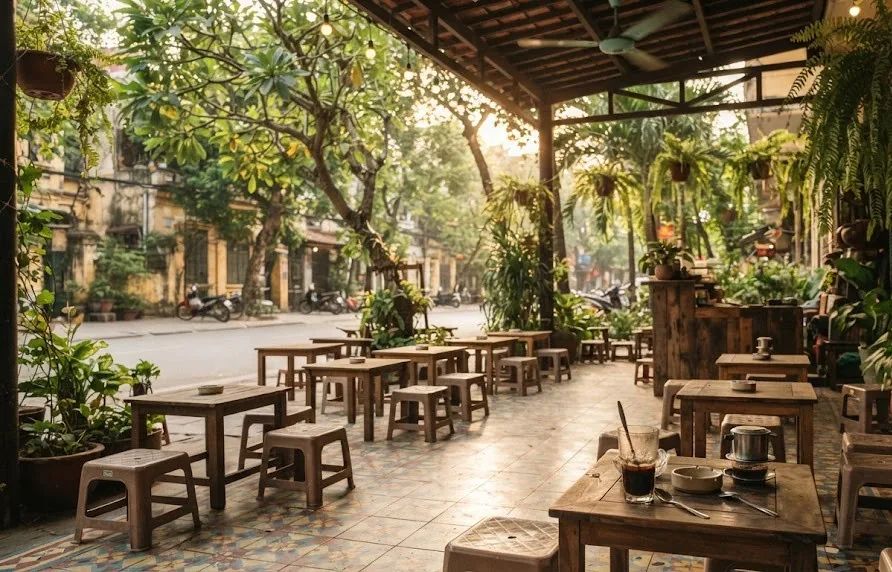
The vibrant street life of Da Nang often spills directly into its cafes. Low plastic stools on the pavement outside a salt coffee shop are as much a part of Da Nang coffee culture as the air-conditioned third-wave roastery two streets away, and plenty of people use both in the same day. This dual nature reflects the city’s broader blend of tradition and modernity.
Data: Da Nang’s accommodation establishments served over 17.6 million — up 25%. The city’s tourism sector has set a 2026 target of 19.1 million visitors, including 8.7 million international, with combined accommodation, food and travel revenue targeted at 70 trillion VND. Figures per Da Nang Department of Culture, Sports and Tourism year-end reporting.
Community and Connection
Cafes often foster a genuine sense of community. Many independently owned establishments are run by families or passionate individuals who build relationships with their regular customers — the owner at Cafe Muối Đà who remembers your order on the second visit, or the family at Roost whose children practise their English on visitors. This personal touch transforms a simple transaction into a real social interaction.
Workshops, cupping sessions and local art displays are increasingly common, further cementing cafes as cultural centers. Reaching Out Teahouse in Hoi An takes this furthest, operating as both a silent tea room and a craft workshop employing deaf and hard-of-hearing artisans.
Future Trends in Da Nang’s Coffee Culture
As Da Nang continues to grow and evolve, so too will its coffee scene. Several trends are likely to shape its future, offering exciting prospects for both locals and visitors.
Insight: The most consequential shift underway is not stylistic but structural — more cafes are moving from buying roasted beans to roasting their own, which is the single biggest driver of quality improvement in any coffee market.
-
The Rise of Roasteries: Independent roasteries continue to emerge, supplying beans directly to cafes and consumers and fostering deeper appreciation for the roasting process.
-
Fine Robusta as Specialty: For years “specialty” in Vietnam implied arabica. That is shifting: carefully processed and roasted robusta is appearing on pour-over menus as a deliberate choice rather than a budget one.
-
Hoi An Integration: The merger creates an obvious opening for roasters to run city-and-old-town operations under a single brand. Expect to see it.
-
Non-Dairy Expansion: Oat and almond milk have moved from rare to common in An Thuong and Ngu Hanh Son, though they remain uncommon at traditional shops.
-
Sustainable Practices: Some cafes already discount for customers bringing their own cup. Given how much single-use plastic a Vietnamese iced-drink economy generates, this has considerable room to grow.
-
Technology Integration: QR ordering and QR payment are now standard rather than novel, and loyalty programmes and digital engagement are following.
Related on this site
- Da Nang Coffee Guide: Salt Coffee, Phin & What to Order
- Discover Da Nang’s Best Kombucha Spots: Fermented Goodness and Flavors 2026
- Da Nang’s Best Nuoc Mia: Fresh Sugarcane Juice Stops 2026
- What Da Nang costs per day
Frequently Asked Questions
What is the most popular coffee drink in Da Nang?
Salt coffee (cà phê muối) has been the dominant order since roughly 2023. Coconut coffee is a close second, and cà phê sữa đá — iced coffee with condensed milk — remains the everyday default for locals.
Where did salt coffee actually come from?
Hue, about 100 km north of Da Nang, at a small family-run shop roughly 13–15 years ago. It stayed a Hue specialty for around a decade before spreading nationwide.
Are Da Nang cafes expensive?
Prices vary widely. Traditional phin coffee at a local shop runs 20,000–35,000 VND, around one US dollar. Standard cafe drinks including salt and coconut coffee are 35,000–60,000 VND. Specialty espresso drinks run 50,000–80,000 VND, and single-origin pour-overs 70,000–150,000 VND. Rare lots at high-end roasteries go considerably higher — ask before ordering.
Do cafes take cards?
Inconsistently. QR bank transfer is what most Vietnamese customers use and it isn’t accessible to foreign visitors, so carry cash. Several of the best cafes on this list accept nothing else.
Can I find vegan milk options in Da Nang cafes?
Increasingly yes, especially in the An Thuong and Ngu Hanh Son areas. Berries Croffle, Nối – The Cabin and most specialty shops carry oat milk. Traditional cafes generally do not.
Which cafes are best for working?
HI4 Coffee & Workspace is open 24 hours. Lighthouse, Zi Coffee & Roastery, CÀPHÊ COMMUNE, Dng.coffee and Wind Garden all offer reliable Wi-Fi, outlets and comfortable seating for long sessions.
Is Hoi An really part of Da Nang now?
Yes. The July 2025 merger of Da Nang City and Quang Nam province brought Hoi An, My Son and Cu Lao Cham inside Da Nang’s boundaries.
What is the best time to visit a cafe in Da Nang?
Locals go early — 6:00 to 8:00 AM is genuinely busy. Mid-morning is quietest. Afternoons suit long work sessions. Note that several of the best view cafes close by 5:30 PM, so plan sunset elsewhere.
Should I tip at Da Nang cafes?
Tipping is not a standard practice in Vietnam. While appreciated for exceptional service, it is not expected and generally not necessary.
What defines Da Nang coffee culture compared to Hanoi or Saigon?
Hanoi is defined by egg coffee and cramped old-quarter shophouses; Saigon by cà phê sữa đá and sidewalk speed. Da Nang coffee culture is younger and more layered — it absorbed Hue’s salt coffee, built a third-wave roastery scene serving international visitors, and developed a category of 24-hour workspace cafes that neither of the larger cities has to the same degree.
Conclusion
Da Nang coffee culture is a vibrant and dynamic tapestry, but it rewards a plan rather than a search for a single “best.” The city does four things genuinely well — third-wave specialty, salt and coconut coffee, work-friendly spaces, and traditional phin — and they are not interchangeable. A serious pour-over at XLIII and a plastic-stool salt coffee on Tran Phu are both worth your time, but neither substitutes for the other. Pick one cafe from each category and you’ll understand the city far better than working through a ranked list.
As Da Nang continues to embrace innovation while cherishing its heritage, its coffee scene is poised for further growth and exciting new developments. Carry cash, ask for ít ngọt, and let the phin take its six minutes. And remember that since mid-2025 the honest version of this guide extends 30 km south to Hoi An — which is more coffee ground to cover than any Da Nang guide written before the merger could account for.
Cafe addresses and opening hours were verified in August 2026. Hours change frequently in Vietnam — confirm on Google Maps before travelling to any specific location, particularly the early-closing cafes (Nối – The Cabin, The Wave, Brewman). Administrative changes are per National Assembly Resolution 202/2025/QH15 and Standing Committee Resolution 1659/NQ-UBTVQH15.
Part of our guide to what to eat in Da Nang.