Da Nang’s coastline, riverways, and hidden lagoons offer some of Vietnam’s most diverse kayaking terrain. From paddling past the Dragon Bridge at sunset to exploring the remote coves of the Son Tra Peninsula, the city is a launching pad for adventures that suit everyone from first-timers to seasoned paddlers. This guide breaks down the six best kayaking locations in Da Nang for 2026, covering what makes each spot unique, how to get there, and what to expect on the water.
Da Nang’s kayaking scene in 2026 offers six distinct paddling environments: an urban river route under the Dragon Bridge, sea kayaking around the Son Tra Peninsula with wildlife spotting, a coastal paddle from My Khe Beach to the Marble Mountains, sunset tours through Da Nang Bay’s fishing villages, freshwater exploration at Hoa Trung Lake, and a full-day cross-border expedition to Hoi An. Each location has specific seasonal windows, difficulty levels, and safety considerations that determine the best time to visit. This article provides the practical details you need to choose the right route and plan a safe, memorable paddle.
How We Selected Da Nang’s Top Kayaking Spots for 2026
Six locations made the final list based on accessibility, scenery quality, water conditions, and crowd levels during peak season.
We evaluated each spot against four criteria. Accessibility considers how easy it is to reach the launch point from Da Nang city center and whether rental equipment is available nearby. Scenery looks at the visual reward — limestone karsts, mangrove forests, fishing villages, or city skylines. Water conditions factor in wave height, current strength, and seasonal safety ratings. Crowd levels account for tourist boat traffic and how many other kayakers you will likely encounter on a weekend morning.
In 2026, Da Nang’s kayaking infrastructure has expanded noticeably. New tour operators have opened along the Han River and Da Nang Bay, offering guided sunset paddles and equipment delivery services. The city has also installed additional kayak launch ramps at Bach Dang Street and near the Tho Quang fishing village. These developments make previously tricky launch points accessible to independent paddlers without a guide.
1. Han River: Urban Kayaking Through Da Nang’s Heart
The Han River offers the most accessible kayaking in Da Nang, with a 5–8 km loop that beginners can complete in two to three hours.
Best launch points and rental shops along the riverfront
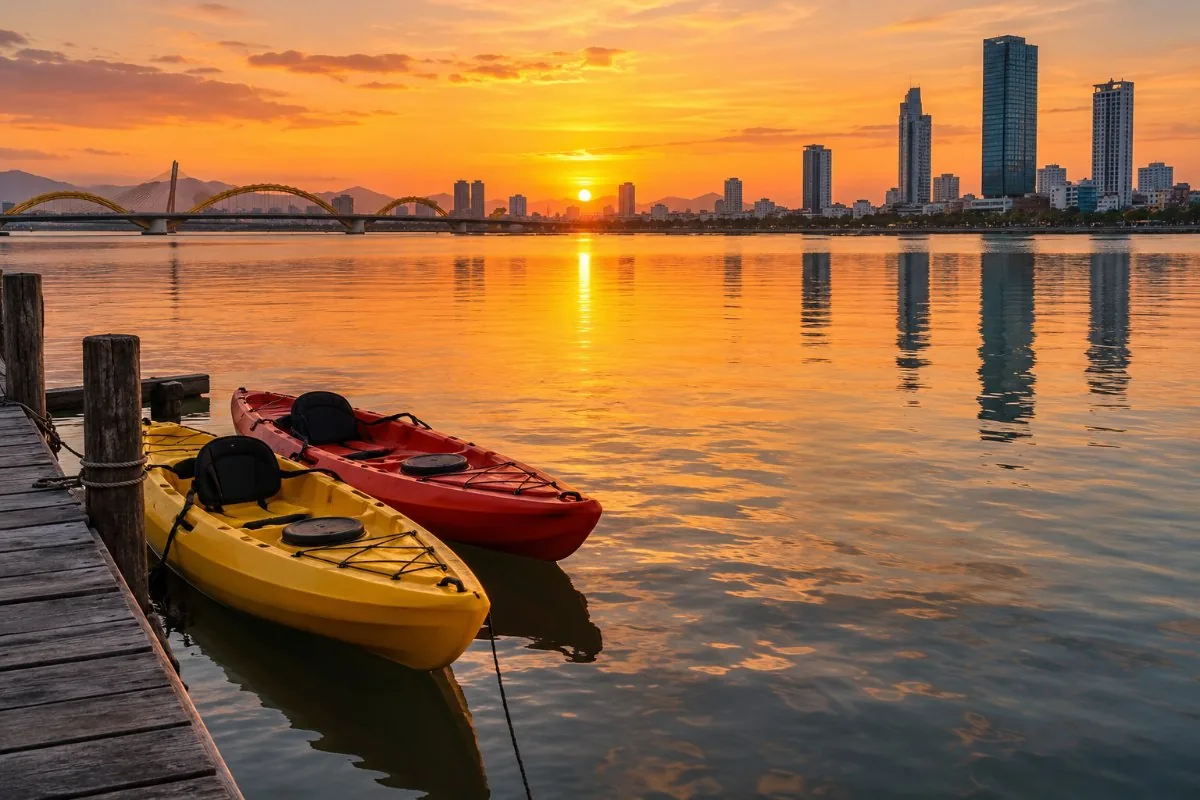
The most convenient launch point is along Bach Dang Street, near the Dragon Bridge. Several rental shops operate here, including Han River Kayak, which offers single and tandem kayaks for 150,000–250,000 VND per hour. They provide life jackets, paddles, and a basic safety briefing. Arrive before 4:00 PM for daytime paddling or after 5:30 PM for the sunset session. The water is calm here, with minimal current, making it ideal for first-timers who want to practice basic strokes before heading further out.
Dragon Bridge views and evening paddling with city lights
The highlight of this route is paddling directly under the Dragon Bridge. On weekend evenings, the bridge puts on a fire and water show at 9:00 PM — kayakers can position themselves on the river’s east side for an unobstructed view. Evening paddling transforms the experience entirely. The city skyline lights up along both banks, and the water reflects the neon signs from riverside bars and restaurants. The temperature drops noticeably after sunset, so bring a light windbreaker even during summer months.
Distance and difficulty: 5–8 km loop suitable for beginners
The standard loop starts at Bach Dang Street, paddles north toward the Tien Sa Port area, crosses to the east bank near the Novotel, and returns along the opposite side. Total distance is roughly 5 km, extendable to 8 km if you continue toward the Han River mouth. The current is gentle, and motorized boat traffic is light during weekday afternoons. Beginners can complete this route without prior kayaking experience, though paddling against the wind on the return leg can be tiring. Take a 10-minute break at the halfway point on the east bank.
2. Son Tra Peninsula: Sea Kayaking Around Monkey Mountain
Son Tra Peninsula offers the most adventurous sea kayaking near Da Nang, with hidden coves and snorkeling spots that are only reachable by paddle craft.
Hidden coves and snorkeling spots only accessible by kayak
The peninsula’s eastern coastline is dotted with small beaches that have no road access. Bai But beach and Tien Sa beach are two of the most popular stopovers. From the main launch point at the Son Tra Nature Reserve entrance, paddle south along the coast for about 30 minutes to reach Bai But. The water here is clear enough for snorkeling — you will see coral formations and small reef fish within 10 meters of the shore. Bring your own snorkel mask, as rental options are limited at the launch point.
Wildlife encounters: langurs, sea turtles, and coral gardens
Son Tra is home to the endangered red-shanked douc langur, and paddling quietly along the shoreline increases your chances of spotting them in the trees above the beach. Sea turtles are less common but have been reported in the waters around Tien Sa beach during the early morning hours. The coral gardens near the peninsula’s southern tip are the most vibrant in the area, though they are fragile — avoid standing on the coral and maintain a distance of at least 2 meters. Local conservation groups have marked protected zones with buoys, so stay within the designated paddling channels.
Best time of day for calm waters and avoiding tourist boats
Early morning, between 6:00 AM and 9:00 AM, offers the calmest water conditions on the Son Tra coast. The afternoon sea breeze picks up around 11:00 AM, creating chop that makes paddling harder and less enjoyable. Tourist boats from the Da Nang harbor start arriving around 10:00 AM, so an early start also helps you avoid the wake and noise. Check the Windy app the night before — if wind speeds exceed 15 km/h, postpone your trip to the next day. The water is generally calmest from March to May and September to November.
3. My Khe Beach to Marble Mountains: Coastal Paddle Route
This 3–4 hour coastal journey connects My Khe Beach to the Marble Mountains, offering limestone karst views and hidden beach stopovers along the way.
3–4 hour coastal journey with limestone karst views
The route starts at the southern end of My Khe Beach, near the Son Tra – Dien Ngoc intersection. Paddle south along the coastline, keeping the shore on your right. After about 45 minutes, the Marble Mountains come into view — five marble and limestone hills rising directly from the coastal plain. The total distance is roughly 8 km one way, meaning a round trip requires 6–8 hours of paddling. Most kayakers choose to go one way and arrange a pickup from Non Nuoc beach. Several local tour operators offer this shuttle service for around 200,000 VND per person.
Stopover at hidden beaches between My Khe and Non Nuoc
Two small beaches sit between the main tourist stretches — locals call them “secret beaches” because they lack signage and development. The first appears about 2 km south of the My Khe launch point, marked by a cluster of casuarina trees. The second is just north of Non Nuoc beach, accessible only by water. Both have soft sand and shallow water, making them safe spots for a rest break. Pack a small dry bag with snacks and water, as there are no vendors at either location.
Tide and wind considerations for this exposed coastal route
This route is exposed to open sea conditions, so tide and wind planning is essential. Paddle with the outgoing tide in the morning (around 6:00 AM–9:00 AM) to make the southward journey easier. The return trip should align with the incoming tide in the late afternoon. Wind patterns from March to September are generally southeasterly, meaning you will face headwinds on the return leg. If wind speeds exceed 20 km/h, skip this route entirely and choose a sheltered option like the Han River or Hoa Trung Lake instead.
4. Da Nang Bay: Sunset Paddling and Fishing Village Tours
Da Nang Bay offers the best sunset kayaking experience, with guided tours that paddle through the floating communities of Tho Quang fishing village.
Tho Quang fishing village: paddling through floating communities
The Tho Quang fishing village sits on the northern edge of Da Nang Bay, where hundreds of wooden boats anchor overnight. Guided tours paddle through the floating village, passing between rows of fishing boats and seeing how the local fishermen live on the water. The experience is more cultural than physical — the paddling is easy, with calm, sheltered water inside the bay. Tour guides typically stop at a floating platform where you can try your hand at traditional fishing techniques using a bamboo rod and line.
Sunset timing: best months for golden hour on the water
The golden hour on Da Nang Bay runs from about 5:00 PM to 6:15 PM during the dry season (February to August). The sun sets behind the Son Tra Peninsula, casting orange and pink reflections across the bay’s calm surface. September and October also offer good sunset conditions, though the timing shifts to 5:30 PM–6:45 PM. November through January has the earliest sunsets (around 5:15 PM) but also carries a higher chance of cloud cover.
Tour operators offering guided sunset kayak experiences
Two main operators run sunset tours in Da Nang Bay. Sunset Kayak Da Nang offers a 2.5-hour guided tour for 500,000 VND per person, including equipment, a guide, and a stop at the floating fishing village. Danang Paddle runs a similar tour for 450,000 VND per person, with a focus on photography — the guide knows the best angles for capturing the sunset behind the fishing boats. Both operators provide life jackets, dry bags, and waterproof phone pouches. Book at least 24 hours in advance during peak season (June–August), as group sizes are capped at 12 people.
| Operator | Duration | Price (per person) | Group Size | Inclusions |
|---|---|---|---|---|
| Sunset Kayak Da Nang | 2.5 hours | 500,000 VND | Max 12 | Equipment, guide, fishing village stop, water |
| Danang Paddle | 2 hours | 450,000 VND | Max 10 | Equipment, guide, photo tips, dry bag |
| Independent Rental | Self-guided | 200,000 VND/hour | N/A | Kayak, paddle, life jacket only |
5. Hoa Trung Lake: Freshwater Kayaking in Da Nang’s Highlands
Hoa Trung Lake provides a calm freshwater alternative to sea kayaking, with pine forest views and flat water that is perfect for families with children.
Inland alternative to sea kayaking: calm waters and pine forest views
Located about 30 minutes by car from Da Nang city center, Hoa Trung Lake sits in the highlands at an elevation of roughly 200 meters. The water is completely flat — no waves, no current, and no salt spray. Pine trees line the northern shore, creating a landscape that feels more like a temperate lake than a tropical destination. The water temperature is noticeably cooler than the sea, making it a refreshing option during the hot months of June through August. Paddling here is about relaxation rather than adventure, with no challenging conditions to navigate.
Getting there: 30-minute drive from Da Nang city center
From the city center, take Le Duan Street west until it becomes Highway 14B. Follow the signs toward Hoa Trung village — the lake is visible from the road. The drive takes approximately 30 minutes in normal traffic, though it can stretch to 45 minutes during weekend afternoons when local families visit the area. Parking is available at the lake’s main access point for 20,000 VND. A motorbike is sufficient for the trip, though a car is more comfortable if you are bringing your own kayak.
Equipment rental and picnic spots along the lake shore
Two small rental kiosks operate on the lake’s southern shore, offering single kayaks for 100,000 VND per hour and tandems for 150,000 VND per hour. They also rent life jackets, paddles, and basic dry bags. The kiosks close at 5:00 PM, so arrive by 2:00 PM at the latest to have enough paddling time. Several shaded picnic spots with wooden benches line the shore — bring your own food and drinks, as the only on-site option is a small stall selling bottled water and instant noodles.
The lake is shallow near the edges, making it safe for children to wade in the water after paddling.
6. Cua Dai Beach to Hoi An River Mouth: Cross-Border Paddle
This full-day expedition connects Da Nang’s southern coast to Hoi An’s Thu Bon River, covering 15–18 km with cultural stops along the way.
Connecting Da Nang’s southern coast to Hoi An’s Thu Bon River
The route starts at Cua Dai Beach, about 30 minutes south of Da Nang’s city center. Launch from the beach’s northern end and paddle south along the coastline for roughly 2 hours until you reach the Thu Bon River mouth. The transition from open sea to river is gradual — the water changes from blue to brown as you enter the estuary, and the current shifts from wave-driven to tide-driven. The river mouth can have strong tidal flows, so time your arrival for slack tide (the 30-minute window between incoming and outgoing tides) to make the transition easier.
Full-day expedition: 15–18 km paddle with cultural stops
Once inside the Thu Bon River, the landscape changes to mangrove forests and rice paddies. The main cultural stop is the Bay Mau Coconut Forest, a 7-hectare area of nipa palm trees where local fishermen have built a network of narrow canals. Paddle through these canals for about 45 minutes — the canopy of palm leaves creates a tunnel effect, and the water is dotted with small fishing boats. Further upstream, the craft villages near Hoi An offer another stop.
Kim Bong carpentry village and Thanh Ha pottery village are both accessible from the river, though you will need to tie up your kayak and walk about 200 meters inland to reach the workshops.
Guided multi-day options combining kayaking with Hoi An exploration
Several tour operators offer multi-day packages that combine this paddle route with exploration of Hoi An’s old town. Hoi An Kayak Tours runs a two-day itinerary: Day 1 covers the paddle from Cua Dai to Hoi An (about 6 hours on the water), with an overnight stay in a homestay near the ancient town. Day 2 includes a guided walking tour of Hoi An’s Japanese Covered Bridge, Chinese assembly halls, and night market. Prices start at 1,500,000 VND per person for the two-day package, including kayak equipment, guide, accommodation, and one meal.
Book at least one week in advance, as group sizes are limited to eight people.
Comparing Da Nang’s Kayaking Experiences at a Glance
Each location suits different skill levels and preferences — this comparison table helps you choose the right one for your trip.
| Location | Difficulty (1–5) | Best Season | Duration | Cost Range (VND) | Best For |
|---|---|---|---|---|---|
| Han River | 1 (Easy) | Year-round | 2–3 hours | 150k–250k/hour | Beginners, evening paddling |
| Son Tra Peninsula | 3 (Moderate) | Mar–May, Sep–Nov | 3–5 hours | 300k–500k (guided) | Wildlife, snorkeling |
| My Khe to Marble Mountains | 4 (Challenging) | Feb–Aug | 3–4 hours one way | 200k–400k (shuttle) | Experienced paddlers, scenery |
| Da Nang Bay | 2 (Easy) | Feb–Aug | 2–2.5 hours | 450k–500k (guided) | Sunset, cultural tours |
| Hoa Trung Lake | 1 (Easy) | Year-round | 1–3 hours | 100k–150k/hour | Families, children, relaxation |
| Cua Dai to Hoi An | 4 (Challenging) | Feb–May, Sep–Nov | 6–8 hours (full day) | 1.5M–2M (multi-day) | Adventurers, cultural explorers |
Essential Gear and Safety Tips for Da Nang Kayaking in 2026
Proper preparation separates an enjoyable paddle from a dangerous one — these gear and safety tips apply to all six locations.
What to pack: dry bags, reef-safe sunscreen, and waterproof phone cases
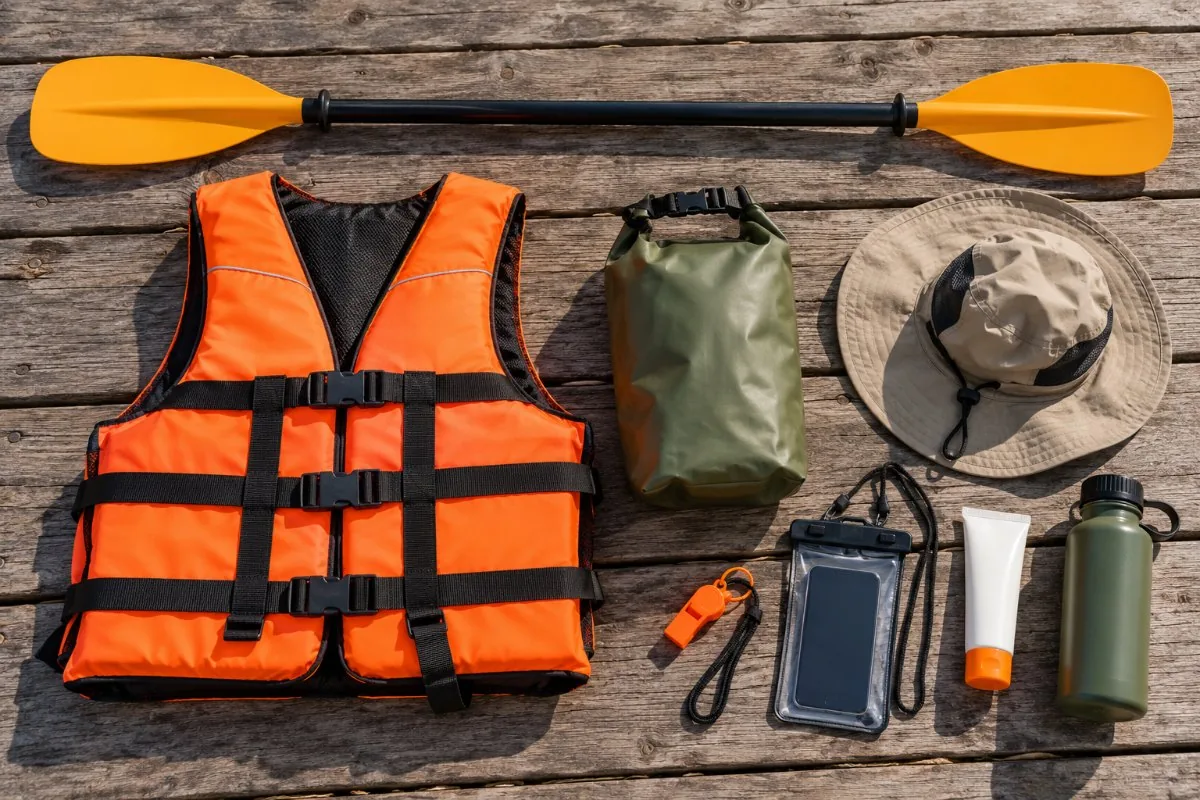
A 10–20 liter dry bag is essential for protecting your phone, wallet, and change of clothes. Brands like Sea to Summit and Earth Pak are available at outdoor gear shops in Da Nang’s city center. Reef-safe sunscreen is mandatory if you plan to paddle near coral areas like Son Tra Peninsula — regular sunscreen damages marine life, and some tour operators now check for it before departure. Waterproof phone cases with a lanyard allow you to take photos without risking water damage. Test the case by submerging it with a tissue inside before your trip.
Safety checklist: life jacket regulations, weather monitoring apps, emergency contacts
Vietnamese law requires all kayakers to wear a life jacket while on the water. Rental shops provide them, but check that the straps are intact and the buckle works before launching. Download the Windy app for real-time wind speed and wave height forecasts — anything above 20 km/h wind or 1 meter wave height means you should stay off exposed coastal routes. The Da Nang Coast Guard can be reached at 0511 382 2323 for emergencies. Save this number in your phone before heading out, and tell someone onshore your planned route and expected return time.
Environmental responsibility: coral-friendly paddling and waste disposal
When paddling near coral reefs, maintain a distance of at least 2 meters from the coral. Touching or standing on coral kills the polyps, and recovery takes years. Avoid using single-use plastic water bottles — bring a reusable bottle and fill it at your hotel before departing. If you see floating trash during your paddle, collect it in a separate dry bag and dispose of it properly onshore. Several tour operators in Da Nang now participate in beach clean-up programs and will provide a trash bag if you ask.
Related on this site
- Ultimate Guide to Da Nang’s Wildflower Meadows: Seasonal Blooms to Admire 2026
- Da Nang’s Best Zipline Adventures: Fly Through the Trees in 2026
- Laser Tag in Da Nang 2026: Where You Can Actually Play
Frequently Asked Questions
Do I need prior kayaking experience to paddle in Da Nang?
No. The Han River and Hoa Trung Lake routes are suitable for absolute beginners. Rental shops provide basic instructions before you launch, and the water conditions are calm enough to practice without risk.
What is the best time of year for kayaking in Da Nang?
February to August offers the most reliable weather, with calm seas and minimal rain. September to November is also good for coastal routes, though you should check typhoon forecasts. December and January bring cooler temperatures and stronger winds, making exposed routes less comfortable.
Can I rent a kayak independently without joining a tour?
Yes. Multiple rental shops operate along the Han River, My Khe Beach, and Da Nang Bay. Prices range from 100,000 to 250,000 VND per hour depending on the location and kayak type. Most shops require a deposit of 500,000 VND or a passport copy.
Is it safe to kayak in Da Nang as a solo traveler?
Yes, especially on the Han River and Hoa Trung Lake routes, where other kayakers and boats are nearby. For coastal routes like Son Tra Peninsula or My Khe to Marble Mountains, joining a guided group is safer due to the more challenging conditions.
What should I wear for a day of kayaking in Da Nang?
Quick-dry clothing, a wide-brim hat, and water shoes with a good grip. Avoid cotton, as it stays wet and heavy. Reef-safe sunscreen and polarized sunglasses are essential for protecting your skin and eyes from the strong tropical sun.
Are there any age restrictions for kayaking in Da Nang?
Most rental shops require children to be at least 5 years old and able to wear a properly fitting life jacket. Tandem kayaks are recommended for families with young children, as an adult can handle most of the paddling while the child sits in the front.
Can I combine kayaking with other activities in Da Nang?
Yes. Many tour operators offer combined packages that include snorkeling at Son Tra Peninsula, visiting the Marble Mountains after a coastal paddle, or exploring Hoi An’s ancient town after the cross-border route. The combination packages typically cost 20–30% less than booking each activity separately.
Next Steps
Da Nang’s kayaking scene in 2026 offers six distinct paddling experiences, each with its own character and requirements. The Han River is your go-to for a quick urban paddle, Hoa Trung Lake suits families with children, and the Cua Dai to Hoi An route delivers the most rewarding full-day adventure for experienced paddlers. Start with an easy route to build confidence, check the weather forecast the night before, and always wear your life jacket.
- Choose your route based on your skill level and available time — beginners should start with the Han River or Hoa Trung Lake.
- Book guided tours at least 24 hours in advance during peak season (June–August) to secure your spot.
- Download the Windy app and save the Da Nang Coast Guard number (0511 382 2323) before heading out.
Part of our guide to places to visit in Da Nang.