Da Nang Zipline Adventures: Thrills in the Forest 2026 takes you 300 meters across a river valley in Hoa Vang district, where a 5-hour combo tour pairs the ride with 2.5 kilometers of rocky river rafting. This guide breaks down the technical specs, safety rules, and booking details so you know exactly what you’re signing up for before you leave the city.
Da Nang’s forest ziplining is a full-day adventure package, not just a single ride. The main course runs 300 meters (about 1,000 feet) over a river, with a weight limit of 25–90 kg and an age range of 14–65. Most visitors book the combo that adds 2.5 kilometers of rafting, a traditional lunch, and round-trip transport for roughly $84–105 per person. Rain cancels the zipline, so your booking date matters as much as your fitness level.
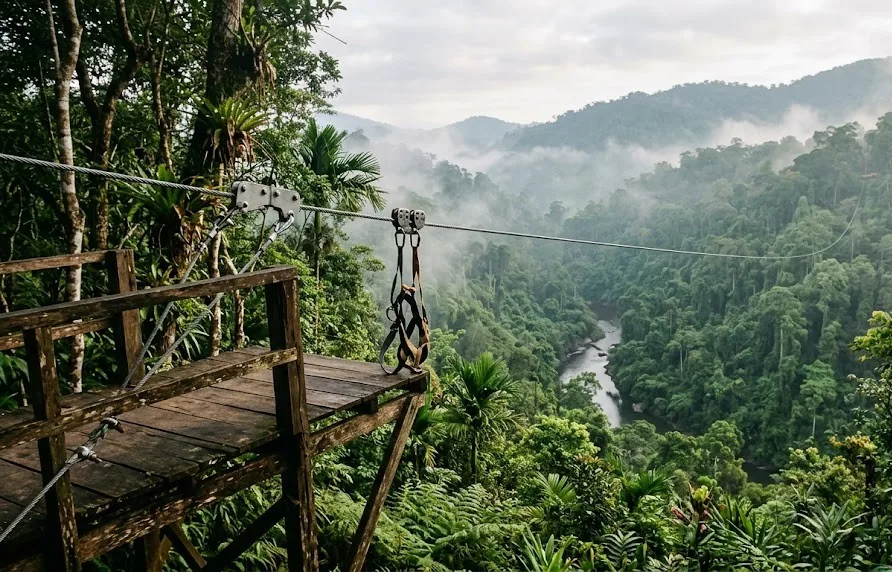
Da Nang Zipline Adventures: Thrills in the Forest 2026 — What to Expect
The typical Da Nang zipline tour runs about 5 hours from pickup to drop-off. You’ll leave the coastal city center, drive roughly 30–40 minutes inland, and arrive at a forested river valley where the adventure actually happens. The main attraction is a single 300-meter zipline that launches from a hilltop and carries you across open water — a different feeling entirely from the beachside activities most visitors associate with Da Nang.
Most operators package the zipline with river rafting, archery, and a fish massage, turning what could be a 10-minute thrill into a half-day outing. The combo structure matters: the zipline alone is brief, but paired with the rafting route and lunch, it becomes a proper adventure day worth the trip inland.
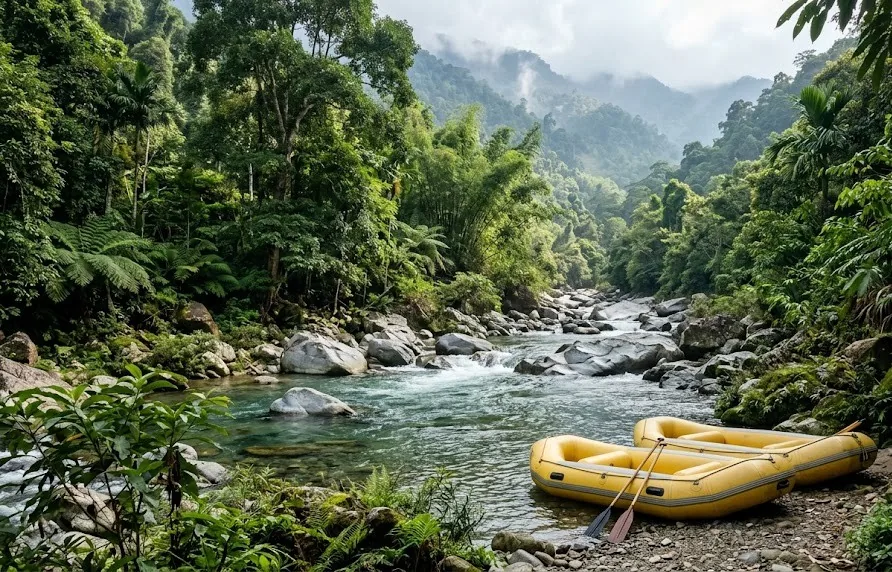
The Forest Setting: Where Do Da Nang Ziplines Actually Run?
The zipline courses operate in Hoa Vang district, the rural, mountainous area southwest of Da Nang’s urban core. This is where the city’s adventure tourism has quietly expanded beyond the beaches — the terrain here offers elevation changes, river valleys, and forest cover that simply don’t exist along the coast.
Hoa Vang — the Adventure Hub Beyond the City Beaches
Hoa Vang sits closer to Ba Na Hills than to My Khe Beach, which gives you a sense of the landscape shift. The district is characterized by low mountains, agricultural land, and the Cu De River winding through the valleys. For adventure operators, this topography provides natural launch points and water crossings that make ziplining genuinely exciting rather than a short ride between platforms.
What Makes the Forest Canopy Route Different from Coastal Rides
Coastal ziplines typically run over flat ground or short distances between towers. The forest route in Hoa Vang uses the natural elevation of the hillside — you launch from a higher point and glide down across the river valley below. The sensation is closer to flying than sliding, with the added element of crossing water rather than sand or grass. The tree canopy on either side frames the experience differently, and the river below provides a visual reference point that makes the height feel more dramatic than it would over flat terrain.
The Main Zipline: 300 Meters of High-Speed Gliding
The centerpiece ride measures 300 meters — roughly 1,000 feet — which puts it in the mid-range category for commercial ziplines globally. That length gives you enough time to build speed, look around, and actually enjoy the crossing rather than feeling like the ride ends before it starts.
Technical Specs: Length, Height, and Speed You Can Expect
Here’s what the numbers look like in practice:
- Length: 300 meters (about 1,000 feet) across the river valley
- Height: The launch point sits noticeably higher than the landing platform, creating a gravity-assisted glide
- Speed: You’ll accelerate during the first half of the ride before friction and the slight upward angle at the end slow you down
- Duration: The actual zipline crossing takes roughly 30–45 seconds depending on your weight
- Harness system: Full-body or seat harness with trolley attachment, standard for commercial operations
Heavier riders naturally pick up more speed and may reach the landing platform faster. Lighter riders glide more slowly but still complete the full crossing — the cable is tensioned to ensure everyone makes it to the other side without needing to be pulled in.
Weight and Age Regulations Before You Book
The standard weight range for this zipline is 25–90 kg (about 55–198 pounds). The lower limit exists because lighter riders may not generate enough momentum to carry them across the full 300 meters, especially if there’s any headwind. The upper limit is a safety cap based on the cable’s load rating and braking system capacity.
Age restrictions typically fall between 14 and 65 years old. These aren’t arbitrary — the minimum age reflects the physical coordination needed to land properly, and the maximum age accounts for the impact forces on joints during braking. If you fall outside these ranges, operators will likely refuse you even if you feel capable, so check before booking to avoid disappointment.
How the Ride Works: From Hilltop Launch to River Crossing
The sequence is straightforward:
- Briefing: Staff explain the correct body position — legs forward, one hand on the trolley, the other free
- Harness fitting: You’re clipped into a full-body or seat harness connected to the cable via a trolley wheel
- Launch: You step off the platform and gravity takes over, carrying you down the cable’s slope
- Crossing: The middle section passes directly over the river, with the landing platform visible ahead
- Braking: The cable angles slightly upward near the end, and a braking system slows you before you reach the platform
- Disconnect: Staff unclip you on the landing side, and you walk back to the starting area via a bridge or trail
First-timers should know the launch is the hardest part mentally. Once your feet leave the platform, the ride smooths out and the sensation becomes more exhilarating than scary. The staff are experienced with nervous riders and will talk you through the launch if needed.
Combining Zipline with River Rafting: The Full Adventure Package
The most popular way to experience Da Nang ziplining is the combo package that adds river rafting to the same outing. This pairing transforms a short thrill into a full adventure day, and most operators structure their tours around this combination.
The 2.5-Kilometer Rafting Route Through Rocky Rapids
After the zipline, you’ll board a 2-person inflatable raft for a 2.5-kilometer descent down the Cu De River. The route takes about an hour and includes stretches of rocky rapids mixed with calmer sections where you can paddle at your own pace. The rafts are the standard inflatable tour type — stable enough for beginners but responsive enough to feel the current when it picks up.
Rafting Safety Rules: Weight Limits and Boat Pairing Logic
Each raft carries exactly 2 people — one in front, one in back. The front person sets the paddle rhythm; the back person steers. Operators pair riders to balance weight, so if you’re traveling solo or in an odd-numbered group, you may be paired with another single traveler or a guide. This isn’t just logistics — an unbalanced raft handles poorly in rapids, so the pairing rule exists for safety as much as convenience.
Why the Combo Tour Works Better Than Zipline Alone
The zipline alone is a 10-minute experience wrapped in a 5-hour tour. Adding rafting gives you a second activity that extends the adventure and justifies the travel time inland. The two activities also complement each other physically — the zipline is passive and adrenaline-focused, while rafting engages your arms and core. By the end, you’ve had both a thrill and a workout, plus the river sections let you cool off in a way the zipline doesn’t.
What’s Included in a Da Nang Zipline Tour Package
Understanding what’s covered helps you plan — and avoids surprise costs on the day. Most tour operators bundle the essentials into one price, but the details vary.
Transportation and Pickup Arrangements
Most packages include round-trip private transfer from your Da Nang hotel or a central meeting point. The drive to Hoa Vang takes roughly 30–40 minutes each way, and having transport included means you don’t need to arrange your own ride to a rural area where taxis are scarce. Confirm pickup details when booking — some operators charge extra for hotels outside the city center.
Safety Gear, Insurance, and Entrance Fees
The package typically covers all safety equipment: helmets, harnesses, life jackets for the rafting portion, and paddles. Entrance fees to the eco-park or adventure site are also included in most cases. Travel insurance is sometimes included, but don’t assume — check your operator’s policy. If it’s not covered, your own travel insurance should extend to adventure activities; verify this before booking rather than after an incident.
The Traditional Vietnamese Lunch — What’s on the Menu
Most full-day packages include lunch at a local restaurant or the eco-park’s dining area. The menu typically features:
- Pork or beef dishes cooked Vietnamese-style
- Omelet with fresh herbs
- River fish — a local specialty given the area’s aquatic focus
- Zucchini soup or a similar vegetable-based soup
- Steamed rice and fresh fruit for dessert
The meal is hearty and designed to refuel you after the morning activities. Portions are generous, and vegetarians can usually request adjustments if they notify the operator in advance.
Best Time to Book Your Zipline Adventure in 2026
Timing affects both your experience and whether the tour runs at all. Da Nang’s weather patterns dictate the adventure season more than any other factor.
Weather Windows: When Rain Cancels the Zipline
The zipline and rafting both shut down in heavy rain. The cable becomes dangerous when wet — braking efficiency drops and the trolley’s grip on the cable changes. Rafting in heavy rain also raises river levels and increases current speed, creating conditions beyond what the tour route is designed for. Operators typically cancel or reschedule when rain is forecast, and the policy is usually no-refund — you’ll be offered a new date instead.
Peak vs. Off-Peak Seasons for Smaller Crowds
The dry season runs roughly February through August, with the most reliable weather from March to June. These months see the highest visitor numbers, so expect fuller tour groups and more competition for weekend slots. The wet season, September through January, brings more rain but also smaller crowds — you might have a more personal experience if you’re willing to gamble on weather windows and book flexibly.
How Far in Advance to Reserve Your Slot
For peak season dates, book at least 3–5 days ahead — weekends can fill up a week or more in advance, especially when tour operators limit group sizes for safety. In the wet season, booking 1–2 days ahead is usually sufficient, but you’ll need to monitor the forecast and stay flexible in case of cancellations.
Physical Requirements and Who Should Skip This Activity
Before you commit, honestly assess your physical condition. The zipline itself requires minimal effort — the staff handle the gear and braking — but the surrounding activities and logistics demand more than you might expect.
Fitness Level Needed for the Forest Course
You need moderate fitness. The zipline launch requires you to walk up a hill to the starting platform, and the rafting portion involves an hour of paddling. You don’t need to be an athlete, but if you avoid all physical activity, the rafting will leave you sore the next day. Comfortable mobility is essential — you’ll need to step off a platform, climb in and out of a raft, and navigate uneven terrain at the eco-park.
Health Conditions That Disqualify Riders
Operators typically exclude riders with the following conditions:
- Spinal injuries or recent back surgery — the harness and landing impact put strain on the spine
- Pregnancy — the harness pressure and rafting jolts are considered too risky
- Cardiovascular conditions — the adrenaline spike and physical exertion can be problematic
- Recent fractures or joint injuries — landing and paddling require full range of motion
- Severe fear of heights — the launch platform and river crossing can trigger panic mid-ride
If you have any of these conditions, the operator will likely refuse you at the site even if you’ve already booked. Be upfront when booking to avoid losing your money.
What If You’re Traveling with Kids or Seniors
The 14–65 age range applies to the zipline specifically. Children under 14 can’t ride, but they can still join the rafting portion and watch the zipline from the landing area. Seniors over 65 in good health can sometimes get a waiver — contact the operator directly rather than assuming the published age range is absolute. For mixed-age groups, confirm whether everyone can participate in all activities or if some members will need to sit out portions.
How Da Nang Ziplining Compares to Other Vietnam Adventure Spots
Vietnam has several zipline destinations, and Da Nang isn’t automatically the best choice for everyone. Here’s how it stacks up against the main alternatives.
Da Nang vs. Dalat — Which Forest Course Is More Thrilling?
Dalat’s zipline courses run through pine forests at higher elevation, offering cooler temperatures and longer combined course lengths across multiple lines. Da Nang’s single 300-meter line is shorter, but the river crossing adds a visual element Dalat’s forest courses lack. Dalat wins on duration and variety; Da Nang wins on the water crossing thrill and easier logistics from a major beach city.
Da Nang vs. Phong Nha — Jungle Zipline Showdown
Phong Nha’s zipline drops you into cave systems — it’s more of a water landing experience than a forest canopy ride. The setting is more dramatic, but the infrastructure is rougher and the location requires a dedicated trip to the national park. Da Nang’s operation is more polished, better suited to first-timers, and accessible as a day trip from a city with full tourist infrastructure.
Why Da Nang Wins for First-Timers and Short Trips
If you’re new to ziplining or on a tight itinerary, Da Nang’s combination of accessibility, professional operations, and the rafting add-on makes it the strongest choice. You get the full adventure experience without the logistical overhead of reaching Dalat or Phong Nha.
| Feature | Da Nang | Dalat | Phong Nha |
|---|---|---|---|
| Main zipline length | 300 meters (single line) | Multiple lines, longer total | Single line into cave water |
| Setting | River valley, forest edges | Pine forest, higher elevation | Jungle, cave entrance |
| Access from city | 30–40 min from Da Nang | Within Dalat city area | 1.5+ hours from Dong Hoi |
| Combo activities | Rafting, archery, fish massage | Canyoning, hiking | Cave trekking, swimming |
| Best for | First-timers, short trips | Adventure enthusiasts | Explorers, cave lovers |
Booking Options: Tour Operators, Prices, and Packages
Several operators run the Hoa Vang zipline and rafting combo, and the booking channel affects both price and flexibility.
Vietnam Explore Travel and Other Local Operators
Vietnam Explore Travel is one of the established names running this specific tour, but you’ll also find the same or similar packages through platforms like Klook, GetYourGuide, and Marriott Bonvoy Tours & Activities. Booking through a major platform gives you review visibility and customer support; booking directly with a local operator sometimes gets you a better price since you cut out the platform commission.
Price Ranges and What Affects the Cost
The combo tour typically runs $84–105 per person. Price variations depend on:
- Group size: Private tours cost more per person than shared group tours
- Transportation distance: Pickup from Hoi An or further out may add a surcharge
- Inclusions: Some packages add archery, fish massage, or upgraded lunch options
- Booking platform: Commission structures differ, so compare across platforms
Cancellation Policies and Rain Refund Rules
Most operators allow free cancellation up to 24 hours before the tour start time. After that window, you’ll typically lose your deposit or full payment. Rain cancellations follow a different logic — if the operator cancels due to weather, you’ll get a full refund or the option to reschedule. If you cancel because of rain yourself, the 24-hour rule still applies. Read the specific policy on your booking confirmation rather than assuming.
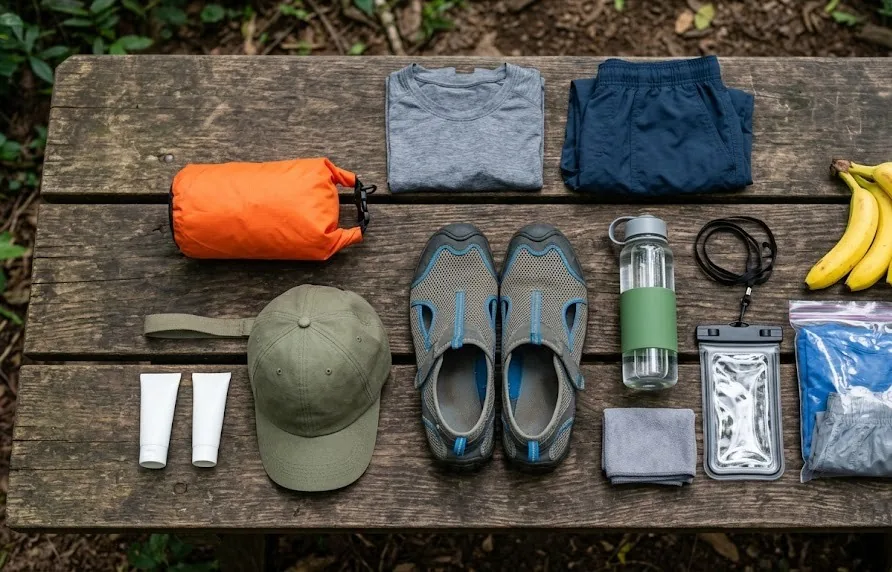
Essential Packing List for Your Forest Zipline Day
What you bring — and what you leave behind — can make the difference between a comfortable adventure and a miserable one.
Clothing and Footwear That Handle Mud and Water
Quick-dry clothing is non-negotiable. You’ll get wet during the rafting portion, and cotton stays damp and heavy. Wear synthetic athletic wear or a swimsuit under quick-dry shorts and a top. For footwear, water shoes or old sneakers that can get muddy work best — flip-flops will come off in the raft, and hiking sandals without a heel strap are a safety risk on the zipline platform.
What to Leave Behind — Phones, Jewelry, Loose Items
Leave your phone in the provided locker or dry bag unless you have a waterproof case with a lanyard. Jewelry, watches, and loose items are hazards — they can catch on harnesses or fall into the river. If you need your phone for photos, use a waterproof pouch that hangs around your neck, and keep it zipped during the zipline itself.
Post-Adventure Essentials: Dry Clothes and Cash
Pack a full change of clothes for after the tour — the ride back to the city is uncomfortable in wet gear. A towel is essential, and cash is useful for tips, extra drinks, or snacks at the eco-park that aren’t included in the package. Some operators accept cards at the base, but rural locations don’t always have reliable card terminals.
Related on this site
Frequently Asked Questions
Is the Da Nang zipline safe for someone who has never done it before?
Yes — the operation is designed for beginners. Staff brief you on body position, fit the harness for you, and control the braking system on the landing side. The main challenge is psychological, not physical.
What happens if it rains on the day of my booking?
Operators typically cancel or reschedule the tour if rain is heavy or forecasted. You’ll be offered a new date or a full refund if the operator initiates the cancellation. If you cancel on your own due to rain, the standard 24-hour policy applies.
Can I bring my own GoPro or camera on the zipline?
Only if it’s securely mounted to a chest strap or helmet mount. Handheld cameras are prohibited because you need both hands — one on the trolley, one free for balance. Waterproof action cameras are the safest option.
Is the rafting portion suitable for non-swimmers?
Yes — you wear a life jacket for the entire rafting route, and the tour operates on a controlled section of river with guides nearby. Non-swimmers can participate as long as they’re comfortable being in a moving raft.
How long is the total tour from pickup to drop-off?
Plan for 5 hours total. This includes the 30–40 minute drive each way, the zipline, the hour-long rafting route, lunch, and the additional activities like archery and fish massage.
Do I need to book in advance, or can I walk up on the day?
Book in advance. The operators need to arrange transport, guides, and lunch portions, so same-day walk-ups are rarely accommodated. During peak season, book at least 3–5 days ahead.
Conclusion
Da Nang’s forest zipline adventure delivers exactly what the name promises — a 300-meter glide over a river valley, wrapped in a 5-hour package that includes rafting, lunch, and transport. The combination of accessible location, professional operations, and the water-crossing thrill makes it a standout choice for first-timers and returning visitors alike. Book during the dry season, pack quick-dry gear, and confirm the weight and age requirements before you pay. If you’re ready for more coastal adventures, check out the paragliding experience or kayaking locations to round out your Da Nang trip.
Part of our guide to things to do in Da Nang.