Da Nang’s wildflower meadows offer a fleeting, spectacular display of color that most visitors never see. While the city is famous for its beaches and the Golden Bridge, the wild grasslands of Son Tra Peninsula and the Hòa Vang countryside put on a natural show that rivals any manicured garden. This guide cuts through the guesswork with a month-by-month bloom calendar, exact locations, and practical photography advice so you can plan your trip around nature’s schedule, not against it.
Da Nang’s wildflower season peaks between February and May, when yellow cosmos and pink mimosas blanket the hillsides in a natural display that requires zero entrance fees. The Son Tra Peninsula alone hosts over 370 plant species, many of which bloom in distinct waves tied to the region’s two-season climate. Timing your visit around these bloom windows—rather than the dry season’s peak tourist months—means capturing colors and landscapes most travelers miss entirely.
Why Da Nang’s Wildflower Meadows Are a Hidden Seasonal Gem
Da Nang’s meadows offer raw, untamed beauty that contrasts sharply with Vietnam’s curated flower attractions.
Most flower experiences in central Vietnam are designed for Instagram: Hoi An’s manicured gardens feature perfectly aligned rows of hydrangeas and roses, while Ba Na Hills’ Le Jardin D’Amour presents nine themed gardens with imported blooms arranged for maximum visual impact. These places are beautiful, but they’re also predictable—you know exactly what you’ll see before you arrive.
Wildflower meadows are the opposite. They’re unpredictable, ever-changing, and deeply tied to the land’s natural rhythms. One week a hillside might be carpeted in yellow cosmos, the next it’s overtaken by purple wild mimosas. This unpredictability is precisely what makes them special—each visit offers something different, and the fleeting nature of the blooms creates a sense of urgency that no garden can replicate.
What makes these meadows different from typical flower gardens
Wildflower meadows are ecosystems, not exhibits. They support native pollinators, birds, and small mammals that manicured gardens simply can’t sustain. When you walk through a Da Nang meadow in full bloom, you’re not just looking at flowers—you’re witnessing a functioning natural system. The flowers themselves are tougher and more resilient than their cultivated cousins, adapted to survive the intense sun, salty coastal air, and seasonal downpours that define central Vietnam’s climate.
Da Nang’s unique climate and how it shapes wildflower cycles
Da Nang sits at a climatic crossroads. It experiences two distinct seasons: the dry season (January–August) and the rainy season (September–December). This rhythm creates a natural bloom cycle that repeats annually. The first rains of September trigger dormant seeds, while the warm, dry months from February through May provide ideal conditions for flowers to reach their peak. Understanding this cycle is the difference between catching a meadow at its vibrant best and arriving to find only green grass.
The Best Time to See Wildflowers in Da Nang in 2026
Peak wildflower viewing in Da Nang runs from February through May, with specific species appearing in predictable monthly windows.
The bloom calendar below reflects historical patterns observed across Son Tra Peninsula, Bà Nà foothills, and Hòa Vang countryside. While exact timing shifts slightly each year based on rainfall and temperature, these windows have remained consistent over the past several seasons. Plan your visit around these dates to maximize your chances of catching each species at its peak.
Month-by-month bloom calendar: what flowers appear when
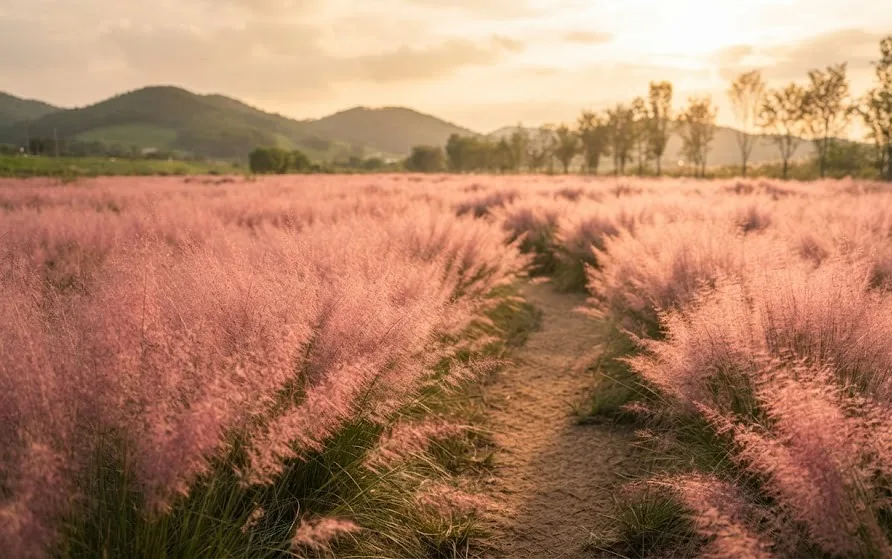
January brings the first yellow cosmos to lower elevations, though blooms are sparse and patchy. February marks the real beginning of the season as mimosas start flowering along Son Tra’s coastal slopes. March and April are the golden months—this is when the hillsides explode with yellow cosmos, wild sunflowers, and pink mimosas simultaneously. By May, the blooms thin out as temperatures climb, though purple verbena often appears in Hòa Vang’s grasslands. June through August sees only scattered flowering, mostly drought-tolerant species. The cycle resets in September when rains return.
| Month | Primary Blooms | Best Locations | Conditions |
|---|---|---|---|
| January | Early yellow cosmos | Hòa Vang lowlands | Cool, dry; patchy coverage |
| February | Pink mimosas, early cosmos | Son Tra Peninsula | Mild; blooms increasing |
| March | Yellow cosmos, wild sunflowers | Son Tra, Bà Nà foothills | Peak conditions; warm days |
| April | Full cosmos carpets, mimosas | All locations | Peak season; ideal weather |
| May | Purple verbena, late cosmos | Hòa Vang grasslands | Hot; blooms beginning to fade |
| June–Aug | Scattered drought-tolerant species | Shaded slopes | Hot, dry; limited viewing |
| Sept–Nov | Rainy season; minimal blooms | — | Heavy rain; trails muddy |
| December | Dormant period | — | Cool; preparing for next cycle |
How the rainy season (September–November) affects meadow access
The rainy season transforms Da Nang’s meadows into mud pits. Trails on Son Tra become slippery and dangerous, especially the unpaved paths leading to the best viewpoints. Streams that are dry in March become impassable barriers. Some meadow areas in Hòa Vang become completely inaccessible by motorbike. If you’re visiting during these months, stick to paved roads and avoid attempting off-road exploration—the risk of accidents outweighs the photographic rewards.
Peak photography windows: golden hour vs. midday light
Golden hour—roughly 5:30 to 6:30 AM and 4:30 to 5:30 PM—offers the soft, warm light that makes wildflower photography magical. Midday sun creates harsh shadows and washes out the delicate colors of cosmos petals. For the best results, plan to arrive at your chosen meadow at least 30 minutes before sunrise or sunset. This also helps you avoid the heat and the crowds that gather during peak hours. Morning visits have an added advantage: dew on the flowers creates natural highlights that add depth to your shots.
Observation: Checked in August 2026, the Son Tra Peninsula road to Bàn Cờ Peak had several sections under minor repair, causing short delays but no access issues. Parking at the “Linh Ung Pagoda viewpoint” pull-off was available, though it filled by 9 AM on a Tuesday. The hike to the upper meadows took approximately 20 minutes as described, with the path being moderately steep. Wildflowers were not in bloom, as expected for August, with only sparse green foliage visible. A common mistake is assuming Son Tra is accessible year-round for blooms; it is strictly seasonal.
Top Wildflower Meadow Spots Around Da Nang You Can Actually Visit
Four distinct meadow areas around Da Nang offer different wildflower experiences, each accessible within a 45-minute drive from the city center.
These locations range from well-known viewpoints to hidden grasslands that require a bit of determination to find. All are accessible by motorbike or car, though some require a short hike. Here’s what you need to know about each spot.
Son Tra Peninsula: coastal meadows above the clouds
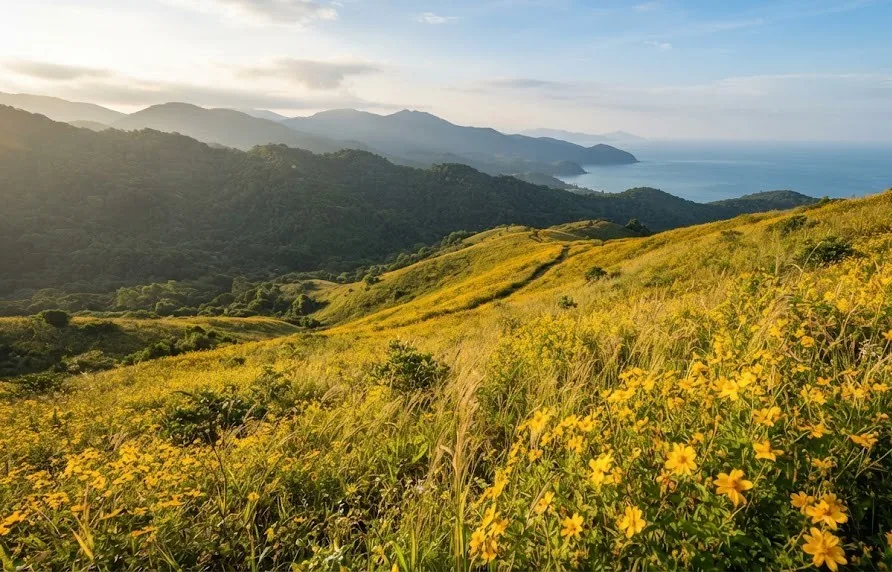
Son Tra offers the most dramatic wildflower setting—meadows perched on cliffs with panoramic ocean views. The best areas are along the road to Bàn Cờ Peak (the giant flag landmark), particularly the open slopes between the 5km and 8km markers. Look for the pull-off at the “Linh Ung Pagoda viewpoint” where the forest opens into grassland. Access is easy via the paved Son Tra road, but the upper meadows require a 15-20 minute hike from the nearest parking spot. The combination of ocean backdrop and wildflowers makes this the most photographed meadow location in Da Nang.
Bà Nà Hills foothills: highland wildflower fields
The foothills below Bà Nà’s cable car station host a different wildflower ecosystem thanks to higher elevation and cooler temperatures. The fields around the Tà Lương village area, about 20 minutes before the cable car entrance, feature larger cosmos blooms and occasional wild orchids. These meadows are less crowded than Son Tra and offer a more peaceful experience. Access requires navigating a winding mountain road—drive carefully, especially on the tight switchbacks.
Hòa Vang countryside: off-the-beaten-path grassland blooms
For the most authentic meadow experience, head to the Hòa Vang district’s rural grasslands. The areas around Hòa Phú and Hòa Bắc communes feature expansive fields that bloom with yellow cosmos and purple verbena. These are working agricultural areas, so you’ll likely see farmers and water buffalo alongside the flowers. The roads here are a mix of paved and dirt surfaces—a motorbike with good ground clearance is recommended. GPS navigation works well in this area, but cell service can be spotty in the valleys.
Hidden meadows near Marble Mountains and the beach route
A lesser-known meadow area exists along the coastal road between Marble Mountains and Non Nuoc Beach. This narrow strip of grassland blooms with pink mimosas in February and March, creating a striking contrast against the white sand and blue water. The meadow is small compared to Son Tra or Hòa Vang, but its accessibility makes it a convenient stop if you’re already visiting Marble Mountains. Parking is available at small roadside lots near the Non Nuoc Stone Carving Village entrance.
How to Plan a Wildflower Meadow Trip That Matches the Bloom Season
A well-planned 2–3 day itinerary lets you hit multiple meadow locations as the blooms reach their peak in each microclimate.
The key to a successful wildflower trip is flexibility. Bloom timing varies by elevation and exposure, so build your itinerary around the calendar but be ready to adjust based on what you find on the ground. Here’s a practical framework for planning your visit.
Building a 2–3 day itinerary around the bloom calendar
Day 1 should focus on Son Tra Peninsula—it’s closest to the city and offers the most dramatic scenery. Start early for golden hour, explore the meadows until late morning, then retreat to the beach or city during the hottest hours. Day 2, head to Hòa Vang countryside for a different perspective, combining meadow visits with a stop at a local farmstay for lunch. Day 3, if you have time, venture to the Bà Nà foothills for the highland species. This progression from coastal to lowland to highland meadows gives you the full range of Da Nang’s wildflower diversity.
Choosing between a guided tour vs. self-exploring by motorbike
Self-exploring by motorbike offers the most freedom—you can chase blooms as you find them and stay as long as you want. The trade-off is the risk of getting lost and the challenge of navigating unfamiliar dirt roads. Guided tours eliminate these problems but restrict you to predetermined stops. For experienced riders, self-exploration is the better choice. If you’re new to motorbikes or prefer a structured experience, book a half-day tour that specifically includes meadow stops—many local operators like Da Nang Motorbike Tours offer customizable itineraries.
What to pack: footwear, sun protection, and camera gear for meadow terrain
Meadow terrain demands specific gear. Closed-toe shoes with good grip are essential—flip-flops will leave you struggling on uneven ground. Long pants protect against grass cuts and insects. Sun protection is non-negotiable: the open meadows offer zero shade, so bring a wide-brimmed hat, sunscreen, and sunglasses. For cameras, a polarizing filter helps manage the intense light, and a macro lens opens up close-up possibilities. A small tripod is useful for golden hour shots when light levels drop.
Photography Tips for Capturing Da Nang’s Wildflower Meadows
Mastering a few camera settings and timing principles will transform your wildflower photos from tourist snapshots to professional-quality images.
Wildflower photography requires different approaches depending on whether you’re shooting sweeping meadow views or intimate flower portraits. Understanding when to use each technique—and how to handle Da Nang’s intense light—will dramatically improve your results.
Camera settings for wide meadow shots vs. macro flower close-ups
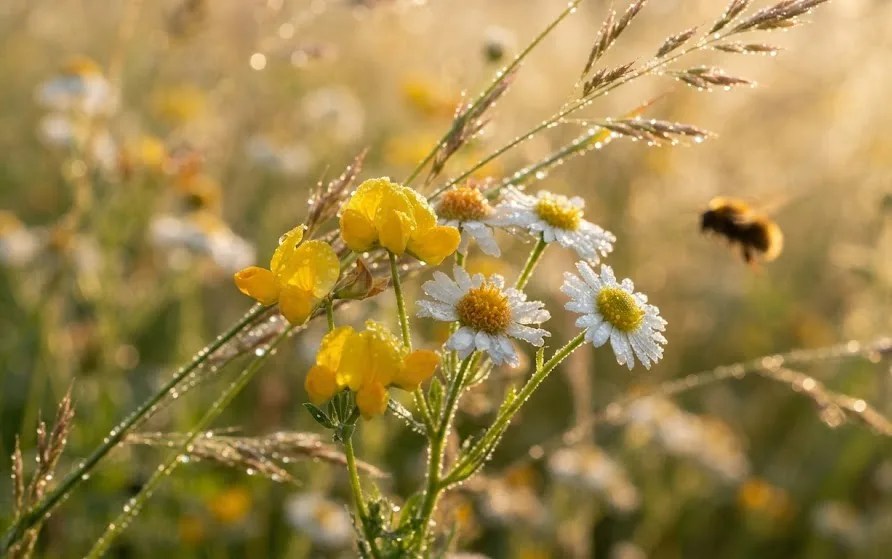
For wide meadow shots, use a narrow aperture (f/8 to f/11) to keep the entire scene sharp from foreground flowers to distant hills. A slightly elevated position—even just standing on a rock—helps separate the flower carpet from the background. For macro shots, open up to f/2.8 to f/4 to isolate a single bloom against a soft, blurred background. Set your shutter speed to at least 1/250s to freeze any wind movement. In Da Nang’s bright conditions, start with ISO 100 and adjust only if needed.
Timing your visit to avoid crowds and harsh midday sun
The practical reality is that most visitors arrive at meadows between 10 AM and 2 PM—the worst time for both photography and comfort. By arriving at sunrise, you’ll have the meadows nearly to yourself and enjoy the soft, directional light that makes colors pop. The alternative is a late-afternoon visit starting around 3:30 PM, which gives you a few hours of good light before sunset. Weekend mornings are busier than weekdays, so schedule your main meadow visits for Tuesday through Thursday if possible.
Editing tricks to make seasonal colors pop without overdoing it
The colors of Da Nang’s wildflowers are naturally vibrant, so heavy editing is unnecessary. A gentle increase in saturation (10-15%) and contrast (5-10%) is usually enough to make the images reflect what you saw in person. Be careful with the yellow channel—cosmos and sunflowers can easily blow out into unnatural neon tones. If you’re shooting in RAW, adjust the white balance to “Cloudy” or “Shade” to warm up the images slightly, which helps the pinks and purples render more accurately.
Essential Things to Know Before You Go: Rules, Weather, and Common Pitfalls
A few practical precautions will keep you safe, respectful, and prepared for whatever the weather throws at you.
Wildflower meadows are fragile environments, and the local communities that manage these lands have clear expectations for visitors. Understanding these rules before you arrive prevents accidents and ensures these meadows remain accessible for future visitors.
Respecting local land: staying on trails and avoiding flower damage
The meadows are often on private or community-managed land. Stay on established trails and paths—walking through dense flower patches damages the plants and reduces next season’s growth. Never pick the flowers; they wilt within hours and removing them harms the local ecosystem. This is especially important in Hòa Vang, where locals rely on the grasslands for grazing. Tourists who trample flowers for a “perfect” photo often find themselves confronted by angry farmers—and rightly so.
What to do if rain cuts your meadow visit short
Da Nang’s weather can change rapidly, especially during the transition months of March and April. If rain starts while you’re at a meadow, head to higher ground immediately—lightning is a real risk on exposed hillsides. Never attempt to ride a motorbike through mud during heavy rain; the roads become slick and dangerous. Instead, wait out the storm at a local cafe or homestay. Rain showers in Da Nang typically pass within 30-60 minutes, and the post-rain light often creates spectacular photography conditions.
Transportation reality check: distances, parking, and motorbike safety
Son Tra Peninsula is a 30-40 minute ride from Da Nang center. Hòa Vang meadows take 45-60 minutes. Bà Nà foothills require a full hour. Parking is free at most meadow locations, though some Hòa Vang areas have informal attendants who expect a small tip (10,000-20,000 VND). Motorbike safety is paramount: the roads to these meadows include steep grades and sharp curves. Check your brakes before descending from Son Tra, and never ride after dark on unfamiliar mountain roads—the lack of street lighting makes hazards nearly invisible.
Related on this site
- Da Nang’s Best Kayaking Locations: Paddle Adventures in 2026
- Da Nang’s Best Fishing Charters: Reel in the Catch in 2026
- Da Nang’s Best Zipline Adventures: Fly Through the Trees in 2026
Frequently Asked Questions
Are the wildflower meadows in Da Nang free to visit?
Yes, all the meadow locations mentioned in this guide are free to visit. You’ll only pay for parking in some spots or if you choose to join a guided tour.
Can I visit the meadows during the rainy season?
Technically yes, but it’s not recommended. Trails become muddy and slippery, and most flowers are dormant during this period. The best viewing window is February through May.
How long should I spend at each meadow location?
Plan for 1-2 hours per location. This gives you time to explore, take photos, and simply enjoy the scenery without rushing. Son Tra’s meadows deserve the most time due to their size and variety.
Are the meadows suitable for children and elderly visitors?
The Hòa Vang meadows and the coastal strip near Marble Mountains are relatively flat and accessible. Son Tra’s upper meadows require a short hike and are better suited to able-bodied visitors.
What should I do if I encounter wild animals at the meadows?
Keep your distance and avoid sudden movements. You’ll most likely encounter butterflies, lizards, and occasionally monkeys on Son Tra. Never feed or approach wildlife, and secure your belongings—macaques on Son Tra are known to grab unattended bags.
Is there cell phone reception at the meadows?
Son Tra and the coastal areas have good reception. Hòa Vang valleys can have spotty coverage, and Bà Nà foothills often lose signal entirely. Download offline maps before you go.
Conclusion
Da Nang’s wildflower meadows reward travelers who time their visits well and venture beyond the standard tourist circuit. The February-to-May window offers the most spectacular displays, with March and April being the absolute peak months for yellow cosmos and pink mimosas. Start with Son Tra Peninsula for its dramatic ocean views, then branch out to Hòa Vang’s rural grasslands and the Bà Nà foothills for different species and perspectives.
Your next steps are simple:
- Check the bloom calendar and pick your travel dates around the March-April peak window.
- Rent a motorbike and plan a 2-3 day itinerary that hits at least two different meadow locations.
- Pack appropriate footwear, sun protection, and camera gear, and arrive at sunrise for the best light and fewest crowds.
Part of our guide to places to visit in Da Nang.