Short answer: Con Market (Chợ Cồn) is Da Nang's big local market, on Hùng Vương Street in Hải Châu, under 2 km from Han Market. Go for the food court, not souvenirs: bánh bèo, mì Quảng, bánh xèo and nem lụi at local prices. Entry is free; most stalls trade from early morning until about 7pm.
Han Market gets the tour groups. Con Market is where Da Nang families buy fabric, rice, dried squid and school uniforms, and where office workers eat lunch for the price of a coffee back home. It is bigger, louder and less polished, and that is the point. This guide covers when to go, how the market is laid out, what to eat, and how it compares with Han Market.
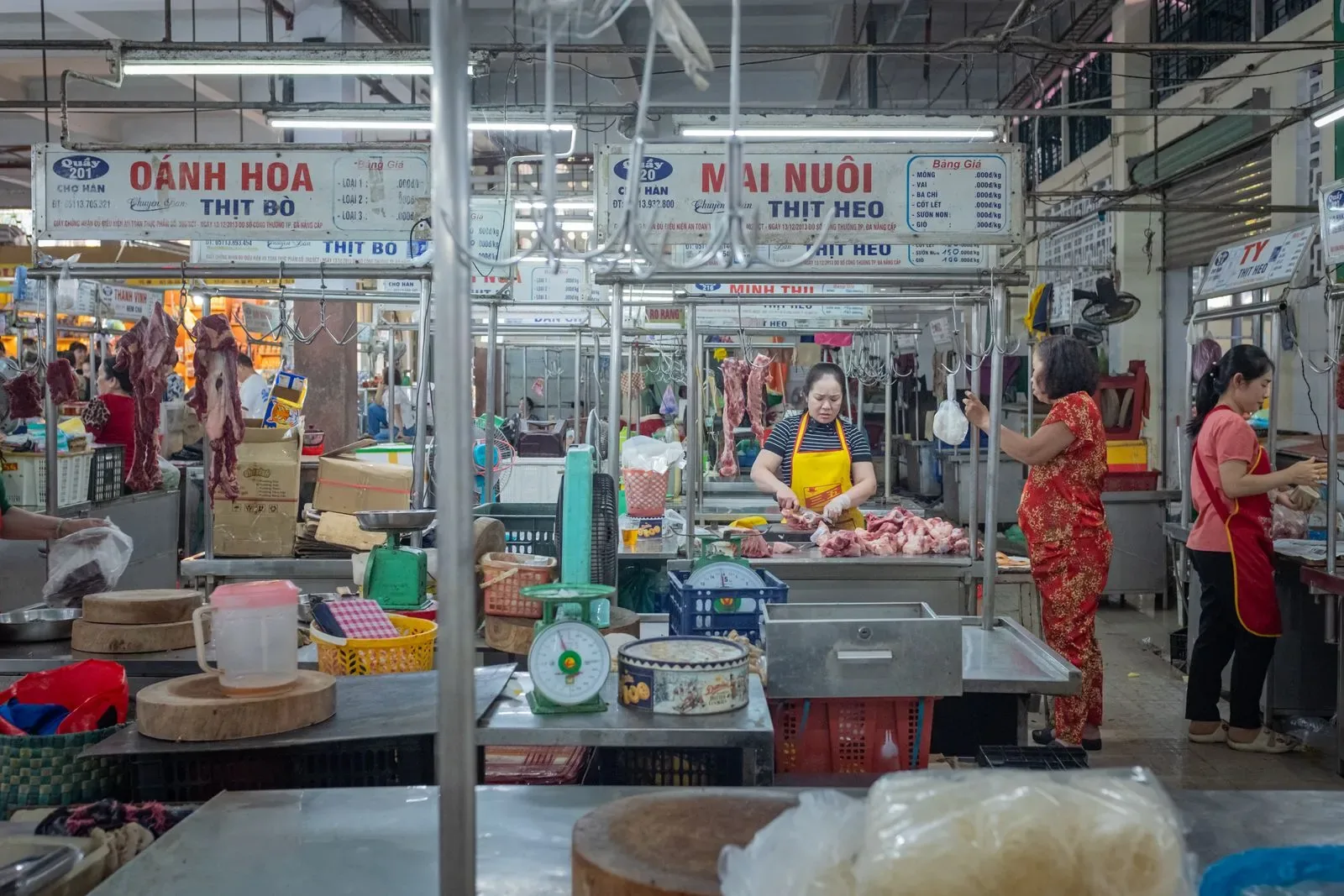
Where is Con Market and how do you get there?
Con Market fills a whole city block in Hải Châu ward, between Hùng Vương Street and Ông Ích Khiêm Street, a few blocks west of the Han River. Different guides print different street numbers for it, so use the market's name in Grab or Google Maps rather than a house number: open Con Market in Google Maps. Ask your driver to drop you on the Hùng Vương side, where the main entrance is.
From the Dragon Bridge it is roughly 1 km on foot; from Han Market it is under 2 km, a short Grab or taxi ride. From My Khe Beach hotels, allow 10–15 minutes by car, more at the 5pm rush. If you are new to ride-hailing here, our Grab vs taxi guide explains how pick-ups work.
What are Con Market's opening hours?
There is no single official timetable: each stall sets its own hours. Sources checked in November 2026 put the market's day at roughly 6–7am to about 7–7:30pm, every day. Entry is free.
| Part of the market | Typical hours | Best for |
|---|---|---|
| Main market halls (dry goods, fabric, clothes) | About 7am – 7pm | Shopping, browsing |
| Wet market (fish, meat, produce) | Early morning, busiest before 9am | Seeing local life |
| Indoor food court | About 7am – 3pm | Breakfast and lunch |
| Outdoor food stalls around the market | From mid-afternoon (about 3–4pm) into the evening | Afternoon snacks, early dinner |
Hours vary by stall and around Tết (Lunar New Year), when many stalls close for several days. Sources: Vietnam Tourism portal (vietnamtourism.com, November 2026), VinWonders travel guide, Vietnam Airlines travel guide, GTrip (2026); checked November 2026.
The best time for most visitors is 9–11am: the wet market is still lively, the food court is in full swing, and the midday heat has not peaked. Late afternoon (3–5pm) works too if you want the outdoor snack stalls.
How is Con Market laid out?
The market grew from a small trading spot in the 1940s. Its main complex was rebuilt in the mid-1980s and today holds around 2,000 stalls, according to the VinWonders and Vietnam Airlines guides. There is no printed floor plan, but it splits into rough zones:
- Dry goods near the entrances: dried squid and shrimp, cashews, coffee, tea, spices, candied fruit and rice paper. This is the easiest place to buy food gifts to take home.
- Fabric and tailoring: bolts of cloth, plus small tailors who can make simple garments. Agree the price, fabric and pick-up date before paying.
- Clothes, shoes and household goods: cheap everyday wear, bags, kitchenware and plastic everything, aimed at locals rather than tourists.
- Wet market deeper inside: fish, meat, fruit and vegetables. Floors are wet and narrow, so wear closed shoes and watch for carts.
- Food court: rows of small counters with plastic stools, each specialising in one or two dishes.
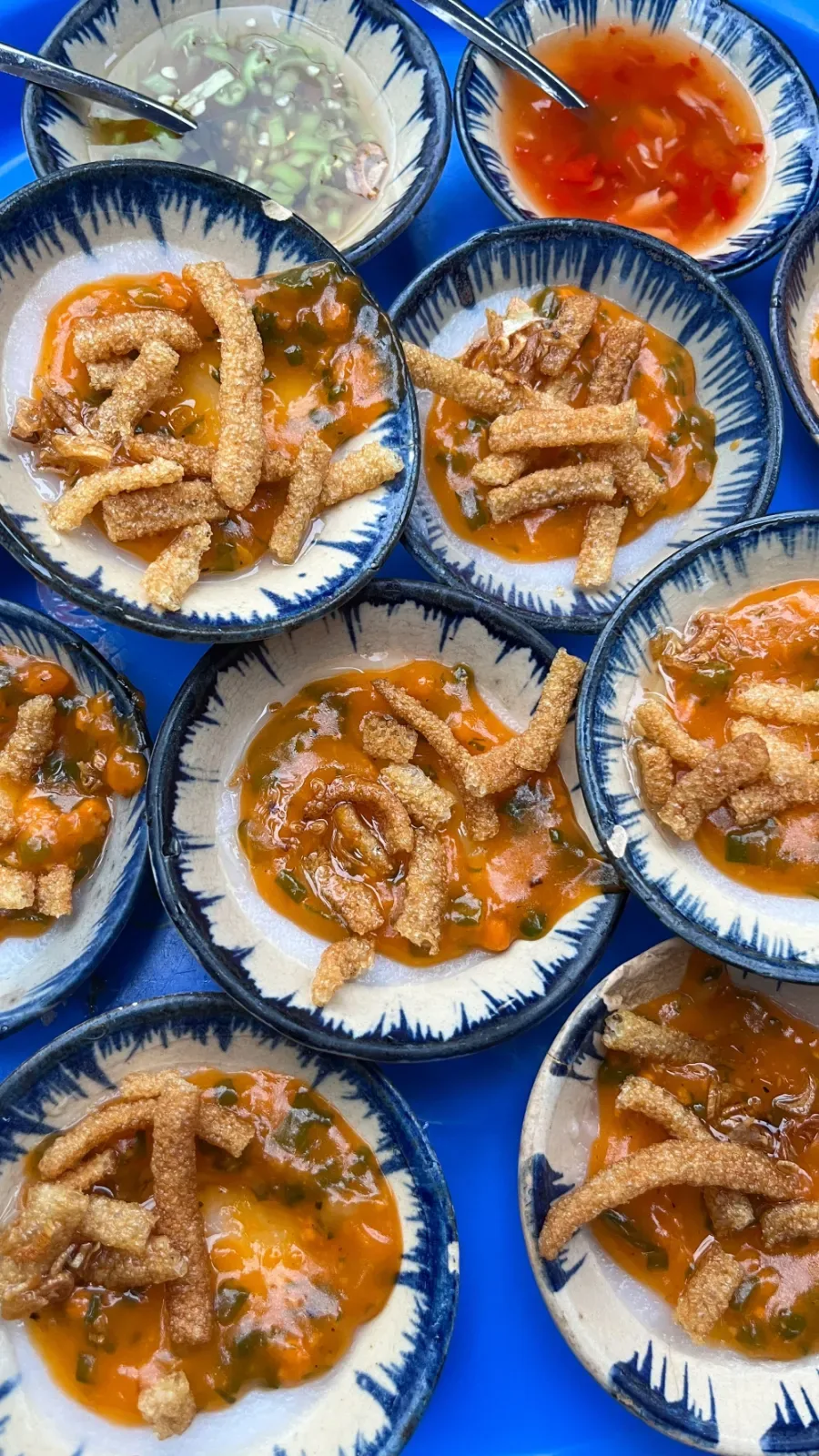
What should you eat at Con Market?
The food court is the main reason travellers come. Every guide we checked names the same Central Vietnamese staples. Prices below are typical ranges from sources checked in November 2026; individual stalls vary, and some guides quote lower or higher figures.
| Dish | What it is | Typical price (VND) |
|---|---|---|
| Bánh bèo | Small steamed rice cakes topped with shrimp and crispy pork, eaten with fish sauce | 20,000 – 40,000 a plate |
| Mì Quảng | Turmeric rice noodles with a little rich broth, pork, shrimp, herbs and a sesame cracker | 30,000 – 60,000 a bowl |
| Bánh xèo | Crispy rice-flour pancakes rolled in rice paper with herbs | 30,000 – 50,000 a serving |
| Nem lụi | Grilled pork on lemongrass skewers, wrapped with greens and dipped in peanut sauce | 30,000 – 50,000 a serving |
| Bún mắm nêm | Rice vermicelli with pork and a pungent fermented anchovy sauce | 30,000 – 50,000 a bowl |
| Kem bơ | Avocado smoothie-style dessert topped with coconut ice cream | 20,000 – 35,000 a cup |
How it works: sit at a counter, point at what the people next to you are eating, and pay when you finish. Most stalls show prices on a board; if there is no board, ask before you order. Bring small notes, as stalls rarely take cards. For more on the dishes, see our guides to mì Quảng in Da Nang and bánh xèo and bánh khọt.
Con Market or Han Market: which should you visit?
They are close enough to do both in one morning, but they suit different trips.
| Con Market | Han Market | |
|---|---|---|
| Main crowd | Local shoppers | Visitors and tour groups |
| Best for | Food court, dry food gifts, local atmosphere | Souvenirs, áo dài tailoring, central location |
| Size | Larger, more spread out | Smaller, two floors by the river |
| English spoken | Little | More common |
| Prices | Generally local prices | Higher starting prices for tourists |
If you only have time for one and you care about food, choose Con Market. If you want souvenirs and a riverside stroll afterwards, read our Han Market guide.
What should you buy, and how do you bargain?
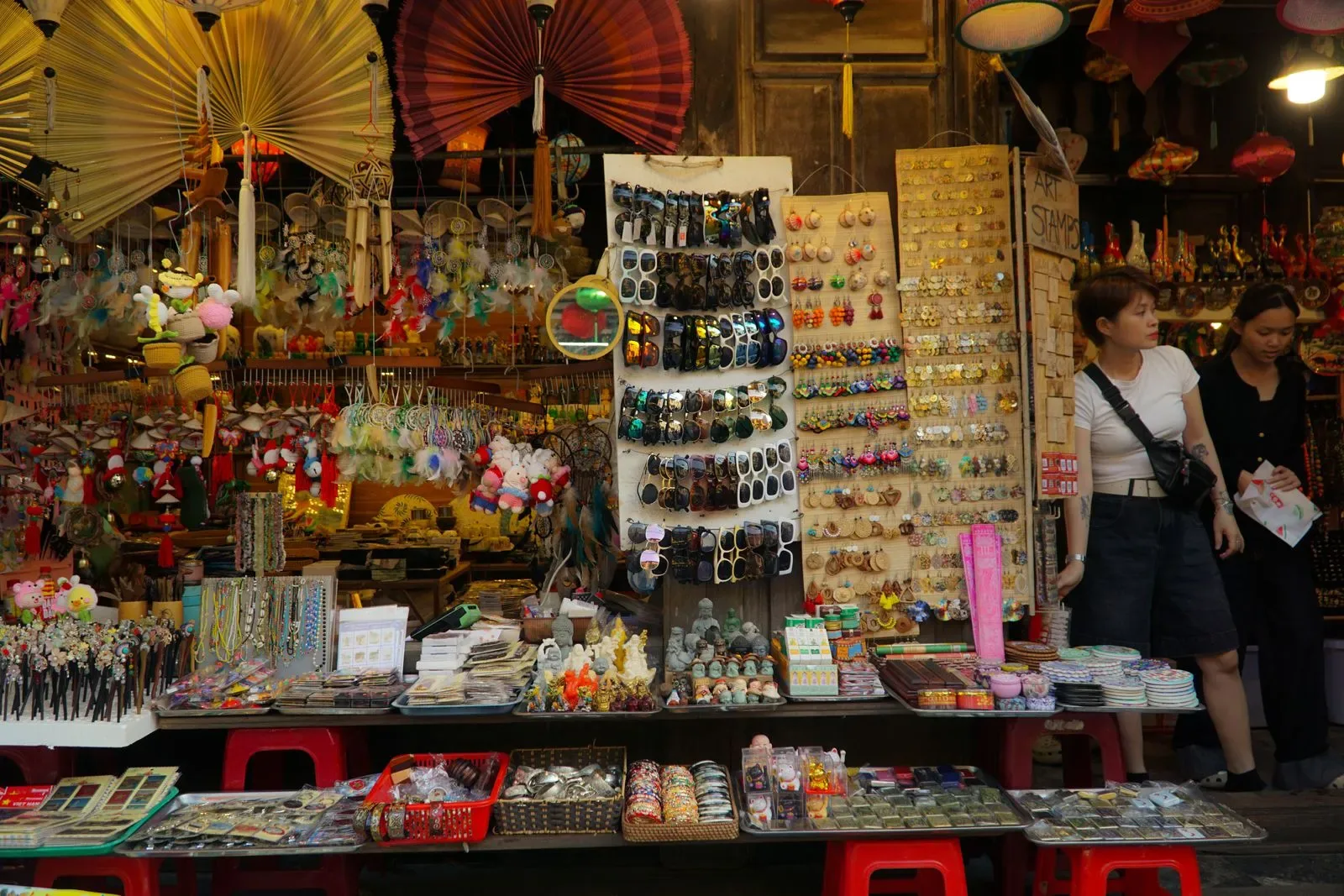
Good buys are things locals buy: dried squid, cashews, Vietnamese coffee, rice paper, fish sauce gift bottles and simple cotton clothes. Souvenir T-shirts and lacquerware are also sold, but the range is wider at Han Market.
- Food prices are usually fixed. Bargaining is for clothes, fabric and non-food goods, not for a bowl of noodles.
- Ask the price first, then counter calmly. Walking away politely is normal and often brings a better offer.
- Check weight and packaging on dried seafood and nuts; ask for vacuum-sealed bags if you are flying.
- Carry cash in small notes. Some stalls accept bank QR transfers, but foreign cards rarely work.
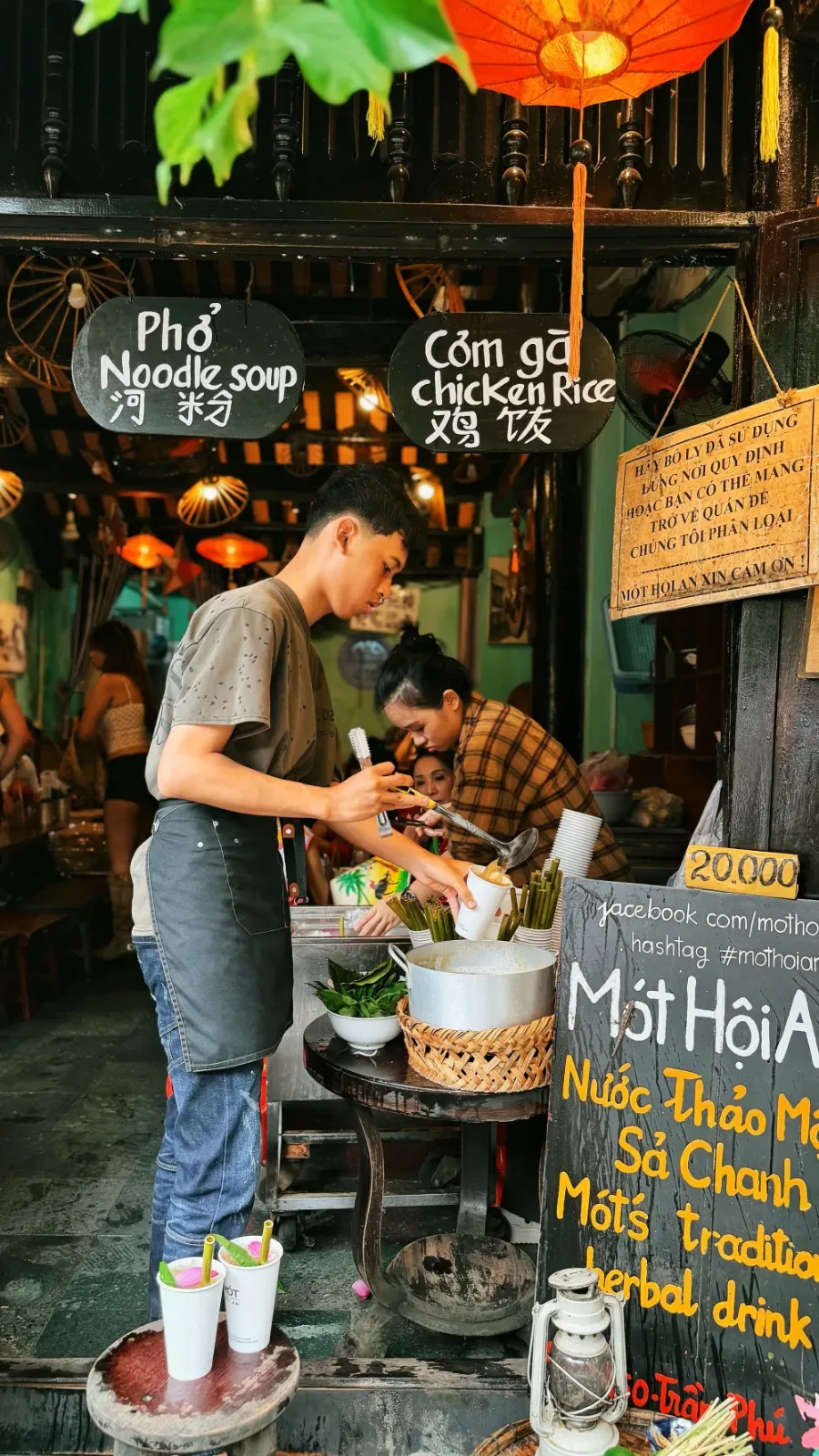
Practical tips before you go
- Keep phones and wallets in front pockets. The aisles are tight and busy, as in any big market.
- Dress for heat and wet floors. Closed shoes are better than flip-flops in the wet market.
- Toilets exist but are basic; carry tissues.
- Avoid the first days of Tết, when many stalls shut. The days just before Tết are the busiest of the year.
- Combine it with Han Market, the riverside and the Dragon Bridge in one half-day. Our Da Nang food guide has more places to eat nearby.
Planning a market morning plus a trip to Hoi An or the Marble Mountains on the same day? A private car with an English-speaking driver saves juggling several rides; message us on WhatsApp +84 968 275 320 for a quote. No deposit: you pay the driver at the end of the trip. Airport pick-ups and fixed-price routes are listed on our Da Nang airport transfer page.
Frequently asked questions
Is Con Market worth visiting?
Yes, if you like food and local life. It is one of the cheapest places in central Da Nang to try several regional dishes in one sitting. If you only want souvenirs, Han Market is more convenient.
Is Con Market open every day?
Yes, it trades daily, roughly from early morning to about 7pm. Individual stalls set their own hours, and many close for several days over Tết (Lunar New Year).
Is there an entrance fee?
No. Entry is free; you only pay for what you buy or eat.
How far is Con Market from Han Market?
Under 2 km. That is a 20–25 minute walk in the heat, or a few minutes by Grab or taxi.
Can I eat dinner at Con Market?
The indoor food court is mainly a breakfast and lunch place. Outdoor stalls around the market run from mid-afternoon into the early evening. For later meals, the night markets are a better bet: see our night market food guide.
Do vendors speak English?
A few do, but most do not. Pointing, a calculator or a translation app works fine, and prices are often written on boards.