If you only have time for one market in Da Nang, make it Han Market (Chợ Hàn). It sits right in the city centre, a short walk from the Han River promenade, and it has been the place locals buy dried seafood, coffee, fabric and everyday goods for generations. For visitors it is the easiest spot to pick up edible souvenirs, get clothes tailored and try a few local snacks in one stop.
This guide covers what Han Market is like inside, what is worth buying, rough prices, how to bargain without spoiling the mood, and the best time to go. If you are planning your first days in Da Nang, it pairs well with an evening at the night market and a slow coffee by the river.
Han Market at a Glance
- Location: 119 Trần Phú, Hải Châu District, between Trần Phú and Bạch Đằng streets, one block from the Han River.
- Opening hours: roughly 6:00 AM to 7:00 PM daily. Some stalls close earlier, and a few open later on weekends.
- Entry: free.
- Time needed: 45 minutes for a quick browse, up to 2 hours if you are getting clothes tailored or shopping for gifts.
- Payment: mostly cash (Vietnamese đồng). Some bigger stalls accept bank transfer by QR code, but cards are rare.
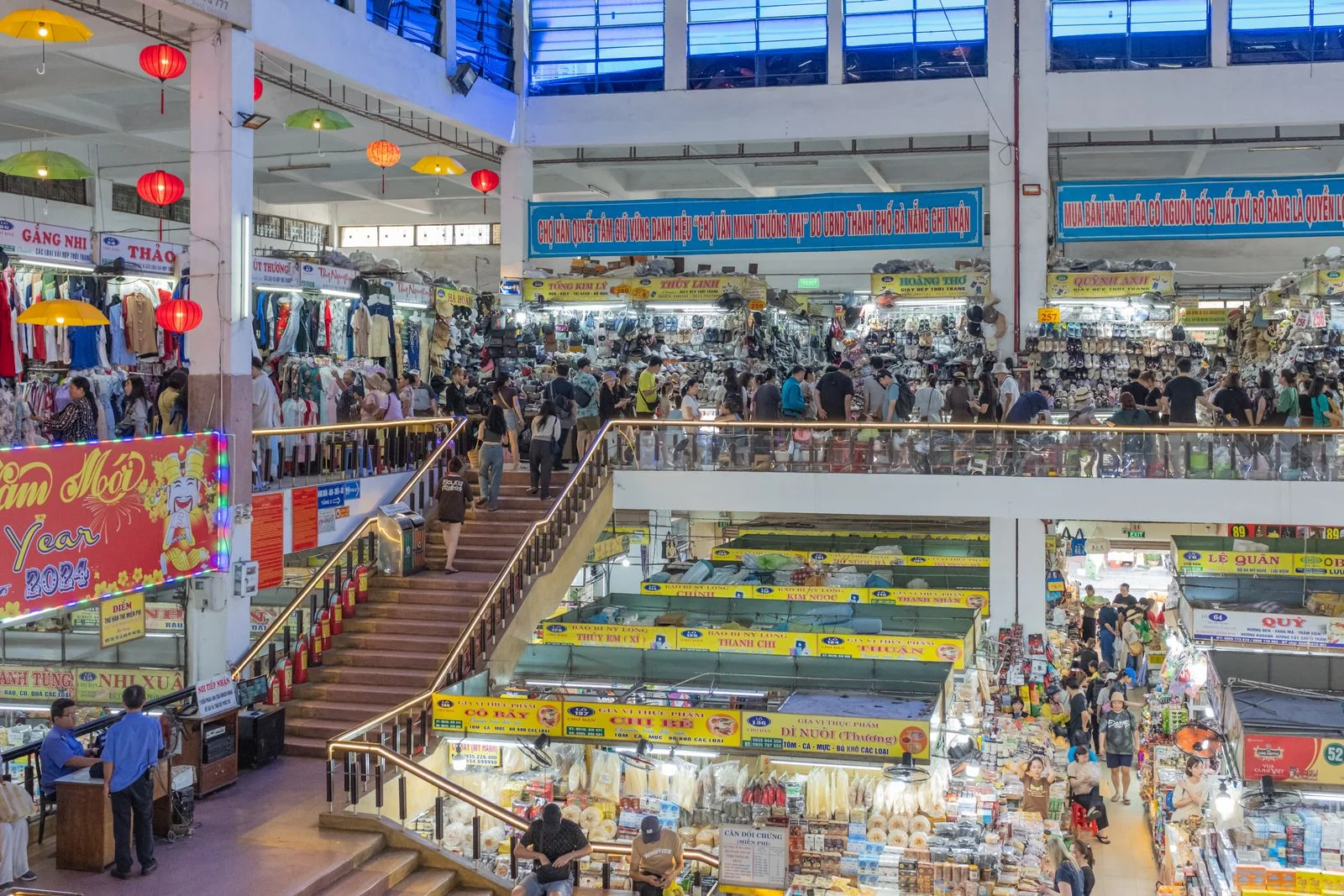
The market dates back to the French colonial period and was rebuilt as the two-storey building you see today. Locals still shop here every day, so it feels like a working market rather than a tourist attraction, even though the dried-goods stalls near the entrance now cater heavily to visitors.
How Han Market Is Laid Out
Ground floor: food, dried goods and fresh produce
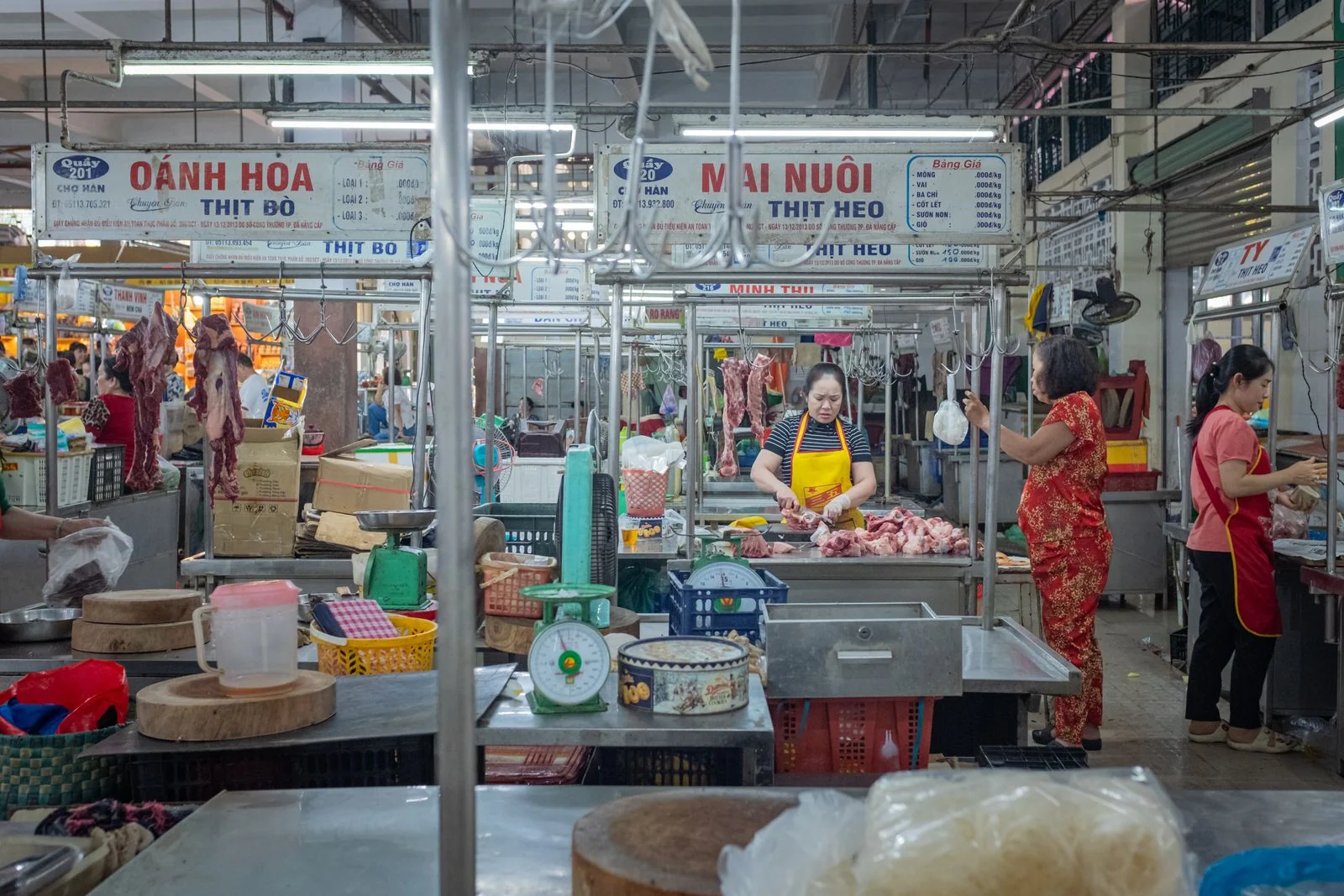
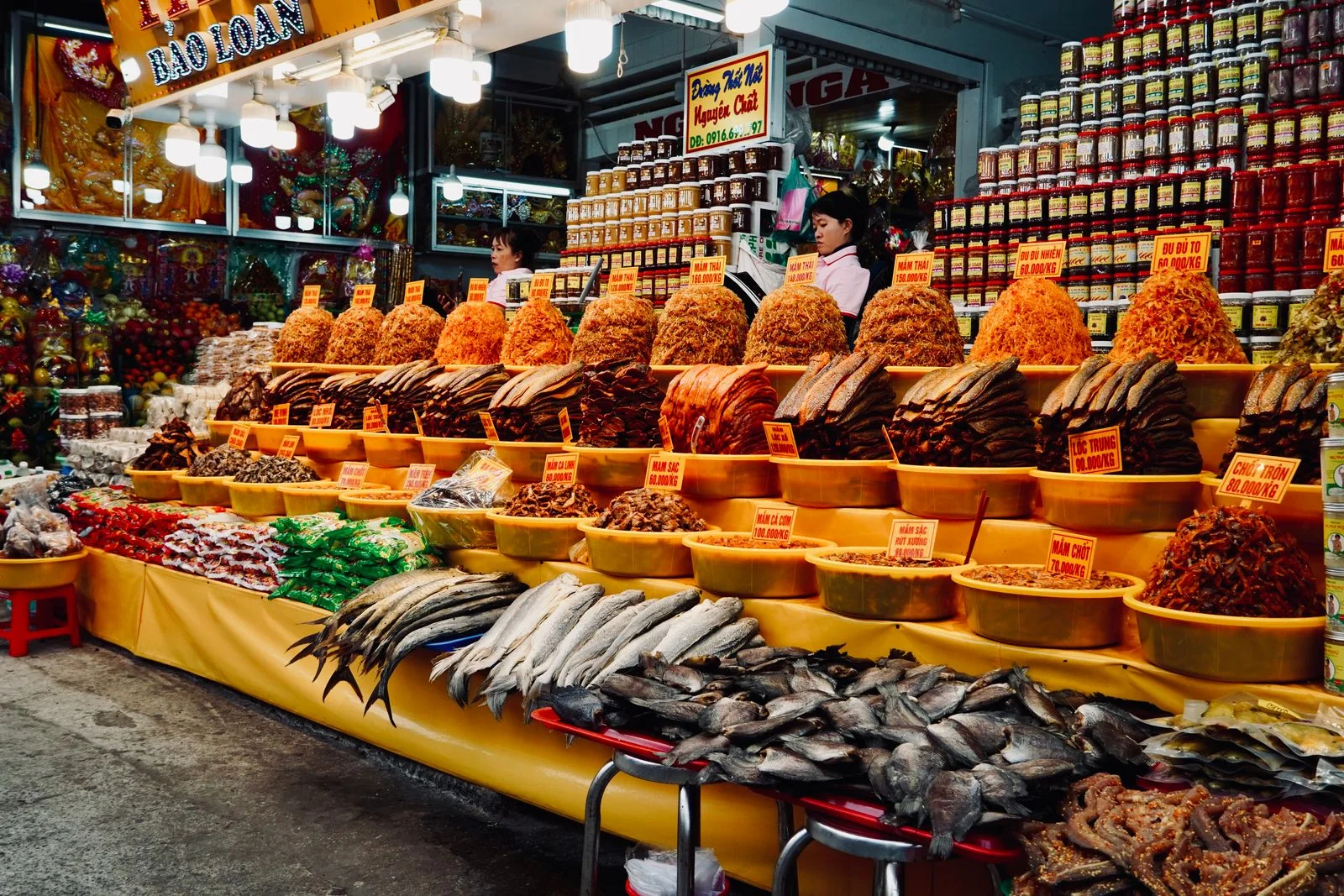
The ground floor is where most of the action is. Near the main entrances you will find stall after stall of dried squid, shrimp, fish snacks, candied fruit, cashews and coffee, often stacked in tall, colourful pyramids. Further in, the market becomes more local: fresh fruit, vegetables, meat, fish and household goods. The back corner has a small cluster of food stalls where you can sit on low plastic stools and eat with the vendors.
Upper floor: fabric, clothes and tailors
Upstairs is quieter and full of fabric rolls, ready-made clothes, áo dài, bags and accessories. This is where many visitors come for tailoring. You choose a fabric, get measured on the spot, and pick up the finished piece one or two days later. Simple items like shirts, trousers or a basic áo dài are realistic; complex suits are better left to a dedicated tailor shop in Hoi An.
What to Buy at Han Market
Han Market is not the place for luxury goods or brand names. It shines for edible gifts, everyday clothing and small handicrafts. Here is what is most worth your luggage space.
1. Dried seafood and snacks
Dried squid, shredded dried squid with chilli, dried shrimp and fish snacks are Da Nang specialities and the most popular buys. Ask for vacuum-sealed bags if you are flying home; most stalls can seal them for you in a few minutes. Check customs rules for your home country first, since some countries restrict meat and seafood products.
2. Vietnamese coffee
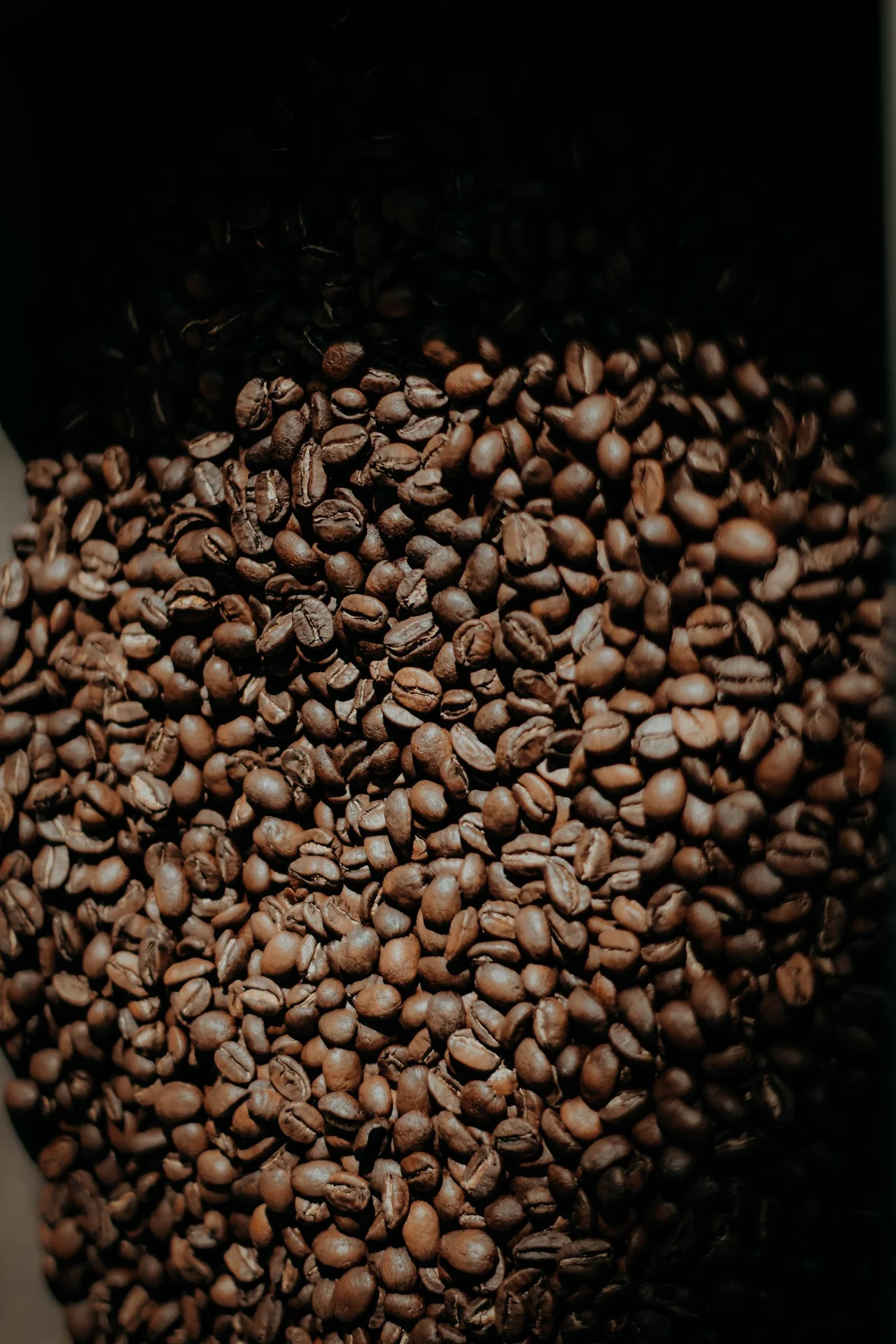
Ground robusta, blends with arabica and weasel-style "specialty" coffees are sold everywhere near the entrance. Buy a simple phin filter too, so you can brew it the Vietnamese way at home. If you want to taste before you buy, read our Da Nang coffee guide and try a few cafés first.
3. Candied fruit, cashews and tea
Ginger candy, dried mango, lotus seed sweets, roasted cashews and artichoke tea are light, cheap and easy to pack. They make good office gifts.
4. Tailored clothes and áo dài
A tailored shirt or a simple áo dài from the upper floor is a memorable souvenir. Bring a photo of what you want, agree on the price and pickup date before you pay a deposit, and ask for a fitting before final payment.
5. Conical hats, bags and small crafts
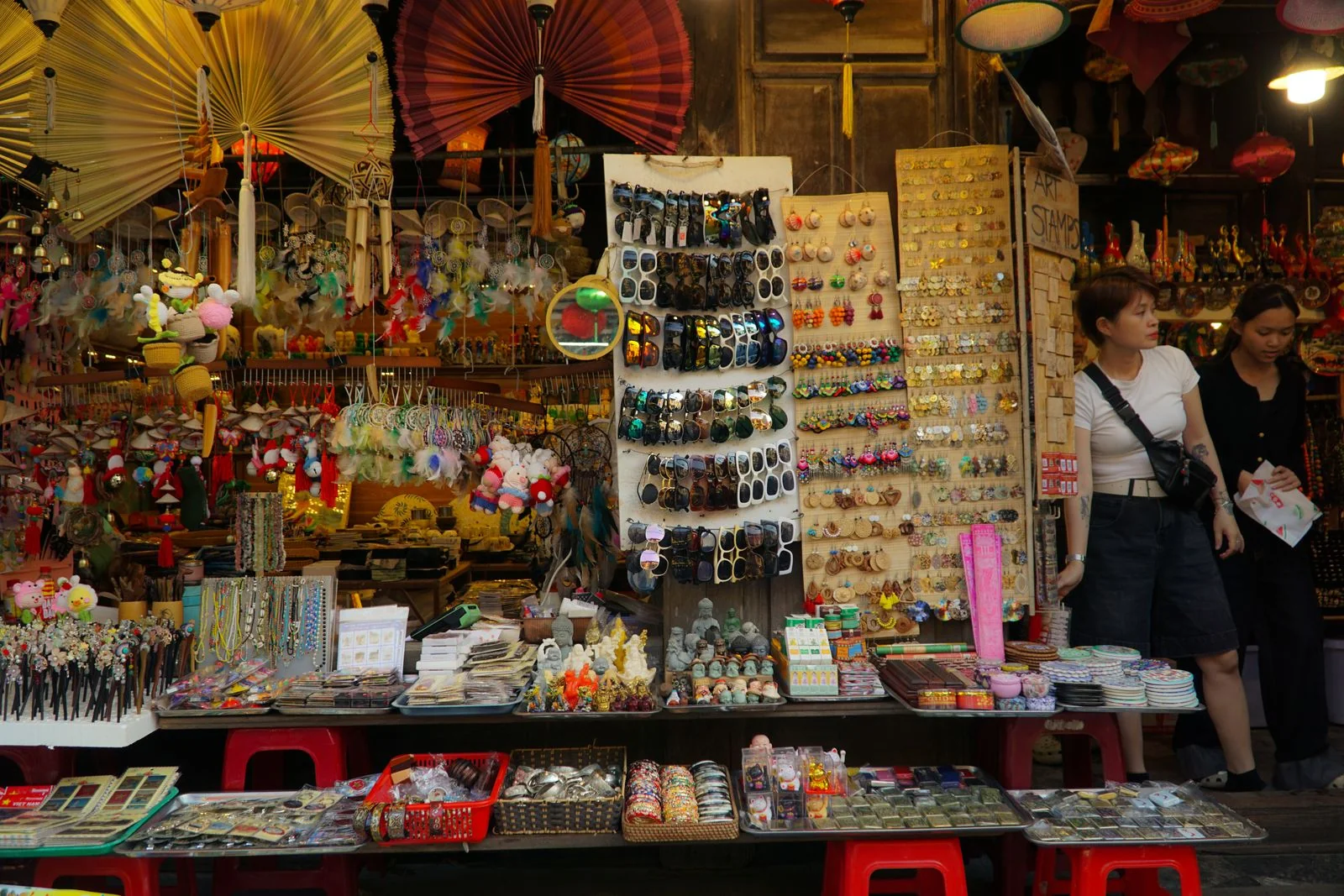
Nón lá (conical hats), embroidered pouches, beach bags, sandals and small lacquer pieces are easy, inexpensive gifts. For more hand-made ideas, see our list of unique souvenirs from Da Nang.
Rough Prices to Expect
Prices change and depend on quality and your bargaining, so treat these as a rough guide only:
- Dried shredded squid: often around 700,000–1,200,000 VND per kg, depending on grade.
- Ground coffee: about 150,000–400,000 VND per 500 g for standard blends.
- Dried mango or candied ginger: around 60,000–150,000 VND per bag.
- Conical hat: roughly 30,000–80,000 VND.
- Tailored shirt: often 300,000–600,000 VND including fabric.
To compare with your daily spending, our Da Nang cost per day guide breaks down food, transport and accommodation costs.
How to Bargain Politely
Bargaining is normal at Han Market, especially at the souvenir and clothing stalls near the entrances. Food stalls in the back and fresh produce usually have fair, fixed prices. A few simple habits help:
- Ask the price first, then pause. A friendly "a bit cheaper?" (rẻ hơn được không?) often brings the price down 10–20%.
- Buy more, ask for a deal. Discounts come easily when you buy several bags from the same stall.
- Compare two or three stalls. Prices for the same dried squid can vary a lot within a few metres.
- Stay relaxed. Smile, keep it light, and walk away politely if the price does not work. Never bargain hard and then not buy.
- Carry small notes. Paying a 50,000 VND item with a 500,000 VND note makes change awkward for small vendors.
Watch the weight when buying by the kilo. Ask the vendor to show the scale and the bag weight, and count your change before leaving.
What to Eat Inside the Market
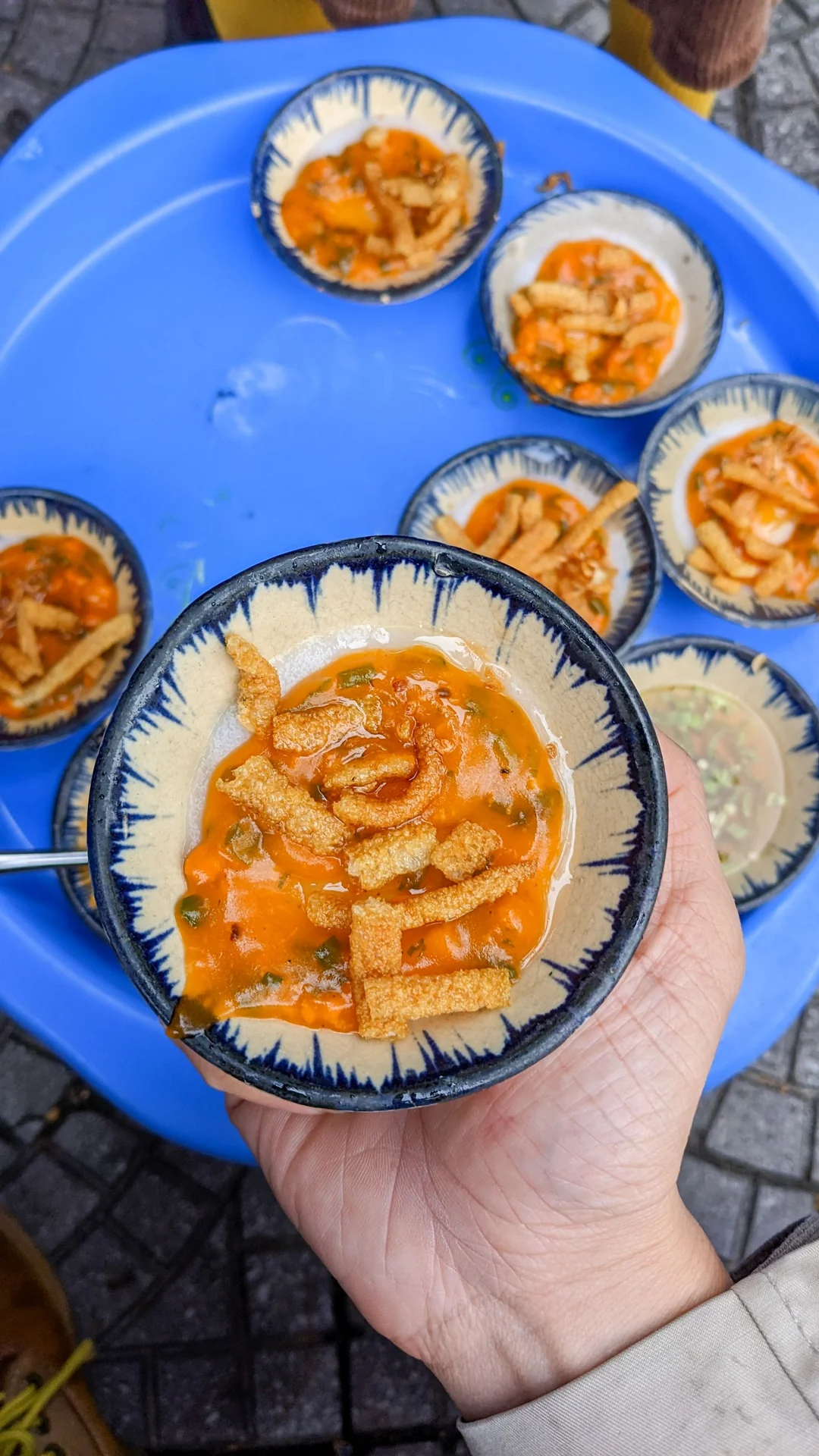
The food corner is small but good for a cheap lunch or snack. Look for bánh bèo (small steamed rice cakes topped with shrimp), bánh xèo, fresh spring rolls, chè (sweet dessert soups) and fruit smoothies. Point at what others are eating if you do not know the names. Prices are low, and the turnover means food is fresh.
Best Time to Visit Han Market
- Early morning (6:30–9:00 AM): the most local atmosphere, fresh produce at its best, cooler temperatures.
- Late morning to midday: busiest with tour groups. Fine for shopping, but expect crowds near the entrances.
- Late afternoon (3:30–6:00 PM): calmer, a good time to shop for souvenirs, then walk to the river for sunset.
From Han Market you can walk along Bạch Đằng street to the Dragon Bridge in about 15 minutes. If you still want to shop after dark, head across the river to the night market. Our Da Nang night market guide explains what to buy and eat there.
Getting There and Practical Tips
- From My Khe Beach: about 10–15 minutes by car or Grab across the river.
- From Da Nang Airport: about 10–15 minutes by car. If you land in the morning, you can drop your bags at the hotel and be at the market before lunch.
- Bags: keep your phone and wallet in a front pocket or zipped bag; the aisles are narrow and crowded.
- Dress: it gets hot inside, so wear light clothes and comfortable shoes. The ground floor can be wet near the fresh food section.
- Carrying your shopping: if you buy a lot, ask your hotel to hold it, or arrange a car so you do not have to carry heavy bags in the heat.
Arriving soon? Da Nang Chill Ride offers private airport pickup and city rides with friendly English-speaking drivers, so you can head straight from the airport to your hotel or to Han Market without haggling for a taxi. Still need your entry paperwork? We can also help with a Vietnam eVisa before you fly.
FAQ: Han Market Da Nang
What time does Han Market open?
Han Market generally opens around 6:00 AM and closes around 7:00 PM every day. Individual stalls may open later or close earlier, especially on holidays.
Is Han Market expensive for tourists?
Starting prices at souvenir stalls near the entrances are often higher for visitors. Comparing stalls and bargaining politely usually brings prices to a fair level. Food stalls and fresh produce are generally fairly priced.
Can I pay by card at Han Market?
Mostly no. Bring cash in Vietnamese đồng. Some larger stalls accept QR bank transfers, but do not count on cards.
What is the difference between Han Market and Con Market?
Han Market is smaller, central and easier for visitors, with lots of dried goods and tailoring. Con Market (Chợ Cồn) is larger, more local and better known for street food and cheaper everyday goods.
Can I bring dried squid home on a plane?
Usually yes in checked luggage if it is sealed, but rules differ by country. Check your home country's customs rules for seafood and meat products before you buy.
How long does tailoring take at Han Market?
Simple items usually take one to two days. Allow extra time for a fitting and adjustments, and avoid ordering on your last day.