Mi Quang is the definitive taste of Da Nang, a turmeric-tinted noodle dish that tells the story of Central Vietnam in every bite. Unlike the ubiquitous pho or the spicy bun bo Hue, this iconic local noodle favorite offers a unique textural experience with its wide, chewy rice noodles, a small amount of intensely flavored broth, and a mountain of fresh herbs and crunchy toppings. This guide goes beyond a simple list of eateries to help you understand, order, and savor Mi Quang like a true local, revealing the cultural nuances that make it a global sensation.
Mi Quang is more than just noodles; it’s a culinary blueprint of Central Vietnam’s resourcefulness. The dish balances a rich, turmeric-infused broth with a generous helping of fresh herbs, roasted peanuts, and crispy rice paper. In 2026, it secured a spot on TasteAtlas’s Top 100 Noodles list, solidifying its place on the world stage. This article will decode the dish’s anatomy, teach you the local eating ritual, and guide you to the best bowls in Da Nang, ensuring you experience its authentic soul, not just a tourist version.
What Makes Mi Quang the Soul of Da Nang’s Street Food Scene
Mi Quang’s soul lies in its deep connection to the land and people of Quang Nam (now part of Da Nang), evolving from a humble rural meal into Da Nang’s most iconic dish.
For another view of the city’s dining scene, the Michelin Guide’s Da Nang restaurant selection is worth scanning before you map out your food route.
This isn’t just a noodle bowl; it’s a cultural artifact. Originating from the rural kitchens of Quang Nam, which borders Da Nang, Mi Quang was a farmer’s meal designed to be filling, flavorful, and portable. Its global recognition, particularly its inclusion in the TasteAtlas Top 100 Noodles 2026, reflects a growing appreciation for its unique character.
From rural kitchens to global recognition — the journey of a humble noodle
The dish’s journey from a provincial staple to a world-renowned delicacy is a testament to its enduring appeal. For generations, families in Quang Nam would prepare Mi Quang using whatever protein was available—often leftover pork, chicken, or shrimp—combined with homegrown herbs and a simple broth. This practical, farm-to-table approach is the dish’s foundation. The recent accolade from TasteAtlas, where it was named alongside other Vietnamese greats like pho and bun cha, is a modern validation of its timeless quality.
This recognition has spurred a new wave of interest, with visitors to Da Nang now seeking out the most authentic versions of this once-humble noodle.
How Mi Quang differs from pho, bun bo Hue, and cao lau
Understanding Mi Quang means understanding its place among Vietnam’s noodle royalty. The table below highlights the key differences that set it apart.
| Feature | Mi Quang | Pho | Bun Bo Hue | Cao Lau |
|---|---|---|---|---|
| Broth-to-Noodle Ratio | Low (just enough to coat) | High (soupy) | High (soupy, spicy) | Very Low (almost dry) |
| Noodle Type | Wide, flat rice sheets (cut) | Thin, flat rice noodles | Thick, round rice noodles | Thick, chewy rice noodles (with lye water) |
| Broth Flavor | Rich, turmeric-infused, savory | Clear, beef/chicken bone broth | Spicy, lemongrass-heavy beef broth | Light, pork-based, less intense |
| Toppings | Pork, shrimp, quail eggs, peanuts, fresh herbs | Sliced beef/chicken, herbs | Sliced beef, pork knuckles, congealed blood | Sliced pork, croutons, herbs |
| Signature Crunch | Yes (crispy banh trang) | No | No | Yes (croutons) |
The most immediate difference you’ll notice is the broth-to-noodle ratio. While pho is a soup you drink, Mi Quang is a noodle dish you toss in a flavorful, almost concentrated sauce. The noodles themselves are also distinct—wider and more substantial than pho’s, but not as dense as cao lau’s. This unique combination of textures and flavors is what makes Mi Quang a singular experience.
The Anatomy of a Perfect Bowl of Mi Quang
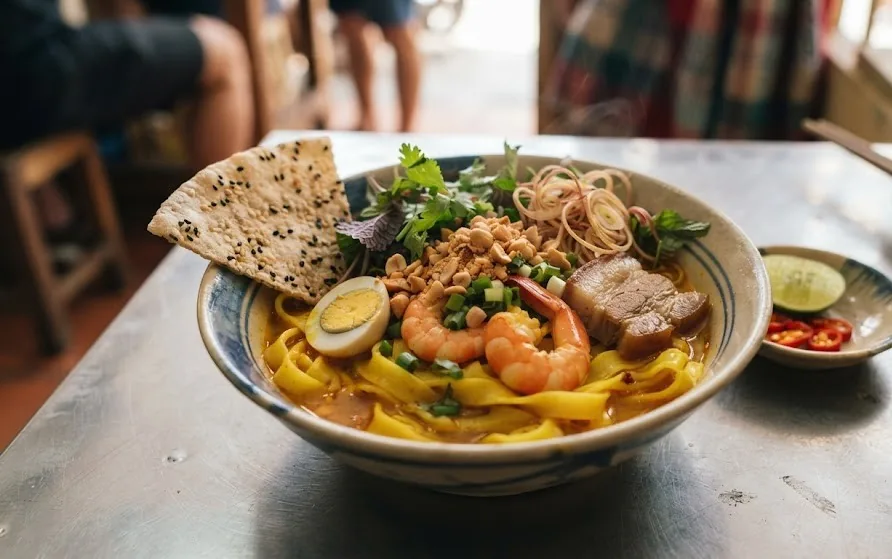
A perfect bowl of Mi Quang is a masterclass in balancing five key elements: the golden turmeric noodles, the intense broth, the savory toppings, the fresh herbs, and the crunchy garnish.
Each component plays a critical role. When you know what to look for, you can instantly tell a thoughtfully prepared bowl from a rushed imitation.
Golden turmeric noodles — why wide rice sheets are cut, not extruded
The foundation of Mi Quang is its signature noodle. Rice flour is mixed with water and turmeric, giving the noodles their characteristic golden hue and a subtle, earthy flavor. The batter is then steamed into thin sheets, which are allowed to cool and set. Unlike pho noodles, which are cut into thin strips from a similar sheet, or bun noodles, which are extruded into round strands, Mi Quang noodles are cut into wide, square-ish pieces, often about 2-3 inches wide. This cutting method gives them a distinct, chewy texture that holds up perfectly to the small amount of broth.
The wide surface area is designed to catch and hold the sauce, ensuring every bite is packed with flavor. In Da Nang, you’ll find these noodles in varying thicknesses, but the best ones are soft yet resilient, never mushy.
The broth paradox: less liquid, more intensity
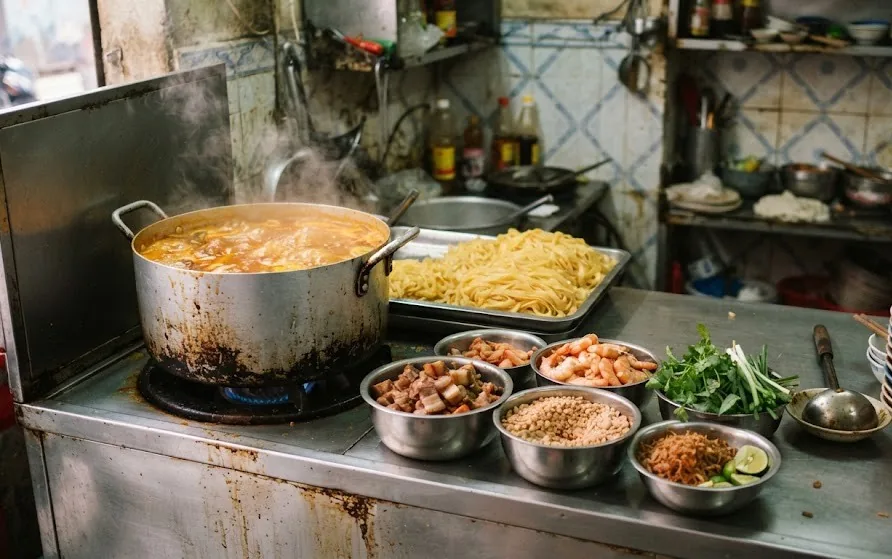
This is where Mi Quang confuses many first-timers. The broth is not meant to be a soup. It is a concentrated, deeply savory liquid that serves as a sauce. Made by simmering pork or chicken bones with shallots, garlic, and annatto seeds for color, the broth is reduced to a rich, flavorful essence. A perfect bowl will have just enough broth to coat the noodles generously, pooling at the bottom of the bowl but never submerging the toppings. The goal is to toss the noodles in this liquid, not to drink it.
A common mistake is to ask for extra broth, which dilutes the entire experience. The intensity of this small amount of broth is what makes Mi Quang so satisfying.
Essential toppings: shrimp, pork, quail eggs, and the crunch of banh trang
The toppings on Mi Quang are a celebration of texture and flavor. A classic bowl typically includes:
- Protein: Thinly sliced pork shoulder (thit heo) and whole, shell-on shrimp (tom). Chicken (ga) is a popular alternative, especially at specialist shops.
- Quail Eggs: Two or three soft-boiled quail eggs (trung cut) add a creamy richness that balances the savory broth.
- Crunchy Garnish: This is non-negotiable. The bowl is topped with a generous handful of roasted peanuts (dau phong) and a broken piece of crispy rice paper (banh trang). The peanuts add a nutty crunch, while the banh trang provides a satisfying crackle that soaks up the broth.
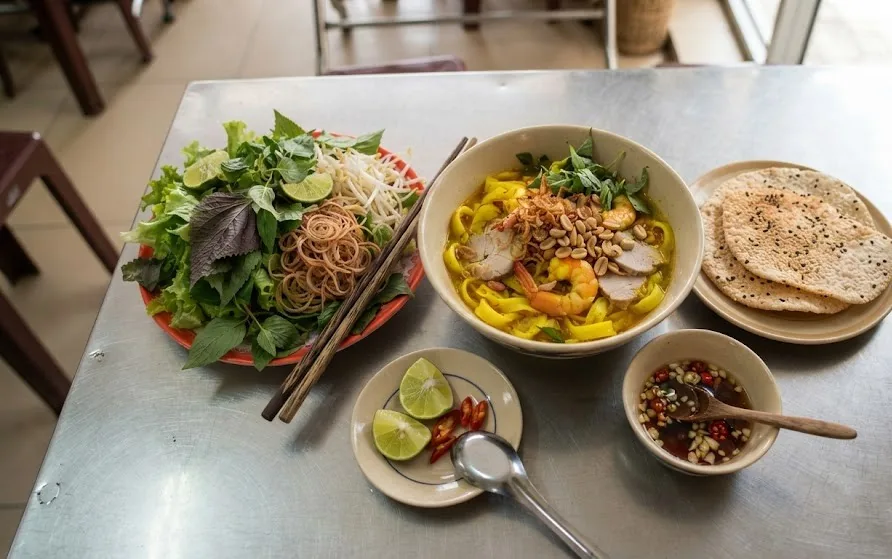
- Fresh Herbs & Greens: A massive pile of raw greens is served on the side, not on top. This typically includes lettuce, herbs like rau ram (Vietnamese coriander) and basil, and slices of banana flower (bap chuoi).
How to Eat Mi Quang Like a Local in Da Nang
Eating Mi Quang is an interactive process, and doing it correctly unlocks the dish’s full potential of flavors and textures.
Don’t just dive in. Follow this step-by-step guide to experience the dish as it was meant to be enjoyed.
The correct order: mix noodles before adding broth
When your bowl arrives, the noodles and broth might look separated. Your first move is to take your chopsticks and give everything a thorough toss. The goal is to coat every single noodle in that golden, savory broth. This is the most important step. Once the noodles are evenly coated, you can then add the broth from the side soup bowl, if you wish. Most locals prefer the noodles to be just moist, not swimming. The key is to mix first, then assess if you need any additional liquid.
Herb pairing guide — which rau thom goes with which protein
The side plate of herbs and greens is not just for decoration. It’s a crucial part of the flavor profile. The general rule of thumb is to tear the large herbs into smaller pieces and add them to your bowl as you eat. Here’s a simple guide:
- For Pork Mi Quang: Rau ram (Vietnamese coriander) is the classic pairing. Its peppery, citrusy notes cut through the richness of the pork.
- For Shrimp Mi Quang: Thai basil (hung que) or regular basil is excellent. Its anise-like flavor complements the sweetness of the shrimp.
- For Chicken Mi Quang: A mix of rau ram and mint (bac ha) works wonderfully. The mint adds a refreshing coolness.
- Always add: A few slices of banana flower and some lettuce for a fresh, slightly bitter crunch.
Squeeze lime, add chili, crush peanuts: customizing your bowl
This is the final, personal touch. Take the wedge of lime on your side plate and squeeze it over the herbs, not directly onto the hot noodles, to preserve the citrus aroma. If you want heat, add a few slices of fresh chili. The final step is to take the crispy rice paper (banh trang) and crush it into your bowl with your hands. This isn’t just for fun—it adds the final layer of crunch that makes each bite a textural adventure.
The peanuts are already in the bowl, but you can crush them further with your spoon for a more even distribution.
Where to Find the Best Mi Quang in Da Nang (2026 Edition)
Da Nang offers a spectrum of Mi Quang experiences, from MICHELIN-recognized institutions to hidden family-run stalls, each with its own loyal following.
While personal preference plays a big role, these three spots are consistently rated as the best in the city for 2026.
Mi Quang 1A — the MICHELIN-recognized icon on Hai Phong Street
This is the most famous bowl in Da Nang, and for good reason. Located at 1A Hai Phong Street, this no-frills spot received a recommendation from the MICHELIN Guide, a testament to its consistency and quality. Their specialty is a mixed bowl with pork, shrimp, and quail eggs. The broth is exceptionally rich, and the noodles have a perfect chew. Expect a queue during peak lunch hours (11 am-1 pm). A standard bowl is priced between 35,000 and 50,000 VND. This is the benchmark against which all other Mi Quang is measured.
Ba Mua — hidden alley bowl with family recipe since 1990
For a more intimate, family-run experience, head to Ba Mua. Tucked away in a small alley, this spot has been serving its secret family recipe since 1990. The broth here is known for being particularly aromatic, with a deeper, more complex flavor. The portions are generous, and the service is incredibly warm. A bowl is around 40,000 VND. This is the place to go if you want to feel like you’ve discovered a local secret. Finding it is part of the adventure—it’s a true hidden gem.
Ba Vi — the chicken Mi Quang specialist near Han Market
If you prefer chicken over pork and shrimp, Ba Vi is your destination. Located near the bustling Han Market, this shop is dedicated to the art of chicken Mi Quang. The chicken is tender and flavorful, having been poached in the same broth used for the noodles. The broth itself is lighter and slightly sweeter than the pork version, allowing the chicken flavor to shine. It’s a perfect lunch option after a morning of exploring the market. A bowl is typically around 40,000 VND.
Street stalls vs sit-down restaurants: when to choose which
Your choice between a street stall and a sit-down restaurant often depends on the occasion.
- Street Stalls (Quan via he): These offer the most authentic, everyday experience. The bowls are often simpler, focusing on one or two proteins. The plastic stools and bustling atmosphere are part of the charm. This is the best choice for a quick, cheap, and genuine local meal.
- Sit-Down Restaurants (Quan an): These offer a more comfortable environment with menus, air conditioning, and table service. They often have a wider variety of toppings and side dishes. This is a better choice for groups, first-timers who want a more guided experience, or when you want to linger over your meal.
Why Mi Quang Won a Spot in TasteAtlas Top 100 Noodles 2026
The TasteAtlas recognition is a global validation of Mi Quang’s unique flavor profile and its authentic representation of Central Vietnamese culinary tradition.
This wasn’t a random selection. The dish earned its place through a combination of its distinct character and cultural importance.
The global recognition that put Da Nang on the food map
In the 2026 TasteAtlas ranking, Mi Quang was listed alongside other global noodle legends. This recognition has a tangible impact on food tourism in Da Nang. It signals to international travelers that the city is not just a beach destination but a serious culinary capital. The ranking, compiled from thousands of user ratings and expert reviews, highlights the dish’s “rich broth, golden wide rice noodles, toasted peanuts, and fresh herbs” as key factors. This official stamp of approval has made “finding the best Mi Quang” a top activity for many visitors.
What judges look for: authenticity, flavor balance, cultural significance
TasteAtlas’s methodology emphasizes authenticity. A dish doesn’t score high just because it tastes good; it must be a true representation of its regional origin. Mi Quang scores highly on all three fronts:
- Authenticity: The dish remains remarkably true to its rural roots. The best versions in Da Nang still use traditional recipes and techniques.
- Flavor Balance: The interplay between the savory broth, fresh herbs, crunchy peanuts, and soft noodles is a perfect example of culinary balance.
- Cultural Significance: Mi Quang is more than a meal; it’s a part of daily life and a source of local pride in Da Nang and Quang Nam.
Key Tips for First-Timers: Avoiding Common Mi Quang Mistakes
Navigating your first Mi Quang experience can be tricky, but a few simple tips will ensure you get the authentic bowl every time.
These are the most common pitfalls that tourists fall into, and how to avoid them.
Ordering the wrong size — understanding “tô” vs “dĩa” Mi Quang
This is the most confusing part for first-timers. Mi Quang is typically served in two ways:
- Tô (Bowl): This is the standard, soupy version. The noodles are served in a small bowl with a bit more broth. This is what most people picture when they think of a noodle soup.
- Dĩa (Plate): This is the dry, or “kho,” version. The noodles are served on a plate with the broth on the side in a small dipping bowl. This is the preferred style for many locals, as it allows you to control the amount of liquid and prevents the noodles from getting soggy.
Local Tip: If you want to eat like a local, order “Mi Quang kho” (dry Mi Quang) or ask for it on a “dĩa” (plate). This gives you maximum control over the texture and flavor.
Overloading with broth — why less is more for texture
The biggest mistake tourists make is asking for more broth. The beauty of Mi Quang lies in its texture—the chewy noodles coated in a concentrated sauce. Adding too much broth turns it into a generic soup, diluting the intense flavors and ruining the noodle’s texture. Trust the chef. The amount of broth provided is intentional. If you feel the noodles are too dry after mixing, add a spoonful from the side bowl, but resist the urge to pour the whole thing in.
Timing your visit: peak hours vs quiet hours at popular spots
Popular Mi Quang shops like Mi Quang 1A have a predictable rhythm. The peak lunch rush is from 11:00 AM to 1:00 PM. During this time, you can expect a 15-30 minute wait for a seat. The atmosphere is chaotic but electric. If you want a more relaxed experience, aim for a late lunch around 1:30 PM or an early dinner around 5:00 PM. Many shops also close for a few hours in the afternoon (around 2:00 PM to 4:00 PM) to prepare for the evening service, so check the hours before you go.
Related on this site
- Da Nang’s Top Grilled Specialties: Savoring Smoky Flavors
- Da Nang’s Hidden Food Courts: Local Lunch Spots 2026
- Da Nang’s Best Farmers Markets: Fresh Produce and Local Delights
If you prefer a clear southern broth to mi quang’s turmeric one, we also cover where to eat hu tieu in Da Nang.
Frequently Asked Questions
Is Mi Quang gluten-free?
However, be aware that some shops may add a small amount of wheat flour to the broth as a thickener. If you have a severe allergy, it’s best to ask the restaurant directly.
What is the difference between Mi Quang and Cao Lau?
While both are Central Vietnamese noodle dishes, they are distinct. Cao Lau is specific to Hoi An and features a thicker, chewier noodle made with lye water and local well water. Its broth is lighter, and it’s topped with croutons instead of crispy rice paper. Mi Quang is more common in Da Nang, has a richer, turmeric-heavy broth, and uses wider, softer noodles.
Can I find vegetarian Mi Quang in Da Nang?
Yes, but it’s not as common as the meat version. Many restaurants will offer a “Mi Quang chay” (vegetarian Mi Quang) that uses tofu, mushrooms, and vegetable broth. It’s best to ask at the restaurant. Some specialized vegetarian restaurants in the city will also have their own version.
How spicy is Mi Quang?
On its own, Mi Quang is not spicy. The heat comes from the fresh chili peppers that are served on the side. You can add as much or as little as you like, making it a very customizable dish for different spice tolerances.
What is the best drink to pair with Mi Quang?
The best and most traditional pairing is a glass of iced tea (tra da). Its clean, slightly bitter flavor is the perfect palate cleanser between bites of the rich, savory noodles. A cold local beer (bia) is also a popular choice.
Is it rude to use a fork instead of chopsticks?
Not at all. While chopsticks are the traditional utensil, most restaurants in Da Nang are accustomed to tourists and will happily provide a fork if you ask. The most important thing is that you enjoy the meal.
How much does a bowl of Mi Quang cost in 2026?
Prices are very reasonable. A standard bowl at a street stall or local restaurant typically costs between 30,000 and 50,000 VND ($1.20 to $2.00 USD). At a more upscale or tourist-oriented restaurant, you might pay up to 70,000 VND ($2.80 USD).
Conclusion — Next Steps
Mi Quang is a dish that demands to be experienced, not just eaten. From its humble origins to its global recognition, every bowl tells a story of Da Nang’s culinary soul. By understanding the anatomy of the dish and the local eating rituals, you transform a simple meal into a cultural immersion. Your next step is to put this knowledge into practice. Head to Mi Quang 1A for the benchmark bowl, or seek out Ba Mua for a taste of a family legacy.
Order it “kho” on a plate, mix the noodles first, add your herbs, and crush that crispy banh trang. You’ll discover why this golden noodle dish is the true heart of Da Nang’s street food scene.
Part of our guide to what to eat in Da Nang.