Savoring Da Nang’s Suon Nuong: Grilled Pork Ribs is about more than just eating meat off a bone—it’s about understanding a coastal city’s soul through its signature marinade, its charcoal smoke, and the communal joy of eating with your hands. This guide breaks down what makes Da Nang’s version distinct, walks you through the essential ingredients and a foolproof step-by-step marinade process, and covers four different grilling methods so you can recreate that iconic smoky-sweet flavor at home, whether you have a charcoal grill or just an oven.
The defining feature of Da Nang’s suon nuong is its aggressive sweet-salty-umami balance, built on a foundation of good fish sauce and palm sugar, which creates a deep caramelized crust when grilled. Unlike Saigon’s com suon, which leans lighter and brighter, or Hanoi’s drier, more pepper-forward style, Da Nang’s version is boldly lacquered and intensely savory. Mastering it comes down to three things: choosing the right cut of ribs, giving the marinade enough time (4-6 hours minimum), and controlling your heat to avoid burning the sugar before the meat is cooked through.
What Makes Da Nang’s Suon Nuong Different From Other Vietnamese Grilled Ribs
Da Nang’s suon nuong is defined by a bolder, sweeter, and more umami-packed marinade than you’ll find in other Vietnamese regions. While the basic formula of fish sauce, sugar, and aromatics is shared across the country, the proportions and the final flavor profile shift dramatically from north to south. In Da Nang, the marinade is built to stand up to the charcoal smoke and create a thick, lacquered glaze that clings to every rib.
The coastal city’s signature marinade balance: sweeter, saltier, more umami
Walk past any street-side grill in Da Nang and you’ll smell it before you see it: a pungent, sweet, and deeply savory aroma. The city’s version of suon nuong uses a heavier hand with fish sauce and sugar than what you might find elsewhere. This creates a marinade that is intensely concentrated, designed to caramelize quickly over high heat into a sticky, almost candied exterior. The saltiness of the fish sauce is balanced by the sweetness of sugar, while a generous amount of shallots and garlic adds a savory depth.
The result is a rib that is simultaneously sweet, salty, and packed with umami—a flavor profile that perfectly complements the coastal city’s vibrant and bold food scene.
Charcoal grilling culture along the Han River and My Khe Beach
The grilling culture in Da Nang is a central part of its social fabric. As the sun sets, the air along the Han River and near My Khe Beach fills with smoke from countless charcoal braziers. Street vendors set up low tables and plastic stools, grilling ribs over glowing coals. This isn’t just about cooking; it’s a nightly ritual. The high, dry heat of charcoal is essential to the dish, imparting a smoky flavor that no oven or air fryer can truly replicate. Research from the Culinary Institute of America indicates that charcoal grilling can impart up to 10 times more smoke compounds than gas grilling, significantly enhancing the flavor profile of meats.
It’s this combination of the bold marinade and the charcoal smoke that gives Da Nang’s suon nuong its distinctive, unforgettable character.
How Da Nang’s version compares to Saigon’s com suon and Hanoi’s suon nuong
To truly appreciate Da Nang’s style, it helps to understand its regional cousins. Saigon’s com suon is often served with broken rice and a thinner, more diluted marinade that focuses on a lighter sweetness. Hanoi’s suon nuong, on the other hand, tends to be drier and more savory, with a stronger emphasis on black pepper and less sugar. Da Nang sits firmly in the middle, taking the best of both—the caramelized sweetness of the south and the savory punch of the north—and amplifying both with an extra dose of umami.
This makes it the most intensely flavored of the three, a true celebration of the grill.
| Feature | Da Nang Style | Saigon Style (Com Suon) | Hanoi Style |
|---|---|---|---|
| Flavor Profile | Bold, sweet, salty, high umami | Lighter, brighter, sweet-forward | Savory, drier, pepper-forward |
| Marinade Thickness | Thick, lacquered, caramelized | Thinner, more diluted | Dry rub-like paste |
| Key Aromatics | Shallots, garlic, lemongrass | Shallots, garlic, lemongrass | Garlic, black pepper, less sugar |
| Typical Serving | With rice, herbs, and pickles | With broken rice (com tam) | With rice noodles or as a standalone dish |
| Grilling Style | Aggressive caramelization over charcoal | Basted frequently to keep moist | Cooked until dry and slightly chewy |
The Core Ingredients Behind Authentic Da Nang-Style Grilled Pork Ribs
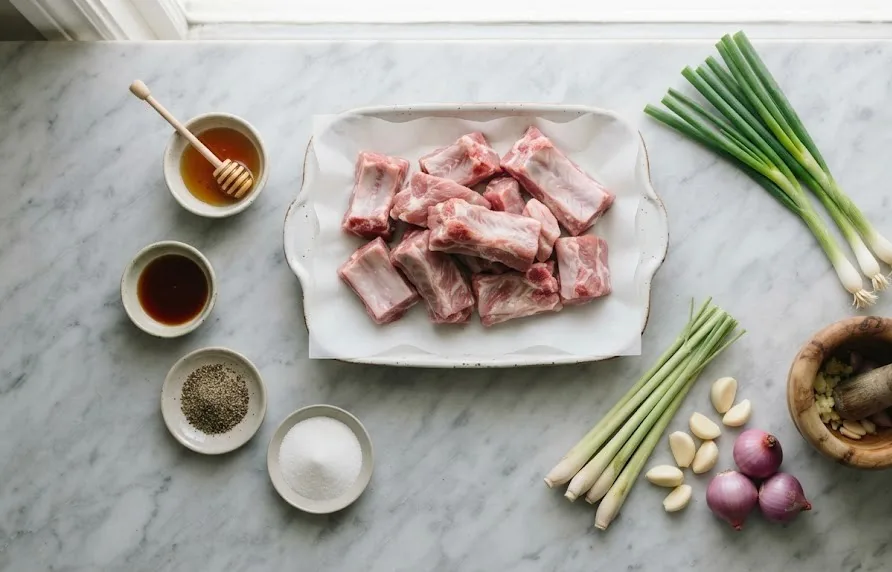
The magic of suon nuong lies in a handful of pantry staples that, when combined in the right proportions, create a complex and deeply satisfying flavor. Each ingredient plays a specific role, from the savory backbone of fish sauce to the caramelized sweetness of sugar. Understanding these components is the first step to mastering the dish at home.
Fish sauce as the backbone: choosing the right nước mắm for depth
Fish sauce is the soul of this marinade. It provides the salty, umami-rich foundation that defines the dish. For the best results, use a high-quality fish sauce made from anchovies, such as those from Phu Quoc island. These sauces have a more complex, less harsh flavor than cheaper alternatives. Look for a bottle with a rich, amber color and a deep, savory aroma. A good fish sauce should taste salty but also have a subtle sweetness and a lingering umami finish.
You can use a milder sauce if you’re sensitive to the flavor, but don’t skip it—there is no substitute for its unique depth.
Palm sugar vs. brown sugar: how sweetener choice changes caramelization
The sweetener you choose has a direct impact on the final texture of the ribs. Palm sugar, which has a lower glycemic index and a more complex, almost butterscotch-like flavor, is the traditional choice. It caramelizes more slowly and evenly, creating a beautiful, deep amber glaze without burning too quickly. Brown sugar is a common substitute and works well, but it has a higher water content and can burn faster at high temperatures. If you use brown sugar, be more vigilant about your heat control.
For an authentic Da Nang flavor, try to find Thai or Vietnamese palm sugar, which is often sold in solid discs or cylinders that need to be grated or melted down.
Aromatics that define the profile: shallots, garlic, lemongrass, and black pepper
These aromatics form the aromatic backbone of the marinade. Shallots and garlic provide a pungent, savory base that is essential. Lemongrass adds a bright, citrusy note that cuts through the richness of the pork and adds a distinctly Vietnamese character. Use only the tender, white and pale green parts of the lemongrass stalk, and mince it very finely or pound it into a paste. Black pepper, both for heat and aroma, is the final piece. Use freshly ground black pepper for the best flavor.
The combination of these four ingredients, along with the fish sauce and sugar, creates the signature profile of Da Nang’s suon nuong.
Optional umami boosters: oyster sauce, dark soy sauce, and honey
While not part of the traditional five-ingredient recipe, many home cooks and street vendors in Da Nang add a few extra ingredients to deepen the flavor. Oyster sauce adds a rich, savory complexity and helps the marinade cling to the meat. A splash of dark soy sauce contributes both color and a deeper, more fermented soy flavor. A drizzle of honey can help achieve a shinier, more lacquered glaze and adds another layer of sweetness that complements the palm sugar. These are optional, but they can elevate your marinade from good to exceptional.
Start with a small amount and adjust to your taste.
Step-by-Step: How to Prepare and Marinate Suon Nuong at Home
This is a straightforward process that rewards a little patience, with the key to success being a well-balanced marinade and enough time for the flavors to penetrate the meat. Follow these steps to create ribs that are juicy, flavorful, and perfectly caramelized.
- Select your ribs. For 2-3 people, buy about 2-3 lbs of baby back ribs. They are meatier and more tender than spare ribs. If you prefer, you can also use pork spare ribs or even thick-cut pork chops, adjusting the cooking time as needed.
- Prepare the ribs. Rinse the ribs and pat them completely dry with paper towels. Remove the thin, tough membrane from the back of the ribs—this allows the marinade to penetrate more effectively.
- Make the marinade paste. In a food processor, combine 3-4 shallots, 4-5 cloves of garlic, and the white parts of 2 lemongrass stalks. Pulse until a coarse paste forms. If you don’t have a food processor, you can finely mince these aromatics by hand.
- Combine the marinade ingredients. In a large bowl, whisk together the aromatic paste, 1/2 cup of fish sauce, 1/4 cup of palm sugar (or brown sugar), 1 tablespoon of oyster sauce (optional), 1 teaspoon of dark soy sauce (optional), and 1-2 teaspoons of freshly ground black pepper. Taste the marinade—it should be intensely salty, sweet, and savory.
- Marinate the ribs. Place the ribs in a large bowl or a resealable plastic bag. Pour the marinade over the ribs and massage it into the meat, ensuring every surface is coated. Cover and refrigerate for at least 4-6 hours, but preferably overnight for the best flavor penetration.
Selecting the right cut: baby back ribs vs. pork spare ribs vs. short ribs
The cut of meat you choose will influence the cooking time and the final texture. Baby back ribs are lean, tender, and cook relatively quickly, making them a great choice for grilling. Pork spare ribs are larger, fattier, and have more connective tissue, which means they need a longer cooking time to become tender. Pork short ribs are incredibly rich and flavorful, but they are also very tough and require a long, slow cooking method, like braising, before they can be successfully grilled. For a classic suon nuong experience, baby back ribs are the most forgiving and reliable option.
Building the marinade paste: food processor vs. hand-mincing aromatics
Using a food processor is a quick and efficient way to create a fine, consistent paste for the marinade. This helps the aromatics distribute evenly and release their flavors more effectively. If you don’t have a food processor, you can hand-mince the shallots, garlic, and lemongrass. The key is to mince them as finely as possible so they don’t create large chunks that could burn on the grill. A mortar and pestle is another great option, as it allows you to pound the aromatics into a paste while releasing their essential oils, which intensifies the flavor.
Marinating time: does overnight really make a difference vs. 2 hours?
Yes, marinating time makes a big difference. A minimum of 2 hours will give the meat some flavor, but an overnight marinade (8-24 hours) is ideal. This extended time allows the salt and sugar in the marinade to penetrate deep into the meat, seasoning it from within and helping to tenderize it. The aromatics also have more time to infuse their flavors. If you’re short on time, try to aim for at least 4-6 hours.
However, be careful not to marinate for more than 24 hours, as the acid and salt can begin to break down the meat’s texture, making it mushy.
How to balance saltiness for eating with rice vs. eating ribs straight up
Consider how you plan to serve the ribs. If you’re serving them with steamed rice and fresh herbs, you can be more generous with the fish sauce, as the rice will help balance the saltiness. If you plan to eat the ribs on their own as an appetizer or snack, you might want to slightly reduce the amount of fish sauce or increase the sugar to create a more balanced flavor. The best approach is to taste your marinade before adding the ribs. It should taste bold and flavorful but not overwhelmingly salty.
You can always adjust the seasoning after grilling with a squeeze of lime or a side of dipping sauce.
Grilling Methods: Charcoal, Oven, Air Fryer, and Pan-Seared
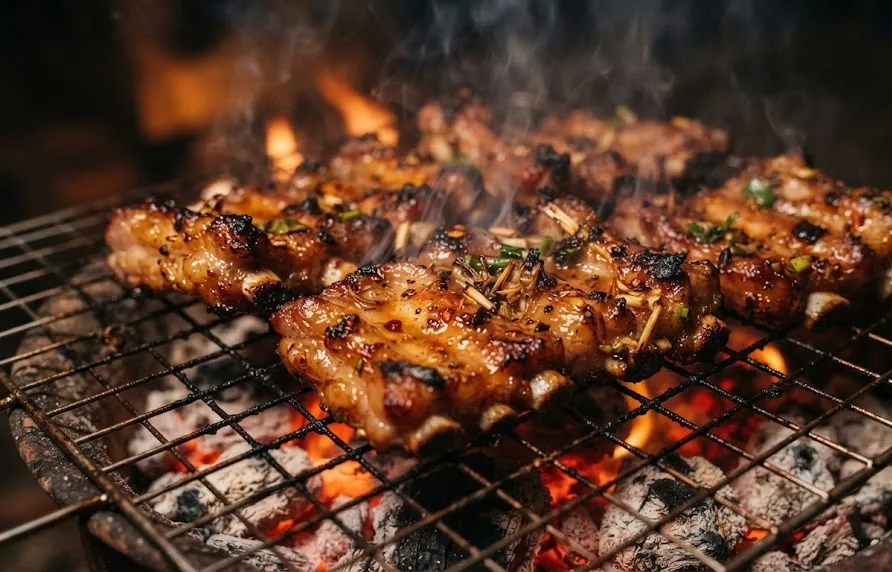
While charcoal is the traditional method, you can achieve delicious results using an oven, air fryer, or even a skillet. Each method has its own advantages, and the key is to understand how to manage heat and caramelization.
Charcoal grilling: achieving that smoky char at 375-400°F
For the most authentic flavor, charcoal is the way to go. Set up your grill for two-zone cooking: pile the hot coals on one side and leave the other side empty. This allows you to sear the ribs over high heat and then move them to the cooler side to finish cooking without burning. Aim for a grill temperature of 375-400°F. Grill the ribs for 6-10 minutes per side over the direct heat, turning occasionally to get a nice char.
Then, move them to the cooler side of the grill, cover, and cook for another 15-20 minutes, or until the meat is tender and cooked through. The smoky flavor from the charcoal is irreplaceable.
Oven method: roasting then broiling for crispy edges
This method is great for when you can’t grill outdoors. Preheat your oven to 180°C (350°F). Place the marinated ribs on a wire rack set over a baking sheet. Roast for 45-60 minutes, or until the meat is tender and pulls back from the bone. Then, increase the oven temperature to 200°C (400°F) or switch to the broiler setting. Brush the ribs with a little extra marinade or honey and broil for 5-7 minutes, watching carefully, until the edges are crispy and caramelized. This two-step process ensures the ribs are fully cooked and tender before achieving that desirable char.
Air fryer shortcut: getting caramelized results in under 20 minutes
The air fryer is a surprisingly effective tool for making suon nuong. Preheat your air fryer to 375°F (190°C). Place the marinated ribs in the air fryer basket in a single layer, working in batches if necessary. Cook for 10-12 minutes, then flip the ribs and cook for another 5-8 minutes, or until they are caramelized and cooked through. The hot, circulating air helps to render the fat and create a crispy, slightly sticky exterior. This method is fast, easy, and produces results that are surprisingly close to grilling, making it perfect for a quick weeknight meal.
Pan-searing for apartment cooks: how to get char without a grill
If you don’t have a grill or an air fryer, you can still get a good result with a heavy skillet. Heat a cast-iron or heavy-bottomed skillet over medium-high heat with a little oil. Add the ribs in a single layer, being careful not to overcrowd the pan. Sear for 4-5 minutes per side, until a nice char develops. Then, reduce the heat to low, add a splash of water or broth to the pan, cover, and let the ribs steam for 10-15 minutes, or until they are cooked through and tender.
This method gives you a good sear and helps tenderize the meat, though you won’t get the same smoky flavor as charcoal.
How to Serve Suon Nuong the Da Nang Way
In Da Nang, suon nuong is rarely served alone; it’s the centerpiece of a communal meal, meant to be shared and enjoyed with a variety of accompaniments. The goal is to create a balanced plate with contrasting flavors and textures.
Com tam (broken rice) pairing: rice, pickled carrots and daikon, cucumber slices
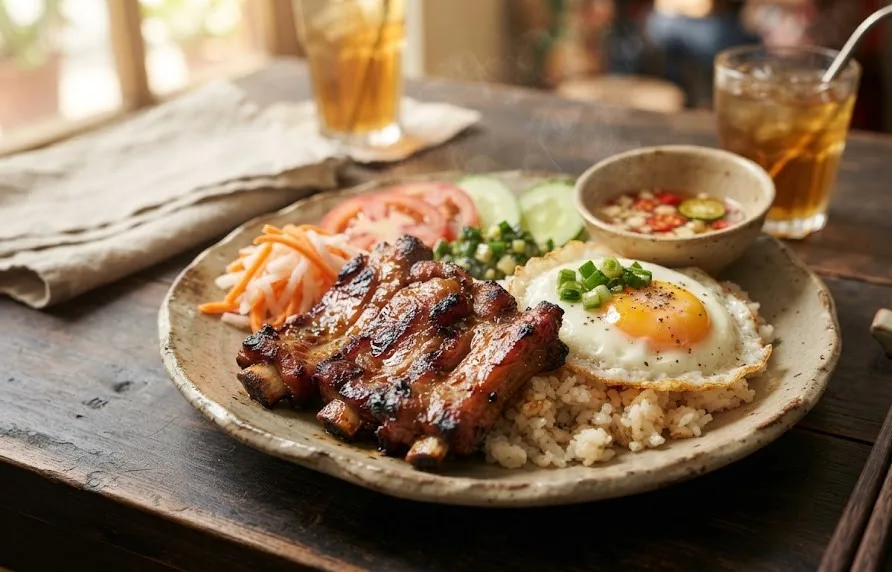
The classic and most beloved way to serve suon nuong is over a bed of com tam, or broken rice. The nutty, slightly chewy texture of the rice is the perfect counterpoint to the rich, caramelized ribs. A traditional com tam plate also includes a portion of pickled carrots and daikon, which provides a bright, tangy contrast to the sweet and salty meat, and a few slices of fresh cucumber for a cool, crisp element. The combination of textures and flavors is what makes this dish so satisfying.
Nước chấm (dipping sauce): the essential fish sauce vinaigrette recipe
No suon nuong meal is complete without a bowl of nuoc cham, the ubiquitous Vietnamese dipping sauce. It’s a simple vinaigrette made with fish sauce, lime juice, sugar, water, and fresh chili. A good starting ratio is 1 part fish sauce, 1 part lime juice, 1 part sugar, and 2 parts water. Adjust the balance to your taste, adding more sugar for sweetness or more chili for heat. The sauce should be a perfect harmony of sweet, sour, salty, and spicy. This dipping sauce adds a final pop of flavor that cuts through the richness of the ribs.
Fresh herb platter: lettuce, mint, cilantro, and pickled onions
Fresh herbs are essential for cutting through the richness of the grilled meat. A typical platter will include crisp lettuce leaves (often used to wrap the meat), fresh mint, cilantro, and sometimes Thai basil. Pickled onions or thinly sliced shallots in vinegar also make a great addition. The idea is to take a piece of rib, some rice, and a few herbs, and wrap it all in a lettuce leaf for a fresh, flavorful, and texturally interesting bite. This is how locals enjoy it, and it’s the best way to experience the full complexity of the dish.
What to drink: local beer, jasmine tea, or sugarcane juice
To complete the experience, choose a drink that complements the bold flavors. A cold, local beer, like a crisp lager from one of Vietnam’s breweries, is a popular choice to wash down the rich, smoky meat. For a non-alcoholic option, a glass of iced jasmine tea is a perfect palate cleanser. Its floral notes help to refresh your taste buds between bites. Fresh sugarcane juice, sweet and refreshing, is another great choice, especially on a hot day. It provides a natural sweetness that echoes the caramelized glaze on the ribs.
Important Notes and Common Pitfalls When Making Suon Nuong
Even with a great recipe, a few common mistakes can ruin your batch of suon nuong. Here are the key things to watch out for to ensure your ribs turn out perfect every time.
- Don’t over-marinate. While a long marinade is good, marinating for more than 24 hours can break down the meat’s texture, making it mushy and overly salty. Stick to 8-24 hours for the best results.
- Watch the heat. A sugary marinade can burn quickly over high heat. If you see the sugar starting to blacken before the meat is cooked, move the ribs to a cooler part of the grill or reduce the oven temperature.
- Don’t skip the rest period. After grilling, let the ribs rest for 5 minutes before cutting into them. This allows the juices to redistribute throughout the meat, resulting in a more tender and flavorful bite.
- Freeze for later. You can freeze marinated, uncooked ribs for up to 3 months. Thaw them overnight in the refrigerator before grilling. This is a great time-saver for meal prep.
Over-marinating with fish sauce: when salty becomes overpowering
The salt in fish sauce acts as a brine. While this helps to season the meat, too much time in the marinade can draw out too much moisture and make the ribs overly salty. The line between well-seasoned and overpowering is thin. If you’re worried, you can reduce the amount of fish sauce in the marinade and add a little water to compensate. Always taste your marinade before using it. It should be bold, but you should still be able to taste the sweetness and aromatics, not just salt.
Burning the sugar: how to avoid bitter char instead of caramelized glaze
The biggest enemy of suon nuong is burnt sugar. When sugar is exposed to too much direct heat, it burns and becomes bitter, ruining the flavor of the ribs. To avoid this, be mindful of your heat. On a charcoal grill, use a two-zone setup. In the oven, roast slowly and then broil only at the very end, watching carefully. In an air fryer, check frequently and flip the ribs. The goal is a deep, amber caramelization, not a blackened, charred exterior. A little char is good, but a bitter, black crust is a sign that you’ve gone too far.
Skipping the rest period: why 5 minutes off the heat matters
This is a crucial step that’s often overlooked. When you take the ribs off the grill, the juices inside are bubbling and moving rapidly. If you cut into them immediately, those juices will run out onto the cutting board, leaving you with drier, less flavorful meat. Letting the ribs rest for 5-10 minutes allows the juices to settle and redistribute evenly throughout the meat. This simple step makes a noticeable difference in the final texture and flavor, ensuring every bite is moist and juicy.
Can you freeze marinated ribs? Storage tips for meal prep
Yes, you can absolutely freeze marinated ribs. This is a great way to prep for future meals. Place the ribs and marinade in a heavy-duty freezer bag, squeeze out as much air as possible, and seal. They can be frozen for up to 3 months. When you’re ready to cook, thaw the ribs in the refrigerator overnight. The marinade will do its work as it thaws, and the ribs will be ready to grill the next day. This is a fantastic time-saver for busy weeknights.
Related on this site
- Da Nang’s Top Grilled Specialties: Savoring Smoky Flavors
- Banh Trang Cuon Thit Heo: Da Nang’s Signature Pork Rolls (2026)
- Da Nang’s Must-Try Nem Nuong: Grilled Pork Skewers Revealed
Grilled ribs are also the classic topping for broken rice; see the best com tam in Da Nang.
Frequently Asked Questions
What is the best cut of pork for suon nuong?
Baby back ribs are the most popular and forgiving choice, as they are lean and tender. Pork spare ribs are also good but require a longer cooking time. For a quicker meal, you can also use thick-cut, bone-in pork chops.
Can I make suon nuong without fish sauce?
Fish sauce is the core ingredient that gives suon nuong its authentic flavor, so there’s no true substitute. You could use soy sauce or a vegan fish sauce alternative, but the final flavor will be different. For the most authentic taste, it’s best to use real fish sauce.
How do I prevent the ribs from burning on the grill?
The key is to manage the heat. Use a two-zone fire on a charcoal grill, or keep the heat on medium and move the ribs to a cooler area if they start to char too quickly. Also, be careful with sugary marinades, as they burn easily.
What is the difference between suon nuong and com suon?
Suon nuong refers to the grilled pork ribs themselves. Com suon is a specific dish that consists of grilled pork served over broken rice (com tam), along with pickles, herbs, and a dipping sauce. So, suon nuong is the main protein, and com suon is one popular way to serve it.
Can I use this marinade for other meats?
Absolutely! This marinade works wonderfully with chicken thighs, pork chops, or even shrimp. The sweet and savory flavors are very versatile. Just adjust the cooking time based on the protein you’re using.
Conclusion
Savoring Da Nang’s suon nuong is an experience that combines bold flavors, simple techniques, and a rich cultural tradition. Whether you’re enjoying it from a street-side vendor along the Han River or recreating it in your own kitchen, the key is to balance the sweet, salty, and umami elements of the marinade and cook with care. To truly experience the dish in its home, consider exploring the local food scene on your next visit.
For more culinary adventures, check out our guide to Da Nang’s best BBQ spots or plan a street food tour to taste suon nuong and other local specialties. You can also pair your meal with a scenic Han River cruise for a memorable evening. Start with a good marinade, be patient, and you’ll be well on your way to mastering this iconic Vietnamese dish.
Part of our guide to what to eat in Da Nang.