Da Nang is a city where ancient craft traditions breathe alongside modern life. Beyond its famous beaches and bridges, a network of artisan workshops invites travelers to move from spectator to creator. Exploring Da Nang’s artisan workshops offers a chance to learn traditional crafts directly from the masters who have kept these skills alive for generations. This isn’t just a souvenir hunt; it’s an opportunity to shape clay, carve stone, and weave silk with your own hands, leaving with a story, not just a product.
The most immersive way to understand Vietnamese culture is by making something with a local artisan. Over 15 traditional craft villages surround Da Nang, many offering English-friendly workshops for beginners. Sessions typically last 1-3 hours and cost between 100,000 and 500,000 VND ($4-$20). This guide breaks down the best workshops—from stone carving at Non Nuoc to lantern making in Hoi An—and gives you a step-by-step plan to book, attend, and enjoy your first craft experience without the tourist-trap hassle.
What Makes Da Nang a Hub for Traditional Vietnamese Craftsmanship
The living heritage: How craft villages preserve generational skills
Da Nang’s craft scene is not a manufactured attraction for tourists; it is a living heritage. Families in villages like Non Nuoc (stone) and Tuy Loan (rice paper) have passed down their techniques for centuries. These are not hobbyists; they are artisans who learned the trade from their grandparents. When you join a workshop, you are stepping into a lineage of skill that predates the city’s modern skyline. This authenticity separates a Da Nang workshop from a generic craft class elsewhere.
Da Nang vs. Hoi An: Why both cities are essential for a complete craft experience
A common question is whether to focus on Da Nang or nearby Hoi An for craft experiences. The answer is both, as they offer complementary specialties. Da Nang is the center for raw, heavy crafts like marble and stone carving, rooted in the Marble Mountains. Hoi An excels in lighter, decorative crafts like lantern making and tailoring. A combined trip provides the full spectrum of Vietnamese artistry.
| Feature | Da Nang (Non Nuoc Village) | Hoi An (Old Town & Villages) |
|---|---|---|
| Primary Craft | Stone & Marble Carving | Lantern Making, Tailoring, Pottery |
| Material Focus | Raw stone, heavy materials | Silk, bamboo, clay, paper |
| Workshop Vibe | Industrial, focused on process | Artistic, decorative, retail-focused |
| Best For | Learning about material transformation | Creating a finished, decorative souvenir |
| Distance from Center | 20-30 min south of Da Nang center | 30-45 min south of Da Nang center |
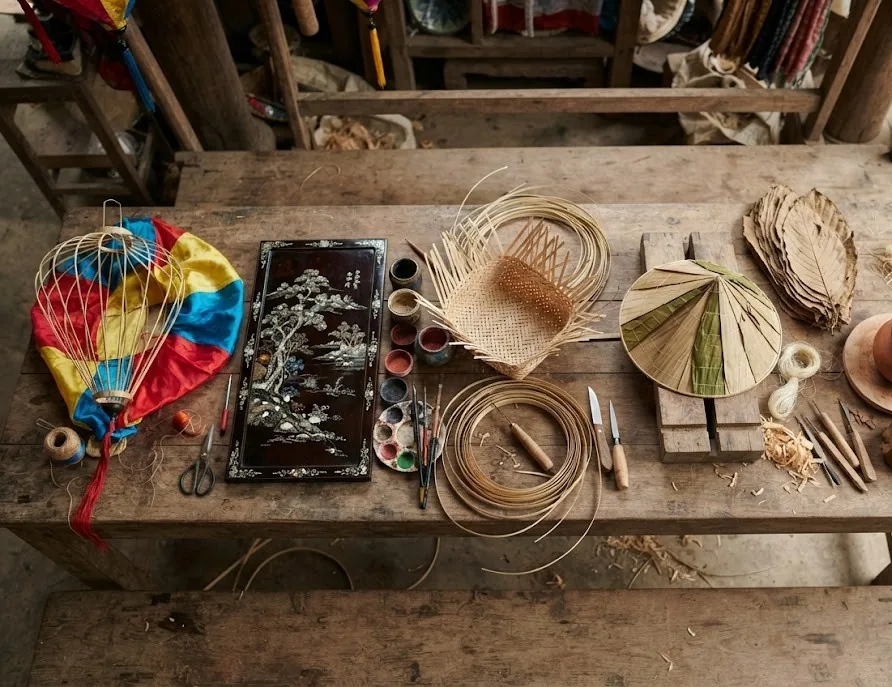
Choosing Your Craft: A Guide to Da Nang’s Most Popular Artisan Workshops
Stone carving at Non Nuoc Fine Arts Village: From raw marble to intricate statues
Non Nuoc Fine Arts Village sits at the foot of the Marble Mountains. This is where raw stone blocks transform into delicate Buddha statues and intricate feng shui items. Workshops here are less about quick tourist projects and more about observing mastery. Many studios, like those along the main road, allow you to watch carvers at work. Some offer short introductory sessions where you can try shaping a small piece of soapstone or marble with a chisel and file. The experience is gritty, hands-on, and deeply connected to the land.
- Duration: 1-3 hours for guided observation; 2-4 hours for a hands-on mini-project.
- Difficulty: Moderate (requires physical effort).
- Price Range: Free to watch; 200,000 – 500,000 VND for a hands-on session.
- Best For: Travelers interested in sculpture, geology, and traditional craft processes.
Pottery and ceramic classes: Getting your hands dirty at local studios
Pottery is one of the most accessible crafts for beginners. Several studios in Da Nang and the surrounding area offer wheel-throwing and hand-building classes. The Hangart, located just outside the city in Điện Bàn, is a multi-craft space that runs pottery workshops in a peaceful garden setting. Create Art Space in the city center also offers pottery sessions combined with a café visit. These classes focus on the tactile joy of working with clay. You won’t become a master potter in an hour, but you will understand the basic principles of centering and shaping.
- Duration: 1.5 – 2 hours.
- Difficulty: Easy to Moderate (wheel throwing is harder than hand-building).
- Price Range: 150,000 – 350,000 VND.
- Best For: Families, couples, and anyone who enjoys getting their hands dirty.
Lantern making: Crafting your own silk and bamboo souvenir
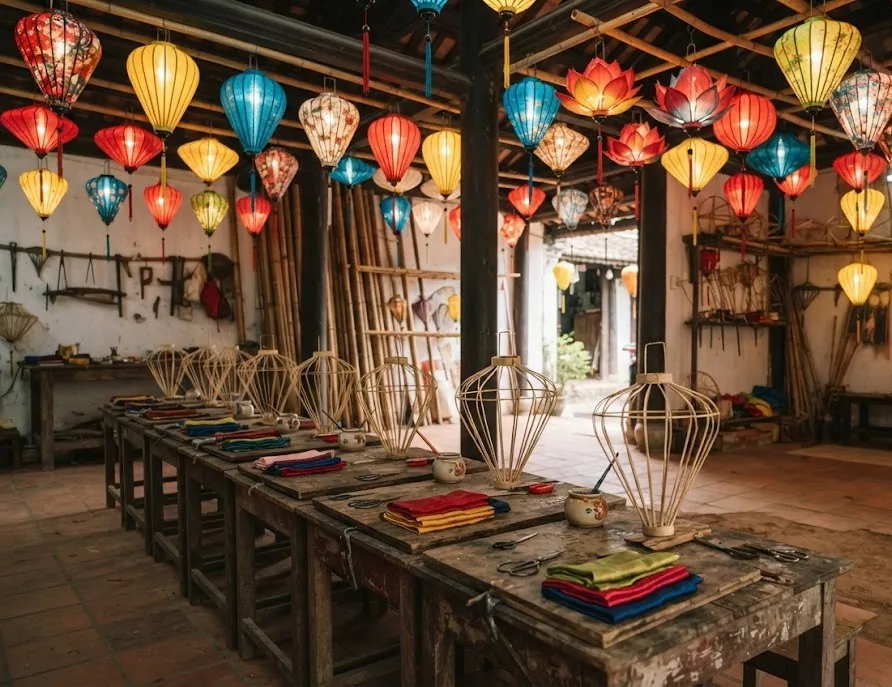
While Hoi An is the undisputed king of lanterns, you can find lantern-making workshops in Da Nang as well, often as part of a broader craft experience at places like The Hangart. The process involves assembling a bamboo frame, selecting silk fabric, and carefully gluing the material into shape. It is a precise, meditative craft that results in a beautiful, portable souvenir. The lantern is a symbol of luck and happiness in Vietnamese culture, making it a meaningful item to create yourself.
- Duration: 1 – 1.5 hours.
- Difficulty: Easy (suitable for children and adults).
- Price Range: 100,000 – 250,000 VND.
- Best For: Beginners, families with kids, souvenir hunters.
Textile and natural dyeing workshops: Learning the art of weaving and color
For those interested in textiles, workshops focusing on natural dyeing and weaving offer a deep dive into an ancient craft. The Hangart, for example, offers sessions on indigo dyeing and woodblock printing on fabric. You learn how colors are extracted from plants like indigo and turmeric, and how patterns are stamped onto cloth. This is a slower, more educational experience that connects you to Vietnam’s rich textile history. The finished product can be a scarf, a tote bag, or a piece of fabric to use at home.
- Duration: 2 – 3 hours.
- Difficulty: Easy to Moderate (requires patience for dyeing processes).
- Price Range: 250,000 – 500,000 VND.
- Best For: Fashion enthusiasts, artists, and eco-conscious travelers.
A Step-by-Step Guide to Booking and Joining a Workshop in Da Nang
Step 1: Research and select your craft based on interest and skill level
Start by deciding what kind of experience you want. Do you want to be physically active (stone carving) or relaxed (lantern making)? Are you traveling with kids (pottery or lanterns are best)? Check platforms like Airbnb Experiences, GetYourGuide, and TripAdvisor. These listings show real reviews, photos, and exact prices. Look for workshops that explicitly state they welcome beginners and provide all materials.
Step 2: Book directly via Airbnb Experiences, Facebook, or the workshop’s website
Once you’ve chosen a workshop, book in advance. Popular spots like The Hangart and Create Art Space often fill up, especially during peak season. The most reliable method is to book through Airbnb Experiences or the workshop’s own Facebook page. Messaging them on Facebook Messenger is common in Vietnam and usually gets a quick response. This direct communication also lets you ask specific questions about timing, language, and what to bring.
Step 3: Arrive early, dress comfortably, and prepare to listen to the artisan’s story
Plan to arrive 10-15 minutes early. This gives you time to settle in, use the restroom, and observe the space. Dress for mess. Pottery involves wet clay, dyeing can stain clothes, and stone carving creates dust. Wear comfortable clothes you don’t mind getting dirty. The most important preparation is your mindset. Come ready to listen. The best part of these workshops is often the story the artisan tells about their craft, their family, and the history of their village.
Step 4: Follow the process, ask questions, and don’t aim for perfection
During the workshop, your instructor will guide you step-by-step. Listen carefully and don’t be afraid to ask questions. Vietnamese artisans are generally patient and happy to explain. The goal is not to create a museum-quality piece in one session, but to learn the process and enjoy the act of creation. Your first pot might be lopsided. Your lantern might have a wrinkle. That’s the point; the imperfection makes it authentically yours.
Step 5: Take your finished product home and share your experience
Most workshops will pack your finished piece safely for travel. Pottery and ceramics may need to be fired, which can take a day or two. Ask about this when booking. Some studios can ship your item home for an additional fee. When you return, display your creation. It will be a constant reminder of the time you spent learning from a master in Da Nang, a story far richer than any item bought from a shop.
Where to Find Workshops Beyond the Tourist Trail: Hidden Gems in Da Nang
The Hangart (Điện Bàn): A multi-craft space with pottery, woodblock printing, and more
The Hangart is arguably the best single location for a diverse craft experience. Located in Điện Bàn, just a short drive from Da Nang, it is a creative space set in a lush garden. They offer workshops in pottery, woodblock printing, natural dyeing, and even traditional paper making. The atmosphere is relaxed and artistic, not a mass-tourism stop. You book a specific time slot and get a private or small-group session with a skilled instructor. The Hangart also has a café, making it a great half-day destination.
Create Art Space (City Center): Combining a café with painting, candle, and soap making
Create Art Space is a unique hybrid: a creative café and art workshop hub in the heart of Da Nang. It is less focused on traditional Vietnamese crafts and more on general artistic expression. They offer painting sessions, candle making, soap making, and pottery. This is an excellent option if you are short on time or want a more modern, café-style experience. It is very beginner-friendly and has a vibrant, social atmosphere. You can walk in, order a coffee, and decide to join a class on the spot.
Exploring craft villages in the outskirts: Tuy Loan rice paper and Cam Le mat weaving
For a truly off-the-beaten-path experience, visit the craft villages on Da Nang’s outskirts. Tuy Loan village is famous for its traditional rice paper making. You can watch families spread rice batter on bamboo mats and dry it in the sun. Cam Le village is known for its sedge mat weaving. These are not formal workshops with English guides, but they offer a raw, authentic glimpse into rural craft life. A local guide or a motorbike tour is helpful to navigate these areas and communicate with the artisans.
How to Combine Craft Workshops with a Day Trip to Hoi An
Morning: Stone carving at Non Nuoc (Da Nang) before heading south
Start your day early in Da Nang. Visit the Non Nuoc Fine Arts Village around 9:00 AM. Spend an hour watching the stone carvers and trying a small hands-on project. The morning light is beautiful for photos, and the workshops are less crowded. After your session, head south on the coastal road towards Hoi An.
Afternoon: Pottery at Thanh Ha or carpentry at Kim Bong (Hoi An)
Arrive in Hoi An by midday. Head straight to Thanh Ha Terracotta Park, a pottery village where you can try your hand at the wheel. It’s a more tourist-oriented setup but still offers a fun, hands-on experience. Alternatively, take a short boat ride to Kim Bong carpentry village, where you can see intricate wood carving and inlay work. Both are within 15 minutes of Hoi An’s Old Town.
Evening: Lantern making in Hoi An’s Old Town
End your day in Hoi An’s enchanting Old Town. Many shops offer lantern-making classes that last about an hour. You can choose your silk, assemble the frame, and create your lantern while the sun sets and the town lights up. This is a perfect, peaceful conclusion to a day of craft exploration. You walk away with a handmade lantern that will light up your memories of Vietnam.

Key Tips for First-Timers: What to Expect from a Da Nang Craft Workshop
Language and communication: Most workshops offer English-speaking guides
Most workshops that cater to tourists, such as those listed on Airbnb Experiences, GetYourGuide, and TripAdvisor, have English-speaking instructors or translators. The instructions are usually visual and hands-on, so language is rarely a barrier. If you are visiting a more traditional village workshop, having a local guide or a translation app on your phone is helpful.
Duration and cost: Expect 1-2 hour sessions ranging from 100,000 to 500,000 VND
Most beginner workshops last between 1 and 2 hours. Prices are very reasonable. A simple lantern-making class can cost as little as 100,000 VND ($4). A more complex pottery or stone carving session might range from 250,000 to 500,000 VND ($10-$20). This price almost always includes all materials and the finished product. It is excellent value for a unique, hands-on souvenir.
- Lantern Making: 100,000 – 250,000 VND (1 hour)
- Pottery (Hand-building): 150,000 – 300,000 VND (1.5 hours)
- Natural Dyeing: 250,000 – 400,000 VND (2 hours)
- Stone Carving (Mini Project): 200,000 – 500,000 VND (2-3 hours)
What to wear and bring: Comfortable clothes; materials are usually provided
Wear comfortable clothes that you don’t mind getting dirty or stained. Closed-toe shoes are a good idea, especially for stone carving. Workshops provide all materials, tools, and aprons. You don’t need to bring anything except your phone for photos and cash for payment (some smaller places may not accept cards). Sunscreen and a hat are useful if you are visiting outdoor village workshops.
Booking in advance: Popular workshops often require a reservation
Do not assume you can just walk in. Popular workshops like those at The Hangart and Create Art Space require advance booking, especially during the dry season (February to August). A reservation ensures the instructor is available and the materials are prepared. A quick message on Facebook or a booking through Airbnb Experiences is all it takes.
Related on this site
- Explore Da Nang’s Ancient Cham Ruins: A Historical Journey 2026
- Da Nang Art Gallery Walk: Contemporary and Traditional Exhibits 2026
- Da Nang Cultural Shows: Traditional Dance and Music Performances 2026
Frequently Asked Questions
Do I need any artistic experience to join a workshop?
No. The workshops are specifically designed for beginners. The instructors guide you through every step. The goal is to have fun and learn, not to create a masterpiece.
Can children participate in these craft workshops?
Yes. Lantern making and hand-building pottery are excellent for children. Always check the minimum age requirement when booking. The Hangart and Create Art Space are very family-friendly.
How do I get to the craft villages from Da Nang city center?
You can take a taxi (Grab is the most convenient and affordable), rent a motorbike, or join a guided tour. Non Nuoc village is about a 20-minute drive from My Khe Beach. The Hangart is about a 30-minute drive from the city center.
What if my pottery piece isn’t finished during the class?
Many pottery workshops require the piece to be fired in a kiln. This can take a day or two. Ask the studio if they can ship the finished piece to your hotel or home. Some studios offer this service for an additional fee.
Are the workshops authentic or just for tourists?
Both. Places like The Hangart and Non Nuoc village are authentic craft spaces where real artisans work. They offer tourist-friendly sessions to share their skills. The experience is genuine, even if the session is structured for visitors.
What is the best time of year to do a craft workshop in Da Nang?
The dry season from February to August is ideal. The weather is sunny and reliable, making travel to the villages easy. Many outdoor workshops are more enjoyable without rain.
Can I combine a workshop with a visit to the Marble Mountains?
Yes. Non Nuoc Fine Arts Village is located right at the base of the Marble Mountains. You can easily spend the morning exploring the mountains and the afternoon at a stone carving workshop.
Conclusion: Your Next Creative Adventure
Da Nang’s artisan workshops offer a direct connection to the city’s cultural soul. By choosing a craft that matches your interest, booking in advance, and approaching the experience with curiosity, you will leave with more than a souvenir. You will carry a new skill and a personal story of creation. The next step is simple: pick a craft, make a booking, and get ready to learn from the masters.
- Choose your craft: Stone carving, pottery, lanterns, or textile dyeing.
- Book a session: Use Airbnb Experiences, Facebook, or GetYourGuide for a guaranteed spot.
- Embrace the process: Arrive early, get messy, and listen to the artisan’s story.
Part of our guide to things to do in Da Nang.