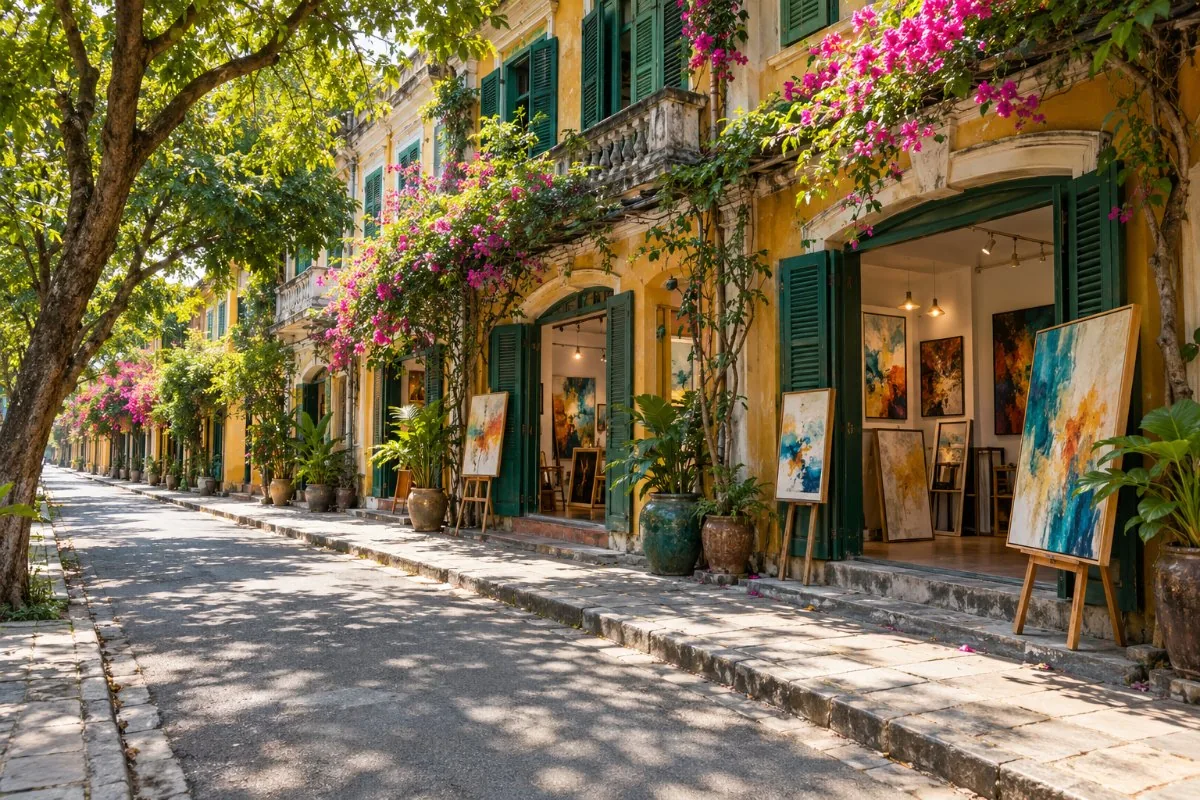
Da Nang’s art scene in 2026 presents a compelling fusion of ancient Cham heritage and dynamic contemporary expression, best explored through a self-guided gallery walk. This curated journey moves beyond passive museum visits, offering a direct connection to the city’s cultural pulse through its most significant traditional and modern exhibits.
Da Nang’s art gallery walk in 2026 is characterized by a striking contrast between centuries-old Cham sandstone masterpieces and innovative digital installations. The Da Nang Museum of Cham Sculpture houses over 2,000 artifacts, including the iconic Tra Kieu Altar, while emerging spaces in the Son Tra district showcase video art and sculptures crafted from recycled materials. This self-guided walk connects six key venues across Hai Chau and Son Tra, with most open Tuesday–Sunday from 07:00–17:00. The route typically takes 3–4 hours to complete and costs under $10 for all entry fees.
What Defines a Da Nang Art Gallery Walk in 2026?
The Da Nang art gallery walk is a self-guided cultural route that contrasts ancient Cham sculpture with contemporary mixed-media installations, offering a dynamic alternative to traditional museum visits.
The fundamental distinction lies in the art on display. Traditional exhibits focus on Cham sculpture from the 4th–14th centuries, alongside silk paintings and folk art, typically housed in formal museum settings with chronological arrangements. Contemporary exhibits, conversely, feature video installations, interactive digital art, performance pieces, and works utilizing recycled materials, often found in independent galleries, pop-up spaces, and artist studios that refresh their collections every few months.
The gallery walk format itself diverges from a standard museum visit in three primary ways. Firstly, it is self-guided, allowing you to dictate your route, pace, and stops. Secondly, it incorporates pop-up spaces that may host only a single exhibition cycle, fostering a sense of discovery. Thirdly, many venues on the walk facilitate artist meet-and-greets, enabling direct conversations with creators about their techniques and inspirations. This approach transforms art appreciation into an active, personal exploration rather than a passive viewing experience.
| Feature | Traditional Museum Visit | Da Nang Gallery Walk |
|---|---|---|
| Format | Fixed route, guided or self-paced | Self-guided, flexible route across multiple venues |
| Art Types | Permanent collections (Cham sculpture, silk) | Mix of permanent and rotating contemporary exhibits |
| Venue Types | Single large museum | Multiple museums, independent galleries, pop-up spaces |
| Interaction | Viewing only | Artist meet-and-greets, workshops, interactive installations |
| Duration | 1–2 hours per museum | 3–4 hours total for 4–6 venues |
| Cost | $2–$5 per museum | $5–$10 total for all venues |
Key Venues for the 2026 Da Nang Art Gallery Walk: Where Tradition Meets Modernity
Three primary venues anchor the Da Nang gallery walk: the Da Nang Fine Arts Museum for contemporary work, the Da Nang Museum of Cham Sculpture for ancient artifacts, and a growing network of independent galleries for emerging art.
Da Nang Fine Arts Museum – the anchor for contemporary Vietnamese painting and sculpture
Located at 78 Le Duan Street in Hai Chau district, the Da Nang Fine Arts Museum houses over 1,000 works of modern art, folk art, and unique sculptures across three display floors. The collection includes lacquer paintings, silk works, and contemporary pieces by Vietnamese artists. Entry is approximately $2, and a visit of 45–60 minutes is recommended. The museum is open Tuesday–Sunday from 07:30–17:00. Its permanent collection offers a solid foundation for understanding the evolution of Vietnamese visual art from the 20th century to the present day.
Da Nang Museum of Cham Sculpture – the definitive stop for ancient Cham artifacts and sandstone masterpieces
At 2 Thang 9 Street, this museum is the most important stop for traditional art on the walk. It holds over 2,000 artifacts from the Champa civilization, including the famous Tra Kieu Altar and the My Son E1 Altar, both intricately carved sandstone pieces dating back to the 7th–10th centuries. The museum also features the Tara Bodhisattva statue, a masterpiece of Cham bronze casting. Entry is around $3, and a visit of 45–60 minutes is recommended. The museum provides free audio guides in English, French, and Vietnamese, making the historical context accessible to international visitors.
Emerging independent galleries and studio spaces (e.g., private ateliers in Son Tra and Hai Chau)
Beyond the major museums, Da Nang’s art scene is expanding through independent galleries and private studios. In the Son Tra district, several ateliers near the An Thuong area showcase works by local contemporary artists. These spaces often feature rotating exhibitions every 2–3 months, focusing on mixed media, photography, and digital art. The Hai Chau district also hosts studio spaces that function as workshops, allowing visitors to observe artists at work. Most of these independent venues offer free entry and require 20–30 minutes per stop. They are best visited on weekends when artists are more likely to be present.
What to Expect from Contemporary Exhibits in 2026
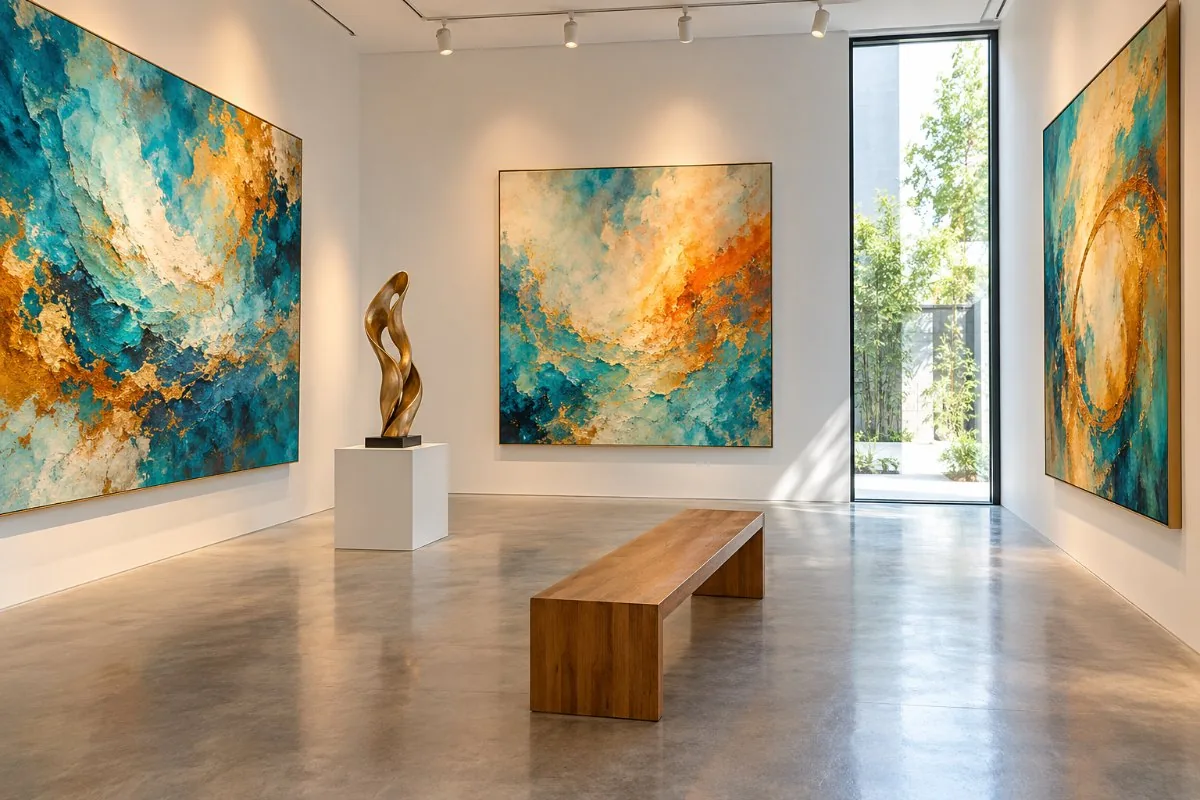
Contemporary art in Da Nang for 2026 will center on themes of urban transformation, environmental consciousness, and post-Đổi Mới identity, delivered through video installations, interactive digital art, and recycled-material sculptures.
Predicted themes: urban transformation, environmental consciousness, and post-Đổi Mới identity
Artists in Da Nang are increasingly responding to the city’s rapid development. Expect exhibits that explore the tension between high-rise construction and traditional fishing villages, the impact of tourism on the Son Tra peninsula ecosystem, and the search for a Vietnamese identity after decades of economic reform. These themes are not abstract — they are grounded in the daily reality of Da Nang residents. You will see works that incorporate construction debris, discarded fishing nets, and photographs of neighborhoods that have been demolished or transformed.
Mediums on the rise: video installations, interactive digital art, and recycled-material sculptures
Three mediums are gaining prominence in Da Nang’s contemporary art scene. Video installations are being used to document performance art and to create immersive environments. Interactive digital art allows visitors to manipulate projections or soundscapes through touch or movement, making the viewer a participant. Recycled-material sculptures are particularly common, with artists using plastic waste, scrap metal, and discarded textiles to comment on consumer culture and environmental degradation. These works are often displayed in independent galleries rather than the main museums.
Featured artists to watch: local Da Nang talents vs. international guest artists
Several Vietnamese artists are gaining international recognition. Tuan Andrew Nguyen, a Ho Chi Minh City-based artist, has shown work at Art Basel and Documenta, and his video installations exploring post-war memory and migration are influential among younger Da Nang artists. Vy Trinh, a Da Nang native, works with silk and digital printing to create layered portraits that examine urban identity. Ngô Đình Bảo Châu, based in Hanoi, creates mixed-media installations that incorporate traditional lacquer techniques with modern abstract forms.
While these artists are not all based in Da Nang, their works appear in temporary exhibitions at the Fine Arts Museum and independent galleries throughout the year.
What to Expect from Traditional Exhibits in 2026
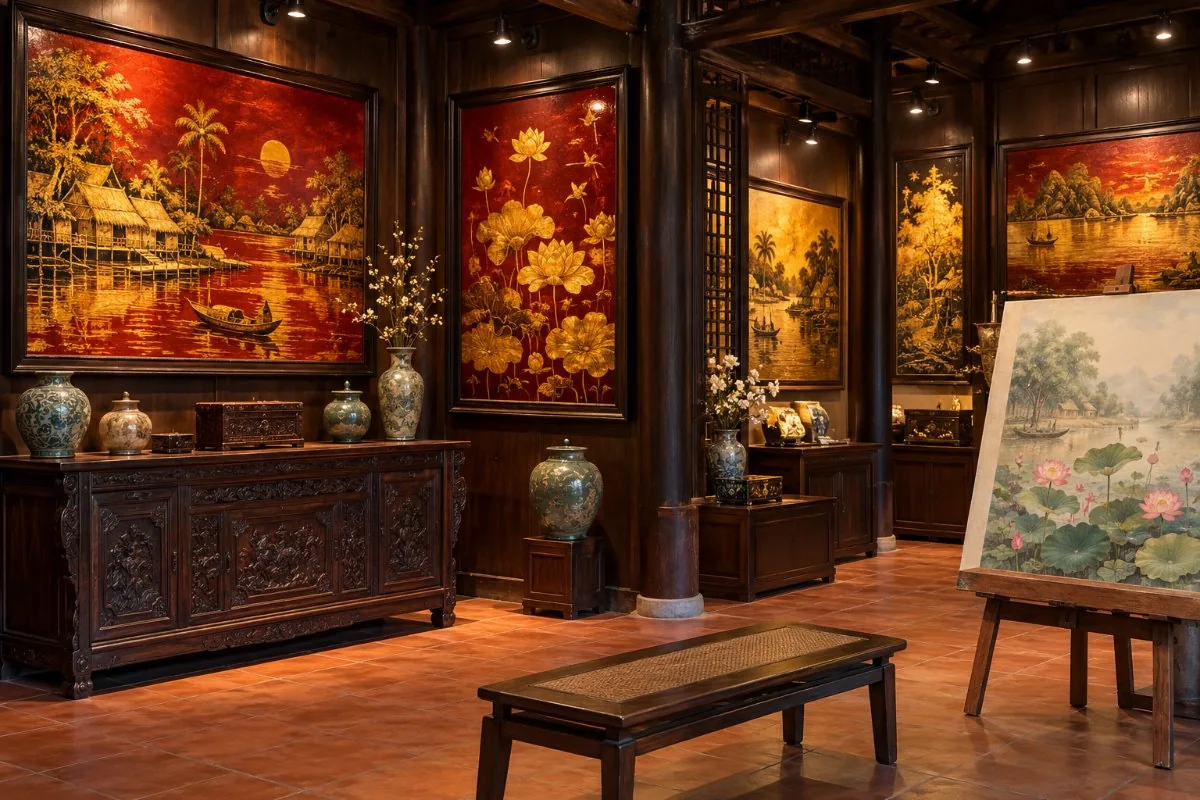
Traditional exhibits in 2026 focus on Cham sculpture masterpieces and Vietnamese folk art, presented with modern curation techniques like enhanced lighting, free audio guides, and interactive displays that make ancient art accessible to contemporary audiences.
Cham sculpture highlights: Tra Kieu Altar, My Son E1 Altar, Tara Bodhisattva statue
The Da Nang Museum of Cham Sculpture is home to three must-see pieces. The Tra Kieu Altar, dating from the 7th–8th century, is a sandstone relief depicting scenes from Hindu mythology, including the life of Rama. The My Son E1 Altar, from the 10th century, features intricate carvings of dancers, musicians, and mythical creatures, providing insight into Cham religious ceremonies. The Tara Bodhisattva statue, cast in bronze, is one of the few surviving large-scale Cham metal sculptures and demonstrates the advanced metallurgy of the civilization.
These pieces are displayed with new LED lighting installed in 2026 that highlights the detail of the carvings.
Vietnamese folk art and craft demonstrations: lacquer painting, silk weaving, stone carving from Non Nuoc village
Traditional craft demonstrations are an integral part of the gallery walk. Near the Marble Mountains, the Non Nuoc Stone Carving Memory Museum offers live demonstrations of stone carving, a craft that has been practiced in the area for over 400 years. You can watch artisans create small sculptures, jewelry, and architectural ornaments from local marble. The Fine Arts Museum also hosts periodic demonstrations of lacquer painting and silk weaving, often on weekend mornings. These sessions allow you to see the techniques behind the finished works and purchase pieces directly from the craftspeople.
How traditional exhibits are being presented with modern curation techniques (lighting, audio guides, interactive displays)
Museums in Da Nang are adopting modern curation methods to make traditional art more engaging. The Cham Museum now uses directional spotlights to emphasize the texture of sandstone carvings, replacing the flat, uniform lighting of previous decades. Free audio guides available in English, French, and Vietnamese provide historical context without cluttering the display space with text panels. The Fine Arts Museum has introduced touch-screen kiosks where you can zoom into high-resolution images of paintings and read about the artist’s techniques. These upgrades make traditional exhibits more accessible to international visitors who may not be familiar with Vietnamese art history.
How to Plan Your Self-Guided Gallery Walk Route
Two primary route options exist for the Da Nang gallery walk: a half-day cultural loop covering the major museums, and a contemporary art deep dive focused on independent galleries in the An Thuong and My Khe areas.
Option A: The half-day cultural loop (Cham Museum → Fine Arts Museum → Da Nang Museum)
This route covers the three major venues and takes approximately 2–3 hours, not including travel time between them. Start at the Da Nang Museum of Cham Sculpture (2 Thang 9 Street) at 07:00 when it opens. Spend 45–60 minutes there. Walk or take a short taxi ride to the Da Nang Fine Arts Museum (78 Le Duan Street), which opens at 07:30. Allocate another 45–60 minutes. If time permits, add the Da Nang Museum (located near the Dragon Bridge), which focuses on the city’s modern history and has a small art collection.
This route is ideal for first-time visitors who want a broad overview of Da Nang’s art and culture.
Option B: The contemporary art deep dive (independent galleries in An Thuong and My Khe areas)
For visitors focused on contemporary art, this route explores the independent gallery scene in the An Thuong and My Khe neighborhoods near the beach. These areas have a growing number of small galleries, often located in converted houses or ground-floor retail spaces. Start around 09:00, as most independent galleries open later than the museums. Spend 20–30 minutes at each of 3–5 venues. The total time is 2–3 hours, but the route is less structured — you can wander and discover spaces on foot. This option is best for repeat visitors or those specifically interested in emerging Vietnamese artists.
Timing your walk: best days (Tuesday–Sunday), opening hours (07:00–17:00 typical), and avoiding Monday closures
Most art venues in Da Nang are closed on Mondays. Plan your gallery walk for Tuesday through Sunday. The major museums open at 07:00 or 07:30 and close at 17:00, with the last entry typically at 16:15. Independent galleries often open later, around 09:00 or 10:00, and may close for lunch between 12:00–13:30. The best strategy is to start at the Cham Museum or Fine Arts Museum in the early morning, then move to independent galleries from late morning through early afternoon. Avoid visiting between 12:00–13:30 if you want to see smaller galleries, as many close for lunch.
Practical Tips and Common Pitfalls for the Gallery Walk
To make the most of your Da Nang gallery walk, use the free audio guides in English, and combine your route with nearby attractions like Han Market and Dragon Bridge for a full day of exploration.
Booking ahead: which venues require reservations and which accept walk-ins
The Da Nang Museum of Cham Sculpture and Da Nang Fine Arts Museum accept walk-ins at the ticket counter. No advance reservation is needed for general admission. However, if you want to join a guided tour or attend a special exhibition opening, booking a few days ahead is recommended. Independent galleries and studio spaces typically do not require reservations — you can simply walk in during opening hours.
For workshops and craft demonstrations, particularly at the Non Nuoc Stone Carving Memory Museum, it is wise to call ahead or check social media pages for the schedule, as these sessions are not always daily.
Language barriers: venues with English labels, audio guides, and English-speaking staff
Language is a manageable challenge on the Da Nang gallery walk. The Da Nang Museum of Cham Sculpture offers free audio guides in English, French, and Vietnamese, and most artifact labels include English text. The Da Nang Fine Arts Museum has English labels for major works but less for smaller pieces. Independent galleries vary widely — some have English descriptions for their exhibitions, while others are Vietnamese-only. Staff at the major museums typically speak basic English. For independent galleries, having a translation app on your phone is helpful, especially for reading artist statements and exhibition descriptions.
Combining the walk with nearby attractions: Han Market, Dragon Bridge, and riverside dining
The gallery walk can be easily combined with other Da Nang attractions. The Cham Museum and Fine Arts Museum are both within a 15-minute walk of Han Market, where you can shop for local handicrafts, textiles, and street food. The Dragon Bridge is a 10-minute walk from the Da Nang Museum, and the area along the Han River has dozens of restaurants and cafes perfect for a lunch or dinner break. For a full day itinerary, start at the Cham Museum at 07:00, walk to the Fine Arts Museum, then head to Han Market for lunch.
Spend the afternoon at independent galleries in An Thuong, and end the evening watching the Dragon Bridge fire show (weekends at 21:00) with dinner at a riverside restaurant.
Frequently Asked Questions
Is the Da Nang Art Gallery Walk suitable for families with children?
Yes, most venues are family-friendly. The Da Nang Museum of Cham Sculpture has large, open spaces where children can move around, and the ancient sculptures are visually striking. The Fine Arts Museum occasionally hosts children’s workshops on weekends. Independent galleries are smaller and may not have child-specific activities, but they are generally welcoming. The total walking distance for the half-day loop is about 2–3 kilometers, which is manageable for most children aged 6 and older.
What is the average cost for a full day of gallery visits?
A full day covering the three major museums costs approximately $8–$10 total for entry fees: $3 for the Cham Museum, $2 for the Fine Arts Museum, and $2–$3 for the Da Nang Museum. Independent galleries are usually free. Add $5–$10 for transportation between venues if using taxis or ride-hailing apps, and $10–$15 for meals. The total cost for a full day of art exploration is around $25–$35 per person, excluding souvenirs.
Are photography and videography allowed inside the galleries?
Photography without flash is generally allowed at the Da Nang Museum of Cham Sculpture and Da Nang Fine Arts Museum for personal use. Videography is restricted in some areas. Independent galleries have their own policies — it is best to ask the staff when you arrive. Flash photography is prohibited in all venues to protect the artworks. Tripods and selfie sticks are not allowed in the major museums. For professional or commercial photography, you must obtain permission from the museum administration in advance.
Which month in 2026 has the best art events and openings?
August is typically the most active month for art events in Da Nang, coinciding with the annual Da Nang International Fireworks Festival and related cultural programs. Many galleries schedule special exhibitions and openings during this period. April and May also see increased activity around the Reunification Day (April 30) and International Labor Day (May 1) holidays. December has several year-end exhibitions. For the most up-to-date information, check the social media pages of the major museums and independent galleries a few weeks before your visit.
Can I book a guided tour of the gallery walk in English?
Yes, guided tours in English are available through several travel agencies and tour operators in Da Nang. These tours typically cover the Cham Museum and Fine Arts Museum, with some including independent galleries. The cost ranges from $20–$40 per person for a half-day tour, depending on group size and inclusions. You can also book a private guide through the Da Nang Museum of Cham Sculpture’s website. For the independent gallery route, self-guided exploration is more common, as the venues are spread out and schedules vary.
Next Steps
Da Nang’s art gallery walk offers a rare opportunity to experience both ancient Cham heritage and cutting-edge contemporary Vietnamese art in a single self-guided route. The half-day cultural loop covers the essential museums, while the contemporary deep dive reveals the city’s emerging creative energy. Start planning your route now — check opening hours for your chosen venues, download the free audio guide for the Cham Museum, and set aside a Tuesday through Sunday for your visit. For a complete cultural day, combine your gallery walk with lunch at Han Market and an evening stroll along the Dragon Bridge.
If you are also interested in exploring Da Nang’s broader cultural scene, consider reading our guide to hidden art studios and meeting local artists for deeper insight into the city’s creative community.
Part of our guide to things to do in Da Nang.