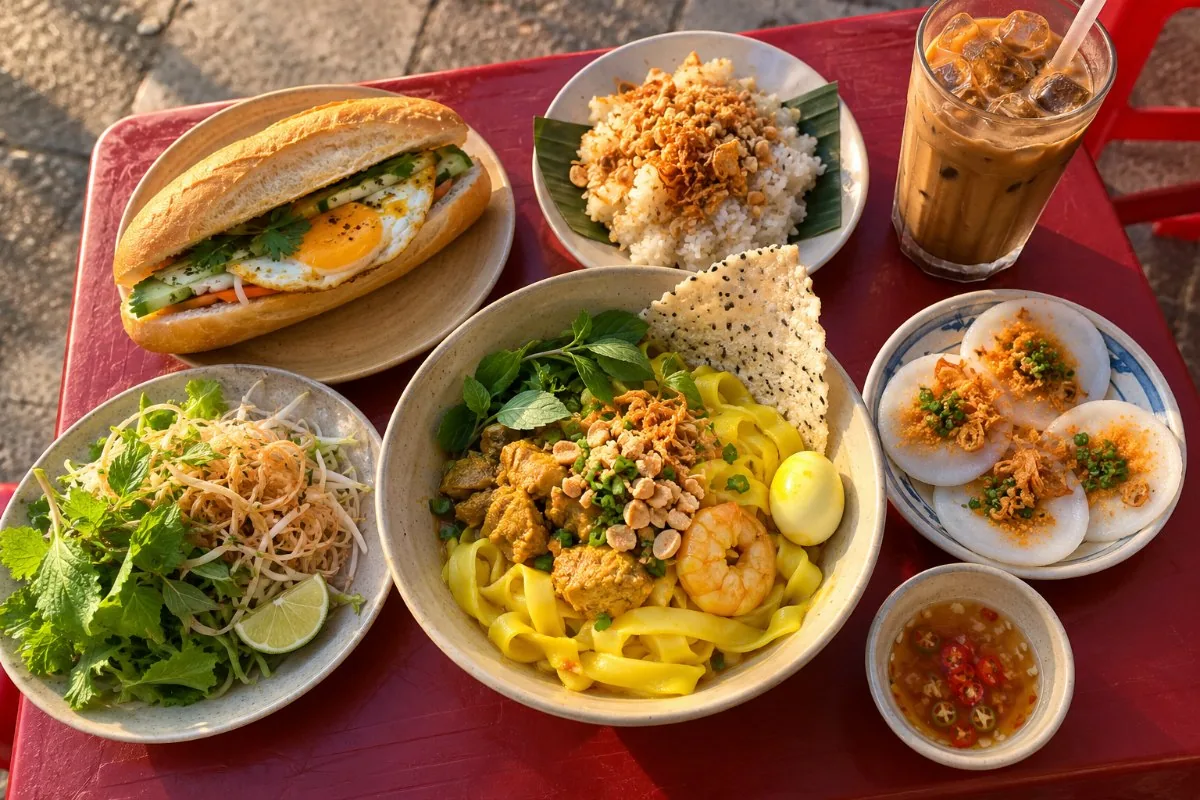
Da Nang’s breakfast scene has quietly become one of Vietnam’s most compelling food stories. While the city is famous for its beaches and bridges, the morning meal here reveals a culinary identity that is distinct from Hanoi’s pho or Ho Chi Minh City’s broken rice. In 2026, travelers are increasingly planning trips around morning food experiences, and Da Nang delivers a lineup of dishes that are both deeply local and surprisingly accessible. This guide covers the eight breakfast dishes you need to try, where to find them, and how to eat them like a local.
Da Nang’s breakfast culture in 2026 is defined by eight essential dishes, from the iconic Mì Quảng turmeric noodles to the grab-and-go xôi sticky rice. Unlike tourist-heavy Hội An, Da Nang’s morning food scene is still anchored in local habits, with street stalls and markets serving dishes that cost between $1 and $3. This guide breaks down each dish, explains what makes it unique, and points you to the best spots in the city, including market clusters like Cồn Market and street food hubs on Nguyễn Chí Thanh.
Why Da Nang’s Breakfast Scene Stands Out in 2026
The rise of “breakfast tourism” and what it means for travelers
Breakfast tourism is a growing global trend, and Da Nang is a prime beneficiary. Travelers in 2026 are not just looking for a quick bite before heading to the beach; they are seeking immersive morning food experiences that connect them to local culture. Reddit threads and travel forums show that visitors actively ask for “local breakfast spots” rather than hotel buffets. This shift means that understanding Da Nang’s breakfast landscape is no longer optional for the curious traveler — it is a core part of the trip.
How Da Nang’s coastal location shapes its morning flavors
Da Nang sits between the ocean and the mountains, and this geography directly influences its breakfast dishes. The fresh catch of mackerel, shrimp, and squid arrives at markets like Cồn Market by 5 AM, making seafood a natural morning ingredient. The city’s proximity to Quảng Nam province also means access to high-quality turmeric, herbs like dill and mint, and rice paper made in nearby villages. The result is a breakfast palette that is lighter than Hanoi’s and less sweet than Saigon’s, with a distinct emphasis on fresh, briny flavors.
What locals actually eat vs. what tourists think they eat
- Tourists often think: pho is the universal Vietnamese breakfast. In Da Nang, locals rarely eat pho in the morning — it is considered a lunch or dinner dish.
- Locals actually eat: Mì Quảng, bún chả cá, bánh bèo, and cháo lòng. These are the dishes that fuel the city’s workers and students before 8 AM.
- Another misconception: bánh mì is a breakfast-only food. In Da Nang, bánh mì is eaten all day, but the morning versions are simpler and cheaper.
- The real morning routine: many locals start with a bowl of soup or a plate of rice paper rolls, often shared with colleagues or family at a street-side stall.
1. Mì Quảng – The Turmeric Noodle Bowl That Defines the Region
What makes Mì Quảng different from other Vietnamese noodle soups
Mì Quảng is the signature breakfast dish of central Vietnam, and it is fundamentally different from pho or bún bò Huế. The noodles are wide and flat, stained yellow from turmeric, and served in a shallow bowl with just enough broth to coat them — not to drown them. This is a “dry” noodle soup by Vietnamese standards, where the broth acts as a sauce rather than a soup base. The toppings are also more varied: shrimp, pork, quail eggs, crushed peanuts, and fresh herbs all sit on top of the noodles, creating a complex bite every time.
Key ingredients: turmeric noodles, bone broth, shrimp, pork, and quail eggs
The soul of Mì Quảng is the turmeric noodle, which is made from rice flour and turmeric powder, giving it that signature yellow hue and a subtle earthy flavor. The broth is a pork and chicken bone stock, reduced to a rich, savory concentrate. Toppings typically include sliced pork shoulder, whole shrimp (often with shells on for flavor), and hard-boiled quail eggs. Crushed roasted peanuts and toasted sesame rice crackers (bánh tráng mè) are added tableside for crunch. The herb mix is generous: mint, basil, cilantro, and shredded banana flower all make an appearance.
Where to find the best bowls in Da Nang (street stalls vs. sit-down restaurants)
For the most authentic experience, head to the street stalls on Hải Phòng Street near the intersection with Lê Duẩn. These stalls open by 6 AM and serve bowls for around $1.50 to $2.50. The setup is basic — plastic stools, a steaming cauldron, and a line of locals. For a sit-down version, try Mì Quảng Bà Vệ on Hoàng Hoa Thám, where the broth is richer and the portions are larger. The version at Quán Mậu on Nguyễn Chí Thanh is also highly regarded, with a slightly sweeter broth that appeals to first-time visitors.
2. Bún Chả Cá – The Fish Cake Noodle Soup You Can’t Miss
Why Da Nang’s version is distinct from other Vietnamese fish noodle soups
Bún chả cá is a specialty of the central coast, and Da Nang’s version is arguably the best. Unlike the fish noodle soups of the south, which can be overly sweet or heavy on coconut milk, Da Nang’s bún chả cá is clean and savory. The broth is made from fresh mackerel bones and heads, simmered with turmeric and dill for a light golden color and a fragrant, slightly peppery finish. The fish cakes themselves are springy and dense, made from hand-chopped mackerel that is seasoned with fish sauce and black pepper.
The secret to the broth: fresh mackerel, turmeric, and dill
The key to a great bún chả cá broth is the quality of the mackerel. Da Nang’s fishing boats return daily with fresh catch, and the best stalls use only the morning’s haul. The fish bones are roasted briefly before simmering to add depth, then turmeric and dill are added in the final 30 minutes. Dill is the unexpected star here — it adds a fresh, almost citrusy note that cuts through the richness of the fish. The broth is served with thin rice vermicelli (bún), slices of tomato, and a handful of fresh herbs.
Top spots for a morning bowl: Bà Lợi, Bà Thọ, and hidden alley gems
Bà Lợi on Đống Đa Street is the most famous name in Da Nang for bún chả cá. The stall opens at 5:30 AM and often sells out by 9 AM. The fish cakes here are exceptionally bouncy, and the broth is perfectly balanced. Bà Thọ on Nguyễn Chí Thanh is another legendary spot, known for its generous portions and a slightly spicier broth.
For a hidden gem, look for the unmarked alley stall near the intersection of Trần Phú and Lê Lợi — it has no sign, but the line of locals at 7 AM tells you everything you need to know.
3. Bánh Tráng Cuốn Thịt Heo – The Ultimate Rice Paper Roll Experience
How this dish works as a breakfast: dipping, wrapping, and sharing
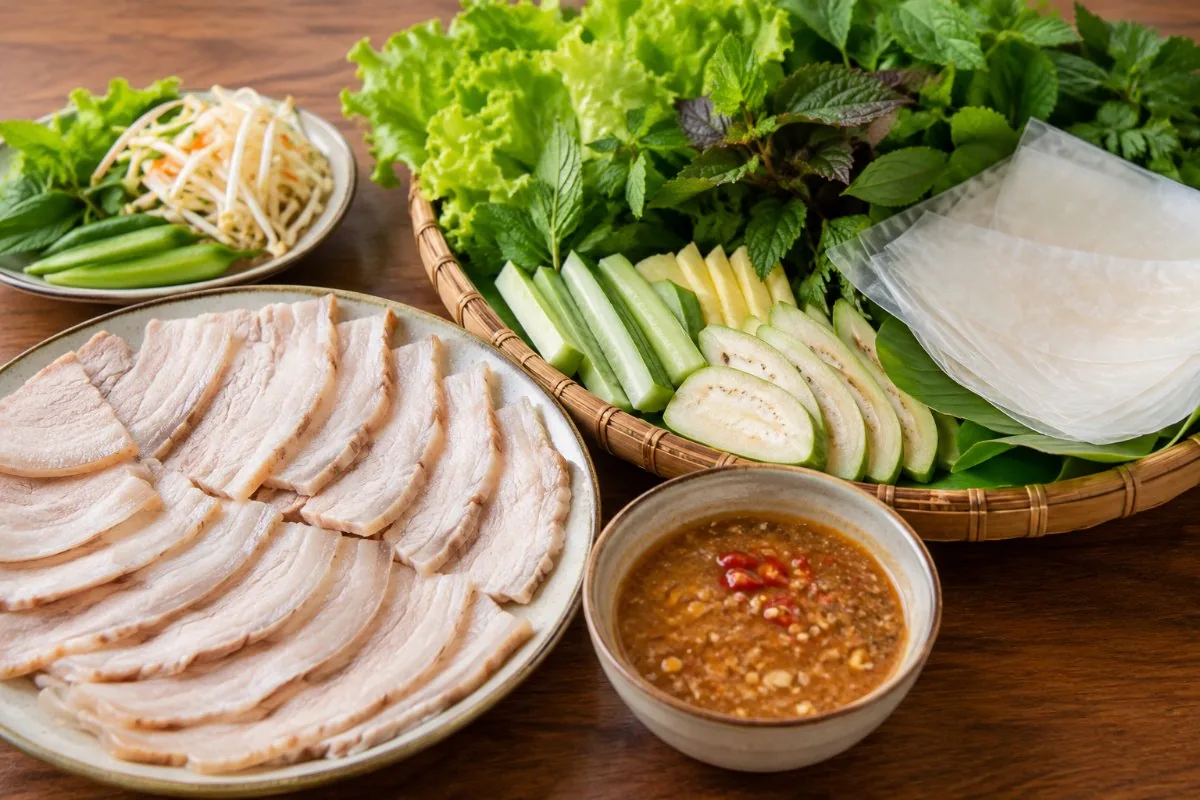
Bánh tráng cuốn thịt heo is not a grab-and-go breakfast — it is a social, interactive meal that can easily take 45 minutes. A platter of boiled pork (usually belly or shoulder) is served with a stack of thin, pliable rice papers, a basket of fresh herbs (lettuce, mint, perilla, and star fruit slices), and a bowl of fermented fish sauce (mắm nêm). The process is simple: dip a rice paper in warm water to soften it, layer on herbs and a slice of pork, roll it tightly, and dip it into the pungent, savory mắm nêm.
The combination of textures — chewy rice paper, tender pork, crisp herbs — is addictive.
The essential components: thin rice paper, boiled pork, fresh herbs, and fermented fish sauce
The rice paper used for this dish is thinner than the standard bánh tráng used for spring rolls. It is dipped in warm water just long enough to become pliable but not soggy. The pork is boiled with a bit of salt and ginger, then sliced thin. The herb platter is generous: lettuce, mint, basil, cilantro, and sometimes sliced green banana or star fruit for acidity. The mắm nêm is the soul of the dish — a fermented anchovy sauce that is mellowed with pineapple, garlic, and chili. It is strong but not overpowering when balanced with the fresh herbs.
Why it’s a social breakfast — and where to try it with friends
This dish is best shared with at least two people, which is why it is a popular weekend breakfast for groups of friends or families. Quán Bà Mưa on Hoàng Diệu Street is the most famous spot, serving this dish from 6 AM to 10 AM. The portions are generous, and the mắm nêm is house-made. Quán Mậu also serves a solid version, though their rice paper is slightly thicker. If you are eating alone, many stalls offer a “phần lẻ” (single portion) with pre-rolled pieces, though the experience is less fun that way.
4. Bánh Mì – Da Nang’s Take on the National Sandwich
Da Nang vs. Hội An vs. Sài Gòn bánh mì: what changes
Bánh mì is a national dish, but the Da Nang version has its own identity. Compared to Hội An’s bánh mì, which is smaller and often sweeter, Da Nang’s version is larger, heartier, and more savory. Compared to Saigon’s bánh mì, which leans heavily on cold cuts and pate, Da Nang’s version favors grilled pork (thịt nướng) as the main protein. The bread is also slightly denser and chewier, closer to a traditional French baguette than the airy, crispy version found in the south.
| City | Bread Texture | Main Protein | Key Flavor | Avg. Price |
|---|---|---|---|---|
| Da Nang | Dense, chewy | Grilled pork (thịt nướng) | Savory, smoky | $1.00–$1.50 |
| Hội An | Light, crispy | Mixed (pork, egg, pate) | Slightly sweet | $1.50–$2.00 |
| Sài Gòn | Airy, very crispy | Cold cuts (chả lụa) | Rich, fatty | $1.00–$1.50 |
The local twist: pate, grilled pork, and a dash of chili sauce
A typical Da Nang bánh mì starts with a smear of pork pate, followed by a generous portion of grilled pork shoulder that has been marinated in fish sauce, honey, and lemongrass. The sandwich is then filled with pickled daikon and carrot, cucumber slices, cilantro, and a drizzle of chili sauce. Some stalls add a fried egg for an extra $0.30. The combination of the smoky grilled pork, the creamy pate, and the acidic pickles creates a balanced, savory breakfast that is both filling and portable.
Best bánh mì breakfast stands in Da Nang (early morning vs. all-day spots)
Bánh Mì Bà Lan on Trần Phú Street is the gold standard for breakfast bánh mì in Da Nang. The stall opens at 5 AM and the grilled pork is cooked over charcoal, giving it a distinct smoky flavor. Bánh Mì Như Ý on Hùng Vương is a close second, known for its homemade pate and generous portions. For an all-day option, Bánh Mì Phương on Nguyễn Văn Linh serves a consistent sandwich from 6 AM to 8 PM, though the bread is slightly less crusty by the afternoon.
5. Bánh Bèo – The Steamed Rice Cakes That Start Your Day Light
What bánh bèo are and why they’re a breakfast staple in Central Vietnam
Bánh bèo are small, round steamed rice cakes that are a specialty of central Vietnam, particularly Huế and Da Nang. They are made by pouring a thin layer of rice batter into small ceramic or porcelain dishes, then steaming them until they become soft, translucent discs. The texture is delicate — somewhere between a rice noodle and a jelly. In Da Nang, they are eaten as a light breakfast or morning snack, often served in sets of five to ten small cakes on a plate.
The texture game: soft rice cake + crunchy fried shallots + savory fish sauce
The magic of bánh bèo lies in the contrast of textures. The rice cake itself is soft and slightly chewy, almost melting on the tongue. On top, a spoonful of savory minced shrimp and pork is added, along with crunchy fried shallots and a drizzle of scallion oil. The dish is served with a small bowl of sweet-savory fish sauce (nước mắm chua ngọt) for dipping. The combination of the soft cake, the umami topping, the crunch of the shallots, and the tangy sauce is a perfect start to a hot Da Nang morning.
Where to find fresh bánh bèo in Da Nang (morning markets and street vendors)
The best place to try bánh bèo is at a morning market. Cồn Market has several vendors selling freshly steamed bánh bèo from 6 AM to 9 AM. Look for the stalls with small steaming baskets and a line of locals. Hàn Market is another good option, though the prices are slightly higher due to the tourist traffic. For a street vendor experience, head to the area around the intersection of Lê Duẩn and Hùng Vương, where a few elderly women set up portable steaming stations and sell plates of bánh bèo for about $1.00.
6. Cháo Lòng – The Hearty Rice Porridge for Early Risers
Why cháo lòng is a breakfast of choice for locals before work
Cháo lòng is a rice porridge made with pork offal, and it is the breakfast of choice for many Da Nang workers who need a filling, warming meal before a long shift. The porridge is cooked until the rice grains have completely broken down, creating a smooth, almost creamy texture. The offal — typically liver, heart, kidney, and intestines — is cleaned thoroughly and simmered in the porridge until tender. A bowl of cháo lòng is hearty, savory, and deeply satisfying, especially on a cooler morning.
What goes into the bowl: pork offal, congee, ginger, and fresh herbs
The base of the dish is a simple rice congee, made by simmering rice in pork bone broth for several hours until it reaches a thick, porridge-like consistency. The offal is added in the final 30 minutes of cooking, allowing the flavors to meld. The bowl is served with a generous sprinkle of black pepper, slivers of fresh ginger, and a handful of chopped scallions and cilantro. A side plate of fresh herbs (mint, basil, lettuce) and sliced chili is always provided. Many locals also add a squeeze of lime and a dash of fish sauce to balance the richness.
How to approach this dish if you’re new to organ meats
If you are not accustomed to organ meats, cháo lòng can be intimidating. Start by ordering a bowl with mostly liver and heart, as these have the mildest flavor and a texture similar to lean meat. Avoid the intestines on your first try — they have a stronger, more distinct taste. The key is to use the fresh herbs and ginger generously, as they cut through the richness of the offal. Quán Cháo Lòng Cô Huệ on Hoàng Hoa Thám is a great place for first-timers, as the offal is exceptionally clean and the broth is well-balanced.
Quán Mậu also serves a solid version, though their offal mix is more adventurous.
7. Bánh Ướt – Soft, Steamed Rice Sheets with a Savory Topping
How bánh ướt differs from bánh cuốn and phở rolls
Bánh ướt is often confused with bánh cuốn (steamed rice rolls) and phở rolls, but they are distinct dishes. Bánh cuốn is made by steaming a thin layer of rice batter on a cloth, then rolling it with a filling of minced pork and mushrooms. Phở rolls are fresh rice noodles wrapped around beef and herbs. Bánh ướt, by contrast, is simply the steamed rice sheet itself, served flat or folded, with a savory topping placed on top or on the side.
The texture of bánh ướt is softer and more delicate than bánh cuốn, almost like a thin, slippery pancake.
The classic combo: steamed rice sheets, grilled pork, fresh herbs, and dipping sauce
The most common breakfast version of bánh ướt in Da Nang is served with grilled pork (thịt nướng). The rice sheets are steamed fresh and laid flat on a plate, then topped with slices of smoky, caramelized grilled pork. A handful of fresh herbs — mint, basil, lettuce — is placed on the side, along with a bowl of nước mắm chua ngọt for dipping. Some versions also include a sprinkle of crushed peanuts and fried shallots.
The dish is eaten by tearing off a piece of the rice sheet, wrapping it around a piece of pork and some herbs, and dipping it in the sauce.
Where to find the best morning bánh ướt in Da Nang
Quán Bánh Ướt Cô Liên on Lê Duẩn Street is the most famous spot for this dish in Da Nang. The rice sheets are made to order, and the grilled pork is cooked over charcoal, giving it a deep, smoky flavor. The stall opens at 6 AM and is usually packed until 9 AM. For a more casual option, look for street vendors near Phạm Văn Đồng Street, particularly around the intersection with Nguyễn Sinh Sắc. These vendors serve a simpler version with fewer toppings but at a lower price — around $0.80 per plate.
8. Xôi – Sticky Rice: The Portable Breakfast for Busy Mornings
Why xôi is the ultimate grab-and-go breakfast in Da Nang
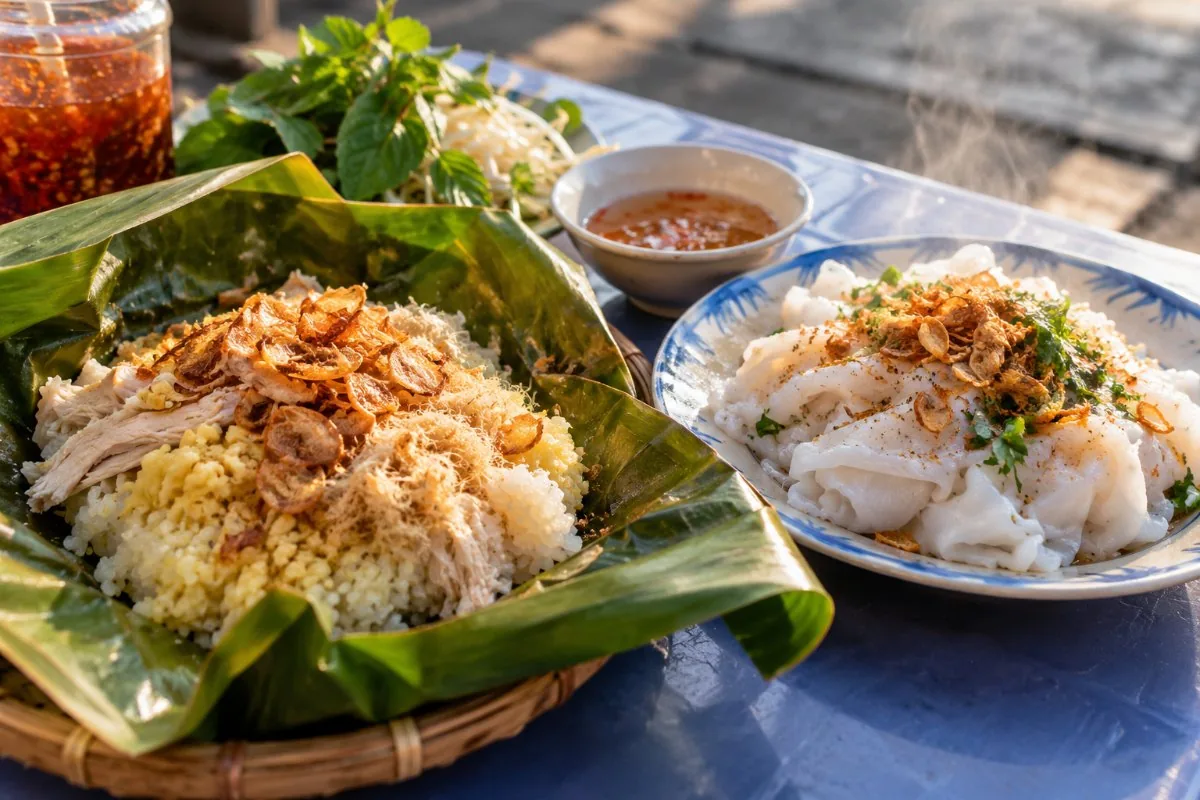
Xôi, or sticky rice, is the breakfast of choice for Da Nang residents who are in a hurry. It is portable, filling, and endlessly customizable. Vendors set up small carts on street corners, with a large steaming basket of sticky rice and a selection of toppings displayed in front. You order, the vendor wraps your xôi in a banana leaf or a small plastic bag, and you are on your way. A serving of xôi costs between $0.50 and $1.00, making it the most affordable breakfast option in the city.
Popular variations: xôi mặn (savory with pork floss, pate, egg) vs. xôi ngọt (sweet with mung bean)
- Xôi mặn (savory): sticky rice topped with pork floss (chà bông), pate, a fried egg, Chinese sausage (lạp xưởng), and fried shallots. This is the most popular breakfast version.
- Xôi ngọt (sweet): sticky rice mixed with steamed mung bean paste, topped with shredded coconut and sesame seeds. Sometimes served with a drizzle of coconut milk.
- Xôi gà: sticky rice with shredded chicken, often served with a side of chicken broth for dipping.
- Xôi bắp: sticky rice mixed with corn kernels, a lighter option that is popular in the summer months.
Best xôi stands and carts to look for in the morning rush
Xôi Bà Hoa on Trần Phú Street is a legendary name in Da Nang. Her cart is set up near the intersection with Lê Lợi, and she serves a mean xôi mặn with homemade pate and generous portions of pork floss. Xôi Cô Hồng on Hùng Vương is another favorite, known for her xôi gà with tender, shredded chicken. For a sweet option, look for the cart near the entrance of Cồn Market — the vendor serves a warm xôi ngọt with freshly grated coconut that is perfect for a light breakfast.
Where to Eat Breakfast Like a Local in Da Nang (2026 Edition)
Morning markets: Cồn Market and Hàn Market for variety and atmosphere
Cồn Market (Chợ Cồn) is the largest market in Da Nang and the best place for a breakfast food crawl. The market opens at 5 AM, and by 6 AM, the food section is in full swing. You can find vendors selling all the dishes mentioned in this guide, from Mì Quảng to bánh bèo, all within a few meters of each other. Hàn Market (Chợ Hàn) is smaller and more tourist-oriented, but it still has excellent food stalls, particularly for bánh mì and bánh ướt. Both markets accept cash only, so come prepared with small denominations.
Street food clusters: Nguyễn Chí Thanh, Hùng Vương, and the Sơn Trà peninsula
Nguyễn Chí Thanh Street is arguably the most famous breakfast street in Da Nang. It is lined with stalls and small restaurants that serve everything from bún chả cá to cháo lòng. Hùng Vương Street is another major breakfast corridor, with a higher concentration of bánh mì and xôi vendors. For a quieter experience, head to the Sơn Trà peninsula (also known as Monkey Mountain), where small fishing villages have their own breakfast stalls serving fresh seafood congee and fish noodle soups. The atmosphere is more relaxed here, and you get a view of the bay with your meal.
Tips for navigating the breakfast scene: timing, language, and payment
- Timing: Most breakfast stalls open between 5 AM and 6 AM and close by 10 AM. Arrive before 8 AM for the freshest food and the best selection.
- Language: English is not widely spoken at street stalls. Learn a few key phrases: “Một tô” (one bowl), “Bao nhiêu?” (how much?), and “Cảm ơn” (thank you). Pointing at what other customers are eating also works.
- Payment: Cash is king at street stalls. Most vendors accept Vietnamese đồng only, and few have change for large bills. Keep small notes (10,000–50,000 VND) handy.
- Seating: Be prepared for low plastic stools and small tables. This is part of the experience.
Related on this site
- Da Nang’s Best Breakfast Noodles: Top Pho and Hu Tieu Stalls in 2026
- The Ultimate Da Nang Foodie Itinerary for 2026
Frequently Asked Questions
What time do Da Nang breakfast spots open?
Most street stalls and market vendors open between 5 AM and 6 AM. The peak breakfast rush is from 6 AM to 8 AM. By 10 AM, many stalls have sold out and closed for the day. A few all-day spots like Bánh Mì Phương serve breakfast items until later, but the best experience is early morning.
Is Da Nang breakfast food spicy?
Da Nang breakfast food is generally mild to moderately spicy. Dishes like Mì Quảng and bún chả cá are not inherently spicy, but they are often served with fresh chili slices or chili sauce on the side. The mắm nêm used in bánh tráng cuốn thịt heo has a strong, pungent flavor but is not spicy in the chili sense. If you are sensitive to spice, ask for “không cay” (no chili) when ordering.
How much does a typical breakfast cost in Da Nang in 2026?
A typical breakfast at a street stall costs between $1.00 and $2.50 (25,000 to 60,000 VND). A bowl of Mì Quảng is around $1.50–$2.50, a bánh mì is $1.00–$1.50, and a plate of bánh bèo is about $1.00. The most affordable option is xôi, which costs $0.50–$1.00 per serving. Even at sit-down restaurants, breakfast rarely exceeds $3.00.
Can I find vegetarian breakfast options in Da Nang?
Yes, but they are less common than meat-based options. Many street stalls offer a vegetarian version of Mì Quảng (Mì Quảng chay) made with tofu and mushrooms instead of pork and shrimp. Cồn Market has a section dedicated to vegetarian food (quán chay), where you can find bánh bèo chay and xôi ngọt. Hàn Market also has a few vegetarian stalls. It is worth learning the phrase “ăn chay” (vegetarian) to communicate your preference.
What’s the best breakfast dish for first-time visitors?
For first-time visitors, Mì Quảng is the best introduction to Da Nang’s breakfast culture. It is flavorful, visually striking, and not too adventurous in terms of ingredients. If you want something more familiar, a bánh mì with grilled pork is a safe and delicious choice. For those who want to dive into local flavors, bún chả cá is a fantastic option that showcases the city’s seafood heritage. Avoid cháo lòng and bánh tráng cuốn thịt heo on your first morning, as they require some familiarity with Vietnamese flavors and textures.
Next Steps
- Pick one dish and find it this morning: Start with Mì Quảng at a stall on Hải Phòng Street. It is the dish that defines Da Nang, and eating it at 7 AM with the locals is an experience you will not forget.
- Plan a market crawl for variety: Dedicate one morning to Cồn Market. Arrive at 6 AM, walk the food section, and order three or four small dishes to share. This is the fastest way to understand the breadth of Da Nang’s breakfast scene.
- Use the street food clusters as your guide: Focus your breakfast explorations on Nguyễn Chí Thanh and Hùng Vương streets. These corridors have the highest concentration of quality stalls, and you can easily try two or three dishes in one morning.
Part of our guide to what to eat in Da Nang.