Da Nang’s Best Waterfall Hikes: Nature Escapes 2026 guide covers seven distinct waterfall trails, from the family-friendly Fairy Falls near Hoi An to the demanding forest trek of Gieng Troi in Hoa Vang district. Each hike offers a different experience, and this guide breaks down the difficulty, distance, and best season for every one of them.
Most visitors come to Da Nang for the 30 kilometers of sandy coastline, but the city’s western edge — where the Truong Son mountain range meets the lowlands — hides a network of streams, natural pools, and cascading waterfalls that few tourists ever see. The Hoa Vang district alone contains more than a dozen named waterfalls, and the 2026 rainy season has already reshaped which trails are accessible and which pools are safe for swimming.
Da Nang’s best waterfall hikes in 2026 range from the stair-lined Fairy Falls trail (accessible for families with young children) to the guide-required forest trek of Gieng Troi in Hoa Ninh. The rainy season from September to December brings the strongest water flow, but also the highest flash flood risk on exposed trails. Hoa Phu Thanh’s 3km complex offers the most activities per visit, while An Binh Waterfall provides the quietest swimming experience for those willing to navigate an unmarked trail.
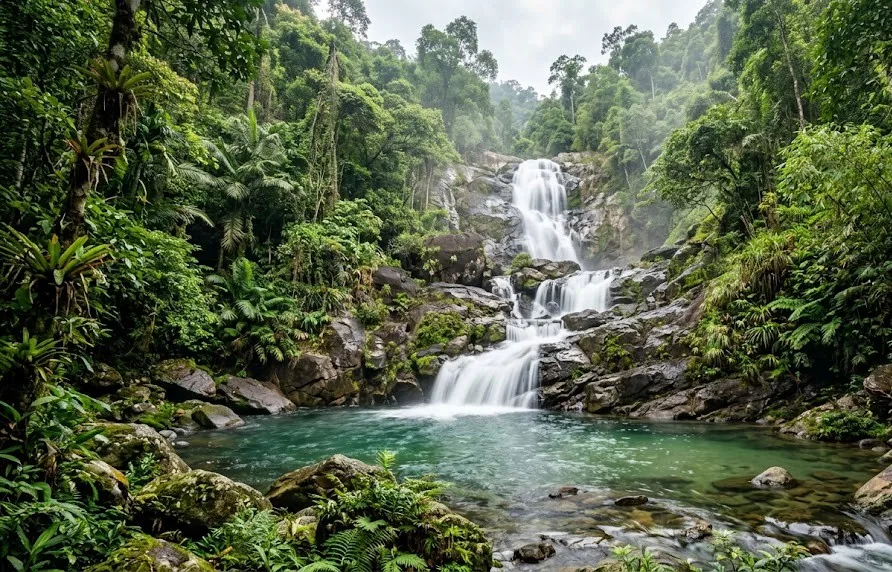
Why Da Nang Is a Hidden Gem for Waterfall Hikers
Da Nang sits at the meeting point of the Han River delta and the Annamite mountain range, giving it a geography that most beach destinations simply don’t have. Drive 30 minutes west from My Khe Beach and you leave the flat coastal plain behind, entering the forested hills of Hoa Vang district where streams carve through granite boulders and drop into natural pools. The Son Tra Peninsula offers its own jungle hikes, but the real waterfall concentration lies inland, around the base of Ba Na Mountain and the upper reaches of the Tuy Loan and Cu De rivers.
Beyond the beaches: the mountain terrain of Hoa Vang and Ba Na
The Hoa Vang district covers roughly 700 square kilometers of mostly forested terrain, with elevations ranging from 50 meters at the valley floor to over 1,400 meters at the peak of Ba Na Mountain. This elevation gradient creates the conditions for year-round waterfall flow — the mountains catch moisture from both the northeast monsoon and the southwest monsoon, meaning even the dry season (February to August) keeps most streams running at a swimable level.
The granite geology of the region also matters: the hard rock doesn’t erode into mud, so the water stays clear and the pools maintain their depth year after year.
How the 2026 rainy season reshapes trail access and waterfall flow
The 2026 rainy season in central Vietnam has followed a pattern similar to recent years, with heavy downpours concentrated in October and November. For waterfall hikers, this means two things: the trails on the eastern slopes (closer to Da Nang city) dry out faster and become accessible earlier in the year, while the deeper forest trails around Hoa Ninh and Hoa Bac stay muddy well into March. Water flow peaks between September and December, which makes for dramatic waterfall views but also raises the risk of flash floods on narrow canyon trails.
The safest window for most hikes is from February through May, when the water is still flowing strongly but the trails have had time to dry out.
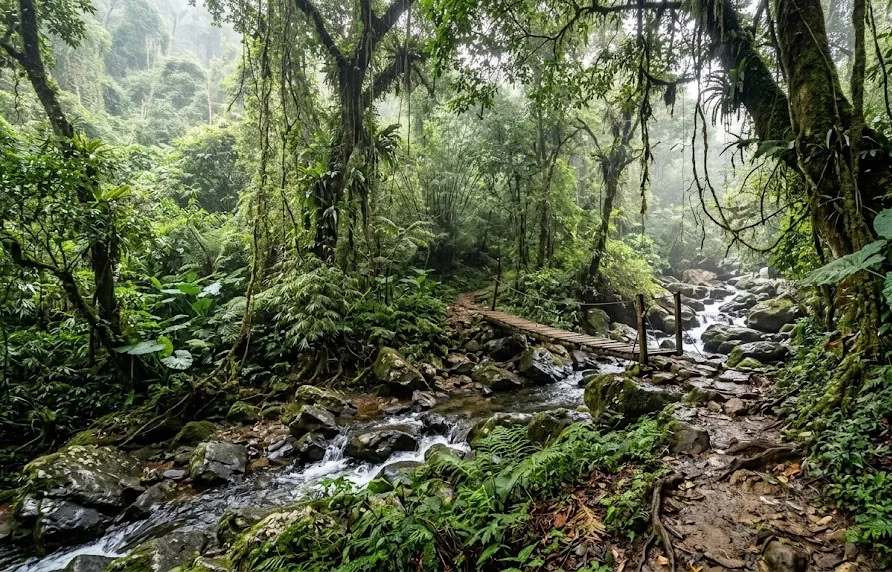
How to Pick the Right Waterfall Hike for Your Fitness Level
Match the hike to your experience level before you leave Da Nang, because the difference between an easy waterfall visit and a demanding trek is measured in hours, not minutes. The seven hikes in this guide split into three clear categories: easy-access falls with paved or stair-lined paths, moderate treks that require some scrambling, and challenging routes that demand proper hiking gear and a reasonable fitness baseline.
Easy-access falls: Fairy Falls and An Binh Waterfall for families
Fairy Falls, located about 20 minutes from Hoi An, has the most developed trail of any waterfall in the region — built-in stairs, metal handrails, and a clear path that takes roughly one hour round trip. This is the only waterfall in the Da Nang area where you can wear flip-flops and still reach the swimming area safely. An Binh Waterfall in Hoa Ninh is slightly more challenging to find (the trailhead is unmarked), but the walk itself is flat and short, making it a solid choice for families who want solitude without a strenuous hike.
Moderate treks: Hoa Phu Thanh and Suoi Mo for casual adventurers
Hoa Phu Thanh stretches across 3 kilometers of stream, with multiple swimming holes, natural water slides, and a few sections where you’ll need to climb over boulders. The walking is manageable for most people, but you’ll want water shoes because the rocks get slippery. Suoi Mo, at the foot of Ba Na Mountain, involves a short descent from the parking area to the main swimming spot — the challenge here is the uneven terrain rather than the distance. Both hikes suit casual adventurers who are comfortable with basic trail conditions.
Challenging routes: Gieng Troi and Vung Bot for experienced hikers
Gieng Troi in Hoa Ninh is the most demanding hike on this list — a 45-minute to one-hour trek through thick forest with steep inclines, small rope descents, and sections where you’ll be using your hands to pull yourself up. Vung Bot in Hoa Bac is less technically demanding but requires strong swimming ability, because the main attraction is a series of deep “pot” pools that are best experienced by jumping in. Both hikes require proper footwear, plenty of water, and ideally a local guide who knows the trail conditions.
| Waterfall | Difficulty | Distance from Da Nang | Swim Access | Best Season |
|---|---|---|---|---|
| Fairy Falls | Easy | 30 km (near Hoi An) | Yes — pool at base | Feb–May |
| Hoa Phu Thanh | Moderate | 25 km | Yes — multiple pools | Feb–Jun |
| Gieng Troi | Challenging | 35 km | Yes — hidden pools | Mar–May |
| Suoi Mo | Moderate | 30 km | Yes — large swimming area | Feb–May |
| Toc Tien | Easy (viewing) | 40 km (Ba Na) | No — view only | Year-round |
| An Binh | Easy | 28 km | Yes — quiet pool | Feb–May |
| Vung Bot | Challenging | 32 km | Yes — deep pools | Mar–Jun |
1. Fairy Falls — The Most Accessible Nature Escape Near Hoi An
Fairy Falls sits in the Cam Thanh area, roughly 20 minutes by motorbike from Hoi An’s old town, and it’s the waterfall that local tour operators recommend when travelers ask for something that doesn’t require technical hiking skills. The trailhead starts at a small parking area where local families sell snacks and cold drinks, then follows a well-maintained path through secondary forest before reaching a series of stairs that descend to the main waterfall and swimming pool.
Trail details: built-in stairs, metal rails, and a 1-hour hike
The trail at Fairy Falls is the most developed of any waterfall in the Da Nang-Hoi An region. Concrete stairs with metal handrails guide you down the hillside, and the entire round trip — from the parking area to the waterfall and back — takes about one hour at a relaxed pace. The main pool at the base of the falls is deep enough for swimming, and there are shallower sections where younger children can wade safely. The water is cool but not freezing, even during the hottest months.
Best time to visit and what to pack for a half-day trip
Visit Fairy Falls in the morning, ideally before 10 AM, to avoid the tour groups that arrive later in the day. The standard tour itinerary runs about six hours total, including transportation from Hoi An or Da Nang, the hike itself, and time for swimming and a picnic lunch. For a self-guided trip, pack water shoes (the rocks around the pool are slippery), a quick-dry towel, and a waterproof phone pouch. The entrance fee is collected at the parking area, and there are basic changing facilities available.
2. Hoa Phu Thanh Waterfall — A 3km Natural Water Park
Hoa Phu Thanh is less a single waterfall and more an entire stream system that has been developed into a natural water park. The 3-kilometer complex along the Tuy Loan River includes multiple waterfalls, natural pools, and rock formations that have been shaped by centuries of water flow. This is the waterfall destination to choose when you want variety — you can swim, slide, and climb without ever getting bored.
Water sliding, rafting, and natural pools for thrill-seekers
The main attractions at Hoa Phu Thanh are the natural water slides — smooth granite channels where the water flows fast enough to carry you down into deeper pools. You’ll also find sections where local operators offer basic rafting on inflatable tubes, though this is a guided activity rather than something you do independently. The pools vary in depth, so you can choose your comfort level: shallow wading areas near the top of the complex, and deeper swimming holes further downstream.
How to combine this with Nui Than Tai Hot Springs in one day
Hoa Phu Thanh sits just a few kilometers from Nui Than Tai Hot Springs, which makes it possible to combine both attractions into a single day trip. Spend the morning at Hoa Phu Thanh swimming and sliding, then drive to the hot springs complex for a soak in the mineral pools and access to their mud baths. The hot springs facility has proper changing rooms, restaurants, and lockers, so it’s a good place to end the day after getting wet at the waterfall.
A motorbike is the most practical way to reach both locations, as the roads are winding but well-paved.
3. Gieng Troi (The Well of God) — A True Trekking Adventure
Gieng Troi, which translates to “The Well of God,” is the waterfall hike that experienced trekkers in Da Nang talk about with genuine enthusiasm. Located in the Hoa Ninh commune of Hoa Vang district, this waterfall requires a proper forest trek to reach — there’s no paved path, no handrails, and no shortcut. The reward is a series of crystal-clear pools hidden in the forest that feel completely untouched.
Navigating the forest trail to crystal-clear hidden waters
The trail to Gieng Troi starts from a small village in Hoa Ninh and immediately enters dense secondary forest. You’ll spend 45 minutes to an hour navigating a narrow path that includes steep inclines, small rope-assisted descents, and sections where you’ll need to steady yourself on tree roots and rocks. The trail can be difficult to follow in places, particularly after rain when leaf litter covers the path. The final approach to the waterfall involves a short scramble down to the pool level, where the water emerges from a narrow cleft in the rock.
Why this hike demands a guide and proper gear
Gieng Troi is the one waterfall on this list where hiring a local guide is strongly recommended rather than optional. The trail is unmarked, mobile phone reception is patchy at best, and the forest looks the same in every direction — getting lost is a genuine risk for first-time visitors. A guide from the local village knows the trail conditions day by day and can adjust the route if sections have become overgrown or slippery.
On the gear front, you’ll need proper hiking shoes with good grip, long pants to protect against leeches and scratchy vegetation, and at least two liters of water per person.
4. Suoi Mo Stream — Swimming in Natural Stone Canyons
Suoi Mo offers a different kind of waterfall experience — instead of a single dramatic cascade, you get a long stretch of stream flowing through natural stone canyons at the foot of Ba Na Mountain. The water here is exceptionally clear, and the smooth granite walls of the canyon create a natural swimming environment that feels like a private resort, minus the crowds.
The large swimming area at the foot of Ba Na Mountain
The main swimming area at Suoi Mo is a large, deep pool where the stream widens out between two granite walls. The water is deep enough for diving in the center, with shallower edges where you can sit and let the current flow past. The canyon walls provide natural shade in the afternoon, which makes this a good choice for a midday visit when other outdoor activities become uncomfortably hot. The surrounding rocks are smooth but can be slippery when wet, so water shoes are essential.
Combining Suoi Mo with Ba Na Hills cable car views
Because Suoi Mo sits at the base of Ba Na Mountain, you can combine a morning swim with an afternoon at the Ba Na Hills resort complex, which includes the famous cable car ride and the Golden Bridge. The practical approach is to visit Suoi Mo first, spend two to three hours swimming and relaxing, then drive up the mountain road to the Ba Na cable car station. The contrast between the raw natural setting of the stream and the manicured attractions of Ba Na Hills is striking, and it makes for a memorable day of varied experiences.
5. Toc Tien Waterfall — The “Fairy Hair” Visible from the Cable Car
Toc Tien, meaning “Fairy Hair,” is the waterfall you can see from the Ba Na Hills cable car as it climbs the mountain. The waterfall’s name comes from its appearance — a thin, tall cascade that looks like a strand of hair falling down the cliff face. For most visitors, this is the easiest waterfall to “visit” in the Da Nang area because you don’t need to hike at all.
Viewing spots on the Ba Na cable car and short walks nearby
The best views of Toc Tien come from the cable car itself — the waterfall is visible on the left side of the cabin during the ascent, particularly in the middle section of the ride. If you want a closer look, there are short walking paths near the cable car stations that offer partially obstructed views through the trees. The waterfall is most impressive during and just after the rainy season, when the flow is at its strongest.
Is the hike worth it versus just taking the gondola?
For most travelers, the answer is no — the views from the cable car are better than anything you’ll see on foot, and the terrain around Toc Tien is steep and unstable. The waterfall is best appreciated as a visual highlight of the Ba Na Hills experience rather than a standalone hiking destination. If you’re set on a waterfall hike, choose one of the other six options on this list, where you can actually swim in the pools instead of just looking at the cascade from a distance.
6. An Binh Waterfall — A Quiet Hidden Gem for Crowd-Free Swimming
An Binh Waterfall in Hoa Ninh is the waterfall that locals visit when they want to escape the small crowds that gather at Fairy Falls and Hoa Phu Thanh on weekends. The trail is unmarked and the parking area is nothing more than a flat patch of dirt beside the road, but the payoff is a peaceful swimming spot that rarely sees more than a handful of visitors.
Finding the unmarked trail in Hoa Ninh
The trailhead for An Binh is genuinely easy to miss — it’s a narrow footpath that branches off from a rural road in Hoa Ninh, with no signage to indicate what lies beyond. The walk itself is short and relatively flat, taking about 15 to 20 minutes to reach the waterfall. You’ll cross the stream once on the way, so water shoes are useful even for the approach. The lack of development is the main appeal here — no snack stalls, no entrance fee, just the waterfall and the forest.
What makes this a better pick than Fairy Falls for solitude
Fairy Falls draws tour groups throughout the day, particularly between 10 AM and 2 PM. An Binh, by contrast, sees a fraction of that traffic — on a typical weekday, you might have the entire swimming area to yourself. The waterfall itself is smaller than Fairy Falls, but the pool is deep enough for swimming and the surrounding forest creates a more natural, untouched atmosphere. If your priority is a quiet, crowd-free swimming experience, An Binh is the better choice.
7. Vung Bot Stream — Deep Natural Pools for Strong Swimmers
Vung Bot, located in the Hoa Bac commune, is known for its “pot” pools — deep, circular depressions carved into the granite by centuries of swirling water and pebbles. These pools are significantly deeper than the swimming holes at other waterfalls in the area, which makes them a favorite for experienced swimmers and a destination that demands respect for the water.
The “pot” pools and why they’re best after the dry season
The pot pools at Vung Bot are at their best from March through June, after the dry season has lowered the water level and made the pools more defined. During this window, the water is clear enough to see the bottom, and the swimming conditions are at their safest. Earlier in the year, after heavy rain, the pools can be murky and the current stronger than it appears from the surface.
Safety considerations for diving and jumping
The deep water at Vung Bot makes it tempting to jump from the surrounding rocks, but this is where caution matters. The water depth varies between pools, and what looks like a deep section might be shallower than it appears, especially after the dry season lowers water levels. Always enter the water feet-first on your first visit to each pool, and never jump into a pool where you haven’t personally confirmed the depth. The rocks around the pools are also slippery, so take your time when moving between swimming spots.
Quick Comparison: Distance, Difficulty, and Best Season for Each Hike
This table summarizes the key practical information for all seven waterfall hikes, so you can make a quick decision based on your fitness level, available time, and travel plans.
A side-by-side table of all 7 waterfall hikes
| Waterfall | Distance from Da Nang | Hike Time | Difficulty | Best Season | Guide Needed? |
|---|---|---|---|---|---|
| Fairy Falls | 30 km (near Hoi An) | 1 hr round trip | Easy | Feb–May | No |
| Hoa Phu Thanh | 25 km | 2–3 hrs | Moderate | Feb–Jun | No |
| Gieng Troi | 35 km | 1.5–2 hrs | Challenging | Mar–May | Yes |
| Suoi Mo | 30 km | 1–2 hrs | Moderate | Feb–May | No |
| Toc Tien | 40 km (Ba Na) | View only | Easy | Year-round | No |
| An Binh | 28 km | 30–40 min | Easy | Feb–May | No |
| Vung Bot | 32 km | 1–2 hrs | Challenging | Mar–Jun | Recommended |
How to chain two waterfalls into a single day trip
If you want to see two waterfalls in one day, the most practical combination is Hoa Phu Thanh and Vung Bot — they sit on the same road in Hoa Vang district, roughly 15 minutes apart by motorbike. Start at Hoa Phu Thanh in the morning when the water is at its clearest, spend two hours exploring the pools and slides, then drive to Vung Bot for the afternoon. Alternatively, pair Fairy Falls with a visit to Hoi An’s old town, since the waterfall is only 20 minutes from the ancient quarter.
For a full-day nature immersion, combine Suoi Mo with the Ba Na Hills cable car, but budget extra time for the mountain road.

Essential Gear and Safety Tips for Waterfall Hiking in Da Nang
The right gear separates an enjoyable waterfall hike from a miserable one. The tropical climate of central Vietnam means you’ll be dealing with heat, humidity, and the constant possibility of rain, even during the dry season. Here’s what you actually need to bring, based on the specific conditions of the trails around Da Nang.
Footwear, swimwear, and dry bags — what you actually need
- Water shoes — the single most important item. The rocks around every waterfall in Da Nang are slippery, and standard flip-flops or sandals will not provide enough grip. Look for shoes with a rubber sole and drainage holes.
- Quick-dry towel — a microfiber towel packs small and dries fast, unlike a cotton towel that stays wet for hours.
- Waterproof phone pouch — you’ll want your phone for photos, but the combination of water spray and sweat can damage unprotected devices.
- Dry bag — for keeping your clothes, wallet, and phone dry while you swim. A 10-liter bag is enough for a day trip.
- Long pants for forest trails — for Gieng Troi and Vung Bot, long pants protect against leeches and scratchy vegetation. Lightweight hiking pants are ideal.
- At least 2 liters of water per person — the tropical heat means you’ll sweat more than you expect, and none of these trails have water refill stations.
- Insect repellent — particularly important during and just after the rainy season, when mosquitoes are most active.
Weather warnings: flash floods, slippery rocks, and leech season
The biggest safety risk at Da Nang waterfalls is flash flooding. Central Vietnam’s mountains can receive intense rainfall in a short period, and a stream that’s ankle-deep in the morning can become a dangerous torrent by afternoon. Check the weather forecast before you go, and if heavy rain is predicted, postpone your hike. Slippery rocks are the second most common hazard — even the developed trails at Fairy Falls have sections where the concrete steps become slick with moss.
Leech season runs from roughly June through September, and these small creatures are most active in the forest trails of Gieng Troi and Vung Bot. They’re harmless but unpleasant, and long pants plus insect repellent are your best defense.
How to hire a local guide or join a group tour
For Gieng Troi and Vung Bot, hiring a local guide is the safest approach. You can arrange a guide through your hotel or guesthouse — most accommodations in Da Nang have contacts with local hikers who know the trails well. Expect to pay between 500,000 and 800,000 VND for a half-day guided hike, with the price depending on the trail difficulty and group size. Alternatively, several tour operators in Da Nang offer organized waterfall tours that include transportation, a guide, and lunch.
These typically cost between 800,000 and 1,500,000 VND per person and are a good option if you’re traveling solo or don’t want to arrange your own transport.
Related on this site
- Explore Ba Na Hills: Cable Car Rides and Golden Bridge Views 2026
- Da Nang Volunteer Opportunities: Give Back While Traveling 2026
- Da Nang Meditation Retreat: Find Inner Peace 2026
If a hike sounds like too much, the same green spaces appear in our guide to the best picnic spots in Da Nang.
Frequently Asked Questions
What is the easiest waterfall to reach from Da Nang city?
Fairy Falls is the easiest waterfall to reach, both in terms of transportation and the hike itself. It’s located about 30 kilometers from Da Nang near Hoi An, and the trail features built-in stairs and metal handrails. The entire round trip takes about one hour, making it suitable for families with young children and travelers with limited hiking experience.
Can I visit the waterfalls without a guide?
Yes, for most of the waterfalls on this list — Fairy Falls, Hoa Phu Thanh, Suoi Mo, and An Binh can all be visited independently if you have your own transportation and a GPS app. Gieng Troi and Vung Bot are the exceptions, where a local guide is strongly recommended due to unmarked trails and challenging terrain.
What is the best time of year to visit Da Nang waterfalls?
The best window is from February through May, when the rainy season has ended but the water flow is still strong enough for swimming. During these months, the trails are drier, the water is clear, and the weather is comfortable for hiking. From September through December, the water flow is at its peak but flash flood risk increases significantly.
Are the waterfalls safe for children?
Fairy Falls and An Binh are the most family-friendly options, with gentle trails and shallow swimming areas. Hoa Phu Thanh is also suitable for older children, but the natural water slides require supervision. Gieng Troi and Vung Bot are not recommended for young children due to the demanding trails and deep water.
How do I get to the waterfalls from Da Nang without a car?
The most flexible option is renting a motorbike, which costs about 150,000 VND per day and lets you reach all the waterfalls independently. Alternatively, you can hire a private car with a driver for the day, which typically costs between 800,000 and 1,200,000 VND. Grab (the ride-hailing app) also operates in Da Nang, but drivers may be reluctant to take long trips to remote waterfall locations.
Do I need to pay an entrance fee at the waterfalls?
Most of the waterfalls on this list charge a small entrance fee, typically between 20,000 and 50,000 VND per person. Fairy Falls and Hoa Phu Thanh have official ticket booths, while An Binh and Gieng Troi may have local villagers collecting a small fee at the parking area. Toc Tien is viewable from the Ba Na cable car without any additional fee beyond the cable car ticket.
What should I do if it starts raining while I’m at a waterfall?
Leave the water immediately and move to higher ground. Flash floods in central Vietnam can develop quickly, and the streams that feed these waterfalls can rise dramatically within minutes. If you’re on a forest trail like Gieng Troi, head back to the trailhead as quickly as conditions allow, and avoid crossing streams until the rain stops.
Conclusion
Da Nang’s waterfall hikes offer a side of the city that most visitors never see — a landscape of forested mountains, clear streams, and natural pools that sits just 30 minutes from the beach. Whether you choose the easy, family-friendly path at Fairy Falls, the activity-packed complex at Hoa Phu Thanh, or the demanding forest trek to Gieng Troi, the key is matching the trail to your fitness level and checking the weather before you go.
Start with the easier hikes if you’re new to waterfall exploring, and work your way up to the more challenging routes as your confidence grows.