Da Nang sits on a narrow strip of coast where the Truong Son mountains meet the East Sea, creating a microclimate that directly influences its noodle culture. The city’s best noodle soups—from the clear, beefy pho to the fiery, lemongrass-laced bun bo Hue—are not random imports. They are the result of three distinct regional cooking traditions converging in one city, each adapted to local tastes and the daily catch from the Son Tra peninsula.
In 2026, a new wave of young chefs and family-run stalls are refining these classics, making this an ideal time to explore Da Nang’s evolving bowl scene.
Da Nang’s noodle soup scene is a living map of Vietnam’s culinary geography. The city’s coastal location gives its broths a lighter, seafood-inflected character compared to Hanoi or Saigon. Three traditions—Central’s spicy lemongrass, Northern’s clear beef stock, and Southern’s sweet-savory balance—collide in Da Nang kitchens. In 2026, this fusion is more accessible than ever, with family-run stalls and modern eateries alike offering authentic bowls that reveal the city’s unique position as Vietnam’s noodle crossroads.
Da Nang’s Noodle Soup Landscape: Why This City is a Bowl-Hunting Paradise
How Da Nang’s coastal location shapes its broth and seafood
The Han River meets the sea at My Khe Beach, and that proximity to fresh catch defines Da Nang’s noodle identity. Restaurants along the Son Tra peninsula source fish, shrimp, and squid daily, which means the broth in a bowl of bun cha ca or mi quang carries a sweetness that inland cities cannot replicate. The coastal humidity also affects how noodles are dried and stored, giving local rice vermicelli a softer, more pliable texture.
When you taste a bowl of pho in Da Nang, the broth often has a subtle brininess—a signature that comes from bones simmered with sea salt and local herbs like rau ram, which grows abundantly along the coast.
The three regional influences converging in Da Nang kitchens
Da Nang sits at the crossroads of three culinary zones: the North (Hanoi), the Central Coast (Hue), and the South (Saigon). Northern influence appears in the clear, cinnamon-scented pho broth, but local cooks add less sugar and more fish sauce than their Hanoi counterparts. From Hue comes the bold use of lemongrass, shrimp paste, and annatto oil—the backbone of bun bo Hue. Southern influence shows up in the generous use of fresh herbs, bean sprouts, and lime wedges served on the side.
A single Da Nang kitchen might serve all three styles, each adapted to local palates that prefer brighter, cleaner flavors.
Why 2026 is a great year to explore Da Nang’s evolving food scene
Da Nang’s food scene is undergoing a quiet renaissance. Young chefs who trained in Hanoi, Saigon, and abroad are returning to open small, focused stalls that honor tradition while experimenting with technique. The city’s street food alleys—particularly around the Han Market and the Pham Van Dong strip—are seeing a wave of second-generation owners who have refined their parents’ recipes. In 2026, you can find a bowl of bun bo Hue made with organic beef from the Ba Na hills, or a mi quang that uses turmeric from Hoi An’s ancient gardens.
This is the moment to taste these soups before the next wave of tourism transforms the landscape.
How to Choose Your Bowl: A Quick Guide to Da Nang’s Noodle Styles
Broth base: Clear and savory vs. rich and spicy
The first decision is the broth. Clear, savory broths—like those in pho and bun cha ca—rely on long-simmered beef bones or fish frames, seasoned with star anise, cinnamon, and fish sauce. Rich, spicy broths—like bun bo Hue and some variations of mi quang—use annatto oil for color, lemongrass for aroma, and shrimp paste for depth. If you want a light, refreshing start to the day, choose pho or bun cha ca. If you crave something bold and warming, bun bo Hue or a spicy mi quang will deliver.
Noodle type: Thin rice vermicelli vs. thick round noodles vs. wide turmeric noodles
Each soup calls for a specific noodle. Pho uses flat, thin rice noodles (banh pho) that cook in seconds. Bun bo Hue uses thick, round rice noodles (banh bun) that hold up to the heavy broth. Mi quang features wide, flat noodles stained yellow with turmeric, giving them a distinct color and a slightly chewy texture. Bun cha ca uses thin, round vermicelli (bun) that absorbs the light fish broth without becoming soggy. Cao lau, unique to Hoi An, uses thick noodles made with ash from local trees, giving them a firm, springy bite.
Protein focus: Beef shank, seafood, fish cakes, or pork
Your protein choice defines the bowl. Pho is beef-centric: rare slices, brisket, tendon, and tripe. Bun bo Hue adds pork knuckle and congealed blood for a richer, heartier experience. Mi quang typically features shrimp, pork, and quail eggs, though variations with frog (ech) or chicken (ga) exist. Bun cha ca is all about fish cakes—mackerel, tuna, or a blend—served in a clear broth with fresh dill. Cao lau uses char siu-style pork belly, sliced thin and layered over noodles with fresh herbs.
| Soup | Broth Base | Noodle Type | Primary Protein | Typical Price (VND) |
|---|---|---|---|---|
| Pho | Clear beef bone, star anise | Flat thin rice noodles | Beef (rare, brisket, tendon) | 40,000–60,000 |
| Bun Bo Hue | Rich lemongrass, annatto oil | Thick round rice noodles | Beef shank, pork knuckle, blood | 50,000–80,000 |
| Mi Quang | Concentrated turmeric broth | Wide turmeric noodles | Shrimp, pork, quail eggs | 35,000–55,000 |
| Bun Cha Ca | Clear fish broth | Thin round vermicelli | Fish cakes (mackerel, tuna) | 40,000–60,000 |
| Cao Lau | Minimal broth, soy-based | Thick ash-infused noodles | Char siu pork | 45,000–70,000 |
1. Pho: The Classic That Needs No Introduction, But Needs a Good Address
What makes Da Nang pho different from Hanoi or Saigon versions
Da Nang pho is a distinct regional variation. Hanoi pho is known for its clear, delicate broth and narrow noodles, while Saigon pho often adds more sugar and a wider array of herbs. Da Nang pho splits the difference: the broth is clear but more robust, with a noticeable sweetness from local onions and a hint of sea salt. The noodles are slightly wider than Hanoi’s but thinner than Saigon’s.
The beef is often sliced thinner and served with a side of fresh rau thom (mixed herbs) that includes basil, mint, and sawtooth herb, rather than the single herb bundle common in the North.
Best pho spots in Da Nang for 2026: local favorites vs. tourist-friendly
For an authentic local experience, head to Pho Hong on Hai Phong Street. This family-run stall has been serving the same recipe for three decades—clear broth, tender beef, and a generous pile of fresh herbs. Tourists often flock to Pho Bac on Nguyen Chi Thanh, which offers a wider menu and English-friendly service, but the broth is slightly sweeter to suit foreign palates. Pho Viet on Le Duan is a middle ground: the family speaks basic English, the broth strikes a perfect balance, and the beef is sourced from the Ba Na hills.
In 2026, Pho Hong remains the gold standard for purists.
How to order pho like a local: cuts of beef, side greens, and condiments
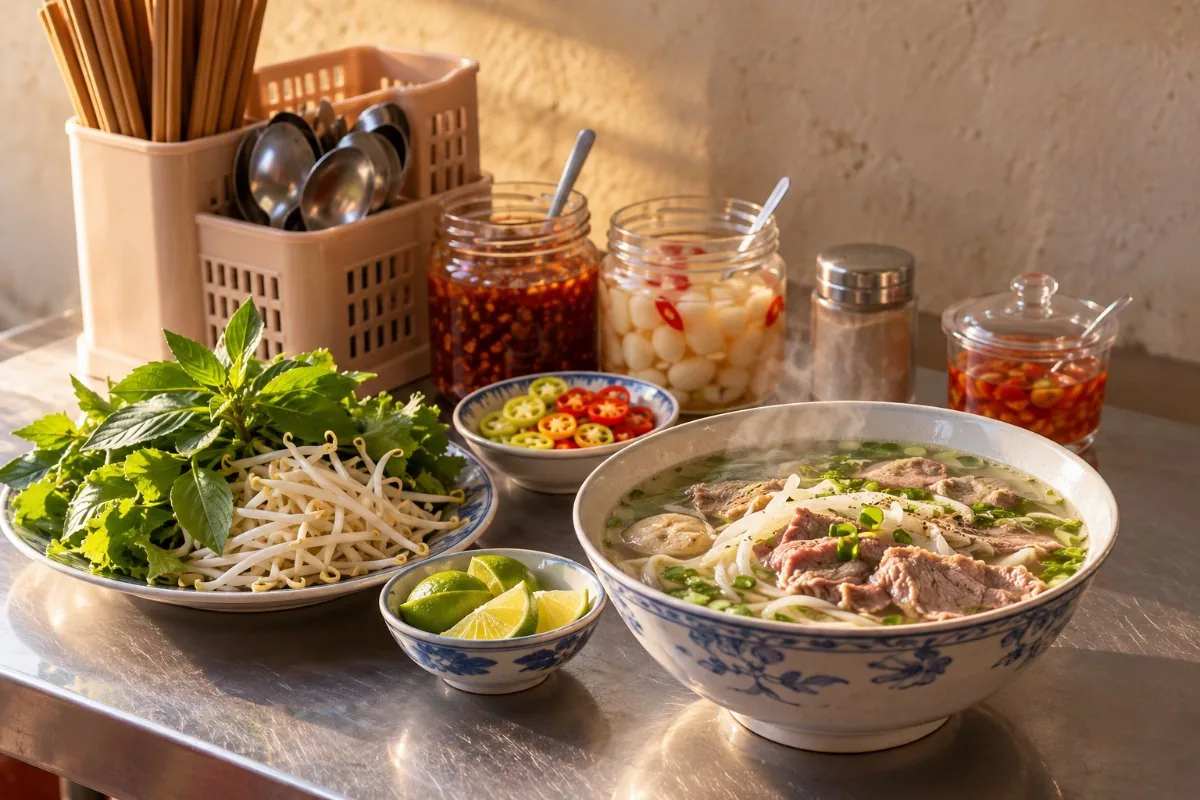
Ordering pho in Da Nang is simple once you know the cuts. Say “pho tai” for rare beef slices, “pho chin” for well-done brisket, or “pho nam” for flank. For a mix, order “pho thap cam” (combination). The side greens are non-negotiable: a plate of rau thom (mixed herbs), bean sprouts, and lime wedges arrives with your bowl. Add a squeeze of lime, a few drops of chili oil, and a pinch of fresh chili slices. Do not add hoisin sauce or sriracha—locals consider this a corruption of the broth’s purity.
Instead, dip your beef slices in a small bowl of nuoc cham (fish sauce with garlic and chili) for a clean, balanced flavor.
2. Bun Bo Hue: The Spicy, Lemongrass-Infused Imperial City Export
The signature broth: beef bones, lemongrass, shrimp paste, and annatto oil
Bun bo Hue’s broth is a study in complexity. Beef bones are simmered for hours with lemongrass stalks, shrimp paste (mam tom), and annatto oil, which gives the broth its signature orange-red hue. The result is a deeply savory, slightly funky base that is both spicy and aromatic. Unlike pho, where the broth is clear and subtle, bun bo Hue announces itself with a punch of lemongrass and a lingering heat from fresh chilies. The shrimp paste adds an umami depth that is essential—without it, the broth lacks the characteristic “Hue soul.”
Where to find the most authentic bun bo Hue in Da Nang (not Hue)
The best bun bo Hue in Da Nang is not a tourist attraction. Bun Bo Hue Ba Mua on Nguyen Van Thoai is a no-frills stall that has been serving the same recipe for 20 years. The broth is rich, the beef shank is fall-apart tender, and the pork knuckle adds a gelatinous richness. Another solid option is Bun Bo Hue 46 on Hoang Hoa Tham, where the family makes their own noodles daily and the broth is slightly spicier than average.
In 2026, these two stalls remain the benchmarks for authenticity, with locals lining up before 7 AM to secure a bowl.
Key toppings: beef shank, pork knuckle, congealed blood, and how to handle them
A proper bowl of bun bo Hue includes beef shank (thit bo), pork knuckle (gio heo), and congealed blood (huyet). The blood is cut into cubes and added to the broth—it has a silky, custard-like texture that absorbs the spicy broth. If you are new to congealed blood, start with a small piece; it is an acquired taste but essential to the experience. The pork knuckle is slow-cooked until the skin is soft and the meat falls off the bone. Use chopsticks to separate the meat, then dip it in a small dish of salt, pepper, and lime juice.
The combination of spicy broth, tender pork, and tangy dip is the heart of the bowl.
3. Mi Quang: The Turmeric-Stained Icon You Must Try
Less soup, more flavor: the concentrated broth and wide noodles
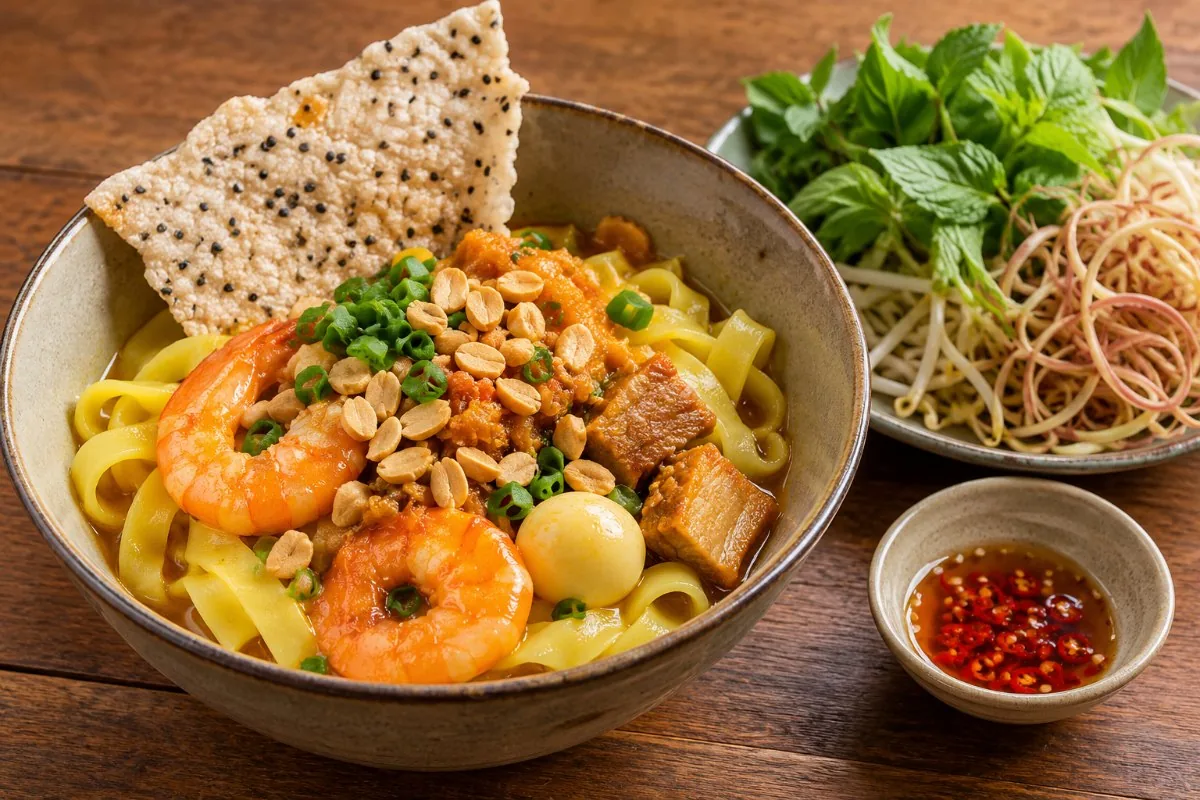
Mi quang is the noodle soup that breaks all the rules. The broth is minimal—just enough to coat the noodles—but intensely flavored with turmeric, fish sauce, and pork bones. The wide, flat noodles are stained yellow from the turmeric, giving them a distinct color and a slightly chewy texture. Unlike pho or bun bo Hue, where the broth is the star, mi quang is about the interplay of textures: the soft noodles, the crisp raw vegetables, the crunchy peanuts, and the brittle rice cracker that sits on top.
Classic toppings: shrimp, pork, quail eggs, peanuts, and crispy rice cracker
A classic mi quang bowl is a visual feast. Fresh shrimp, sliced pork, and halved quail eggs sit on top of the turmeric noodles, surrounded by fresh herbs (mint, basil, and perilla), shredded lettuce, and bean sprouts. Crushed peanuts add a nutty crunch, and a large, round rice cracker (banh trang) is placed on top, to be broken into pieces and mixed into the broth. The combination of textures—soft noodles, tender shrimp, crunchy peanuts, and crisp cracker—makes every bite different.
Some stalls add a spoonful of chili oil for heat, but the base flavor is savory and slightly sweet from the turmeric.
Best mi quang stalls in Da Nang and how to order the variations
Mi Quang Ba Mua on Tran Binh Trong is the most famous stall in Da Nang, and for good reason. The broth is rich, the toppings are generous, and the rice cracker is always freshly fried. Mi Quang 1A on Nguyen Chi Thanh offers a lighter version with more broth, ideal for those who prefer a soupier bowl. For a unique twist, try mi quang ech (frog) at a stall on Hoang Dieu—the frog meat is tender and absorbs the turmeric broth beautifully.
When ordering, specify “mi quang thap cam” for a combination of all proteins, or “mi quang ga” for chicken. The standard price is 35,000–55,000 VND per bowl.
4. Bun Cha Ca: Da Nang’s Light and Savory Fish Cake Noodle Soup
The clear, sweet-savory broth made from fresh coastal fish
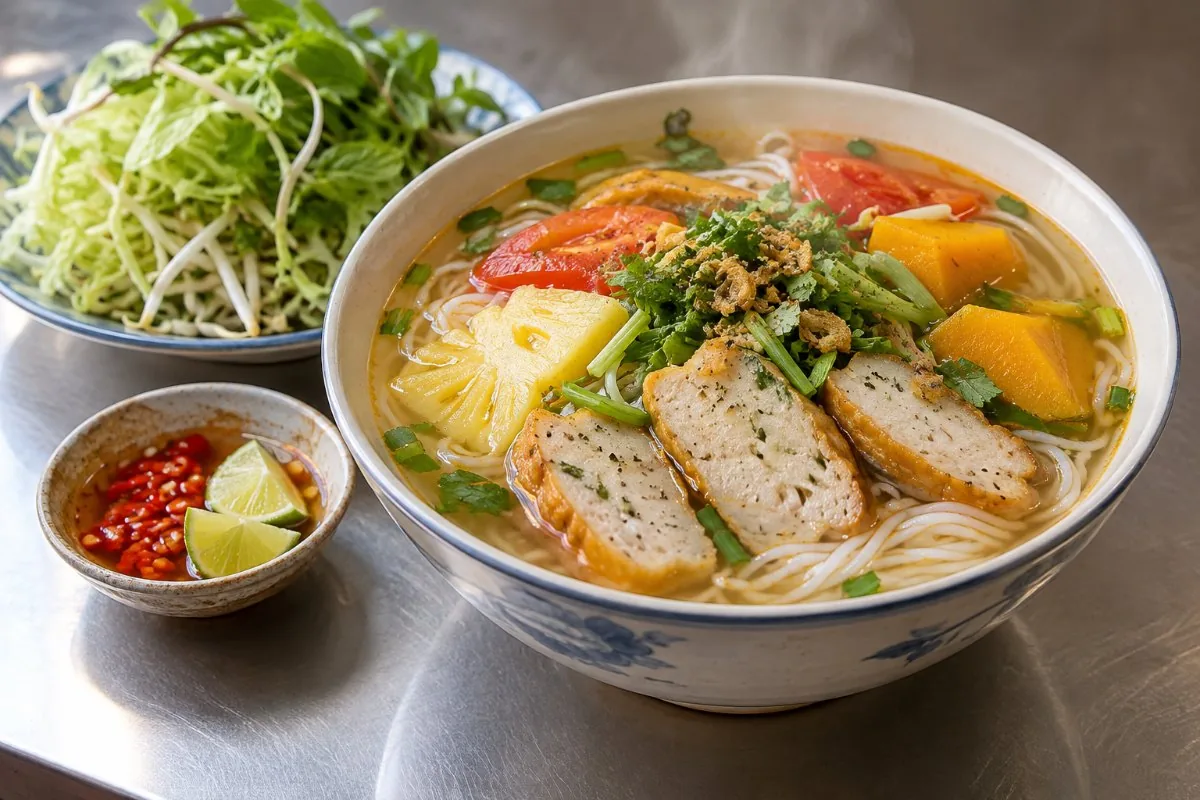
Bun cha ca is Da Nang’s answer to a light, healthy noodle soup. The broth is made by simmering fish frames—often from mackerel or tuna—with onions, tomatoes, and a touch of fish sauce. The result is a clear, golden liquid that is both sweet from the fish and savory from the umami-rich bones. Unlike the heavy broths of pho or bun bo Hue, bun cha ca is refreshing and easy to digest, making it a popular breakfast choice for locals. The broth is typically served with fresh dill and green onions, which add a bright, herbal note.
Fish cake varieties: mackerel, tuna, and the art of making cha ca
The fish cakes (cha ca) are the soul of this dish. They are made by grinding fresh mackerel or tuna with garlic, pepper, and fish sauce, then shaping the mixture into small patties or balls. The cakes are either fried until golden or poached directly in the broth. Fried cha ca has a crispy exterior and a tender, flaky interior, while poached cha ca is softer and more delicate. Some stalls offer a mix of both, allowing you to experience two textures in one bowl.
The best cha ca is made daily—if you see a stall with a visible fish-grinding station, that is a good sign.
Top bun cha ca addresses in Da Nang for a beach-town breakfast
Bun Cha Ca 109 on Nguyen Chi Thanh is the most famous address in Da Nang. The family has been making fish cakes for three generations, and the broth is consistently clear and sweet. Bun Cha Ca Ba Luan on Tran Phu offers a spicier version with a side of chili garlic sauce, ideal for those who want a kick. For a beachside experience, head to the stalls along Vo Nguyen Giap near My Khe Beach—they serve bun cha ca with a view of the water, and the fish cakes are made from the morning catch.
A bowl costs 40,000–60,000 VND.
5. Cao Lau: The Hoi An Unicorn Worth a Short Trip from Da Nang
The legend of the Ba Le well and the unique noodle-making process
Cao lau is a noodle soup that exists only in Hoi An, a 45-minute drive from Da Nang. The legend says the noodles must be made with water from the ancient Ba Le well, which gives them a unique firmness and springy texture. The noodles are made by mixing rice flour with ash from local trees, then soaking them in Ba Le well water before steaming and cutting. The result is a thick, chewy noodle that absorbs the minimal broth without becoming mushy.
In 2026, several Hoi An restaurants still claim to use Ba Le well water, though the authenticity of this practice is debated among locals.
What to expect in the bowl: char siu pork, herbs, croutons, and minimal broth
Cao lau is a study in contrasts. The bowl contains a small amount of broth—just enough to moisten the noodles—topped with slices of char siu-style pork belly, fresh herbs (mint, basil, and lettuce), bean sprouts, and crispy croutons made from fried bread or rice paper. The pork is marinated in soy sauce and five-spice powder, then roasted until caramelized and tender. The croutons add a crunchy texture that contrasts with the soft noodles and tender pork. The broth is light, savory, and slightly sweet, meant to be a background note rather than the main event.
How to find the most authentic cao lau in Hoi An and why it’s worth the journey
For the most authentic cao lau, head to Thanh Cao Lau on Thai Phien Street in Hoi An. The family has been serving the same recipe for over 40 years, and the noodles are made daily using traditional methods. Cao Lau Ba Be on Tran Cao Van is another excellent option, known for its generous portions and perfectly caramelized pork. The journey from Da Nang to Hoi An takes about 45 minutes by car or scooter, and the experience of eating cao lau in its birthplace—sitting on a small plastic stool under a canopy of banyan trees—is worth every minute.
A bowl costs 45,000–70,000 VND.
Essential Tips for Noodle Soup Hunting in Da Nang (2026 Edition)
Best time of day to eat each type of noodle soup
Timing matters in Da Nang’s noodle culture. Pho is a breakfast dish—most stalls open at 6 AM and close by 10 AM. Bun bo Hue is also a morning staple, though some stalls serve it until early afternoon. Mi quang is a lunch dish, typically served from 11 AM to 2 PM. Bun cha ca is versatile—many stalls serve it from breakfast through late afternoon. Cao lau is best enjoyed in Hoi An during lunch, when the stalls are at their busiest.
In 2026, a few modern eateries in Da Nang serve these soups all day, but the most authentic experience comes from visiting during the traditional hours.
How to spot a quality shop: the one-dish rule and the 30-year kitchen
The best noodle shops in Da Nang follow the one-dish rule: they serve only one type of soup. A stall that only makes bun bo Hue has perfected its recipe over decades, while a shop that offers pho, bun bo Hue, and mi quang is likely cutting corners. Look for stalls with a single, large pot simmering on the stove—this indicates fresh broth made daily. Also, check the age of the kitchen: shops that have been operating for 20–30 years, often passed down through generations, are the safest bet.
In 2026, these family-run stalls remain the heart of Da Nang’s noodle culture.
Navigating the menu: key phrases for ordering in Vietnamese
Learning a few phrases will transform your experience. Say “mot to” (one bowl) followed by the soup name: “mot to pho tai” (one bowl of pho with rare beef), “mot to bun bo Hue” (one bowl of bun bo Hue), or “mot to mi quang” (one bowl of mi quang). For specific toppings, add “them” (extra): “them trung” (extra egg), “them cha” (extra fish cake). To specify the noodle texture, say “noodle mem” (soft noodles) or “noodle dai” (firm noodles). Most stall owners appreciate the effort and will respond with a smile.
Price guide for 2026: what you should expect to pay per bowl
In 2026, a bowl of pho costs 40,000–60,000 VND ($1.60–$2.40 USD). Bun bo Hue is slightly more expensive at 50,000–80,000 VND ($2.00–$3.20 USD) due to the premium ingredients like pork knuckle and congealed blood. Mi quang ranges from 35,000–55,000 VND ($1.40–$2.20 USD), while bun cha ca is 40,000–60,000 VND ($1.60–$2.40 USD). Cao lau in Hoi An costs 45,000–70,000 VND ($1.80–$2.80 USD). These prices reflect the cost of fresh, locally sourced ingredients and the skill of the cook. A meal at a street stall is significantly cheaper than a restaurant, and the quality is often higher.
Related on this site
- Savoring Da Nang’s Suon Nuong: Grilled Pork Ribs
- Da Nang’s Best Lunch Deals: Affordable Midday Meals 2026
- Da Nang’s Gluten-Free Dining: Safe and Delicious Choices 2026
For the southern rice-noodle soup in more depth, read where to eat hu tieu in Da Nang.
Frequently Asked Questions
What is the most popular noodle soup in Da Nang?
Mi quang is the most iconic noodle soup of Da Nang and the surrounding Quang Nam (now part of Da Nang). While pho is widely available, mi quang is the local specialty that defines the region. Its turmeric-stained noodles, minimal broth, and combination of shrimp, pork, and peanuts make it a must-try.
Is bun bo Hue originally from Da Nang?
No, bun bo Hue originated in the imperial city of Hue, about 100 kilometers north of Da Nang. However, Da Nang has its own version, which is often lighter and less spicy than the Hue original. Many locals argue that Da Nang’s version is more approachable for first-timers.
Can I find vegetarian versions of these noodle soups in Da Nang?
Yes, many stalls offer vegetarian versions of mi quang and bun bo Hue, especially during Buddhist holidays. Look for “mi quang chay” (vegetarian mi quang) or “bun bo Hue chay” (vegetarian bun bo Hue). These versions use tofu, mushrooms, and vegetable broth instead of meat and fish sauce.
What is the best time of day to eat bun cha ca?
Bun cha ca is a breakfast dish in Da Nang. Most stalls open at 6 AM and serve until late morning. The broth is light and refreshing, making it an ideal start to the day. Some stalls also serve it during lunch, but the fish cakes are freshest in the morning.
How do I know if a noodle shop is authentic?
Look for a shop that serves only one type of noodle soup, has a large pot simmering on the stove, and has been operating for at least 10–20 years. The one-dish rule is the strongest indicator of authenticity. Also, check if the stall is busy with local customers—tourist-heavy shops often compromise on quality.
Is cao lau worth the trip from Da Nang to Hoi An?
Absolutely. Cao lau is unique to Hoi An and cannot be found elsewhere. The noodles are made with ash from local trees and water from the Ba Le well, giving them a texture and flavor that is impossible to replicate. The 45-minute drive from Da Nang is well worth it for this one-of-a-kind bowl.
What should I avoid ordering at a noodle stall?
Avoid ordering pho with hoisin sauce or sriracha—locals consider this a corruption of the broth’s purity. Also, avoid asking for extra broth in mi quang, as the dish is designed to have minimal liquid. Respect the chef’s recipe and try the bowl as intended before making adjustments.
Conclusion: Your Next Bowl Awaits
Da Nang’s noodle soup scene is a living archive of Vietnam’s culinary history, with each bowl telling a story of migration, adaptation, and local pride. From the clear, beefy pho to the fiery bun bo Hue, the turmeric-stained mi quang to the light fish cake bun cha ca, and the elusive cao lau in Hoi An, the city offers a journey through Vietnam’s most iconic noodle soups. In 2026, the best way to experience this landscape is to follow the one-dish rule, eat at family-run stalls, and trust the locals who have been perfecting these recipes for decades.
- Start your day with a bowl of pho at Pho Hong on Hai Phong Street—arrive before 8 AM to avoid the rush.
- Explore the mi quang stalls around the Han Market for lunch, and save bun bo Hue for a mid-morning meal at Bun Bo Hue Ba Mua.
- Plan a half-day trip to Hoi An for cao lau at Thanh Cao Lau, and end your noodle journey with a sunset bowl of bun cha ca at My Khe Beach.
Part of our guide to what to eat in Da Nang.