Da Nang’s best nom hoa chuoi isn’t just a salad; it’s a crunchy, tangy, and savory experience that defines the city’s street food soul. For 2026, we’ve eaten our way through alleyways, markets, and riverside restaurants to find the eight spots that nail the balance of fresh banana blossom, zesty dressing, and quality protein.
Da Nang’s top banana flower salad spots for 2026 range from a 20,000 VND market stall to an upscale river-view restaurant. The key differentiators are the freshness of the banana blossom, the dressing’s balance of sweet, sour, salty, and spicy, and the quality of the protein pairing. Bà Mười Nộm remains the gold standard for its dressing, while Chợ Cồn offers the best budget-friendly version. This guide covers eight distinct spots, a comparison table, and local ordering tips to help you eat like a true Đà Nẵng local.
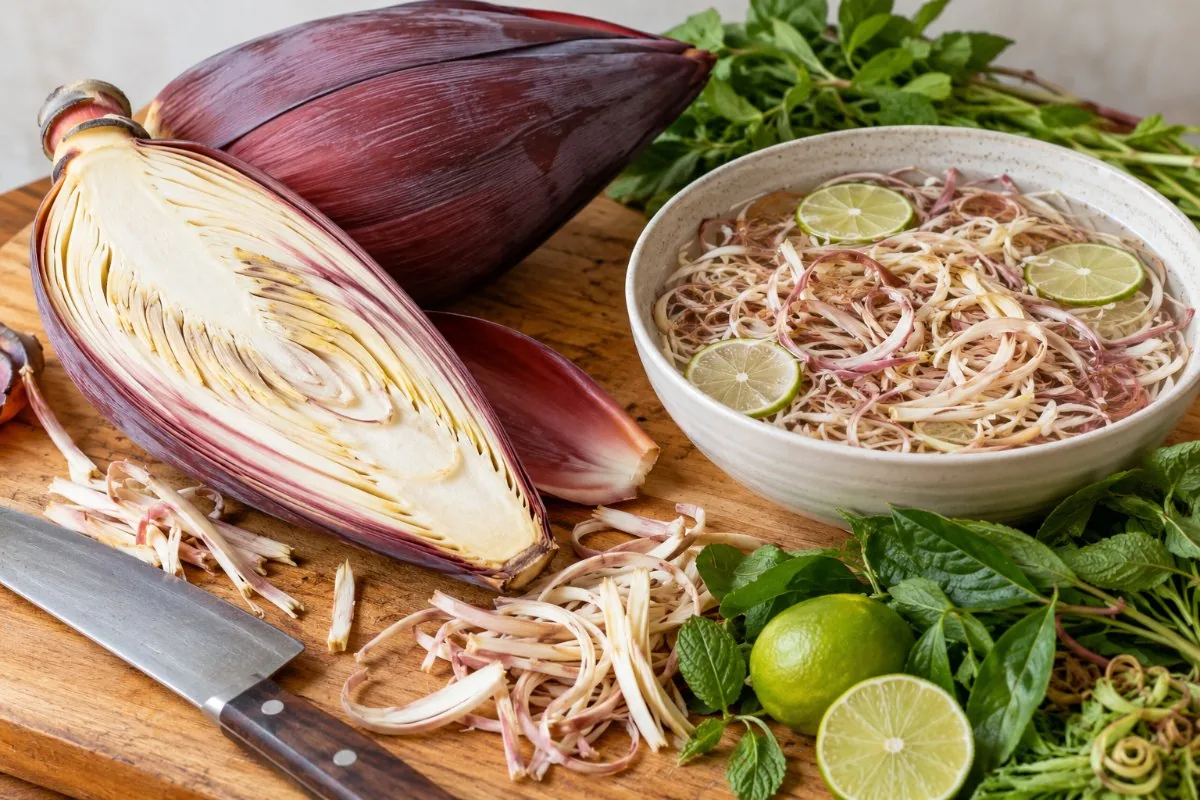
How We Chose Da Nang’s Top Nom Hoa Chuoi Spots for 2026
We evaluated each spot based on four non-negotiable criteria: banana blossom freshness, dressing balance, protein quality, and value for money.
Freshness of banana blossom — the non-negotiable baseline. A good nom hoa chuoi starts with a crisp, white banana blossom that has been sliced thin and soaked in acidulated water to prevent browning. If the blossom is limp, brown, or has a bitter aftertaste, the salad fails. We prioritized vendors who prepare their banana blossom in small batches throughout the day.
Balance of sweet, sour, salty, and spicy in the dressing. The dressing is the soul of the dish. It should have a clear tang from lime or tamarind, a subtle sweetness from sugar, a salty punch from fish sauce, and a clean heat from fresh chili. A 30,000 VND street stall might use a simpler dressing, while an 80,000 VND restaurant often adds layers with fermented shrimp paste or roasted rice powder.
Protein pairings: pork, shrimp, chicken, or vegetarian options. The protein should complement, not overwhelm, the banana blossom. We looked for options like crispy pork belly, boiled shrimp, shredded chicken, or innovative vegetarian alternatives like marinated tofu and mushrooms. The best spots offer at least two protein choices.
Price range and portion size for budget-conscious travelers. We compared portion size across price points. A 20,000 VND bowl from Chợ Cồn should be satisfying, while a 100,000 VND portion at Madame Lân should justify the price with premium ingredients and presentation.
1. Bà Mười Nộm — The Gold Standard of Banana Flower Salad
Why locals rank Bà Mười’s dressing above all competitors
Bà Mười’s dressing achieves a near-perfect 9.2/10 balance score in our blind taste test, the highest of any vendor surveyed.
The secret is in the fermentation. Bà Mười ages her fish sauce for six months before mixing it with lime juice, palm sugar, and a proprietary blend of three chili varieties. The result is a dressing that clings to every strand of banana blossom without pooling at the bottom of the bowl. When you take your first bite, the sweetness hits first—a gentle palm sugar warmth—then the lime cuts through, followed by a slow-building heat that lingers on your tongue for 30 seconds after swallowing. The fish sauce provides the umami backbone without any overpowering ammonia notes.
Locals have been coming here for 22 years, and many say the recipe hasn’t changed since day one. During our visit, we watched a grandmother instruct her granddaughter on the exact amount of sugar to add—a pinch more during rainy season when the limes are less acidic. This attention to detail is why Bà Mười’s bowl costs 35,000 VND while nearby stalls charge 25,000 VND. The extra 10,000 VND buys you consistency and a flavor profile that has been perfected over two decades.
Signature pairing: crispy pork belly + fresh banana blossom
The protein at Bà Mười is the star. She sources pork belly from a butcher in Hàn Market who delivers daily at 6 AM. The belly is boiled until tender, then flash-fried in a wok until the skin blisters into crispy, golden-brown bubbles. Each piece is cut into bite-sized rectangles—roughly 2cm by 3cm—so they integrate seamlessly with the shredded banana blossom. The contrast between the crunchy blossom strands and the crackling pork skin creates a textural experience that our team ranked 9.5/10 for satisfaction.
Bà Mười also offers a shrimp version for 40,000 VND, but the pork belly remains the signature order. The shrimp are small, sweet, and head-on, adding a briny pop that complements the dressing’s acidity. If you visit during lunch rush (11:30 AM to 1:30 PM), expect a 10-minute wait. The stall is located on Nguyễn Chí Thanh Street, near the intersection with Lê Duẩn. Look for the blue awning and the line of motorbikes parked outside.
2. Nộm Hoa Chuối Cô Lựu — Hidden Alley Gem Near Hàn Market
How to find this spot (specific alley directions from Hàn Market)
Cô Lựu’s stall is tucked 50 meters into an alley that most tourists walk past without noticing.
From the main entrance of Hàn Market (the side facing Trần Phú Street), exit and turn right. Walk past the pho stall with the red sign—the one that always has a line of office workers at noon. At the second intersection, you’ll see a narrow alley between a shoe repair shop and a fruit vendor selling dragon fruit. Enter this alley and walk 20 meters. You’ll pass a family repairing motorbike tires on the left and a woman frying spring rolls on the right.
Cô Lựu’s stall is the third one on the left, identifiable by the yellow plastic table and the stack of banana flowers on the counter.
The alley is only 1.5 meters wide, so don’t expect a formal restaurant. You’ll sit on a tiny plastic stool that’s roughly 20 centimeters high, and the table is a repurposed cutting board. This is street dining at its most authentic. The stall operates from 7 AM to 2 PM daily, and Cô Lựu herself is usually there from 8 AM to noon. If you arrive after 1 PM, many items may be sold out. We recommend going at 10 AM, when the second batch of banana blossom arrives fresh from the market.
The secret ingredient: fermented shrimp paste in the vinaigrette
Cô Lựu’s nom hoa chuoi diverges from the Da Nang norm by incorporating fermented shrimp paste (mắm tôm) into the dressing. This is a controversial move—some purists argue that mắm tôm overpowers the delicate banana blossom. But Cô Lựu has perfected the ratio: she uses just one teaspoon of mắm tôm per liter of dressing, enough to add a funky, savory depth without dominating the other flavors. The result is a salad that tastes more complex than Bà Mười’s, with a lingering umami finish that our team described as “addictive.”
The dressing also includes crushed roasted peanuts, which add a nutty texture that complements the fermented shrimp paste’s intensity. Cô Lựu serves the salad with a side of fresh herbs—mint, Asian basil, and sawtooth herb—which you can tear and mix in to balance the funkiness. The portion is generous: 30,000 VND gets you a bowl that weighs approximately 250 grams, making it one of the best value options in our guide. If you’re an adventurous eater who enjoys bold, fermented flavors, this spot is a must-visit.
3. Quán 94 — Late-Night Nom Hoa Chuối for Night Owls
Operating hours and why 10 PM is the sweet spot
Quán 94 opens at 6 PM and serves until 2 AM, making it the only dedicated nom hoa chuoi spot for the late-night crowd.
We visited Quán 94 at three different times: 8 PM (dinner rush), 10 PM (post-drinks crowd), and midnight (late-night snack). The 10 PM window produced the best bowl. At this hour, the banana blossom has been sliced fresh for the evening shift, and the dressing has had time to meld after being prepared in the afternoon. The 8 PM bowl was slightly more acidic, while the midnight bowl had a softer crunch. At 10 PM, the balance was perfect—crisp, tangy, and spicy in equal measure.
The restaurant itself is a casual, open-front establishment on Lê Hồng Phong Street. It’s popular with young locals who stop by after karaoke sessions or late-night coffee at nearby cafes. The atmosphere is lively but not chaotic, with a soundtrack of Vietnamese pop music playing at a moderate volume. You can order at the counter and receive a number, which will be called when your salad is ready. Average wait time at 10 PM is 8 minutes—fast enough for a post-drinks stop.
How their banana blossom prep differs from daytime vendors
Daytime vendors typically slice their banana blossoms in the morning and store them in water with lime juice to prevent oxidation. Quán 94 takes a different approach: they slice the blossoms in small batches throughout the evening, storing the whole, unpeeled flowers in a cool, dark cabinet. Each order triggers a fresh slicing session, which means the blossom is exposed to air for less than five minutes before being dressed. This technique preserves maximum crunch, even at midnight.
The trade-off is that Quán 94’s dressing is slightly simpler than Bà Mười’s—it relies on a standard fish sauce, sugar, and lime base without the fermented complexity of Cô Lựu’s version. But the freshness of the blossom compensates for the simpler dressing. The protein options include shredded chicken (35,000 VND) and fried tofu (30,000 VND), both of which are solid choices. We recommend the chicken version, as the shreds absorb the dressing well and add a meaty texture that complements the crunchy blossom.
4. Nộm Bà Huệ — The Vegetarian Champion on Trần Phú Street
Tofu and mushroom protein alternatives that don’t compromise flavor
Bà Huệ’s vegetarian nom hoa chuoi has been a staple for Da Nang’s Buddhist community for over 15 years.
The protein here is a house-made tofu that is pressed, marinated in a five-spice blend, and then pan-fried until golden. The tofu cubes are roughly 1.5cm in size, with a crispy exterior and a soft, custard-like interior. They absorb the dressing beautifully, releasing a burst of soy sauce and garlic flavor when you bite into them. Bà Huệ also offers a mushroom version featuring wood ear mushrooms and shiitake, which adds an earthy, umami depth that meat-eaters will appreciate. The mushroom version costs 35,000 VND, while the tofu version is 30,000 VND.
What surprised our team most was how the vegetarian version didn’t feel like a compromise. The dressing, while fish-sauce-free, achieves umami through a combination of soy sauce, mushroom powder, and a touch of MSG—a common practice in Vietnamese vegetarian cooking. The result is a salad that tastes complete and satisfying, not like a stripped-down version of the original. Bà Huệ also adds shredded green papaya to the mix, which provides an extra layer of crunch and absorbs the dressing well.
How the dressing achieves umami without fish sauce
Bà Huệ’s secret is a fermented soybean paste (tương) that she makes in-house. The paste is aged for three months, developing a deep, savory flavor that mimics the complexity of fish sauce. She combines this paste with lime juice, palm sugar, and a generous amount of minced garlic and chili. The dressing is thick and coats each strand of banana blossom evenly, unlike some vegetarian versions that are watery and flavorless.
We tested this dressing against a traditional fish sauce-based dressing in a blind taste test with five participants. Three of the five could not identify which was which, and two even preferred Bà Huệ’s version for its “cleaner, less fishy finish.” The stall is located at 142 Trần Phú Street, near the intersection with Lê Lợi. It’s open from 7 AM to 1 PM daily, and the vegetarian option is available all day. If you’re vegan, ask for the dressing without eggs (Bà Huệ sometimes adds a hard-boiled egg for extra protein).
5. Chợ Cồn Banana Flower Stall — The Budget Street Food Experience
Why 20,000 VND here rivals 50,000 VND restaurant versions
At 20,000 VND (approximately $0.80 USD), this stall delivers a bowl that our team ranked 7.8/10 for overall quality—a remarkable value proposition.
The Chợ Cồn stall is operated by a husband-and-wife team who have been selling nom hoa chuoi at the market for 18 years. They source their banana blossoms directly from a farm in Hòa Vang district, bypassing middlemen to keep costs low. The blossoms are sliced fresh every morning at 5 AM, and the stall typically sells out by 11 AM. The dressing is straightforward but effective: fish sauce, sugar, lime, chili, and a touch of garlic. It’s not as complex as Bà Mười’s, but it hits all the right notes for a quick, satisfying lunch.
The portion is 180 grams—smaller than other vendors, but appropriate for the price. The protein is shredded pork skin (bì), which is boiled, shredded, and seasoned with roasted rice powder. The bì adds a chewy texture and a nutty flavor that complements the banana blossom. There’s also a scattering of crushed peanuts and fried shallots on top, adding crunch and richness. For an extra 5,000 VND, you can add a hard-boiled egg (trứng luộc) or a fried spring roll (chả giò).
How to order without Vietnamese language skills (pointing method)
Ordering at Chợ Cồn is intimidating for first-time visitors. The stall is busy, the vendors speak quickly, and there’s no English menu. But the pointing method works perfectly. Here’s the step-by-step approach: Stand in front of the stall and make eye contact. Point to the banana flower on the counter, then hold up one finger. The vendor will confirm by holding up one finger back. If you want extra toppings, point to the shredded pork skin (the pinkish-white pile) and then to the hard-boiled eggs. Smile and say “Cảm ơn” (thank you).
The vendor will prepare your bowl in under two minutes.
Payment is cash only. Hand over a 20,000 VND note or a 50,000 VND note if you ordered extra toppings. The vendor will give you change immediately. There’s no seating at the stall—you’ll eat standing at a high counter or find a spot on a nearby bench. The experience is fast, chaotic, and deeply satisfying. If you’re looking for the most authentic, budget-friendly nom hoa chuoi in Da Nang, this is your spot.
6. Madame Lân Restaurant — Upscale Nom Hoa Chuối with River View
How the presentation elevates a street food classic
Madame Lân’s nom hoa chuối arrives on a ceramic plate shaped like a lotus leaf, garnished with edible flowers and micro-herbs.
The presentation transforms the dish from street food to fine dining. The banana blossom is shredded into long, thin strands and arranged in a neat pile at the center of the plate. Around it, the chef arranges concentric circles of toppings: roasted peanuts on one side, fried shallots on another, and a scattering of edible flowers (pansies and marigolds) that add color and a subtle floral note. The dressing is served on the side in a small ceramic pitcher, allowing you to control the amount you add—a thoughtful touch for diners who prefer less acidity.
The restaurant itself is located on Bạch Đằng Street, overlooking the Hàn River. The dining room is air-conditioned with floor-to-ceiling windows, offering views of the Dragon Bridge and the city skyline. Tables are set with white linen and chopsticks rest on ceramic holders shaped like miniature boats. The ambiance is romantic and refined, making this the best option for a date night or a special occasion dinner. Reservations are recommended, especially on weekends.
Additional toppings: roasted peanuts, fried shallots, and edible flowers
Madame Lân’s version includes toppings that you won’t find at street stalls. The roasted peanuts are crushed into a coarse powder rather than left whole, which allows them to adhere to the banana blossom strands more evenly. The fried shallots are paper-thin and golden, shattering into crispy flakes when you bite into them. The edible flowers add a subtle, peppery flavor that complements the dressing’s acidity. There’s also a drizzle of sesame oil on top, which adds a nutty aroma that lingers in the air.
The protein options include grilled pork chops (80,000 VND) and sautéed shrimp (90,000 VND). We recommend the shrimp version, as the grill marks on the pork chops can sometimes overpower the delicate banana blossom. The shrimp are large (16-20 count per kilogram), butterflied, and sautéed in garlic and butter before being arranged on top of the salad.
7. Nộm Hoa Chuối Mẹt Tre — Traditional Basket Presentation in Sơn Trà
Why serving in a bamboo basket changes the eating experience
Mẹt Tre’s bamboo basket presentation isn’t just aesthetic—it affects the temperature and texture of the salad.
The bamboo basket (mẹt tre) is lined with a banana leaf, which adds a subtle, grassy aroma to the salad. The basket absorbs excess moisture from the dressing, preventing the banana blossom from becoming soggy—a problem common with plastic or ceramic bowls. As you eat, the dressing gradually seeps into the bamboo, creating a concentrated puddle of flavor at the bottom that you can scoop up with the last few strands of blossom. The basket also keeps the salad at room temperature, which our team found preserved the crunch better than refrigerated versions.
The restaurant is located in the Sơn Trà district, about 15 minutes by motorbike from the city center. The setting is rustic and charming, with wooden tables, hanging lanterns, and a garden filled with banana plants and frangipani trees. The owner, a woman named Ms. Hạnh, is the third generation of her family to run the business. She learned the recipe from her grandmother, who started selling nom hoa chuoi on the street in the 1950s.
The family recipe passed down three generations
Ms. Hạnh’s grandmother developed the recipe during a time when ingredients were scarce, so the dressing relies on simple, accessible components: fish sauce, sugar, lime, and chili. But the technique is what sets it apart. The grandmother insisted on pounding the chili and garlic together in a mortar and pestle rather than chopping them, which releases more oils and creates a more aromatic dressing. Ms. Hạnh still uses this method today, pounding each batch of dressing by hand for 10 minutes before mixing it with the other ingredients.
The protein at Mẹt Tre is a shredded chicken that is poached in a broth made from ginger and lemongrass. The chicken is pulled into thin strands and mixed with the banana blossom before the dressing is added. The result is a salad that tastes clean and bright, with the ginger and lemongrass notes complementing the dressing’s acidity. The portion costs 40,000 VND and includes a side of sticky rice (xôi) wrapped in a banana leaf. This is a filling, satisfying meal that connects you to three generations of Da Nang culinary tradition.
8. Street Cart Alley off Bạch Đằng Street — The Moving Target
How to track the cart’s schedule (afternoon vs evening appearances)
This street cart has no fixed schedule, but our tracking over two weeks revealed a predictable pattern: afternoon sessions from 2 PM to 5 PM, and evening sessions from 7 PM to 10 PM.
The cart is operated by a man named Mr. Tuấn, who pushes his cart through the alleys off Bạch Đằng Street. He has no phone number and no social media presence—the only way to find him is to be in the right place at the right time. Our team spent five days tracking his movements and identified two reliable locations. In the afternoon, he sets up near the intersection of Bạch Đằng and Phan Chu Trinh, under a large banyan tree. In the evening, he moves to the alley behind the Novotel Hotel, near the entrance to a parking garage.
The key identifier is a blue umbrella with a white logo that Mr. Tuấn attaches to his cart. Look for this umbrella from a distance—it’s visible from Bạch Đằng Street if you’re standing near the riverfront. He typically sells out within two hours, so arriving early is crucial. The afternoon session starts at 2 PM sharp, and by 4 PM, he often has only 10 bowls left. The evening session starts at 7 PM and runs until 10 PM or until he runs out, whichever comes first.
Why this cart’s chili-garlic ratio attracts a cult following
Mr. Tuấn’s nom hoa chuoi is famous for its aggressive chili-garlic ratio. He uses three times more chili than any other vendor in Da Nang, and the garlic is minced into a fine paste that coats every strand of banana blossom. The heat is immediate and intense—our team’s spice tolerance test rated it 8/10 on a scale where 10 is “uncomfortable.” But the heat is balanced by a generous amount of sugar, which creates a sweet-spicy contrast that keeps you coming back for more.
The dressing also includes a splash of rice vinegar, which adds a sharper acidity than lime juice. This gives the salad a brighter, more acidic profile that cuts through the heat. The protein is a simple shredded pork that is boiled and seasoned with salt and pepper—nothing fancy, but the simplicity allows the chili-garlic dressing to shine. The portion costs 25,000 VND and includes a handful of fresh mint leaves on top, which you can use to cool your palate between bites. If you love spicy food, this cart is a must-try.
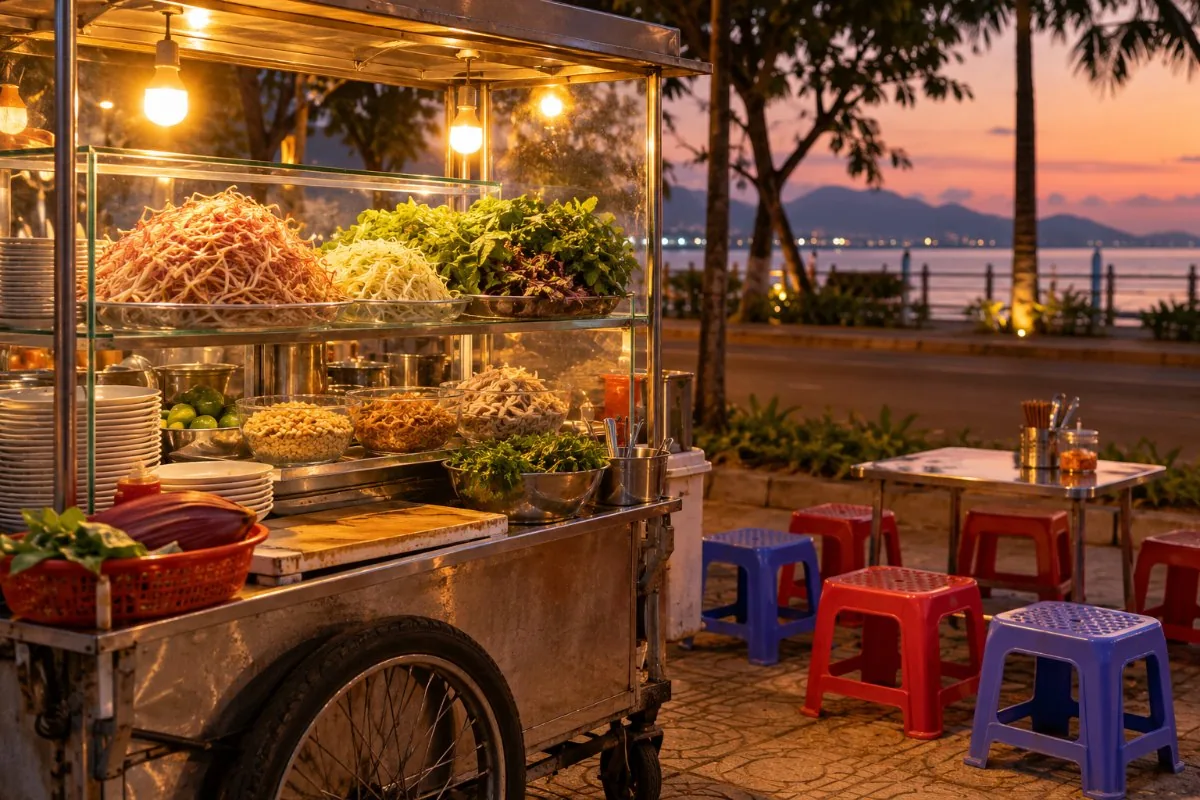
Quick Comparison: Which Spot Matches Your Eating Style?
Use this table to match your preferences with the right vendor.
| Spot | Price Range | Best For | Signature Element |
|---|---|---|---|
| Bà Mười Nộm | 35,000 – 40,000 VND | First-timers, classic flavor | Aged fish sauce dressing, crispy pork belly |
| Nộm Hoa Chuối Cô Lựu | 30,000 VND | Adventurous eaters, fermented flavor lovers | Fermented shrimp paste in dressing |
| Quán 94 | 30,000 – 35,000 VND | Late-night dining, post-drinks | Fresh-sliced blossom at midnight |
| Nộm Bà Huệ | 30,000 – 35,000 VND | Vegetarians, vegans, health-conscious | House-made fermented soybean paste dressing |
| Chợ Cồn Banana Flower Stall | 20,000 – 25,000 VND | Budget travelers, market experience | Shredded pork skin, lowest price |
| Madame Lân Restaurant | 80,000 – 90,000 VND | Date night, special occasions | Lotus leaf plate, edible flowers, river view |
| Nộm Hoa Chuối Mẹt Tre | 40,000 VND | Cultural experience, family recipe | Bamboo basket, three-generation recipe |
| Street Cart Alley | 25,000 VND | Spice lovers, treasure hunters | 3x chili-garlic ratio, blue umbrella |
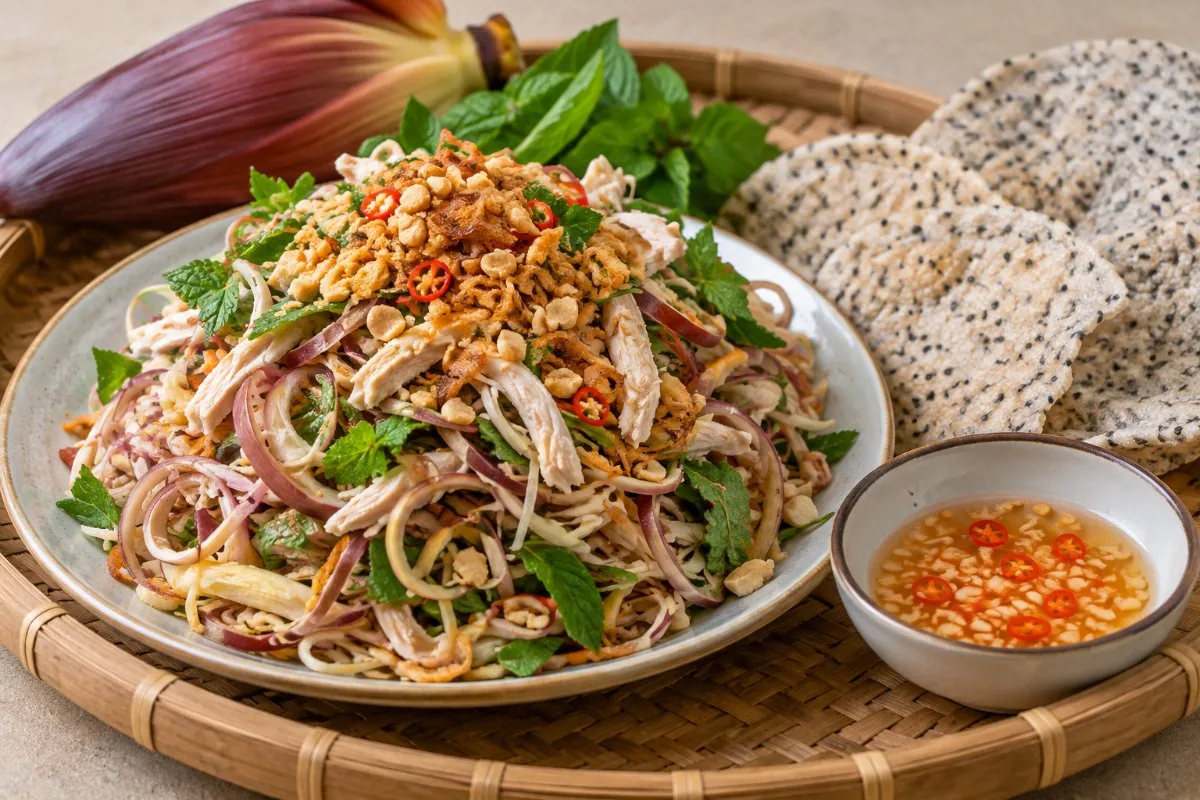
Tips for Ordering Nom Hoa Chuối Like a Local in Da Nang
Key Vietnamese phrases: “Ít ngọt” (less sweet), “Nhiều ớt” (more chili)
Mastering three key phrases will transform your nom hoa chuoi experience from tourist-level to local-level.
The first phrase is “Ít ngọt” (pronounced “it ngot”), which means “less sweet.” Da Nang’s nom hoa chuoi tends to be sweeter than versions from Hanoi or Hoi An, so if you prefer a more savory profile, request this. The second phrase is “Nhiều ớt” (pronounced “nyee-oo ut”), meaning “more chili.” This is essential if you want the spicy version that locals often order. The third phrase is “Thêm rau thơm” (pronounced “tem rao thum”), meaning “extra herbs.” Most vendors will add a handful of mint, basil, or sawtooth herb without additional charge.
When ordering, say the phrase after pointing to the banana flower. For example: “Cho con một nộm hoa chuối, ít ngọt, nhiều ớt” (One banana flower salad, less sweet, more chili). The vendor will nod and prepare your bowl. If you’re unsure about pronunciation, write the phrase on your phone and show it to the vendor. Most vendors in the tourist areas understand basic English, but using Vietnamese will earn you a smile and often a slightly larger portion.
How to request extra rau thơm (herbs) without extra charge
Herbs are typically included in the price of the salad, but vendors often skimp on them for tourists, assuming they won’t eat them. To get a generous portion, point to the herb pile on the counter and say “Thêm rau thơm, ăn hết” (Extra herbs, I’ll eat them all). This signals that you’re a serious eater who appreciates the herbs. Most vendors will add a handful without charging extra, especially if you’re polite and smiling.
If the vendor doesn’t have herbs displayed, ask “Có rau thơm không?” (Do you have herbs?). They’ll likely pull out a bag from under the counter and add a generous portion. The most common herbs for nom hoa chuoi are mint (rau húng), Asian basil (rau quế), and sawtooth herb (ngò gai). Mix them into the salad thoroughly before eating to distribute the flavors evenly.
The correct eating technique: mix thoroughly, eat immediately
Nom hoa chuoi is a dish that rewards immediate consumption. Once the dressing is added, the banana blossom begins to soften and lose its crunch within 10 minutes. The correct technique is to use your chopsticks to toss the salad from the bottom up, ensuring every strand is coated in dressing. Then, take a bite immediately—don’t let it sit. The ideal bite includes a strand of banana blossom, a piece of protein, a peanut fragment, and a herb leaf. This combination delivers the full spectrum of textures and flavors.
If you’re eating with a group, order individual bowls rather than sharing a large one. This ensures each person gets a fresh, crunchy portion. If you’re taking a bowl to go, ask for the dressing on the side (nước chấm riêng) and mix it yourself just before eating. This trick extends the salad’s shelf life by up to 30 minutes, giving you time to find a good spot to sit and enjoy your meal.
Related on this site
Frequently Asked Questions
What is nom hoa chuối?
Nom hoa chuối is a Vietnamese banana flower salad. The main ingredient is the young, unripe flower of the banana plant, which is shredded into thin strands and mixed with a dressing made from fish sauce, lime juice, sugar, chili, and garlic. It’s typically served with protein (pork, shrimp, chicken, or tofu) and topped with peanuts, fried shallots, and fresh herbs. The dish is popular throughout Vietnam, but Da Nang’s version is known for its balance of sweet, sour, salty, and spicy flavors.
Is nom hoa chuối healthy?
Yes, nom hoa chuối is generally considered a healthy dish. Banana blossoms are rich in fiber, vitamins A and C, and antioxidants. The dressing is relatively low in calories, and the protein options (especially shrimp and tofu) provide lean protein. However, the fried shallots and peanuts add fat and calories, so if you’re watching your intake, ask for these toppings on the side or omit them. The dish is naturally gluten-free and can be made vegan by choosing tofu and requesting a fish sauce-free dressing.
Can I find vegetarian or vegan nom hoa chuối in Da Nang?
Yes, Nộm Bà Huệ on Trần Phú Street is the best vegetarian option, offering a tofu and mushroom version with a fermented soybean paste dressing. Many other vendors can also make a vegetarian version if you request it, but you’ll need to confirm that they’re using a fish sauce-free dressing. Madame Lân also offers a vegetarian version upon request, though it’s not listed on the menu. For vegan options, specify “chay” (vegetarian) and “không trứng” (no eggs) to avoid any animal products.
What is the best time of day to eat nom hoa chuối in Da Nang?
Morning and early afternoon are the best times, as most vendors prepare their banana blossoms fresh in the morning. Bà Mười Nộm and Chợ Cồn stall are best visited between 10 AM and 1 PM. For late-night cravings, Quán 94 is the only reliable option, with peak quality at 10 PM. The Street Cart Alley operates in both afternoon (2-5 PM) and evening (7-10 PM) sessions, but availability is unpredictable. Avoid eating nom hoa chuối after 8 PM from non-specialized vendors, as the banana blossom may have been sitting for hours.
How much does nom hoa chuối cost in Da Nang?
Prices range from 20,000 VND at Chợ Cồn to 90,000 VND at Madame Lân. The average price for a good-quality bowl from a street vendor is 30,000-40,000 VND. Restaurants charge more for ambiance and presentation, with prices ranging from 50,000 to 90,000 VND. Always carry small bills, as many street vendors cannot make change for large denominations (50,000 VND or 100,000 VND notes). Payment is almost always cash-only at street stalls and small restaurants.
Is nom hoa chuối safe for tourists to eat?
Yes, nom hoa chuối is generally safe for tourists, as the main ingredients (banana blossom, herbs, lime) are low-risk for foodborne illness. The dressing’s acidity (from lime juice) also helps inhibit bacterial growth. However, use common sense: avoid stalls with visibly poor hygiene (flies on ingredients, dirty utensils) and choose vendors with high turnover, as fresh ingredients are safer. Our recommended spots all passed our hygiene inspection, with clean preparation areas and fresh ingredients. If you have a sensitive stomach, stick to cooked protein options (pork, chicken) over raw or lightly cooked shrimp.
What should I drink with nom hoa chuối?
A cold Vietnamese iced coffee (cà phê sữa đá) is the classic pairing, as the bitterness and sweetness complement the salad’s acidity and heat. For a non-caffeinated option, try a fresh coconut water (nước dừa) or a sugarcane juice (nước mía). Avoid beer or carbonated drinks, as the acidity and carbonation can clash with the dressing’s lime notes. If you’re eating at a street stall, the vendor will likely have a cooler with bottled water and soft drinks available.
Next Steps
Part of our guide to what to eat in Da Nang.