Da Nang’s spring roll scene in 2026 is a vibrant exploration for any food enthusiast visiting this coastal city. It represents one of Vietnam’s most satisfying culinary journeys. The city’s unique geography, nestled between the Son Tra Peninsula‘s mountains and the shores of My Khe Beach, imbues its spring rolls with a distinct character found nowhere else.
This guide delves into Da Nang’s two primary spring roll categories: the translucent, herb-rich freshness of gỏi cuốn and the satisfyingly crisp texture of chả giò. We will highlight specific establishments, traditional eating customs, and the local secrets that contribute to each memorable bite.
Da Nang’s spring rolls in 2026 are characterized by a growing emphasis on fresh, clean ingredients, exemplified by spots like Roly Poly in An Thuong, while traditional fried chả giò remains a beloved staple. The local distinction lies in the use of herbs such as perilla and Vietnamese mint, often sourced from the foothills of Son Tra, and a dipping sauce culture that meticulously balances fish sauce, lime, sugar, and chili. Understanding the nuances of where to eat, what to order, and how to assemble each roll correctly elevates the dining experience.
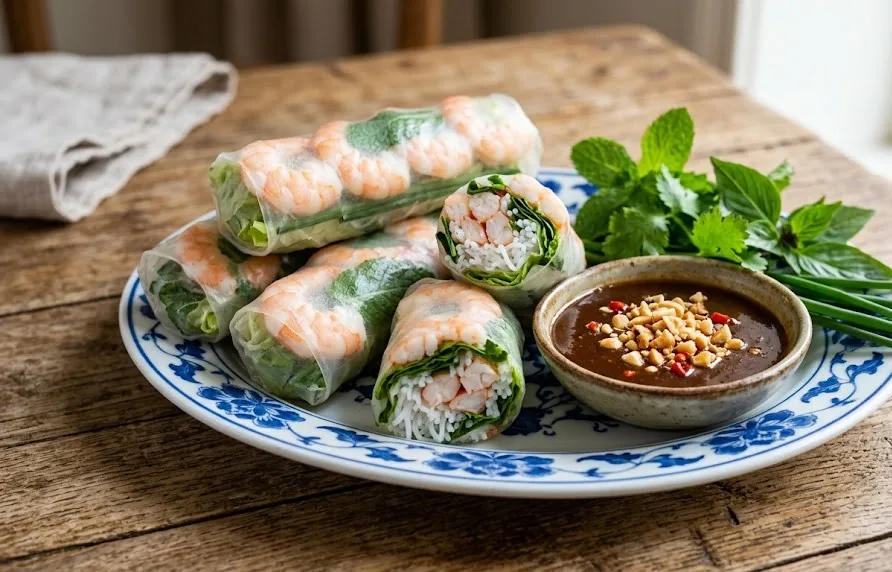
How Da Nang’s Spring Roll Scene Stands Out in 2026
Da Nang’s spring rolls are distinguished by the exceptional freshness of their seafood fillings and a unique herb culture, directly influenced by the city’s coastal environment.
The city’s location between the Truong Son mountain range and the East Sea offers distinct advantages for spring roll preparation. Firstly, the proximity to Tho Quang fishing port ensures that seafood—shrimp, crab, and fish—is exceptionally fresh, often arriving before dawn. Secondly, the specific microclimate of the Son Tra Peninsula cultivates herbs with a potent aroma and flavor that differ from those grown in Hanoi’s cooler climate or Saigon’s humidity. Consequently, a Da Nang spring roll offers a taste of the region’s geography and its culinary techniques.
Why Central Vietnam’s Coastal Cuisine Shapes the Local Roll Identity
Central Vietnamese cuisine is known for its bold, assertive flavors, often characterized by higher saltiness and spice levels compared to the more delicate northern or sweeter southern styles. This intensity is directly reflected in Da Nang’s spring rolls. Gỏi cuốn in Da Nang frequently feature thicker rice paper to accommodate generous portions of herbs. The accompanying dipping sauce typically includes more chili and garlic than its northern counterpart. Local variations of fried rolls often incorporate regional seafood, such as crab meat or whole shrimp, underscoring the city’s fishing heritage.
Even the rolling technique shows regional preference: Da Nang cooks often create denser, smaller rolls, a style favored by locals for pairing with cold beer.
The 2026 Trend: Clean-Eating Fresh Rolls Meet Street-Style Fried Classics
Two distinct culinary trends define Da Nang’s spring roll landscape in 2026. One is the rise of clean-eating cafes, particularly in the An Thuong area, which focus on elevated fresh gỏi cuốn. These establishments use premium ingredients like garlic prawns and lemongrass beef, alongside organic herbs from local farms, catering to health-conscious diners and remote workers seeking nutritious meals. Concurrently, traditional street stalls in the Son Tra Night Market and the alleys near Han Market continue to offer classic fried chả giò, prepared using generations-old recipes.
Both styles coexist harmoniously, and discerning food explorers in Da Nang appreciate each for its unique qualities.
Fresh Spring Rolls (Gỏi Cuốn): The Essential Da Nang Varieties
Fresh gỏi cuốn in Da Nang are defined by their abundant use of herbs, the superior quality of shrimp and pork, and a rice paper texture that can range from delicate to satisfyingly chewy.
Unlike their fried counterparts, fresh spring rolls depend on ingredients at their absolute peak. The rice paper must be pliable yet firm, and the shrimp should be sweet and succulent. Herbs need to be crisp and aromatic. As a major seafood hub, Da Nang’s shrimp in these rolls often possess a noticeable freshness. The local preference for generous herb bundles contributes a vibrant, garden-like quality to each roll.
Classic Gỏi Cuốn Tôm Thịt — Shrimp and Pork Perfection
The classic tôm thịt (shrimp and pork) roll serves as a benchmark for fresh rolls. In Da Nang, the finest versions feature whole river shrimp or large sea prawns, halved lengthwise to showcase their color against the translucent rice paper. The pork, typically boiled shoulder or belly, is thinly sliced and layered with rice vermicelli, lettuce, and a specific blend of herbs. A distinctive Da Nang addition is chives, a long green herb that imparts a mild onion flavor, and occasionally, a thin slice of starfruit for a touch of tartness.
A well-made tôm thịt roll allows each ingredient to be tasted distinctly, with the herbs acting as a unifying element.
Vegetarian and Vegan Gỏi Cuốn — A Growing Plant-Based Movement in Da Nang
Da Nang’s Buddhist traditions have long supported vegetarian cuisine, and the 2026 surge in plant-based eating has significantly advanced vegan gỏi cuốn. Contemporary versions often substitute pork and shrimp with fried tofu, various mushrooms, or jackfruit prepared to mimic the texture of meat. The herb bundle becomes the focal point, featuring perilla, Vietnamese mint, cilantro, and lettuce wrapped around vermicelli and pickled vegetables. Many vegan cafes in the city offer these rolls with a peanut-hoisin sauce, providing richness without animal products.
The An Thuong neighborhood and the vicinity of Linh Ung Pagoda host the highest concentration of these plant-based options, positioning Da Nang as a notable destination for vegan spring roll enthusiasts.
Regional Twists: What Makes Da Nang’s Fresh Rolls Different from Hanoi or Saigon
Hanoi’s gỏi cuốn typically contain fewer herbs and more vermicelli, accompanied by a milder dipping sauce that emphasizes umami from fish sauce without significant heat. Saigon’s version leans sweeter, often served with a peanut sauce that can approach dessert-like richness. Da Nang’s style balances these elements while incorporating its coastal identity: a higher herb-to-vermicelli ratio, a spicier nước chấm with visible chili flakes, and a slightly thicker, chewier rice paper. The local practice of wrapping each bite in additional lettuce leaves before dipping further distinguishes Da Nang’s approach, adding an extra layer of crunch and preserving the roll’s integrity.
For those accustomed to spring rolls from Hanoi or Saigon, Da Nang’s rendition will likely feel more robust and herb-forward.
Fried Spring Rolls (Chả Giò / Nem Rán): Crunchy Favorites You Can’t Miss
Da Nang’s fried spring rolls offer a satisfyingly crisp exterior that gives way to a savory, juicy filling. The city’s seafood-infused versions elevate the humble chả giò into a truly exceptional dish.
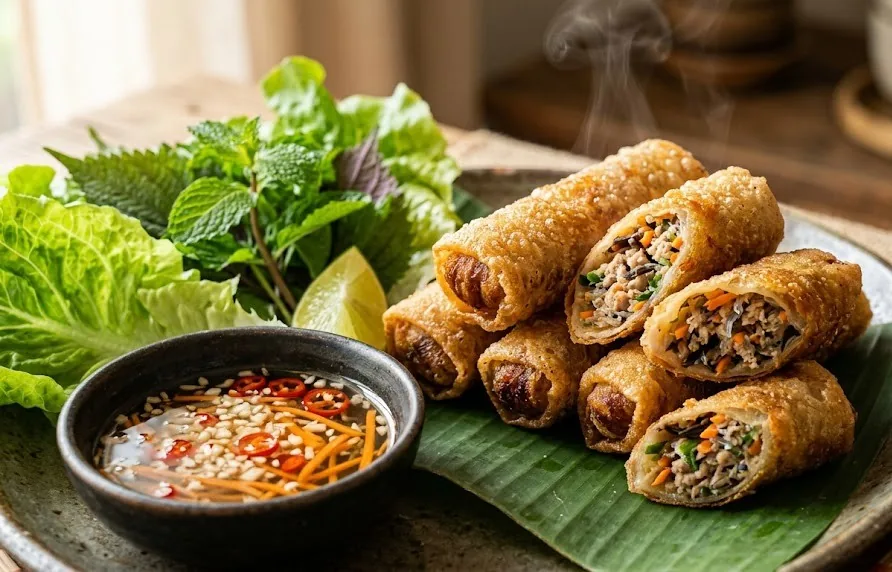
Fried spring rolls in Da Nang appear in various forms, each possessing a distinct texture and cultural significance. The classic chả giò utilizes a thin wheat or rice wrapper that fries to a delicate, bubbly crispness. The filling commonly includes ground pork, wood ear mushrooms, cellophane noodles, and shredded vegetables. However, Da Nang’s coastal location inspires many variations that incorporate crab, shrimp, or fish, resulting in a richer, more luxurious flavor profile. Achieving the perfect fried roll hinges on maintaining the correct oil temperature: too low, and the roll absorbs excess grease; too high, and the wrapper burns before the filling is cooked through.
Da Nang’s street vendors have honed this technique over decades of practice.
Chả Giò Tôm Cua — The Luxurious Seafood-Stuffed Version
This premium fried roll is a highlight at sit-down restaurants and for special occasions in Da Nang. The filling combines minced crab meat, chopped shrimp, and a small amount of ground pork for binding, seasoned with pepper, shallots, and fish sauce. The wrapper is typically thinner than that used for standard chả giò, contributing to a dramatic, shattering crispness when bitten. Served with fresh lettuce, mint, and a selection of herbs, these rolls are intended to be wrapped in greens before dipping, offering a refreshing contrast to the hot, crunchy roll.
At establishments near My Khe Beach, chả giò tôm cua can range from VND 60,000 to VND 80,000 per serving, with the quality justifying the price.
Nem Lụi — Grilled Pork Skewers Wrapped in Rice Paper: A Central Vietnam Specialty
While technically a grilled dish, nem lụi is integral to any discussion of Da Nang’s spring roll family. Minced pork is seasoned with lemongrass, shallots, and fish sauce, then molded around lemongrass stalks or bamboo skewers and grilled over charcoal. The result is a smoky, slightly sweet, and intensely savory flavor. To eat nem lụi, diners remove the pork from the skewer, place it on a sheet of rice paper along with fresh herbs, slices of green banana, and starfruit, then roll it up and dip it in a thick peanut sauce.
This interactive eating experience is a Central Vietnamese specialty that Da Nang executes exceptionally well, particularly at street-side grills in the evenings.
Bánh Khọt and Bánh Căn — Mini Savory Cakes That Roll Like Spring Rolls
Although not strictly spring rolls, bánh khọt and bánh căn are Da Nang’s cherished mini savory cakes that share the same eating ritual of wrapping in greens and dipping. Bánh khọt are small, round pancakes made from rice flour and coconut milk, cooked in a special mold until their edges are crispy and golden, often topped with a whole shrimp. Bánh căn are similar but slightly thicker and may include quail eggs. Both are enjoyed by wrapping the cake in lettuce with herbs and dipping it in nước chấm, mirroring the spring roll ritual.
These bite-sized delights are essential for anyone exploring Da Nang’s related culinary offerings and are available at dedicated stalls throughout the city.
Where to Find the Best Spring Rolls in Da Nang: A 2026 Food Map
Da Nang’s premier spring roll destinations are concentrated in three key areas: the night markets for street-style fried rolls, the My An Ward for local favorites, and the restaurants near My Khe Beach for refined versions.
Strategic selection of dining locations helps avoid tourist-oriented establishments. Da Nang’s spring roll scene rewards exploration, but a few key starting points can lead directly to high-quality offerings. The city’s culinary map has evolved by 2026, with An Thuong emerging as a significant foodie hub, while traditional markets near the Han River maintain their appeal. Here are the recommended locations for your culinary exploration.
Street Food Stalls in Son Tra Night Market and An Thuong Night Market
Son Tra Night Market, situated near the eastern end of the Han River bridge, provides convenient access for tourists seeking to sample various spring roll styles in one evening. Stalls here offer fresh gỏi cuốn and fried chả giò at prices ranging from VND 20,000 to VND 40,000 per serving, which is slightly higher than local prices but still reasonable. An Thuong Night Market, smaller and more frequented by locals, presents a more authentic experience. The fried spring roll stalls often feature family recipes passed down through generations, ensuring high quality.
Visiting between 6 PM and 8 PM is ideal, as stalls are typically well-stocked and the cooking oil is fresh.
Hidden Gems in My An Ward — Where Locals Eat After Work
My An Ward, the neighborhood extending west from My Khe Beach, is a hub for Da Nang’s authentic food scene. This residential area hosts spring roll eateries that prioritize local patrons. Look for small, family-run establishments on side streets off Tran Bach Dang and Vo Nguyen Giap. While English menus may be scarce, pointing to dishes enjoyed by other diners is an effective way to order. The gỏi cuốn here are often more herb-forward, and the chả giò tend to have more generous fillings.
Prices typically range from VND 25,000 to VND 50,000 per serving. The optimal times to visit are between 11 AM and 1 PM for lunch or 5 PM and 7 PM for dinner.
Sit-Down Restaurants and Garden Cafes That Elevate the Classic Roll
For a more refined spring roll experience, Da Nang offers several sit-down dining options. Roly Poly Fresh Spring Rolls & Coffee in An Thuong has gained recognition for its garlic prawn and lemongrass beef rolls—modern interpretations emphasizing premium ingredients and attractive presentation. Garden cafes located in the foothills of the Son Tra Peninsula also serve excellent spring rolls, often featuring herbs sourced from their own gardens. These establishments typically charge VND 45,000–60,000 per serving but provide a more comfortable ambiance and consistent quality.
For special occasions, seafood restaurants along My Khe Beach offer chả giò tôm cua that rivals the city’s best.
How to Eat Spring Rolls Like a Local: Dipping Sauces and Wrapping Rituals
The Da Nang method of eating spring rolls involves a two-step process: first, wrapping the roll in fresh lettuce and herbs, and second, dipping it into a sauce precisely balanced with fish sauce, lime, sugar, and chili.
Many travelers miss the full experience by consuming spring rolls directly from the plate. The Da Nang tradition incorporates additional wrapping at the table and a deliberate dipping technique. This practice enhances the flavors and textures, transforming a good spring roll into a complete culinary experience. The lettuce adds a refreshing crunch and moisture, the herbs contribute aromatic complexity, and the sauce harmonizes all elements.
The Perfect Nước Chấm — Balancing Fish Sauce, Lime, Sugar, and Chili
The quintessential Da Nang nước chấm adheres to a base ratio of 1:1:1:1—one part fish sauce, one part lime juice, one part sugar, and one part water. Minced garlic and fresh chili are added according to taste. The sugar must be fully dissolved before serving. The resulting sauce should offer a balanced blend of salty, sour, sweet, and spicy notes, with no single flavor overpowering the others. While some variations include a splash of vinegar or a pinch of MSG, the clean 1:1:1:1 base is the city’s standard.
This sauce is also suitable for fried rolls, though some prefer to add extra chili to complement the rich, crispy texture.
Lettuce Wrap Etiquette — Which Herbs and Leaves to Use for Each Roll Type
Different spring rolls are traditionally paired with specific wrapping greens. Fresh gỏi cuốn are often eaten as is, though some diners add an extra lettuce leaf for added crunch. For fried chả giò, the lettuce wrap is considered essential: select a crisp lettuce leaf, add mint, perilla, and perhaps a slice of starfruit, place the fried roll on top, and wrap it into a bundle before dipping. The starfruit’s tartness effectively cuts through the richness of the fried roll, while the herbs provide a fresh counterpoint.
For nem lụi, the ritual includes slices of green banana, which contribute a starchy, slightly astringent note that complements the grilled pork and peanut sauce.
Peanut Sauce vs. Fish Sauce: When to Choose Which
Da Nang offers two distinct dipping sauce experiences, and understanding their traditional pairings demonstrates an appreciation for the local cuisine. Fish sauce nước chấm is the standard accompaniment for most spring rolls, both fresh and fried. Peanut sauce, a thicker mixture of hoisin, peanut butter, and sometimes coconut milk, is typically reserved for specific dishes such as nem lụi, bánh khọt, and bánh căn. While some contemporary restaurants offer peanut sauce with fresh rolls as a fusion option, traditionalists consistently opt for fish sauce. When in doubt, inquiring about the restaurant’s recommendation is advisable, as they are most familiar with their dishes.
A general guideline: use fish sauce for lighter preparations and peanut sauce for richer dishes.
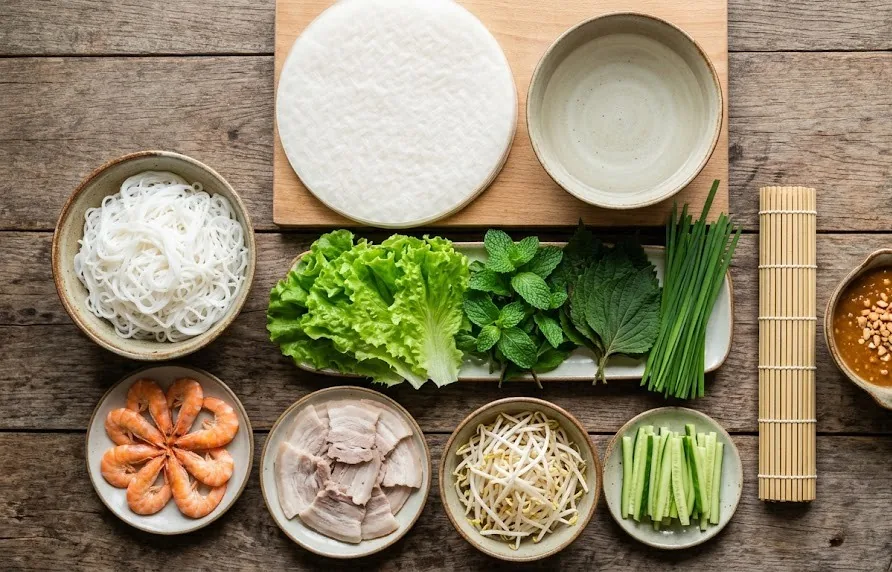
Making Spring Rolls at Home: A Da Nang-Inspired Recipe Guide
Recreating Da Nang-style spring rolls at home involves sourcing fresh rice paper and herbs, mastering the assembly technique, and achieving the correct oil temperature for perfectly crisp fried rolls.
Bringing the authentic flavors of Da Nang’s spring rolls into your kitchen is feasible, whether you are in the city with access to local markets or elsewhere with access to suitable ingredients. The process itself offers insight into why these rolls taste so distinctive, as every step, from preparing the rice paper to frying, influences the final outcome. This guide provides instructions for replicating Da Nang’s spring rolls regardless of your location.
Sourcing Ingredients in Da Nang — Where to Buy Fresh Rice Paper and Herbs
If you are in Da Nang, Han Market or Con Market are excellent sources for spring roll ingredients. Look for rice paper labeled “bánh tráng”—these thin, round sheets are used for both fresh and fried rolls. For fresh gỏi cuốn, select the softer, more pliable variety; for fried chả giò, a slightly thicker paper works better. Fresh herbs such as perilla, Vietnamese mint, cilantro, and chives are readily available in the produce sections of any market. Requesting “rau sống” (raw vegetables) will typically yield a bundle of assorted herbs and lettuce.
Outside of Vietnam, Asian grocery stores often carry dried rice paper, and substitutions like Thai basil or common mint can be used effectively.
A Step-by-Step Fresh Roll Assembly That Won’t Fall Apart
Begin by briefly dipping a sheet of rice paper in warm water for 2-3 seconds, just enough to soften it without making it overly pliable. Lay the softened paper flat on a clean surface. Arrange lettuce, vermicelli, herbs, shrimp, and pork in a horizontal line about one-third of the way up from the bottom edge. Fold the bottom edge over the filling, tucking it in snugly, then fold in the sides. Roll forward, maintaining gentle tension to ensure the filling remains compact.
The critical factor is avoiding over-soaking the rice paper; it should retain a slight firmness, allowing it to tighten as it fully hydrates. Practice is key; initial rolls may be loose, but proficiency is quickly achieved.
Frying Techniques for Chả Giò — Achieving the Golden, Non-Greasy Crunch
Heat oil to 170°C (340°F). A small drop of batter should sizzle and float immediately upon contact with the oil. Fry the rolls in batches of 4-6, ensuring not to overcrowd the pan. Cook for approximately 2-3 minutes per batch, turning occasionally, until the rolls achieve a golden-brown, crisp exterior. Maintaining the correct oil temperature is paramount: insufficient heat leads to greasy rolls, while excessive heat burns the wrapper before the filling is cooked. Drain the finished rolls on paper towels for a minute before serving.
A common error is over-softening the rice paper before wrapping; for fried rolls, it should be barely moist, as the wrapper will crisp during the frying process.
Important Considerations When Enjoying Spring Rolls in Da Nang
Enjoying Da Nang’s spring rolls safely and authentically involves paying attention to stall hygiene, clearly communicating dietary needs, and understanding typical pricing structures.
The spring roll scene in Da Nang is generally safe and welcoming, but a degree of awareness enhances the experience. Food stalls operate under health regulations, and the vast majority serve clean, fresh food. Nevertheless, a few practical precautions can ensure a positive spring roll experience. Here are key points to keep in mind while exploring the city’s offerings.
Food Safety and Hygiene — Choosing Stalls That Prioritize Cleanliness
Opt for stalls where food handlers wear gloves or use tongs for ready-to-eat items, where preparation surfaces are clean, and where fresh herbs are kept covered or refrigerated. A consistent flow of local customers often indicates fresh ingredients and high turnover. For fresh spring rolls, observe how the rice paper is handled; it should be dipped and used promptly. If a stall appears unsanitary or ingredients look wilted, it is advisable to choose another option. Da Nang offers numerous excellent spring roll vendors, making it unnecessary to compromise on hygiene standards.
Dietary Restrictions — Gluten-Free Options, Nut Allergies, and How to Ask in Vietnamese
Traditional Vietnamese spring rolls are naturally gluten-free, as rice paper is made from rice flour. The fillings—pork, shrimp, vegetables, and herbs—are also typically gluten-free. However, some dipping sauces may contain soy sauce or hoisin, which can include wheat. For nut allergies, be aware that peanut sauce is a common accompaniment for certain dishes. Learning key phrases can be helpful: “tôi bị dị ứng” (I have an allergy), “không bột ngọt” (no MSG), and “không đậu phộng” (no peanuts). Most food vendors in Da Nang are accommodating with clear communication, and many understand basic English.
Price Expectations and Avoiding Tourist-Trap Overcharging
A serving of fresh gỏi cuốn typically costs between VND 20,000 and VND 40,000, while fried chả giò ranges from VND 25,000 to VND 50,000. Sit-down restaurants generally charge more, with prices from VND 45,000 to VND 80,000 for premium versions. Prices significantly exceeding these ranges without clear justification, such as premium seafood, may indicate a tourist trap. Warning signs include aggressive touts, multilingual menus with inflated prices, and locations directly facing major tourist attractions. A simple solution is to explore a block or two away from prime tourist zones, where better prices and often superior food quality can be found.
Related on this site
- Da Nang’s Top Sinh To: Fresh Fruit Smoothies to Beat the Heat 2026
- Da Nang’s Best Goi Cuon: Fresh Spring Rolls for a Healthy Bite
Frequently Asked Questions
What’s the difference between gỏi cuốn and chả giò?
Gỏi cuốn are fresh spring rolls, wrapped in soft, translucent rice paper with shrimp, pork, herbs, and vermicelli, served cold with a fish sauce dip. Chả giò are fried spring rolls, characterized by a crispy exterior and a savory filling of pork, mushrooms, and vegetables. Both are essential Da Nang culinary experiences.
Are Da Nang spring rolls gluten-free?
Traditional gỏi cuốn and chả giò are naturally gluten-free due to the use of rice paper instead of wheat wrappers. The fillings, consisting of meat, seafood, vegetables, and herbs, also contain no gluten. However, some dipping sauces might include soy sauce or hoisin, so it’s advisable to inquire if you have gluten sensitivity.
What is the best time of day to eat spring rolls in Da Nang?
Fresh spring rolls are best enjoyed at lunch or in the early afternoon when ingredients are at their freshest. Fried spring rolls are suitable at any time, but evening street stalls offer the most atmospheric experience. Night markets like Son Tra are lively from 6 PM to 9 PM.
How much do spring rolls cost in Da Nang?
Street stalls typically charge VND 20,000–40,000 per serving for fresh rolls and VND 25,000–50,000 for fried rolls. Sit-down restaurants range from VND 45,000–80,000. Prices rarely exceed VND 80,000, even at upscale establishments.
Can I find vegetarian spring rolls in Da Nang?
Yes, Da Nang features a growing plant-based food scene. Many cafes in An Thuong and vegan restaurants near Linh Ung Pagoda offer vegetarian gỏi cuốn made with tofu, mushrooms, or jackfruit. These are often served with a peanut-hoisin sauce.
What dipping sauce goes with which spring roll?
Fish sauce nước chấm is the standard accompaniment for both fresh and fried spring rolls. Peanut sauce is traditionally reserved for nem lụi, bánh khọt, and bánh căn. While some modern eateries offer peanut sauce with fresh rolls, traditional Da Nang diners prefer fish sauce.
Do I need to wrap fried spring rolls in lettuce?
Yes, wrapping fried chả giò in lettuce with fresh herbs and a slice of starfruit is the traditional Da Nang practice. The lettuce provides crunch and moisture, the herbs add aroma, and the starfruit’s tartness balances the richness of the fried roll. This is considered an integral part of the intended eating experience.
Conclusion
Da Nang’s spring roll scene in 2026 offers a compelling duality: the clean, herb-forward freshness of gỏi cuốn and the satisfying crunch of chả giò, both reflecting the city’s coastal identity. Begin your culinary exploration at Son Tra Night Market for authentic street-style fried rolls, then transition to An Thuong for contemporary fresh rolls showcasing premium ingredients. Mastering the wrapping ritual—incorporating lettuce, herbs, and the balanced 1:1:1:1 nước chấm—will enable you to savor these dishes like a local within days.
For a broader understanding of Da Nang’s food culture, explore our guide to the city’s noodle soups or discover budget-friendly meals under $5 to complement your culinary journey.
Part of our guide to what to eat in Da Nang.