Nem lui, Da Nang’s signature lemongrass pork skewers, is more than just street food — it’s a hands-on, DIY dining ritual where you wrap smoky grilled pork in rice paper with herbs and a rich peanut dipping sauce. The five best spots to try in 2026 range from the original Ba Duong to modern Moc, each offering a unique take on the classic. This guide breaks down what makes nem lui distinct, how to eat it like a local, and where to find the best versions this year.
Da Nang’s nem lui stands apart from other Vietnamese pork skewers (nem nuong) because the meat is molded around a whole lemongrass stalk, grilled over charcoal, and served with a thick peanut dipping sauce (tuong dau phong). The DIY rice paper wrap — including green banana, star fruit, and perilla leaves — is a Da Nang tradition. The five best spots in 2026 include Ba Duong (the original), Phu Hong (lighter sauce), Ba Tho (hidden gem), Co Sau (budget-friendly), and Moc (modern twist). Expect to pay 15,000–25,000 VND per skewer, with an order of 5-6 skewers per person.
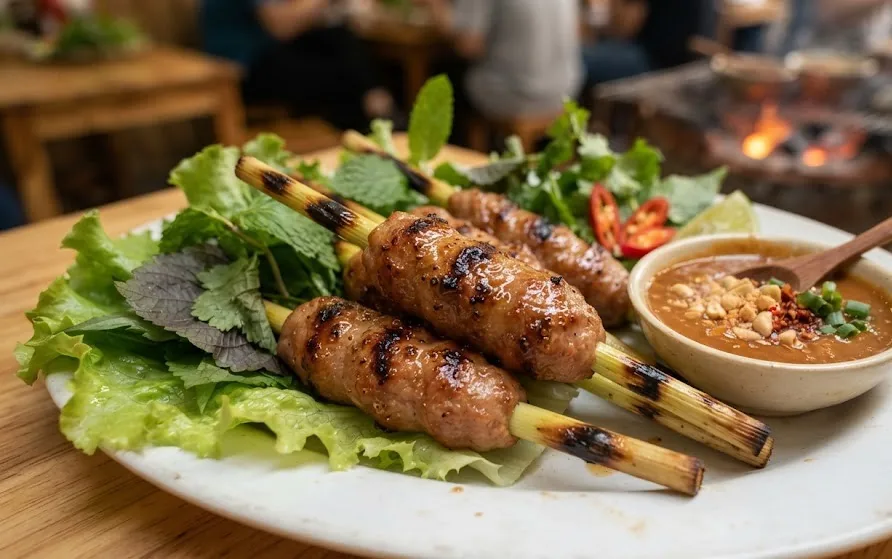
What Makes Nem Lui Da Nang Different from Other Vietnamese Pork Skewers
Nem lui is defined by three elements: the lemongrass stalk skewer, charcoal grilling, and a thick peanut dipping sauce. Most Vietnamese pork skewers (nem nuong) use bamboo sticks, but Da Nang’s version impales the meat on a whole lemongrass stalk. This infuses the pork with a subtle citrus aroma during grilling — a technique you won’t find in Nha Trang or Ho Chi Minh City.
For another view of the city’s dining scene, the Michelin Guide’s Da Nang restaurant selection is worth scanning before you map out your food route.
Grilling over charcoal embers vs. gas or oven
Da Nang’s nem lui is traditionally grilled over low charcoal embers, not gas flames or electric ovens. The charcoal gives the meat a smoky crust while keeping the inside juicy. Vendors like Ba Duong use a horizontal charcoal grill, rotating the skewers constantly to ensure even cooking. A gas grill would cook faster but miss that essential charred flavor. The temperature is lower than a direct flame — around 180-200°C — allowing the fat to render slowly without burning the lemongrass.
The lemongrass stalk skewer: flavor infusion vs. bamboo sticks
The lemongrass stalk does double duty: it’s both the skewer and a flavoring agent. As the pork cooks, the heat releases essential oils from the lemongrass into the meat. Bamboo sticks are neutral — they just hold the meat. With lemongrass, each bite carries a faint citrus note that balances the rich pork fat. The stalk also makes the skewer easier to eat: you can bite the meat off directly without worrying about splinters.
The dipping sauce (tương đậu phộng) as the defining element
The peanut dipping sauce (tuong dau phong) is the soul of nem lui. Ba Duong’s version is thick and rich, made with ground peanuts, hoisin sauce, and a touch of pork liver for depth. Phu Hong’s sauce is lighter, with more peanut chunks and less liver — a family recipe that leans sweeter. A good sauce should coat the back of a spoon without being pasty. Runny sauce often means too much water or oil, a sign of a rushed preparation.
| Element | Nem Lui (Da Nang) | Nem Nuong (Nha Trang/HCMC) |
|---|---|---|
| Skewer material | Whole lemongrass stalk | Bamboo stick |
| Grilling method | Horizontal charcoal embers | Vertical grill or gas flame |
| Dipping sauce | Thick peanut sauce (tuong dau phong) | Fish sauce dip (nuoc cham) or sweet chili |
| Meat texture | Minced patty wrapped around stalk | Ground sausage-like roll on stick |
| Serving style | DIY rice paper wrap with herbs | Often served with rice noodles (bun) |
| Regional origin | Central Vietnam (Da Nang/Hue) | Nha Trang (nem nuong) or general street food |
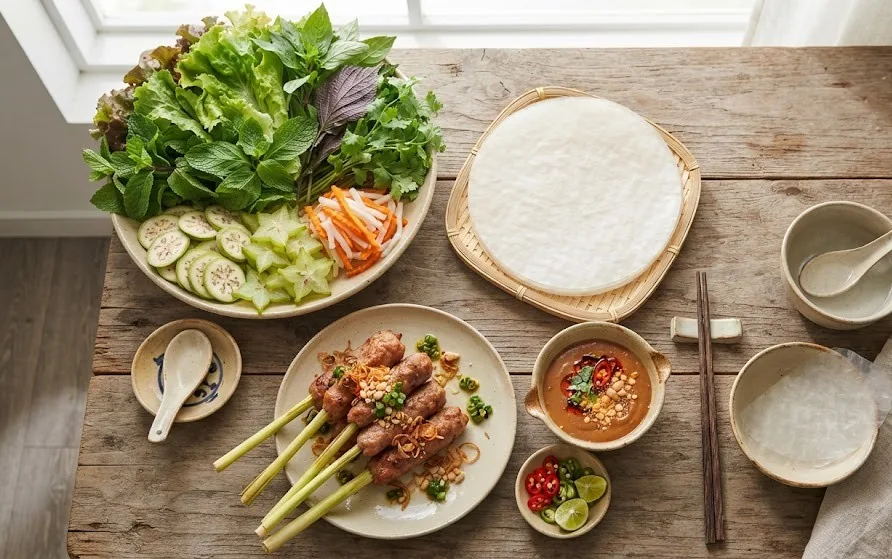
How to Eat Nem Lui Like a Local: The DIY Rice Paper Wrap
Eating nem lui is a two-handed, build-your-own experience — not a grab-and-go snack. The table comes with a plate of rice paper, a basket of herbs, and a bowl of dipping sauce. You assemble each roll yourself, and the order of steps matters more than you think.
The traditional ingredient lineup: rice paper, herbs, green banana, star fruit
A standard nem lui platter includes these components:
- Rice paper (banh trang): Soft, pliable sheets — not the crispy kind used for spring rolls.
- Herbs: Perilla leaves (tia to), lettuce, mint, and sometimes coriander. Perilla has a distinct minty-basil flavor that cuts through the pork fat.
- Green banana (chuoi xanh): Sliced thin. Adds a starchy crunch and slight astringency that balances the rich sauce.
- Star fruit (khe): Sour and tangy. Provides acidity without needing lime.
- Pickled carrot and daikon (do chua): Sweet and sour crunch.
- Cucumber slices: Optional but common for extra freshness.
Green banana is non-negotiable for an authentic experience. Many tourists skip it because it’s not visually appealing, but the texture contrast it provides is essential. If the restaurant doesn’t offer green banana, ask — most vendors have it but may not put it on the plate by default.
Step-by-step wrapping technique to avoid soggy rolls
- Dip the rice paper in water: Quickly submerge the sheet in a bowl of warm water for 1-2 seconds. Don’t soak it — it should still feel slightly firm when you lift it. Lay it flat on your plate.
- Layer the herbs first: Place a perilla leaf (or lettuce) in the center. This creates a barrier between the rice paper and the moist pork, preventing the wrapper from tearing.
- Add green banana and star fruit: Place 2-3 slices of green banana and one star fruit slice on top of the herbs.
- Slide the pork off the lemongrass stalk: Use your chopsticks or fork to push the meat off the skewer onto the rice paper. The lemongrass stalk is not eaten — it’s just the cooking vessel.
- Fold and roll: Fold the bottom of the rice paper over the filling, then fold in the sides, and roll tightly upward. The roll should be snug but not bursting.
- Seal the edge: The rice paper will naturally stick to itself. Let it rest for 5 seconds before picking it up.
Why the dipping sauce order matters — dip first or roll then dip?
There are two schools of thought. Most locals dip the finished roll into the sauce. This keeps the rice paper dry and prevents it from getting soggy. The alternative — brushing sauce onto the filling before rolling — is less common because the moisture can make the rice paper tear. If you’re a beginner, roll first, then dip. For a more intense flavor, ask for extra sauce on the side and spoon it into each bite.
5 Best Nem Lui Spots in Da Nang to Try in 2026
These five restaurants represent the range of nem lui styles in Da Nang, from the original 20-year-old stall to a modern craft-beer pairing version. Each has a distinct sauce and atmosphere.
Bà Đường Nem Lui — the original and most famous
Located on Hoang Dieu Street, Ba Duong has been serving nem lui since the early 2000s. The sauce is the benchmark — thick, nutty, with a hint of pork liver that gives it depth. The meat is fatty enough to stay juicy after grilling. Expect a 10-15 minute wait during peak hours (6-8 PM). One order includes 5 skewers, rice paper, and a full herb plate for about 35,000 VND. The grill is visible from the street, so you can watch the skewers being turned over charcoal.
Nem Lui Phú Hồng — lighter sauce, family-run vibe
Phu Hong, near the Dragon Bridge, is a smaller operation run by a local family. The sauce is lighter and sweeter — less liver, more peanuts. The meat is leaner, which some diners prefer for a less heavy meal. The herb basket is generous, including both perilla and mint. The atmosphere is casual: plastic stools on the sidewalk, a charcoal grill set up by the entrance. The owner speaks limited English but is patient with tourists trying the wrapping technique for the first time.
Nem Lui Bà Thọ — hidden gem near the Han River
Ba Tho is tucked inside a small alley off Bach Dang Street, near the Han River. It’s easy to miss — look for the red sign and the smell of charcoal smoke. The sauce here is balanced: not as heavy as Ba Duong, not as sweet as Phu Hong. The meat is hand-chopped, not machine-ground, giving it a coarser texture that holds up better on the grill. The green banana slices are thicker, adding more crunch. Portions are slightly smaller (4 skewers per order), but the quality is consistent.
Nem Lui Cô Sáu — budget-friendly with generous portions
Co Sau, located on Nguyen Chi Thanh Street, is the go-to for budget-conscious eaters. An order of 6 skewers costs around 25,000 VND — roughly 20% cheaper than Ba Duong. The sauce is thinner but still flavorful, and the herb plate includes cucumber and pickled vegetables alongside the standard greens. The meat-to-fat ratio is higher on fat, which makes the skewers juicier but slightly greasier. The trade-off is acceptable given the price point.
Nem Lui Mộc — modern twist with craft beer pairing
Moc, near the Han Market, is a newer addition that serves nem lui in a sit-down restaurant setting rather than a sidewalk stall. The skewers are grilled over binchotan charcoal (Japanese white charcoal), which burns cleaner and hotter than standard charcoal, producing a smokier flavor. The sauce includes a touch of sesame oil for a nuttier finish. Moc also offers a craft beer pairing — a local Da Nang IPA that cuts through the richness of the pork. This is the most expensive option (50,000 VND for 5 skewers) but worth it for the atmosphere and beer pairing.
| Restaurant | Location | Sauce Style | Price (5-6 skewers) | Best For |
|---|---|---|---|---|
| Ba Duong | Hoang Dieu Street | Thick, rich, liver-forward | 35,000 VND | First-time nem lui experience |
| Phu Hong | Near Dragon Bridge | Lighter, sweeter, more peanuts | 30,000 VND | Family-run, casual vibe |
| Ba Tho | Alley off Bach Dang | Balanced, hand-chopped meat | 30,000 VND | Hidden gem, consistent quality |
| Co Sau | Nguyen Chi Thanh Street | Thinner, fattier meat | 25,000 VND | Budget-friendly, generous portions |
| Moc | Near Han Market | Sesame-oil infused, binchotan grill | 50,000 VND | Modern twist, craft beer pairing |
What to Look For When Choosing a Nem Lui Restaurant
Not all nem lui is created equal — the sauce consistency, grilling freshness, and herb quality separate the best from the average. Here’s a quick checklist to evaluate any vendor.
- Sauce consistency: A good sauce should coat the back of a spoon without dripping off immediately. If it’s watery or separates into oil and solids, the vendor cut corners. Thick sauce means more peanuts and a longer cooking time. Runny sauce often means too much water or cheap hoisin.
- Grilling freshness: Watch the grill. If the skewers are pre-cooked and only reheated, the meat will be dry and the lemongrass won’t release its aroma. Made-to-order skewers sizzle when placed on the grill, and the fat renders visibly. Pre-cooked skewers look dull and have a uniform brown color.
- Herb freshness and variety: The herbs should be perky, not wilted. A serious vendor will offer at least three types: perilla, lettuce, and mint. If the herb basket is limited to lettuce only, the restaurant is cutting corners. Green banana should be firm, not mushy, and star fruit should be bright yellow-green.
- Charcoal condition: The charcoal should be glowing red, not smoldering with white smoke. White smoke indicates incomplete combustion, which can give the meat a bitter taste. A well-managed charcoal bed produces a steady, even heat.
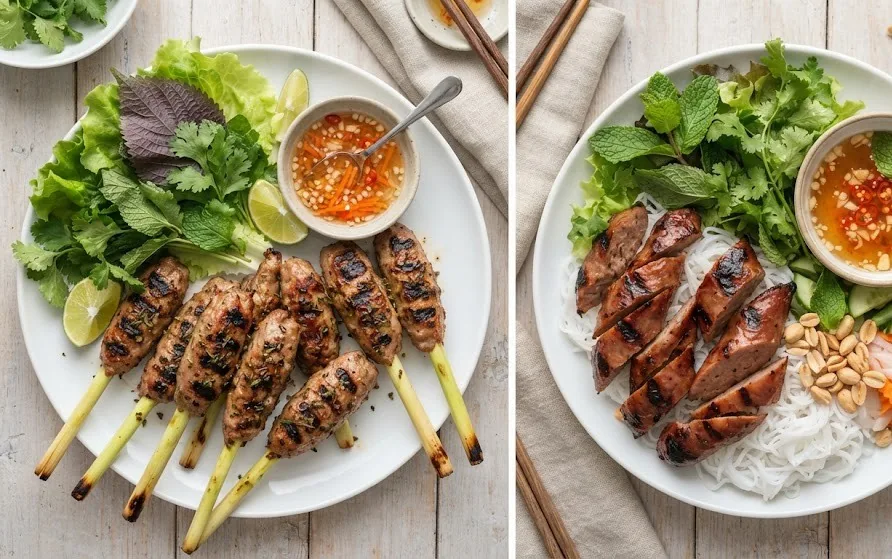
Nem Lui vs. Nem Nướng: What’s the Actual Difference?
Nem lui and nem nuong are often confused, but they differ in skewer material, meat texture, and regional origin. The confusion is understandable — both are grilled pork skewers served with rice paper and herbs. But the differences matter for authenticity.
Skewer material: lemongrass stalk vs. bamboo stick
Nem lui uses a whole lemongrass stalk. The meat is molded around the stalk, not threaded through it. This allows the lemongrass to infuse the pork during grilling. Nem nuong uses a flat bamboo stick, similar to satay. The meat is shaped around the stick and grilled without any flavor infusion from the skewer itself. The lemongrass stalk also makes nem lui easier to handle — you can hold the stalk and bite the meat off directly.
Meat texture: minced patty vs. ground sausage-like roll
Nem lui meat is coarser — minced by hand, with visible pieces of pork fat and sometimes pork skin. The texture is loose and slightly crumbly. Nem nuong meat is ground finer, almost like a sausage, and often includes pork paste (gio) for a springy, bouncy texture. The nem nuong mixture is typically marinated longer (overnight vs. 2-3 hours for nem lui), resulting in a more uniform flavor throughout.
Regional origin: Da Nang vs. Nha Trang vs. Hoi An styles
Nem lui is a Central Vietnam specialty, specifically from Da Nang and Hue. The Da Nang version uses a horizontal charcoal grill and a thick peanut sauce. The Hue version (nem lui Hue) is similar but often includes more lemongrass in the marinade and is served with a lighter fish-sauce-based dip. Nem nuong is most associated with Nha Trang, where it’s grilled on a vertical rotisserie and served with rice noodles (bun). Hoi An also has its own version, which is closer to the Da Nang style but with a sweeter marinade and smaller skewers.
Common Mistakes Tourists Make When Ordering Nem Lui
Three mistakes can ruin your nem lui experience: ordering too little, skipping the green banana, and not asking for extra sauce. Here’s how to avoid them.
- Ordering only one skewer: One order typically includes 5-6 skewers per person. If you order just one skewer, you’ll get a single piece of meat and no rice paper or herbs. Portions are designed for sharing — order one portion per person, or two portions if you’re very hungry. The total cost is low (25,000-50,000 VND per portion), so don’t hold back.
- Skipping the green banana and star fruit: Many tourists see green banana and think it’s unripe or inedible. In fact, it’s essential for texture and flavor. The starchy crunch of green banana balances the fatty pork, and the sourness of star fruit cuts through the rich sauce. If the restaurant doesn’t offer them, ask — most vendors have them in the back.
- Not asking for extra sauce or chili: The peanut sauce is the star, and many vendors are conservative with it. Ask for extra sauce (them tuong) — it’s usually free or costs a few thousand VND extra. Also ask for fresh chili (ot tuoi) if you want heat. The chili is typically served as slices, not a sauce, so you can add it directly to your roll.
Related on this site
Frequently Asked Questions
What is the difference between nem lui and nem nuong?
Nem lui uses a lemongrass stalk as the skewer and is served with a thick peanut dipping sauce. Nem nuong uses a bamboo stick and is typically served with a fish-sauce-based dip. The meat texture also differs: nem lui is coarser, while nem nuong is finer and springier.
How many skewers should I order per person?
One portion is 5-6 skewers per person. If you’re very hungry or sharing with someone who eats a lot, order two portions. The total cost is low, so it’s better to order extra than to run out.
Can I eat nem lui if I don’t eat pork?
Traditional nem lui is made with pork, but some restaurants offer chicken or vegetarian versions. Moc (near Han Market) sometimes has a chicken option. For vegetarian, check the vegan travel community — some stalls in Da Nang offer nem lui chay (vegetarian lemongrass skewers) made with tofu or mushrooms.
Is nem lui spicy?
The base dish is not spicy. The peanut sauce is mild and sweet. Heat comes from fresh chili slices served on the side. If you want spice, ask for ot tuoi (fresh chili) and add it to your roll.
What’s the best time of day to eat nem lui?
Nem lui is typically eaten for dinner, from 5 PM to 9 PM. Most stalls open in the late afternoon and close by 10 PM. Some spots like Ba Duong are busiest between 6-8 PM, so expect a wait during peak hours.
Do I need to tip at nem lui stalls?
Tipping is not expected at street food stalls in Da Nang. The price you see on the menu (or the price the vendor tells you) is the final amount. If you want to leave a small tip (5,000-10,000 VND), it’s appreciated but not required.
Can I take nem lui to go?
Most stalls offer takeaway. The skewers will be wrapped in foil or placed in a container with the rice paper and herbs separately. The sauce is usually packed in a small plastic bag. Reheat the skewers in a pan or over a gas flame — not in a microwave, which makes the meat rubbery.
Next Steps
Nem lui is one of Da Nang’s defining street foods, and finding the right spot makes all the difference. Start with Ba Duong for the classic experience, then explore Phu Hong or Ba Tho for variety. If you want a modern twist, Moc’s binchotan-grilled version with craft beer is worth the splurge. For more Da Nang food discoveries, check out our guide to the city’s foodie night market or explore the local noodle favorite, Mi Quang.
Part of our guide to what to eat in Da Nang.