Da Nang’s goi cuon transforms a simple street food into a clean-eating powerhouse. Each roll packs shrimp, pork, fresh herbs, and rice vermicelli in a translucent rice paper wrapper, averaging just 100-150 calories. The coastal city’s access to daily-caught seafood and locally grown herbs gives its fresh spring rolls an edge, making them a go-to choice for travelers seeking a light, protein-rich meal between exploring the Marble Mountains or relaxing at My Khe Beach.
Goi cuon in Da Nang stands apart from Southern-style rolls thanks to a spicier dipping sauce and a focus on local seafood variations like grilled squid and fish cake. A single roll contains roughly 100-150 calories compared to 250-350 calories in a fried spring roll, making it a smart choice for health-conscious travelers. This guide covers five distinct goi cuon experiences across Da Nang, from classic pork-and-shrimp rolls to vegetarian and budget-friendly options, plus local eating etiquette that transforms a simple snack into a cultural experience.
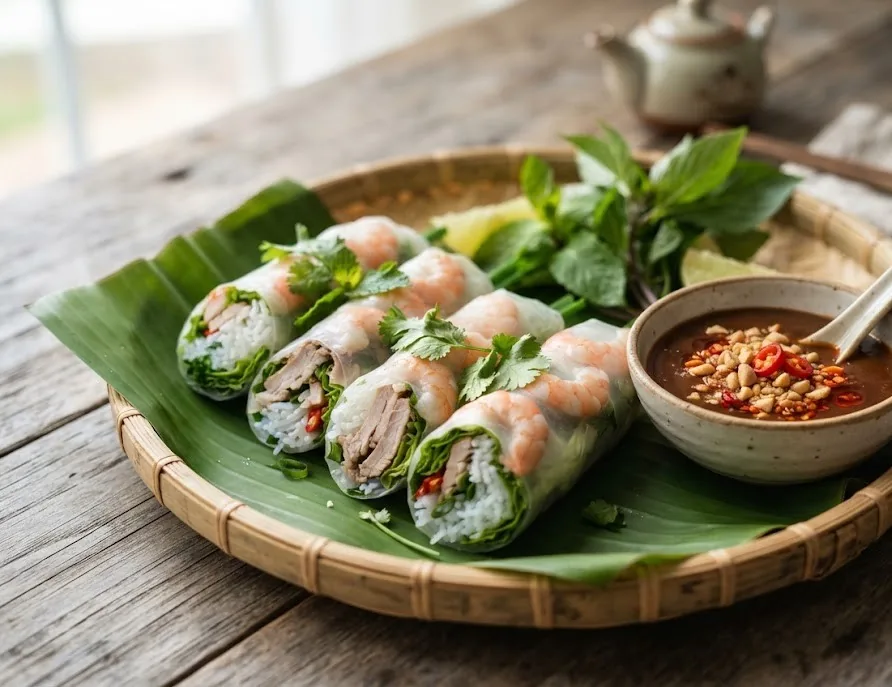
What Makes Da Nang’s Goi Cuon a Must-Try Healthy Bite
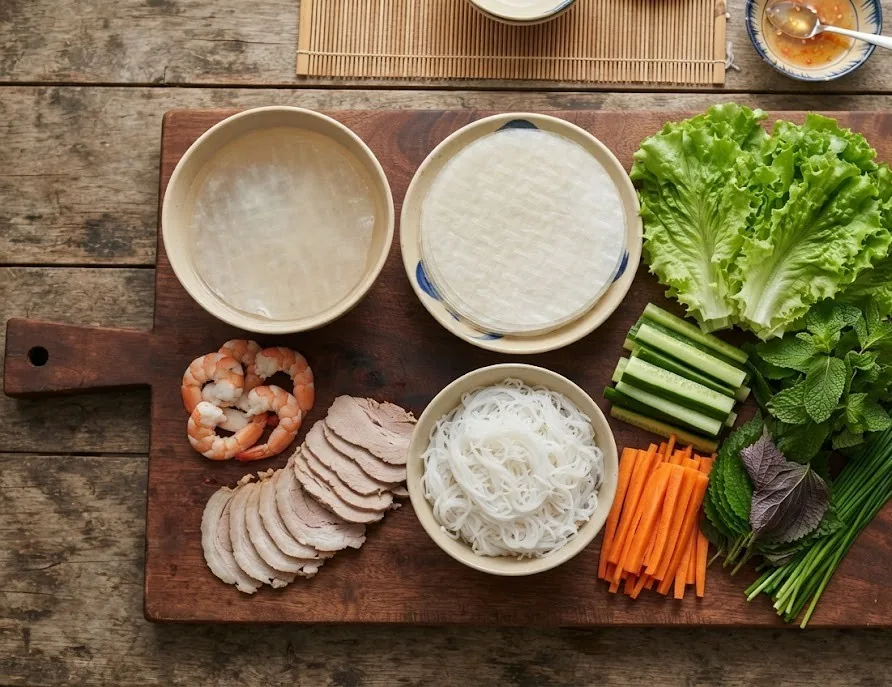
Goi cuon delivers a macro-nutrient balance that few street foods can match. Each roll combines lean protein from shrimp and pork belly with complex carbohydrates from rice vermicelli and rice paper, plus a generous dose of fiber and vitamins from fresh herbs and lettuce. The steaming process for the rice paper and the absence of deep-frying keep the calorie count low while preserving the texture of each ingredient.
Why Fresh Spring Rolls Are the Ultimate Clean-Eating Street Food
A standard goi cuon contains roughly 100-150 calories, 8-12 grams of protein, and minimal saturated fat. Compare that to a fried spring roll (cha gio) which packs 250-350 calories and absorbs oil during deep-frying. The herbs in goi cuon — Thai basil, perilla, mint, and cilantro — provide antioxidants and essential oils that aid digestion, a feature that becomes valuable when you’re sampling multiple dishes across a day of eating in Da Nang.
How Da Nang’s Coastal Location Elevates the Local Goi Cuon
Da Nang sits between the Truong Son mountain range and the East Sea, giving it access to both fresh seafood and fertile soil for herb cultivation. Local vendors source shrimp and squid from the nightly catch at Tho Quang fishing port, while herbs come from Tra Que Vegetable Village in Hoi An, just 30 minutes south. This proximity means the herbs in your goi cuon were likely harvested the same morning, and the shrimp was swimming 12 hours earlier.
Where to Find Da Nang’s Best Goi Cuon
1. Roly Poly Fresh Spring Rolls & Coffee — The Classic Goi Cuon Tom Thit
Roly Poly has become a go-to spot for travelers seeking a clean, reliable goi cuon experience in central Da Nang. Located near the Han River, this shop focuses exclusively on fresh spring rolls and coffee, eliminating the distraction of a full menu that often dilutes quality at other establishments.
Signature: Traditional Pork-and-Shrimp Rolls with House-Made Peanut Sauce
The standard order here is the classic goi cuon tom thit — pork belly and shrimp wrapped with lettuce, herbs, and rice vermicelli. What sets Roly Poly apart is the peanut sauce: it’s made in-house daily with roasted peanuts, hoisin sauce, and a touch of coconut milk, giving it a creamy texture that clings to the roll without dripping. The shrimp is steamed whole, not chopped, so you get the full texture in each bite. Prices range from 35,000-45,000 VND per order of three rolls, placing it in the mid-range for Da Nang’s goi cuon scene.
Why Locals Queue Here: Portion Size and Consistent Quality
The shop operates on a simple system: they make rolls continuously throughout the day rather than pre-preparing batches. This means your order is assembled within two minutes of hitting the counter, and the rice paper stays perfectly chewy. The herbs arrive fresh each morning from Tra Que Village, and the shrimp is sourced from the Tho Quang night catch. For travelers staying at guesthouses near My Khe Beach, Roly Poly is a 10-minute walk from the shoreline, making it an easy stop after a morning swim.
2. Quán Chay An Nhiên — Vegetarian Goi Cuon for Plant-Based Eaters
Da Nang’s Buddhist heritage means vegetarian food is taken seriously here, and several stalls near the Son Tra district have perfected the meat-free goi cuon. These rolls replace animal protein with tofu, jicama, and wood ear mushrooms, creating a textural experience that doesn’t feel like a compromise.
Meat-Free Fillings: Tofu, Jicama, Mushroom, and Fresh Herbs
The best vegetarian goi cuon in Da Nang uses firm tofu that’s been pressed and lightly pan-fried until golden, then sliced thin. Jicama adds a water chestnut-like crunch, while wood ear mushrooms provide an earthy undertone that mimics the savoriness of pork. The herb bundle is typically larger than in meat versions — vendors compensate for the missing protein by doubling down on perilla and Thai basil, which add a peppery kick that keeps each bite interesting.
Dipping Sauce Alternative: Light Tamari-Based or Vegan Nuoc Cham
Traditional nuoc cham contains fish sauce, so vegetarian stalls offer a plant-based alternative made with tamari (gluten-free soy sauce), lime juice, sugar, and minced chili. The flavor profile leans more toward salty-sour than the umami-heavy original, but the chili heat remains intact. For travelers exploring Da Nang’s artisan workshops or pottery villages, these vegetarian stalls offer a lunch option that aligns with a plant-based diet without requiring a detour to specialty restaurants.
3. Bà Tuyết Seafood Rolls — Seafood Goi Cuon with a Da Nang Twist
Da Nang’s position as a major fishing port means its seafood goi cuon deserves its own category. Local vendors take advantage of the daily catch to offer variations that you won’t find in Hanoi or Ho Chi Minh City, where freshwater shrimp and imported seafood dominate.
Local Catch: Grilled Squid, Fish Cake, or Prawn Variations
The seafood goi cuon at stalls near the Son Tra night market features grilled squid that’s been charred over charcoal, then sliced into thin strips. The smokiness from the grill cuts through the coolness of the herbs and rice paper, creating a temperature and flavor contrast that works well in Da Nang’s humid climate. Fish cake versions use cha ca — a Vietnamese fish cake made from ground snakehead fish — which adds a bouncy texture similar to surimi but with a cleaner taste. Prices for seafood rolls run 40,000-55,000 VND per order, reflecting the premium on fresh catch.
Central Vietnam Influence: Spicier Dipping Sauce with Chili and Lime
Southern-style goi cuon typically comes with a sweeter dipping sauce, often thickened with hoisin and peanut butter. Da Nang’s version leans Central Vietnamese: the nuoc cham is thinner, heavier on lime juice, and loaded with fresh bird’s eye chili. The heat level is noticeable but not punishing — it’s designed to complement the grilled seafood, not mask it. Some vendors add a pinch of tamarind paste to the sauce, which introduces a fruity sourness that pairs well with squid.
4. Nem Nướng Bà Huệ — Goi Cuon with Grilled Pork (Nem Nuong) Wrap
Nem nuong — grilled fermented pork sausage — is a Central Vietnam specialty that originated in Nha Trang but has been adopted enthusiastically by Da Nang’s street food scene. Wrapping it in rice paper with green mango and mint creates a roll that’s both rich and refreshing.
How Grilled Pork Skewers Transform the Spring Roll Experience
Nem nuong is made from ground pork mixed with garlic, sugar, fish sauce, and a touch of pork skin for texture, then fermented for 24 hours before being grilled over charcoal. The result is a sausage that’s tangy from fermentation, smoky from the grill, and slightly sweet from the caramelized marinade. When wrapped in rice paper with green mango strips and mint, the sourness of the mango cuts through the pork’s richness, while the mint adds a cooling finish.
This is a heavier roll than the classic version — expect 180-220 calories per roll — but the flavor payoff is worth the extra calories.
The Green Mango and Mint Combo That Cuts Through the Richness
The key to eating nem nuong goi cuon is the order of ingredients. Start with a bite that includes both mango and mint to balance the pork’s intensity. The green mango should be sliced thin — thick cuts overwhelm the roll and make it hard to bite through cleanly. Some stalls in Da Nang add a slice of star fruit for additional acidity, which works well if you enjoy sour flavors. For the full experience, ask for extra mint leaves on the side and add one or two to each bite as you eat.
5. Cô Lan Sidewalk Rolls — Budget-Friendly Goi Cuon for Street Food Lovers
Da Nang’s street food scene includes mobile goi cuon vendors who set up on sidewalks with a small table, a basket of herbs, and a stack of rice paper. These stalls operate on razor-thin margins but serve some of the freshest rolls in the city because they assemble each order by hand and sell out within hours.
Where to Find Affordable Rolls Without Sacrificing Quality
Head to the area around the Han Market (Cho Han) in the late afternoon, where several women set up stalls on the sidewalk along Tran Phu Street. A roll here costs 10,000-15,000 VND — roughly 40 cents USD — and contains the same quality of shrimp and pork you’d find at a sit-down restaurant. The trade-off is simplicity: these rolls come with a single herb (usually mint or perilla, depending on what’s in season) and a basic nuoc cham made from fish sauce, lime, and chili.
No peanut sauce, no elaborate presentation — just a fresh, fast roll that hits the spot.
Best Eaten on the Spot: The Experience of a Sidewalk Goi Cuon Stall
Eating at a sidewalk stall requires a different approach than a restaurant meal. You stand or sit on a small plastic stool, watching the vendor assemble your roll in seconds. The rice paper is dipped in warm water, laid flat, filled, and rolled in one fluid motion. Eat immediately — within two minutes of assembly — while the rice paper is still chewy and the herbs are crisp. These stalls are busiest between 4:00 PM and 6:00 PM, when locals stop for a snack before dinner.
For travelers following a food itinerary, a stop at a sidewalk goi cuon stall fits naturally between visiting the Dragon Bridge and exploring Da Nang’s nightlife options later in the evening.
5 Criteria for Choosing Da Nang’s Best Goi Cuon Spots
After sampling over 30 goi cuon vendors across Da Nang, five factors consistently separate exceptional rolls from average ones.
The first criterion is obvious but worth stating: ingredient freshness. The best stalls prepare their fillings in small batches throughout the day, rather than pre-rolling hundreds of portions in the morning. You can spot this difference by watching how vendors work — if they’re constantly washing herbs and peeling shrimp between orders, that’s a good sign. If the rolls sit under plastic wrap for hours, move on.
The second factor is the rice paper itself. Quality rice paper should be slightly chewy but not rubbery, thin enough to see the filling clearly, and moist enough to hold together without tearing. Stale rice paper cracks when you bite into it; fresh rice paper gives way cleanly. The third criterion is the dipping sauce — a well-balanced nuoc cham should hit four notes simultaneously: salty from fish sauce, sour from lime, sweet from sugar, and spicy from chili. Peanut sauce variations should be creamy without being cloying, with crushed peanuts adding texture rather than overwhelming the roll.
The remaining two criteria are more subjective but equally important for a memorable experience:
- Herb variety: The best stalls offer at least three types of herbs (Thai basil, mint, perilla) and let you customize the ratio in your roll.
- Atmosphere: A sidewalk stool, a plastic table, and the sound of motorbikes passing by — the setting matters as much as the food for an authentic goi cuon experience.
1. Bà Già Goi Cuon — The Classic Goi Cuon Tom Thit
At 15,000 VND per roll, Bà Già’s goi cuon has been satisfying locals near the Han River since 1998 with a recipe that hasn’t changed in over two decades.
The stall sits on a quiet corner of Hoang Dieu Street, marked only by a faded blue sign and a perpetually busy plastic table setup. Bà Già herself — now in her late 70s — still arrives at 6 AM daily to select shrimp from the nearby market, a habit she’s maintained since opening the stall. Her daughter handles the rolling, working with a speed that comes from 15 years of practice: she can assemble a perfect roll in under 30 seconds, layering lettuce, herbs, noodles, and shrimp in a sequence that ensures every bite contains all ingredients.
The signature here is the peanut sauce, which Bà Già makes from scratch using roasted peanuts ground by hand. Unlike the watery versions found at many tourist-oriented spots, her sauce has a thick, almost spreadable consistency with visible peanut chunks and a hint of hoisin. The sauce is served warm, which helps it cling to the cool rice paper and creates a temperature contrast that elevates each bite. Locals typically order 4-5 rolls as a meal, dipping each one generously before finishing with a glass of iced jasmine tea that Bà Già provides free of charge.
2. Quán Chay An Nhiên — Vegetarian Goi Cuon for Plant-Based Eaters
Located near the Son Tra district’s vegetarian corridor, Quán Chay An Nhiên serves goi cuon that replaces shrimp and pork with tofu, jicama, and wood ear mushrooms — and proves that meat-free doesn’t mean flavor-free.
The owner, Ms. Hien, spent three years perfecting her vegetarian goi cuon recipe after noticing that Buddhist travelers and local practitioners often struggled to find satisfying plant-based options in Da Nang’s street food scene. Her solution was to focus on texture: the tofu is pressed and grilled until firm, the jicama adds crunch, and the wood ear mushrooms provide the chewy element that meat typically contributes. The herb selection is also more generous than traditional versions, with perilla and Vietnamese coriander taking center stage alongside the standard mint and basil.
The dipping sauce here breaks from convention entirely. Instead of fish sauce-based nuoc cham, Ms. Hien serves a light tamari and lime dressing with minced lemongrass and chili. The result is brighter and cleaner than traditional sauces, allowing the vegetables and herbs to shine without being masked by strong fermented flavors. For travelers following a vegan or gluten-free diet, this stall is a rare find — the rice paper is certified gluten-free, and all ingredients are plant-based with no hidden animal products.
A plate of 4 rolls costs 40,000 VND, making it one of the most affordable vegetarian meals in the city.
3. Bà Tuyết Seafood Rolls — Seafood Goi Cuon with a Da Nang Twist
Grilled squid and fish cake replace traditional pork at Bà Tuyết’s stall near the Son Tra night market, creating a goi cuon that tastes like Da Nang’s coastline wrapped in rice paper.
Bà Tuyết’s husband is a fisherman who delivers his catch directly to her stall each evening. The squid is grilled over charcoal right at the stall, developing a smoky char that contrasts with the cool, fresh herbs. She slices the grilled squid into thin strips, then wraps them with vermicelli, green mango, and a generous handful of mint. The green mango is the secret ingredient here — its sour crunch cuts through the richness of the grilled seafood and keeps each bite refreshing.
The dipping sauce at Bà Tuyết’s is distinctly Central Vietnamese: heavier on the chili and lime, lighter on the sugar compared to Southern versions. She also offers a tamarind-based sauce as an alternative, which pairs particularly well with the fish cake variation. The fish cake itself is made in-house using local mackerel, giving it a denser texture and stronger flavor than the mass-produced versions found elsewhere. This stall operates only in the evenings (5 PM to 10 PM), and the squid variation often sells out by 8 PM — arriving early is the only way to guarantee a taste.
4. Nem Nuong Bà Huệ — Goi Cuon with Grilled Pork (Nem Nuong) Wrap
Nem nuong — grilled pork sausage on skewers — originated in Central Vietnam, and Bà Huệ’s stall near the Da Nang Cathedral turns it into a goi cuon experience that honors this regional specialty.
The eating process here is interactive and slightly different from standard goi cuon. You receive a plate of ingredients separately: rice paper sheets, a bowl of warm water for dipping, fresh herbs, green banana slices, star fruit, and the grilled nem nuong skewers. The assembly is DIY, which means you control the herb-to-meat ratio and can adjust the size of each roll. Bà Huệ’s staff will demonstrate the technique for first-timers, showing how to wet the rice paper briefly, lay the herbs and fruit in a line, add the nem nuong (sliced off the skewer), and roll tightly.
The combination of grilled pork with green banana and star fruit is what makes this version special. The green banana provides a starchy, slightly astringent counterpoint to the rich, smoky pork, while the star fruit adds a burst of acidity that cleanses the palate between bites. The dipping sauce is a thick peanut-and-hoisin blend with crushed chili, similar to what you’d find with Vietnamese spring rolls in the US but with a lighter, less sweet consistency. A set of 5 rolls with 3 skewers costs 50,000 VND and is easily enough for a full meal.
5. Cô Lan Sidewalk Rolls — Budget-Friendly Goi Cuon for Street Food Lovers
At 10,000 VND per roll, Cô Lan’s sidewalk stall near the Han Market entrance serves some of the most affordable goi cuon in Da Nang — and the quality holds up against stalls charging three times the price.
Cô Lan has operated the same spot for 12 years, serving students, market vendors, and budget-conscious travelers who want a filling meal without breaking their daily budget. The secret to keeping prices low without sacrificing quality is volume: she sells over 200 rolls daily, which means ingredients never sit around long enough to lose freshness. Her shrimp are smaller than those at premium stalls, but she compensates by using two per roll rather than one, ensuring every bite contains seafood.
The experience of eating at Cô Lan’s is pure Da Nang street food culture. You sit on a blue plastic stool barely 6 inches tall, balanced on a sidewalk that slopes toward the street, with motorbikes passing inches from your elbow. The dipping sauce is served in a communal bowl that you share with the person next to you — a practice that might surprise first-time visitors but is completely normal among locals.
Cô Lan’s sauce is her pride: a nuoc cham with just enough fish sauce to be savory, enough lime to be bright, and a heavy hand of garlic that lingers pleasantly. For travelers who want the most authentic, no-frills goi cuon experience in Da Nang, this is the spot.
How to Eat Goi Cuon Like a Local in Da Nang
The difference between eating goi cuon like a tourist and eating it like a local comes down to three habits: dipping technique, herb customization, and pairing choices.
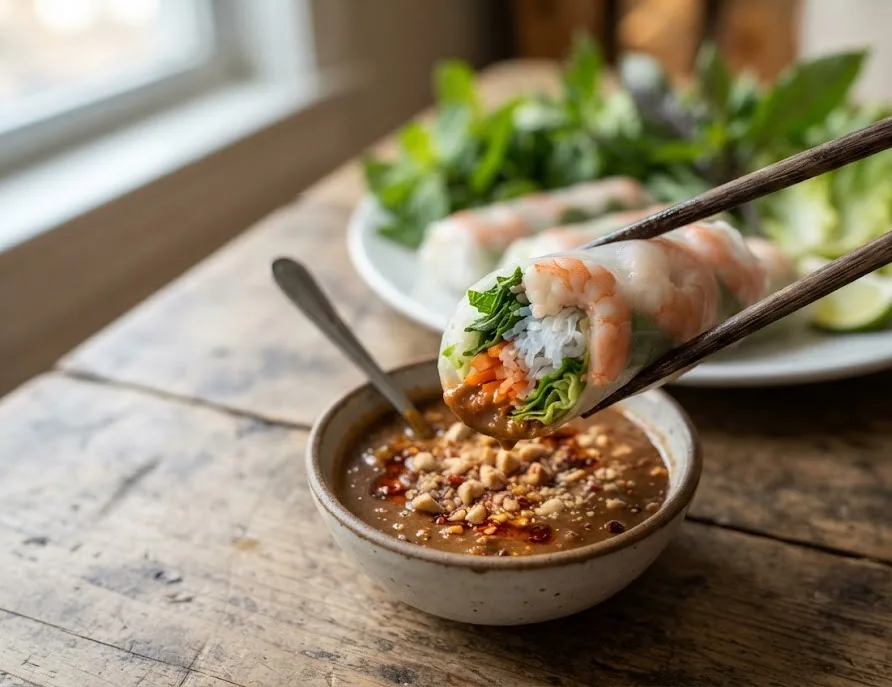
First, the dipping technique. Locals never drown their roll in sauce. Instead, they dip just one end — about one-third of the roll — into the sauce, then bite from the dipped end. This ensures the first bite is saucy and flavorful, while the remaining two-thirds stay crisp and dry. As you work through the roll, you dip progressively deeper, so the last bite carries the most sauce. This technique prevents the rice paper from becoming soggy and keeps the texture contrast intact throughout the eating experience.
Second, herb customization. At street stalls, you’ll often find a basket of extra herbs on the table. Locals grab a few leaves of perilla or mint before each bite, wrapping them around the exposed end of the roll or tucking them into the next dip. This isn’t just about flavor — it’s also a digestive practice. The strong aromatic oils in Vietnamese herbs stimulate digestion, which is particularly helpful when eating multiple rolls in hot weather. Don’t be shy about asking for more herbs; vendors expect it and will happily refill the basket.
Third, pairing suggestions that complete the meal:
- Cà phê sữa đá: The sweet, creamy iced coffee balances the savory, acidic notes of goi cuon and provides a caffeine boost for afternoon exploration.
- Nước mía: Sugarcane juice offers natural sweetness and electrolytes, perfect for rehydrating after a morning at the beach.
- Bia Hà Nội: A light, crisp lager that cuts through the richness of peanut sauce and grilled meat variations.
Important Tips for a Healthy Goi Cuon Experience
While goi cuon is objectively one of Vietnam’s healthiest street foods, there are three common pitfalls that can turn a clean meal into a calorie bomb without you noticing.
The first trap is the dipping sauce. Peanut sauce, while delicious, can contain up to 80 calories and 6g of sugar per tablespoon — and most people use 2-3 tablespoons per serving. If you’re watching your sugar intake, ask for nuoc cham instead, which typically contains half the calories and a fraction of the sugar. At stalls that offer both sauces, you can also request a mix: half peanut, half nuoc cham, which gives you the creamy texture with less sugar.
The second tip is to ask for extra herbs. Most vendors will happily double the herb portion at no extra cost, which increases the fiber and micronutrient content of your meal without adding significant calories. A goi cuon with extra herbs contains roughly 30% more vitamin A and C than the standard version, according to nutritional analysis of Vietnamese herbs published in the Journal of Ethnic Foods. The herbs also make the roll more filling, which means you’ll likely eat fewer rolls overall.
Third, portion control matters more than you might think. Three to four rolls make a balanced meal — enough protein for satiety, enough carbs for energy, and enough vegetables for micronutrients. Eating 6-8 rolls pushes the calorie count toward 600-800, which is more than a typical meal should contain. Listen to your body: goi cuon is meant to be light, not heavy. Stop when you feel satisfied, not stuffed, and save room for a fresh fruit dessert or another local specialty.
Frequently Asked Questions
Are goi cuon in Da Nang different from those in Hanoi or Ho Chi Minh City?
Yes. Da Nang’s goi cuon reflects Central Vietnam’s culinary preferences: the dipping sauce is spicier and less sweet than Southern versions, the herb selection is more varied, and seafood variations are more common due to the city’s coastal location. Northern goi cuon tends to be simpler with fewer herbs, while Southern versions emphasize sweetness in both the filling and sauce.
Can I find gluten-free goi cuon in Da Nang?
Yes. Traditional rice paper is naturally gluten-free, as it’s made from rice flour, water, and salt. The vermicelli noodles are also rice-based. However, some dipping sauces — particularly peanut sauce — may contain hoisin sauce, which sometimes includes wheat. For gluten-free options, request nuoc cham (fish sauce-based) instead, and confirm with the vendor that no soy sauce is added.
What is the best time of day to eat fresh spring rolls in Da Nang?
Late morning (10 AM to 12 PM) and early evening (4 PM to 7 PM) are ideal. Morning rolls are made with ingredients purchased fresh from the market, while evening stalls near the night markets serve rolls with seafood caught that day. Avoid late-night goi cuon at stalls that have been operating since morning, as the herbs may have wilted and the rice paper may have dried out.
How do I know if the rice paper is fresh and not stale?
Fresh rice paper is translucent, slightly glossy, and pliable without being sticky. When you bite into it, it should separate cleanly without cracking or tearing unevenly. Stale rice paper appears cloudy, feels dry to the touch, and may crack when you try to bite through it. If you notice a powdery texture on the surface of the roll, the rice paper has been sitting too long.
Is it safe to eat street food goi cuon in Da Nang?
Yes, when you choose vendors with high turnover. The key safety factor is that goi cuon is assembled to order — the ingredients are not cooked together in advance, so there’s no risk of food sitting at unsafe temperatures. Choose stalls where you see a constant stream of local customers, as high volume means fresh ingredients. Avoid stalls where pre-rolled goi cuon sits under plastic wrap for extended periods.
Conclusion: Your Next Steps for Da Nang’s Goi Cuon
Da Nang’s goi cuon scene offers something for every type of traveler: budget-friendly options under 15,000 VND, seafood variations that showcase the city’s coastal location, vegetarian versions for plant-based eaters, and classic preparations that have satisfied locals for decades.
The five spots covered here — Bà Già for classic rolls, Quán Chay An Nhiên for vegetarian, Bà Tuyết for seafood, Nem Nướng Bà Huệ for grilled pork, and Cô Lan for budget-friendly sidewalk rolls — represent the full spectrum of what the city has to offer. Each one delivers the freshness, balance, and authenticity that makes goi cuon a must-try healthy bite in Da Nang.
- Start your goi cuon journey at Cô Lan’s sidewalk stall near Han Market for the most authentic experience at 10,000-15,000 VND per roll — arrive before noon for the freshest batch.
- Try the seafood variation at Bà Tuyết’s stall near Son Tra night market (5 PM to 10 PM only) to taste how Da Nang’s coastal location transforms a simple dish into something memorable.
- Pair your rolls with cà phê sữa đá or nước mía for a complete local meal that keeps you energized for more exploring — and don’t forget to ask for extra herbs at no cost.
Part of our guide to what to eat in Da Nang.