Most travelers leave Da Nang with magnets and keychains. A growing number are leaving with something far more personal: a ceramic bowl they shaped themselves, glazed with a miniature replica of the Marble Mountains, and fired in a local kiln. Exploring Da Nang’s Pottery Villages: Craft Your Own Souvenir 2026 is shifting from a passive sightseeing activity to an active, hands-on experience. This guide covers the three best workshops for 2026, the exact step-by-step process to make your own piece, and a full pricing breakdown so you know exactly what to expect before you get your hands dirty.
Da Nang’s pottery scene in 2026 is defined by two key developments: the new $3.8M Vietnamese Pottery Village in Ba Na ward and a growing focus on creating landmark-specific souvenirs like ceramic replicas of Linh Ung Pagoda. You can shape a decorative tile for 50,000 VND ($2 USD) in an hour, or invest 200,000 VND ($8 USD) for a kiln-fired mug that takes one week to complete. This guide compares three workshop locations, breaks down the five-step souvenir-making process, and shares practical tips for first-time potters — including what to wear and which Vietnamese phrases to use.
Da Nang’s Pottery Scene in 2026: What Makes It Different from Hoi An
Da Nang’s pottery experience in 2026 centers on creating functional souvenirs that replicate the city’s iconic landmarks. While Hoi An’s Thanh Ha village focuses on traditional wheel-throwing and decorative pieces, Da Nang’s newer venues emphasize personalized, take-home items that reflect the city’s identity.
The new Vietnamese Pottery Village in Ba Na ward — a $3.8M cultural space
Opened in early 2026, the Vietnamese Pottery Village in Ba Na ward is a $3.8 million investment designed to preserve and showcase Vietnam’s ceramic heritage. According to VietnamPlus, the village features exhibition halls, workshop spaces, and a dedicated area where visitors can shape their own clay pieces. The space is built around the concept of “locally distinctive souvenir products” — meaning every piece you create here is designed to reflect Da Nang’s landmarks and culture.
Unlike traditional villages that have evolved organically over centuries, this is a purpose-built cultural destination with modern facilities, English-speaking instructors, and structured workshop sessions that run daily from 8 AM to 5 PM.
Why Da Nang’s pottery experience focuses on souvenir-making, not just wheel-throwing
The shift toward souvenir-making is a deliberate strategy. Traditional pottery villages like Thanh Ha in Hoi An offer a general experience — you sit at a wheel, try to center the clay, and leave with a lopsided bowl. Da Nang’s approach is different: visitors are guided to create pieces that directly reference the city’s landmarks. You can mold a miniature version of the Linh Ung Pagoda’s Lady Buddha statue, shape a tile carved with the Marble Mountains’ silhouette, or form a mug with the Dragon Bridge as its handle.
This focus makes the finished piece more than a craft project — it becomes a tangible memory of a specific place.
Key difference: ceramic landmarks replicas (Linh Ung Pagoda, Marble Mountains) as take-home items
The most distinctive offering in Da Nang’s pottery scene is the ability to create ceramic replicas of the city’s landmarks. At the Vietnamese Pottery Village, instructors provide silicone molds of key Da Nang landmarks for beginners, while more experienced visitors can hand-carve details. A typical session might involve shaping a small Linh Ung Pagoda replica (about 15 cm tall) or a Marble Mountains-themed tile. These pieces are designed to be lightweight enough for carry-on luggage and durable enough to survive the flight home — unlike the fragile, mass-produced ceramics sold in tourist shops.
| Feature | Da Nang Pottery (2026) | Hoi An Thanh Ha Village |
|---|---|---|
| Primary focus | Souvenir-making with landmark replicas | Traditional wheel-throwing demos |
| Key attraction | Vietnamese Pottery Village ($3.8M) | Terracotta Park & museum |
| Typical workshop duration | 1–2 hours structured session | 30 min demo + optional practice |
| English instruction | Available at Ba Na ward venue | Limited, mostly Vietnamese |
| Unique souvenir type | Linh Ung Pagoda, Marble Mountains replicas | General bowls, vases, figurines |
| Kiln-fired option | Yes (1-week turnaround) | Yes (1-week turnaround) |
3 Pottery Villages and Workshops to Visit in Da Nang for 2026
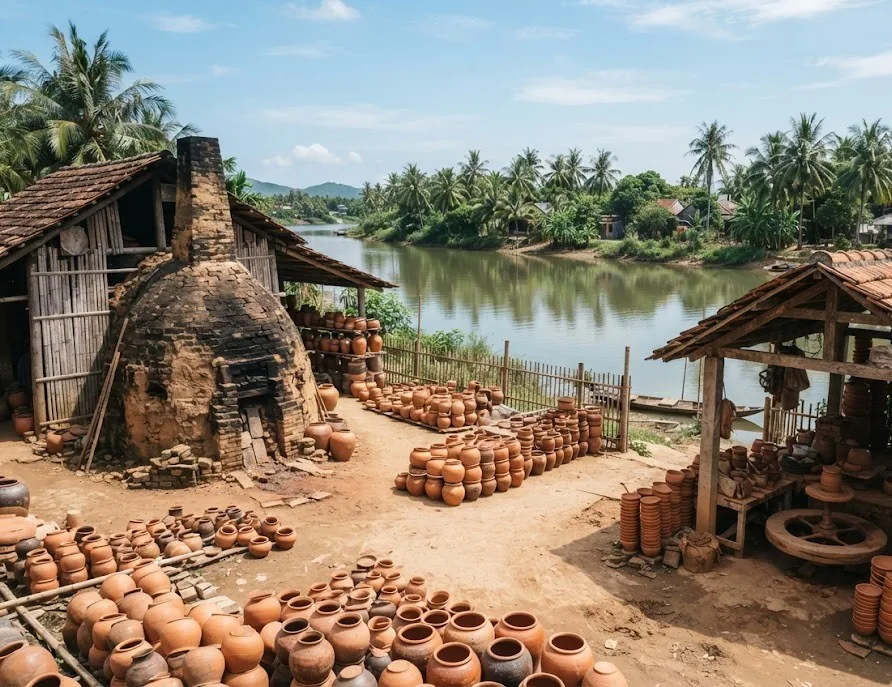
Three venues offer distinct pottery experiences within easy reach of Da Nang city center. Each caters to different preferences — from a flagship cultural complex to a family-run shop known for kiln-fired functional ceramics.
Vietnamese Pottery Village (Ba Na ward) — the flagship 2026 opening
Location: Ba Na ward, approximately 20 minutes from Da Nang city center. Entry is free for the exhibition halls, while workshop sessions cost 100,000–200,000 VND ($4–$8 USD) depending on the complexity of the piece. The village offers structured 90-minute workshops with English-speaking instructors. The highlight is the landmark replica station, where you can choose from silicone molds of Da Nang’s most famous structures. The village also has a small café and a shop selling finished ceramics from local artisans. Booking in advance is recommended, especially during peak season (June–August).
Walk-ins are accepted but may face longer wait times during busy weekends.
Thanh Ha Pottery Village (Hoi An) — 30 minutes from Da Nang, worth the trip
Located in Hoi An, roughly 30 minutes south of Da Nang, Thanh Ha Pottery Village is the most established option. Entry costs 35,000 VND ($1.50 USD) per person, which grants access to the village, the Terracotta Park, and a small museum. According to Instagram user notesfrommax, the same-day decorative pottery option costs 50,000 VND ($2 USD) — but this piece is decorative only and cannot hold liquid. For a functional piece like a coffee mug, the kiln-fired option costs 200,000 VND ($8 USD) with a one-week wait.
Thanh Ha is best for travelers who want to combine a pottery visit with a day trip to Hoi An’s Ancient Town. The village has multiple family-run workshops, each with slightly different pricing and quality. My Linh shop, located within the village, is recommended for its kiln-fired option and friendly instruction.
My Linh Pottery Shop — the kiln-fired option for functional mugs and bowls
My Linh Pottery Shop, mentioned by travelers on Instagram and travel forums, is a family-run workshop within Thanh Ha Village that specializes in kiln-fired functional ceramics. The owner, a local woman with decades of experience, personally guides visitors through the shaping process. The 200,000 VND ($8 USD) kiln-fired mug option includes shaping, glazing, and firing — the finished piece is food-safe and dishwasher-friendly. Turnaround is one week, and the shop can ship internationally for an additional 150,000–300,000 VND ($6–$12 USD) depending on destination.
My Linh is ideal for travelers who want a practical souvenir — a mug they can actually use for their morning Vietnamese coffee back home.
What You’ll Learn in a Da Nang Pottery Workshop
A typical workshop covers three core techniques: hand-building, wheel-throwing basics, and surface decoration. You don’t need any prior experience — instructors tailor the session to your skill level.
Hand-building techniques: coiling, pinching, slab construction
Hand-building is the most accessible technique for beginners. Coiling involves rolling clay into long ropes and stacking them to form a vessel — ideal for creating textured, organic shapes like vases or bowls. Pinching is the simplest method: you start with a ball of clay, press your thumb into the center, and pinch the walls as you rotate the piece. Slab construction uses flat sheets of clay that are cut and joined to create geometric forms like tiles or boxes.
At the Vietnamese Pottery Village, instructors typically start beginners with pinching to build confidence before moving to coiling or slab work. The entire hand-building process for a small decorative tile takes about 20–30 minutes.
Wheel-throwing basics for beginners — what to expect in the first 30 minutes
Wheel-throwing is the technique most people imagine when they think of pottery, but it requires more coordination. In the first 30 minutes, you’ll learn four steps: centering the clay on the wheel, opening the center with your thumbs, pulling the walls upward, and shaping the rim. Most beginners struggle with centering — the clay wobbles and collapses. Instructors at Thanh Ha and the Vietnamese Pottery Village expect this and will intervene to recenter the clay. The goal of a beginner session is not perfection but exposure.
You’ll leave with a lopsided but recognizable cup or bowl — and a genuine appreciation for how difficult wheel-throwing actually is.
Decorating your piece: carving patterns vs painting glazes
Once your piece is shaped, you can decorate it. Two main options exist: carving patterns into the leather-hard clay or painting glazes onto the bisque-fired surface. Carving is done with wooden or metal tools — you can etch traditional Vietnamese patterns (lotus flowers, waves, dragon scales) or personal designs like your name or travel date. Painting with underglaze colors allows for more detail and precision, while overglaze painting (done after the first firing) produces brighter, more durable colors. At My Linh shop, the owner provides stencils of Da Nang landmarks for travelers who aren’t confident in their freehand skills.
The decorating phase typically takes 15–30 minutes, depending on complexity.
Step-by-Step: Craft Your Own Da Nang Souvenir Ceramic
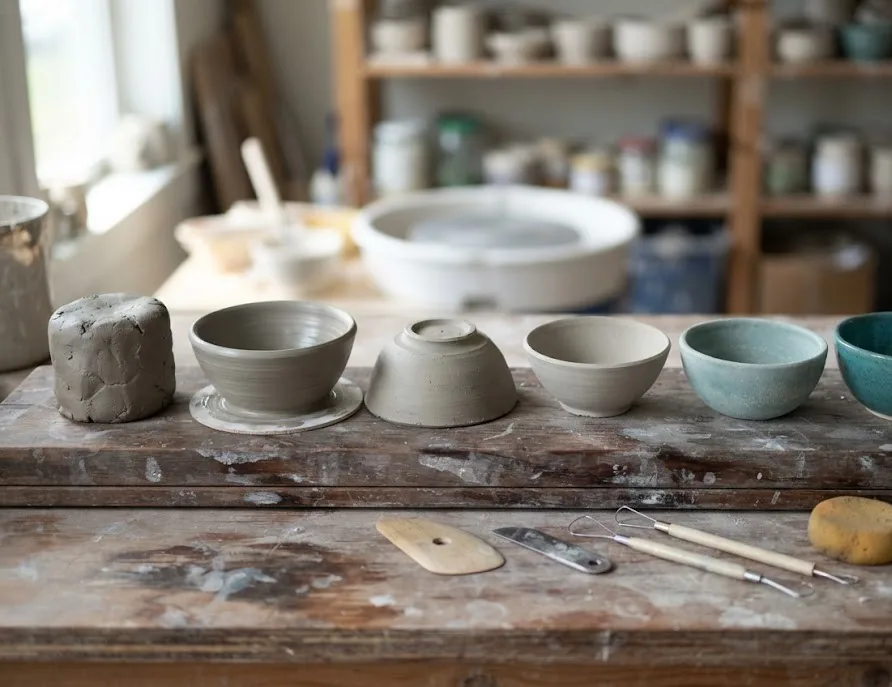
Follow these five steps to create a personalized ceramic souvenir during your Da Nang trip. Total time ranges from one hour (same-day decorative piece) to one week (kiln-fired functional piece).
Step 1: Choose your souvenir type — decorative tile, mug, or landmark replica
Your first decision determines the entire process. Three main options exist:
- Decorative tile (50,000 VND / $2 USD): A flat, hand-painted tile about 10×10 cm. Best for beginners. Can be taken home same day after air-drying. Not food-safe or waterproof.
- Mug or bowl (200,000 VND / $8 USD): A functional piece shaped on the wheel or by hand. Requires kiln firing. Turnaround is one week. Food-safe and dishwasher-friendly.
- Landmark replica (150,000–250,000 VND / $6–$10 USD): A miniature version of Linh Ung Pagoda, Marble Mountains, or Dragon Bridge. Uses silicone molds for the base shape, with hand-carved details. Requires kiln firing.
Consider your travel timeline. If you’re in Da Nang for less than a week, choose the decorative tile or arrange for international shipping of your kiln-fired piece.
Step 2: Shape the clay — which technique matches your skill level
Match the technique to your comfort level:
- Absolute beginner: Pinching or slab construction for a tile. No prior skill needed. Takes 20–30 minutes.
- Some confidence: Coiling for a small vase or bowl. Takes 30–45 minutes.
- Adventurous: Wheel-throwing for a mug or cup. Expect 2–3 failed attempts before you get a usable shape. Takes 45–60 minutes.
Instructors at all three venues will guide your hands through the process. Don’t worry about perfection — the character of handmade ceramics is in their imperfections.
Step 3: Add personal details — carving initials, Da Nang landmarks, or traditional patterns
Once your piece is shaped and has firmed up slightly (leather-hard stage), you can add details. Options include:
- Carving your initials with a wooden tool — the simplest personalization.
- Etching a Da Nang landmark using a stencil provided by the workshop.
- Painting traditional patterns like lotus flowers, waves, or dragon scales with underglaze colors.
- Writing a date or short message — “Da Nang 2026” or “Vietnam trip.”
This step takes 15–30 minutes. Take your time — this is what makes your souvenir unique.
Step 4: Choose your finish — same-day air-dry vs kiln-fired (1-week wait)
Two finishing options are available:
- Same-day air-dry (50,000 VND / $2 USD): Your piece is air-dried and can be taken home immediately. It’s decorative only — not waterproof, not food-safe, and fragile. Best for tiles or small figurines.
- Kiln-fired (200,000 VND / $8 USD): Your piece is bisque-fired, glazed, and glaze-fired. Takes one week. The result is a durable, food-safe, waterproof ceramic. Best for mugs, bowls, or any functional item.
If you choose kiln-fired, the workshop will provide a receipt with a pickup date. My Linh shop and the Vietnamese Pottery Village both offer international shipping for an additional 150,000–300,000 VND ($6–$12 USD).
Step 5: Collect or ship — options for international travelers
For kiln-fired pieces, you have two options:
- Pick up in person at the workshop one week later. Most workshops are open daily 8 AM–5 PM.
- International shipping — costs vary by destination. Shipping to the US or Europe typically ranges from 150,000–300,000 VND ($6–$12 USD) and takes 2–4 weeks. The workshop will package the piece securely with bubble wrap and a cardboard box.
If you’re staying in Da Nang for less than a week, arrange shipping on the day you create your piece. Provide your hotel address or a local contact for pickup if you’re moving locations.
Pricing Guide: What Each Pottery Experience Costs in 2026
Understanding the full cost structure helps you choose the right option for your budget and timeline. Below is a comparison of entry fees, workshop packages, and additional costs across the three venues.
| Item | Vietnamese Pottery Village | Thanh Ha Village | My Linh Shop |
|---|---|---|---|
| Entry fee | Free (exhibition only) | 35,000 VND ($1.50 USD) | Included in Thanh Ha entry |
| Same-day decorative piece | 50,000–100,000 VND ($2–$4 USD) | 50,000 VND ($2 USD) | 50,000 VND ($2 USD) |
| Kiln-fired mug/bowl | 200,000 VND ($8 USD) | 200,000 VND ($8 USD) | 200,000 VND ($8 USD) |
| Landmark replica | 150,000–250,000 VND ($6–$10 USD) | Not typically offered | Not typically offered |
| International shipping | 150,000–300,000 VND ($6–$12 USD) | 150,000–300,000 VND ($6–$12 USD) | 150,000–300,000 VND ($6–$12 USD) |
| Custom glaze/color | +50,000 VND ($2 USD) | +50,000 VND ($2 USD) | +50,000 VND ($2 USD) |
| Extra firing (additional piece) | +100,000 VND ($4 USD) | +100,000 VND ($4 USD) | +100,000 VND ($4 USD) |
Hidden costs to consider: shipping is the biggest variable. If you’re creating multiple pieces, ask about combined shipping rates. Custom glazes — like a specific shade of blue or green — add 50,000 VND ($2 USD) per piece. Most workshops accept cash only, so carry enough Vietnamese dong. Credit cards are not accepted at any of the three venues.
Practical Tips for First-Time Pottery Visitors in Da Nang
A few practical considerations can make your pottery experience smoother and more enjoyable. These tips come from traveler reports and firsthand accounts shared on social media and travel forums.
Best time to visit: morning sessions (less crowded, cooler)
The ideal time for a pottery workshop is between 8 AM and 10 AM. Morning sessions are less crowded — especially at the Vietnamese Pottery Village, which can get busy after 11 AM with tour groups. The temperature is also cooler, which matters because clay dries faster in heat, giving you less working time. Afternoon sessions in the summer months (May–September) can be uncomfortably hot, as many workshops have open-air spaces with fans but no air conditioning. If you can only visit in the afternoon, choose a session after 3 PM when the heat begins to ease.
What to wear and bring — clay gets everywhere
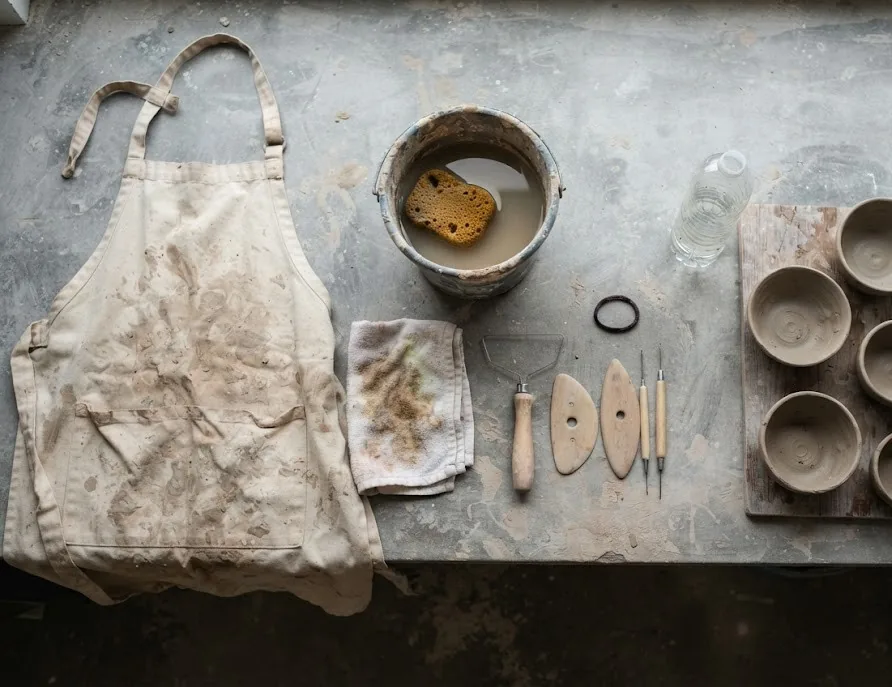
Clay is messy. Wear clothes you don’t mind getting dirty — dark colors hide clay stains better than light colors. Avoid loose sleeves that can drag through wet clay. Closed-toe shoes are recommended because clay shards and tools can fall on the floor. Most workshops provide aprons, but they don’t cover your arms or legs. Bring a change of clothes if you’re visiting other attractions afterward. A small towel or wet wipes are useful for cleaning your hands between steps. Leave jewelry at home — rings and bracelets can get caught in clay or damage your piece.
Language barrier: key Vietnamese phrases for pottery workshops
English is spoken at the Vietnamese Pottery Village in Ba Na ward, but at Thanh Ha and My Linh, communication may be limited. Learning a few Vietnamese phrases helps:
- “Tôi muốn làm gốm” — “I want to make pottery.”
- “Bao nhiêu tiền?” — “How much does it cost?”
- “Cái này có thể gửi đi nước ngoài không?” — “Can this be shipped abroad?”
- “Khi nào tôi nhận được sản phẩm?” — “When will I receive the product?”
- “Cảm ơn” — “Thank you.”
Pointing and smiling works for basic interactions, but using these phrases shows respect and often results in warmer service. My Linh shop’s owner is known for being especially patient with non-Vietnamese speakers.
Combining pottery with nearby attractions: Ba Na Hills, Marble Mountains, Linh Ung Pagoda
The Vietnamese Pottery Village in Ba Na ward is located near Ba Na Hills, making it easy to combine both in one day. Start with a morning pottery session (8–10 AM), then head to Ba Na Hills for the afternoon. Alternatively, if you’re visiting the Marble Mountains or Linh Ung Pagoda, consider creating a ceramic replica of those landmarks at the pottery village afterward — it adds a meaningful layer to your experience.
Thanh Ha Village in Hoi An is a 10-minute drive from Hoi An Ancient Town, so you can easily pair pottery with a walking tour of the old town. For travelers interested in exploring more of Da Nang’s cultural side, consider a guided motorbike tour of traditional craft villages, which often includes stops at pottery and weaving workshops.
Related on this site
- Da Nang’s Luxury Shopping Districts: High-End Brands and Boutiques 2026
- Da Nang’s Most Unique Souvenir Shops: Where to Find Them in 2026
Frequently Asked Questions
Can I take my pottery piece home the same day?
Yes, if you choose the same-day decorative option (50,000 VND / $2 USD). The piece is air-dried and can be taken home immediately. However, it is fragile and decorative only — not food-safe or waterproof. For kiln-fired pieces, you must wait one week or arrange for international shipping.
How much does it cost to ship a ceramic souvenir from Da Nang to the US?
International shipping from Da Nang to the US typically costs 150,000–300,000 VND ($6–$12 USD) per piece, depending on size and weight. The workshop packages the item securely with bubble wrap. Delivery takes 2–4 weeks.
Do I need any prior pottery experience to join a workshop?
No prior experience is needed. Workshops at all three venues cater to absolute beginners. Instructors guide you through each step, from centering clay to decorating your finished piece. The most beginner-friendly option is the decorative tile using the pinching or slab construction technique.
Which pottery village is closest to Da Nang city center?
The Vietnamese Pottery Village in Ba Na ward is the closest, approximately 20 minutes from Da Nang city center by taxi or motorbike. Thanh Ha Village in Hoi An is about 30 minutes south. My Linh shop is located within Thanh Ha Village.
Are pottery workshops suitable for children?
Yes, children aged 6 and above can participate. Hand-building techniques like pinching and coiling are especially suitable for younger visitors. The Vietnamese Pottery Village offers family-friendly sessions with shorter timeframes (45 minutes) and simpler projects like small bowls or tiles.
What payment methods are accepted at pottery workshops?
Cash (Vietnamese dong) is the primary payment method at all three venues. Credit cards are not accepted. ATMs are available in Da Nang city center and near Ba Na Hills, but not at the pottery villages themselves. Carry sufficient cash before your visit.
Can I create a ceramic replica of a specific Da Nang landmark?
Yes, the Vietnamese Pottery Village in Ba Na ward offers silicone molds of Linh Ung Pagoda, Marble Mountains, and Dragon Bridge. You use the mold to shape the base, then add hand-carved details. This option costs 150,000–250,000 VND ($6–$10 USD) and requires kiln firing.
Next Steps
Da Nang’s pottery scene in 2026 offers something most souvenir shopping doesn’t: the chance to create a tangible memory with your own hands. Whether you shape a decorative tile in an hour at the Vietnamese Pottery Village, fire a functional mug at My Linh shop over a week, or craft a miniature Linh Ung Pagoda to display on your shelf, the process itself becomes part of your travel story.
- Choose your venue based on your timeline. If you have one hour, visit the Vietnamese Pottery Village for a same-day decorative tile. If you have one week in the area, invest in a kiln-fired mug from My Linh shop.
- Book your workshop in advance during peak season (June–August). Walk-ins are accepted but may face longer wait times. Contact the venue directly via phone or social media to reserve a slot.
- Carry enough cash and wear appropriate clothing. Clay is messy, so dress accordingly. Bring 200,000–500,000 VND ($8–$20 USD) to cover the workshop and potential shipping costs.
Part of our guide to places to visit in Da Nang.