Da Nang bike tours in 2026 present an exceptional way to explore central Vietnam’s coastline, merging cycling exhilaration with intimate access to secluded beaches, mountain passes, and local villages. Enhanced by new coastal paths and quieter roads, the city offers improved cycling conditions, with over 120 km of rideable coastline connecting the Marble Mountains to the Hai Van Pass.
This guide details four essential routes—from the renowned Hai Van climb to the gentle beach cruise towards Hoi An—alongside equipment advice, e-bike options, and seasonal recommendations for planning your ideal two-wheeled adventure along Da Nang’s coast.
Da Nang’s coastline provides four distinct cycling experiences in 2026: the 20 km Hai Van Pass ascent (500 m elevation), the 15 km Son Tra Peninsula jungle loop, the flat 30 km beach road to Hoi An, and the 25 km Hoa Bac Valley countryside ride. The dry season (March–July) offers temperatures of 28–35°C with less than 50 mm of monthly rainfall, marking it as the prime period for extended rides.
What Makes Da Nang a Top Destination for Coastal Bike Tours in 2026
Da Nang’s coastal bike tours in 2026 offer a unique combination of dramatic mountain-meets-sea geography, recently upgraded cycling infrastructure, and a strategic location between two UNESCO World Heritage sites. The city is situated at the foot of the Annamite Mountain range, where peaks descend directly into the South China Sea. This proximity allows for diverse activities within a compact area, enabling a mountain pass climb in the morning, a swim at My Khe Beach by midday, and a cycle through rice paddies in the afternoon.
The unique geography: where the Annamite Mountains meet the South China Sea
The Son Tra Peninsula serves as a natural shield, protecting Da Nang Bay from strong winds and ensuring calm coastal waters suitable for beachside cycling. To the south, the Marble Mountains, five limestone and marble hills, rise from the coastline. Between these points, the coast remains relatively flat for approximately 15 km before ascending towards the Hai Van Pass in the north. This topography allows for a choice between flat beach cruising and challenging mountain ascents within the same day.
Why 2026 is the ideal year: new coastal infrastructure and quieter routes
Da Nang completed a 10 km dedicated bike lane along Vo Nguyen Giap Street in early 2025, linking the city center to the Son Tra Peninsula entrance. The Cu De River cycling path, inaugurated in late 2025, offers a car-free route through the Hoa Bac Valley. These improvements have lessened the need to share main roads with vehicular traffic, particularly along the popular beachfront.
Comparing Da Nang to Hoi An for cycling: which base suits your trip?
The choice between Da Nang and Hoi An as a cycling base depends on individual priorities:
- Da Nang as a base: Provides superior access to mountain routes like the Hai Van Pass and Son Tra Peninsula. Offers a broader selection of bike rental services and a wider range of accommodation options, with beachside stays starting around $30 per night. It also offers direct access to the airport and train station.
- Hoi An as a base: Features flatter terrain suitable for casual riders and quieter rural roads through rice paddies. While it boasts an ancient town atmosphere, it has limited options for hill-climbing routes. Reaching Da Nang’s coastal paths requires a 30 km ride.
- Combined approach: Many cyclists opt for a 2–3 day stay in Da Nang to explore mountain routes, followed by a 30 km cycle to Hoi An for flatter riding and culinary experiences. The beach road connecting the two cities is paved and has minimal elevation changes.
The 4 Scenic Coastal Bike Routes You Must Ride in Da Nang
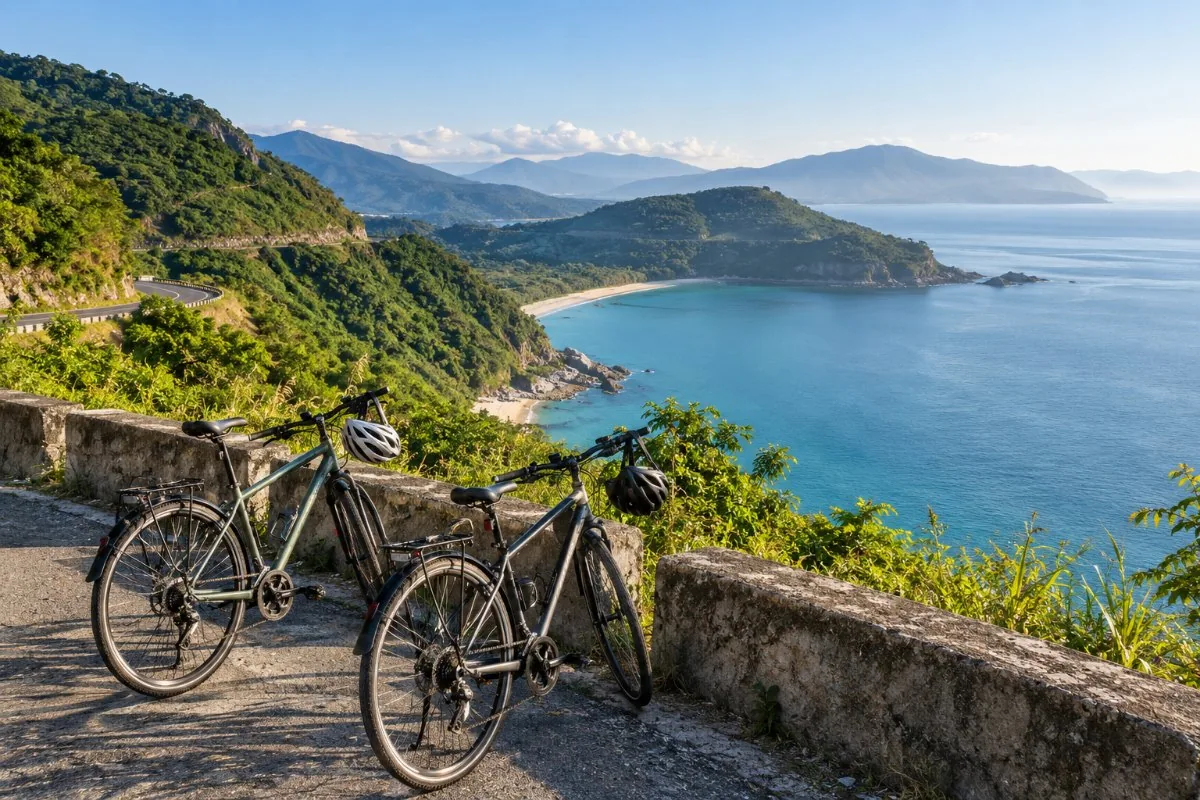
Da Nang’s four essential bike routes cater to a spectrum of cyclists, from novices to seasoned climbers, with distances varying from 15 km to 70 km and elevation gains ranging from flat to 500 meters. Each route presents unique scenery and cultural points of interest, allowing for customization based on fitness and available time.
Route 1: Hai Van Pass to Lap An Lagoon — the iconic coastal climb
Distance: 40 km round trip (20 km climb each way). Elevation gain: 500 meters. Difficulty: Strenuous. This route is celebrated as central Vietnam’s premier cycling path, recognized in publications like Top Gear. The ascent begins at the northern edge of Da Nang, winding 12 km through jungle-clad mountains via 22 switchbacks to a summit at 496 meters. The summit offers expansive views of Da Nang Bay, the Son Tra Peninsula, and the coastline stretching towards Hue.
The descent covers 8 km to Lap An Lagoon, a tranquil water body where local farmers cultivate oysters and seaweed. The lagoon features two seafood eateries serving fresh clams and squid. The entire ride, including stops for photos, typically takes 3–4 hours.
Route 2: Son Tra Peninsula loop — jungle, monkeys, and ocean views
Distance: 15 km loop. Elevation gain: 400 meters. Difficulty: Moderate to strenuous. The Son Tra Peninsula, also known as Monkey Mountain, is a 4,400-hectare nature reserve rising 693 meters above sea level. The loop commences near My Khe Beach and ascends 6 km to the Ban Co Peak viewpoint. The paved road is narrow with sharp turns, and the area is home to red-shanked douc langurs. The descent passes the Linh Ung Pagoda, notable for its 67-meter-tall Guan Yin statue. The loop is estimated to take 1.5–2 hours of riding.
This route is best experienced in the early morning (6–9 AM) to avoid the heat and observe the local wildlife.
Route 3: Da Nang Beach Road to Hoi An — flat seaside cruising
Distance: 30 km one way. Elevation gain: Minimal (under 20 meters). Difficulty: Easy. This route extends south from My Khe Beach along the coastal road towards Hoi An. The initial 10 km traverse Da Nang’s beachfront hotels and seafood restaurants before opening onto a flat coastal plain with rice paddies on one side and the sea on the other. The final 5 km lead into Hoi An’s outskirts, where the road narrows and traffic decelerates. The ride typically takes 1.5–2 hours at a relaxed pace.
Return transport to Da Nang from Hoi An is available via bus or taxi for approximately $8–$10. This route is suitable for a half-day excursion, potentially combined with lunch in Hoi An.
Route 4: Hoa Bac Valley countryside loop — rice paddies and stream dips
Distance: 25 km loop. Elevation gain: 100 meters. Difficulty: Easy to moderate. Located 10 km west of Da Nang city center, this route circles through the Hoa Bac Valley, an agricultural region characterized by terraced rice paddies, vegetable gardens, and the Cu De River. The path is predominantly flat with gentle undulations, passing through small villages where rice is often dried on the roadside. A highlight includes a stop at a local homestay for a swim in a freshwater stream and a home-cooked meal featuring grilled fish and vegetables. The loop can be completed in 2–3 hours, including breaks.
Many guided tours incorporate this route as a half-day option that includes lunch.
How to Choose the Right Da Nang Bike Tour for Your Fitness Level
Da Nang’s bike tours span from flat 25 km valley rides to demanding 40 km mountain passes, making it crucial to align the route with your fitness level to ensure an enjoyable experience. The table below compares key aspects across different difficulty levels.
| Difficulty Level | Recommended Routes | Distance Range | Elevation Gain | Riding Time | Best For |
|---|---|---|---|---|---|
| Easy | Hoa Bac Valley, Beach Road to Hoi An | 25–30 km | 0–100 m | 1.5–2.5 hours | Families, casual cyclists, first-time riders |
| Moderate | Son Tra Peninsula loop, full Hoi An route | 15–30 km | 100–400 m | 2–3 hours | Active riders, recreational cyclists |
| Strenuous | Hai Van Pass, multi-day Da Nang–Hue | 40–80 km | 400–500 m | 3–6 hours | Experienced cyclists, climbers, endurance riders |
Easy rides for families and casual cyclists: Hoa Bac Valley and the beach road
The Hoa Bac Valley loop is recommended for families due to its quiet roads, flat terrain, and numerous opportunities for refreshments. Children aged 10 and above can typically manage the 25 km distance with planned breaks. The beach road to Hoi An is also flat, but the initial 10 km involve sharing the road with local traffic. Both routes are well-suited for standard hybrid bikes or e-bikes.
Moderate challenges for active riders: Son Tra Peninsula and the full Hoi An route
The Son Tra Peninsula loop requires a moderate level of fitness, with a 6 km climb featuring an average gradient of 6% and steeper sections towards the summit. Riders who cycle 2–3 times per month should find this manageable. The full Hoi An route (30 km one way) is flat but longer, offering a good half-day workout. A hybrid bike with front suspension or a mountain bike is advisable for the Son Tra road surface.
Strenuous climbs for experienced cyclists: Hai Van Pass and multi-day options
The Hai Van Pass demands significant climbing fitness and experience with sustained ascents. The 12 km climb averages an 8% grade, with some sections reaching 12%. Experienced cyclists typically complete this climb in 45–60 minutes. Multi-day options include the Da Nang to Hue route (100 km, 600 m elevation gain) or the Da Nang to Hoi An to My Son circuit (120 km over 2–3 days). These routes are best suited for road bikes or lightweight mountain bikes with slick tires.
Why E-Bikes Are Transforming Da Nang Bike Tours in 2026
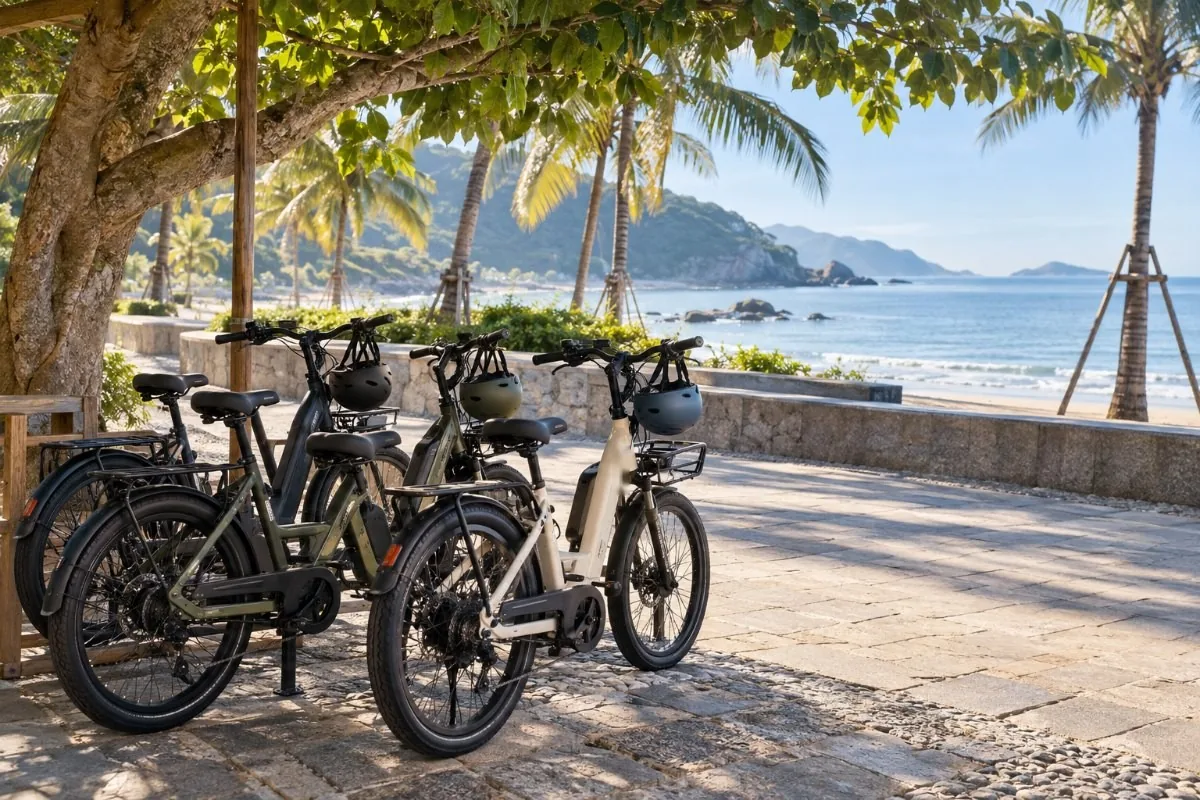
They enable riders of all fitness levels to navigate routes like the Hai Van Pass and Son Tra Peninsula without undue exertion. The choice between mid-drive and hub-drive motors is significant, as their performance varies on Da Nang’s steep coastal inclines.
Mid-drive vs hub-drive e-bikes: which one handles the Hai Van Pass better?
Mid-drive motors, such as the Giant SyncDrive system found on the Fathom E+ 2, are positioned at the bike’s bottom bracket. Hub-drive motors, common on less expensive rental e-bikes, are located in the rear wheel and can struggle on gradients exceeding 10%, often overheating after 5–10 minutes of continuous climbing. For Da Nang’s mountainous terrain, a mid-drive e-bike is the recommended choice.
E-bike rental costs and where to book a quality Giant Fathom E+ 2 or similar
Renting a quality mid-drive e-bike in Da Nang typically costs $25–$40 per day, contrasting with $10–$15 for a standard hybrid bike. BeeBikeHub offers the Giant Fathom E+ 2 for $35 daily, inclusive of a helmet, lock, and basic repair kit. Other rental providers near My Khe Beach offer the Trek Marlin 5 e-bike for $30 per day; however, this model features a hub-drive motor better suited for flatter routes. During peak season (March–July), booking at least 24 hours in advance is advised, as premium e-bikes are in high demand.
Who benefits most from an e-bike upgrade: non-cyclists and hill-climb skeptics
Individuals new to cycling who wish to experience the Hai Van Pass scenery without significant physical exertion find e-bikes particularly beneficial. Those concerned about their ability to complete a route also gain confidence, as the e-bike provides a reliable means of propulsion if energy levels decrease, maintaining speeds of 15–20 km/h. For families with teenagers, e-bikes help equalize riding abilities, allowing parents and children to stay together.

What to Pack for a Coastal Bike Tour in Da Nang
Proper packing for a Da Nang coastal bike tour involves preparation for tropical heat, potential rain showers, and the specific requirements of cycling on varied road surfaces. The following checklist includes essential items that may not be provided by tour operators.
- Sunscreen SPF 50+: Apply before riding and reapply every 2 hours. The tropical sun is intense, even on overcast days.
- Quick-dry cycling jersey: Fabrics like merino wool or synthetics wick moisture more effectively than cotton, preventing discomfort and chafing on longer rides.
- Padded cycling shorts: Crucial for rides exceeding 20 km, especially when using standard rental bike saddles.
- Waterproof phone pouch: Protects electronics from sudden downpours, essential for navigation and communication.
- Lightweight rain jacket: A packable jacket, weighing under 200 grams, can be stored in a jersey pocket and offers protection against sudden mountain showers.
- Hydration pack or two water bottles: Essential for maintaining hydration in Da Nang’s heat, where 1–2 liters per hour is recommended.
- Repair kit and pump: Carrying your own ensures preparedness for minor mechanical issues, even if a tour operator provides them. Include tire levers, a spare tube, and a mini pump.
Essential gear for tropical heat and sudden rain showers
A cycling cap worn under a helmet can help manage sweat and provide sun protection. Electrolyte tablets can aid in preventing cramps during extended rides. For rain, a waterproof jacket with ventilation features is recommended. Synthetic or wool socks are preferable to cotton, as they dry faster and reduce the risk of blisters.
Bike-specific items: helmet, padded shorts, and repair kit
While most rental shops provide a basic helmet, personal fit and safety history may warrant bringing your own. Padded shorts are a personal item and should be brought from home or purchased locally; Decathlon in Da Nang offers options for $15–$20. A basic repair kit, including tire levers, a spare tube, and a mini pump, costs approximately $10–$15 and is available at local bike shops. Familiarity with basic repairs is recommended before embarking on a tour.
What your tour operator provides vs what you must bring yourself
Guided tour operators typically supply the bicycle, helmet, repair kit, and a support vehicle for multi-day trips, along with water and snacks. Personal items such as padded shorts, sunscreen, a rain jacket, and a phone pouch are the rider’s responsibility. Self-guided rental services usually provide only the bicycle and helmet. For self-guided tours, all other necessary gear must be brought or acquired separately. Decathlon Da Nang is a resource for cycling apparel and accessories.
Best Time of Year for Da Nang Coastal Cycling in 2026
The optimal period for Da Nang coastal cycling is the dry season, from March to July, characterized by temperatures between 28–35°C and monthly rainfall below 50 mm. The rainy season, from October to December, offers cooler temperatures and quieter roads, appealing to experienced cyclists. The table below outlines monthly conditions.
| Month | Average Temperature | Rainfall | Humidity | Cycling Rating | Key Notes |
|---|---|---|---|---|---|
| January–February | 22–26°C | 50–80 mm | 75–80% | Good | Cooler temperatures, occasional drizzle |
| March–May | 28–32°C | 20–40 mm | 70–75% | Excellent | Peak season, clear skies, low rain |
| June–July | 32–35°C | 10–30 mm | 65–70% | Excellent | Hottest months, ride early morning |
| August–September | 30–33°C | 60–100 mm | 75–80% | Moderate | Transition months, increasing rain |
| October–December | 23–28°C | 150–300 mm | 85–90% | Fair | Rainy season, cooler but wet |
Dry season (March–July): ideal for photography and long rides
The dry season provides 8–10 hours of daily sunshine, offering clear visibility from the Hai Van Pass summit to the Cham Islands. Morning temperatures ranging from 25–30°C are conducive to climbing, while afternoon temperatures exceeding 32°C necessitate hydration breaks every 30 minutes. This period is optimal for photography due to low humidity, resulting in sharp, haze-free images. Advance booking for accommodation and bike rentals, 2–3 weeks prior, is recommended.
Rainy season (October–December): why some cyclists still prefer it
Some experienced cyclists favor the rainy season for its cooler temperatures (23–28°C), which make the Hai Van Pass climb more comfortable. Rainfall typically occurs in short, intense bursts rather than prolonged drizzle. Roadways are less crowded, offering a more solitary cycling experience. However, visibility at the summit can be reduced, and road surfaces may become slippery during descents. Cyclists choosing this season should consider wider tires (32 mm or more) for enhanced grip and always carry a waterproof jacket.
Temperature and wind patterns by month: a quick reference table
Wind conditions can influence cycling, particularly on the flat beach road. From March to July, prevailing winds are from the southeast at 10–15 km/h, creating a headwind when cycling south towards Hoi An. Between October and December, winds shift to the northeast at 15–25 km/h, potentially increasing the difficulty on the exposed western side of the Son Tra Peninsula loop. The Hai Van Pass is largely sheltered during the ascent but exposed at the summit, where gusts can reach 30–40 km/h during the rainy season.
How to Book a Guided vs Self-Guided Da Nang Bike Tour
The decision between a guided and self-guided Da Nang bike tour hinges on your experience, budget, and interest in local insights. Guided tours typically range from $70–$100 per person, including support vehicles and cultural stops, whereas self-guided rentals cost $15–$30 per day, offering maximum flexibility.
Guided tour benefits: local guides, support vehicle, and cultural stops
Guided tours feature local guides knowledgeable about optimal photo locations, safe routes, and authentic dining establishments. A support vehicle accompanies the group, carrying provisions like water and snacks, and spare bicycles, eliminating the need for riders to carry extensive repair equipment. Cultural stops are integrated into the itinerary; for instance, a guided Hai Van Pass tour often includes a 30-minute stop at the summit for photos, a 45-minute lunch at Lap An Lagoon, and a visit to Linh Ung Pagoda.
BeeBikeHub’s guided Hai Van tour is priced at $70 per person and operates on Wednesdays and Saturdays.
Self-guided route planning: using Ride with GPS and Google Maps offline
Self-guided tours necessitate pre-trip route planning. Utilizing apps like Ride with GPS allows for the download of user-generated routes with turn-by-turn navigation for popular routes such as the “Da Nang Hai Van Pass” or “Son Tra Peninsula loop.” Google Maps in offline mode can assist with basic navigation but lacks detailed elevation profiles or gradient warnings. Printing a physical map as a backup is advisable, considering that phone batteries can deplete rapidly in tropical heat and cellular coverage may be inconsistent in mountainous areas. Marking potential water stops and repair shops on the map beforehand is recommended.
Cost comparison: guided group tours ($70–$100) vs bike rental ($15–$30 per day)
Guided group tours are priced between $70–$100 per person for half-day or full-day excursions, encompassing the bicycle, helmet, guide, support vehicle, water, and lunch. Self-guided rentals range from $15–$30 per day for a quality hybrid or mountain bike, with additional costs for helmets and locks if not included. Over a five-day period, self-guided options typically cost $75–$150 in total, compared to $350–$500 for guided tours. The guided option is advantageous for those seeking local expertise and logistical support, while self-guided tours suit experienced cyclists who prefer independent travel.
Key Safety Tips and Local Traffic Rules for Cyclists in Da Nang
Cycling safely in Da Nang requires an understanding of local traffic dynamics, where scooters and cars anticipate predictable cyclist behavior, the use of hand signals, and consistent visibility. Adhering to the following 7 tips enhances safety on Da Nang’s roads.
- Ride on the right side of the road, not the sidewalk. Vietnamese traffic operates on the right, and cyclists are considered part of the general traffic flow. Sidewalk cycling is prohibited and hazardous due to shared use by scooters and motorbikes.
- Use a bright rear light at all times. A flashing red rear light improves visibility to vehicles from up to 200 meters away, even during daylight hours. While many rental shops provide lights, bringing your own is recommended.
- Make eye contact with drivers before turning. Vietnamese drivers often rely on visual confirmation rather than turn signals. Before executing a turn, ensure direct eye contact with drivers behind you to confirm they have seen you.
- Carry a Vietnamese SIM card for emergency calls. A local SIM card with data is inexpensive ($3–$5) and provides access to navigation tools and emergency contact numbers. Emergency numbers include 113 for police, 114 for fire, and 115 for ambulance services.
- Stop at all major intersections, even if the light is green. Red-light violations by scooters are not uncommon in Da Nang. Wait a few moments after your light turns green to ensure the intersection is clear before proceeding.
- Signal turns with your left arm extended horizontally. This is a universally understood hand signal in Vietnam. Avoid using right-arm signals, as they are not as widely recognized.
- Know the nearest bike repair shops along the coast. On the Hai Van Pass, the closest repair facility is located near Lang Co Beach. On the Son Tra Peninsula, a shop at the entrance can assist with flat tire repairs for approximately $2–$3. It is advisable to save these locations in your phone prior to your ride.
Related on this site
- A Guide to Da Nang’s Eco-Friendly Activities and Tours 2026
- Da Nang’s Eco-Tourism: Sustainable Travel Options
- Adventurous Escapes: Hiking Trails Around Da Nang
Frequently Asked Questions
Do I need to be a very strong cyclist to ride the Hai Van Pass?
While strong fitness is not mandatory, basic cycling ability and the capacity for a 45–60 minute climb are necessary. For those uncertain about their fitness, renting an e-bike is recommended, as the pedal assist significantly reduces the physical effort, making the climb accessible to casual cyclists.
Can I rent a bike in Da Nang for a self-guided tour?
Yes. Several providers, including BeeBikeHub and Golden Cycling Tours, along with numerous shops near My Khe Beach, offer daily rentals. Prices range from $10 for a standard hybrid bike to $35 for a quality e-bike. Helmets and locks are typically included. Booking 24 hours in advance is advised during peak season.
What is the best route for a first-time cyclist in Da Nang?
The Hoa Bac Valley countryside loop is highly recommended for first-time cyclists. It is a flat 25 km route that winds through quiet villages, offering multiple opportunities for hydration and rest. This route avoids main roads and provides an introduction to rural life without the challenges of mountain ascents.
Is it safe to cycle on the main coastal road from Da Nang to Hoi An?
Cycling on this route is generally safe, though caution is advised. The initial 10 km from My Khe Beach involve sharing the road with moderate traffic, including scooters and cars. Beyond this section, the road transitions to a flatter coastal plain with reduced traffic density. Riding on the right shoulder and using a rear light are recommended safety measures. The total route is 30 km and typically takes 1.5–2 hours to complete.
What is the best time of day to cycle the Son Tra Peninsula?
Early morning, between 6 AM and 9 AM, is the ideal time. Temperatures are cooler, monkeys are more active, and the morning light provides dramatic scenic views. By 10 AM, the heat intensifies, and tourist buses often arrive at the pagoda, increasing congestion.
How much does a guided bike tour cost in Da Nang?
Guided half-day tours generally cost between $70–$100 per person, inclusive of the bicycle, helmet, guide, support vehicle, water, and lunch. Full-day or multi-day tours can range from $150–$250 per person per day, covering accommodation and meals. Operators like BeeBikeHub and Golden Cycling Tours offer competitive pricing.
Do I need to book a bike tour in advance?
Advance booking is strongly recommended, particularly during the dry season (March–July). Popular e-bikes and guided tours can be fully booked one to two weeks in advance. Booking online through platforms like GetYourGuide or directly with tour operators such as BeeBikeHub is advised to secure your preferred date and equipment.
Conclusion
Da Nang’s coastal bike tours in 2026 offer four distinct routes suitable for all fitness levels, ranging from the flat 30 km beach cruise to Hoi An to the challenging 20 km Hai Van Pass climb. Enhanced cycling infrastructure, including new bike lanes and quieter roads, has improved safety. E-bike rentals now make steep gradients accessible to casual riders. For beginners, the Hoa Bac Valley loop provides a gentle introduction. The Son Tra Peninsula offers jungle and ocean vistas, while the Hai Van Pass presents a significant climbing challenge.
It is advisable to book bikes or guided tours at least a week in advance during the March–July dry season. Essential items to pack include sunscreen, a rain jacket, and padded cycling shorts for a comfortable experience.
Part of our guide to things to do in Da Nang.