Da Nang is quickly becoming a leading destination for eco-conscious travelers in Vietnam, with a growing network of certified sustainable tours and conservation-focused activities. This guide to Da Nang’s eco-friendly activities and tours 2026 covers the best ways to explore the city’s natural wonders, from the biodiverse Son Tra Peninsula to the pristine beaches of My Khe, while minimizing your environmental footprint. You will learn how to identify genuinely sustainable operators, discover top eco-tours and accommodations, and apply practical tips for a greener trip.
The shift toward eco-tourism in Da Nang is tangible. com now include sustainability keywords, and local authorities have expanded the Son Tra Peninsula protected area by 150 hectares in 2026. Whether you are hiking through ancient forests to spot the endangered red-shanked douc langur or joining a kayak clean-up on My Khe Beach, the city offers a range of activities that balance adventure with conservation. This guide cuts through the greenwashing to highlight the tours, operators, and practices that genuinely make a difference.
How Da Nang is Redefining Eco-Tourism in 2026
Da Nang’s eco-tourism transformation is driven by a combination of government policy, community initiatives, and private-sector innovation.
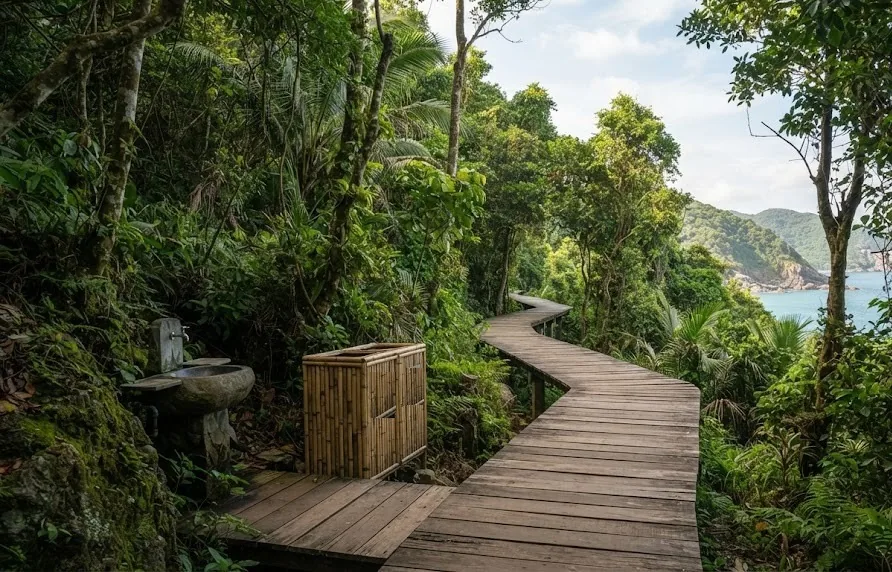
The Son Tra Peninsula, often called the “green lung” of Da Nang, is at the heart of this shift. Home to over 1,000 plant species and 370 animal species, including the endangered red-shanked douc langur, the peninsula has become a model for sustainable tourism. In 2026, the Da Nang People’s Committee approved a master plan to restrict large-scale construction on Son Tra, prioritizing low-impact eco-lodges and guided nature walks over mass tourism infrastructure.
Local businesses are also stepping up. According to a 2026 report from the Da Nang Department of Tourism, the number of hotels and tour operators holding recognized eco-certifications has grown by 35% since 2023. The Furama Resort, for example, has integrated solar panels into its energy grid and launched a zero-waste-to-landfill program. Meanwhile, community-based tourism in villages like Cam Thanh (known for its coconut forest) provides direct income to local families while preserving traditional crafts and farming practices.
Key drivers of this eco-tourism boom include:
- Government investment: $12 million allocated for waste management and renewable energy projects in tourist zones for 2026.
- NGO partnerships: Organizations like the GreenViet Biodiversity Conservation Centre work with tour operators to fund langur protection programs.
- Traveler demand: Data from Trip.
The Core Principles of Eco-Tourism in Da Nang
Genuine eco-tourism in Da Nang rests on three pillars: environmental stewardship, community benefit, and wildlife protection.
Minimizing environmental impact through waste reduction and renewable energy
Many hotels and tour operators in Da Nang have adopted reusable container policies, eliminating single-use plastics from their operations. The Danang Chill Ride team, for instance, provides stainless steel water bottles on all cycling tours and partners with local refill stations. For travelers, this means choosing accommodations and tours that visibly avoid plastic packaging and prioritize renewable energy.
Supporting local communities and conservation programs
Eco-tourism in Da Nang is designed to channel visitor spending directly into local economies. Community-based tours in Hoi An’s Tra Que Vegetable Village and Cam Thanh Coconut Forest ensure that a portion of each ticket goes to farmers and artisans. The “One Tour, One Tree” initiative, run by Dacotours, plants a native tree on Son Tra Peninsula for every booking. When you book a tour, ask whether it supports a specific local fund—this is a strong indicator of genuine sustainability.
Wildlife protection: Red-shanked douc langur and habitat preservation on Son Tra Peninsula
The red-shanked douc langur, a primate species found only in Vietnam and Laos, is the flagship species for conservation on Son Tra. Eco-tours on Son Tra are strictly regulated: certified guides must keep a minimum distance of 30 meters from the langurs, and groups are limited to 10 people to minimize disturbance. Avoid any tour that promises close-up encounters or feeding—these practices harm the animals and violate local regulations.
Top Eco-Friendly Activities and Tours in Da Nang for 2026
From guided nature walks to farm-to-table cooking classes, here are the best eco-friendly activities and tours to book in Da Nang for 2026.
Guided nature walks and biodiversity tours on Son Tra Peninsula
Join a half-day guided walk with Dacotours or Origin Vietnam to explore the Son Tra Peninsula’s trails. These tours typically last 4–5 hours and cost between $35 and $55 per person. You will hike through primary forest, learn about medicinal plants from local guides, and stop at viewpoints overlooking Da Nang Bay. The highlight for many visitors is spotting the red-shanked douc langur in its natural habitat. Morning departures (6:00 AM) offer the best chance of wildlife sightings.
Kayaking and clean-up tours on My Khe Beach
Several operators, including Danang Chill Ride, offer combined kayaking and beach clean-up tours. You paddle along the coastline for about two hours, collecting plastic debris with provided nets and bags. After the clean-up, participants enjoy a fresh coconut drink while the collected waste is sorted for recycling. Prices start at $25 per person, and tours run daily from 7:00 AM to 10:00 AM to avoid the midday heat.
Cycling tours through rural villages and the Marble Mountains
Danang Chill Ride’s cycling tours take you off the main roads and into the countryside. The “Rural Village Loop” covers 25 kilometers, passing through rice paddies, vegetable farms, and the base of the Marble Mountains. Bicycles are well-maintained and helmets are provided. The tour includes a stop at a local family’s home for a traditional Vietnamese lunch. Expect to pay $30–$40 for a half-day tour, which includes a guide, bike rental, and meal.
Farm-to-table cooking classes at organic farms in Hoi An
In Hoi An, just 30 minutes from Da Nang, you can join a farm-to-table cooking class at Tra Que Vegetable Village or the Hoi An Eco Tour farm. You start by harvesting herbs and vegetables from the organic garden, then learn to prepare dishes like “banh xeo” (crispy pancakes) and “cao lau” (noodle soup) under the guidance of a local chef. Classes cost $40–$60 per person and usually last 3–4 hours. Many operators, such as Origin Vietnam, include a bicycle transfer from Da Nang.
Visit to Than Tai Mountain Hot Springs Park for sustainable geothermal bathing
Than Tai Mountain Hot Springs Park, located about 40 minutes from Da Nang city center, uses geothermal energy to heat its natural mineral pools. Entry fees are around $15 for a day pass, which includes access to the hot springs, mud baths, and a steam cave. The park also maintains a botanical garden with over 200 species of native plants.
How to Choose a Genuinely Sustainable Tour Operator in Da Nang
Not every tour labeled “eco” is truly sustainable. Use this checklist to separate genuine operators from greenwashing.
Verify certifications: What to look for in eco-labels and partnerships
Look for operators that hold certifications from recognized bodies. The “Green Lotus” label, awarded by the Vietnam Tourism Association, requires compliance with strict environmental standards, including waste reduction, energy efficiency, and community engagement. EarthCheck certification, while less common in Da Nang, is another strong indicator. Also check for partnerships with NGOs like GreenViet or the World Wildlife Fund (WWF). If an operator’s website mentions “eco-friendly” but does not display any certification or partnership, proceed with caution.
Check for community involvement: How tour fees benefit local villages
Genuine operators disclose how their fees are distributed. On the other hand, vague claims such as “we support the local community” without specifics are a red flag. Ask the operator directly: “What percentage of my tour fee stays in the local community?” A transparent answer is a good sign.
Red flags: Greenwashing vs. real sustainable practices
Watch out for these common greenwashing tactics:
- Generic “eco” labels: Any operator that uses “eco” or “green” in their name without providing details on their practices.
- No waste management plan: If a tour provides single-use plastic water bottles or snacks wrapped in plastic, they are not serious about sustainability.
- Wildlife disturbance: Tours that advertise “close encounters” with langurs or other wildlife are likely violating conservation guidelines.
- Lack of transparency: If the operator cannot explain how they minimize their environmental impact, assume they do not.

Practical Tips for Reducing Your Footprint While Exploring Da Nang
Small changes in your daily travel habits can significantly reduce your environmental impact in Da Nang.
Packing smart: Reusable bottles, bags, and reef-safe sunscreen
Bring a reusable water bottle with a built-in filter, such as a LifeStraw or Grayl bottle. Da Nang’s tap water is not safe to drink, but filtered water is widely available at refill stations in hotels and cafes. Pack a foldable tote bag for market shopping and a reusable straw. Reef-safe sunscreen is essential if you plan to swim or kayak—conventional sunscreens contain oxybenzone and octinoxate, which damage coral reefs. Look for brands labeled “reef-safe” at stores like Lotte Mart or online before your trip.
Transportation choices: When to rent a bicycle vs. a scooter vs. a private car
For short distances (under 5 km), a bicycle is the best option. Danang Chill Ride offers bicycle rentals for $5 per day, and the city has dedicated bike lanes along the beachfront. For medium distances (5–15 km), an electric scooter is a good alternative to a gasoline-powered one. Several rental shops near My Khe Beach offer e-scooters for $10–$15 per day. For longer trips or when traveling with family, choose a private car service that uses electric or hybrid vehicles. Avoid using ride-hailing apps for very short trips—walking is often faster and produces zero emissions.
Waste management: Navigating Da Nang’s recycling systems and avoiding single-use plastics
Da Nang has a developing recycling system, but it is not always straightforward. The Viet Nam Plastic Alliance app (available on iOS and Android) maps recycling points across the city, including at major hotels and supermarkets. When eating out, bring your own container for leftovers—street food vendors are happy to use your container instead of a styrofoam box. Avoid bottled drinks at convenience stores; instead, order fresh coconut water or sugarcane juice from street vendors, which are served in biodegradable cups.
Where to Stay: Eco-Friendly Accommodations in Da Nang
Choosing the right accommodation is one of the most impactful decisions you can make for a sustainable trip.
Resorts with zero-waste policies and renewable energy (e.g., Furama Resort’s ESG initiatives)
Furama Resort Danang has implemented a comprehensive ESG (Environmental, Social, and Governance) program that includes solar panels on its roof, a food waste composting system, and a ban on single-use plastics in all rooms and restaurants. The resort also partners with local NGOs to organize beach clean-ups and mangrove planting events for guests. Room rates start at $120 per night, making it a mid-range option for eco-conscious travelers.
Boutique homestays supporting local culture and crafts
For a more intimate experience, consider a homestay in the Cam Thanh or Tra Que villages. Homestays like the “Coconut Garden Homestay” offer rooms built from natural materials, serve meals made with ingredients from the family’s garden, and organize craft workshops where guests learn to weave mats or make traditional lanterns. Prices range from $25 to $50 per night, and the experience directly supports the host family.
Budget-friendly hostels with community gardens and water-saving programs
Hostels in Da Nang are also embracing sustainability. The “Onederz Hostel” on My Khe Beach has a community garden where guests can pick herbs for their meals, low-flow showerheads to reduce water use, and a “book swap” program to reduce paper waste. Dorm beds start at $8 per night, and private rooms at $25. Another option is “The Common Room Project,” which uses solar-powered lighting and offers discounts to guests who arrive by bicycle.
| Type | Example | Price Range (per night) | Key Eco-Features |
|---|---|---|---|
| Resort | Furama Resort Danang | $120–$250 | Solar panels, zero-waste program, NGO partnerships |
| Boutique Homestay | Coconut Garden Homestay | $25–$50 | Natural materials, farm-to-table meals, craft workshops |
| Budget Hostel | Onederz Hostel | $8–$25 | Community garden, low-flow water fixtures, book swap |
Key Mistakes to Avoid When Planning an Eco-Friendly Trip to Da Nang
Even well-intentioned travelers can make mistakes that undermine their eco-friendly goals. Here are three common pitfalls and how to avoid them.
Mistake 1: Booking “eco-tours” without checking the operator’s actual practices
A tour labeled “eco” on TripAdvisor or GetYourGuide may simply be a standard tour with a green label. If the information is vague, contact the operator directly. A genuine operator will be happy to explain their practices.
Mistake 2: Overlooking the impact of single-use plastic on pristine beaches
My Khe Beach is consistently ranked among the world’s most beautiful beaches, but plastic pollution is a growing concern. A 2025 study by the Da Nang University of Science and Technology found that microplastic levels on My Khe Beach have increased by 40% since 2020. Avoid contributing to this problem by refusing single-use plastic items—say “no” to plastic straws, bags, and bottles. If you see litter on the beach, pick it up and dispose of it properly.
Mistake 3: Visiting sensitive wildlife areas without a certified guide
Exploring the Son Tra Peninsula on your own may seem adventurous, but it can harm the ecosystem. Without a certified guide, you might accidentally stray off designated trails, disturb wildlife, or damage fragile vegetation. Certified guides are trained in responsible wildlife viewing and know the rules for approaching animals. Always book a guided tour for sensitive areas like Son Tra and the Marble Mountains.
Frequently Asked Questions
What is the best time of year for eco-friendly activities in Da Nang?
The best time for outdoor eco-activities is from February to August, when the weather is dry and temperatures range from 25°C to 35°C. The rainy season (September to January) can make trails slippery and reduce visibility for wildlife spotting.
Are there eco-friendly options for visiting Ba Na Hills?
Yes, some tour operators offer private or small-group tours to Ba Na Hills that use hybrid vehicles and include stops at local farms. However, the cable car system itself has a significant energy footprint. Consider combining a Ba Na Hills visit with a community-based tour in a nearby village to balance your impact.
Can I find vegan or vegetarian food on eco-tours in Da Nang?
Most eco-tour operators accommodate dietary preferences if you inform them in advance. Many farm-to-table cooking classes focus on vegetarian dishes. The “Rural Village Loop” cycling tour by Danang Chill Ride, for example, includes a vegetarian lunch option.
How do I get to the Son Tra Peninsula without a car?
The most eco-friendly way is to rent a bicycle or electric scooter. The peninsula is about 10 kilometers from the city center. Alternatively, you can book a guided tour that includes transportation from your hotel.
Is it safe to swim at My Khe Beach after a clean-up tour?
Yes, My Khe Beach is safe for swimming year-round. The clean-up tours focus on collecting debris from the sand, not from the water. Always swim in designated areas and check for warning flags.
What should I do if I see a tour operator harming wildlife?
Report the incident to the Da Nang Department of Tourism or the GreenViet Biodiversity Conservation Centre. You can also leave a review on platforms like TripAdvisor to warn other travelers.
Are there any free eco-friendly activities in Da Nang?
Yes, you can join free beach clean-ups organized by local groups like “Da Nang Clean Up” on weekends. Walking or cycling along the Han River promenade and visiting the Da Nang Museum of Cham Sculpture (which uses energy-efficient lighting) are also low-cost, eco-friendly activities.
Next Steps
Planning an eco-friendly trip to Da Nang in 2026 is about making informed choices, not sacrifice. The city offers a rich array of sustainable tours, accommodations, and activities that let you experience its natural beauty while actively supporting conservation efforts. Start by booking a certified guided walk on Son Tra Peninsula, pack a reusable water bottle and reef-safe sunscreen, and choose an accommodation with a clear environmental policy. The small steps you take before and during your trip will help ensure that Da Nang’s beaches, forests, and wildlife remain vibrant for generations to come.
- Book a certified eco-tour: Choose a guided nature walk on Son Tra Peninsula with Dacotours or a kayak clean-up with Danang Chill Ride.
- Switch to sustainable transport: Rent a bicycle or electric scooter for city exploration instead of a gasoline scooter or car.
- Choose an eco-certified accommodation: Look for the Green Lotus label or check for specific sustainability policies like zero-waste programs or solar energy.
Part of our guide to things to do in Da Nang.