Planning a month-long trip to Da Nang or considering a remote work stint by the beach in 2026? Standard hotels can feel cramped and expensive for extended stays, while short-term Airbnb rentals often lack the support services you might need. Serviced apartments bridge this gap, offering the space and privacy of a private home with the convenience of hotel-like amenities. This guide breaks down exactly what to look for, where to find the best deals, and how to navigate the rental process for a comfortable, stress-free long-term stay in Da Nang in 2026.
Before arranging a longer visit from abroad, you can ask for help preparing your Vietnam eVisa alongside your accommodation planning.
A one-bedroom serviced apartment near My Khe Beach in 2026 ranges from VND 8-15 million per month, while a month in a mid-range hotel costs roughly VND 20-30 million. The key difference is having a full kitchen, separate living area, and in-unit laundry—features that transform a temporary stay into a genuine home base. This guide covers the best neighborhoods, must-have amenities, hidden costs, and the step-by-step process to secure the right apartment for your extended visit.
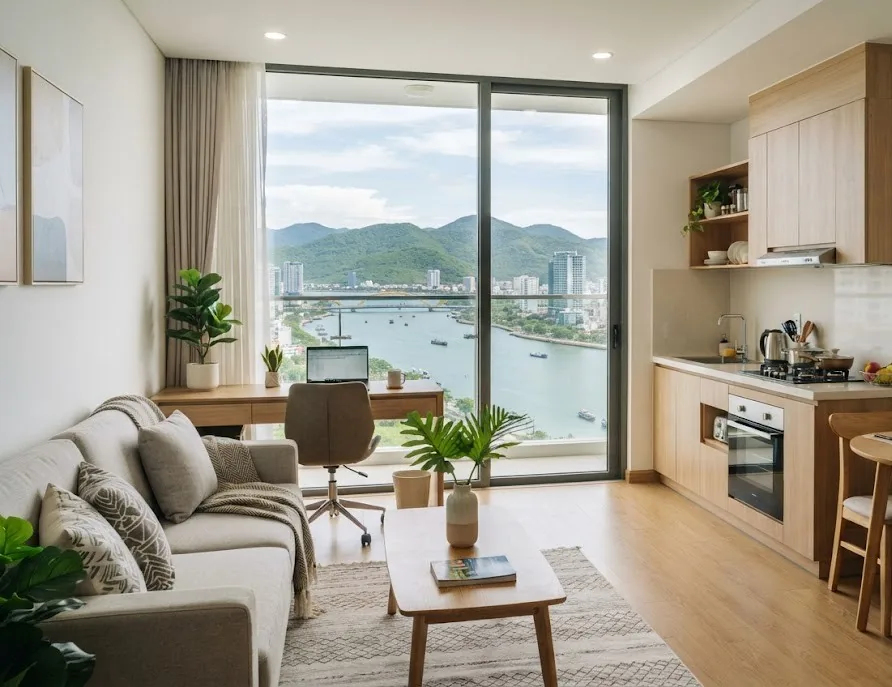
What Defines a Serviced Apartment in Da Nang for Extended Stays?
A serviced apartment in Da Nang is a fully furnished rental unit that combines the space of a private home with hotel-style amenities, specifically designed for stays of one month or longer. Unlike standard hotels, these apartments offer separate living areas, fully equipped kitchens, and laundry facilities. Unlike private long-term rentals, they include regular housekeeping, on-site management, and flexible lease terms. This hybrid model has become the preferred choice for digital nomads, expat professionals, and families relocating temporarily to Da Nang in 2026.
Key Differences Between Serviced Apartments, Hotels, and Regular Rentals
The main distinction lies in the balance between independence and service. A hotel room gives you daily housekeeping and a reception desk but locks you into a small space with no cooking facilities—a 30-night hotel stay in Da Nang averages VND 12-25 million for a standard room. A regular rental through a local agent saves money (VND 5-8 million for a one-bedroom) but requires you to buy furniture, set up utilities, and handle maintenance yourself.
Serviced apartments sit in the middle: you get a furnished home with weekly cleaning, a reception desk, and all bills included, typically costing VND 8-18 million per month for a one-bedroom unit near the beach.
| Feature | Hotel (Standard Room) | Serviced Apartment | Regular Rental (Unfurnished) |
|---|---|---|---|
| Minimum stay | 1 night | 1 month | 6-12 months |
| Kitchen access | None (minibar only) | Full kitchen | Requires setup |
| Housekeeping | Daily | Weekly | Self-managed |
| Monthly cost (1BR) | VND 15-25 million | VND 8-18 million | VND 5-8 million + bills |
| Lease flexibility | Nightly booking | Monthly renewal | Fixed-term contract |
| WiFi reliability | Hotel network | Dedicated fiber | Self-setup required |
The “Home Comforts” Package: Kitchen, Living Space, and Privacy
What makes serviced apartments truly livable for extended stays is the separation of functional zones. A typical unit includes a living room with a sofa and TV, a separate bedroom with a wardrobe, and a kitchen area with a stove, refrigerator, and basic cookware. This layout matters more than most first-time renters realize—after three weeks in a single hotel room, the lack of spatial separation starts affecting sleep quality and productivity. The kitchen alone saves you VND 3-5 million per month on food costs if you cook dinner at home five nights a week instead of eating out.
Privacy is another underrated factor: in a serviced apartment, housekeeping visits weekly rather than daily, meaning you control your own schedule without interruption.
Why Da Nang in 2026 is a Prime Market for Long-Stay Serviced Living
Da Nang has become Southeast Asia’s most accessible long-stay destination due to direct international flights, upgraded infrastructure, and visa policies that favor remote workers. The city’s 2026 master plan includes the completion of the Da Nang-Quang Ngai expressway extension and a second terminal at Da Nang International Airport, which handled 15 million passengers in 2026 according to the Civil Aviation Authority of Vietnam. These developments make the city more connected than ever for travelers arriving from Japan, South Korea, Singapore, and Europe.
Infrastructure Upgrades and the Growing Expat Community
The expat population in Da Nang has grown steadily, reaching an estimated 12,000-15,000 long-term foreign residents by early 2026. This growth has driven demand for serviced apartments, leading to a construction boom in the Ngu Hanh Son and Son Tra. New developments like the Sun Group’s coastal projects and the expansion of the Truong Sa road network have opened up previously residential-only areas for serviced living. The Da Nang government has also invested in flood drainage systems and underground power lines in the My Khe area, addressing two common complaints from earlier expat cohorts.
For a long-stay visitor, this means better infrastructure reliability and a wider selection of modern apartment buildings than what existed even two years ago.
The Rise of Remote Work and Digital Nomad Visas
Vietnam’s updated visa policies for 2026 have made extended stays significantly easier. The e-visa now allows 90-day single or multiple entries for citizens of 80 countries, and the proposed digital nomad visa—expected to launch in late 2026—would permit stays of up to 12 months with proof of remote employment. This regulatory shift directly benefits serviced apartment occupancy rates.
According to a 2025 survey by Nomad List, Da Nang ranked as the third most popular city in Asia for remote workers, citing cost of living (VND 25-35 million per month for a comfortable lifestyle) and internet reliability (average 85 Mbps fiber) as top factors. Serviced apartments cater specifically to this demographic by offering co-working spaces within buildings, meeting rooms, and business-grade WiFi as standard inclusions.
Choosing the Right Neighborhood for Your Long-Term Stay
Your neighborhood choice in Da Nang determines daily convenience, noise levels, and access to amenities more than any other factor during an extended stay. The three main areas for long-term renters—My Khe/Phuoc My, Hai Chau, and Ngu Hanh Son—each serve different lifestyles. My Khe suits beach lovers and social nomads, Hai Chau appeals to professionals and city explorers, while Ngu Hanh Son works best for families and those seeking quiet living. Visiting each area during both daytime and evening before committing to a lease helps avoid common mismatches between expectations and reality.
My Khe / Phuoc My (Son Tra): Beachfront Living and Vibrant F&B Scene
This area stretches along the eastern coastline from the My Khe public beach up to the Son Tra peninsula. It is the most popular zone for expats and digital nomads, with hundreds of serviced apartment buildings concentrated on streets like Vo Nguyen Giap, An Thuong 1-6, and Hoang Sa. The advantages are clear: you are within a five-minute walk of the beach, surrounded by international restaurants (Korean, Japanese, Italian, Indian), and part of a community where English is commonly spoken in cafes and shops.
The downsides include higher rent (VND 10-18 million for a one-bedroom), traffic noise on main roads, and the risk of karaoke bars operating until 11 PM on side streets. For maximum quiet, choose a unit on a small alley off An Thuong rather than directly on Vo Nguyen Giap.
Hai Chau (City Center): Convenience, Business Hubs, and Riverside Views
Hai Chau covers the city core along the Han River, including the Dragon Bridge area, Bach Dang Street, and the administrative districts. This neighborhood suits travelers who prefer urban convenience over beach proximity. Serviced apartments here are often located in newer high-rise buildings with river views, gyms, and swimming pools. The area offers direct access to supermarkets (Lotte Mart, Big C), hospitals, and the main bus routes to Hoi An and Hue.
Monthly rent ranges from VND 8-15 million for a one-bedroom in an older building to VND 20-35 million for a premium two-bedroom in a luxury tower like the Monarchy or Sun Cosmo Residence. The main drawback is the lack of beach access—you will need a motorbike or Grab for the 10-minute ride to My Khe.
Ngu Hanh Son (Marble Mountain Area): Quieter, Family-Friendly, and New Developments
South of the city center, Ngu Hanh Son district includes the Marble Mountain tourist area, the Non Nuoc beach stretch, and new residential developments along Truong Sa Road. This area has seen the most construction of serviced apartment buildings since 2023, with many offering larger units at lower prices than Son Tra. A one-bedroom serviced apartment here costs VND 7-12 million per month, often with better square footage and newer furniture than comparable units in My Khe. The trade-off is fewer dining options and a quieter social scene—you will rely on motorbike travel for most errands.
Families with children prefer this area because of the larger apartments, lower traffic, and proximity to international schools like the British International School and Singapore International School.
Cost Breakdown: What Does a Serviced Apartment Rent for in 2026?
Monthly rent for serviced apartments in Da Nang varies by district, unit size, and building age, with one-bedroom units ranging from VND 7 million to VND 25 million. The table below provides realistic 2026 pricing based on current market listings and recent rental data from expat forums and real estate agents.
| Apartment Type | My Khe / Son Tra | Hai Chau | Ngu Hanh Son |
|---|---|---|---|
| Studio (25-35 m²) | VND 7-12 million | VND 6-10 million | VND 5-8 million |
| 1-Bedroom (40-55 m²) | VND 10-18 million | VND 8-15 million | VND 7-12 million |
| 2-Bedroom (60-85 m²) | VND 18-30 million | VND 15-25 million | VND 12-20 million |
| Premium 2BR (90+ m²) | VND 30-45 million | VND 25-40 million | VND 20-35 million |
Utility Bills, Cleaning Fees, and Hidden Costs to Negotiate
Most serviced apartments include water and internet in the monthly rent, but electricity is often billed separately at the local rate (approximately VND 2,500-3,500 per kWh in 2026). For a one-bedroom apartment running air conditioning 8-10 hours daily, expect an additional VND 1-2 million per month. Weekly cleaning is typically included, but some buildings charge VND 200,000-500,000 per extra cleaning session. Parking for one motorbike is usually free, while car parking adds VND 1-2 million monthly. The hidden cost most renters overlook is the deposit structure—most landlords ask for one month’s deposit plus one month’s rent upfront.
Negotiate for a reduced deposit (one month total) if you commit to a three-month or longer stay, which is standard practice in Da Nang’s serviced apartment market.
How Rental Prices Compare to Hotels and Short-Term Airbnb Stays
For a 30-night stay, the cost difference is substantial. A standard hotel room in My Khe costs VND 400,000-800,000 per night, totaling VND 12-24 million per month without kitchen access. An Airbnb one-bedroom apartment in the same area averages VND 600,000-1,200,000 per night including cleaning fees, totaling VND 18-36 million per month. A serviced apartment at VND 10-18 million per month saves you 25-50% compared to hotels and 40-60% compared to Airbnb, while providing more space and amenities.
The savings increase further if you cook at home—estimated VND 3-5 million per month on food—and if you stay longer than three months, many serviced apartment buildings offer 10-15% discounts on the listed monthly rate.
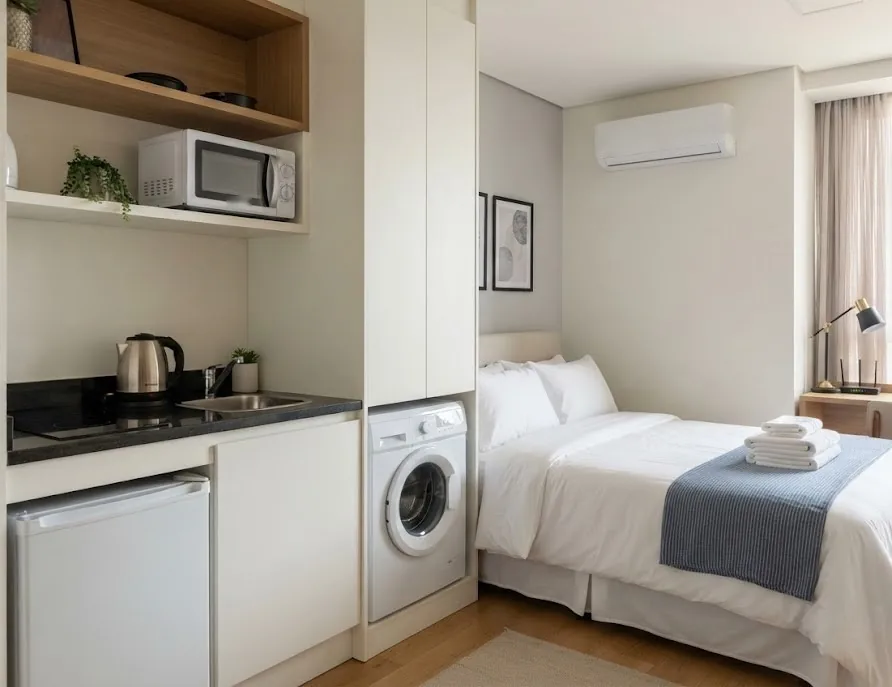
Must-Have Amenities for a Comfortable Extended Visit
Reliable WiFi, consistent hot water, and quiet air conditioning are non-negotiable amenities that directly impact your daily comfort during a long-term stay. Unlike a weekend trip where you can tolerate minor inconveniences, a one- to six-month stay exposes every flaw in the apartment’s infrastructure. Testing these amenities during a physical viewing—not just relying on listing photos—prevents weeks of frustration.
The Non-Negotiables: Reliable WiFi, Hot Water, and Quiet Air Conditioning
Internet speed should be your first check. Ask for a speed test during the viewing—aim for at least 50 Mbps download for video calls and streaming, with 100 Mbps being ideal for remote work. Many serviced apartments in Da Nang offer fiber optic connections from VNPT or Viettel, but some buildings share bandwidth across units, causing slowdowns during peak hours (7-10 PM). Hot water is another critical check: some older buildings use electric water heaters that run out after 10-15 minutes, while newer buildings have centralized gas or solar systems with unlimited supply.
Test the AC in each room during the viewing, especially in the bedroom, where noise levels matter most for sleep quality.
Lifestyle Amenities: Pool, Gym, On-Site Security, and Parking
- Swimming pool: A clean, regularly maintained pool adds significant value during Da Nang’s hot season (April-September). Check if the pool is open year-round and whether it is shared with a hotel that may prioritize paying guests.
- Gym equipment: Many serviced apartments advertise a “gym” that turns out to be a single treadmill and a broken bench. Visit the gym during your viewing—look for at least a multi-purpose machine, free weights, and working cardio equipment.
- 24/7 security: A security guard at the entrance and CCTV coverage in common areas are standard in most serviced apartment buildings. Confirm that the security desk can receive packages and that there is a protocol for after-hours emergencies.
- Parking: Free motorbike parking is expected in most buildings. If you plan to rent a car, confirm parking availability and cost—some buildings have limited car spaces that require advance booking.
- Elevator: For units above the third floor, a working elevator is essential. Older walk-up buildings (common in My Khe) may have apartments on the 4th or 5th floor with no lift, which becomes exhausting during daily grocery runs.
The “Kitchen Test”: What to Look for in a Fully Equipped Kitchen
The kitchen is the feature that most distinguishes a serviced apartment from a hotel room, but not all kitchens are created equal. During your viewing, check for the following: an induction cooktop or gas stove (gas is preferred for even cooking), a refrigerator with a freezer compartment (not just a minibar), a microwave or oven, and basic cookware including a frying pan, pot, and knife set. Many serviced apartments provide plates, bowls, and cutlery, but confirm this before signing—some units leave the kitchen completely empty.
The sink should have hot water, and there should be a ventilation hood or window to remove cooking smoke. If the kitchen fails these checks, factor in the cost of buying your own cookware (VND 1-2 million for a basic set) or reconsider the unit entirely, since eating out for every meal adds VND 5-8 million to your monthly expenses.

The Rental Process: From Search to Lease Signing
Finding and securing a serviced apartment in Da Nang involves three main channels: Facebook expat groups, real estate agents, and direct building inquiries—each with distinct advantages and risks. The process typically takes 3-7 days from initial search to move-in, provided you have a clear budget and neighborhood preference. Starting your search two weeks before your arrival date gives you enough time to compare options and avoid rushed decisions.
Where to Find Listings: Facebook Groups vs. Real Estate Agents vs. Direct
- Facebook groups: “Da Nang Expats,” “Da Nang Serviced Apartments,” and “Da Nang Housing” are the most active groups, with 10-30 new listings posted daily. Owners and agents post photos, prices, and contact information directly. The advantage is zero commission fees—you deal directly with the owner or building manager. The risk is fake or outdated listings; always request a video call or in-person viewing before paying any deposit.
- Real estate agents:Their advantage is access to a curated inventory of verified apartments, assistance with lease translation, and help negotiating terms. This route is safer for first-time renters or those who cannot visit in person before arrival.
- Direct building inquiries: Walking into serviced apartment buildings and asking the reception desk about available units is an underused but effective strategy. Many buildings have unlisted units that are not advertised online. This method works best in My Khe and Ngu Hanh Son, where serviced apartment buildings are concentrated on specific streets.
The Viewing Checklist: What to Inspect Before Paying a Deposit
Never pay a deposit without seeing the exact unit you will rent—photo-switching is a common issue in Da Nang’s rental market. During the viewing, bring this checklist:
- WiFi speed test: Run a speed test on your phone using the building’s network. Aim for 50 Mbps minimum, 100 Mbps preferred.
- Water pressure: Turn on the shower and both sink taps. Low water pressure is a persistent problem in older buildings, especially on upper floors.
- Air conditioning test: Turn on the AC in each room and wait 2-3 minutes. Check that it cools effectively and that the outdoor unit is not excessively loud.
- Noise check: Stand near the windows and doors for 2-3 minutes. Listen for street noise, neighboring karaoke, or construction sounds. Repeat this check in the evening if possible.
- Furniture condition: Open all drawers, closets, and cabinets. Check for mold in the bathroom corners and under the sink. Inspect the mattress for stains and sagging.
- Lock and security: Test the front door lock, window locks, and any sliding door mechanisms. Confirm that the building has a security guard at night.
Understanding the Lease: Deposit, Minimum Stay, and Notice Periods
A standard serviced apartment lease in Da Nang is a one-page document in Vietnamese, sometimes with an English translation. Key terms to verify include the minimum stay (typically one month, with discounts for three- or six-month commitments), the deposit amount (usually one month’s rent), and the notice period for moving out (often 15-30 days). Some leases include a clause that the deposit is non-refundable if you leave before the minimum stay—negotiate this to a pro-rated refund if possible. Electricity billing should be clearly stated: either a fixed monthly amount or metered usage at the local rate.
If the landlord speaks limited English, bring a Vietnamese-speaking friend or use a translation app during lease signing.
Important Considerations and Common Pitfalls for Long-Stay Renters
Even with careful planning, several common issues can disrupt a long-term stay in Da Nang—noise from construction and karaoke, misleading listing photos, and unexpected lease clauses are the most frequent complaints among expat renters. Anticipating these problems before they occur saves you from stressful mid-stay moves or financial losses.
Noise and Construction: How to Avoid a Disrupted Stay
Da Nang is undergoing rapid development, particularly in Ngu Hanh Son and along the Truong Sa coastal road. Construction noise from 7 AM to 5 PM, six days a week, is common in these areas. During your viewing, ask the building manager about any planned construction projects within a 500-meter radius for the next 3-6 months. Check for visible construction cranes from the apartment windows—if you see any, assume that noise will be a factor. Karaoke noise is another persistent issue, especially in My Khe where bars and family gatherings operate until 11 PM.
Choose a unit on a small alley (hem) rather than a main road, and avoid ground-floor apartments near karaoke establishments. If noise sensitivity is high, consider Hai Chau’s riverside buildings, which tend to be quieter due to fewer entertainment venues.
Scams and Misleading Photos: How to Verify a Listing
Rental scams in Da Nang typically take three forms: listing photos that do not match the actual unit, requests for deposits before viewing, and “bait-and-switch” where the advertised apartment is “unavailable” but a more expensive unit is offered. To protect yourself: never pay a deposit without a physical viewing or a live video call showing the exact unit. Request to see the apartment’s electricity meter and WiFi router to confirm that the photos match the actual location. Use Google reverse image search on listing photos to check if they appear on multiple listings.
If the price seems too good to be true—for example, a two-bedroom serviced apartment in My Khe for VND 8 million—it is almost certainly a scam. Legitimate listings at that price point exist only in older buildings in Hai Chau or Ngu Hanh Son.
The “First Week” Strategy: Why You Should Book a Short-Term Rental First
The most common mistake long-stay renters make is committing to a lease before experiencing the neighborhood. Book a hotel, hostel, or Airbnb for your first 5-7 days in Da Nang. Use this time to visit serviced apartments in person, test commute times to your preferred cafes or co-working spaces, and assess noise levels at different times of day. This strategy also gives you leverage in negotiations—landlords are more likely to offer discounts to tenants who can move in immediately rather than those who need to wait two weeks.
During this first week, visit at least three apartments in your target neighborhood. Compare them on the checklist items above, and do not rush into a decision just because you feel pressure from a landlord claiming “other interested tenants.” In Da Nang’s serviced apartment market, new listings appear daily, and the right unit will still be available if you wait a day or two.
Related on this site
- Finding the Perfect Da Nang Serviced Apartment for Extended Stays 2026
- Da Nang Aparthotels: Home-Like Comfort for Extended Stays 2026
- Da Nang Apartments with Kitchens: Cook Your Own Meals 2026
Frequently Asked Questions
Can I negotiate the monthly rent for a serviced apartment in Da Nang?
Yes, negotiation is standard practice, especially for stays of three months or longer. Start by asking for a 10-15% discount on the listed monthly rate. If the landlord hesitates, offer to pay two months upfront or commit to a six-month lease in exchange for a reduced rate. The best time to negotiate is during the low season (October-February) when occupancy rates drop.
Is it cheaper to rent a serviced apartment than stay in a hotel for a month?
Yes, significantly. A serviced apartment typically costs 25-50% less than a hotel room for a 30-night stay, while providing more space and kitchen access. The savings increase if you cook at home and negotiate a multi-month discount.
What is the typical minimum stay for a serviced apartment in Da Nang?
The standard minimum stay is one month. For stays shorter than two weeks, a hotel or Airbnb is usually more cost-effective.
Do serviced apartments in Da Nang allow pets?
Some do, but it is not standard. Pet-friendly serviced apartments are more common in Ngu Hanh Son and Hai Chau than in My Khe. Expect to pay an additional deposit of VND 2-5 million and a monthly pet fee of VND 500,000-1,000,000. Always confirm the pet policy in writing before signing the lease.
How do I pay rent if I am coming from abroad?
Most landlords accept bank transfers in VND or USD, and some accept cash upon arrival. If you are paying from a foreign bank account, factor in 2-3 business days for international transfers to clear. Some serviced apartments also accept payment via Wise or PayPal, but confirm this in advance. Avoid wiring a deposit before seeing the apartment in person or via live video call.
Working out a monthly budget? See what Da Nang costs per day.