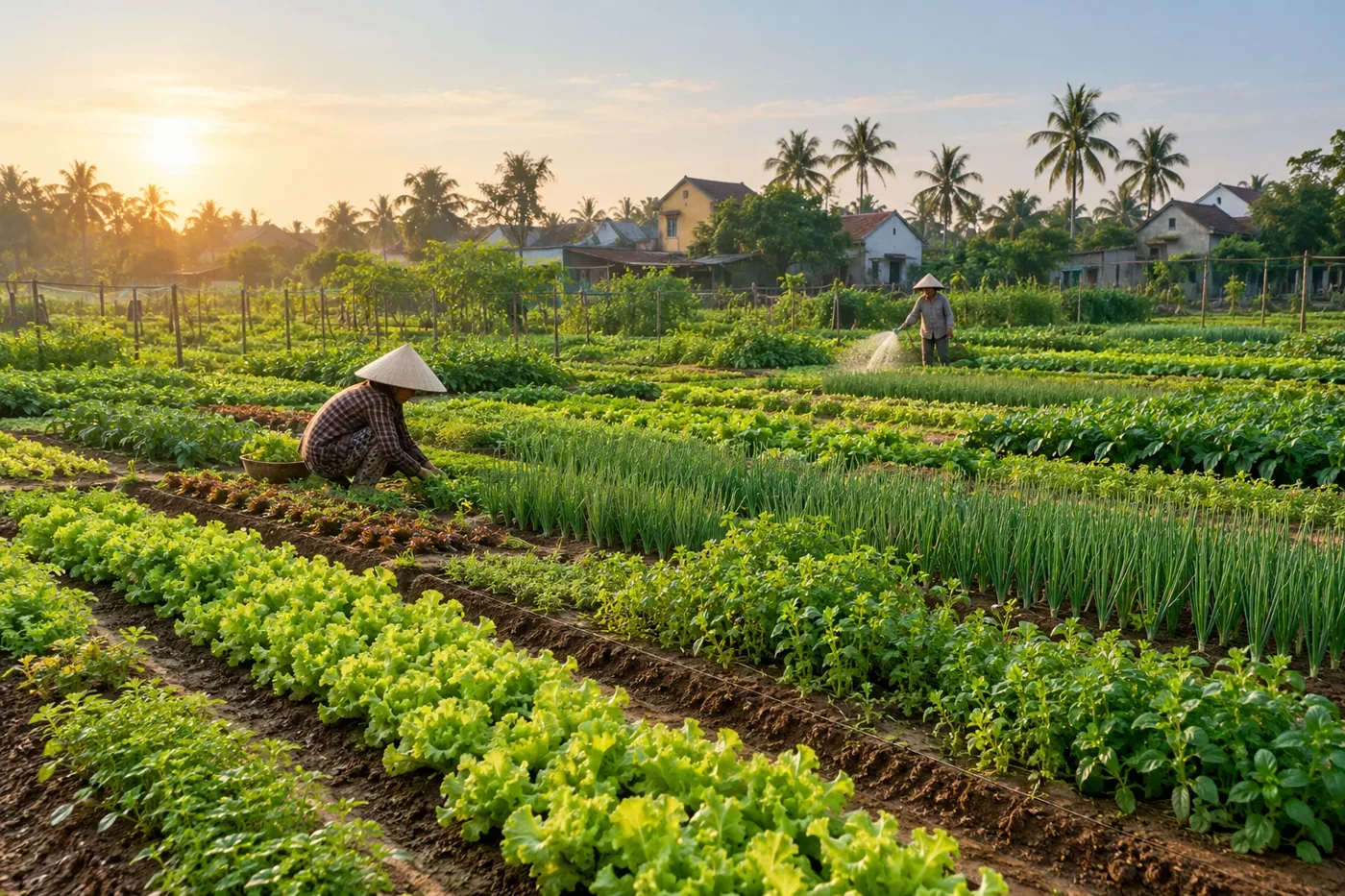
Tra Que Vegetable Village is a food-and-farming stop north of Hoi An, suited to a guided garden visit, a cooking class or a short walk along permitted village paths. Allow around one to two hours for a simple visit, or the full advertised duration for a farm-and-cooking programme. Book participation with a host; working vegetable beds are not public props.
Images in this guide are AI-generated illustrations, not on-site photographs. They do not establish current access, facilities or conditions.
For the wider trip, use our Hoi An travel guide.
Why visit Tra Que?
The interest is in seeing how herbs and vegetables are grown near the town where they are eaten. A host can connect the gardens to the flavours on your plate, explaining cultivation and seasonal work. It is a good choice if you prefer a slower activity with conversation over a checklist of monuments.
UN Tourism lists Tra Que Vegetable Village among its Best Tourism Villages for 2024. This is a specific tourism recognition, not a UNESCO World Heritage inscription and not a certification of every individual tour business.
Choose a walk, a farm activity or a cooking class
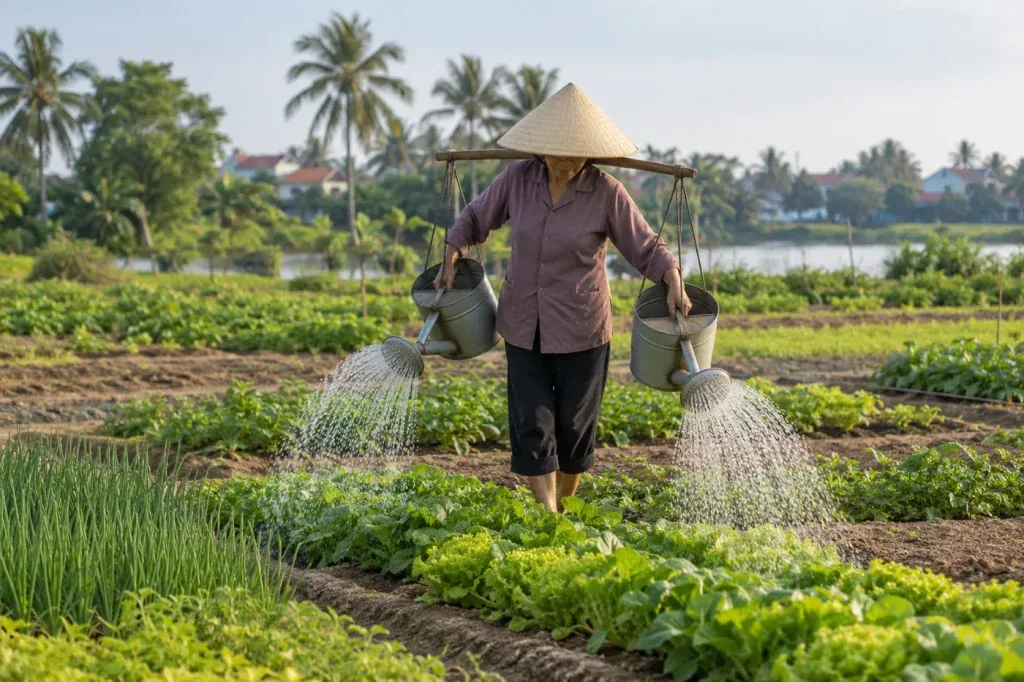
A short village visit
Stay on public or clearly permitted paths, look at the gardens from the edges and ask before entering a plot. A short visit can work between Hoi An and the beach, but do not expect demonstrations simply because farmers are working nearby.
A hosted farming session
Ask the host what is suitable on your date. Watering, planting or another demonstration depends on the crop and farm work; activities should not be guaranteed year-round. Wear practical shoes and clothes you do not mind getting dirty.
A cooking programme
Check whether the package includes a market visit, garden activity, hands-on cooking or only a demonstration, and whether the meal is the food you prepare. Ask about the menu, group size, language, transfers and total duration. Dietary needs are easier to accommodate when discussed before the ingredients are bought.
Getting there from Hoi An
UN Tourism places the village about three kilometres north of the Ancient Town. Use your host’s exact address rather than the village name alone. A taxi or arranged transfer works well for a timed class; cycling can be pleasant for confident riders in suitable conditions.
Choose a cycling route for traffic and surface conditions, not just the shortest map line. Carry water, allow time to find the meeting point and avoid narrow farm paths that are not intended for visitor bicycles.
Fees, hours and booking
No current official, universal visitor tariff or opening schedule was confirmed for this guide. A village visit, guided farm session and cooking class are different products. Ask your host which entry or activity fees apply and get the final total, inclusions and cancellation terms before paying.
Farm work does not follow the same timetable as a ticketed museum. If your priority is meeting a grower or joining an activity, arrange a time rather than arriving and expecting someone to be available. Check whether bad weather changes the outdoor part of your booking.
Best timing and practical access
Early or later parts of the day can make time outside more comfortable, but follow your host’s schedule. In strong heat, shorten the walking portion and take breaks. After heavy rain, paths may be muddy or slippery.
Garden paths can be narrow and uneven. If you use a wheelchair or have limited mobility, ask about a firm route, an accessible teaching space and toilets. A cooking session at an accessible venue may suit you better than moving between beds.
Respecting a working village
- Ask before photographing a farmer closely or entering a garden.
- Do not pick herbs, step onto beds or move tools for photographs.
- Pay for the activity you agree to and clarify any extra charges before taking part.
- Keep voices low near homes and leave room for residents and deliveries.
- Take litter away and follow the host’s instructions when handling produce or equipment.
What to combine with Tra Que
A village visit and lunch can pair with An Bang Beach later in the day. If the cooking class is long, leave the rest of the afternoon flexible. The Ancient Town offers a separate architectural experience; dividing them across two days gives each more attention.
Turn a garden visit into a food-learning experience
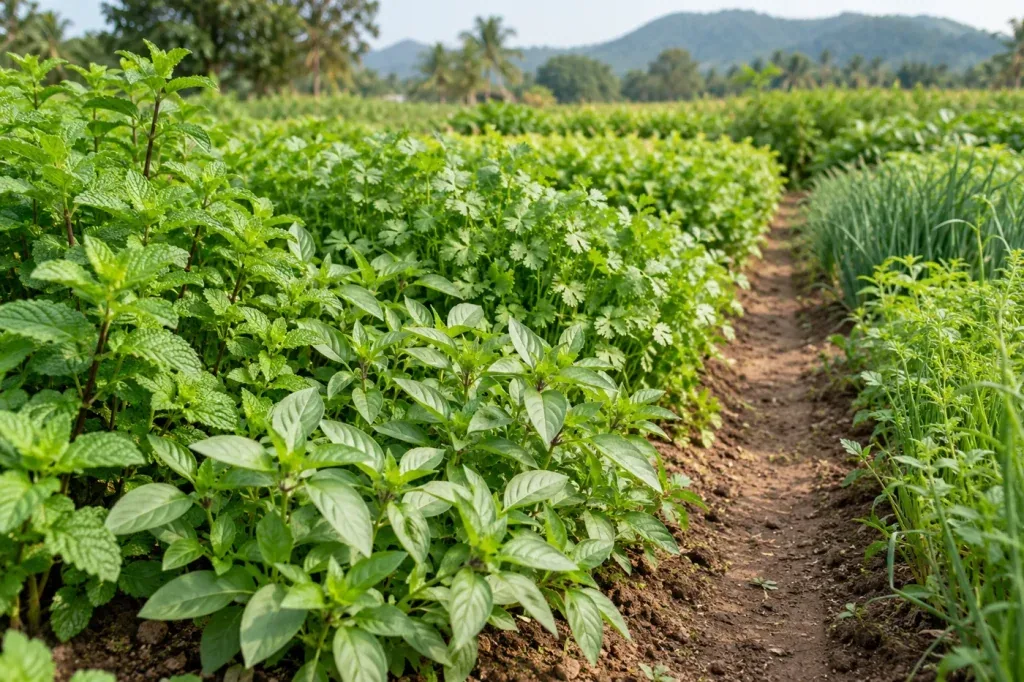
Ask your host to show how a few plants connect to dishes you might order in Hoi An. Rather than trying to memorise every crop, choose two or three ingredients and discuss their smell, texture and use in cooking. Ask before touching or tasting anything, and follow the host’s instructions about handling and washing produce. A vegetable bed is a working space, not a self-service tasting display.
Useful questions include what is growing during your visit, which tasks are needed that week and where the produce will be used or sold. This keeps the conversation tied to the farm in front of you. Avoid expecting the same demonstration shown in a tour photograph: cultivation changes with the crop, weather and work schedule, and the host should be able to explain what is appropriate that day.
Compare cooking classes on participation
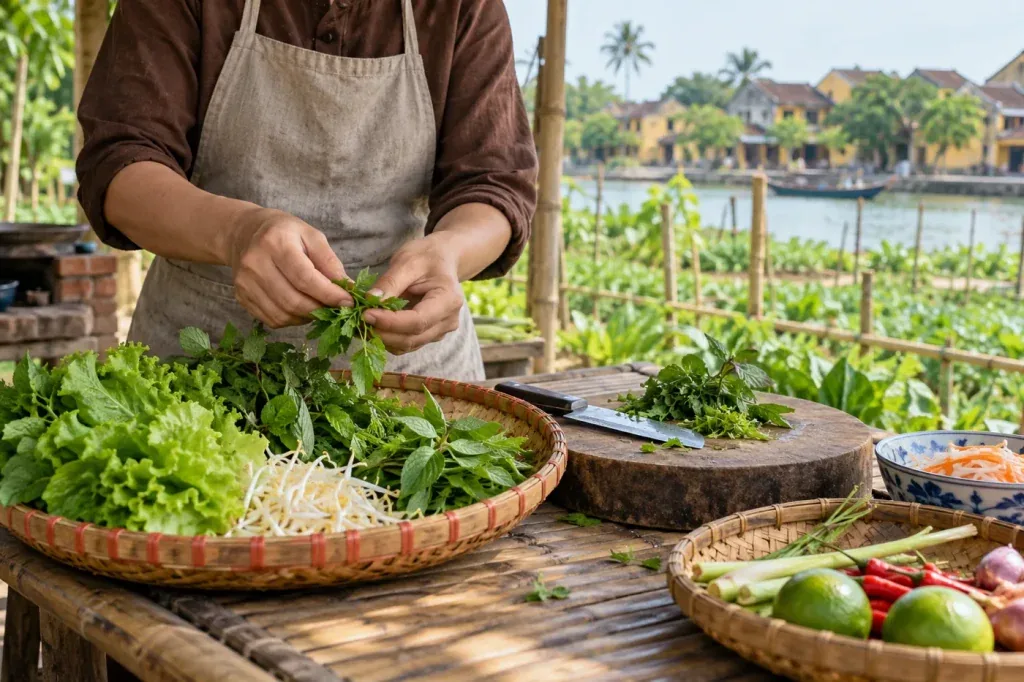
A menu is only one part of choosing a class. Ask how many people share a workstation, which steps each guest performs and how much time is spent preparing rather than watching. If the class includes a market stop, check whether it is an explanation of ingredients or time for independent shopping. Confirm whether recipes are supplied in a language you can use after returning home.
Discuss dietary requirements before paying. Ask how ingredients and sauces can be changed and whether the teaching space can accommodate your needs. A dish described as vegetable-based does not by itself establish that every sauce or stock suits your diet. If the provider cannot give a clear answer, choose a programme that can explain its menu more precisely rather than relying on a general assurance.
Plan a short visit or a complete activity
A brief stop between town and beach
Choose this when you mainly want to see the gardens from permitted paths. Keep the walk compact, respect private plots and leave demonstrations out of the plan unless arranged. A short stop should not become an unannounced interruption to someone’s work. If you want to ask detailed questions, book a hosted visit so that time has been set aside for you.
A farm-and-cooking half-day
Allow the host’s full programme and leave your next booking flexible. Check whether the meal replaces lunch or is a smaller tasting before reserving another restaurant. Bring suitable clothing for both outdoor activity and a kitchen, and ask where bags can be kept. For children, discuss the tasks and supervision required instead of assuming that every cooking stage is suitable for every age.
What the tourism award does and does not tell you
The village’s UN Tourism recognition provides context for its tourism development. It does not select a particular booking agent for you or guarantee the quality of an individual class. Judge a provider by the clarity of its programme, communication, group arrangements and ability to answer your practical questions.
Frequently asked questions
Can I just walk around?
You can plan a short visit using permitted paths, but private gardens and organised activities require permission or booking. Check local signs and any applicable visitor fee.
Is every cooking class based in the village?
No. Read the meeting address and programme: a tour may mention Tra Que while cooking elsewhere.
Is it suitable for children?
A host-led activity can work well if the tasks, duration and cooking equipment are appropriate. Discuss ages and supervision with the provider before booking.