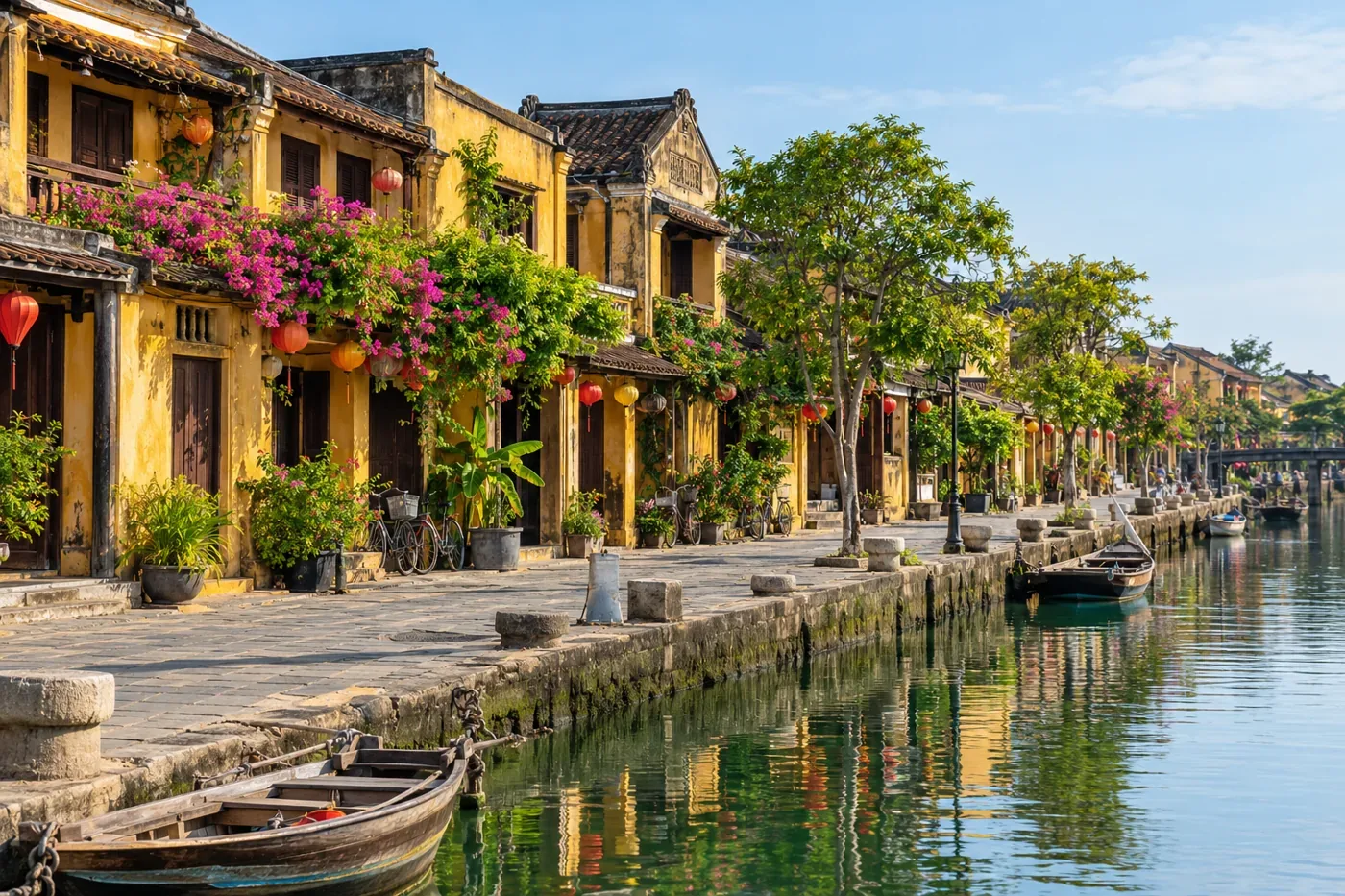
Hoi An Ancient Town is the historic trading-port quarter best explored on foot, combining merchant houses, assembly halls, museums and the Japanese Covered Bridge. Give it at least half a day, with time in daylight for heritage interiors and an evening return for the riverside atmosphere. Buy the appropriate heritage ticket before your visit and check which sites it covers.
Images in this guide are AI-generated illustrations, not on-site photographs. They do not establish current access, facilities or conditions.
This guide covers the historic quarter itself. For accommodation and the wider area, use our Hoi An travel guide; for the journey and return arrangements, see a Hoi An day trip from Da Nang.
Why the old town matters
UNESCO inscribed Hoi An Ancient Town in 1999. Its heritage lies in the street pattern, timber buildings and blend of local and overseas influences associated with a trading port active from the 15th to 19th centuries. Looking at how houses face the streets and connect towards the river adds context beyond the familiar lantern photographs.
It is also a lived-in neighbourhood. Shops, places of worship and homes share the same streets, so stay out of private rooms and do not assume an attractive doorway is a public attraction.
Understanding the heritage ticket
The heritage centre’s April 2024 notice lists a 120,000 VND ticket covering the town landscape, either the Japanese Covered Bridge or Quan Cong Temple, one museum and three other selected heritage sites. It asks visitors to purchase before entering and retain the stub for possible re-entry checks. This is the official published reference available at our source check; confirm the current price, choices and validity at an authorised ticket counter.
Use the printed map to choose sites that interest you. A ticket is not a promise that every building, performance, boat ride or workshop is included. Check opening times for individual interiors before leaving them until the evening.
A flexible heritage walk
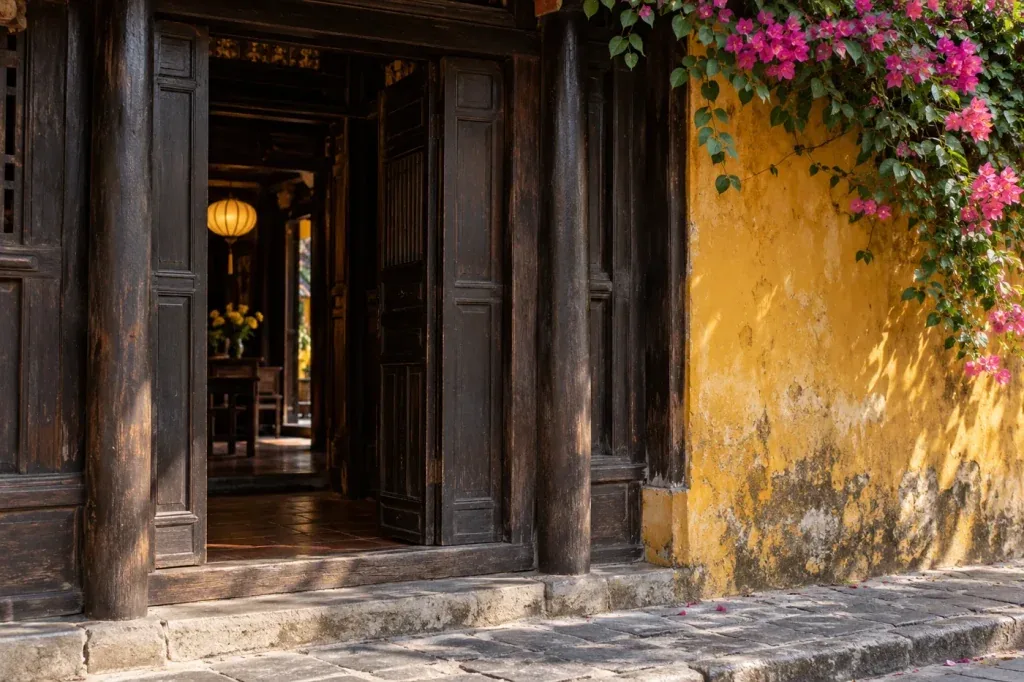
Start with the Japanese Covered Bridge area
Use the bridge as a western landmark, then follow the streets into the historic quarter. Take a short look from outside before deciding how to use your ticket allocation. Our Japanese Covered Bridge guide explains the monument and restoration context.
Choose a merchant house and an assembly hall
Look for an open historic house such as Tan Ky and an assembly hall such as Phuc Kien, checking eligibility on the current ticket list. A guide can help explain the use of courtyards, altars and trading spaces. Avoid treating every furnished room as a museum display: some buildings retain active religious or domestic uses.
Add a museum, then the riverfront
Choose a museum by subject rather than entering every possible stop. Leave time for a shaded drink, then walk towards the waterfront. The route works in either direction; shorten it if heat, rain or crowded interiors make the visit tiring.
Daylight or evening?
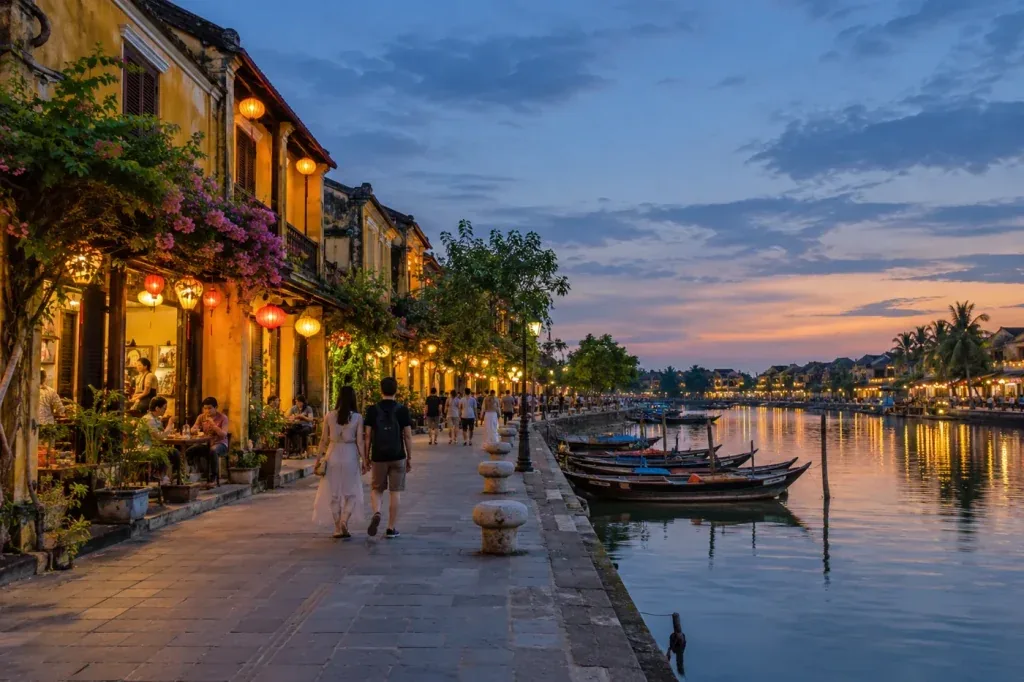
Daylight makes architecture and museum visits easier. Evening brings illuminated streets and busier riverside areas, but not necessarily access to the interiors you wanted to see. A late-afternoon arrival can combine both, provided you check the heritage sites’ closing times first.
Do not depend on a particular monthly festival without checking its actual date and programme. Lanterns are part of the town’s everyday appearance; scheduled events are a separate matter. During heavy rain or flooding, follow local closure instructions and avoid flooded riverfront streets.
Food and shopping breaks

Cao lau, white rose dumplings and hoanh thanh are useful starting points for a Hoi An meal. Ask about ingredients and allergens rather than assuming that a dish is vegetarian because it contains herbs. Keep shopping time separate from the heritage circuit if you want to enter several buildings.
For tailoring, agree the fabric, total price, fitting times and delivery before paying a deposit. A hurried same-day visit leaves little room for alterations. Ask permission before photographing working craftspeople or merchandise up close.
Getting around and accessibility
Arrange vehicle pickup at an accessible meeting point outside the pedestrian streets, and save the pin. Vehicle restrictions vary by street and time; a hotel address inside the quarter may not be a possible car drop-off.
Flat-looking streets can still have uneven paving, kerbs and drainage gaps, while heritage buildings may have raised thresholds, steps and narrow doorways. If step-free access is essential, plan a shorter outdoor route and check specific interiors with the heritage centre.
Choose heritage interiors that tell different stories
Before using the ticket, decide what you want to understand about Hoi An. A merchant house can introduce the relationship between trade, family life and worship; an assembly hall can help explain community organisation; a museum can supply context that is difficult to infer from a street photograph. Choosing one of each may be more rewarding than visiting several similar interiors just because they are close together.
Use the current ticket map to check your choices against the categories included. If a preferred building is closed, ask for an alternative in the same category before walking across town. Keep the ticket accessible and note which admissions you have already used. Do not rely on a photograph of someone else’s older ticket to establish your own entitlement.
A half-day walk or two shorter visits?
When you have one afternoon
Put the ticketed interiors first, taking account of their actual closing times. Choose a compact route with a house, an assembly hall and the museum you are most interested in, then leave shopping and a riverside meal until afterwards. If the first stop takes longer than expected, remove a later stop instead of racing through every room. Check your return transport before committing to dinner.
When you are staying overnight
Use a daylight visit for architecture and interpretation, and treat an evening walk as a separate experience. This lets you return for the atmosphere without carrying the pressure of unfinished sightseeing. Confirm ticket validity and any re-entry terms rather than assuming two visits on different days are covered. Accommodation inside the historic quarter is convenient for walking, but also requires checking luggage access and your vehicle meeting point.
Make a guided walk more useful
Ask a prospective guide how the route explains the town’s trading history, rather than simply requesting the greatest number of stops. Useful questions include how buildings were arranged for commerce, which features show different cultural influences and how flood preparation affects present-day use. Agree whether tickets, refreshments and shopping stops are included. If you do not want retail stops, say so when setting the route.
For an independent walk, pick a few questions to investigate using the official interpretation. Look at how public and private space meet at a doorway, how a courtyard changes the feel of an interior and how a building connects to the street. You do not need to identify every symbol or architectural date to appreciate the town; avoid attaching a confident explanation to a detail you have not checked.
Frequently asked questions
Is half a day enough?
It is enough for a selected heritage walk and a meal. Two separate visits, one by day and one in the evening, give more flexibility.
Does the ticket include a lantern boat ride?
Do not assume so. Confirm boat duration, boarding point, passenger number and total price separately with the operator.
Should I also visit the beach that day?
Only if you are comfortable with a shorter heritage visit. For a slower stay, put the beach on another morning or afternoon.