Non Nuoc Stone Carving Village is a living museum where 400 years of Vietnamese craftsmanship meet the raw beauty of the Marble Mountains. This guide walks you through the village’s history, the intricate carving process, and exactly how to visit, buy authentic pieces, and connect with the artisans who keep this heritage alive.
Non Nuoc Stone Carving Village is one of Vietnam’s oldest craft villages, with a history spanning more than 400 years. Today, over 500 workshops and roughly 4,000 artisans produce everything from 10-meter statues to 5-centimeter bracelets. The craft earned National Intangible Cultural Heritage status in 2014, cementing its cultural significance. This guide covers the village’s history, the five-stage carving process, practical travel logistics from Da Nang, and insider tips for buying authentic marble souvenirs.
What Makes Non Nuoc Stone Carving Village a Living Heritage in Da Nang
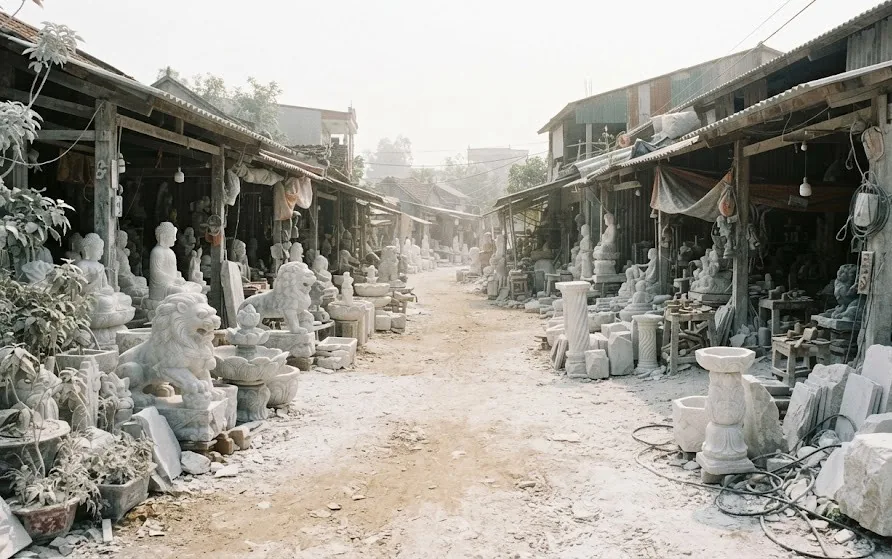
Non Nuoc Stone Carving Village is not a static museum — it is a thriving community where centuries-old techniques meet contemporary demand. The village sits at the foot of the Marble Mountains (Ngu Hanh Son), a cluster of five marble and limestone hills that have defined both the landscape and the craft. This is a place where the sound of chisels tapping against stone fills the air, where family workshops have passed down their trade through generations, and where every statue, pagoda, and decorative piece carries the imprint of a living tradition.
The 400-year journey: from Huynh Ba Quat’s first workshop to a national treasure
The village’s origin story begins in the late 17th century, when a man named Huynh Ba Quat arrived from Thanh Hoa province and established the first stone carving workshop at the foot of the Marble Mountains. He brought with him not just tools, but a deep understanding of stone — its veins, its weaknesses, its potential. Over the following centuries, his techniques spread to neighboring families, and the craft became the economic and cultural backbone of the community.
What started as a single workshop grew into a village-wide industry, with each generation refining the skills and expanding the repertoire of carved goods.
How the Marble Mountains shaped the village’s identity and craft
The Marble Mountains are not just a scenic backdrop — they are the very source of the village’s identity. For centuries, the mountains provided the raw marble that artisans carved into everything from Buddhist statues to architectural ornaments. The five mountains — Kim (Metal), Moc (Wood), Thuy (Water), Hoa (Fire), and Tho (Earth) — are themselves steeped in spiritual and historical significance, with caves, pagodas, and Buddhist sanctuaries tucked into their slopes. This sacred geography infused the craft with a spiritual dimension: carving a Buddha statue here is not merely a commercial act, but a form of devotion.
The mountains also gave the village its alternate name, “Non Nuoc,” which translates to “Mountains and Water,” reflecting the harmonious setting where the craft developed.
Why the 2014 National Intangible Cultural Heritage status matters today
In 2014, the Vietnamese government officially recognized Non Nuoc Stone Carving Village as a National Intangible Cultural Heritage. This designation is more than a ceremonial honor — it provides legal protection for the craft, encourages government support for artisan training programs, and raises the village’s profile both domestically and internationally. For visitors, this status means you are witnessing a craft that the state has deemed worthy of preservation, a craft that represents a tangible link to Vietnam’s cultural past.
It also signals that the village is committed to maintaining traditional techniques rather than fully industrializing, which is a key consideration when you are looking for authentic, hand-carved pieces.
Where Is Non Nuoc Stone Carving Village and How to Get There
The village is located in Hoa Hai ward, Ngu Hanh Son district, just 8 kilometers southeast of Da Nang’s city center and about 15 kilometers from Hoi An. Its position on the coastal road between two of central Vietnam’s most popular destinations makes it an easy and worthwhile stop on any itinerary. The village sits directly at the base of the Marble Mountains, so you can realistically visit both attractions in a single morning or afternoon.
Exact location: Hoa Hai ward, Ngu Hanh Son district — 8 km from Da Nang center
Set your GPS or show your driver “Lang Non Nuoc” or “Lang Da Non Nuoc.” The village is spread along the main road that runs parallel to the Marble Mountains, so you cannot miss it — you’ll see rows of workshops with marble statues displayed prominently outside. From Da Nang’s city center, the drive takes roughly 20 to 25 minutes depending on traffic. The route is straightforward: head east toward the coast, then follow the signs for Ngu Hanh Son / Marble Mountains.
Getting there: taxi, motorbike, or combined route with Hoi An (15 km away)
You have several options for reaching the village, each suited to different travel styles:
- Taxi or ride-hailing (Grab): The most convenient option. A Grab car from Da Nang center costs around 150,000–200,000 VND (approximately $6–$8 USD) each way. This is your best bet if you are short on time or traveling in a group.
- Motorbike rental: For experienced riders, renting a motorbike gives you flexibility to explore the Marble Mountains and nearby beaches at your own pace. Rental costs about 120,000–150,000 VND per day. The ride from Da Nang is flat and easy, following the coastal road south.
- Combined with Hoi An: If you are staying in Hoi An, the village is only a 30-minute drive away. Many travelers combine a visit to Non Nuoc with a trip to the Marble Mountains and Hoi An in a single day, as all three are along the same coastal corridor.
How to pair your visit with the Marble Mountains to save time and money
The smartest approach is to combine your visit to the stone carving village with an exploration of the Marble Mountains themselves. Since the village sits at the mountain’s base, you can spend the morning climbing the mountains, visiting the caves and pagodas, and then descend to the village to see where the marble is transformed into art. Many taxi drivers will wait for you if you negotiate a round-trip fare, or you can simply walk between the two sites. Entrance to the Marble Mountains requires a ticket (around 40,000 VND), while the village itself is free to wander.
This combination gives you a complete picture: you see the raw material in its natural setting, then witness the craftsmanship that turns it into objects of beauty.
The Craft Behind the Stone: Materials, Tools, and Techniques
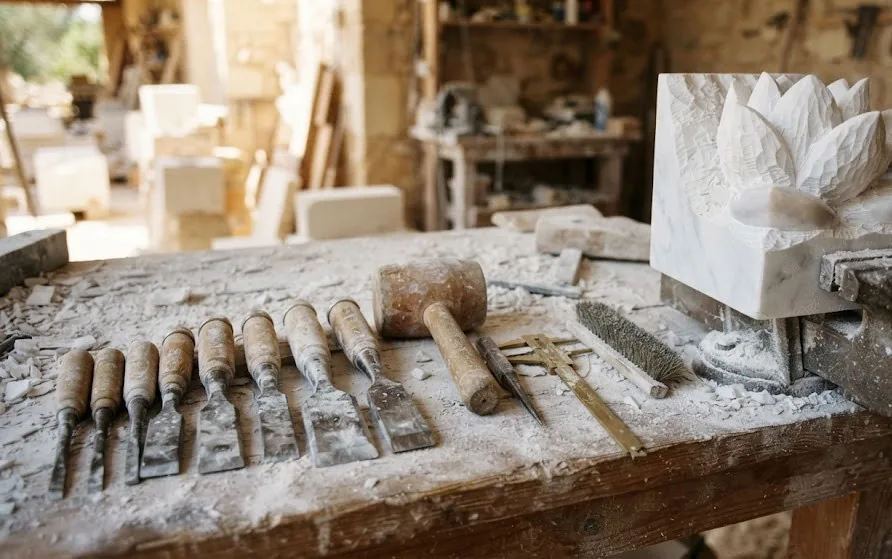
Understanding the materials and techniques elevates your visit from a casual stroll to a genuine appreciation of the craft. The artisans of Non Nuoc work with several types of marble, each with distinct properties that influence the final product. The carving process itself is a meticulous, five-stage journey that requires patience, precision, and years of training.
Types of stone used: white, blue, yellow, and pink marble — and where it comes from now
The Marble Mountains historically provided a rich variety of stone, and artisans still refer to these local types by name. The most prized is white marble (da trang), which is pure and luminous, ideal for statues of Buddha and other religious figures. Blue marble (da xanh) has a distinctive gray-blue hue and is often used for larger architectural pieces. Yellow marble (da vang) and pink marble (da hong) are rarer and add a warm, distinctive tone to decorative items.
The carving process: from raw block to polished figurine in five stages
Transforming a rough block of marble into a finished figurine is a labor-intensive process that follows a consistent sequence. Here is the five-stage breakdown you will likely observe as you walk through the workshops:
- Rough shaping: Using a large electric saw or chisel, the artisan removes the bulk of excess stone, creating the basic silhouette of the final piece. This stage requires a keen eye to work around any cracks or weak points in the marble.
- Fine carving: Using smaller chisels, hammers, and increasingly precise tools, the artisan refines the shape, adding details like facial features, folds in clothing, or the scales of a dragon. This is the most time-consuming stage and where the artisan’s skill truly shines.
- Detailed etching: For intricate patterns, decorative motifs, or fine lines, artisans use specialized tools to etch details onto the surface. This is where the piece begins to take on its final character.
- Grinding and sanding: The surface is smoothed using progressively finer abrasive stones or sandpaper, removing tool marks and preparing the marble for polishing.
- Polishing and finishing: The final stage uses a polishing compound and a rotating buffer to bring out the marble’s natural luster. Some pieces may also receive a coat of protective wax or sealant. The result is a smooth, gleaming surface that reveals the stone’s color and veining.
Why marble mining is banned locally and stone now arrives from Yen Bai, Thanh Hoa, India, or Pakistan
In the 1990s, the Vietnamese government banned local marble mining to protect the Marble Mountains, which are both a natural wonder and a site of historical and spiritual significance. This ban forced the village to adapt. Today, raw marble is imported from other regions of Vietnam — primarily the northern provinces of Yen Bai and Thanh Hoa — as well as from international sources like India and Pakistan. This shift has had a significant impact on the craft: artisans now work with stone they may be less familiar with, and the cost of raw materials has increased.
However, the ban has also ensured the preservation of the Marble Mountains themselves, allowing visitors to appreciate the landscape much as it would have appeared centuries ago.
What You’ll See Inside the Village: Workshops, Artisans, and Products
Walking through Non Nuoc is an immersive sensory experience — the sharp ring of chisels, the fine marble dust in the air, and the sheer scale of the works on display. The village is a working community, and you are invited to wander through the open-air workshops, watch artisans at their benches, and browse the showrooms that display finished pieces ranging from monumental statues to delicate jewelry.
Over 500 workshops and 4,000 artisans: the scale of daily production
The village is a significant economic hub, with more than 500 workshops and an estimated 4,000 artisans working daily. This is not a small, struggling craft community — it is a thriving industry that supplies stone products to customers across Vietnam and around the world. As you walk the main street, you will see the production process in action: workers hauling raw blocks, artisans hunched over half-finished statues, and showrooms filled with gleaming finished pieces. The sheer number of workshops means you have the freedom to browse widely, compare quality, and find pieces that speak to you.
From 10-meter statues to 5-centimeter bracelets: the range of crafted goods
The range of products is staggering. At the grand end, you will find massive statues that tower up to 10 meters high and weigh as much as 30 tons — these are often commissioned for temples, pagodas, and public parks. In dramatic contrast, the same workshops produce delicate bracelets, pendants, and small figurines that measure just a few centimeters across. In between, you will find a vast array of items:
- Buddhist statues of all sizes, from small desktop figures to life-sized representations of Buddha, Quan Am (Goddess of Mercy), and other deities.
- Architectural elements such as columns, balustrades, and decorative panels.
- Garden ornaments, including stone lanterns, fountains, and animal figures like turtles, dragons, and carp.
- Household items like mortars and pestles, tabletops, and decorative bowls.
- Jewelry and small gifts, including bracelets, earrings, and pendants made from polished marble.
Hidden details to spot: ancestral altars, manual polishing areas, and master-apprentice workshops
To truly appreciate the village, look beyond the main showrooms. Many workshops maintain a small ancestral altar, often tucked in a corner or a back room, where families honor the founder of their craft lineage and their ancestors. These altars are a reminder that this is not just a business — it is a tradition passed down through generations. Also keep an eye out for the manual polishing areas, where artisans finish pieces by hand using water and abrasive stones. This is where you’ll see the most skill on display.
Finally, look for workshops where a master is training an apprentice — this master-apprentice relationship is the heart of the village’s continuity, ensuring that the craft survives for another generation.
Best Time to Visit Non Nuoc Stone Carving Village
Timing your visit well can be the difference between a rushed stop and a genuinely memorable experience. Da Nang’s climate is characterized by two distinct seasons: a dry season and a rainy season. The dry season, which runs roughly from February to August, offers the best conditions for exploring the outdoor workshops and the Marble Mountains.
Weather windows: when to go for comfortable exploration (February–August)
The period from February to August is the ideal window for visiting Non Nuoc. During these months, you can expect sunny skies, low humidity, and minimal rainfall — perfect for wandering between workshops and climbing the Marble Mountains. The hottest months are June, July, and August, when temperatures can soar, so plan to visit the village in the morning before the heat peaks. The months from September to January bring the rainy season, with the heaviest rainfall typically occurring in October and November.
While you can still visit during this time, you’ll need to be prepared for sudden downpours and potentially slippery conditions.
Time of day: early morning vs. late afternoon for light and crowds
For the best experience, aim to arrive right when the workshops open in the early morning, around 8:00 a.m. The light is soft and golden, the air is cooler, and you’ll have the village largely to yourself before tour groups arrive. This is also the best time to see artisans at work, as they tend to do their most detailed carving in the cooler morning hours. Late afternoon, from around 3:00 p.m. to 5:00 p.m., is another good option. The light is warm and flattering for photography, and the pace of the village slows down as the day winds down.
Avoid the midday hours if you can — the sun is intense, and the village can be crowded with tour buses.
How to align your visit with local festivals and craft demonstrations
If you want to see the village at its most vibrant, try to time your visit to coincide with a local festival. The most significant is the Linh Ung Pagoda Festival, which takes place at the Marble Mountains and attracts pilgrims and visitors from across the region. The village also hosts occasional craft demonstrations and exhibitions, particularly during major holidays like Tet (Lunar New Year). While these events are not always scheduled far in advance, it’s worth asking your hotel or a local tour operator if any demonstrations are planned during your stay.
Even on a regular day, you’ll likely see artisans happy to explain their work if you show genuine interest.
Practical Tips for a Smooth Visit: What to Know Before You Go
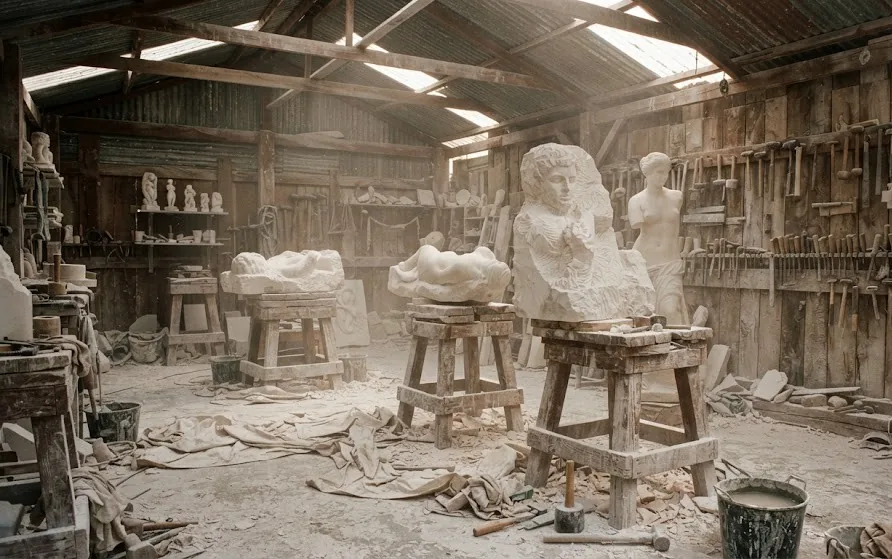
A little preparation goes a long way in making your visit to Non Nuoc both enjoyable and rewarding. This is a working industrial area, not a polished tourist attraction, so a few practical considerations will help you navigate it comfortably and respectfully.
What to wear and bring: dust, cobblestones, and walking comfort
The village is a working environment, which means there is a constant layer of fine marble dust in the air and on the ground. Wear comfortable, closed-toe shoes with good grip, as the ground can be uneven and sometimes slick with water from the polishing process. Lightweight, breathable clothing is ideal for the warm climate, but consider bringing a light scarf or bandana to cover your mouth and nose if you are sensitive to dust. Also bring sunscreen, a hat, and plenty of water, as you’ll likely be walking outdoors for a couple of hours.
How to buy souvenirs without overpaying: negotiating with artisans
Buying directly from the workshops is the best way to ensure you are getting an authentic, hand-carved piece and to support the artisans directly. Here are a few tips for a fair transaction:
- Compare prices: Visit several workshops before committing. The same item can vary significantly in price depending on the workshop and the quality of the stone.
- Assess quality: Look for smooth, even polishing, consistent color, and no visible cracks or chips. Ask the artisan to point out the differences between pieces.
- Negotiate politely: Bargaining is expected, but keep it respectful. A friendly smile and a reasonable counter-offer will get you further than aggressive haggling. A 10–20% discount is a common outcome.
- Ask about shipping: For larger pieces, ask if the workshop can arrange shipping to your home country. Many are experienced with export logistics, and this can save you the hassle of carrying a heavy statue through the airport.
Common mistakes to avoid: skipping the Marble Mountains, missing the polishing area, and ignoring workshop etiquette
Three common mistakes can diminish your visit. First, skipping the Marble Mountains is a missed opportunity — the village and the mountains are inextricably linked, and seeing the source of the stone adds depth to your understanding of the craft. Second, missing the polishing area means you’ll only see the finished products, not the labor that goes into them. Take the time to look for the artisans working on the final stages of a piece — this is where the true skill of the craft is most visible. Finally, ignoring workshop etiquette can create awkward moments.
Always ask before taking photos of artisans at work, avoid touching unfinished pieces, and be mindful that you are a guest in their workspace. A simple “xin chao” (hello) and a smile go a long way.
Related on this site
- Exploring Da Nang’s Ancient Towers: A Journey Through Champa History 2026
- Da Nang’s Must-Visit Pagodas: Spiritual Sites with Stunning Architecture 2026
- Must-See Architectural Wonders in Da Nang 2026
Frequently Asked Questions
Is the Non Nuoc Stone Carving Village free to visit?
Yes, wandering through the village and its open-air workshops is completely free. You only need to pay an entrance fee if you choose to visit the Marble Mountains, which is a separate attraction adjacent to the village.
How long should I spend at the village?
Plan for at least one to two hours to comfortably browse the workshops and watch the artisans at work. If you combine your visit with the Marble Mountains, budget for a half-day (about 3–4 hours) to cover both without rushing.
Can I watch the artisans actually carving stone?
Yes, most workshops are open to visitors, and you can watch artisans at various stages of the carving process. They are generally welcoming and happy to answer questions, though it’s polite to ask before taking photos.
Is it better to buy souvenirs at Non Nuoc or in Hoi An?
For authentic, hand-carved marble pieces, Non Nuoc is the better choice. You are buying directly from the source, which often means better prices and higher quality. In Hoi An, you’ll find more tourist-oriented shops with a wider variety of goods, but marble items are likely to be marked up.
Are the stone carvings at Non Nuoc all handmade?
While the village is known for traditional hand-carving, some workshops also use electric tools and machinery to speed up production, particularly for larger or more repetitive pieces. If authenticity is your priority, ask the artisan if a piece was carved entirely by hand. The finest, most detailed pieces are typically those where hand-carving played a significant role.
Conclusion
Non Nuoc Stone Carving Village offers a rare window into a craft that has defined a community for over four centuries. From the spiritual significance of the Marble Mountains to the intricate five-stage carving process, every aspect of the village tells a story of patience, skill, and cultural continuity. A visit here is not just about buying a souvenir — it’s about witnessing a living heritage and connecting with the artisans who keep it alive.
To make the most of your trip:
- Combine your visit with the Marble Mountains for a complete understanding of the craft’s origins and context.
- Take your time browsing workshops — compare quality and prices before committing to a purchase, and don’t be afraid to ask artisans about their work.
- Support the tradition by buying directly from the source, choosing hand-carved pieces that will serve as lasting reminders of your journey.
Part of our guide to places to visit in Da Nang.