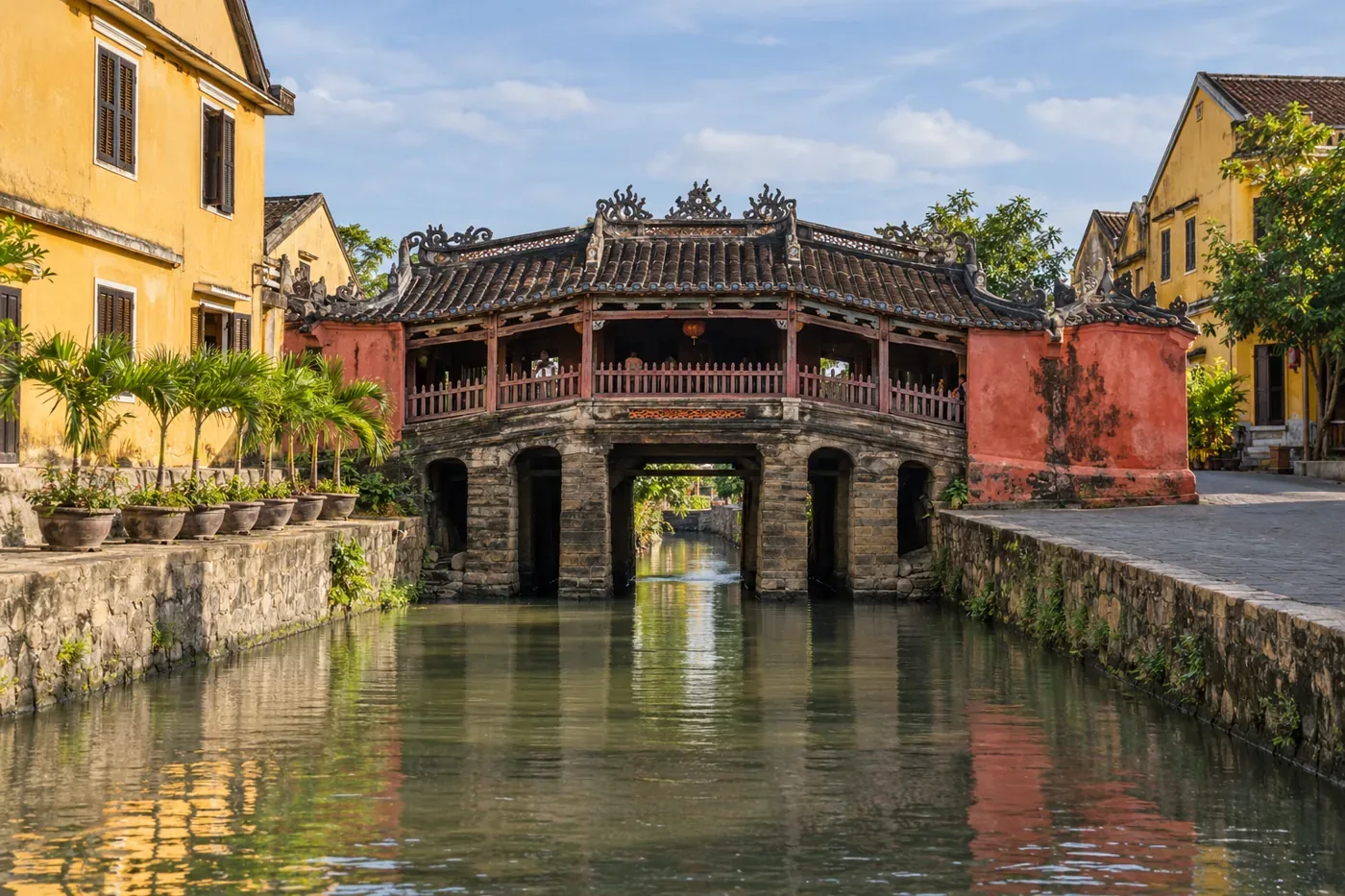
The Japanese Covered Bridge, also called Chua Cau, is a small but significant monument in Hoi An Ancient Town. Allow around 20–30 minutes to see the exterior, read the interpretation and visit accessible sections, plus any queue. Combine it with a wider heritage walk rather than making it a separate half-day trip.
Images in this guide are AI-generated illustrations, not on-site photographs. They do not establish current access, facilities or conditions.
Use our Ancient Town guide for the walking route and the Hoi An travel guide for your wider stay.
Why the bridge is important
The bridge reflects the Japanese presence and cultural exchange in Hoi An’s trading-port history. Its covered structure and associated shrine make it more than a convenient crossing. Look at it in the context of the surrounding streets, where communities traded and worshipped close to one another.
The bridge’s history includes successive changes and restoration, so it should not be presented as an untouched structure surviving in exactly its original form. Different historical accounts assign dates to different stages; on-site interpretation is a useful companion to the architecture.
Restoration and what you see today
Hoi An’s heritage authority announced the inauguration of the restoration project on 3 August 2024 and reported the bridge reopening to the public. Older articles describing it as entirely closed for that project are therefore out of date. That reopening does not guarantee every section is accessible on every subsequent day: follow current signs and any conservation barriers.
When comparing photographs taken before and after restoration, remember that conservation work can change the visible appearance of surfaces and structural elements. The purpose of the visit is to understand the monument, not to expect a particular weathered colour from an old image.
Tickets and opening arrangements
The heritage centre’s published ticket scheme includes the bridge as one possible monument choice, with Quan Cong Temple as the alternative in that category. Confirm the current town-ticket price, remaining admissions and any access controls at an authorised counter. Do not buy a second ticket merely because a seller describes it as a “bridge ticket” without explaining what it covers.
Viewing the outside, crossing where permitted and entering the shrine are different activities. Ask staff which parts your ticket allows that day. No current standalone fee or universal opening-hours notice was confirmed for this guide.
A short visit that works
- Approach on foot from the surrounding historic streets and look at the exterior from a permitted public vantage point.
- Check the ticket arrangement and join the appropriate queue if there is one.
- Move through slowly enough to notice the structure, but avoid stopping where you block a narrow passage.
- Read the interpretation or ask a qualified guide about the shrine and cultural history.
- Continue into the old town for a house, assembly hall or museum that complements the bridge.
When to go and photography
A daylight visit is better for examining architectural details. Evening lighting gives a different setting but can coincide with heavier foot traffic. If photography matters, be prepared to wait at the side instead of holding up the crossing.
Do not climb on the structure, lean equipment against historic surfaces or enter closed areas for a better angle. Avoid flash where restricted and ask before including worshippers closely in photographs. Wet paving and steps can be slippery after rain.
Access and getting there
The bridge sits within the walkable historic quarter. Arrange car pickup outside restricted streets rather than expecting a vehicle at the monument. For a day visit from Da Nang, use the transport and return-trip guide.
Narrow sections, steps or thresholds can limit wheelchair and stroller access. Ask staff about the current accessible approach; an exterior viewing stop may be more practical than attempting every interior section. Give other visitors room to pass.
Details to look for without rushing the crossing
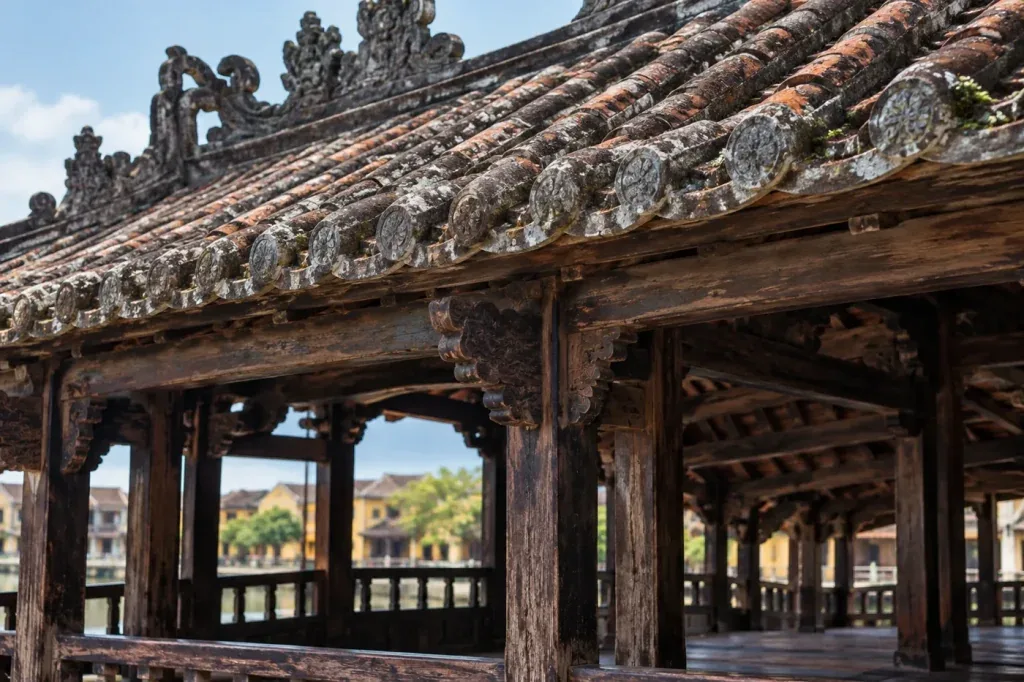
First stand where the whole bridge can be seen without obstructing a passage. Notice the relationship between the roof, the crossing beneath it and the adjoining historic streets. Then compare that overall view with the smaller details visible from the permitted visitor route. This two-stage approach is more useful than entering immediately and trying to photograph the full structure from a narrow space inside.
Where interpretation is available, use it to distinguish the crossing from the associated religious space. Ask which features belong to different phases of construction or repair, and which elements were addressed in the recent conservation project. It is better to leave a date uncertain than assign every visible part to the original building period. A restored monument can retain heritage significance without every surface looking old.
Questions that improve a guided stop
Three useful questions are: why was a covered crossing important here, what does the shrine reveal about the monument’s religious role, and what challenges did the conservation work address? Ask your guide to separate documented history from a story told to visitors. Legends can be interesting, but should be presented as legends rather than as an explanation supported by engineering or archival evidence.
If you are joining a wider walking tour, find out whether the bridge stop includes admission where required or only an exterior explanation. Also ask how much time is allowed for photographs. A tour description saying “Japanese Bridge” does not establish which side you will approach from, which spaces you will enter or whether a queue is included in the itinerary.
Build a short route around the bridge
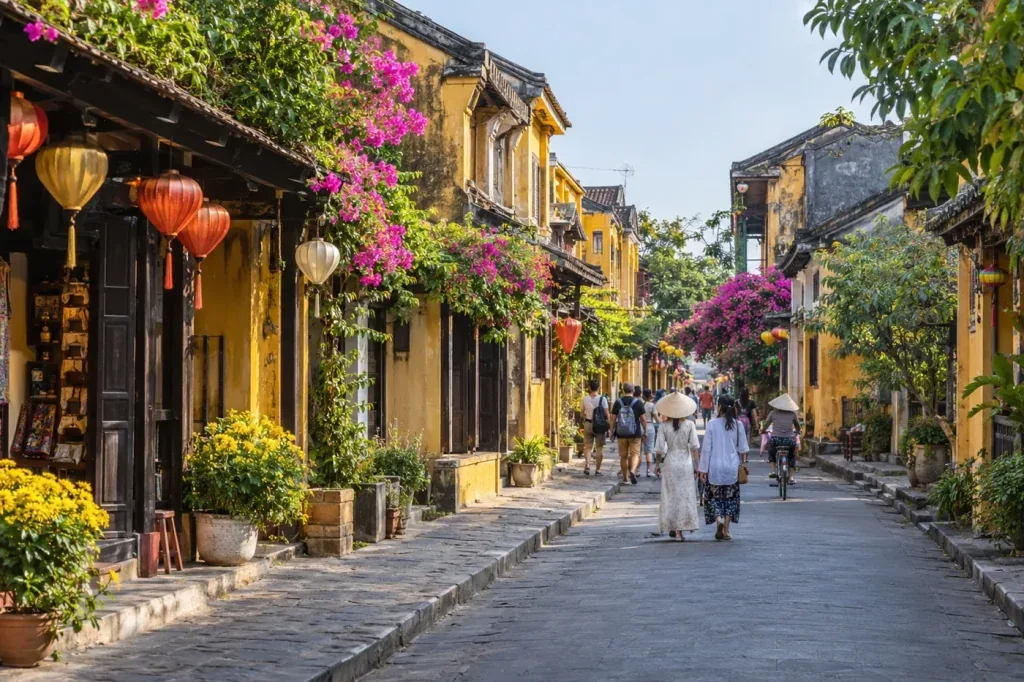
Use the bridge as the opening or closing landmark of an Ancient Town walk. After an exterior view and any permitted interior visit, choose one complementary heritage building rather than immediately boarding transport to another part of Hoi An. A house or museum can put the bridge’s trading-port context into a broader story. Take a seated break before moving on if your group has been standing in a queue.
If you arrive late, decide whether your priority is the exterior setting or entering a particular section. Check current access first; waiting for a less crowded photograph can consume the remaining visitor window. If the interior is unavailable, do not let a single closed section turn the whole town visit into a failed trip. The surrounding heritage walk remains a separate reason to spend time here, subject to local access instructions.
For travellers with limited walking time
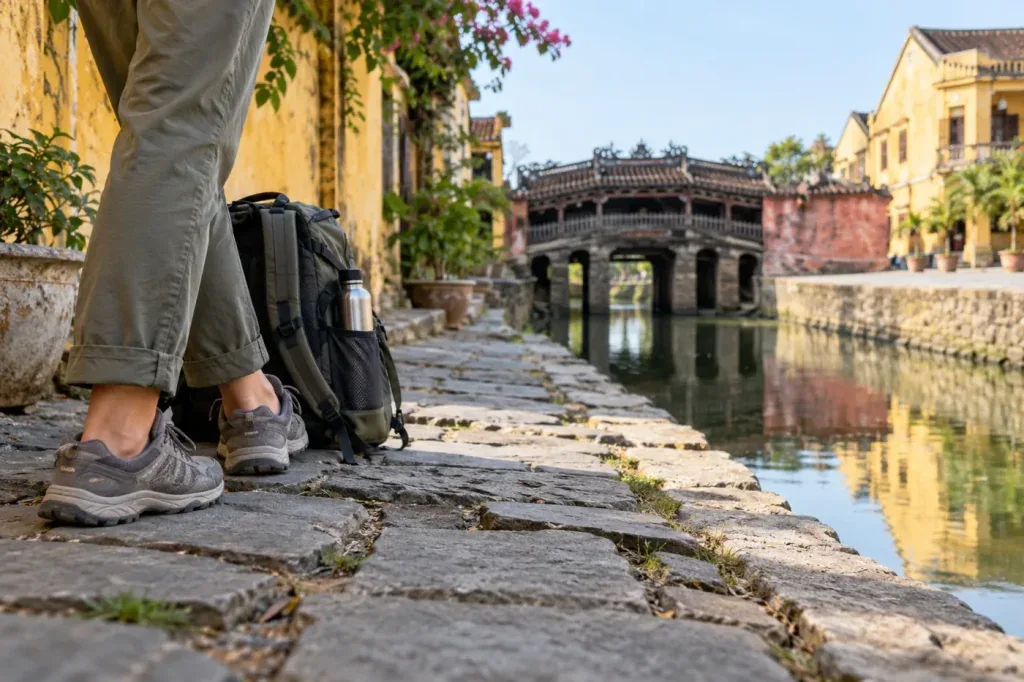
Ask your driver or guide to choose a realistic meeting point and describe the walk from it before booking. Plan an out-and-back visit with a clear place to rest, and make interior access optional until staff confirm the route. Allow your companion to wait comfortably rather than feeling obliged to negotiate every narrow section together.
Frequently asked questions
Is the Japanese Bridge still under the 2024 restoration closure?
The heritage authority reported reopening in August 2024. Check for temporary restrictions on the day rather than relying on an old closure article.
How much time do I need?
About 20–30 minutes is a planning allowance for a short visit, with extra time for queues or a guided explanation.
Is it worth visiting if I cannot enter?
The exterior and its position in the old town still provide context. Adjust expectations if access to the shrine or crossing is restricted.