Da Nang’s night markets pulse with energy after dark, a vibrant fusion of sizzling street food, local chatter, and the distant hum of scooters. For visitors exploring Da Nang, the sheer variety of stalls can be daunting. This guide navigates the city’s two primary night markets in 2026—Helio and Son Tra—offering insights into what to buy, what to eat, and how to experience them like a local. We provide specific stall insights, price ranges, and practical bargaining tips to help you make the most of your visit.
Update, August 2026: Helio Center suspended Helio Play, Helio Kids and the Helio Night Market for renovation on 5 September 2025, and the Da Nang city tourism portal still lists them as suspended. The Metiz cinema at the same address stayed open. Check directly before you plan a visit.
Da Nang’s night markets present distinct experiences: Helio Night Market (open Friday to Sunday) is a large-scale food festival featuring live music and over 100 food vendors. Son Tra Night Market (open daily) combines more than 150 souvenir booths with a dedicated seafood dining area near the Dragon Bridge. Typical food expenses range from 50,000–150,000 VND per dish, and most souvenir prices can be negotiated down by 30–50% from the initial offer. This guide details essential eats, items to consider, and navigation strategies for both markets in 2026.
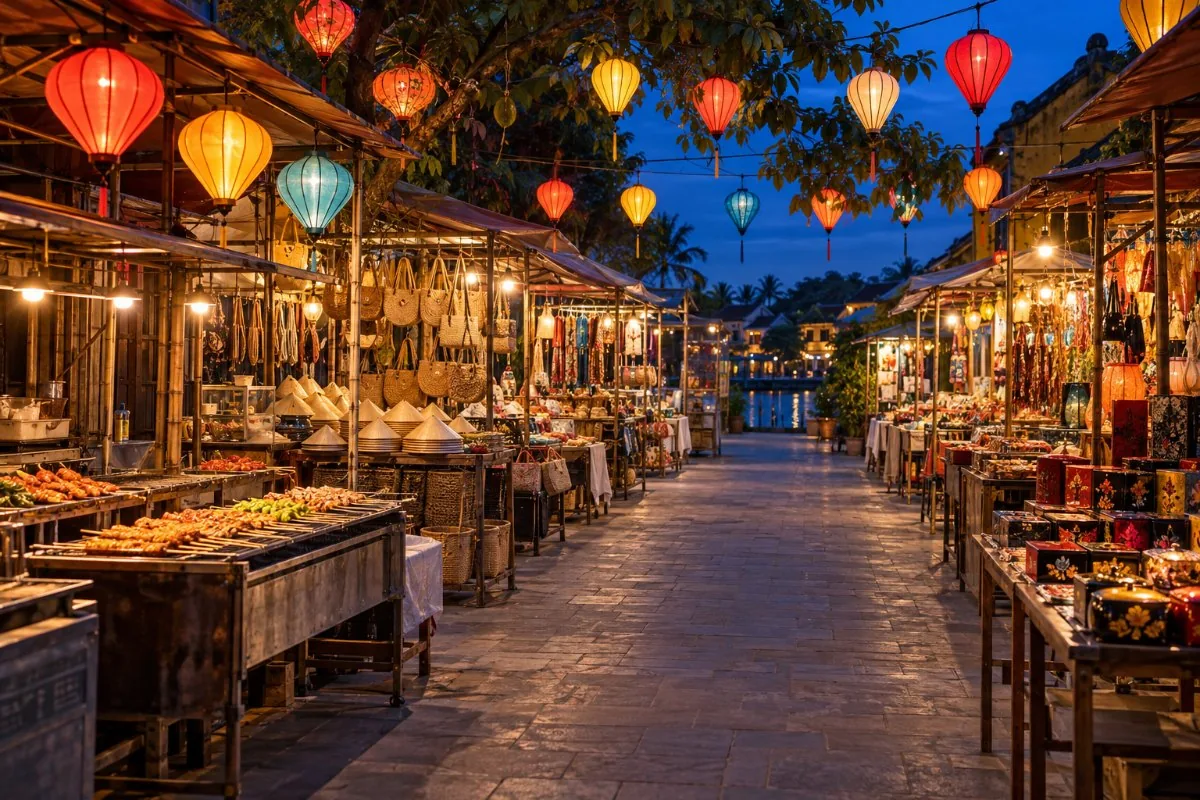
Da Nang Night Market Shopping and Dining: A 2026 Overview
Da Nang features two main night markets, each catering to different visitor needs. Helio Night Market operates exclusively on weekends, focusing primarily on food and entertainment, functioning much like an expansive outdoor food court with live performances. Son Tra Night Market is open nightly and is divided into two distinct areas: a souvenir and clothing zone with approximately 150 booths, and a seafood dining section situated closer to the river. Understanding these differences can optimize your market visits.
For those prioritizing shopping for gifts and apparel, Son Tra Night Market is accessible any evening. If your objective is to sample a wide array of Vietnamese dishes within a single evening, visiting Helio Night Market on a Friday, Saturday, or Sunday is recommended.
1. Helio Night Market: A Culinary Hub (Open Fri-Sun)
Located on the eastern side of the city near the Helio Center entertainment complex, Helio Night Market welcomes visitors from Friday evening through Sunday night. This concentrated weekend event brings together a diverse collection of street food vendors. The market’s circular design features food stalls along the perimeter and a central stage hosting live music performances from approximately 19:00 to 22:00. Most dishes are priced between 30,000 and 100,000 VND, allowing for sampling multiple items within a budget of around 300,000 VND for a single visit.
Must-Try Dishes: Snails, Quang Noodles, and Grilled Rice Paper
Three signature dishes define the Helio experience. First, ốc (snails) are a popular offering at numerous stalls. Seek out vendors serving snails with dipping sauces made from lemongrass, chili, and lime. A portion of ốc hấp sả (steamed snails with lemongrass) typically costs around 50,000 VND and is accompanied by toothpicks and a small salt-pepper-lime dip. Second, mì Quảng (Quang noodles), a regional specialty, features turmeric-infused noodles topped with shrimp, pork, peanuts, and fresh herbs. Several vendors offer this dish; the stall near the southeast entrance often has the longest queues, indicating its popularity.
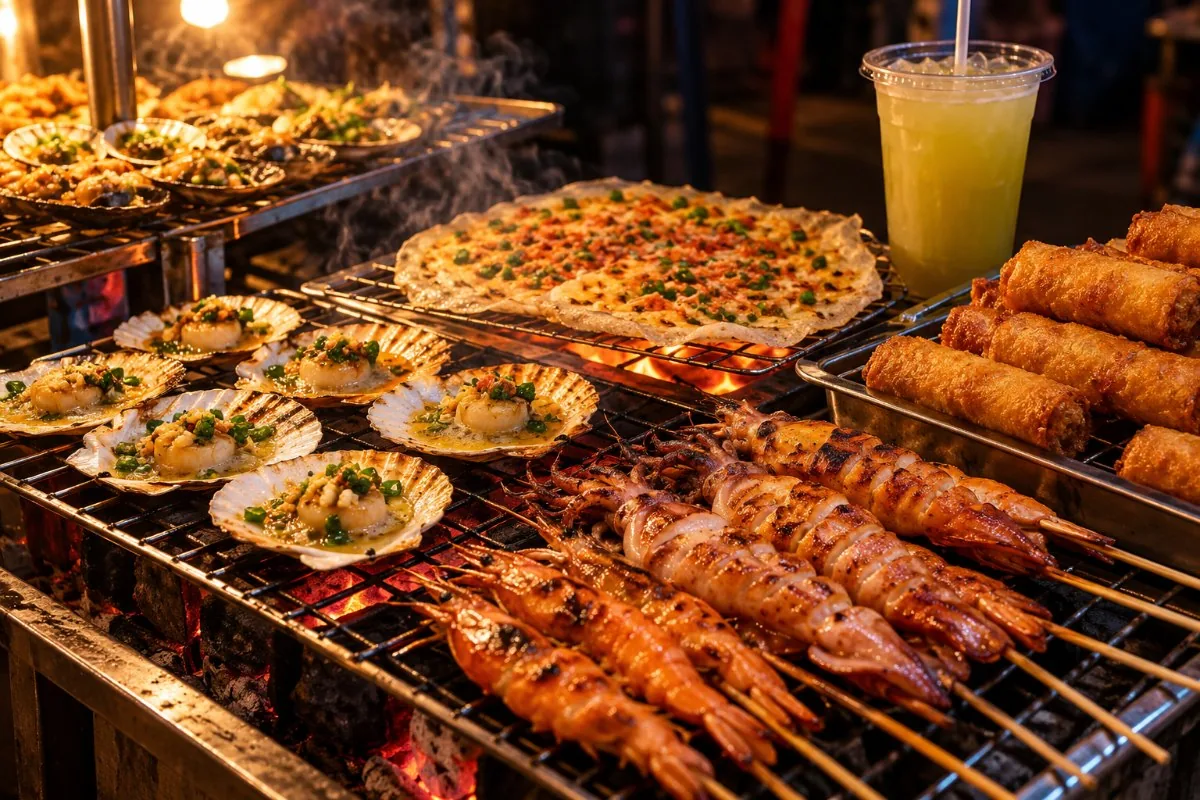
Third, bánh tráng nướng (grilled rice paper) provides a crispy, savory snack. This dish involves a rice paper base topped with quail egg, dried shrimp, and scallion oil, cooked over a charcoal grill. It is best enjoyed immediately after preparation for maximum crispness.
Live Music and Entertainment Schedule
Helio’s central stage features local acoustic bands and cover groups performing from 19:00 to approximately 21:30 on Friday and Saturday evenings. Sunday evenings typically offer more subdued performances or recorded music. The area in front of the stage provides seating for groups enjoying grilled skewers and beverages. To secure a spot near the stage, arriving before 18:30 on Friday or Saturday is advisable, as the crowd grows significantly after 19:00. The musical repertoire primarily consists of Vietnamese pop and rock covers, with occasional English-language songs.
Food and Drink Price Range
Helio maintains consistent pricing across its food stalls, simplifying budget planning. Grilled meats and seafood skewers are generally priced between 20,000–50,000 VND. Rice and noodle dishes, such as mì Quảng or cơm tấm (broken rice), range from 40,000–70,000 VND. Beverages are also affordably priced: fresh sugarcane juice (nước mía) costs 10,000–15,000 VND, canned soft drinks are 15,000–20,000 VND, and a glass of bia hơi (draft beer) is available for 5,000–10,000 VND. A comprehensive meal for two, including six dishes and four drinks, typically costs between 350,000–500,000 VND.
2. Son Tra Night Market: Souvenirs and Seafood (Open Daily)
Situated at the base of the Son Tra Peninsula, Son Tra Night Market is a short walk from the eastern end of Dragon Bridge. Operating nightly from approximately 17:00 to 23:00, it serves as a consistent option throughout the week. The market is organized into two main sections: a souvenir and clothing area adjacent to the main road, and a seafood dining zone closer to the river. For visitors with limited time, Son Tra offers both shopping and dining opportunities in a compact setting.
Top Souvenir Picks: Phone Cases, Keychains, and Handicrafts
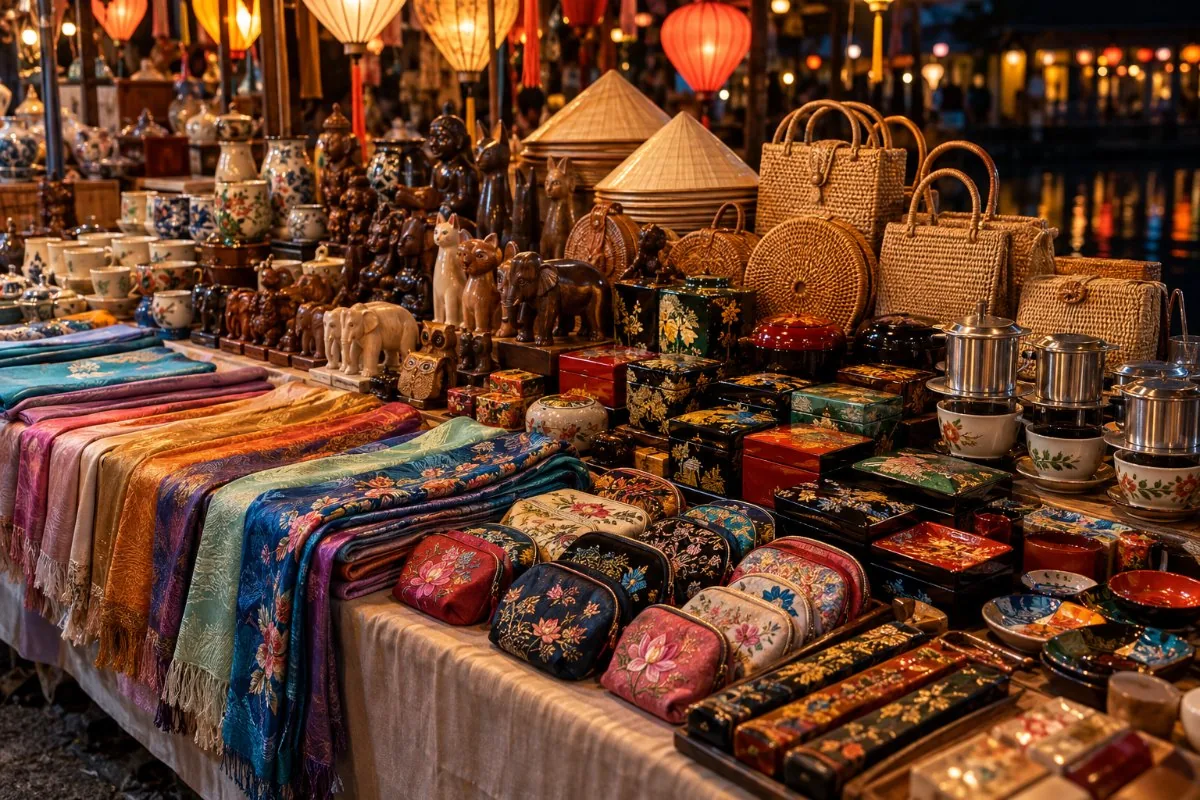
The souvenir section at Son Tra comprises around 70–80 stalls offering a variety of items. Phone cases featuring Da Nang landmarks like the skyline or Dragon Bridge are priced between 50,000–100,000 VND. Keychains in the shape of traditional conical hats (nón lá) or wooden sandals typically cost 10,000–30,000 VND. For more refined gifts, consider lacquerware coasters and small paintings, which start at 100,000 VND and can extend up to 500,000 VND for larger, more intricate pieces. Vendors located further from the main entrance are often more amenable to negotiation.
Seafood Stalls: Ordering and Pricing Guidance
Each stall displays its selection of squid, prawns, clams, crabs, and fish on ice. Prices are usually listed per kilogram, but the final cost is determined by the specific items and quantities ordered. Grilled squid (mực nướng) generally ranges from 80,000–150,000 VND per plate. Grilled clams with scallion oil (nghêu nướng mỡ hành) are priced between 50,000–80,000 VND. To ensure clarity on pricing, confirm the total cost before the food is prepared by asking, “Bao nhiêu tiền?” (How much?) while indicating the desired portion.
It is advisable to avoid stalls that do not clearly display prices, as these may be more likely to overcharge tourists.
Location Advantage: Proximity to Dragon Bridge
Son Tra Night Market’s strategic location is a significant practical benefit. Following the Dragon Bridge’s fire and water shows on Saturday and Sunday evenings, the market is reachable in under three minutes on foot. This proximity allows for a convenient combination of both attractions. The market is also within walking distance of numerous hotels on the eastern bank of the Han River. For those staying in the city center, a Grab taxi ride to the market typically costs between 30,000–50,000 VND.
3. What to Buy at Da Nang Night Markets (2026 Edition)
Not all items available at night markets represent good value. While some offer authentic local products at fair prices, others are mass-produced goods with inflated tourist prices. This section categorizes popular items, highlighting what to consider purchasing and what to potentially skip in 2026.
Fashion and Accessories: Clothing, Shoes, and Bags
Stalls at both markets offer casual apparel such as t-shirts, shorts, dresses, and light jackets, typically made from cotton or polyester blends. T-shirt prices range from 50,000 to 150,000 VND, while women’s dresses can cost between 100,000–300,000 VND, depending on the material and craftsmanship. Canvas bags featuring Da Nang landmarks are priced at 80,000–150,000 VND and serve as practical souvenirs. For traditional attire, some vendors sell áo dài (Vietnamese dress) for 300,000–800,000 VND; however, it is crucial to inspect the tailoring quality, including seams and zippers, before purchasing.
Footwear, including shoes and sandals, is widely available but often of lower quality, with limited durability.
Local Handicrafts: Lacquerware, Silk Items, and Conical Hats
Authentic Vietnamese handicrafts can be found with careful selection. Lacquerware items, such as small boxes, coasters, and decorative plaques, start at 100,000 VND for simpler designs and can reach 500,000 VND for hand-painted pieces. Silk scarves and pouches are priced between 50,000–200,000 VND; genuine silk has a smooth, cool texture, whereas synthetic versions may feel plasticky. Traditional conical hats (nón lá) are sold at most souvenir stalls for 30,000–80,000 VND. The least expensive options are often flimsy and mass-produced; investing 60,000–80,000 VND may yield a hat with better weaving and a chin strap.
Items to Avoid: Electronics and Counterfeit Brands
Two categories of products are generally best avoided at Da Nang night markets. Electronics, including headphones, phone chargers, power banks, and Bluetooth speakers, are frequently low-quality counterfeits that may fail shortly after purchase. For reliable electronics, it is recommended to shop at official stores in the city center. Similarly, counterfeit brand-name goods, such as athletic shoes and apparel, are common. These items often exhibit noticeable flaws in stitching, fabric, and logos, and may be subject to confiscation by customs officials upon international travel. Focusing on locally made products is advisable.
4. What to Eat: A Street Food Bucket List for 2026
Da Nang’s night markets offer an excellent introduction to central Vietnamese street food, known for its distinct spice profiles and abundant use of fresh herbs. This list highlights essential dishes to try during your visit.
Bánh Xèo and Bánh Bèo
Bánh xèo is a crispy crepe made from rice flour and turmeric, typically filled with shrimp, pork, and bean sprouts. It is served with a platter of fresh herbs and lettuce for wrapping. At Helio Night Market, the bánh xèo stall near the center stage offers portions for 40,000–60,000 VND. Bánh bèo consists of small, steamed rice cakes topped with minced shrimp, crispy pork skin, and scallion oil. A set of 5–10 small cakes usually costs 20,000–40,000 VND and is intended to be eaten in a single bite.
Fresh Seafood: Grilled Squid, Clams, and Prawns
The seafood at Son Tra Night Market is among the freshest available after dark. Grilled squid (mực nướng) is marinated in a mixture of fish sauce, sugar, and chili before being grilled over hot coals. A whole squid typically costs 80,000–120,000 VND and is served with a chili-lime salt dip. Grilled clams with scallion oil (nghêu nướng mỡ hành) are flavorful and often served sizzling. Prawns (tôm nướng) are sold by weight, with approximately 200 grams costing 100,000–150,000 VND.
Prioritize stalls where the seafood is displayed on ice and the grill is actively in use, indicating high turnover and freshness.
Drinks: Sugarcane Juice, Fresh Coconut, and Bia Hơi
Three popular beverages are commonly found at the night markets. Nước mía (sugarcane juice) is pressed fresh to order, with a tall glass costing 10,000–15,000 VND, often served over ice with a squeeze of kumquat. Fresh coconut (dừa tươi) ranges from 20,000–40,000 VND, with vendors opening the fruit and providing a straw. Bia hơi (draft beer) is an inexpensive alcoholic option, priced at 5,000–10,000 VND per glass.
Look for bia hơi stations indicated by yellow plastic kegs and accompanying seating areas.
5. Bargaining Tips: Securing the Best Price
Bargaining is an expected part of the shopping experience at Da Nang’s night markets. A polite and respectful approach is generally more effective than aggressive negotiation. Knowing when and how to negotiate can lead to better prices.
When to Negotiate and Fixed Prices
Negotiation is appropriate at stalls selling souvenirs, clothing, and handicrafts, where prices often include a margin of 30–50%. Bargaining is not customary at food stalls or drink vendors, as prices are already low (10,000–50,000 VND), and attempting to negotiate small amounts can be perceived as impolite. Seafood prices at Son Tra may be negotiable, especially when ordering multiple items, but always confirm the total cost beforehand. Items like bottled water, canned drinks, and pre-packaged snacks typically have fixed prices.
The 50% Rule: Starting Your Negotiation
A common strategy for night market bargaining is to begin by offering 50% of the vendor’s initial asking price, with the expectation of settling at 60–75% of the original price. For example, if an item is priced at 200,000 VND, an initial offer of 100,000 VND is a reasonable starting point. The vendor will likely counter with a price between 150,000–180,000 VND. If your target price is 120,000 VND, you can propose this amount by asking, “120,000 đồng, được không?” (120,000 VND, okay?). If the vendor agrees, finalize the purchase promptly. If the offer is rejected, a polite departure may prompt a revised offer.
Useful Vietnamese Phrases for Bargaining
Learning a few basic Vietnamese phrases can enhance your bargaining interactions. “Bao nhiêu?” (How much?) is used to inquire about the price. “Mắc quá!” (Too expensive!) can be said with a smile after hearing the initial price. “Giảm được không?” (Can you reduce it?) is a direct request for a discount. Using these phrases politely, combined with a friendly demeanor, can lead to more favorable prices.
| Vietnamese Phrase | Pronunciation | Meaning | When to Use |
|---|---|---|---|
| Bao nhiêu? | Bow nyee-ew? | How much? | To ask the price of an item. |
| Mắc quá! | Mak wah! | Too expensive! | After hearing the initial price, said politely. |
| Giảm được không? | Zyam duhk khong? | Can you reduce it? | To initiate a negotiation for a lower price. |
| Được không? | Du-uhk khong? | Okay? / Deal? | After stating your offer price. |
| Cảm ơn | Kam un | Thank you | After agreeing on a price and completing the transaction. |
6. Practical Tips for Your Night Market Visit in 2026
A successful night market experience hinges on planning, timing, and informed choices. These practical tips address logistical aspects that can enhance your visit.
Best Time to Visit: Avoiding Peak Hours
The busiest period at both markets typically occurs between 19:00 and 20:00, when many visitors arrive after dinner. For a less crowded experience with shorter wait times at food stalls, consider visiting between 17:30–18:00 (shortly after opening) or after 21:00, when crowds begin to thin. The earlier window is also advantageous for photography, offering good light and fully operational stalls before the peak rush. Saturday nights at Helio are generally the most crowded; Sunday evenings tend to be slightly more relaxed.
What to Bring: Cash, Small Bills, and Reusable Bags
Da Nang night market vendors primarily operate on a cash basis in 2026. It is advisable to carry Vietnamese Dong in smaller denominations (e.g., 10,000, 20,000, 50,000 VND) to facilitate transactions and avoid issues with change. A reusable shopping bag is useful for carrying purchases. Hand sanitizer or wet wipes are recommended due to frequent handling of items and food. Minimizing the amount of luggage, such as large backpacks, is also practical for navigating crowded aisles and reducing vulnerability to pickpocketing.
Safety and Hygiene: Selecting Food Stalls
While street food safety at Da Nang’s night markets is generally good, taking precautions can minimize risks. Opt for stalls where food handlers use gloves or utensils and maintain separate handling of raw and cooked ingredients. Stalls with high customer turnover indicate fresh ingredients and active preparation. Avoid pre-cooked items that have been displayed for extended periods. For beverages, choose sealed bottled water or drinks prepared fresh on the spot, such as sugarcane juice or fresh coconut water.
It is best to avoid tap water and ice from unverified sources, sticking instead to drinks from reputable vendors.
Related on this site
- Da Nang’s Best Farmers Markets: Fresh Produce and Local Delights
- Da Nang’s Unique Souvenir Ideas: Handcrafted Gifts and Crafts 2026
Frequently Asked Questions
Are Da Nang Night Markets Open Daily in 2026?
Son Tra Night Market operates daily from approximately 17:00 to 23:00. Helio Night Market is open only on Friday, Saturday, and Sunday evenings. It is recommended to verify operating days before planning your visit.
Which Da Nang Night Market is Best for Food?
Helio Night Market is highly recommended for food enthusiasts due to its extensive selection of over 100 food stalls, live music, and vibrant atmosphere. As it operates only on weekends, planning your visit accordingly is essential.
Can I Use Credit Cards at Da Nang Night Markets?
Most vendors at Da Nang night markets accept cash only in 2026. While some larger souvenir stalls might accept QR code payments via Vietnamese banking applications, international credit card acceptance is rare. Ensure you have sufficient cash in small denominations.
How Much Money Should I Budget for the Night Market?
For an evening of dining and shopping, a budget of 500,000–1,000,000 VND ($20–$40 USD) per person is generally sufficient. This typically covers 4–6 food items, 2–3 drinks, and a few souvenir purchases. If you plan to indulge in seafood at Son Tra, an additional 200,000–400,000 VND should be budgeted.
Is Bargaining Expected at Da Nang Night Markets?
Bargaining is customary at stalls selling souvenirs, clothing, and handicrafts. A common approach is to start at 50% of the asking price and aim to settle around 60–75%. Bargaining is not practiced at food or drink stalls, where prices are already set at low levels.
What Should I Avoid Buying at Da Nang Night Markets?
It is advisable to avoid purchasing electronics, such as headphones and chargers, and counterfeit brand-name goods. These items are often of poor quality and may not perform reliably. Stick to locally produced items for better value and authenticity.
Is Street Food Safe at Da Nang Night Markets?
Street food at Da Nang night markets is generally safe when precautions are taken. Prioritize stalls with high customer turnover and visible food preparation. Opt for freshly cooked items and sealed beverages. Bringing hand sanitizer is also recommended.
Conclusion: Your Next Steps
Da Nang’s night markets in 2026 offer distinct experiences: Helio for weekend culinary exploration and live entertainment, and Son Tra for daily shopping and riverside dining. Understanding market schedules, food specialties, and bargaining etiquette can transform a potentially overwhelming visit into a rewarding cultural immersion.
- Verify the day of the week: If it’s Friday through Sunday, Helio Night Market offers the widest array of food options. For Monday through Thursday visits, Son Tra Night Market remains a worthwhile destination.
- Prepare for your visit: Bring approximately 500,000–1,000,000 VND in small denominations and a reusable bag. Arriving between 17:30–18:00 can help you avoid the 19:00 rush and enjoy shorter queues.
- Practice bargaining phrases: Familiarize yourself with “Bao nhiêu?”, “Mắc quá!”, and “Giảm được không?” before you go. For souvenirs and clothing, start negotiations at 50% of the asking price and aim for a final price between 60–75%.