Most visitors to Da Nang know about the vibrant Banh Troi Nuoc, the colorful glutinous rice balls drenched in a sweet coconut sauce. But there’s a quieter, more elegant cousin that locals crave, especially during the Tết Hàn Thực (Cold Foods Festival): Banh Troi Tau. Exploring Da Nang’s Banh Troi Tau: Sweet Floating Cakes reveals a dessert defined by its simplicity—a chewy, translucent skin wrapped around a molten brown sugar core, finished with a delicate coating of toasted white sesame.
This page covers one slice of the city’s sweet scene. For the overview — where to start if you only have a couple of days — see Da Nang’s best desserts.
The “Tau” in its name hints at its Chinese origins, but Da Nang has made it its own, creating a version that is less sweet and more focused on the pure, nutty flavor of the rice and sesame.
Banh Troi Tau is Da Nang’s elegant answer to the more common Banh Troi Nuoc. It swaps the coconut sauce for a dry, nutty sesame coating and a pure, chewy texture. The key difference lies in the dough preparation and the use of a simple brown sugar cube filling. This dessert is a staple during the Tết Hàn Thực festival, where it symbolizes purity and family connection, but it’s enjoyed year-round as a simple, satisfying street food.
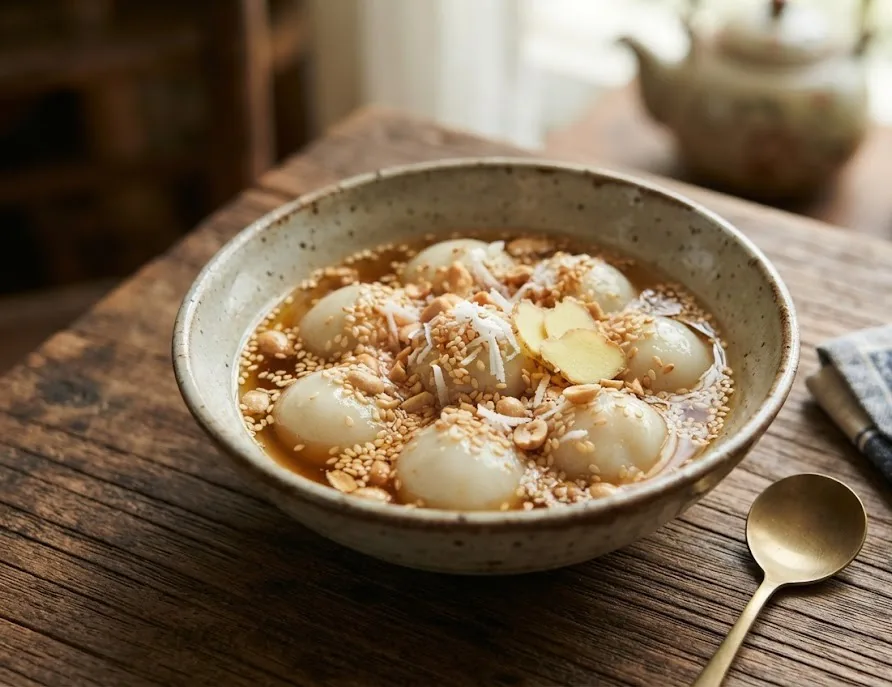
What Exactly Is Banh Troi Tau and How Is It Different from Banh Troi Nuoc?
Banh Troi Tau is a small, chewy glutinous rice ball filled with a cube of brown sugar, boiled until it floats, and then coated in toasted white sesame seeds. It’s a dessert of contrasts: a soft, almost bouncy exterior that gives way to a sudden burst of warm, liquid sugar. The name “Banh Troi Tau” translates to “Floating Cake from the Chinese,” directly referencing its route into Vietnamese cuisine via Chinese immigrants. While both Banh Troi Tau and Banh Troi Nuoc are “floating cakes,” they are distinct in nearly every way except their base ingredient of glutinous rice flour. Banh Troi Nuoc is typically served in a bowl of sweet, warm coconut milk sauce, often with a sprinkle of toasted sesame seeds on top. Banh Troi Tau, on the other hand, is served dry, with the toasted sesame coating acting as the sole flavor companion to the sweet rice and sugar filling. The texture also differs: Banh Troi Tau’s dough is often kneaded to be slightly firmer, resulting in a chewier ball, while Banh Troi Nuoc’s dough is softer, creating a more pillowy texture that absorbs the coconut sauce.
The core ingredients: glutinous rice flour, sugar cubes, and sesame
The beauty of Banh Troi Tau lies in its minimalist ingredient list. The primary component is glutinous rice flour, which provides the signature chewy, Q texture that Vietnamese desserts are famous for. The filling is a single cube of brown sugar, traditionally a specific type called “đường thẻ” (brick sugar), which melts at a precise rate during boiling. The final touch is white sesame seeds, toasted until golden and fragrant, then ground or crushed to a coarse powder.
The ratio of sesame to salt is crucial—just a pinch of salt in the coating elevates the sweetness of the sugar filling and the nuttiness of the rice.
Banh Troi Tau vs. Banh Troi Nuoc: A side-by-side comparison of texture, filling, and broth
To clearly see the differences, here is a direct comparison of the two desserts:
| Feature | Banh Troi Tau (Da Nang Style) | Banh Troi Nuoc (Northern Style) |
|---|---|---|
| Main Liquid | None (served dry) | Warm, sweet coconut milk sauce (nước cốt dừa) |
| Filling | Single cube of brown sugar (đường thẻ) | Brown sugar cube, sometimes mixed with crushed peanuts or coconut |
| Coating | Coarsely ground, toasted white sesame seeds | Toasted sesame seeds, often sprinkled on top of the sauce |
| Dough Texture | Firmer, chewier (Q) | Softer, more pillowy |
| Flavor Profile | Pure, nutty, and sweet; the sesame is the star | Rich, creamy, and sweet; the coconut milk is dominant |
| Typical Occasion | Tết Hàn Thực, but common as street food | Tết Hàn Thực, but more common as a year-round dessert |
The choice between them comes down to preference. If you want a rich, saucy dessert, Banh Troi Nuoc is your pick. If you’re after a cleaner, more texturally focused treat that lets the pure flavor of the rice and sesame shine, Banh Troi Tau is the winner.
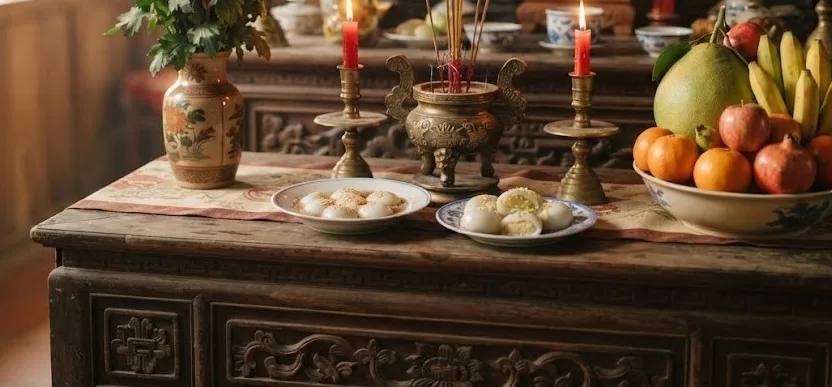
The Cultural Roots: Why Da Nang’s Banh Troi Tau Is a Cold Foods Festival Staple
Banh Troi Tau is inextricably linked to the Tết Hàn Thực (Cold Foods Festival), a day when Vietnamese families prepare cold dishes to honor their ancestors and remember a story of loyalty from ancient China. The festival falls on the 3rd day of the 3rd lunar month, usually in April. On this day, families prepare two types of “floating cakes”: Banh Troi (often meaning Banh Troi Nuoc in the North) and Banh Chay (savory rice cakes in a clear broth). The round shape of the cakes symbolizes family unity and the cycle of life.
The legend of Jie Zitui and the Cold Foods Festival (Tết Hàn Thực)
The festival’s origin story is a classic tale of loyalty and tragedy. It involves a prince named Chong’er and his loyal follower, Jie Zitui, from the Spring and Autumn period of Chinese history. During the prince’s 19-year exile, Jie Zitui once cut a piece of flesh from his own thigh to make soup for the starving prince. When the prince eventually became king, he rewarded all his followers except Jie Zitui, who had retired to the forest with his mother.
Ashamed, the king ordered the forest to be set on fire to force Jie out, but Jie and his mother died in the flames. In grief and remorse, the king decreed that on the anniversary of Jie’s death, no fire could be used, and only cold food could be eaten. This is the origin of the Hanshi Festival (Cold Food Festival), which spread to Vietnam and became Tết Hàn Thực.
How Da Nang’s version of the festival differs from Northern Vietnam’s
While the entire country observes Tết Hàn Thực, Da Nang’s interpretation has its own unique character. In the North, the festival is a major event where families make large batches of Banh Troi Nuoc and Banh Chay to offer on the family altar and share with neighbors. In Da Nang and Central Vietnam, the festival is observed with a similar spirit but with a distinct preference for Banh Troi Tau. The offering is often simpler, and the focus is on the quality of the individual ball—the perfect chewiness of the skin and the precise sweetness of the filling.
Street vendors in Da Nang will set up small stalls selling freshly made Banh Troi Tau in the days leading up to the festival, making it a more public, communal activity compared to the more private, home-based tradition in the North. The central region’s version is also less sweet overall, reflecting a general preference for more balanced, savory flavors. According to a report by the Vietnam Institute of Culture and Arts Studies, regional variations in Vietnamese cuisine often reflect local agricultural products and historical influences, with Central Vietnam tending towards more subtle sweetness and a greater emphasis on texture.
Where to Find the Best Banh Troi Tau in Da Nang
To experience authentic Banh Troi Tau in Da Nang, skip the fancy restaurants and head to the morning markets or street vendors who specialize in this single item. The best versions are made fresh daily, often in small batches, and sold by vendors who have been perfecting their recipe for decades.
Street vendors and morning markets: spots locals recommend
- Con Market (Chợ Cồn): This is the most reliable place to find Banh Troi Tau. Look for the vendors in the dessert section of the market. They usually sell them on a large tray, covered with a cloth to keep them warm. Ask for “Bà bán bánh trôi tàu” (the lady selling Banh Troi Tau) and you’ll be pointed in the right direction.
- Han Market (Chợ Hàn): Similar to Con Market, Han Market has several stalls that sell Banh Troi Tau, particularly in the morning. The version here is often slightly smaller and more delicate.
- Street Vendors on Hoang Hoa Tham Street: In the late afternoon, particularly near the Tết Hàn Thực festival, you’ll find mobile vendors selling Banh Troi Tau from baskets balanced on bicycles or motorbikes. The “ding-dong” sound of their bell is a classic signal for locals to come out and buy a portion.
- Specific Tip: When buying, ask for a portion “ăn liền” (to eat immediately). The vendor will place the balls in a small bag or on a banana leaf, and you eat them with a toothpick or your fingers. The sesame coating is the finishing touch, so make sure it’s generously applied.
How to spot freshly made Banh Troi Tau: visual and textural cues
Freshness is everything. A freshly made Banh Troi Tau should have a translucent, almost glassy sheen to its skin. The sesame coating should be fragrant and slightly oily from the toasting process, not dry or stale. When you pick one up, it should feel firm and slightly springy, not hard or dry. The most reliable test is the “float” test: a freshly cooked ball will be floating on top of the display tray, while older ones will sink to the bottom. If the vendor has a batch that’s just been made, grab it.
The sugar filling inside will be perfectly liquid, not crystallized.
A Step-by-Step Guide to Making Banh Troi Tau at Home
Making Banh Troi Tau at home is a rewarding process that requires patience and attention to detail, but the result is a dessert that rivals any street vendor’s. The key is in the dough’s hydration and the timing of the boil.
Step 1: Preparing the glutinous rice dough for the perfect chewy skin
The dough is the foundation. In a mixing bowl, combine 200g of glutinous rice flour with about 140-150ml of warm water (around 40°C/104°F). The water should be warm, not hot, as hot water will cook the flour and make the dough gummy. Mix with a spatula until a shaggy dough forms, then knead it with your hands for 5-7 minutes until it becomes smooth and elastic. The consistency should be like soft play-doh—pliable but not sticky. If it’s too dry, add a teaspoon of water at a time. If it’s too sticky, dust with a little more flour.
Cover the dough with a damp cloth and let it rest for 20-30 minutes. This rest is crucial for the gluten to relax, resulting in a chewier, more tender skin.
Step 2: Wrapping the brown sugar filling without leaks
This is the most delicate step. Pinch off a small piece of dough (about 15-20g, or the size of a large marble) and roll it into a ball. Flatten the ball into a disc about 3-4cm in diameter. Place a single cube of brown sugar (đường thẻ) in the center. Carefully bring the edges of the dough up and over the sugar cube, pinching them together to seal it completely. The seal must be airtight. If any sugar is exposed, it will leak out during boiling, creating a flat, sad ball.
Roll the sealed ball gently between your palms to smooth out the seam. Repeat with the remaining dough and sugar cubes.
Step 3: Boiling until they float — the doneness test
Bring a large pot of water to a rolling boil. Gently drop the prepared balls into the boiling water, one by one, being careful not to overcrowd the pot. They will sink to the bottom. After about 2-3 minutes, they will float to the surface. This is the “floating” part of the name. Once they float, let them cook for an additional 1-2 minutes. This extra time ensures the sugar inside has fully melted and the dough is cooked through.
Use a slotted spoon to remove the balls and transfer them to a plate lined with paper towels to drain excess water. Do not leave them in the water for too long, or they will become mushy.
Step 4: Coating with toasted sesame and serving
While the balls are boiling, prepare the sesame coating. In a dry pan over medium-low heat, toast 3-4 tablespoons of white sesame seeds, stirring constantly, until they become golden brown and fragrant. This takes about 2-3 minutes. Be careful not to burn them. Transfer the toasted seeds to a mortar and pestle or a spice grinder and coarsely grind them. You want a mix of whole and crushed seeds for the best texture. Mix the ground sesame with a pinch of salt.
While the balls are still warm and slightly damp, roll them in the sesame-salt mixture until evenly coated.
Serve immediately. The best Banh Troi Tau is eaten within 30 minutes of cooking, while the skin is still chewy and the sugar filling is warm and liquid.
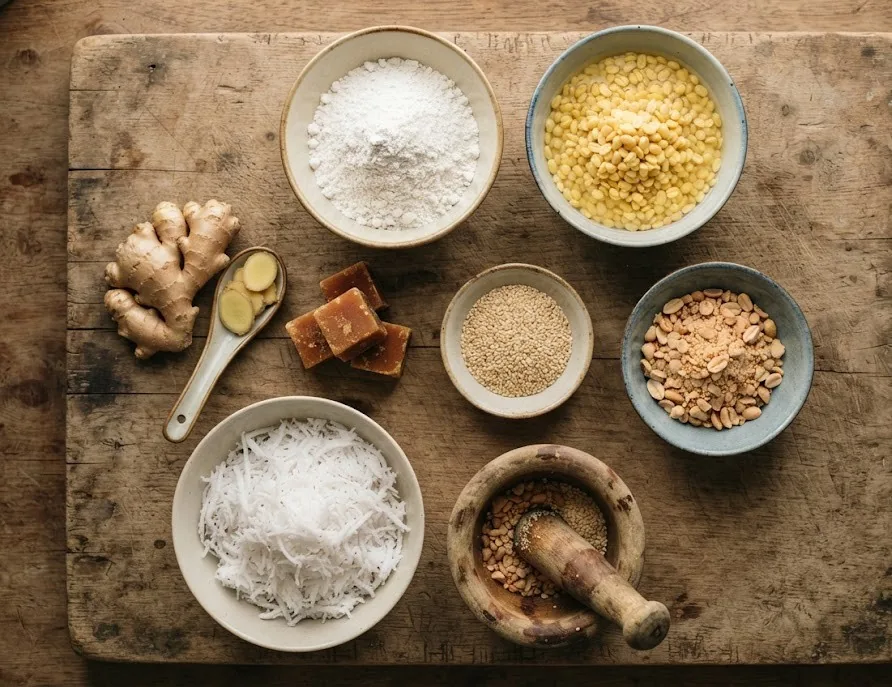
Key Ingredients and Substitutions for Authentic Banh Troi Tau
Using the right ingredients is the difference between a good Banh Troi Tau and a great one. While substitutions are possible, they will change the final texture and flavor.
Glutinous rice flour: fresh vs. dried flour and how each affects texture
The most common type is dried glutinous rice flour, sold in bags at Asian grocery stores. It’s convenient and gives a consistent result. However, some traditional vendors in Da Nang prefer to use fresh, wet glutinous rice flour (bột gạo nếp tươi). This is made by soaking and grinding fresh glutinous rice, then draining the water. The resulting dough has a more delicate, almost silky texture and a slightly sweeter flavor. For home cooks, dried flour is perfectly fine. The key is to buy a reputable brand.
Brands like “Bột Gạo Nếp Hiệp Hưng” or “Bột Gạo Nếp Bà Năm” are reliable choices found in most markets. If you can’t find Vietnamese brands, any high-quality glutinous rice flour from a Thai or Chinese brand will work.
The filling: brown sugar cubes vs. palm sugar alternatives
The traditional filling is a cube of “đường thẻ” (brick sugar), a type of unrefined brown sugar that has a rich, molasses-like flavor and a high melting point. This is crucial because it needs to melt slowly during boiling, creating a liquid center without dissolving entirely. If you can’t find đường thẻ, you can substitute with dark brown sugar cubes. However, these may melt faster, so you need to be more careful with the boiling time. A more adventurous substitute is palm sugar (đường thốt nốt).
Palm sugar offers a unique, floral sweetness and a slightly lower melting point. If using palm sugar, you’ll need to cut it into small cubes. The texture of the final filling will be slightly different—more syrupy than a pure liquid—but the flavor is delicious. Data from food science journals indicates that sugar’s melting point is directly influenced by its composition and moisture content, which explains why different types behave differently during cooking.
The finishing touch: why Da Nang uses white sesame over black
While black sesame is used in some Vietnamese desserts, Da Nang’s Banh Troi Tau exclusively uses white sesame. The reason is visual and textural. The white sesame provides a clean, bright contrast against the translucent white skin of the ball. When toasted, white sesame has a milder, nuttier flavor than black sesame, which can be more earthy and intense. The delicate flavor of white sesame is meant to complement, not overpower, the sweetness of the sugar filling. The coarse grinding process is also key.
A fine powder will stick to the ball but won’t provide the same textural crunch that a coarse grind offers.
| Ingredient | Traditional (Da Nang) | Substitution | Effect on Final Product |
|---|---|---|---|
| Flour | Fresh wet glutinous rice flour | Dried glutinous rice flour | Dried flour is easier to use; texture is slightly less delicate but still excellent. |
| Sugar | Đường thẻ (brick sugar) | Dark brown sugar cubes or palm sugar | Brown sugar cubes melt faster; palm sugar gives a syrupy, floral filling. |
| Sesame | White sesame seeds | Black sesame seeds | Black sesame gives a stronger, earthier flavor and a darker color. |
Important Tips to Avoid Common Mistakes When Making Banh Troi Tau
Even experienced home cooks can run into problems with Banh Troi Tau. Here are the most common pitfalls and how to avoid them.
Why the dough cracks and how to fix it with the right water ratio
The most common complaint is a cracking dough. This happens when the dough is too dry. The solution is simple: add a little more water. The ideal dough should be soft and pliable, like a baby’s earlobe. If you see cracks forming on the surface of your rolled balls, you’ve over-worked the dough or it’s too dry. To fix it, lightly wet your hands with water and gently re-roll the ball. If the problem persists, your flour might be old or of low quality.
A good rule of thumb is to use a 1:0.7 ratio of flour to warm water, then adjust as needed. This ratio ensures the dough has sufficient moisture for elasticity, preventing cracks. Research into dough hydration shows that precise water content is critical for gluten development and overall texture.
Preventing sugar filling from bursting out during boiling
This is the most frustrating mistake. The sugar filling leaks out, leaving you with a flat, empty ball. The main cause is a weak seal. When wrapping the sugar cube, pinch the edges of the dough together firmly. Don’t be shy—make sure there are no gaps. Another cause is boiling the water too vigorously. A gentle rolling boil is ideal. If the water is boiling too hard, the balls can bump into each other and the pot, causing the seals to break. Finally, don’t overcrowd the pot. Give the balls enough room to float freely.
A study on cooking techniques found that controlling water temperature and agitation is key to maintaining the integrity of delicate filled dumplings. Overcrowding can reduce water temperature and increase collisions, both detrimental to the seal.
How to keep cooked cakes from sticking together
Once the balls are cooked and removed from the water, they can quickly stick to each other if left to cool on their own. The solution is twofold. First, after draining them, toss them immediately in the toasted sesame coating. The sesame acts as a barrier, preventing them from sticking. Second, if you’re not serving them immediately, place them on a plate or tray in a single layer, not stacked. If they start to stick, a light sprinkle of water can help separate them, but it’s best to coat them in sesame as soon as they’re cooked.
Related on this site
Frequently Asked Questions
What is the difference between Banh Troi Tau and Tang Yuan?
Both are glutinous rice balls with a sweet filling. Tang Yuan is the Chinese version, often served in a sweet ginger soup. Banh Troi Tau is the Vietnamese adaptation, typically served dry with a sesame coating. The fillings also differ: Tang Yuan often uses black sesame paste or peanut paste, while Banh Troi Tau uses a single cube of brown sugar.
Can I make Banh Troi Tau without a steamer?
Yes. Banh Troi Tau is boiled, not steamed. You don’t need a steamer. A simple pot of boiling water is all that’s required. The “floating” test is the key indicator of doneness.
Why is my Banh Troi Tau dough too sticky?
A sticky dough usually means you’ve added too much water. The fix is to add a little more glutinous rice flour, one tablespoon at a time, and knead it in until the dough becomes smooth and non-sticky. The final texture should be like soft play-doh.
Is Banh Troi Tau gluten-free?
Yes, Banh Troi Tau is naturally gluten-free. It is made entirely from glutinous rice flour, which does not contain gluten. However, always check the packaging of your glutinous rice flour to ensure it hasn’t been processed in a facility that also handles wheat.
Can I freeze Banh Troi Tau?
It is not recommended to freeze cooked Banh Troi Tau, as the texture will become mushy upon thawing. However, you can freeze the uncooked, formed balls. Place them on a baking sheet lined with parchment paper and freeze until solid. Then transfer them to a freezer bag. To cook, boil them directly from frozen, adding 1-2 minutes to the cooking time.
Conclusion: Savoring Da Nang’s Sweet Floating Cake
Banh Troi Tau is a testament to the beauty of simplicity in Vietnamese cuisine. Its delicate, chewy skin, the surprise of warm liquid sugar, and the nutty crunch of toasted sesame create a harmonious experience that is both humble and profound. Whether you hunt for it in the bustling aisles of Con Market or try your hand at making it at home, this Da Nang specialty offers a genuine taste of the city’s culinary soul.
- Find It Fresh: Visit Con Market or Han Market early in the morning to buy a portion from a local vendor. Ask for it “ăn liền” to enjoy it at its best.
- Make It at Home: Follow the step-by-step guide above. Focus on the dough’s texture and the seal around the sugar cube for a perfect result.
- Explore More Da Nang Sweets: This dessert is just one of many. Check out our guide on Da Nang’s Best Banh Bao for another steamed treat, or browse our list of Da Nang’s top bakeries for more sweet indulgences.
Part of our guide to what to eat in Da Nang.