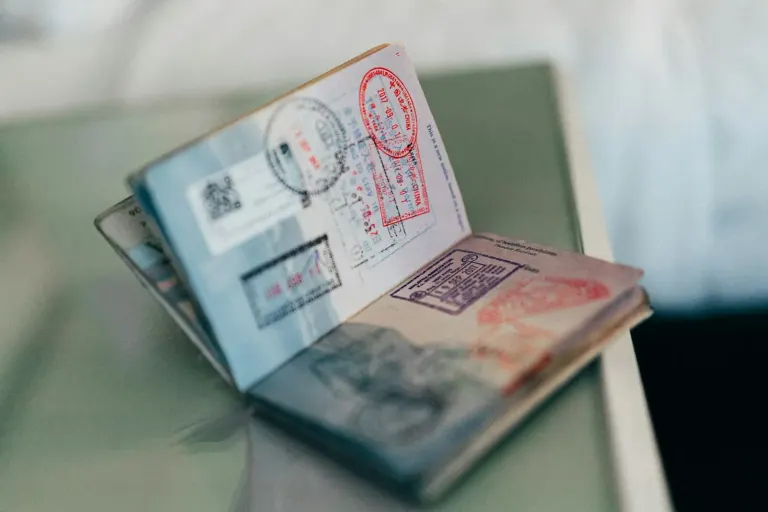
Short answer: If you are a foreigner staying in Da Nang, someone must declare your temporary residence (khai báo tạm trú) with the police. In almost every case that "someone" is not you: the hotel, homestay, landlord or host does it online as soon as you arrive, using your passport details. Your job is to hand over your passport when asked, stay only at addresses that have been declared, and make sure a new declaration is made whenever you move.
This guide explains how the rule works in practice for hotel guests, Airbnb-style rentals, monthly apartments and people staying with friends or family. Rules and figures were checked in November 2026 against the Ministry of Public Security's public service portal and state media. It is general information, not legal advice; for your own situation, check with your ward police (công an phường) or the immigration office.

What is temporary residence registration for foreigners?
It is a police record of where each foreign visitor sleeps in Vietnam. The legal basis is the Law on Entry, Exit, Transit and Residence of Foreigners (Law 47/2014, amended in 2019), together with the Ministry of Public Security's implementing circulars (source: dichvucong.bocongan.gov.vn, procedure 1.001437, checked November 2026).
The declaration covers your full name, gender, date of birth, nationality, passport number, visa or residence card validity and your expected length of stay (source: Viet Nam News, checked November 2026). It is free: the official procedure lists no fee (source: e-services.mps.gov.vn, checked November 2026).
Who has to make the declaration?
The accommodation side does, not the traveller. The official procedure is filed by the owner of the place you stay, its legal representative or a person they authorise (source: Viet Nam News, checked November 2026).
"Accommodation" is wider than hotels. Explainers published in 2026 note that it includes homestays, rented houses and apartments, and even the private home of a friend or relative you stay with (source: Vietcetera, July 2026). In each case the person who runs or owns the place makes the declaration.
| Where you stay in Da Nang | Who declares you | What you should do |
|---|---|---|
| Hotel, resort, hostel | Reception | Show your passport at check-in; let them copy or scan it |
| Homestay or guesthouse | The owner | Same as a hotel; do not refuse the passport check |
| Short-let apartment (booked on an app) | The host or management | Ask the host before arrival how they will declare you |
| Monthly or yearly rental | The landlord | Send passport and visa copies on day one; ask for confirmation |
| A friend's or relative's home | The homeowner | Make sure your host knows it is their duty |
How fast must it be done?
Online declarations should be made immediately when you arrive. The Ministry's procedure for declaring foreigners via the website says the declaration is made "immediately upon arrival" (source: e-services.mps.gov.vn, checked November 2026).
If the accommodation uses the paper form (Form NA17) instead, it must reach the commune or ward police within 12 hours of your arrival, or 24 hours in remote and mountainous areas, under the Ministry's Circular 87 (source: Viet Nam News, checked November 2026). Central Da Nang is not a remote area, so in practice expect same-day registration.

How the online system works in 2026
Since 21 May 2026, accommodation providers declare foreign guests through one national website run by the Ministry of Public Security, tbltkbtt.bocongan.gov.vn (source: Tuoi Tre News, May 2026). It replaced the older provincial declaration websites and the separate guest-reporting software.
The platform works in English and Vietnamese, and hotels, guesthouses and homestays use the same account for foreign and Vietnamese guests (source: Viet Nam News, May 2026). It can read passport images automatically, which is why staff often photograph your passport page rather than typing details.
The account belongs to the accommodation, not to you. A landlord renting one apartment needs their own account, so private landlords who rarely host foreigners sometimes ask the ward police for help the first time. You do not need to visit the police yourself unless they ask.
Penalties if it is not done
The fines fall on the accommodation. Under Decree 282/2025/NĐ-CP, an individual who fails to declare foreign guests can be fined VND 2–4 million for 1–3 guests, VND 4–8 million for 4–8 guests and VND 8–12 million for 9 or more; organisations pay double (source: Viet Nam News, checked November 2026).
Foreigners themselves should not stay at an address that has not been declared, and gaps in your record can cause trouble later when you apply for a visa extension or a temporary residence card (source: Vietcetera, July 2026). That is the main reason long-stayers should check that every move is registered.

Renting a monthly apartment: a practical checklist
For long stays, settle the declaration before you pay the first month. Landlords in Da Nang are used to foreign tenants, but small private owners may not have an account on the new system yet.
- Before signing, ask: "Will you declare my temporary residence on the police system the day I move in?"
- Send clear photos of your passport photo page, your visa or entry stamp, and your residence card if you have one.
- Ask for a screenshot or printout once the declaration is submitted, and keep it with your lease.
- When your visa is extended or your passport is renewed, send the new details to the landlord so the record can be updated (source: Vietcetera, July 2026).
- When you move out, the next accommodation must make a new declaration. One record does not follow you around the country.
If you are still choosing where to live, our guide to hotels vs Airbnb vs monthly apartments in Da Nang compares the options, and our monthly apartments for rent in Da Nang page lists furnished units by area.
Staying with friends, family or a partner
A night at a friend's home still counts as temporary residence. 2026 guidance notes that even an overnight visit at a private home can need a declaration, made by the homeowner (source: Vietcetera, July 2026).
If your Vietnamese host has never done this, they can contact the local ward police for instructions. Mention it early, ideally before you arrive, so it is not a last-minute surprise for them.

Moving between Da Nang, Hoi An and Hue
Each new address needs its own declaration, even for one night. If you split a trip between a beach hotel in Da Nang, a homestay in Hoi An and a hotel in Hue, each place declares you on check-in, so simply carry your passport (not a photocopy) every time you move.
Families moving with luggage and children often book one car for the whole transfer. Our private airport and city transfers include free child seats (tell us the child's age), a free foldable kids' stroller if you ask when booking, and a welcome bag with water, a cold towel and tissues for every adult.
For the bigger picture on settling in, from neighbourhoods to bills, start with our guide to living in Da Nang and the Da Nang travel essentials.
Frequently asked questions
Do I have to go to the police station myself?
Usually no. The hotel, landlord or host files the declaration, and the official procedure is designed for them. Go only if the ward police or your landlord ask you to bring documents in person.
Is there a fee for temporary residence registration?
No. The Ministry of Public Security's procedure for declaring foreigners online lists no fee (source: e-services.mps.gov.vn, checked November 2026). Be wary of anyone charging you for the declaration itself.
Is temporary residence registration the same as a temporary residence card (TRC)?
No. The declaration records where you sleep and applies to every foreign visitor. A temporary residence card is a separate long-term permit for eligible workers, investors and family members, with its own application.
My Airbnb host says registration is not needed. What should I do?
Explain that the rules cover rented homes too, and that the host is the one who files it. If they refuse, consider a licensed hotel or serviced apartment instead, because staying at an undeclared address can cause problems for you later.
What if I lose my passport while staying in Da Nang?
Report it to the local police and contact your embassy, then tell your accommodation so your record can be updated with the new document. Our Da Nang emergency numbers guide lists who to call.
Rules can change and local practice varies by ward. Before relying on this guide for a long stay, confirm the current requirements with your ward police or the Vietnam Immigration Department.