Da Nang’s food scene offers a magnetic pull for any traveler, but the real magic isn’t found on the menus of beachfront restaurants with English translations. It’s hidden in the steam rising from a back-alley bánh xèo pan, in the silent nod of a factory worker enjoying their lunch, and in the glow of a dessert cart that only appears after the city’s neon lights have dimmed. This guide to Da Nang’s Hidden Gem Eateries: Off-the-Beaten-Path Finds in 2026 is your passport to those authentic, unforgettable meals.
We’re skipping the tourist menus and diving into the bowls, plates, and stalls that locals protect like family secrets.
Da Nang’s best food in 2026 is not on the main drags. It’s in the industrial districts, the back alleys, and the mobile carts that track their locations via Facebook groups. This guide reveals 10 specific spots—from a 30-year-old Mỳ Quảng stall in Hòa Khánh to a late-night snail joint in a residential building—that cost between 25,000 and 40,000 VND per meal. You’ll learn how to order, what to look for, and the three Vietnamese phrases that will enhance your culinary adventure.
What Defines a “Hidden Gem” Eatery in Da Nang in 2026?
Beyond the Tourist Trail: Locals-First vs. Instagram-First
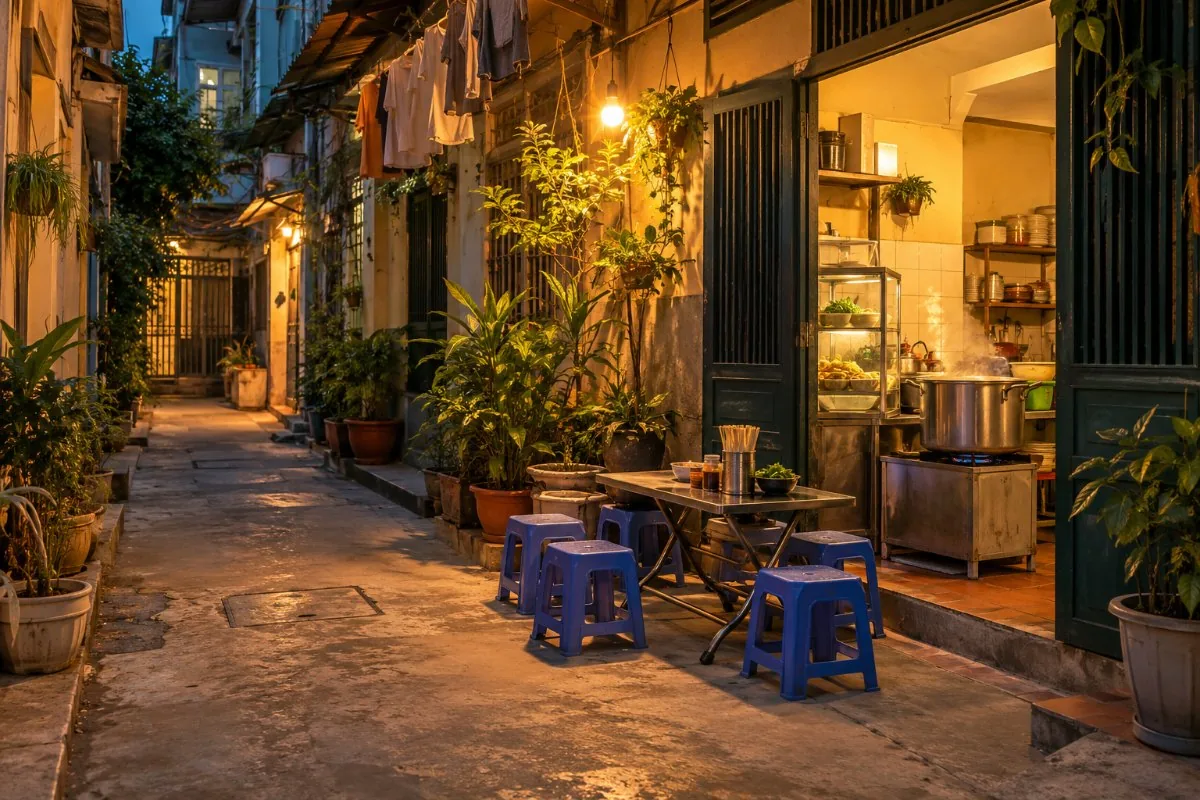
A true hidden gem in Da Nang isn’t defined by its lack of an English sign, but by its clientele. A locals-first spot, like the family-run bún chả cá stall in Hòa Khánh, has a queue of motorbikes, plastic stools worn smooth by years of use, and a menu that doesn’t need pictures because everyone already knows what to order.
The food is faster, the flavors are bolder, and the price is a fraction of what you’d pay in the city center.
The Rise of the “Neighborhood Cơm Bình Dân” and Family-Run Quán
The “Cơm Bình Dân” (family-style rice meal) quán has become the ultimate marker of authenticity in 2026. These are not restaurants; they are homes with a few extra tables on the sidewalk. A typical meal includes a protein (grilled pork, braised fish), a vegetable, a soup, and a mountain of rice—all for around 25,000 VND. These spots thrive on community trust. The owner knows the regulars by name, and the recipe has been passed down, not written down. They are the antithesis of the curated food court experience.
Why 2026’s Hidden Gems Are Shifting Further from the City Center
As Da Nang’s tourism core around the Dragon Bridge and Mỹ Khê Beach becomes saturated with international chains and Instagram cafes, the true hidden gems have migrated. Rising rents in the city center have pushed family-run stalls to industrial districts like Hòa Khánh, residential areas like Thanh Khê, and neighborhoods like Mỹ An. This shift means that the most authentic bowls of Mỳ Quảng or Bún Bò Huế are now a 15-minute Grab ride from the beach, not a five-minute walk. The effort is rewarded with a meal that costs half the price and tastes twice as good.
1. Mỳ Quảng Bà Tỵ: The 30-Year-Old Stall Hiding in Hòa Khánh
The Signature: Why the Broth is Darker and the Noodles are Thicker
Mỳ Quảng Bà Tỵ doesn’t serve the pale, watery broth you find at tourist spots. Theirs is a deep, almost mahogany-colored liquid, the result of simmering pork bones and turmeric for hours. The noodles are cut thicker, giving them a satisfying, chewy texture that holds the rich broth. The bowl arrives with a generous portion of shredded pork, a whole quail egg, and a crackling of roasted peanuts. It’s a meal designed for a factory worker who needs fuel, not a tourist looking for a photo.
How to Order Like a Local: Toppings, Herbs, and the “Dry” vs. “Broth” Debate
Locals here have a preference: “Mỳ Quảng khô” (dry noodles). You order it with less broth, allowing the flavor of the turmeric-infused noodles and the toppings to shine. The plate of herbs is not decorative—it’s essential. Add a handful of shredded banana flower, mint, and basil to your bowl. Squeeze a lime, add a slice of chili, and mix everything together. The final touch is a drizzle of their house-made chili oil, which adds a smoky heat that lingers.
Getting There: Navigating the Industrial District Without a Scooter
Finding Bà Tỵ’s stall is a small adventure. It’s located at the intersection of Đường Tôn Đức Thắng and a small alleyway in the Hòa Khánh industrial zone. Open Google Maps and search for “Mỳ Quảng Bà Tỵ.” If you don’t have a scooter, the best option is a Grab. Show the driver the name, and they will know exactly where to go. The journey from the beach takes about 20 minutes and costs roughly 60,000 VND. The price of a bowl here is 25,000 VND, a fraction of what you’d pay in the city center.
2. Bánh Xèo Bà Dưỡng: The Sizzling Crepe Joint with No English Sign
The Cooking Method: Why the Batter Uses Coconut Milk and Turmeric
Bánh Xèo Bà Dưỡng is a masterclass in texture. The batter is a simple mix of rice flour, water, and turmeric, but the secret is the generous addition of coconut milk. This gives the crepe a rich, creamy interior and a shatteringly crisp edge when it hits the hot, oiled pan. The sizzle—the “xèo” sound—is the signal that a perfect crepe is being born. She cooks them one at a time, a meditative process that ensures every single crepe is perfect.
The Dipping Sauce Secret: A Family Recipe Passed Down Since 1995
The crepe is only half the story. The dipping sauce, or nước chấm, is a family recipe that has been perfected since 1995. It’s a delicate balance of fish sauce, lime juice, sugar, garlic, and chili. But what makes it unique is the addition of a pureed carrot and daikon mixture, giving it a slightly sweet, earthy undertone. You don’t just dip the crepe; you spoon the sauce over the filling of bean sprouts, pork, and shrimp before wrapping it in a lettuce leaf.
Best Time to Visit: Avoiding the Lunch Rush of Local Factory Workers
This spot is a favorite lunch destination for factory workers in the area. The rush hits between 11:30 AM and 1:00 PM. If you arrive at noon, expect a 20-minute wait. The best time to visit is either before 11:00 AM or after 1:30 PM. A portion of two crepes is perfect for one person, and it costs just 30,000 VND. The stall is located on a small street near the Pháp Lâm Temple, with no sign in English—just the sizzle of the pan guiding you in.
3. Bún Chả Cá Ông Hai: The Unassuming Seafood Bowl in Mỹ An
The Fish Cake Difference: Hand-Made vs. Store-Bought Texture
The chả cá (fish cake) at Ông Hai is the star of the show. It’s not the bouncy, uniform cake you find in supermarkets. This is a hand-made cake, roughly textured with visible chunks of fresh snakehead fish. It has a firm, almost crumbly bite that releases a pure, sweet fish flavor. The owner makes a fresh batch every morning at 4:00 AM, ensuring that the cakes are never more than a few hours old when they hit your bowl.
The Broth: A Clear, Sweet Stock Infused with Pineapple and Dill
The broth is a revelation. It’s a clear, golden stock that gets its sweetness not from sugar, but from chunks of fresh pineapple that are simmered in the pot. The dill is added at the very last minute, releasing its fragrant, anise-like aroma. The combination of the sweet broth, the herbal dill, and the savory fish cake creates a harmony that is both refreshing and deeply comforting. It’s a bowl that heals a hangover and a hot day in equal measure.
Why This Spot Survived the 2025 Flood Season While Others Closed
The 2025 flood season was brutal for Mỹ An, with many street stalls forced to close. Ông Hai survived because of his loyal customer base. Regulars, many of whom had been eating here for years, showed up with their own bowls and containers, helping him serve from a makeshift stall on higher ground. The spot is only open from 6:00 AM to 11:00 AM, and a bowl costs 35,000 VND. It’s a breakfast-only affair, so set your alarm.
4. Chè Liên: The Dessert Cart That Appears After 8 PM in An Thượng
The Menu is a Secret: Asking for “The Special” (Chè Thập Cẩm)
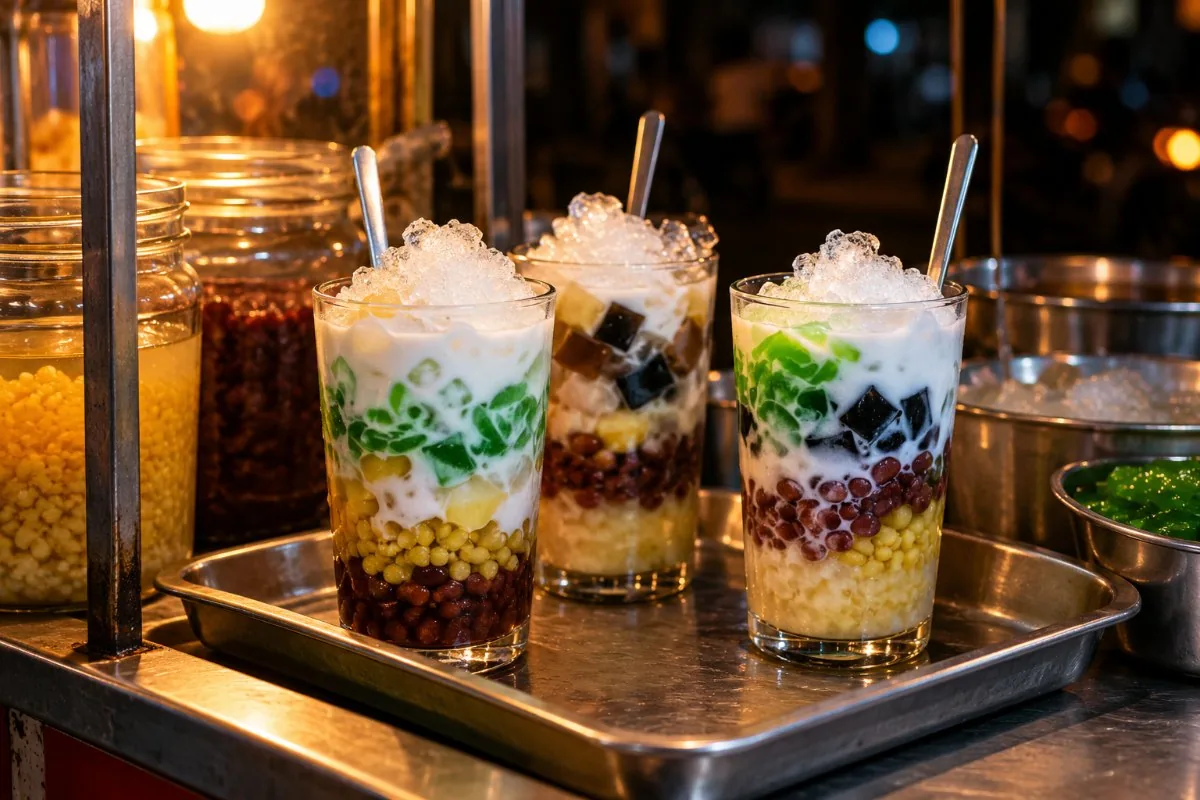
Chè Liên doesn’t have a menu. You approach the cart, and the owner, a woman named Liên, will ask you one question: “Chè thập cẩm?” (Mixed dessert?). You say yes. This “special” is a bowl of everything she has that day—a glorious mix of red beans, green beans, tapioca pearls, lotus seeds, and coconut jelly, all swimming in a pool of sweet, creamy coconut milk and crushed ice. It’s a surprise every time, and it’s always perfect.
The Ingredients: Why the Coconut Cream is Grated Fresh Daily
The foundation of any great chè is the coconut cream. Liên doesn’t use canned coconut milk. She buys fresh coconuts every morning, cracks them open, and grates the flesh by hand. She then squeezes the grated coconut to extract a thick, aromatic cream. This cream is what gives her chè its signature richness and a texture that coats the back of your spoon. The beans are cooked until they are soft but still hold their shape, providing a beautiful contrast to the creamy liquid.
The Social Experience: Sitting on Tiny Plastic Stools with Digital Nomads
The cart sets up at the intersection of An Thượng 3 and An Thượng 5, right near the 7-Eleven. The social scene is a mix of local families, late-night workers, and a growing number of digital nomads who have discovered this spot. You sit on tiny, brightly-colored plastic stools, your knees up near your chin, and you eat your chè while watching the city buzz around you. The wait is rarely more than five minutes, and a bowl costs just 15,000 VND.
5. Cơm Gà Xối Mỡ: The Crispy Chicken Rice Spot with the Longest Queue
The Technique: How the Skin Gets Glass-Crisp Without Being Greasy
The chicken at Cơm Gà Xối Mỡ is a work of culinary engineering. The skin is not just crispy; it’s glass-crisp. The technique involves air-drying the chicken for several hours before it is slowly poached. Just before serving, the chef pours a ladle of extremely hot oil over the skin, causing it to puff up and shatter when you bite into it. The meat underneath remains impossibly juicy and tender. It’s a textural experience that defines the dish.
The Side Dish: The Pickled Papaya and the Ginger Fish Sauce
The chicken is served with a mound of steamed rice and two essential accompaniments. The first is a pile of pickled papaya and carrot, which provides a sharp, acidic crunch that cuts through the richness of the chicken. The second is a bowl of ginger fish sauce. This is not your standard nước chấm. It’s a concentrated, gingery, and slightly sweet sauce that you spoon over the chicken and rice. It elevates the entire dish.
The Queue Strategy: How to Skip the Line (Order Takeaway)
The queue for a table can stretch 20-30 people deep during peak hours (12:00 PM – 1:00 PM and 6:00 PM – 7:00 PM). The hack is to order takeaway. You can walk straight to the counter, place your order for “Cơm gà xối mỡ mang về,” and your food will be ready in under five minutes. The stall is located near the old train tracks on Hoàng Diệu Street. A plate costs 35,000 VND.
6. Bánh Tráng Cuốn Thịt Heo: The DIY Pork Wrap Experience in a Back Alley
The Assembly Line: Rice Paper, Pork, Herbs, and the Fermented Shrimp Sauce
This is not a dish you order; it’s a dish you assemble. A platter arrives with a stack of thin rice papers, a pile of boiled pork belly sliced into perfect rectangles, a mountain of fresh herbs (lettuce, mint, perilla, and cucumber), and a small bowl of the dipping sauce. You take a rice paper, dip it quickly in water to soften it, and then build your wrap: a slice of pork, a few herbs, and a slice of cucumber.
Why the Sauce is the Star: Mắm Nêm vs. Mắm Tôm
The soul of this dish is the dipping sauce. The best spots serve Mắm Nêm, a fermented anchovy sauce that is pungent, salty, and deeply savory. It’s an acquired taste, but once you acquire it, you’ll never go back to the milder Mắm Tôm (shrimp paste). The sauce is tempered with a squeeze of lime, a touch of sugar, and a generous amount of chili. The combination of the cool, tender pork, the crisp herbs, and the funky, explosive sauce is unforgettable.
The Alley Location: A Map-Less Spot Known Only to Grab Drivers
This spot is in Hẻm 42, a narrow alley off Đường Nguyễn Văn Thoại. There is no sign. Grab drivers know it as “the pork wrap place in the alley.” The best way to find it is to get a Grab to the intersection of Nguyễn Văn Thoại and An Thượng 2, and then ask your driver to take you to “Hẻm 42.” The meal costs about 50,000 VND per person and is enough for two people to share.
7. Ốc Len Xào Dừa: The Late-Night Snail Spot in the Back of a Residential Building
The Flavor Profile: Why Coconut and Lemongrass is the Perfect Pairing
Ốc Len Xào Dừa (sea snails stir-fried with coconut) is a quintessential Da Nang late-night snack. The snails are small, tender, and have a mild, briny flavor. They are stir-fried in a rich, creamy sauce made from coconut milk, fresh lemongrass, chili, and a hint of turmeric. The coconut milk tames the heat of the chili, while the lemongrass adds a bright, citrusy note that cuts through the richness. It’s a flavor profile that is both comforting and exciting.
The Tools: How to Master the Toothpick Technique
Eating these snails requires a bit of skill. You are given a small bowl of the snails in their shells, a bowl of the sauce, and a single toothpick. The technique is simple: pick up a snail, use the toothpick to coax the meat out of its shell, dip it generously in the sauce, and enjoy. It can be a messy, slow process, but that’s part of the fun. The goal is to savor each bite and let the flavors linger.
The Drink Pairing: Why You Need a Cold Bia Saigon
This dish is designed to be paired with a very cold bottle of Bia Saigon. The light, crisp, slightly bitter lager is the perfect counterpoint to the rich, creamy, and spicy snails. The carbonation cleanses your palate between bites, preparing you for the next one. The spot is located near the Ấn Quang Pagoda Park, and it only opens from 9:00 PM to 2:00 AM. A portion costs 30,000 VND.
8. Xôi Bà Bảy: The Sticky Rice Stand That Has No Fixed Address
The Menu: Why You Order by Color (White, Green, or Sticky Purple)
Bà Bảy’s menu is simple: you order your sticky rice by color. “Xôi trắng” is plain white sticky rice. “Xôi lá cẩm” is a beautiful, natural purple rice colored with the magenta plant. “Xôi đậu xanh” is green from mashed mung beans. Each color has a slightly different texture and flavor. The purple rice is the most popular—it has a subtle, earthy sweetness that pairs perfectly with the savory toppings.
The Toppings: Pâté, Shredded Chicken, and Fried Shallots
Once you choose your rice, you choose your toppings. The classic combination is a slice of rich, creamy pâté, a generous handful of shredded chicken, and a shower of crispy fried shallots. The pâté melts into the warm rice, the chicken provides a lean protein, and the fried shallots add a salty, crunchy finish. A drizzle of scallion oil is the final touch. It’s a breakfast that will keep you full until dinner.
The Mobile Strategy: How to Track Her Location via Local Facebook Groups
Bà Bảy is a mobile vendor. She sets up her cart at a different spot every day, but she always announces her location in the local Facebook group “Đà Nẵng Foodie.” To find her, join this group and search for “Xôi Bà Bảy” on the day you want to visit. She typically sets up in the Hải Châu district, near a school or a market. A portion costs 20,000 VND. The thrill of the hunt is part of the experience.
9. Bún Bò Huế Cô Tư: The Spicy Hue Noodle That’s Better Than the Hue Originals
The Broth: A Deeper, More Complex Flavor from 12 Hours of Simmering
Cô Tư’s broth is a dark, ruby-red elixir that has been simmering for a full 12 hours. It’s made with beef bones, lemongrass, and a heavy dose of annatto seeds, which give it its signature color and a subtle, earthy flavor. The broth is more complex than a standard Hue-style bowl. It’s deeper, richer, and has a lingering heat that builds with every spoonful. It’s the kind of broth that leaves you satisfied but already planning your next visit.
The Protein: Why the Beef Shank and Pork Hock are Non-Negotiable
A proper bowl of Bún Bò Huế must include two types of meat: tender slices of beef shank and a generous piece of pork hock. The beef shank is lean and flavorful, while the pork hock is rich, fatty, and almost gelatinous from the long simmer. The combination of textures—the lean meat, the fatty skin, and the chewy pork tendon—is what makes this bowl so satisfying. The thick, round rice noodles (bún) are the perfect vehicle for the broth.
The Spice Level: How to Ask for “Extra Satay” Without Burning Your Mouth
The bowl comes with a dollop of deep-red satay (chili paste) on top. If you want it spicier, ask for “thêm sa tế” (more satay). But be careful—a little goes a long way. The satay at Cô Tư’s is potent. Start with the standard amount, taste the broth, and then add more if you need it. The stall is located on Đường Hàm Nghi in the Thanh Khê district. A bowl costs 40,000 VND.
10. Bánh Bèo Bà Mười: The Tiny Steamed Rice Cakes Served on a Banana Leaf
The Bite-Sized Format: Why Less is More
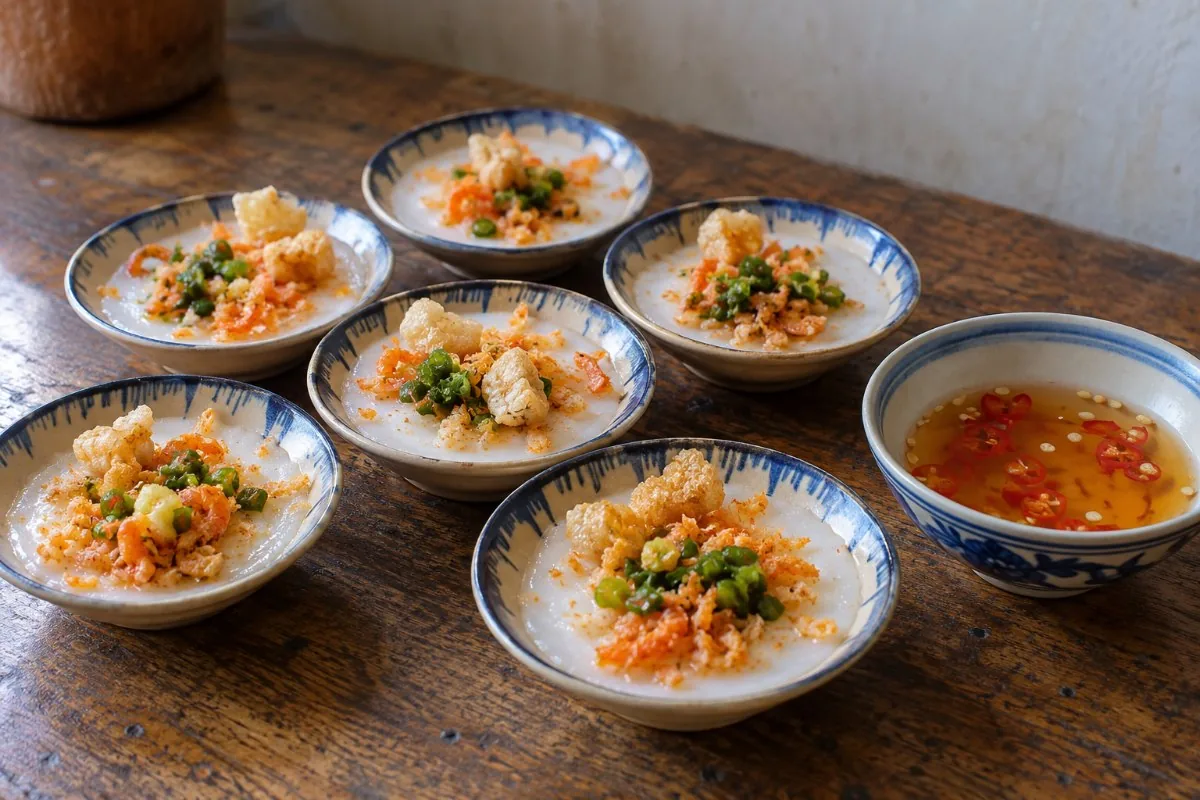
Bánh bèo are tiny, saucer-shaped steamed rice cakes. They are a study in minimalism. Each cake is about the size of a silver dollar, with a slight, jelly-like wobble. The texture is soft, silky, and slightly chewy. The beauty of the dish is in its bite-sized format. You can eat a dozen of these without feeling full, making them the perfect afternoon snack. They are served on a banana leaf, which imparts a subtle, grassy aroma.
The Toppings: Shrimp Crumble, Fried Pork Skin, and Scallion Oil
Each cake is topped with a precise amount of three things. First, a crumble of dried shrimp that has been ground into a fine powder, providing a concentrated blast of umami. Second, a sprinkle of crispy fried pork skin (tóp mỡ), which adds a salty, crunchy texture. Third, a drizzle of scallion oil, which adds a fresh, aromatic finish. The combination of the soft cake, the savory shrimp, and the crunchy pork skin is a textural masterpiece.
The Etiquette: Using the Spoon to Scoop, Not the Chopsticks
There is a specific way to eat bánh bèo. Do not use chopsticks. You pick up the saucer with your fingers, and then use a small spoon to scoop the entire cake into your mouth in one bite. This ensures you get the perfect ratio of cake, topping, and sauce in every mouthful. Bà Mười sets up near the east side of the Dragon Bridge, only in the afternoon. A plate of 10 cakes costs 15,000 VND.
How to Find Your Own Hidden Gems: A 2026 Da Nang Strategy
The “Grab Driver” Method: Asking Your Driver for Their Favorite Spot
Your Grab driver is your most valuable culinary asset. They know the city better than any guidebook. As you get into the car, simply say: “Anh/chị ơi, quán nào ngon ở đây mà ít khách du lịch?” (Excuse me, what’s a good restaurant here with few tourists?). The driver’s face will light up. They will take you to their own lunch spot, a place they’ve been eating at for years. Trust their recommendation over any online review.
The “Google Maps Pin” Hack: Looking for Unreviewed Spots with Vietnamese Names
Open Google Maps in Da Nang. Zoom into a residential area. Look for a pin with a Vietnamese-only name like “Quán Cơm Bà Hạnh” or “Bún Bò Huế Cô Tư.” If the pin has fewer than 20 reviews, you’ve found a potential gem. The lack of English reviews means tourists haven’t discovered it yet. The photos will be of the food, not of people posing. This is the digital equivalent of following the smoke.
The “Follow the Smoke” Rule: Finding Stalls with No Sign, Just a Grill
This is the most primal method. Walk down a side street in the late afternoon. If you see a plume of smoke rising from a charcoal grill, walk toward it. The source will likely be a small, sign-less stall where a woman is grilling pork skewers or chicken wings over hot coals. This is a hidden gem in its purest form. The menu is whatever is on the grill. The price is whatever you agree on. The experience is unforgettable.
Important Considerations for Eating Off the Beaten Path
Cash is Still King: Why Most Hidden Gems Don’t Accept Cards or E-Wallets
The vast majority of these stalls operate on a cash-only basis. They don’t have card machines, and many don’t even accept e-wallets like Momo. Before you head out for the day, make sure you have a stack of small bills (10,000, 20,000, and 50,000 VND notes). Trying to pay with a 500,000 VND note for a 25,000 VND bowl of Mỳ Quảng will cause a problem, as the vendor may not have enough change.
The Language Barrier: Three Vietnamese Phrases You Must Know
You don’t need to be fluent, but three phrases will transform your experience. First: “Làm ơn cho tôi một suất” (Please give me one portion). This is the universal order. Second: “Bao nhiêu tiền?” (How much money?). This is essential for confirming the price. Third: “Ngon quá!” (So delicious!). Say this after your first bite, and you will see the owner’s face break into a genuine smile. It’s the best way to show respect for their craft.
Hygiene vs. Authenticity: How to Judge a Stall’s Cleanliness by the Queue
A long queue of locals is the best indicator of both quality and safety. Locals are discerning customers. If a stall is dirty or uses old ingredients, it will not have a queue. A busy stall has a high turnover of ingredients, meaning the food is fresh. Look for the basics: the cook is using clean utensils, the meat is kept in a cool place, and the plates are washed between customers. A bustling, busy stall is almost always a safe bet.
Related on this site
- Da Nang Restaurants for Anniversary Dinners: Romantic Ambiance 2026
- Da Nang’s Best Food with a View: Restaurants Overlooking the River 2026
- The Ultimate Da Nang Foodie Itinerary for 2026
Frequently Asked Questions
Are hidden gem eateries in Da Nang safe for tourists with sensitive stomachs?
Generally, yes, especially if you follow the queue rule. A stall with a high turnover of local customers means the ingredients are fresh. The food is cooked to order in front of you, which minimizes risk. If you have a very sensitive stomach, start with spots that serve cooked food (like Mỳ Quảng or Cơm Gà) rather than raw items.
What is the average price range for a meal at these off-the-beaten-path spots?
The average price for a filling meal at a hidden gem eatery in Da Nang ranges from 25,000 VND to 50,000 VND (approximately $1 to $2 USD). A bowl of Mỳ Quảng costs 25,000 VND, while a DIY pork wrap experience is around 50,000 VND per person. Desserts like chè are even cheaper, at around 15,000 VND.
How do I find the latest locations for mobile food carts in Da Nang?
The best method is to join local Facebook groups like “Đà Nẵng Foodie” or “Expats in Da Nang City.” Vendors like Xôi Bà Bảy often post their daily location in these groups. You can also ask your Grab driver, who will likely know where the popular mobile carts are setting up on any given night.
Is it better to visit these eateries for lunch or dinner?
It depends on the dish. Breakfast and lunch spots (like Bún Chả Cá Ông Hai and Cơm Gà Xối Mỡ) are best visited before 11:00 AM or after 1:30 PM to avoid the local rush. Dinner and late-night spots (like Chè Liên and the Ốc Len Xào Dừa stall) come alive after 8:00 PM. For the full experience, plan a breakfast hunt and a separate evening snack crawl.
Can I rely on Google Maps reviews for hidden gem eateries?
Not entirely. Many hidden gems have few or no English reviews, which is actually a good sign. Instead of looking at the star rating, look at the number of reviews in Vietnamese. A spot with 50+ Vietnamese reviews and 0 English reviews is likely a true local favorite. Use Google Maps to find the location, but trust the queue of locals as your primary review.
Next Steps
Da Nang’s culinary soul is not found in guidebooks but on the plastic stools of its hidden stalls. The 10 spots in this guide are your starting point, but the real adventure begins when you start using the strategies—the Grab driver method, the Google Maps pin hack, and the follow-the-smoke rule—to discover your own. Your next step is to withdraw some cash, learn those three phrases, and head out to Hòa Khánh or Mỹ An. The best meal of your trip is waiting for you in a back alley.
For places rather than plates, see off-the-beaten-path attractions in Da Nang, and for quiet sand see Da Nang’s hidden beaches.
Part of our guide to what to eat in Da Nang.