Da Nang is celebrated for its beaches and culinary scene, but its most tranquil secrets are found in the hills above. This article explores Da Nang’s secluded hilltop retreats, focusing on elevated wellness sanctuaries that offer a profound escape from coastal crowds, ideal for a 2026 nature getaway.
These retreats, situated on the Son Tra Peninsula, within the Ba Na Hills, and along the Truong Son range, provide more than just accommodation; they offer a shift in perspective. Here, cooler air, quieter surroundings, and a slower pace of life align with the natural environment.
Selecting a hilltop retreat in Da Nang for 2026 involves prioritizing specific environmental factors and wellness offerings. Elevations above 200 meters contribute to cooler temperatures and misty mornings, while true seclusion is achieved through gated access and substantial buffer zones. The most effective retreats combine immersion in nature with structured activities such as yoga, forest bathing, and guided treks, ensuring a stay that is both restorative and enriching.
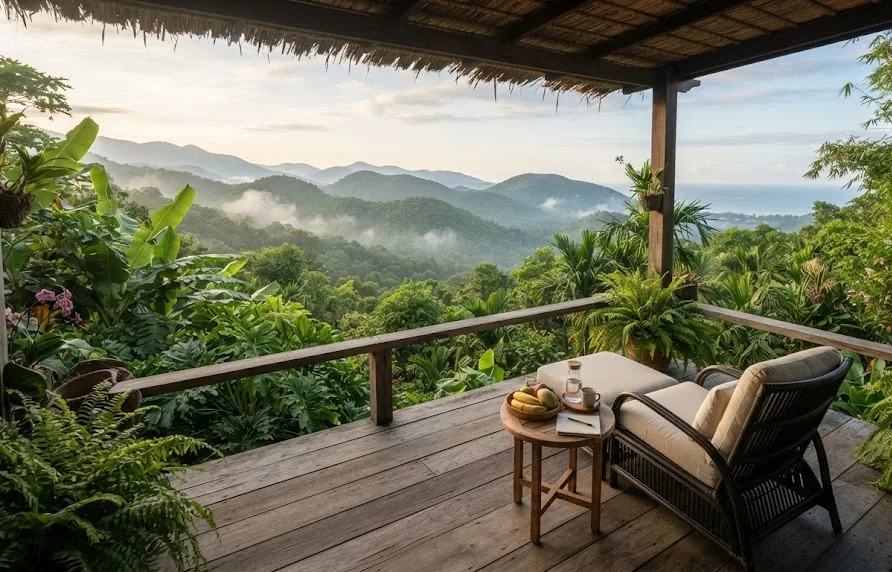
What Defines a Secluded Hilltop Retreat in Da Nang?
A true hilltop retreat in Da Nang combines elevation, privacy, and nature immersion to create a distinct micro-environment that separates you from the coastal tourist hubs.
Elevation and Microclimate: Why 200m+ Changes Your Stay
Altitude significantly alters the Da Nang experience. While the city experiences average humidity around 80% and temperatures often exceeding 30°C from May to August, ascending to 200 meters on the Son Tra Peninsula or higher into the Ba Na Hills (1,400 meters) reveals a different climate. Temperatures typically drop by 5-7°C, humidity decreases, and the air is infused with the scent of pine and tropical hardwoods. Even the lower Marble Mountains, around 100 meters, generate localized breezes that offer pleasant evenings during peak summer.
This climatic shift enhances sleep quality, boosts energy levels, and deepens relaxation. A retreat at 200 meters transforms a standard beach holiday into a restorative climate escape, supporting both profound rest and invigorating daytime exploration.
Privacy Markers: Guest-to-Acre Ratio, Gated Access, Buffer Zones
Genuine seclusion can be quantified. When evaluating hilltop retreats, look for specific privacy markers that indicate true solitude. A guest-to-acre ratio of fewer than 10 guests per acre of natural or landscaped land ensures minimal encounters with other visitors. Gated access with a dedicated security checkpoint establishes a psychological boundary and limits external traffic. Buffer zones—undeveloped land or dense forest separating your accommodation from neighbors—prevent noise and visual intrusion.
Properties on the Son Tra Peninsula, designated as a national nature reserve, naturally feature larger buffer zones than those closer to the city center. These markers are crucial in determining whether your retreat feels like a private sanctuary or merely a hotel situated on a hill.
Nature Immersion vs. Resort Luxury — Finding the Balance
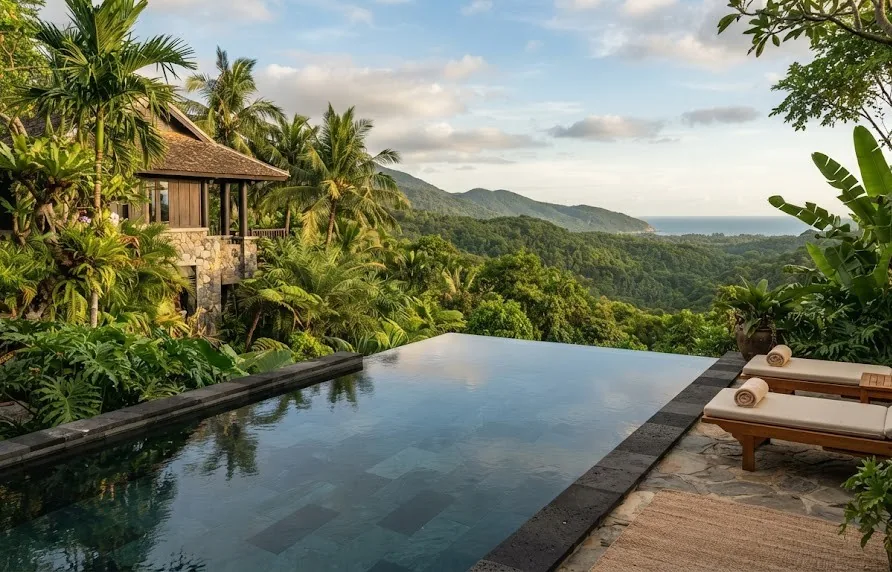
The most effective hilltop retreats in Da Nang integrate luxury amenities with natural settings in a way that enhances, rather than detracts from, the outdoor experience. A villa with floor-to-ceiling windows opening onto a private deck overlooking the jungle exemplifies this balance. An infinity pool that visually merges with the horizon creates the illusion of swimming into the forest canopy. The design intent should be to celebrate the natural surroundings.
Retreats utilizing local materials such as reclaimed wood, natural stone, and thatched roofing tend to blend more harmoniously with the landscape. Stepping outside your villa should immerse you in the forest’s sights, sounds, and smells, rather than leading to a generic manicured lawn.
7 Criteria for Choosing Your 2026 Hilltop Nature Escape
Before booking, evaluate each retreat against seven practical criteria to ensure your hilltop escape delivers on its promise of seclusion and restoration.
Accessibility: Transfer Time from Da Nang International Airport (DAD)
Your journey from Da Nang International Airport (DAD) sets the tone for your retreat. A 30-minute transfer to the Son Tra Peninsula offers a gentle transition from urban energy to natural calm. A 90-minute drive into the Truong Son mountains becomes part of the adventure, winding through rice terraces and ethnic minority villages. Consider your tolerance for travel after a long flight; for a quick reset, choose retreats within 45 minutes of the airport.
For a deeper immersion, embrace the longer transfer and treat it as the initial phase of your digital detox. Most retreats offer airport pickup, but confirm the vehicle type, as some mountain roads necessitate 4WD, especially during the rainy season.
Wellness Programming: Yoga Decks, Spa Treatments, Guided Nature Walks
Seclusion alone does not guarantee relaxation. The most effective retreats structure your day with wellness activities designed to guide you toward restoration. Look for properties with dedicated yoga decks positioned for sunrise views, spa treatment rooms utilizing local ingredients like coconut oil and lemongrass, and guided nature walks led by knowledgeable staff. Some retreats offer daily schedules with sunrise meditation, afternoon breathwork, and evening sound baths, while others provide maps for self-guided exploration.
If you prefer structure, choose a retreat with a published weekly schedule. If spontaneity suits you better, select a property that offers activities on request.
Sustainability Practices and Eco-Certifications
Hilltop environments are fragile ecosystems. Responsible retreats implement visible sustainability practices to protect the landscape. Look for properties that use solar water heating, treat their own wastewater, source food locally, and employ staff from surrounding communities. Eco-certifications from organizations like Green Lotus or Travelife offer third-party verification. Some retreats actively participate in reforestation or wildlife protection programs; properties on the Son Tra Peninsula, home to the endangered red-shanked douc langur, often contribute to conservation efforts.
Supporting these retreats ensures the preservation of natural beauty and deepens your connection to the place, knowing your stay contributes to its protection.
Seasonal Considerations: Best Months for Hilltop Stays in Da Nang
Da Nang’s climate features two distinct seasons, and your retreat choice should align with weather patterns. The dry season, from February to August, offers the most reliable sunshine and clear views, making it optimal for hilltop stays, particularly from February to May when temperatures are mild and humidity is low. The rainy season, from September to January, brings heavy downpours and fog that can obscure views. Ba Na Hills, at 1,400 meters, experiences fog and cooler temperatures from December to February, which can be atmospheric but limiting for some travelers.
Son Tra Peninsula, at lower elevations, remains accessible year-round, though trails can become slippery after rain. For a 2026 escape, booking between February and August maximizes the probability of clear skies and comfortable temperatures.
1. The Yoga Sanctuary — Danang Yoga Wellness Retreat Villa
Perched on a luxury hilltop pool villa surrounded by lush greenery, this retreat offers a structured wellness immersion with daily yoga, sound therapy, and plant-based dining, located 30–45 minutes from Da Nang International Airport.
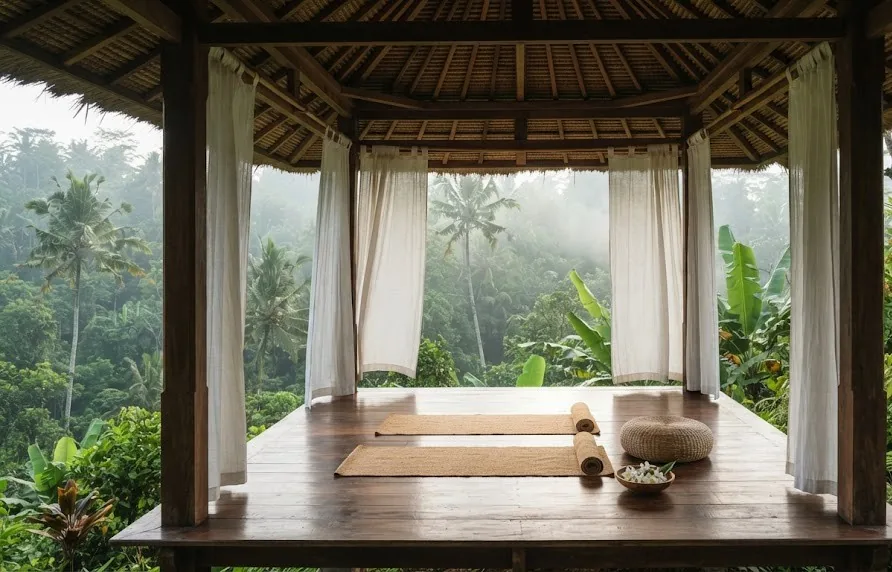
The Danang Yoga Wellness Retreat Villa prioritizes mindful relaxation over sightseeing. Its centerpiece is an infinity pool overlooking mountain ridges, where the water appears to meet the forest canopy. The open-air meditation deck, positioned for sunrise, hosts daily practices blending vinyasa flow with pranayama. This is a purpose-built wellness facility where every element supports your practice.
Infinity Pool Overlooking Mountain Ridges and Open-Air Meditation Deck
The infinity pool at this retreat seems to spill directly into the jungle below. Swimming at dawn, with mist clinging to the treetops, offers a surreal experience. The adjacent hardwood meditation deck accommodates small groups, encouraging quiet contemplation. The design emphasizes sensory calm, with the sounds of water and rustling leaves replacing ambient city noise.
Evening sessions on the deck, guided by candlelight, transition smoothly into the retreat’s nightly sound therapy.
Daily Sattvic Meals, Sound Therapy, and Aura Cleansing Rituals
Nutrition follows the sattvic tradition, featuring fresh, seasonal, and lightly spiced vegetarian meals that support meditation. Breakfast might include golden milk and tropical fruits. Herbal tea rituals offer calming alternatives to caffeine. Sound therapy sessions use singing bowls and gongs for deep relaxation, while aura cleansing rituals, rooted in Vietnamese healing traditions, aim to reset your energetic state. These practices create a structured rhythm that many guests find deeply restorative.
The retreat’s location, 30–45 minutes from DAD, makes it accessible for short breaks yet secluded enough for a genuine escape.
Who This Suits Best: Solo Wellness Travelers and Digital Detox Seekers
This retreat is ideal for travelers who appreciate an organized wellness journey. Solo travelers benefit from the structured schedule, which facilitates meeting like-minded individuals without pressure. Digital detox seekers appreciate the limited WiFi, making disconnection practical. The retreat’s small guest capacity, typically under 15, ensures personalized attention and a sense of community.
If your goal is to deepen your yoga practice, reset eating habits, or experience structured silence, this retreat offers a comprehensive package.
2. The Coastal-Mountain Hybrid — Tia Wellness Resort
Tia Wellness Resort bridges beachfront luxury and hilltop seclusion, offering ocean-view villas with access to private gardens and beach privileges, anchored by the award-winning V-Senses Spa.
Tia Wellness Resort occupies a unique position in Da Nang’s wellness landscape. Its elevated garden villas provide the privacy of a mountain retreat with convenient beach access. The resort’s design, featuring tropical gardens and stone paths, creates a layout where each villa feels isolated. This hybrid approach suits travelers seeking both morning ocean-view yoga and afternoon jungle treks on the Son Tra Peninsula.
Ocean-View Villas with Hilltop Garden Access and Beachfront Privileges
Each villa at Tia includes a private pool and an outdoor garden terrace, offering multiple relaxation zones. The elevated garden villas provide partial ocean views, while the resort’s beachfront location offers direct access to a private stretch of sand. A complimentary shuttle service connects the hilltop villas and the beach, allowing guests to easily switch between mountain and coastal experiences.
The resort’s layout ensures privacy, even at full occupancy.
Signature Spa Therapies Blending Vietnamese Healing Traditions
The V-Senses Spa at Tia Wellness Resort anchors the property’s wellness offerings. Signature treatments combine Vietnamese healing traditions—using ingredients like rice bran, coconut milk, and herbal compresses—with modern spa techniques. Treatment rooms open onto private gardens, allowing natural sounds to accompany massages. The resort offers wellness consultations with on-site practitioners who can design personalized programs addressing sleep quality, stress management, and nutrition.
For couples, the spa offers side-by-side treatment suites, making it a popular choice for romantic wellness escapes.
Who This Suits Best: Couples Wanting Both Beach and Mountain Privacy
Tia Wellness Resort is ideal for couples who desire both ocean and mountain environments. The resort’s hybrid design accommodates these preferences. Couples can book a garden villa with a private pool, enjoying mornings on the beach and afternoons in the hills. Wellness programming, including couples’ spa treatments and private yoga sessions, creates shared experiences. While larger than a boutique hilltop retreat, its design ensures privacy.
The beachfront location, within 20 minutes of Da Nang International Airport, adds convenience for shorter stays.
3. The Eco-Lodge Experience — Ba Na Hills Forest Retreats
At 1,400 meters above sea level, Ba Na Hills offers cloud-level stays where morning mist rolls through the forest, with access to jungle treks, birdwatching platforms, and waterfall meditation spots.
Ba Na Hills provides the most dramatic elevation change near Da Nang. Reached via a world-record cable car, the journey itself is a highlight, transforming the landscape from coastal lowlands to subtropical and cloud forests. The summit’s temperature is consistently 8-10°C cooler than the city below, offering a natural refuge from summer heat. Retreats here prioritize environmental immersion over luxury amenities.
Cloud-Level Stays Above 1,400m with Morning Mist Views
Waking up in a Ba Na Hills retreat means encountering a sea of clouds. The morning mist, typically dissipating by mid-morning, creates an ethereal atmosphere. The fog season, from December to February, intensifies this effect, sometimes shrouding the forest until early afternoon. While limiting visibility, this creates a sense of mystery and isolation. The cooler temperatures allow for comfortable daytime outdoor activities.
Evening temperatures drop further, requiring a light jacket even in summer.
Guided Jungle Treks, Birdwatching, and Waterfall Meditation Spots
The forest around Ba Na Hills features an extensive network of trails. Local guides lead excursions that explore the jungle, identifying medicinal plants and bird species. Birdwatchers will find the area rewarding, with several endemic species. Waterfall meditation spots offer natural settings for mindfulness practice, with the sound of falling water masking external noise. These guided experiences add educational value, transforming a passive nature stay into an active learning journey.
Retreats can arrange private guides for those preferring solo exploration.
Who This Suits Best: Nature Purists and Hiking Enthusiasts
This retreat is for those prioritizing the natural experience over spa treatments and gourmet dining. Accommodations are simple, focusing on comfort. Hiking enthusiasts will find numerous trails, from gentle walks to challenging ascents. Nature purists appreciate the absence of commercial development, focusing solely on the forest’s rhythms. The retreats’ commitment to sustainability aligns with environmentally conscious travelers’ values.
If your ideal retreat involves muddy boots, bird calls, and the scent of damp earth, this is your sanctuary.
4. The Luxury Villa Option — Private Hilltop Pool Villas in Son Tra
On the Son Tra Peninsula, a protected nature reserve, private hilltop villas offer full-property buyouts with dedicated butlers, private infinity pools, and the chance to spot red-shanked douc langurs from your terrace.
The Son Tra Peninsula, known as Monkey Mountain, rises dramatically from the coast northeast of Da Nang. Its protected status preserves 4,400 hectares of tropical forest, a habitat for the endangered red-shanked douc langur. Private villas on the peninsula’s hillsides offer ultimate seclusion, featuring dedicated staff, pools, and panoramic forest and ocean views. This represents the most exclusive category of hilltop retreat in Da Nang.
Full-Villa Buyouts with Private Infinity Pools and Dedicated Butlers
Renting a full villa on Son Tra means exclusive use of the entire property. There are no neighboring guests or shared facilities, ensuring complete privacy. Properties typically range from 5 to 7 bedrooms, accommodating large families or groups. Each villa includes a private infinity pool, often positioned for sunset views over the East Sea. Dedicated butlers manage all details, from arranging private chefs to coordinating day trips.
This level of service transforms the retreat experience, focusing entirely on guest comfort.
Red-Shanked Douc Langur Spotting from Your Terrace
The red-shanked douc langur, a rare primate with fewer than 2,500 individuals remaining in the wild, is found in viable populations on the Son Tra Peninsula. Guests at hilltop villas frequently spot these animals from their terraces, particularly in the early morning or late afternoon. The villas’ elevated positions provide natural vantage points for observation without disturbing the wildlife.
Some properties employ naturalist guides to lead guests to known feeding areas, enhancing sighting opportunities while ensuring wildlife is undisturbed. This unique wildlife experience elevates a luxury villa stay into a genuine nature encounter.
Who This Suits Best: Families and Groups Wanting Complete Seclusion
Private hilltop villas on Son Tra cater to travelers prioritizing exclusivity. Families benefit from the full-villa layout, offering separate sleeping quarters and shared common spaces. Groups of friends can split the cost, making this option more accessible. The dedicated staff handles all logistics, allowing guests to focus on relaxation. The Son Tra location, 20-30 minutes from Da Nang International Airport, provides convenience without sacrificing seclusion.
For special occasions like milestone birthdays or family reunions, these villas offer an unforgettable setting.
5. The Mindfulness-First Retreat — Meditation and Breathwork Villas
Designed for burnout recovery and stress management, these retreats offer structured silent programs, breathwork sessions, and guided forest bathing in digital-free environments.
Mindfulness-first retreats cater to travelers whose primary goal is mental restoration. These properties operate on structured schedules prioritizing meditation, breathwork, and nature connection. Many offer multi-day silent retreats where participants refrain from speaking, allowing the mind to settle. The environment is deliberately minimal—no televisions, limited WiFi, simple plant-based meals—to remove distractions and support an inward journey.
Structured Silent Retreats, Breathwork Sessions, and Guided Forest Bathing
The core offering at these retreats is structure. A typical day begins with sunrise meditation, followed by a silent breakfast. Mid-morning breathwork sessions introduce techniques like the Wim Hof method. Afternoon forest bathing involves slow, mindful walks with guided sensory exercises. Evening sessions might include yoga nidra, a guided meditation inducing deep relaxation.
The structured schedule removes decision fatigue, allowing surrender to the program and focus on inner experience.
Plant-Based Detox Menus and Digital-Free Zones
Nutrition follows a plant-based detox philosophy, emphasizing whole foods for mental clarity. Meals are simple but nourishing: vegetable soups, grain bowls, fresh juices, and herbal teas. Alcohol and caffeine are typically excluded. The digital-free policy is enforced through design and practice—common areas lack charging stations, and guests are encouraged to surrender devices. This enforced disconnection often yields profound results.
Many guests report that the initial 24 hours are challenging, after which a sense of mental spaciousness emerges.
Who This Suits Best: Burnout Recovery and Stress Management Seekers
These retreats are interventions for travelers experiencing burnout and stress. The structured environment provides a container for this work, while the absence of digital distractions ensures inward focus. Burnout recovery requires time—a minimum of three days is recommended, with five to seven days being more effective. The retreats’ locations in the hills surrounding Da Nang reinforce the sense of separation from normal life.
If you are seeking to address the root causes of stress, a mindfulness-first retreat may be a valuable investment.
6. The Cultural Immersion Stay — Hilltop Homestays with Local Hosts
In the Truong Son mountain range, homestays with ethnic minority families offer authentic cultural exchanges, farm-to-table cooking classes, and traditional craft workshops at a fraction of resort prices.
For travelers seeking genuine cultural connection, hilltop homestays in the Truong Son range offer an alternative to commercial retreats. These family-run accommodations place you within the daily life of ethnic minority communities, primarily the Co Tu people. You sleep in a traditional stilt house, eat meals prepared by your host family, and participate in daily activities. This is an invitation into a real community, not a staged performance.
Stay with Ethnic Minority Families in the Truong Son Mountain Range
The Truong Son range is home to numerous ethnic minority groups, each with distinct languages, customs, and traditions. The Co Tu people, west of Da Nang, are known for their weaving, communal houses, and connection to the forest. Homestay programs pair visitors with local families, providing direct economic benefit and an unfiltered view of mountain life.
Communication may require patience, as English is not widely spoken, but the language barrier can deepen the experience through non-verbal connection.
Farm-to-Table Cooking Classes and Traditional Craft Workshops
Daily activities at these homestays revolve around practical skills. Cooking classes begin with harvesting vegetables from the family garden, followed by preparing traditional dishes over an open fire. Flavors differ significantly from Da Nang city cuisine, reflecting the mountain environment. Craft workshops introduce visitors to traditional Co Tu weaving, basket making, and textile dyeing using natural materials. These hands-on experiences offer deeper cultural understanding than museum visits.
Skills learned, such as pounding rice or weaving a bracelet, become tangible memories connecting you to the place.
Who This Suits Best: Cultural Travelers and Budget-Conscious Explorers
Homestays offer a dramatically different value proposition. Prices typically range from $50 to $100 per night, including meals and activities—a fraction of resort costs. This makes them accessible to budget-conscious travelers prioritizing experience over amenities. Cultural travelers seeking authentic connection will find the experience rewarding. The lack of luxury is intentional, offering access to a way of life that is rapidly disappearing. For those willing to embrace potential discomfort, the rewards are immeasurable.
7. The All-Inclusive Wellness Resort — Furama-Style Hilltop Extensions
For first-time wellness travelers seeking convenience, all-inclusive resorts like Furama offer structured daily activities—sunrise yoga, tai chi, nutrition talks—with full spa access and convenient airport transfers.
Furama Resort Da Nang, a well-established name in hospitality, has expanded its wellness offerings to introduce guests to healthy living without requiring a complete lifestyle overhaul. While the main resort is beachfront, its wellness philosophy extends to elevated settings in the surrounding hills. This category suits travelers who want to sample wellness activities without committing to a full detox or silent retreat. The all-inclusive model simplifies planning, covering meals, activities, and airport transfers.
Resort Amenities Transplanted to Elevated Settings with Full Spa Access
The all-inclusive wellness resort model organizes familiar amenities—dining options, pools, fitness centers, spa facilities—around a wellness theme. Guests can participate in activities as desired. A typical day might include sunrise yoga, a tai chi session, a nutrition talk, and an afternoon spa treatment. The V-Senses Spa, accessible to all guests, offers a comprehensive menu of treatments.
This approach lowers the barrier to entry for wellness novices who might find more immersive retreats intimidating.
Structured Daily Wellness Activities: Sunrise Yoga, Tai Chi, Nutrition Talks
The daily activity calendar provides structure without mandating participation. Sunrise yoga sessions cater to all levels. Tai chi classes introduce the meditative martial art, focusing on health benefits. Nutrition talks cover balanced eating, gut health, and Vietnamese cuisine principles. The schedule allows guests to plan their days around preferred activities.
This structure helps first-time wellness travelers identify enjoyable activities, providing a foundation for future, more intensive retreats.
Who This Suits Best: First-Time Wellness Travelers Wanting Convenience
An all-inclusive resort offers a safe introduction for new wellness travelers. The familiar resort environment reduces anxiety. The structured activity schedule provides a taste of wellness practices without full commitment. All-inclusive pricing simplifies budgeting. Proximity to Da Nang International Airport (typically 15-20 minutes) minimizes travel fatigue. For those wanting to explore the wellness lifestyle gradually, this category is ideal.
Hilltop Retreats Compared: Price, Privacy, and Experience Matrix
Understanding the trade-offs between price, privacy, and experience type helps match the right retreat to your specific travel goals for 2026.
Price per Night Range: Budget Homestays to Ultra-Luxury Villas
The price spectrum for hilltop retreats in Da Nang ranges from accessible homestays to exclusive villa buyouts. Your budget determines viable categories, but each tier offers distinct value.
Privacy Ranking: Which Retreats Offer True Seclusion vs. Semi-Private
Privacy exists on a spectrum. Some retreats offer complete seclusion, while others provide semi-private experiences where facilities are shared but accommodation remains private.
Experience Type: Yoga-Focused, Nature-Focused, Luxury-Focused, Culture-Focused
Each retreat category emphasizes a different type of experience. Matching the retreat’s focus to your personal goals ensures maximum value.
Best Months to Book Each Retreat Type in 2026
Seasonal timing affects each retreat category differently. The dry season (February to August) offers the most reliable conditions for all types, but specific months favor certain experiences.
| Retreat Type | Price Range (per night) | Privacy Level | Experience Focus | Best Booking Months |
|---|---|---|---|---|
| Yoga Sanctuary (Danang Yoga Wellness) | $120–$200 | High (small group, <15 guests) | Yoga, meditation, sattvic dining | Feb–May, Oct–Nov |
| Coastal-Mountain Hybrid (Tia Wellness) | $300–$600 | Medium (resort, private villas) | Spa, wellness consultations, beach + hills | Feb–Aug |
| Eco-Lodge (Ba Na Hills Forest) | $80–$150 | High (small lodges, forest location) | Trekking, birdwatching, nature immersion | Mar–Aug (avoid Dec–Feb fog) |
| Luxury Villa (Son Tra Private Villas) | $500–$800+ | Very High (full-villa buyout) | Luxury, private staff, wildlife viewing | Feb–Aug |
| Mindfulness Retreat (Meditation Villas) | $100–$250 | High (small groups, digital-free) | Silent retreats, breathwork, forest bathing | Year-round (avoid Sep–Nov heavy rain) |
| Cultural Homestay (Truong Son) | $50–$100 | Medium (shared family home) | Cultural exchange, cooking, crafts | Feb–May, Sep–Oct |
| All-Inclusive Resort (Furama-style) | $200–$400 | Medium (resort, scheduled activities) | Wellness introduction, spa, structured activities | Feb–Aug |
Common Booking Mistakes and How to Avoid Them
Several recurring mistakes can turn an anticipated hilltop escape into a logistical challenge—anticipate them before you book.
Overlooking Transfer Logistics — Some Hilltop Retreats Require 4WD Vehicles
A common mistake is underestimating the journey. Some hilltop properties, particularly in the Truong Son range and higher elevations of Ba Na Hills, require 4WD vehicles for the final approach. Standard airport taxis may not be equipped for these roads, and some drivers refuse the journey. Confirm the retreat’s transfer policy before booking. Most reputable properties include airport pickup in their rates, using appropriate vehicles. If renting a car, verify that your agreement covers mountain driving and includes adequate insurance.
During the rainy season (September to November), some access roads become impassable—check road conditions before traveling.
Ignoring Seasonal Weather Patterns — Fog and Rain Can Block Views Entirely
Da Nang’s hilltop retreats are subject to dramatic weather variations. Ba Na Hills experiences fog from December to February that can obscure views for days. The rainy season (September to November) brings heavy downpours that can disrupt outdoor activities and make trails slippery. Travelers booking during these periods without understanding the weather patterns often leave disappointed. Research the specific microclimate of your chosen retreat. The dry season (February to August) offers the most reliable conditions, with February to May being particularly pleasant.
If traveling during the rainy season, choose lower-elevation retreats on the Son Tra Peninsula, which remain accessible and offer partial weather protection.
Underestimating the Digital Connectivity Situation
Hilltop locations often have limited or unreliable internet connectivity. Eco-lodges in Ba Na Hills and homestays in the Truong Son range may have no WiFi, while luxury villas on Son Tra Peninsula typically offer high-speed connections. If you plan to work remotely or need to stay in touch, verify the connectivity situation before committing. Some retreats advertise “digital detox” as a feature—if that’s not your intention, understand the limitations. Google reviews mentioning “WiFi” or “internet” can reveal real guest experiences.
Not Confirming What “Secluded” Actually Means
The term “secluded” is used broadly. A property might be labeled “secluded” for being 500 meters from a main road, while another sits at the end of a private valley with no visible neighbors. Read recent guest reviews carefully, looking for mentions of nearby construction, other guests, or road noise. Google Maps satellite view can help assess proximity to neighboring properties. For true seclusion, look for properties with at least 100 meters of forest buffer on all sides.
Related on this site
- Da Nang Beachside Cabins with Fire Pits: Cozy Nights 2026
- Da Nang Farm-to-Table Accommodations: Fresh Dining 2026
- Unique Da Nang Accommodations: Beyond the Ordinary Hotel Experience 2026
If you would rather stay in the city but still avoid the noise, see quiet hotels in Da Nang away from the crowds.
Frequently Asked Questions
What is the best time of year to visit hilltop retreats in Da Nang?
The dry season from February to August offers the most reliable weather for hilltop stays. February through May is particularly ideal, with clear skies, comfortable temperatures between 20-28°C, and minimal rainfall. This window maximizes chances of unobstructed mountain views and enjoyable outdoor activities.
How far are these retreats from Da Nang International Airport?
Transfer times vary significantly. Son Tra Peninsula retreats are 30-45 minutes away, while Ba Na Hills properties require 60-90 minutes including cable car access. Truong Son range homestays can take up to 2 hours by 4WD vehicle. Factor transfer time into your itinerary planning.
Are hilltop retreats suitable for children?
Suitability varies. Luxury pool villas on Son Tra Peninsula generally welcome children and offer private spaces. Meditation-focused retreats often have minimum age requirements or adult-only policies. Eco-lodges in Ba Na Hills can be adventurous for older children but may lack specific amenities. Always check age policies before booking.
Do these retreats provide meals, or should I plan for dining?
Most hilltop retreats offer meal packages, from simple breakfasts at budget homestays to full-board sattvic meal plans at wellness resorts. Luxury villas often include private chef services. Dining options outside the retreats are limited due to remote locations, so plan meals accordingly.
Can I visit these hilltop retreats for just a day trip?
While some retreats welcome day visitors for spa treatments or dining, most prioritize guest privacy and restrict day access. Ba Na Hills Forest Retreats allow day-trippers via cable car tickets, but the experience differs from an overnight stay. For full immersion, book at least two nights.
What should I pack for a hilltop retreat stay in Da Nang?
Pack layers—mountain temperatures can drop significantly, especially in the evenings. Lightweight rain gear is essential year-round, along with comfortable walking shoes for nature trails, insect repellent, and a refillable water bottle. For wellness retreats, bring loose-fitting clothing for yoga and meditation.
Are these retreats accessible for travelers with mobility concerns?
Accessibility varies widely. Luxury villas on Son Tra Peninsula and resort-style properties generally offer better accessibility with paved pathways and elevators. Eco-lodges and homestays in the Truong Son range often require navigating uneven terrain and stairs. Contact the property directly to discuss specific needs before booking.
Next Steps
Da Nang’s secluded hilltop retreats offer a rare opportunity for genuine escape in 2026. Whether you choose the cloud-level serenity of Ba Na Hills, the wildlife-rich slopes of Son Tra Peninsula, or the cultural immersion of Truong Son homestays, these elevated sanctuaries deliver a restorative nature experience that city life cannot match.
- Define your escape style. Are you seeking yoga-focused wellness, luxury privacy, cultural connection, or raw nature immersion? Your answer will narrow the list of retreats to a few viable options.
- Book during the optimal window. Target February through May 2026 for the best weather conditions. Reserve at least 60 days in advance for luxury villas and wellness resorts, which fill quickly during peak season.
- Confirm logistics before you commit. Contact your chosen retreat directly to verify transfer arrangements, connectivity, and meal options. Read the five most recent guest reviews to confirm that “secluded” matches your definition.
Your 2026 nature escape awaits in the hills above Da Nang—where mist rolls in each morning, langurs call from the canopy, and the only schedule that matters is the rhythm of the natural world.
Part of our guide to where to stay in Da Nang.