My Son Sanctuary is a UNESCO-listed Cham temple complex that works as a focused excursion from Hoi An or Da Nang. Allow roughly two to three hours on site as a starting estimate, plus both transfers. Choose it for archaeology, religious architecture and a valley setting; arrange the return journey and confirm the current ticket and opening information before leaving.
Use our Hoi An travel guide for the wider stay. This guide concentrates on the sanctuary rather than an Ancient Town itinerary.
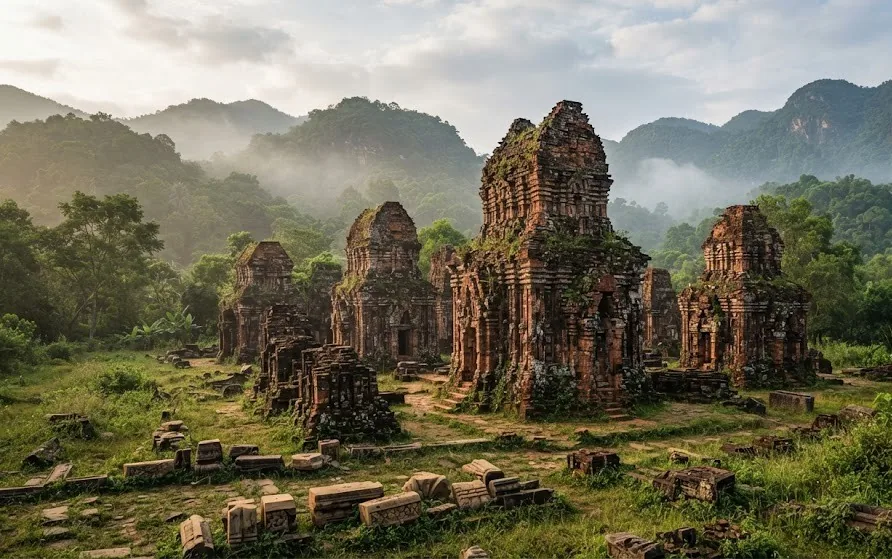
What makes My Son significant?
UNESCO inscribed My Son in 1999. Its description connects the sanctuary’s development from the fourth to thirteenth centuries with Champa and Hindu religious influence, particularly the worship of Shiva. Brick towers and sandstone carving remain within a mountain-ringed valley.
Look at the relationship between the structures, their carved details and the landscape rather than expecting a completely intact temple city. War damage, weathering and conservation have shaped what visitors see. A guide or the museum can help distinguish surviving historic fabric from later conservation work; claims that every brickwork technique is an unsolved mystery oversimplify the site.
Getting there from Hoi An or Da Nang
The sanctuary’s own website gives indicative distances of 45 kilometres from Hoi An and 68 kilometres from Da Nang. These are destination-level figures, not exact routes from every hotel. Check your own journey and allow a buffer for traffic, weather and the entrance-to-monument transfer.
Private car or taxi with an agreed return
A driver gives you control over the departure and return time. Get a quote that states the round trip, waiting period, parking and any extra stop. Do not assume that a one-way app booking guarantees another car will be waiting at the sanctuary when you finish. Save your driver’s contact and meeting point.
Guided excursion
Choose a tour if interpretation and coordinated transport matter more than complete flexibility. Ask how much time is actually spent among the towers, whether admission is included, the guide’s language and group size. A boat segment advertised on a return journey is a separate transfer component; it does not mean the sanctuary itself is reached entirely by river.
Independent motorbike visit
Self-riding requires suitable experience, valid documentation and insurance. Check the route before departure, fuel up and plan to return in daylight. A rural road journey should not be treated as a fixed one-hour ride regardless of starting point or conditions. If you are unsure, take a car rather than learning to ride on the way.
Tickets and hours: separate current booking information from old notices
The sanctuary website links to My Son’s online ticket service. When checked for this update, its selection page displayed 148,000 VND for an international visitor ticket. Treat this as a displayed online offer, not a guaranteed gate tariff: check the final conditions, validity and amount before payment. Child policies, guide fees and additional services require their own confirmation.
The management board’s visitor notice dated 29 June 2020 lists sightseeing from 06:00 to 18:00, ticket sales ending at 17:00, and inclusion of the museum, internal electric shuttle, cultural performance and monuments. Because that notice is older, confirm these hours and inclusions against the current ticket and operating notice. Do not mistake the ticket-sales cutoff for the sightseeing closing time.
We have not confirmed today’s last shuttle, complete admission categories or payment methods at the counter. Carry a cash backup and use the official channels for current details. Do not adopt a new price simply because a third-party page labels it “2026.”
How to spend your time at the sanctuary
Begin with the museum or a short introduction
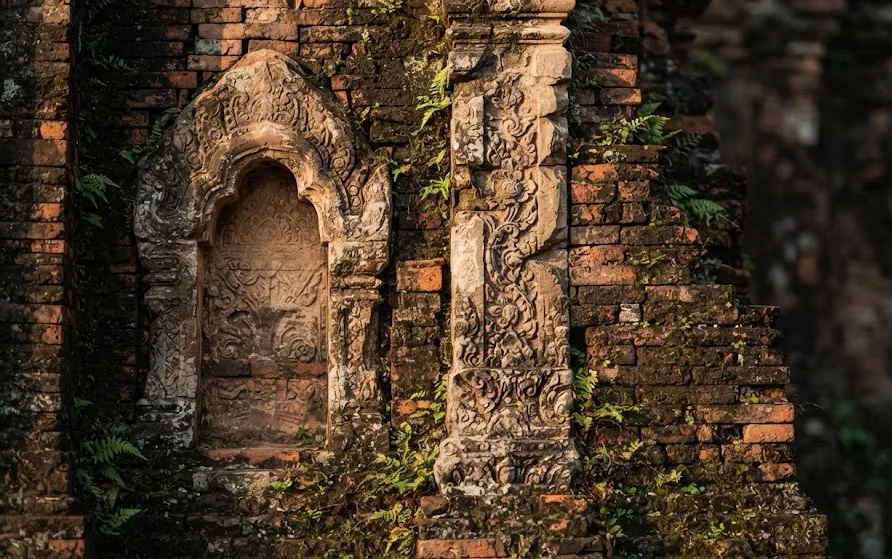
A little context before the towers helps: ask how the site developed, which deities are represented and how the surviving groups differ. The museum is a useful part of the visit if open, especially when you prefer interpretation to simply collecting photographs.
Follow the open visitor circuit
Use the current map and staff directions to choose a route through the accessible groups. Lettered group names are location references, not a requirement to reach every ruin. Focus on a few structures and their carvings, then compare how brick walls and stone details work together. If a group is closed for conservation, use the alternative route rather than trying to get around barriers.
A guide can explain what has survived, what has been restored and which interpretations are well established. Ask at the official visitor service point about current guide availability and price; an unsupported flat guide fee is not included here.
Fit a performance around the visit
Check the day’s posted programme if a Cham cultural performance interests you. Ask about its location and whether it is included in your ticket. Times and outdoor arrangements may change, so do not build a tight transfer schedule around a performance time copied from an old article.
Heat, rain and the best time of day
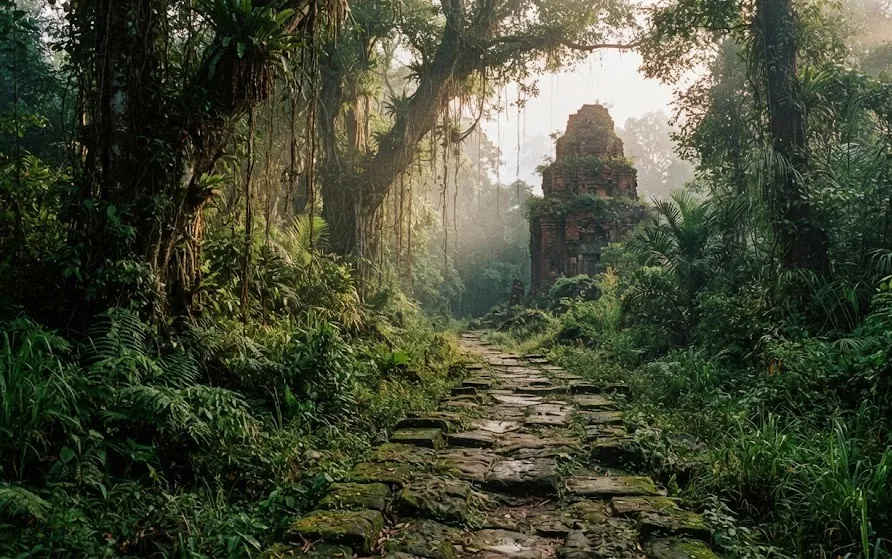
An earlier visit can reduce walking during the hottest part of the day. A later visit may also suit you, but leave enough time before ticket sales and internal transfers finish. Neither choice guarantees empty paths. Check the forecast rather than expecting a particular month to produce clear skies or cool temperatures.
Bring drinking water, sun protection, light rain protection and comfortable footwear. Wet surfaces can be slippery, and heavy rain or storms may affect access. Use staff advice when deciding whether to continue; the sanctuary is not an all-weather indoor attraction.
Accessibility and respectful visiting
An internal electric shuttle reduces part of the approach but does not make the full archaeological circuit step-free. Ask about boarding, paths, toilets and the specific groups you can reach if you use a wheelchair or have limited mobility. A shorter route with seated breaks may be more useful than trying to complete every area.
Stay on marked visitor paths, respect cordons and never climb or lean on fragile ruins. Do not remove fragments or touch carved surfaces for a photograph. Dress respectfully and follow the site’s current rules on photography and other activities. UNESCO’s conservation description notes risks in areas beyond the managed visitor circuit; unofficial forest detours are not part of a sensible visit.
My Son alone or combined with Hoi An?
For an unhurried archaeological visit, keep the rest of the day light. A morning at My Son followed by Hoi An can work with an arranged driver and a flexible finish, but it is a longer day than a single destination outing. Do not assume adding Marble Mountains and every Hoi An attraction creates a relaxed route.
Our Hoi An day-trip guide explains the transport and evening-return considerations. If history is your priority, spend more time at the sanctuary and save the other stops for another day.
Frequently asked questions
Is My Son worth visiting without a guide?
You can make a self-directed visit using the museum and signs. A knowledgeable guide adds context if architecture and religious history are central to your interest.
How much time do I need?
Allow around two to three hours on site as a planning estimate, more for detailed interpretation or a performance. Add your own road transfers and entrance logistics separately.
Is My Son the same as Hoi An Ancient Town?
No. My Son is an inland Cham sanctuary; Hoi An Ancient Town is a separate historic trading-town destination. They need separate travel and visiting time.
Is the shuttle enough for visitors who cannot walk far?
It helps with the approach, but the remaining route needs checking. Contact the management board about your specific access needs.