Da Nang is stepping into the spotlight in 2026 as a destination for travelers who want more than just a photo—they want to create something with their own hands. While the city is famous for its beaches and bridges, a quieter movement is growing among local artisans who are opening their studios to visitors for intimate, hands-on experiences. This guide moves beyond the standard tourist trail to help you find the city’s most genuine creative workshops, where you can shape stone, mold clay, weave silk, and paint lacquerware alongside the masters who keep these traditions alive.
Whether you are a solo traveler seeking a meditative afternoon or a family looking for a meaningful souvenir, these workshops offer a way to connect with Da Nang’s cultural soul.
Da Nang’s artisan workshops in 2026 offer a genuine alternative to mass-produced souvenirs, with hands-on experiences ranging from 100,000 VND for a quick pottery session to 800,000 VND for a multi-hour lacquerware masterclass. Unlike Hoi An’s tourist-focused lantern scene, Da Nang’s craft community centers on stone carving at Non Nuoc Fine Arts Village, pottery in Son Tra, and silk weaving in Cam Le—each providing direct access to master artisans who have honed their skills for decades. This guide profiles five must-try workshops, breaks down pricing and booking strategies, and offers practical advice for choosing the right experience based on your travel style and for bringing your handmade treasures home safely.
The Rise of Hands-On Craft Experiences in Da Nang for 2026
The shift from buying souvenirs to making them is reshaping how travelers experience Da Nang in 2026. Post-pandemic travel trends show a growing appetite for meaningful, skill-based activities over passive sightseeing. Instead of spending an hour in a market picking out a mass-produced keychain, more visitors are booking three-hour pottery classes or stone-carving workshops where they leave with a piece they shaped themselves.
Da Nang’s artisan scene differs from Hoi An’s in several key ways. Hoi An’s workshops, especially around lantern making, are highly polished and designed for quick tourist turnover—you can finish a lantern in 30 minutes. Da Nang’s offerings, by contrast, are more raw and authentic. The stone carvers at Non Nuoc Fine Arts Village have been working marble for generations, and their workshops feel like working studios rather than tourist attractions. You will see dust-covered hands, hear the hum of electric carving tools, and watch apprentices learning the craft. This is not a staged experience; it is a living tradition.
Several factors make 2026 a pivotal year for craft tourism in Central Vietnam. The Da Nang Department of Tourism has been actively promoting creative tourism initiatives, and new workshop spaces have opened in downtown areas that blend traditional techniques with modern aesthetics. Social media has also played a role—travelers share videos of themselves throwing pottery or carving marble, which drives more visitors to seek out these experiences.
Where to Find Da Nang’s Best Artisan Workshops: A Neighborhood Guide
Da Nang’s artisan workshops cluster in three distinct neighborhoods, each offering a different craft tradition and atmosphere.
Knowing where to go saves you hours of wandering. The city’s craft scene is not centralized in one tourist district—instead, workshops are scattered across residential areas, often hidden down narrow alleyways or inside family compounds. Below is a breakdown of the three main workshop zones, with specific locations and practical tips for each.
Marble Mountains district: Stone carving at Non Nuoc Fine Arts Village
Located at the foot of the Marble Mountains, Non Nuoc Fine Arts Village is Da Nang’s most famous craft enclave. Established in the 18th century, this village of 400+ families specializes in marble and stone carving, producing everything from tiny souvenir turtles to life-sized Buddha statues. The main street, Nguyen Huy Chu, is lined with open-front workshops where you can watch artisans at work. For hands-on experiences, visit My Nga Stone Carving (address: 92 Nguyen Huy Chu, open 7:00-17:00 daily). A 2-hour beginner class costs 300,000 VND and includes materials—you carve a small animal figurine under direct supervision.
The best time to visit is weekday mornings before 10:00, when tour groups have not yet arrived.
Son Tra Peninsula: Hidden pottery and ceramic studios
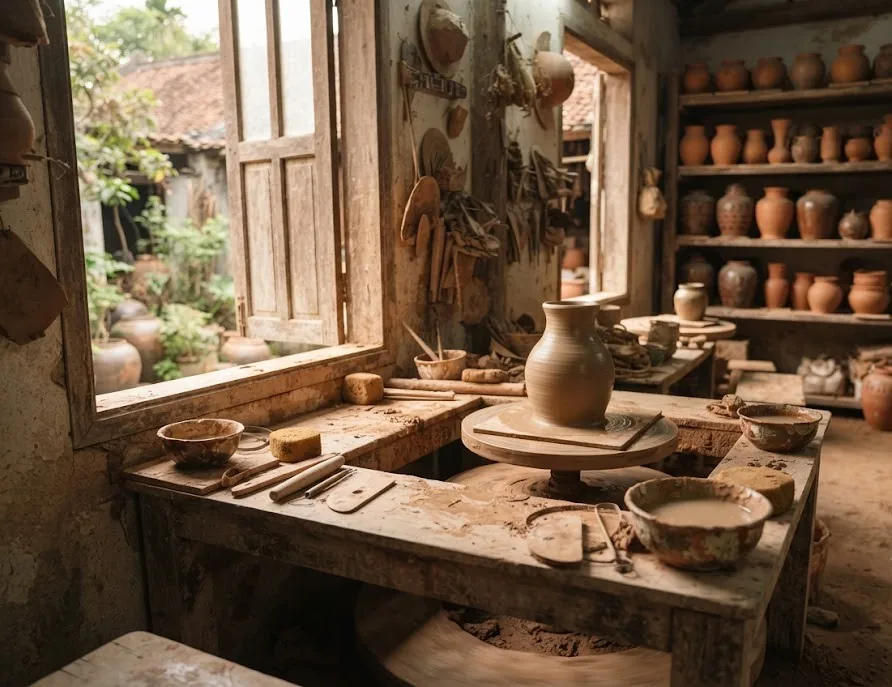
On the quieter side of the Son Tra Peninsula, away from the luxury resorts, several family-run pottery studios operate in the shadow of the mountains. Dong Duong Pottery (address: Lot 12, Hoang Sa Street, open 8:00-18:00, closed Sundays) has been in operation since 1992. The studio offers wheel-throwing sessions for 200,000 VND per hour, with an additional 50,000 VND for firing and glazing your piece. The setting is rustic—a concrete floor, a wooden wheel, and the sound of birds from the surrounding forest.
The studio uses local red clay from the Son Tra foothills, giving finished pieces a distinct terracotta hue. Call ahead on 0905-123-456 to confirm availability, as the studio sometimes closes for family events.
Downtown Da Nang: Urban craft boutiques and pop-up workshops
For travelers short on time, downtown Da Nang offers several craft boutiques that double as workshop spaces. Lotus Leaf Fine Arts (address: 34 Bach Dang Street, opposite the Han River, open 9:00-21:00) is a two-story gallery and studio run by artist Nguyen Thi Lan. Downstairs is a shop selling finished lacquerware and silk paintings; upstairs is a bright, air-conditioned workshop where you can paint your own lacquerware piece. A 90-minute session costs 350,000 VND and includes a pre-drawn template—ideal for beginners who want a polished result.
The boutique also hosts weekend pop-up workshops featuring guest artisans from Hue and Hoi An, so check their Facebook page for 2026 schedules. This location is walkable from most downtown hotels and is a good rainy-day activity.
5 Must-Try Artisan Workshops in Da Nang for 2026
These five workshops represent the best of Da Nang’s craft scene, balancing authenticity, accessibility, and the quality of the finished product you take home.
Each workshop below has been vetted for 2026 relevance—meaning they offer English-friendly instruction, accept direct bookings, and produce items you can legally bring home. Prices are current as of early 2026 and may vary slightly with material costs.
1. Stone carving masterclass at Non Nuoc Fine Arts Village
Artisan: Mr. Nguyen Van Hai, third-generation stone carver
Duration: 2-3 hours | Price: 300,000-500,000 VND | Skill level: Beginner-friendly
Mr. Hai’s workshop at 108 Nguyen Huy Chu is one of the few in Non Nuoc that actively welcomes walk-in learners. His English is basic but functional, and he relies on demonstration—which, in stone carving, is often more effective than words. You start by selecting a piece of local marble (white, green, or pink) and sketching your design. Mr. Hai then guides your hand through the first chisel strokes, teaching you the angle and pressure needed to shape the stone without breaking it. By the end of the session, you will have a small carved fish, turtle, or flower pendant.
The workshop provides safety goggles and dust masks. Book via Facebook Messenger at “Hai Non Nuoc Carving” at least one day in advance.
2. Traditional Vietnamese pottery wheel experience
Studio: Dong Duong Pottery, Son Tra Peninsula
Duration: 1.5-2 hours | Price: 200,000 VND (plus 50,000 VND for firing) | Skill level: Beginner
Dong Duong Pottery offers the most authentic wheel-throwing experience in Da Nang. Unlike tourist-oriented studios that use electric wheels, Dong Duong uses a traditional kick wheel—you control the speed with your foot while shaping the clay with both hands. The studio’s master, Mr. Tran Van Dong, has been throwing pots for 47 years. He will sit beside you, correcting your hand position and showing you how to center the clay. Expect to fail your first two attempts—that is normal. By the third try, most visitors produce a recognizable bowl or cup.
The studio fires your piece and ships it to your hotel within 48 hours, or you can pick it up after three days. Cash only; there is an ATM at the nearby Son Tra Market.
3. Silk weaving and natural dyeing workshop
Studio: Hoa Silk Village, Cam Le
Duration: 3 hours | Price: 500,000 VND | Skill level: Intermediate
Located 20 minutes from downtown Da Nang, Hoa Silk Village is a working silk farm and weaving cooperative run by 12 local families. The workshop begins with a tour of the mulberry trees and silkworm trays, followed by a natural dyeing session using indigo, turmeric, and betel nut. The process is slow and meditative—expect to weave only 10-15 cm per hour. The scarf you take home is imperfect, with uneven edges and natural color variations, which is precisely its charm.
The village has a small cafe serving mulberry tea. Book via their website (hoasilkvillage.com.vn) or call 0935-789-012. Transportation from Da Nang city center costs approximately 150,000 VND by Grab.
4. Lacquerware painting session with local artists
Studio: Lotus Leaf Fine Arts, 34 Bach Dang Street
Duration: 90 minutes | Price: 350,000 VND | Skill level: Beginner (no drawing skills needed)
Lacquerware painting is one of Vietnam’s most revered art forms, and Lotus Leaf Fine Arts makes it accessible to travelers with zero artistic background. You choose from pre-designed templates—lotus flowers, dragons, or abstract landscapes—and paint them onto a wooden tray or small vase using natural lacquer mixed with eggshell, pearl dust, or crushed stone. Artist Nguyen Thi Lan walks you through each step, from applying the base coat to polishing the final layer. The studio handles the drying and finishing (which takes 24-48 hours) and can ship your piece to your home address for an additional 150,000 VND.
This workshop is ideal for a rainy afternoon or as a break from sightseeing. No booking is required for weekdays, but weekend slots fill up quickly.
5. Bamboo and rattan weaving class in Cam Le district
Studio: Cam Le Bamboo Workshop, Hamlet 3, Cam Le
Duration: 2 hours | Price: 150,000 VND | Skill level: Beginner
For the most budget-friendly workshop on this list, head to Cam Le Bamboo Workshop, run by Ms. Huynh Thi Be and her extended family. The workshop is a shaded courtyard filled with piles of bamboo strips and half-finished baskets. Ms. Be teaches you to weave a small basket or tray using traditional techniques passed down through five generations. The bamboo is locally sourced and soaked in water for flexibility. The weaving pattern is surprisingly simple—once you learn the over-under rhythm, you can complete a small basket in about 90 minutes.
The workshop does not have a phone number or website; simply show up at 8 Nguyen Van Linh Street (Cam Le) between 8:00 and 16:00 any day except Sunday. Bring cash and a willingness to communicate through gestures and smiles.
What to Expect: Pricing, Duration, and Booking Tips for 2026
Workshop prices in Da Nang range from 150,000 to 800,000 VND, with most sessions lasting 1.5 to 3 hours.
Understanding the pricing structure helps you budget and avoid overpaying. The table below compares costs across workshop types, including what is included and what costs extra.
| Workshop Type | Price Range (VND) | Duration | What’s Included | Extra Costs |
|---|---|---|---|---|
| Stone carving | 300,000-500,000 | 2-3 hours | Marble block, tools, safety gear | Polishing service: 50,000 VND |
| Pottery wheel | 200,000-250,000 | 1.5-2 hours | Clay, wheel access, instruction | Firing + glazing: 50,000 VND |
| Silk weaving | 500,000 | 3 hours | Materials, natural dyes, loom access | Shipping: 100,000-200,000 VND |
| Lacquerware painting | 350,000 | 90 minutes | Pre-drawn template, paints, finishing | Shipping: 150,000 VND |
| Bamboo weaving | 150,000 | 2 hours | Bamboo strips, instruction | None |
How to book directly vs through tour operators — which saves more?
For example, the stone carving masterclass at Non Nuoc costs 300,000 VND direct versus 400,000 VND on Klook. The trade-off is convenience: direct booking requires Vietnamese language skills or patience with Google Translate. For 2026, most Da Nang workshops now have Facebook pages with Messenger booking, making direct booking easier than ever. If you are short on time or nervous about communication, Klook is a reliable backup—just know you are paying a premium for the middleman.
Best times to visit workshops to avoid crowds and get personal attention
Weekday mornings (Tuesday-Thursday, 8:00-10:00) are the optimal time for any workshop. Tour groups typically arrive after 10:30 and on weekends. By 11:00, the studio may have 8-10 visitors from a tour bus. For workshops in tourist-heavy areas like Non Nuoc, avoid Vietnamese public holidays (Tet in January/February, National Day on September 2) when many artisans close their studios for family celebrations. Always call or message the day before to confirm the artisan will be present.
How to Choose the Right Workshop for Your Travel Style
Not all workshops suit all travelers — matching the experience to your personality and schedule ensures you enjoy rather than endure the session.
Below are persona-based recommendations based on common traveler profiles visiting Da Nang in 2026. Consider your own travel style and group composition before booking.
Solo travelers: Intimate, reflective workshops with small group sizes
Solo travelers often seek workshops that allow for quiet focus and interaction with the artisan. Dong Duong Pottery is ideal: the studio rarely accepts more than three students at once, and the kick wheel requires your full attention, creating a meditative flow. Ms. Huynh Thi Be’s bamboo weaving class in Cam Le is another excellent choice—the family atmosphere makes solo visitors feel welcome, and the repetitive weaving motion is calming. Avoid large-group workshops like those at Hoi An’s lantern-making studios, where you may feel like one of 20 tourists on an assembly line.
Families with kids: Quick, beginner-friendly sessions (under 1 hour)
Traveling with children under 12? Choose workshops with short attention spans in mind. Lotus Leaf Fine Arts lacquerware painting is perfect—the 90-minute session includes pre-drawn templates, so kids can focus on coloring rather than drawing. The air-conditioned studio is a relief from Da Nang’s heat, and the finished piece is ready for pickup the next day. For younger children (ages 5-8), the bamboo weaving class at Cam Le offers instant gratification: they can complete a small basket in under an hour. Avoid stone carving, which requires fine motor control and safety gear unsuitable for small children.
Couples: Romantic lantern-making or jewelry crafting for two
For a romantic activity, consider a private lacquerware session at Lotus Leaf Fine Arts, where you and your partner can paint matching pieces. The studio offers a “couples package” for 600,000 VND (two trays, shared instruction, and a complimentary photo). Alternatively, take a day trip to Hoi An (30 minutes from Da Nang) for a lantern-making workshop at Hoi An Tieng Vong Pho (address: 56 Nguyen Thai Hoc). The 1-hour session costs 100,000 VND per person and includes a silk lantern you can hang in your hotel room.
The walk to the workshop through Hoi An’s lantern-lit streets at dusk is romantic in itself.
Serious craft enthusiasts: Multi-session masterclasses with master artisans
If you have three or more days in Da Nang and want to develop real skill, inquire about multi-session masterclasses. Mr. Nguyen Van Hai at Non Nuoc offers a 3-day stone carving course (1,200,000 VND total) where you progress from a simple pendant to a small figurine. Hoa Silk Village offers a 2-day natural dyeing intensive (1,000,000 VND) covering indigo fermentation, fabric preparation, and pattern tying. These masterclasses require advance booking (at least one week) and a genuine interest in the craft—they are not suitable for casual tourists. Bring a notebook; master artisans love students who take notes.
Practical Tips for Bringing Your Handmade Treasures Home
Your handmade souvenir is fragile and irreplaceable — packing it correctly ensures it arrives intact.
Many travelers spend hours creating a beautiful piece, only to have it shatter in their suitcase. Follow these packing and customs guidelines to bring your treasure home safely.
Packing fragile items: Stone, ceramic, and glass protection methods
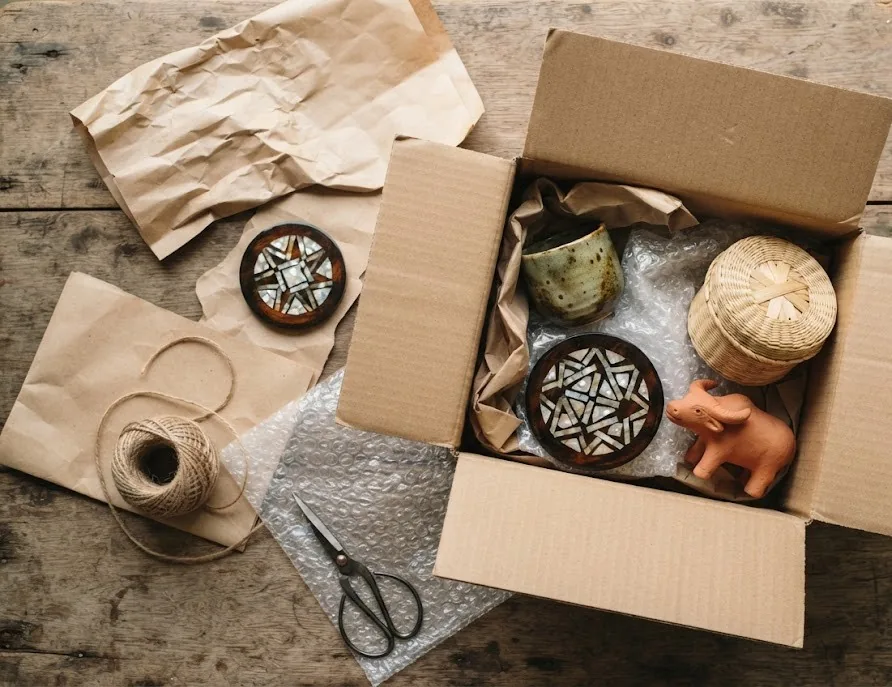
For stone carvings and ceramics, use the “double-box” method: wrap the item in a soft cloth (a t-shirt works), then in 3-4 layers of bubble wrap. Place it in a small cardboard box with crumpled newspaper filling all gaps, then place that box inside a larger box with more cushioning. For lacquerware, which is less fragile but scratch-prone, wrap in a soft cloth and place between layers of clothing in the center of your suitcase. Buy bubble wrap at any Circle K or Family Mart in Da Nang for 15,000-25,000 VND per meter.
Avoid packing fragile items in checked luggage if possible—carry-on is safer, though some workshops (like Dong Duong Pottery) fire pieces too large for carry-on.
Vietnam customs regulations for handmade goods and souvenirs
Vietnam allows export of handmade souvenirs for personal use without special permits, provided they are not antiques (over 100 years old) or made from endangered materials (ivory, certain hardwoods). Your stone carving, pottery, silk scarf, and lacquerware are all legal to export. Declare items worth over 10,000,000 VND (approximately $410 USD) at customs. Keep the workshop’s business card or receipt as proof of purchase—this is rarely requested but helpful if questioned. For silk products, ensure you have a certificate of origin if you buy multiple pieces (over 5 scarves), as customs may classify them as commercial goods.
Shipping options: Courier services vs carry-on for larger pieces
For large or heavy pieces (such as a stone Buddha statue or a full-sized ceramic vase), shipping is more practical than carrying. DHL has an office at 30 Nguyen Van Linh (downtown Da Nang) and offers international shipping starting at 500,000 VND for a 2kg package to Asia, 800,000 VND to Europe or North America. Vietnam Post EMS is cheaper (approximately 300,000 VND for 2kg to the US) but slower (7-14 days vs 3-5 days with DHL).
For items under 1kg, carry-on is best—most airlines allow one carry-on bag plus a personal item, and your wrapped souvenir can fit in your personal item. If you use a courier, insure the package for the item’s value (workshops can provide a valuation letter).
Related on this site
Frequently Asked Questions
Do I need to book workshops in advance, or can I walk in?
Walk-in is possible at Non Nuoc stone carving village and Cam Le bamboo workshop, but for pottery, silk weaving, and lacquerware, you should book at least one day in advance. Workshops like Dong Duong Pottery only prepare enough clay for confirmed students, and Hoa Silk Village needs to prepare dye baths. Booking via Facebook Messenger or WhatsApp is quick and free.
Do workshops offer English instruction?
Most workshops listed in this guide have basic English instruction. Mr. Hai at Non Nuoc uses demonstration-based teaching, which works well even with limited English. Lotus Leaf Fine Arts has an English-speaking assistant. For deeper conversations, install Google Translate on your phone—artisans are patient and appreciate the effort.
Can I bring my finished product on the plane?
Small items (pendants, scarves, small bowls) are fine in carry-on luggage. Larger stone carvings and fired pottery must go in checked luggage or be shipped. Check your airline’s size and weight limits for carry-on—most allow items up to 56x45x25 cm. Lacquerware is safe in carry-on as it is lightweight and scratch-resistant.
Do workshop prices include materials?
Yes, all workshops listed include materials. The price you see covers clay, stone, silk, or bamboo plus tools and instruction. Extra costs apply only for firing (pottery), shipping, or premium materials (larger marble blocks). Always confirm what is included before starting—ask “Is this the final price?” to avoid surprises.
How long does it take to complete a product?
Stone carvings and bamboo weavings are ready immediately. Pottery requires 24-48 hours for firing and glazing. Lacquerware needs 24-48 hours for the paint to cure. Silk weaving is ready immediately if you weave the entire scarf; if you only weave a portion, the village will finish it and ship it. Plan your workshop for early in your trip so you have time to collect finished pieces before departure.
Can I buy finished products at the workshop?
Yes, most workshops sell finished pieces made by the master artisan. Prices range from 50,000 VND for a small ceramic bowl to several million VND for a large stone statue. Buying directly from the workshop supports the artisan more than purchasing from a souvenir shop, and prices are typically 30-50% lower. Ask to see the artisan’s portfolio—many have albums of their best work.
How can I distinguish genuine handmade items from mass-produced ones?
Look for imperfections. A handmade ceramic bowl will have slight asymmetry, visible fingerprints, or glaze variations. Machine-made items are perfectly uniform. Ask the artisan to show you their tools and workspace—if they cannot demonstrate the making process, the item is likely factory-produced. At Non Nuoc, genuine stone carvings have tool marks on the base; polished factory pieces are smooth all over.
Conclusion: Your Next Steps
Da Nang’s artisan workshops in 2026 offer a rare chance to connect with local culture through the simple act of making something with your hands. Whether you carve a stone fish, throw a clay bowl, or weave a silk scarf, the souvenir you take home carries a story that no factory-made product can match. Here is your next step:
- Choose one workshop from the list above that matches your travel style and book it for the second or third day of your trip.
- Contact the workshop directly via WhatsApp or Facebook to confirm pricing and availability—booking direct saves you money and supports the artisan directly.
- Pack a small, soft bag in your luggage specifically for carrying your finished piece home, and buy bubble wrap at any convenience store in Da Nang before your workshop day.
Part of our guide to places to visit in Da Nang.