Da Nang’s crab shacks offer a genuine ocean-to-table experience, with most restaurants sourcing daily from Tho Quang Fishing Port and allowing you to select your crab live from a tank before it’s prepared. The two signature preparations—steamed with lemongrass and grilled over charcoal with scallion oil—highlight the crab’s sweet, briny meat without overpowering it. Prices typically range from 400,000 to 800,000 VND per kilogram, depending on the season and crab type, making it essential to inquire about the per-kilo price upfront. Beyond these classics, tamarind crab, salt-baked crab, and crab hotpot provide further culinary adventures.
Da Nang’s crab shacks deliver a genuinely ocean-to-table experience, with most restaurants sourcing daily from Tho Quang Fishing Port and letting you pick your crab live from a tank before it’s cooked. The two signature preparations—steamed with lemongrass and grilled over charcoal with scallion oil—highlight the sweet, briny meat without masking it. Prices typically range from 400,000 to 800,000 VND per kilogram depending on season and crab type, so asking for the per-kilo price upfront is essential. Beyond the classics, tamarind crab, salt-baked crab, and crab hotpot round out a menu worth exploring.
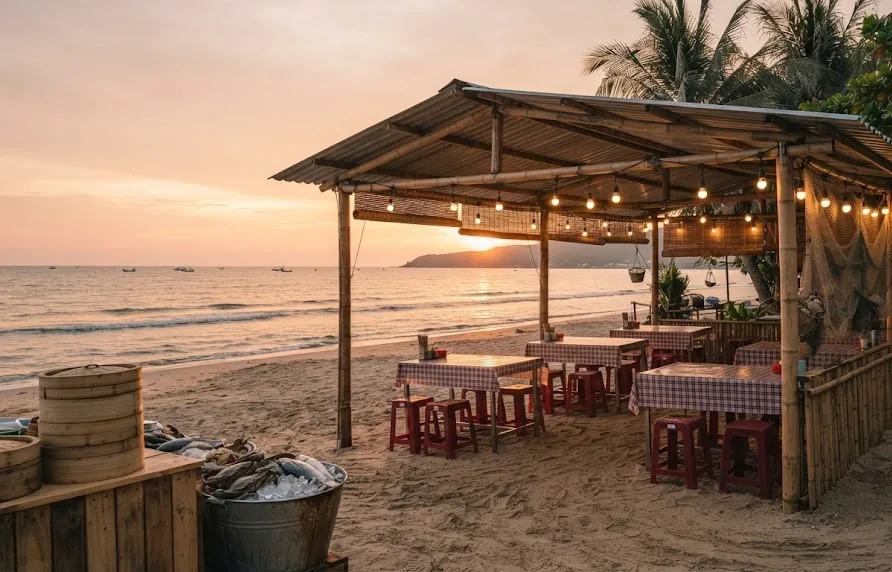
What Makes Da Nang’s Crab Shacks Stand Out
The city’s crab scene relies on daily catches from Tho Quang Fishing Port, where boats land before dawn and restaurants make their purchases directly. This proximity to the source is a significant factor differentiating Da Nang from inland seafood destinations. The crab enjoyed at a beachfront shack on Vo Nguyen Giap Street was likely in the East Sea less than 12 hours prior.
The Ocean-to-Table Advantage: Why Da Nang Crab Tastes Different
The waters off Central Vietnam are warm and nutrient-rich, contributing to crab with a naturally sweet, briny flavor. Unlike imported or frozen crab that undergoes lengthy transport, Da Nang crab retains its moisture and texture due to its inclusion in the local supply chain. Coastal restaurants maintain live saltwater tanks, ensuring the crab remains active until preparation. This freshness directly impacts the dining experience: the meat separates cleanly from the shell, and the tomalley is creamy and sweet.
How to Spot a Quality Crab Shack Before You Sit Down
A quality crab shack is identifiable even before ordering. Look for these indicators:
- Visible live tanks at the entrance with active crab; sluggish crab may indicate it’s not fresh.
- A presence of local diners, particularly during weekday lunches and early dinners.
- A posted price board or staff who readily provide per-kilogram prices.
- Simple, functional seating, indicating the focus is on the seafood.
- High table turnover, suggesting the kitchen consistently prepares fresh product.
Live Tank Selection: Choosing Your Own Crab Like a Local
At most Da Nang crab shacks, you select your crab directly from the tank. The staff will weigh it in front of you, a standard practice. Local etiquette involves confirming the crab is alive and active, asking for the per-kilogram price before committing, and verifying the total weight before it goes to the kitchen. Most establishments will show you the crab again after weighing to ensure transparency.
If a venue is hesitant to weigh the crab publicly or provides vague pricing, it is advisable to seek dining elsewhere.
Steamed Crab: The Classic Da Nang Preparation
Steaming is the primary preparation method in Da Nang, best suited for showcasing the crab’s natural sweetness. While seemingly simple, the process involves infusing the steaming liquid with aromatics and precise timing to prevent overcooking.
Steamed with Lemongrass and Ginger — The Central Vietnamese Signature
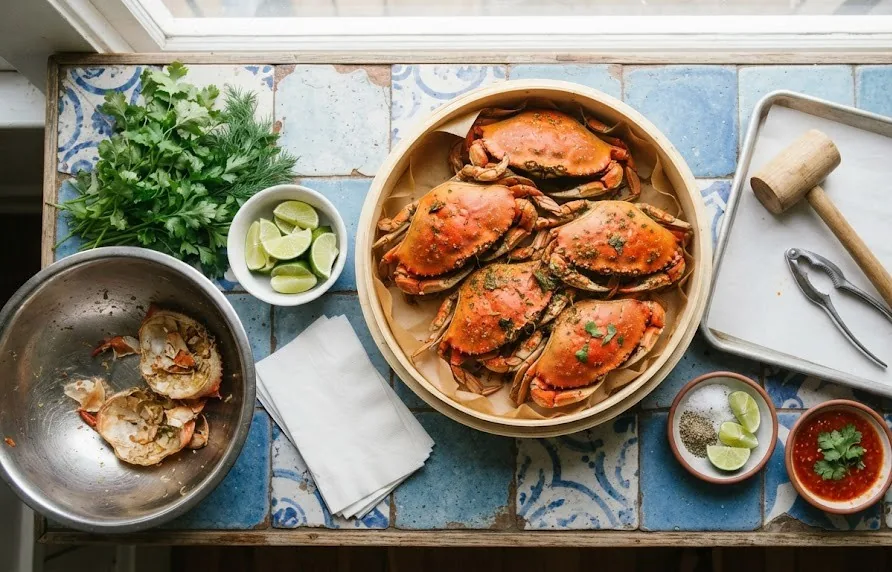
Central Vietnamese kitchens typically steam crab with lemongrass stalks, sliced ginger, and occasionally kaffir lime leaves in the water. The steam imparts these aromatics subtly into the meat. The crab is steamed shell-on, usually whole, arriving at the table glistening. This method is ideal for live crab, preserving its firm texture and sweetness. The natural juices within the shell form a light, flavorful broth, often overlooked by diners.
The Right Dipping Sauces: Salt, Pepper, Lime, and Chili
The traditional Da Nang dipping sauce for steamed crab is muối ớt chanh—a blend of sea salt, black pepper, fresh lime juice, and sliced bird’s eye chili. This sauce is bright, salty, and slightly spicy, designed to complement the crab’s sweetness. Some establishments add a touch of sugar to balance the lime’s acidity. The sauce should be prepared fresh at the table, as lime juice loses its potency quickly.
For a richer option, a small dish of warm melted butter with a squeeze of lime can be requested, offering a less traditional but equally enjoyable pairing.
How to Crack and Eat Steamed Crab Without the Mess
Eating whole steamed crab is an interactive process. Begin by twisting off the claws and legs. Use a wooden mallet or crab cracker to break the claw shells with firm taps. For the body, turn the crab upside down, remove the apron (the underside flap), and lift off the top shell. Discard the feathery gills and mouthparts, then break the body in half. Employ a small fork or crab pick to extract meat from the chambers.
The tomalley in the top shell is considered a delicacy; scoop it out with a spoon or spread it on bread.
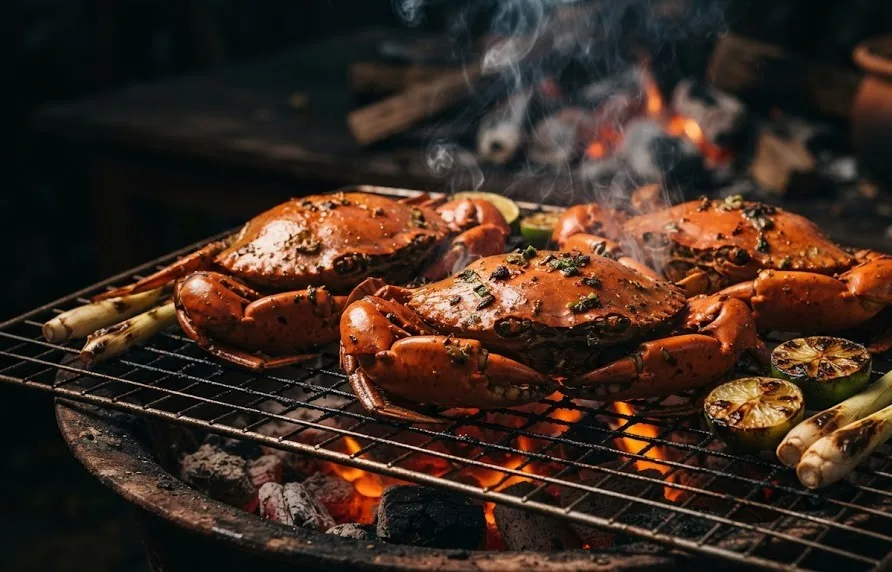
Grilled Crab: Charcoal, Shell-On, and Full of Smoke
Grilled crab offers a more intensely flavored alternative to steamed, showcasing the grilling expertise at Da Nang’s crab shacks. The crab is split, cleaned, and grilled shell-on over charcoal, imparting a distinct smoky depth.
Why Charcoal Grilling Beats Gas for Crab Flavor
Charcoal burns at a higher temperature than gas, producing radiant heat that sears the crab shell quickly and retains moisture. The smoke from the charcoal adds a subtle, woody flavor that infuses the meat. Gas grills offer more even cooking but lack this smoky characteristic. At authentic Da Nang crab shacks, charcoal grills are often visible, with the crab placed shell-side down first to achieve a slight char, then flipped to cook the meat.
The result is juicy crab with a faint, appealing smokiness.
Grilled Crab with Scallion Oil and Roasted Rice Powder
A popular topping for grilled crab in Da Nang is mỡ hành—a warm scallion oil made by gently frying sliced scallions in neutral oil. It is brushed over the grilled crab just before serving, adding a savory dimension. Some establishments also dust the crab with bột gạo rang, a roasted rice powder that provides a nutty, slightly crunchy texture. This combination is a distinctive Central Vietnamese flavor profile.
What to Order Alongside Grilled Crab at a Da Nang Shack
Grilled crab pairs well with several classic sides that balance its richness. Grilled corn on the cob, brushed with scallion oil, is a common accompaniment. Stir-fried morning glory (rau muống xào tỏi) with garlic offers a fresh, crunchy contrast. For a more substantial meal, a bowl of steamed rice or crab fried rice can be ordered to absorb the scallion oil and juices.
A cold local beer, such as Bia Larue or Bia Hoi, is a typical beverage pairing, its crispness cutting through the richness.
Beyond Steamed and Grilled: More Crab Dishes Worth Trying
Da Nang’s crab offerings extend beyond the classic preparations, featuring dishes with sweet-sour, spicy, and other flavor profiles, reflecting the region’s culinary creativity.
Tamarind Crab — The Sweet-Sour Favorite of Locals
Tamarind crab is a stir-fried dish where crab is wok-tossed in a glossy sauce made from tamarind pulp, sugar, fish sauce, and chili. This creates a sweet-sour-savory combination that coats the crab. The sauce is thick enough to adhere to the shell but light enough not to obscure the meat. It is a messier dish than steamed crab but offers a significant flavor reward. Many locals choose this preparation for a more intense taste, and it pairs well with steamed rice to soak up the sauce.
Salt-Baked Crab and Crab Hotpot for Groups
Salt-baked crab involves burying the crab in hot salt and baking it until the shell turns deep orange. The salt seasons the meat gently, and the dry heat concentrates the crab’s natural sweetness. This dish is best shared due to the effort required for cracking and extracting the meat. For group dining, crab hotpot (lẩu cua) is an excellent option. A simmering pot of broth, often soured with tamarind or tomato, is served with fresh crab, vegetables, and noodles. Diners cook their own crab in the broth, then ladle the flavored liquid over rice noodles, creating an interactive and social meal.
Fried Soft-Shell Crab and Crab Fried Rice for Variety
Soft-shell crab, which is crab that has recently molted and has an entirely edible shell, offers a different texture. It is lightly battered and deep-fried until golden, served whole. The shell is crunchy while the meat inside is tender, with a concentrated crab flavor. Crab fried rice is a familiar dish, but Da Nang’s version often features fresh crab meat. The rice is wok-fried with egg, scallions, and substantial pieces of crab, seasoned with fish sauce and white pepper. It serves as a filling main course or a side dish.
Top Crab Shacks and Seafood Spots to Visit in Da Nang
The premier crab experiences in Da Nang span from beachfront restaurants on Vo Nguyen Giap Street to local eateries in residential areas. Knowing where to go and what to expect enhances the dining experience.
Beachfront Spots on Vo Nguyen Giap Street Near My Khe
Vo Nguyen Giap Street, running parallel to My Khe Beach, is lined with seafood restaurants catering to both tourists and locals. These establishments provide ocean views and open-air seating, accompanied by the sound of waves. Crab prices here may be slightly higher than in local neighborhoods, but the quality and atmosphere are consistent. Look for restaurants frequented by Vietnamese families, indicating fresh product turnover.
Many of these venues offer English menus, simplifying the ordering process for visitors.
Hidden Local Gems in Son Tra and Ngu Hanh Son Districts
For a more authentic experience, explore the residential areas of Son Tra district (near the Son Tra Peninsula) or Ngu Hanh Son district (towards Marble Mountain). These neighborhoods are popular with locals, featuring no-frills crab shacks with plastic tables and bright lighting, focusing solely on the seafood. Prices are generally lower than on Vo Nguyen Giap Street, with equally fresh crab often sourced from small fishing boats.
The primary challenge may be the language barrier, as menus are typically in Vietnamese only. However, pointing to the live tank and saying “cua” (crab) is usually effective.
What to Know About Pricing, Hours, and Booking Before You Go
Here is a comparison of what to expect at different types of crab establishments in Da Nang:
| Spot Type | Location | Price Range (per kg of crab) | Signature Dishes | Booking |
|---|---|---|---|---|
| Beachfront restaurant | Vo Nguyen Giap Street, My Khe | 500,000–800,000 VND | Steamed crab, grilled crab with scallion oil | Recommended for dinner |
| Local neighborhood shack | Son Tra, Ngu Hanh Son | 400,000–600,000 VND | Tamarind crab, salt-baked crab | Walk-in only |
| Mid-range seafood restaurant | Citywide | 450,000–700,000 VND | Crab hotpot, crab fried rice | Walk-in or call ahead |
Most crab shacks operate from approximately 10:00 AM to 10:00 PM or later. Dinner service is busiest between 6:00 PM and 8:00 PM; arriving earlier or later can help avoid crowds. For beachfront locations, booking a table for dinner is advisable during peak tourist season (June to August).
Important Tips for a Great Crab Shack Experience
Adopting a few practical habits can significantly enhance your crab meal experience. These suggestions are based on local dining practices and common visitor challenges.
Ask About Price Per Kilogram Before You Order
This is the most crucial guideline. Crab is sold by weight, with prices varying by type (mud crab, swimming crab, blue crab) and season. Always inquire “Bao nhiêu một ký?” (how much per kilo?) before making a decision. Reputable establishments will provide a clear per-kilogram price and weigh the crab in your presence. If a price seems unusually low, clarify whether it is per kilogram or per portion, as some venues quote per-dish prices for smaller servings.
Best Times to Visit: Evening Hours and Avoiding Tourist Peaks
Evening is the traditional time for enjoying crab in Da Nang, when the day’s catch is available and grills are active. The optimal window is between 5:00 PM and 6:30 PM, before the main rush, ensuring the freshest selection and quicker service. Lunch service is typically quieter, and some shacks may offer lower prices on certain crab varieties during the day. Visiting outside the peak tourist months of June, July, and August can provide a more relaxed experience with potentially fewer crowds and more stable pricing.
How to Handle the Language Barrier and Order Confidently
Fluent Vietnamese is not required for a positive crab dining experience. Key phrases include “cua” (crab), “hấp” (steamed), “nướng” (grilled), and “muối ớt chanh” (the dipping sauce). Pointing to the live tank and the desired preparation method on a menu or photo is generally understood. While many beachfront restaurants have English menus, local shacks may not. Asking the staff “Cua ngon?” (is the crab good?) can help identify the freshest options.
Using a translation app on your phone can be helpful for more complex orders, such as crab hotpot.
Related on this site
- Da Nang’s Top Grilled Specialties: Savoring Smoky Flavors
- Da Nang’s Best Ca Kho To: Caramelized Fish in Clay Pot 2026
- Da Nang’s Best BBQ: Grilled Meats and Seafood 2026
Frequently Asked Questions
What is the best time of year for crab in Da Nang?
Crab is available year-round in Da Nang, but the meat is typically sweetest and most abundant during the dry season, from January to August. The rainy season (September to December) can impact fishing, potentially leading to higher prices due to reduced supply.
How much does a crab meal cost at a Da Nang shack?
A crab meal for one person typically ranges from 300,000 to 600,000 VND, depending on crab size, preparation, and any additional side dishes. Sharing a larger crab or ordering multiple dishes can lower the per-person cost.
Is it safe to eat crab from live tanks in Da Nang?
Yes, provided the crab is alive and active when selected. Reputable shacks maintain clean saltwater tanks and have high product turnover. If a tank appears unclean or the crab seems lethargic, it is advisable to dine elsewhere.
What is the difference between mud crab and swimming crab in Da Nang?
Mud crab (cua biển) is larger, with thicker claws and denser, sweeter meat, making it a premium choice for steaming. Swimming crab (cua bơi) is smaller, with lighter, more delicate meat, often used for grilling or stir-fries. Prices reflect these differences.
Do Da Nang crab shacks offer vegetarian options?
Most crab shacks specialize in seafood. However, many offer vegetable side dishes like stir-fried morning glory or simple green salads. For dedicated vegetarian dining, a restaurant with a broader menu might be more suitable.
Can I bring my own crab to a Da Nang restaurant?
Some local shacks may prepare crab purchased elsewhere for a small fee, but this is uncommon and generally not encouraged. It is more straightforward and reliable to select from the restaurant’s live tank, ensuring the staff can attest to its freshness and quality.
Conclusion
Da Nang’s crab shacks provide a direct ocean-to-table dining experience, characterized by live tanks, daily catches, and preparations that emphasize the crab’s natural sweetness. Steamed with lemongrass and grilled over charcoal with scallion oil are the two essential preparations, though tamarind crab and crab hotpot offer further exploration of the region’s culinary traditions.
To maximize your dining experience, always inquire about the per-kilogram price before ordering, choose establishments with high turnover, and feel comfortable asking staff for recommendations on the freshest catch of the day.
- Begin with steamed crab at a local shack near Son Tra to appreciate the pure flavor of Da Nang crab.
- Experience grilled crab with scallion oil and roasted rice powder at a beachfront location for a smoky, layered taste.
- Confirm the per-kilogram price and have your crab weighed before cooking, then savor the meal in the local style.
Part of our guide to what to eat in Da Nang.