Discovering Da Nang’s Folk Music Traditions: From Instruments to Melodies
Da Nang’s folk music is not a museum piece but a living dialogue between history and daily life. Its core repertoire—Ho (rowing songs), Ly (lyrical songs), and Bai Choi—uses a pentatonic scale that feels both ancient and immediate. The music thrives in riverside performances, festival stages, and heritage spaces, with Bai Choi holding UNESCO intangible heritage status. To truly experience it, you need to listen with context: understanding the instruments, the stories they tell, and the communities that keep them alive.
The Cultural Roots of Folk Music in Da Nang and Central Vietnam
Central Vietnam’s folk music grew from a unique blend of Cham heritage, maritime trade, and riverside village life. Unlike the courtly traditions of Hue or the delta sounds of the South, Da Nang’s music carries the working rhythms of fishermen, farmers, and river traders. The region’s history as a cultural crossroads—where Vietnamese, Cham, and foreign traders met—infused the melodies with a distinctive openness and emotional directness. This is music that speaks to labor, love, and the spiritual world, and it remains a living tradition across the region.
How the ancient trading port of Hoi An shaped the region’s melodies
Hoi An, just 30 kilometers south of Da Nang, was one of Southeast Asia’s busiest trading ports from the 15th to 19th centuries. Merchants from Japan, China, Portugal, and the Netherlands docked along the Hoai River, bringing not just goods but also musical ideas. This exchange enriched local folk traditions, blending Vietnamese melodies with foreign scales and instruments. The result is a musical language that feels both distinctly Vietnamese and subtly cosmopolitan—a legacy you can still hear in the region’s lyrical songs and Bai Choi performances.
The role of riverside communities and spiritual beliefs in folk songs
Rivers are the arteries of Central Vietnam, and they shaped the region’s folk music in fundamental ways. Ho (rowing songs) were born from the coordinated labor of boatmen and fishermen, their rhythms matching the pull of oars. Ly (lyrical songs) emerged from the quieter moments of riverside life—women washing clothes, children playing, lovers exchanging verses. Spiritual beliefs also play a central role: many songs invoke ancestors, river deities, and Buddhist concepts, reflecting a worldview where the natural and supernatural are inseparable. To hear these songs is to glimpse the soul of the river communities.
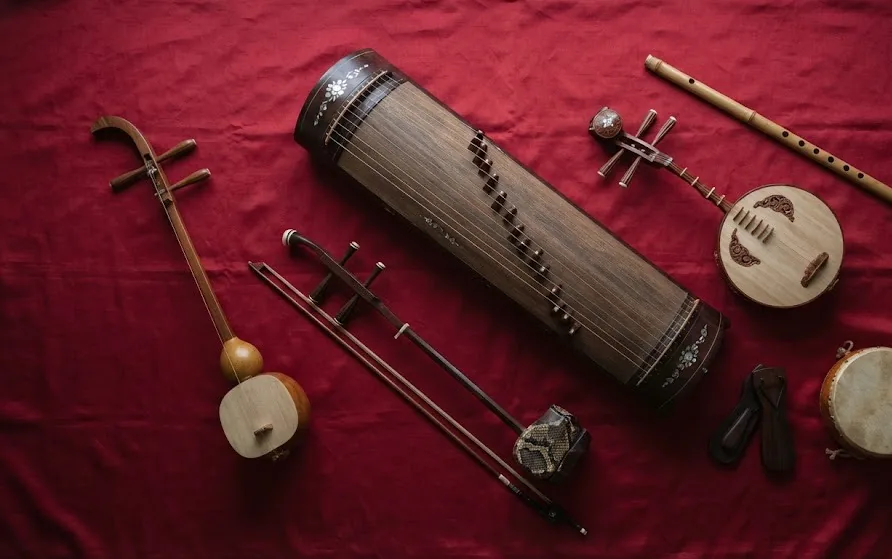
Iconic Instruments That Define Da Nang’s Folk Sound
The sonic identity of Da Nang’s folk music is built on a core of traditional Vietnamese instruments, each with its own voice and history. From the haunting single-string Dan Bau to the shimmering Dan Tranh, these instruments are not just tools but cultural artifacts that carry centuries of meaning. In ethnic minority communities around Da Nang, bamboo xylophones, gongs, and stone lithophones add a percussive, earthy layer to the region’s soundscape.
Dan Bau (monochord zither) — the voice of Vietnamese soul
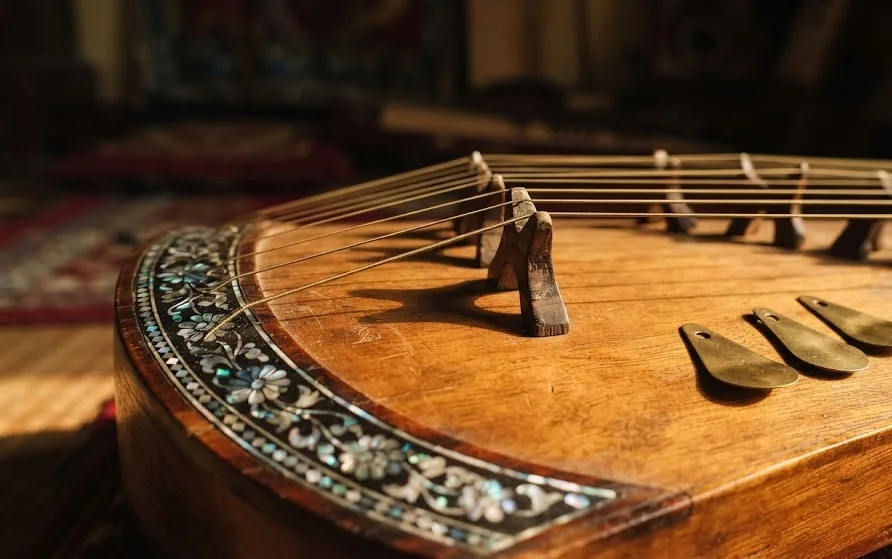
The Dan Bau is a one-string zither that produces a sound so expressive it’s often called the voice of Vietnamese soul. Played by plucking a metal string while flexing a bamboo rod to change pitch, it can mimic the human voice, the cry of a bird, or the whisper of wind. In Da Nang, you’ll hear it in solo performances and as an accompaniment to Ho and Ly songs. Its sound is melancholic yet resilient—a musical metaphor for Vietnamese history itself.
For first-time listeners, the Dan Bau’s ability to bend notes (a technique called “vibrato”) is the first thing to notice.
Dan Tranh (16-string zither) and its storytelling role
The Dan Tranh, or 16-string zither, is the storyteller of Vietnamese folk music. Its bright, flowing arpeggios evoke images of rivers, rice fields, and gentle breezes. In Central Vietnam, it often accompanies Ly songs, providing a melodic foundation that allows the singer’s lyrics to shine. The instrument’s name literally means “zither for entertainment,” but its role is deeper: it’s used to narrate tales of love, loss, and village life. When you hear a Dan Tranh, listen for its glissando slides—the musical equivalent of a sigh.
Dan T’rung (bamboo xylophone), gongs, and lithophones in ethnic performances
Beyond the Kinh (majority) instruments, Da Nang’s folk music scene includes the traditions of ethnic minority groups like the Co Tu and Xo Dang. The Dan T’rung, a bamboo xylophone, produces a warm, wooden tone that’s both rhythmic and melodic. Gongs, often played in sets, are central to community rituals and festivals, their deep resonance marking important events. The lithophone—a set of stone bars struck to produce musical tones—is one of Vietnam’s oldest instruments, with archaeological finds in the Central Highlands dating back thousands of years. These instruments connect the region’s music to its ancient roots.
Bai Choi: The UNESCO-Recognized Folk Art You Can Hear Live
Bai Choi is Central Vietnam’s most distinctive folk art—a unique fusion of singing, card games, and communal storytelling that UNESCO recognized as Intangible Cultural Heritage in 2026. Unlike a passive concert, Bai Choi is an interactive experience where audiences participate in the game while listening to improvised songs. It’s the closest thing to a living, breathing musical tradition you’ll find in Da Nang.
What happens during a Bai Choi performance — singing, cards, and huts
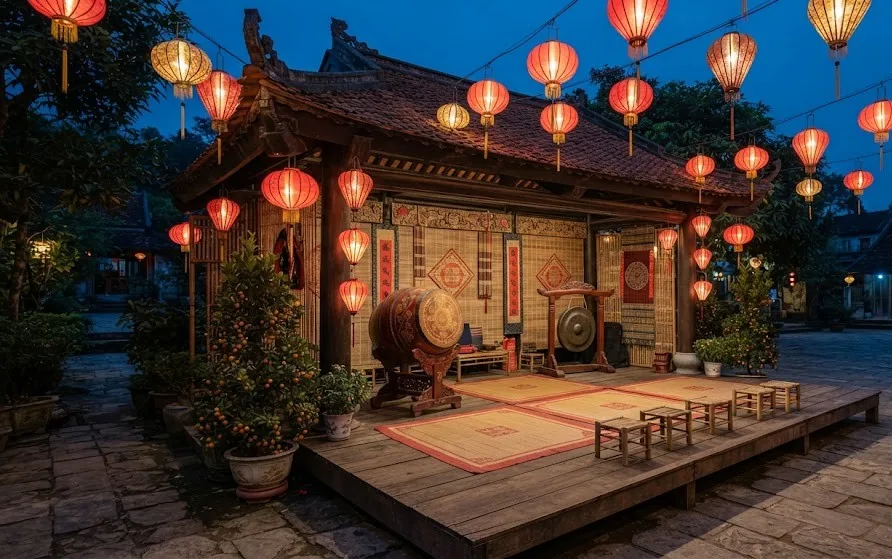
A Bai Choi performance is part game show, part folk concert. Players sit in nine or ten bamboo huts arranged in a circle, each holding a card with a Vietnamese folk saying or image. Singers (called “anh Hai” or “chi Ba”) stand in a central pavilion and sing verses that hint at the cards. Players must listen carefully to identify their card and shout “Bai Choi!” when they hear the matching verse. The songs are improvised, drawing on traditional melodies and poetic forms. It’s a test of listening, memory, and luck—and a wildly entertaining way to experience folk music.
Where to catch Bai Choi in Da Nang and Hoi An in 2026
In 2026, Bai Choi performances are regularly staged in both Da Nang and Hoi An. In Hoi An, the Hoi An Memories Show and various cultural venues host nightly performances, especially during the Lantern Festival. In Da Nang, look for Bai Choi at the Museum of Da Nang, the Bien Dong Park stage, and during major festivals like the International Fireworks Festival. Many hotels and tour operators can arrange private performances. Check local listings for schedules, as performances often start after sunset (around 7:00 PM) to avoid the heat.
Folk Melodies You’ll Hear Across Da Nang’s Festivals
The melodic backbone of Central Vietnamese folk music consists of two main types: Ho (working songs) and Ly (lyrical songs). Understanding the difference helps you appreciate what you’re hearing at festivals and performances throughout Da Nang.
Ho (rowing songs) and Ly (lyrical songs) — the backbone of Central Vietnamese folk music
Ho songs are rhythmic, call-and-response work songs that originated from labor—rowing boats, hauling nets, or pounding rice. They’re energetic, with a strong beat that coordinates workers’ movements. Ly songs, by contrast, are slower, more melodic, and often melancholic. They tell stories of love, separation, and longing, using poetic imagery drawn from nature. Both forms use the pentatonic scale and are typically sung in the local dialect, which adds to their authenticity but can be challenging for non-Vietnamese speakers to follow.
Seasonal festivals and where folk music takes center stage in Da Nang
Da Nang’s festival calendar is packed with musical moments. The Lunar New Year (Tet) brings performances at community houses and pagodas. The Quan The Am Festival (March/April) at Ngu Hanh Son (Marble Mountains) features Buddhist chanting and folk performances. The International Fireworks Festival (June-July) often includes folk music interludes. And the Hoi An Lantern Festival (monthly) fills the old town with music. For a concentrated dose, visit during the Da Nang Food and Culture Festival (typically September), where folk music shares the stage with regional cuisine.
Where to Experience Live Folk Music in Da Nang in 2026
Da Nang offers several venues where you can experience folk music in 2026, from riverfront stages to intimate heritage spaces. Here’s a practical guide to the best spots:
- Han River waterfront (Bach Dang Street): On weekend evenings, local artists perform Ho and Ly songs along the riverfront. It’s free, atmospheric, and a favorite with locals. Look for performances near the Dragon Bridge or the Love Lock Bridge.
- Museum of Da Nang (Bao Tang Da Nang): This museum hosts regular cultural events, including folk music performances and instrument demonstrations. Check their schedule in advance, as events are often held on weekends.
- Hoi An Memories Show (Hoi An): This large-scale outdoor show tells the story of Hoi An using folk music, dance, and stunning stage effects. It’s a spectacular introduction to the region’s cultural heritage.
- Community cultural houses (Nha Van Hoa): Many wards in Da Nang have cultural houses that host weekly folk music nights. These are authentic, local experiences—ask your hotel or a local guide for the nearest one.
- Resort and hotel performances: Upscale resorts like the Shilla Monogram Danang and Furama Resort occasionally host “Meet the Artist” evenings featuring traditional music. These are more polished but offer a comfortable introduction.
Outdoor riverfront performances and cultural shows along the Han River
The Han River is the stage for some of Da Nang’s most atmospheric folk music. On weekend evenings, the riverside promenade transforms into an open-air venue where you can hear Ho songs echoing across the water. These performances are casual—you can wander by, listen for a few minutes, and move on. For a more structured experience, consider combining a river cruise with a folk music performance. Several operators offer dinner cruises that include traditional music, giving you a unique perspective on both the city skyline and its musical heritage.
Heritage spaces and community stages hosting regular folk nights
For a deeper dive, seek out Da Nang’s heritage spaces. The Museum of Da Nang, located in the former French administrative building, is a hub for cultural preservation. It hosts regular folk music nights where you can hear Bai Choi, Ho, and Ly performed by local artists. The nearby Non Nuoc Stone Carving Village also occasionally features performances, especially during festivals. These venues offer context—you can explore the exhibits before the music starts, deepening your understanding of what you’re about to hear. This is a great complement to exploring the region’s traditional crafts.
Combining folk music with other cultural experiences — shows, markets, and food tours
Folk music pairs beautifully with other cultural experiences in Da Nang. Start with a visit to the Han Market or Con Market, where you can hear snippets of folk songs from vendors and shoppers. Then, head to a riverside performance as the sun sets. Or, combine a folk music show with a food tour—many operators offer packages that include both. For a full evening, consider the best Han River Bridge viewpoints for sunset, followed by dinner and a performance. This layering of experiences gives you a richer understanding of Da Nang’s cultural fabric.
How to Appreciate Folk Music as a First-Time Listener
Folk music can feel unfamiliar at first, but a few simple listening strategies can unlock its emotional depth. The key is to approach it not as a passive listener but as an active participant—listening for structure, emotion, and story.
Understanding the pentatonic scale and why it sounds unfamiliar to Western ears
Most Vietnamese folk music uses a pentatonic scale—five notes per octave instead of the seven found in Western major and minor scales. This creates a different set of intervals, which is why the music can sound “unusual” or even “out of tune” to Western ears. But the pentatonic scale is not a limitation; it’s a different expressive language. The gaps between notes create a sense of openness and space, allowing for microtonal bends and slides that convey deep emotion. Once you understand this, you’ll start to hear the music’s internal logic.
What to listen for — vocal techniques, instrument layering, and emotional storytelling
When listening to Da Nang’s folk music, pay attention to the vocal techniques. Vietnamese singers often use “nha” (vocal ornamentation)—slides, trills, and breathy tones that add emotional color. The instruments don’t just accompany; they dialogue with the voice. Listen for the call-and-response pattern between singer and instrument, where the Dan Bau or Dan Tranh “answers” the singer’s phrases. And above all, listen for the story. Most folk songs are narrative—they tell of love, loss, labor, and longing. If you can get a translation of the lyrics, the music transforms from abstract sound to vivid storytelling.
Common Mistakes to Avoid When Exploring Da Nang’s Folk Music
To truly appreciate Da Nang’s folk music, avoid these common pitfalls that can turn a rich cultural experience into a missed opportunity.
Mistake #1: Treating folk music as a background activity instead of a focused experience
Folk music in Da Nang is often performed in casual settings—riverfronts, markets, festival stages. It’s tempting to treat it as ambient background while you chat, eat, or scroll your phone. But this music rewards attention. The lyrics are dense with meaning, the vocal techniques are subtle, and the instrumental interplay is intricate. If you can’t give it your full attention, you’ll miss the emotional core. Instead, dedicate at least 20-30 minutes to a single performance. Put your phone away, lean in, and let the music do its work.
Mistake #2: Expecting Western musical structures and missing the emotional core
If you arrive expecting verse-chorus-bridge structures, catchy hooks, or harmonic progressions, you’ll be confused by Vietnamese folk music. It doesn’t follow Western song structures. Instead, it’s built on repetition, variation, and improvisation. A single phrase might be repeated with subtle changes, each iteration adding emotional weight. The “hook” isn’t a melody—it’s a feeling. If you stop trying to find familiar structures and instead focus on the emotional arc, you’ll discover the music’s power.
Mistake #3: Skipping the historical context that gives each song its meaning
Folk songs are not abstract art; they’re rooted in specific times, places, and experiences. A Ho song about rowing a boat is literally about rowing a boat—but it’s also about the hardship, camaraderie, and resilience of river workers. A Ly song about a moonlit night might be a coded expression of romantic longing. Without historical context, these layers of meaning are lost. Before a performance, spend 10 minutes reading about the song type, its origins, and its cultural significance. You’ll be amazed at how much richer the experience becomes.
Related on this site
- Da Nang’s Must-Visit Museums: Art, History, and Culture 2026
- Da Nang’s Top Cultural Villages: Traditional Crafts and Local Life 2026
- Da Nang’s Cultural Festivals Calendar: Events You Can’t Miss in 2026
Frequently Asked Questions
Is folk music still actively performed in Da Nang, or is it only for tourists?
Folk music in Da Nang is a living tradition, not a tourist relic. While there are performances aimed at visitors, the music is also part of community events, festivals, and family gatherings. Many locals still sing Ho and Ly songs, and Bai Choi is played in villages around Hoi An. The UNESCO recognition of Bai Choi in 2026 has also spurred renewed interest and preservation efforts.
What is the best time of year to hear folk music in Da Nang?
The best time is during festivals. The Lunar New Year (Tet, usually January-February) and the Hoi An Lantern Festival (monthly) are excellent. The Quan The Am Festival (March-April) at Marble Mountains features Buddhist and folk music. The Da Nang International Fireworks Festival (June-July) also includes cultural performances. However, weekend evenings along the Han River offer regular performances year-round.
Do I need to understand Vietnamese to enjoy folk music performances?
Not necessarily, but it helps. The music’s emotional expression transcends language—you can feel the melancholy or joy without understanding the words. However, getting a translation of key lyrics or having a guide explain the song’s story will significantly deepen your appreciation. Some performances, especially those at resorts and the Hoi An Memories Show, offer English subtitles or explanations.
Are there any folk music workshops where I can try playing the instruments?
Yes, several venues offer hands-on workshops. The Museum of Da Nang occasionally hosts instrument demonstration sessions. Some resorts and cultural centers offer short classes where you can try the Dan Bau or Dan Tranh. You can also find private teachers through local music schools or cultural organizations. These workshops are a fantastic way to connect with the music on a deeper level.
How is Da Nang’s folk music different from music in Northern or Southern Vietnam?
Northern Vietnamese folk music (like Quan Ho) tends to be more structured and ceremonial, while Southern music (like Don Ca Tai Tu) is more improvisational and relaxed. Central Vietnam’s folk music, including Da Nang’s, sits between these—it has the emotional depth of the North and the warmth of the South. The region’s history as a trading port also brought in foreign influences, making its melodies more diverse and open.
What is the difference between “Ho” and “Ly” songs?
Ho songs are working songs, originally sung to coordinate labor like rowing or hauling. They have a strong, rhythmic beat and are often call-and-response. Ly songs are lyrical songs about love, nature, and daily life. They’re slower, more melodic, and focus on emotional expression. Both are central to Central Vietnamese folk music and are often performed together.
Conclusion
Da Nang’s folk music is a gateway to understanding the region’s soul—its history, its people, and its connection to the land and water. From the haunting tones of the Dan Bau to the communal joy of Bai Choi, these traditions offer a depth of experience that enriches any visit. As you explore Da Nang, take the time to listen—not just to the music, but to the stories it carries. Here’s how to make the most of your journey:
- Plan ahead: Check local event listings for folk music performances, festivals, and workshops before you arrive.
- Listen with context: Learn about the song types (Ho, Ly, Bai Choi) and their cultural background before attending a performance.
- Immerse fully: Combine folk music with other cultural experiences—visit heritage sites, try local food, and explore the region’s natural beauty to understand the context that shapes the music.
Image credit: traditional music performance by Eustaquio Santimano / Wikimedia Commons, CC BY 2.0.
Part of our guide to places to visit in Da Nang.