Da Nang’s rau muong xao (stir-fried water spinach) is more than a side dish — it’s a local obsession that reveals the city’s culinary soul. Unlike the softer, thinner water spinach found in Hanoi or Ho Chi Minh City, Da Nang’s version features thicker, crunchier stems with a natural sweetness that comes from the region’s sandy coastal soil and tropical climate. This guide breaks down six top spots for rau muong xao in Da Nang for 2026, from classic garlic stir-fries to seafood-infused variations, and explains what makes each version unique.
Da Nang’s rau muong xao stands apart because of the local water spinach itself — thicker stems, crunchier texture, and a subtle sweetness shaped by central Vietnam’s sandy soil and year-round sun. The city’s cooks exploit this advantage with distinct styles: some blanch the vegetable before stir-frying for extra crunch, others add fermented shrimp paste for umami depth, and a few incorporate seafood or quail eggs for heartier meals. This guide covers six standout spots across Hai Chau, Son Tra, and Cam Le, plus benchmarks for evaluating any rau muong xao you encounter in Da Nang.
Why Da Nang’s Rau Muong Xao Stands Out in 2026
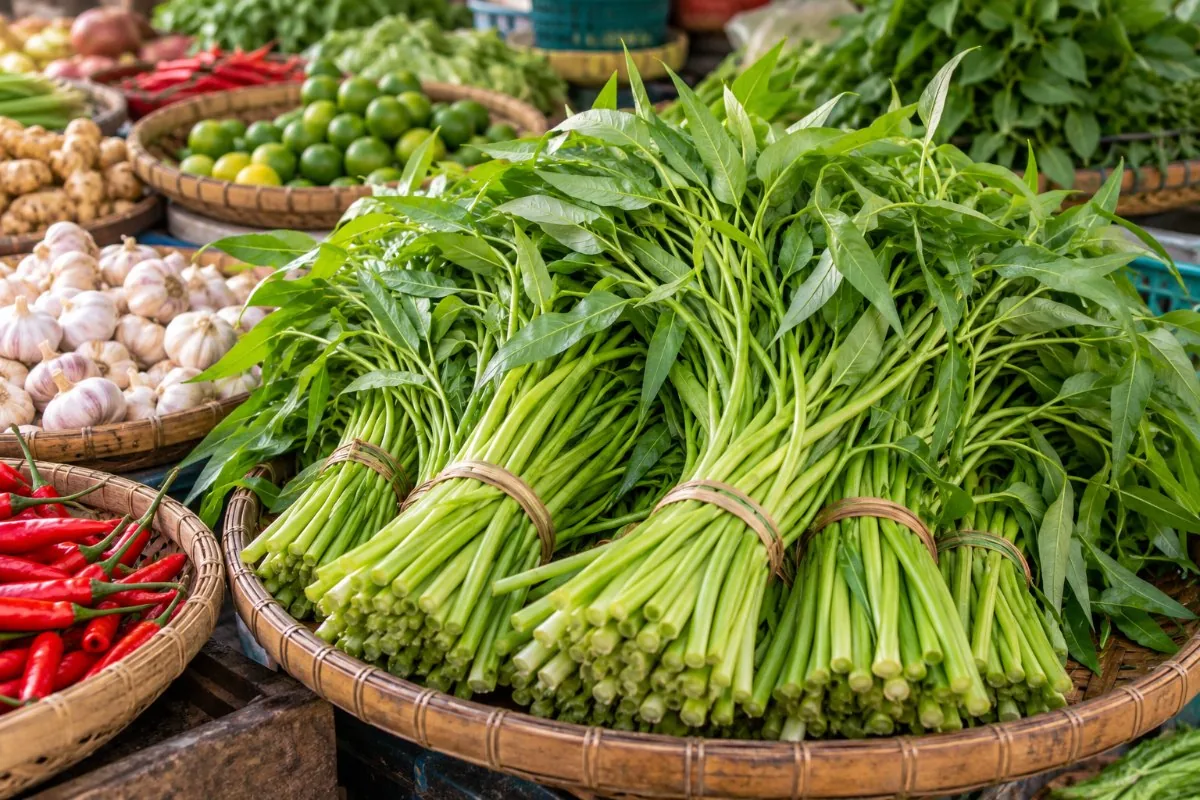
The local water spinach: what makes Da Nang’s rau muong different from other regions
Water spinach grows across Vietnam, but the variety found in Da Nang and the surrounding Quang Nam (now part of Da Nang) is distinct. The stems are thicker — often pencil-width — and the leaves are smaller and denser. This is partly due to the vegetable’s growing conditions: central Vietnam’s sandy, well-drained soil forces the plant to develop stronger cell walls, resulting in a crunchier bite that holds up better to high-heat stir-frying. In Hanoi, water spinach tends to be thinner-stemmed and more tender, often used in soupy preparations like canh rau muong.
Ho Chi Minh City’s version falls somewhere in between, but the stems lack the pronounced snap of Da Nang’s rau muong. The difference is immediately noticeable when eating a plate of rau muong xao in Da Nang — the stems resist slightly before breaking cleanly, releasing a mild, grassy sweetness.
How central Vietnam’s climate and soil shape the vegetable’s texture and flavor
The climate in Da Nang plays a direct role in the quality of local rau muong. The city experiences a tropical monsoon climate with a distinct dry season from January to August, followed by heavy rainfall from September to December. During the dry months, the water spinach grows more slowly, concentrating its flavor and producing firmer stems. The soil along the Han River and coastal areas is sandy and slightly alkaline, which reduces bitterness and enhances the vegetable’s natural sweetness.
Farmers in the Cam Le and Hoa Vang harvest rau muong year-round, but the best batches arrive between March and July, when the stems are at their thickest and most succulent. During the rainy season, the water spinach becomes more watery and less crunchy, though still superior to most imported or southern varieties.
1. Com 3 Ngon (Hai Chau) — The Classic Garlic Stir-Fry
Signature dish: Rau Muong Xao Toi with crispy fried garlic topping
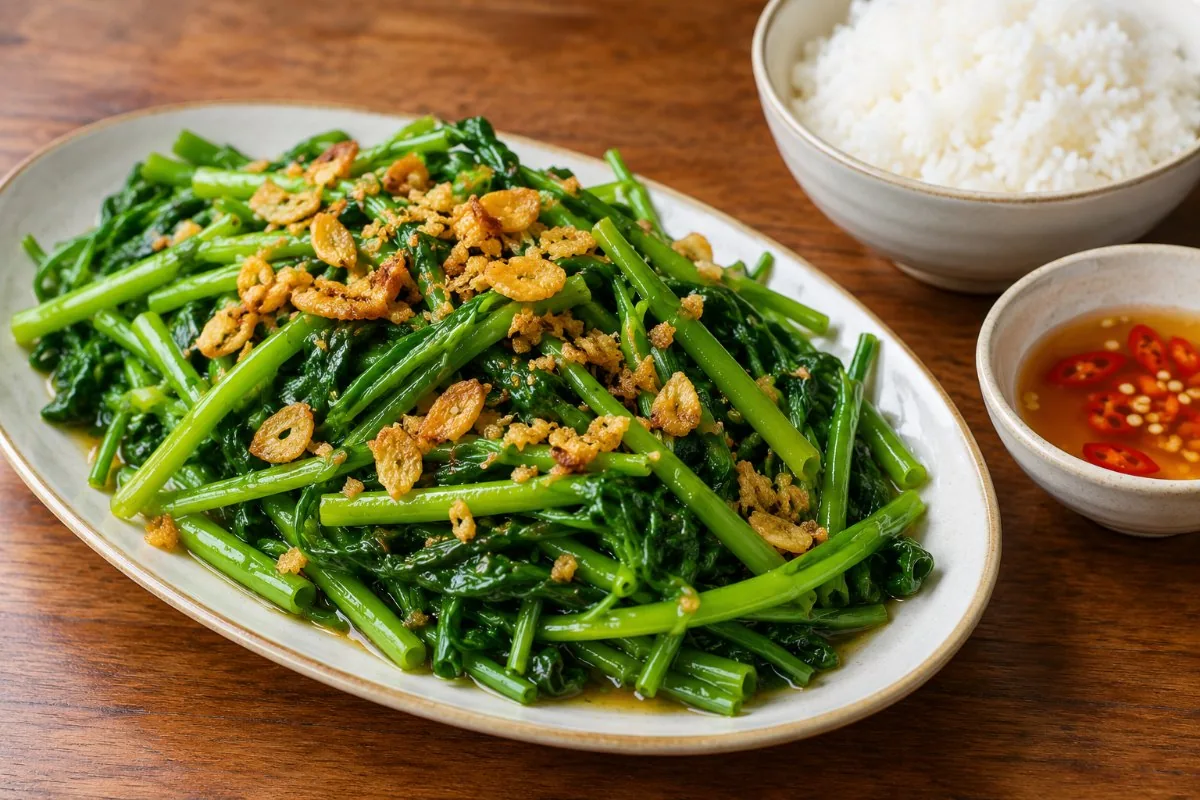
Com 3 Ngon sits on a small alley near Han Market, about a five-minute walk from the central market’s main entrance on Tran Phu Street. The restaurant has been operating for over 15 years and is known among locals for its straightforward, no-nonsense approach to home-style cooking. Their rau muong xao toi arrives at the table glistening with oil, the stems still bright green and crunchy, topped with a generous pile of deep-fried garlic flakes.
The garlic is fried separately until golden and crisp, then scattered over the stir-fry just before serving — this technique keeps the garlic’s flavor sharp and aromatic rather than muted by the vegetable’s moisture. The dish costs 45,000 VND for a single portion, which is enough for two people as part of a shared meal. The stir-fry uses a simple base of oyster sauce and fish sauce, with just enough sugar to balance the saltiness without making the dish sweet.
Why locals recommend this spot for a no-frills, authentic taste
Com 3 Ngon’s appeal lies in its consistency and refusal to complicate things. The kitchen uses a high flame and a well-seasoned wok that has been in use for years, which imparts a subtle smoky flavor — known as wok hei — to the water spinach. The stems are blanched briefly in boiling water before hitting the wok, a step that ensures the vegetable cooks evenly without becoming soggy.
Locals in Hai Chau recommend this spot specifically for the garlic-to-vegetable ratio: the fried garlic pieces are large enough to provide a textural contrast, and the kitchen does not skimp on the amount. The restaurant also serves a range of other dishes like thit kho tau (caramelized pork belly) and canh chua (sour soup), making it easy to build a full meal around the rau muong xao. Service is fast — the stir-fry arrives within five minutes of ordering — and the staff speak enough English to handle basic orders.
2. Quan Co (Son Tra) — Rau Muong Xao with Fermented Shrimp Paste
The bold addition of mam tom (shrimp paste) — a Da Nang specialty
Quan, located on Nguyen Cong Tru Street in the Son Tra district, is known for its aggressive use of mam tom (fermented shrimp paste) in the rau muong xao. The dish here is not for the faint of palate: the shrimp paste is added during the stir-frying process, coating each stem with a pungent, salty, and deeply savory layer that lingers on the tongue.
The mam tom used at Quan Co is sourced from a small producer in the nearby fishing village of Tho Quang, where the shrimp are fermented for at least three months before being ground into a thick, purple-gray paste. The fermentation process breaks down the shrimp proteins into amino acids, creating a natural MSG-like effect that amplifies the water spinach’s sweetness. The kitchen balances the intensity by adding a pinch of sugar and a squeeze of lime juice at the end, which cuts through the saltiness and brightens the dish.
How the dish balances pungent umami with the vegetable’s natural sweetness
The key to Quan Co’s version is the timing of the mam tom addition. The paste is stir-fried in hot oil first, allowing its aroma to bloom before the water spinach goes in. This step mellows the raw pungency of the shrimp paste while concentrating its umami. The water spinach is added next, along with a splash of fish sauce and a small amount of the vegetable’s own water — the residual moisture from washing helps create a light sauce that clings to the stems.
The natural sweetness of Da Nang’s rau muong acts as a counterpoint to the funky, salty shrimp paste, creating a flavor profile that is complex without being overwhelming. The dish is typically eaten with steamed white rice, which helps absorb the sauce and moderate the intensity. A single portion costs 50,000 VND and includes a small bowl of nuoc mam cham (dipping fish sauce) on the side, though most regulars skip it because the stir-fry is already well-seasoned.
3. Bun Cha Ca 109 (Hai Chau) — Water Spinach as a Side for Fish Noodle Soup
Why this spot serves rau muong xao as a complementary side, not a main
Bun Cha Ca 109 on Hoang Hoa Tham Street is primarily a fish cake noodle soup destination, but the restaurant’s rau muong xao has developed a following of its own. Here, the stir-fry is served as a side dish — a small plate placed alongside the steaming bowl of bun cha ca — rather than as a standalone order. The logic is textural: the soft, slippery rice vermicelli noodles and tender fish cakes need a crunchy, savory counterpoint to keep the meal interesting.
The rau muong xao at Bun Cha Ca 109 is cooked with a lighter hand than at dedicated stir-fry spots. The stems retain most of their crunch because the blanching time is shorter — about 20 seconds in boiling water — and the wok time is limited to 30 seconds. The seasoning is restrained: just fish sauce, a touch of oyster sauce, and minced garlic. The result is a side dish that complements the noodle soup without competing with it.
The texture contrast: crunchy stir-fried stems vs. soft bun cha ca noodles
The contrast between the rau muong xao and the bun cha ca is the defining feature of this meal. The fish noodle soup is built around soft elements: the rice noodles are cooked until tender, the fish cakes have a bouncy yet yielding texture, and the broth is light and slightly sweet from simmered pineapple and tomato. Adding a bite of crunchy, salty water spinach between spoonfuls of soup resets the palate and prevents the meal from becoming monotonous.
The recommended way to eat this combo is to take a bite of the rau muong first, then a spoonful of soup with noodles and fish cake — the sequence maximizes the textural interplay. The nuoc mam cham served on the side is meant for the fish cakes, but some diners dip the water spinach stems into it for an extra layer of garlic-chili flavor. A bowl of bun cha ca costs 35,000 VND, and the side of rau muong xao adds 10,000 VND.
4. My Quang 1A (Hai Chau) — Rau Muong Xao with Pork and Quail Eggs
How the stir-fry incorporates local proteins for a heartier meal
My Quang 1A on Tran Binh Trong Street transforms rau muong xao from a side dish into a substantial main course by adding pork belly and quail eggs. The preparation starts with the same base — blanched water spinach stems stir-fried with garlic and fish sauce — but midway through cooking, the kitchen adds sliced pork belly that has been parboiled and then seared until the fat renders slightly. Hard-boiled quail eggs are halved and tossed in during the final minute, absorbing the sauce without becoming rubbery.
The pork belly provides richness that coats the water spinach stems, while the quail eggs add a creamy, almost buttery texture that contrasts with the vegetable’s crunch. The dish is served on a bed of steamed rice, with the stir-fry juices pooling at the bottom of the plate. A portion costs 65,000 VND and is filling enough for lunch without needing additional dishes.
The role of rau muong in balancing the richness of my quang’s broth
My Quang 1A is known for its namesake dish — my quang, a turmeric-colored noodle soup with pork, shrimp, and a small amount of concentrated broth. The restaurant’s rau muong xao with pork and quail eggs serves a specific purpose on the menu: it provides a vegetable-forward option that balances the richness of the noodle soup. The water spinach’s natural bitterness and crunch cut through the fatty, savory broth of my quang, making it possible to eat both dishes in the same meal without feeling overwhelmed.
Regulars often order a small bowl of my quang (35,000 VND) and a plate of the rau muong xao with pork and quail eggs (65,000 VND), alternating between the two. The combination highlights how Da Nang’s cooks use rau muong as a palate cleanser and textural contrast, not just a nutrition supplement.
5. Banh Xeo Ba Duong (Cam Le) — Water Spinach as a Crisp Wrap
The unique serving style: rau muong stems used as edible wrappers for banh xeo
Banh Xeo Ba Duong in the Cam Le district offers one of the most creative uses of rau muong xao in Da Nang. Instead of serving the stir-fry as a separate dish, the restaurant presents it as part of a banh xeo (Vietnamese crispy pancake) platter. The water spinach stems are stir-fried with minimal seasoning — just garlic and a pinch of salt — and arranged on a plate alongside fresh herbs, lettuce leaves, and rice paper.
Diners tear off a piece of the crispy banh xeo, add a few stems of the rau muong xao, wrap everything in a lettuce leaf, and dip it in nuoc cham. The stir-fried stems provide a warm, savory element that contrasts with the cool lettuce and the hot, crispy pancake. The stems’ crunch holds up well inside the wrap, maintaining their texture even after being rolled up.
How the stir-fry’s texture complements the crispy pancake and fresh herbs
The genius of this serving style lies in the textural layering. The banh xeo is shatteringly crisp on the edges and softer in the center, thanks to the coconut milk in the batter. The rau muong xao adds a second crunch — a vegetal, fibrous snap that is distinct from the rice-based crispiness of the pancake. The fresh herbs in the platter, typically mint, perilla, and sawtooth herb, provide a cooling, aromatic contrast. The nuoc cham, made with fish sauce, lime juice, sugar, garlic, and chili, ties everything together with its sweet-sour-salty profile.
The restaurant’s location in Cam Le, a district known for its traditional food stalls, adds to the authenticity of the experience. A full banh xeo platter with rau muong xao costs 55,000 VND and serves one person generously.
6. Hai San Be Man (Son Tra) — Rau Muong Xao with Seafood Medley
The coastal twist: adding squid, shrimp, and clams to the stir-fry
Hai San Be Man on Vo Nguyen Giap Street in Son Tra takes advantage of Da Nang’s coastal location by adding a seafood medley to the rau muong xao. The stir-fry includes squid rings, peeled shrimp, and baby clams, all sourced from the Tho Quang fishing port about two kilometers away. The seafood is stir-fried separately first — the squid and shrimp for about 90 seconds over high heat, the clams until they open — and then combined with the blanched water spinach in the final minute of cooking.
The sauce is a mixture of oyster sauce, fish sauce, and a splash of the clam cooking liquid, which adds a briny depth that plain water cannot replicate. The dish is finished with a generous amount of white pepper and scallions, which complement the seafood without masking its flavor.
Why this version is a 2026 trend: sustainable seafood meets local greens
The combination of locally foraged seafood and seasonal vegetables reflects a broader trend in Da Nang’s food scene in 2026: eating closer to the source. Hai San Be Man works directly with small-scale fishermen who supply the restaurant daily, meaning the seafood is never more than a few hours out of the water. The water spinach comes from farms in the Hoa Vang district, about 15 kilometers from the restaurant. This short supply chain reduces food miles and ensures peak freshness.
The dish also addresses a practical concern: Da Nang’s seafood restaurants generate vegetable waste from trimming herbs and greens, and incorporating rau muong xao into the menu helps utilize the full harvest. A portion costs 85,000 VND and includes a generous serving of seafood alongside the water spinach, making it one of the more expensive options on this list but still affordable by local standards.
How to Choose the Best Rau Muong Xao Spot in Da Nang
3 key indicators: stem thickness, garlic-to-vegetable ratio, and wok hei (breath of the wok)
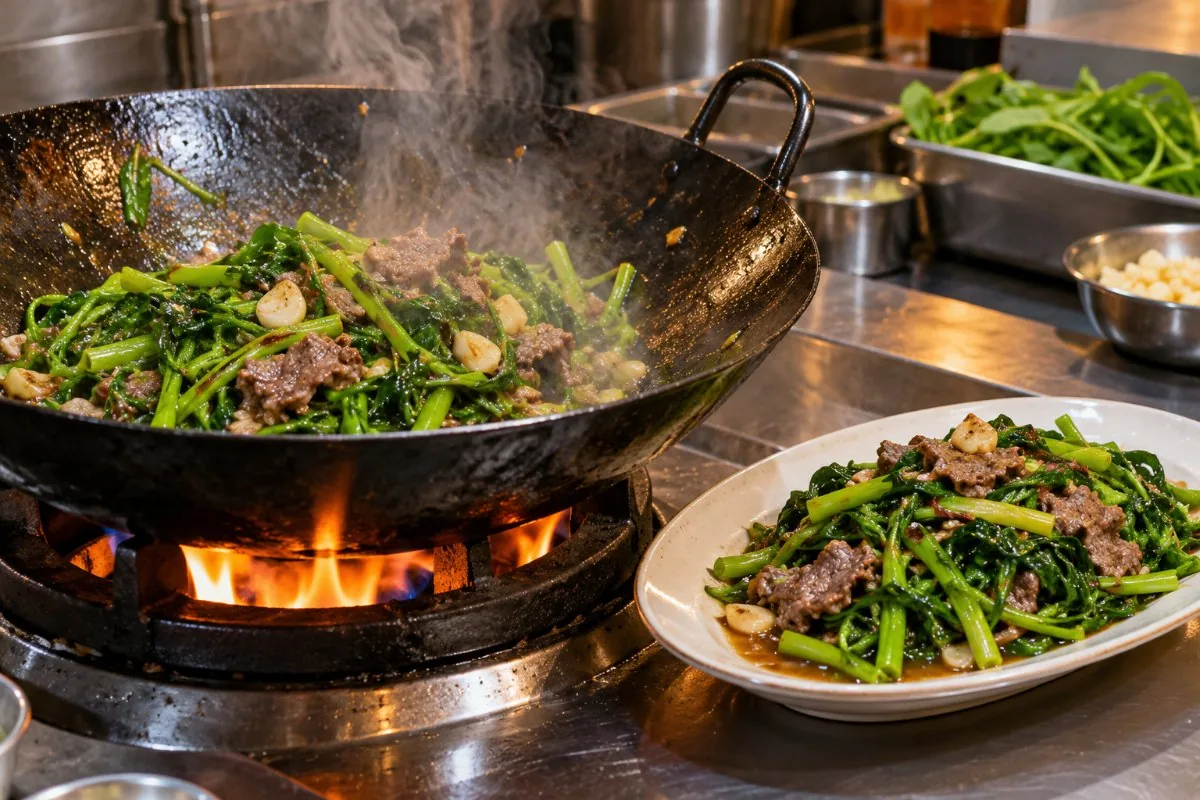
When evaluating a rau muong xao in Da Nang, three factors determine quality. First, stem thickness: the best versions use stems that are at least 4-5 millimeters in diameter, which indicates the water spinach was harvested at the right maturity and grown in optimal conditions. Thin, flimsy stems suggest the vegetable was grown too quickly or harvested too early. Second, the garlic-to-vegetable ratio: a good stir-fry should have visible pieces of garlic in every bite, not just a faint garlic flavor.
The garlic should be either freshly minced and stir-fried until just golden, or deep-fried separately and added as a topping. Third, wok hei — the smoky, charred flavor that comes from cooking in a well-seasoned wok over an extremely high flame. You can detect wok hei by the slight bitterness and charred aroma in the dish; its absence usually means the stir-fry was cooked on a low flame or in a pan that does not retain heat well.
Neighborhood guide: where to find top-tier stir-fries by district
Different districts in Da Nang specialize in different styles of rau muong xao. Hai Chau district, the city center, is the best place for classic versions — the garlic stir-fry at Com 3 Ngon and the side dish at Bun Cha Ca 109 are both within walking distance of Han Market. Son Tra district, along the coast, offers seafood-infused variations like the mam tom version at Quan Co and the seafood medley at Hai San Be Man.
Cam Le district, on the southern edge of the city, is where you find traditional, rural-style preparations like the banh xeo wrap at Banh Xeo Ba Duong. For visitors staying near My Khe Beach, the Son Tra spots are the most convenient, while those based in the city center should focus on Hai Chau. The Cam Le district requires a taxi or motorbike ride, but the trip is worth it for the unique serving style.
What Makes a Great Rau Muong Xao — Key Flavor and Texture Benchmarks
The ideal stem crunch: how to tell if it’s properly blanched and stir-fried
The texture of the water spinach stems is the single most important quality indicator. A properly cooked stem should offer resistance when bitten but yield cleanly without being stringy or tough. This requires a two-step process: blanching the stems in boiling water for 20-30 seconds to soften the cell walls, followed by a quick stir-fry over high heat for 30-45 seconds to add flavor and wok hei. Under-blanched stems are crunchy but fibrous, with a raw, grassy taste. Overcooked stems are limp, mushy, and release too much water, diluting the sauce.
The ideal stem has a translucent appearance on the outside but remains pale green and firm at the center. When you pick up a stem with chopsticks, it should bend slightly but not droop — if it hangs limp, it has been cooked too long.
Sauce balance: oyster sauce, fish sauce, and garlic proportions that work
The sauce for rau muong xao typically combines oyster sauce, fish sauce, sugar, and garlic in specific ratios. A well-balanced sauce uses about two parts oyster sauce to one part fish sauce, with enough sugar to round out the saltiness without making the dish sweet. The garlic should be used generously — at least one whole clove per serving, minced or thinly sliced. The sauce is added after the water spinach has been stir-fried for about 15 seconds, allowing the vegetable to absorb the flavors without becoming soggy.
The final dish should be glossy but not swimming in liquid; excess sauce indicates the wok was not hot enough to evaporate the moisture quickly. A squeeze of lime juice at the end brightens the flavors, but this is optional and varies by restaurant.
| Quality Indicator | Good Execution | Great Execution |
|---|---|---|
| Stem texture | Crunchy but slightly fibrous | Clean snap, tender center, no stringiness |
| Garlic presence | Minced, slightly browned, evenly distributed | Deep-fried separately, crispy, piled on top |
| Wok hei | Faint smoky aroma, no charring | Pronounced charred flavor, slight bitterness |
| Sauce consistency | Lightly coats stems, pools at plate bottom | Clings to stems, no excess liquid |
| Stem color | Bright green with pale sections | Uniform bright green, no gray or yellow areas |
Related on this site
- Da Nang’s Hidden Water Parks: Cool Off This Summer 2026
- Da Nang’s Best Ca Kho To: Caramelized Fish in Clay Pot 2026
Frequently Asked Questions About Da Nang’s Rau Muong Xao
Is rau muong xao vegetarian?
Most versions of rau muong xao in Da Nang are not vegetarian because they use fish sauce and oyster sauce, both of which contain animal products. However, some restaurants can prepare it with soy sauce or mushroom seasoning upon request. Quan Co’s version with mam tom is definitely not vegetarian. Com 3 Ngon may accommodate the request if you ask specifically for a vegetarian version without fish sauce.
What’s the best time of year to eat rau muong xao in Da Nang?
The best months are March through July, when the dry season produces the thickest, crunchiest stems with the most concentrated flavor. During the rainy season from September to December, the water spinach becomes more watery and less crunchy, though it is still available and widely consumed. The quality remains acceptable year-round, but the texture difference is noticeable to regular eaters.
Can I find rau muong xao at Da Nang’s night markets?
Yes, but the quality varies significantly. The Helio Night Market and Son Tra Night Market both have stalls selling rau muong xao, typically as part of a combo with grilled meat or seafood. The night market versions tend to be pre-cooked and reheated, which compromises the stem crunch. For the best experience, visit the dedicated restaurants listed in this guide rather than night market stalls.
Update, August 2026: Helio Center suspended Helio Play, Helio Kids and the Helio Night Market for renovation on 5 September 2025, and the Da Nang city tourism portal still lists them as suspended. The Metiz cinema at the same address stayed open. Check directly before you plan a visit.
Is rau muong xao spicy?
Traditional rau muong xao in Da Nang is not spicy. The heat level depends on whether the restaurant adds fresh chili or chili flakes during cooking. The versions at Com 3 Ngon and My Quang 1A are mild, while Quan Co’s mam tom version can be made spicy on request. If you want heat, ask for “them ot” (add chili) when ordering.
How much does rau muong xao cost in Da Nang?
A single portion of rau muong xao as a side dish costs between 10,000 and 20,000 VND at most restaurants. Larger portions served as a main dish or with added proteins range from 40,000 to 85,000 VND. The prices listed in this guide are accurate as of early 2026 and may vary slightly depending on the season and ingredient availability.
What drinks pair well with rau muong xao?
The salty, savory flavors of rau muong xao pair best with light, refreshing drinks. A cold glass of tra da (iced tea) is the standard accompaniment at most restaurants and helps cleanse the palate between bites. Fresh coconut water or a squeeze of lime in soda water also works well. Avoid sugary soft drinks, which clash with the dish’s savory profile.
Next Steps
Da Nang’s rau muong xao scene in 2026 offers more variety than most visitors expect. From the classic garlic stir-fry at Com 3 Ngon to the seafood medley at Hai San Be Man, each version reflects a different aspect of the city’s culinary identity — its coastal location, its agricultural traditions, and its cooks’ willingness to experiment. The water spinach itself, with its thick stems and natural sweetness, provides a canvas that supports everything from pungent shrimp paste to delicate fish noodle soup.
Start with Com 3 Ngon for the benchmark garlic version, then explore Quan Co’s mam tom rendition if you want something bolder. For a full meal, order the rau muong xao with pork and quail eggs at My Quang 1A. Use the three indicators — stem thickness, garlic ratio, and wok hei — to evaluate any rau muong xao you encounter, and visit between March and July for the best texture. The dish is affordable, widely available, and deeply rooted in Da Nang’s food culture — a perfect entry point for anyone wanting to eat like a local.
Part of our guide to what to eat in Da Nang.