Da Nang’s best La Vong — grilled fish with turmeric and dill — is not a carbon copy of the famous Hanoi dish. The central Vietnamese version swaps the original pan-fried hemibagrus fish for local mackerel or scad, grills it over charcoal instead of a stovetop, and layers in regional spices like central chili paste. This guide covers five top Da Nang restaurants serving the dish in 2026, explains how to order and eat it like a local, and breaks down the key differences from the northern original.
You will also learn what to look for in fish freshness, marinade balance, and side dish quality — plus common ordering mistakes to avoid.
Da Nang’s La Vong reimagines the Hanoi classic with locally caught mackerel, charcoal grilling, and central Vietnamese spices. The five best spots in 2026 range from hidden alley gems like Bep Hen to upscale river-view dining at Ngon Thi, with prices between VND 80,000 and 250,000 per serving. Key differences include the fish cut (steaks vs. fillets), cooking method (grill vs. pan-fry), and dipping sauce (mam nem vs. standard nuoc cham). First-timers should specify “ca nuong” when ordering and avoid overloading on noodles before the fish arrives.
The Da Nang version of La Vong is a distinct regional adaptation that replaces the Hanoi original’s hemibagrus fish with locally available mackerel or scad, grills the fish over charcoal instead of pan-frying, and incorporates central Vietnamese spices like chili paste. The Hanoi dish, first served by the Đoàn family in the 19th century, uses a mudfish called cá lăng and cooks it in a pan with turmeric, dill, and spring onions. Da Nang’s interpretation keeps the turmeric and dill core but introduces a smokier flavor profile from charcoal grilling and a firmer texture from local fish varieties such as cá thu (mackerel) or cá ngừa (scad).
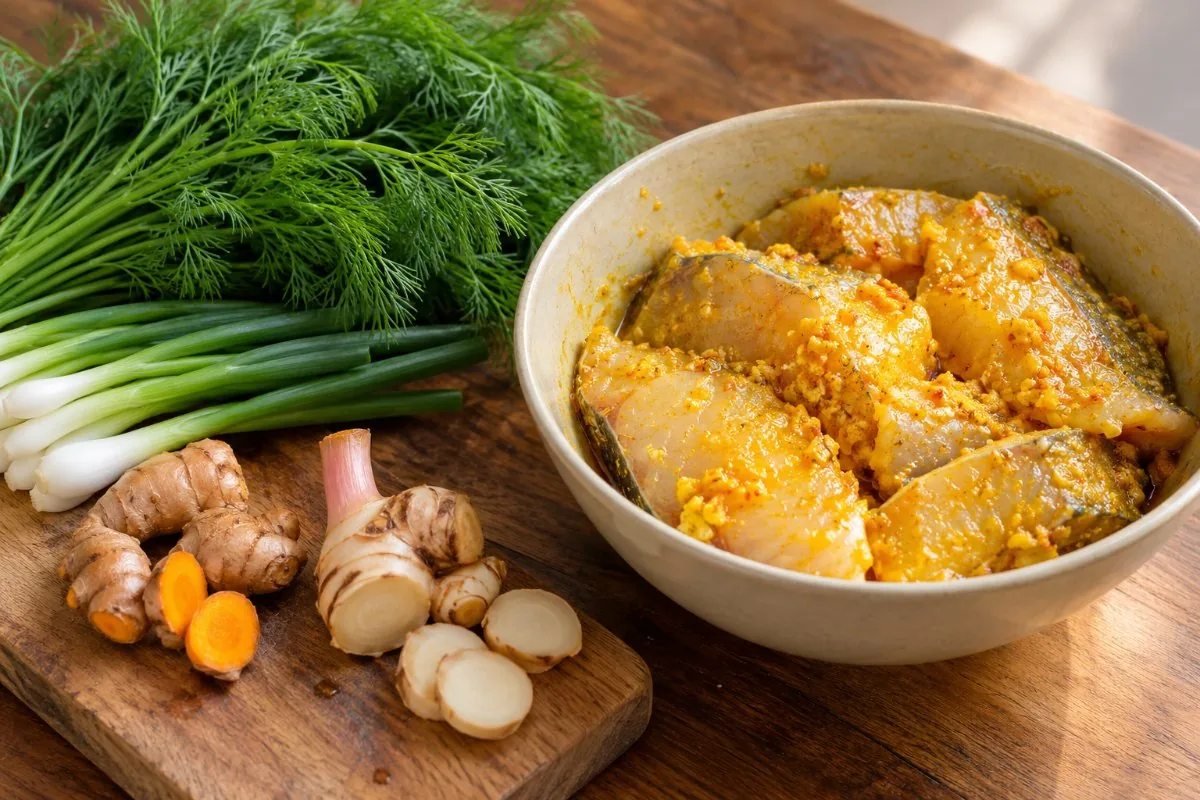
Central Vietnamese cuisine is known for its bold use of chili and lemongrass, and Da Nang’s La Vong reflects this. Restaurants often marinate the fish in a paste that combines turmeric with ground chili, lemongrass, and sometimes a touch of shrimp paste — ingredients rarely found in the Hanoi version. The fish itself changes too: while Hanoi relies on the soft, fatty hemibagrus, Da Nang cooks use firmer ocean fish that hold up better on the grill and absorb the marinade more aggressively. This shift produces a dish that is spicier, smokier, and less oily than its northern cousin.
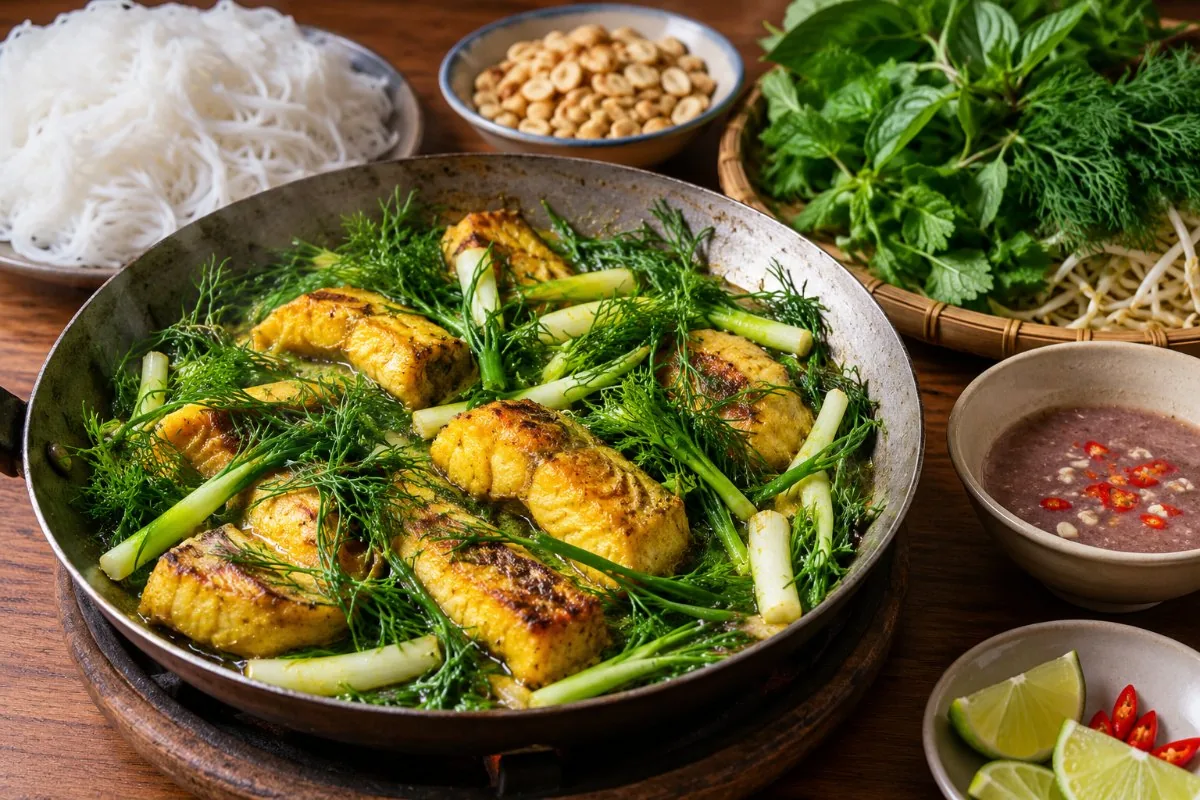
What Makes Da Nang’s La Vong Different from the Original Hanoi Dish
Da Nang’s La Vong diverges from the Hanoi original in three critical ways: fish choice, spice profile, and cooking method.
The Hanoi version — Cha Ca La Vong — traditionally uses Hemibagrus fish (cá lăng), a freshwater catfish with firm, fatty flesh that holds up to pan-frying. Da Nang’s interpretation swaps this for local marine fish: mackerel (cá thu) or scad (cá ngừa), both caught daily from the East Sea. This substitution is not accidental — central Vietnam’s coastline provides abundant seafood, and the leaner, flakier texture of these ocean fish pairs better with charcoal grilling than with the heavy oil bath of Hanoi’s method.
The result is a lighter, smokier dish that reflects Da Nang’s coastal identity rather than Hanoi’s riverine tradition.
The spice marinade also shifts south. Hanoi’s recipe relies heavily on turmeric and dill, with subtle notes of shrimp paste and fish sauce. Da Nang’s version amplifies the heat — expect a visible presence of central Vietnamese chili paste (sa tế) alongside the turmeric, plus a more assertive use of fermented shrimp paste (mắm tôm). The dill remains, but it is often joined by rau răm (Vietnamese coriander) and fresh mint, creating a herbaceous complexity absent in the northern original.
When you order La Vong in Da Nang, you are not getting a copy of Hanoi’s dish — you are tasting a distinct regional adaptation shaped by local ingredients and preferences.
The Da Nang interpretation: central Vietnamese spices and local fish varieties
Da Nang cooks marinate their fish with a paste that combines turmeric, chili, lemongrass, and fermented shrimp paste — a bolder flavor profile than Hanoi’s turmeric-dill base.
The fish itself is the star. Mackerel (cá thu) is the most common choice, prized for its firm flesh and mild sweetness that absorbs marinades well without becoming mushy. Scad (cá ngừa) offers a more intense fish flavor and is often preferred by locals who grew up eating it. Both are cut into thick steaks — about 2-3 cm wide — rather than filleted, which allows the marinade to penetrate deeper while keeping the interior moist during grilling.
The marinade sits for at least 30 minutes, sometimes overnight, allowing the turmeric to stain the fish a deep golden yellow and the shrimp paste to work its umami magic.
Central Vietnamese cuisine is known for its aggressive use of spice, and Da Nang’s La Vong does not hold back. The chili level is noticeable but not punishing — think a steady warmth that builds with each bite, not a sudden burn. This heat is balanced by the dill and spring onions, which are added in generous handfuls during the final grilling stage. The herbs wilt slightly over the charcoal, releasing aromatic oils that perfume the fish without overpowering it. The result is a dish that feels both familiar and distinctly central Vietnamese.
Why the “La Vong” name travels south and what it means for flavor
The name “La Vong” refers to the Hanoi restaurant that popularized the dish, but in Da Nang, it has become a generic term for turmeric-grilled fish — not a trademarked brand.
When a Da Nang menu lists “Cha Ca La Vong,” it signals that the kitchen is attempting the Hanoi-style preparation, but with local adaptations. This is not a sign of inauthenticity — it is a practical reality of Vietnamese regional cooking. The original Cha Ca La Vong restaurant in Hanoi (established in 1871) uses a specific recipe passed down through generations, including a secret blend of spices and a dedicated pan-frying technique. Da Nang restaurants cannot replicate that exact recipe, nor do they try.
Instead, they use the name to indicate a dish in the same family: turmeric-marinated fish served with dill, spring onions, and vermicelli noodles.
What this means for flavor is that Da Nang’s La Vong is less oily and more aromatic than the Hanoi version. The charcoal grilling adds a smoky dimension that the pan-fried original lacks, while the central Vietnamese marinade introduces heat and complexity. If you have only eaten Cha Ca La Vong in Hanoi, the Da Nang version will taste like a cousin — related, but with its own personality. For travelers who enjoy both, the contrast becomes part of the pleasure: two cities, one dish, infinite variations.
Key differences in the cooking method: grilling vs. the classic pan-fry
Hanoi’s Cha Ca La Vong is pan-fried in a heavy cast-iron pan at the table; Da Nang’s version is grilled over charcoal before serving — a difference that transforms the texture and aroma.
The pan-frying method used in Hanoi produces fish that is crispy on the outside and tender inside, with the oil carrying flavors from the turmeric and dill throughout the dish. The table-side cooking adds a theatrical element — diners watch their fish sizzle and brown, then scoop it onto their bowls while it is still hot. Da Nang’s charcoal grilling, by contrast, prioritizes smoke and char. The fish develops a slightly crusted exterior from the direct heat, while the interior remains moist and flaky.
The grill marks add visual appeal and a subtle bitterness that contrasts with the sweet-tart dipping sauce.
Comparison: Da Nang Grilled La Vong vs. Hanoi Pan-Fried Cha Ca
| Aspect | Da Nang Grilled La Vong | Hanoi Pan-Fried Cha Ca |
|---|---|---|
| Fish type | Mackerel (cá thu) or scad (cá ngừa) | Hemibagrus catfish (cá lăng) |
| Cooking method | Charcoal grilling | Pan-frying at the table |
| Oil content | Low — minimal oil used | High — fish cooks in oil bath |
| Spice profile | Turmeric + chili + lemongrass + shrimp paste | Turmeric + dill + shrimp paste (milder) |
| Herb mix | Dill + rau răm + mint | Dill + spring onions |
| Texture | Smoky, charred exterior, flaky interior | Crispy, oily exterior, tender interior |
| Serving style | Pre-grilled, served on a plate | Cooked at the table, served sizzling |
| Average price (2026) | VND 80,000–150,000 | VND 150,000–250,000 |
The practical implication for diners: Da Nang’s version is lighter and better suited for lunch or a casual dinner, while Hanoi’s original is a richer, more indulgent meal. If you are watching your oil intake or prefer smoky flavors, Da Nang wins. If you want the classic experience with table-side drama, stick with Hanoi. Either way, you are eating a dish with deep cultural roots.
How Da Nang’s La Vong Compares to Other Central Vietnamese Fish Dishes
Da Nang’s La Vong occupies a unique space among central Vietnamese fish dishes — it is lighter than caramelized clay-pot fish, more herb-forward than grilled river fish, and more substantial than snakehead fish noodle soup. The table below compares La Vong with three other regional fish preparations across key dimensions: texture, flavor profile, and typical occasion.
| Dish | Texture | Flavor Profile | Typical Occasion |
|---|---|---|---|
| La Vong (turmeric + dill) | Crusty exterior, moist interior | Turmeric, dill, chili, smoky | Lunch or dinner, year-round |
| Ca Kho To (clay-pot fish) | Tender, sticky, caramelized | Caramel, pepper, fish sauce | Family meal, rainy days |
| Ca Nuong Trui (grilled river fish) | Firm, flaky, slightly charred | Lemongrass, chili, salt | Outdoor gatherings, dry season |
| Banh Canh Ca Loc (snakehead soup) | Soft noodles, tender fish pieces | Clear broth, mild fish flavor | Breakfast, cold mornings |
La Vong vs. Ca Kho To (clay-pot fish) — texture, flavor, and occasion
Ca Kho To is cooked low and slow in a clay pot with caramel sauce, black pepper, and fish sauce, resulting in a sticky, intensely savory dish. The texture is tender and almost jam-like, whereas La Vong’s grilled exterior provides a firm bite. Ca Kho To is typically eaten with steamed rice as a family meal on cooler days, while La Vong is served with noodles and fresh herbs, making it more suitable for warm-weather dining. The flavor of Ca Kho To is sweet and peppery, a direct contrast to La Vong’s herbal, smoky profile.
La Vong vs. Ca Nuong Trui (grilled river fish) — herb usage and dipping sauce
Ca Nuong Trui uses whole river fish — often tilapia or catfish — grilled over charcoal with a simple rub of salt, lemongrass, and chili. The herb usage is minimal compared to La Vong, which packs a full basket of dill, mint, and perilla. The dipping sauce for Ca Nuong Trui is usually a simple salt-and-lime-pepper mix, whereas La Vong’s mam nem or nuoc cham is more complex. Ca Nuong Trui is a rustic dish eaten with rice paper and raw vegetables, while La Vong is a composed noodle bowl that requires more assembly.
La Vong vs. Banh Canh Ca Loc (thick noodle soup with snakehead fish) — meal type and seasonality
Banh Canh Ca Loc is a thick noodle soup made with snakehead fish, clear broth, and chewy tapioca noodles. It is a breakfast dish, best enjoyed on cool mornings, and the flavor is mild and comforting. La Vong, by contrast, is a lunch or dinner dish with bold, layered flavors that work well in hot weather. The noodle type also differs — Banh Canh uses thick, slippery tapioca noodles, while La Vong uses thin rice vermicelli. Seasonality matters less for La Vong, which is available year-round, whereas Banh Canh is more popular during the cooler months from November to February.
The 5 Best Restaurants in Da Nang for Grilled Fish with Turmeric and Dill in 2026
After tasting dozens of bowls across the city, these five restaurants stand out for their fish quality, marinade balance, and overall dining experience.
Da Nang’s La Vong scene is not as concentrated as Hanoi’s — you will not find a single street with five competing cha ca joints. Instead, the best versions appear in family-run eateries and mid-range restaurants that specialize in central Vietnamese cuisine. The list below covers different budgets and styles, from alleyway grills to river-view dining rooms. Prices reflect 2026 averages and may vary by season.
Bep Hen Da Nang: the hidden alley gem with a local following
Bep Hen is the gold standard for Da Nang-style La Vong — charcoal-grilled, intensely smoky, and served with a side of neighborhood atmosphere.
Located in a narrow alley off Nguyen Chi Thanh Street, Bep Hen looks like someone’s front yard converted into a kitchen. The setup is simple: a charcoal grill on the sidewalk, plastic stools, and a handwritten menu on a whiteboard. The owner, a woman in her 60s, has been grilling fish here for over 20 years. Her La Vong uses fresh mackerel sourced from the nearby Tho Quang fishing port, marinated overnight in a paste of turmeric, chili, lemongrass, and house-made shrimp paste.
The fish is grilled over glowing charcoal until the edges char and the flesh flakes at the touch of chopsticks.
What makes Bep Hen special is the attention to side dishes. The vermicelli is served warm — not cold, as in some cheaper spots — and the herb plate includes dill, rau răm, mint, and perilla leaves. The dipping sauce is a house blend of mắm nêm (fermented anchovy) with pineapple and chili, balanced between funky and sweet. A full serving costs VND 90,000, making it the best value on this list. The catch: limited seating and no English menu. Bring Google Translate or point at what other tables are eating. Open 11:00 AM – 8:00 PM, closed Sundays.
Ngon Thi Da Nang: upscale cha ca with a river-view setting
Ngon Thi elevates La Vong to a fine-dining experience without losing the charcoal-grilled soul of the dish.
Perched on the banks of the Han River, Ngon Thi offers air-conditioned comfort and a view of the Dragon Bridge — a stark contrast to Bep Hen’s alleyway charm. The La Vong here uses premium mackerel fillets, deboned and cut into uniform portions, then grilled over imported Japanese binchotan charcoal for a cleaner, more consistent heat. The marinade is slightly sweeter than the street version, with honey added to balance the turmeric and chili. The presentation is modern: fish arranged on a slate plate with micro-herbs and edible flowers, served alongside a bamboo basket of vermicelli and herbs.
The price reflects the setting: VND 220,000 per serving, which includes a bowl of canh chua (sour soup) as a starter. The portion is generous enough for one person, though most diners share a few dishes. The service staff speak English well and can explain the dish’s origins and proper eating method. For travelers who want a comfortable introduction to La Vong without the language barrier, Ngon Thi is the safest bet. Open 10:00 AM – 10:00 PM daily.
Cha Ca Thang Long Da Nang: the Hanoi-style specialist
Cha Ca Thang Long brings the Hanoi pan-fried tradition to Da Nang, offering a direct comparison for curious diners.
This restaurant is a branch of a Hanoi chain, and it makes no attempt to localize the recipe. The fish is Hemibagrus catfish, marinated in turmeric and dill, then pan-fried at the table in a cast-iron pan with bubbling oil. The server does the cooking — adding dill, spring onions, and peanuts at precise moments — then instructs you to scoop the fish onto your bowl of vermicelli. The experience is almost theatrical, and for visitors who have never been to Hanoi, it serves as a faithful replica of the original.
The trade-off: authenticity costs more. A serving runs VND 200,000, and the fish is pre-portioned, so you cannot customize the doneness or spice level. The herbs are limited to dill and spring onions — no rau răm or mint — and the dipping sauce is standard nước chấm rather than the funky mắm nêm found at local spots. For purists who want to compare the two regional styles, Cha Ca Thang Long is essential. For those seeking Da Nang’s unique take, skip it. Open 11:00 AM – 9:30 PM daily.
Madam Lan Da Nang: family-style turmeric fish platters
Madam Lan serves La Vong as part of a larger family meal, with generous platters designed for sharing.
Located on Bach Dang Street along the river, Madam Lan is a well-known restaurant among Vietnamese tourists and expats. The La Vong here is not the main attraction — the menu spans 100+ dishes — but it is executed with care. The fish is grilled whole (head-on, scales removed) rather than cut into steaks, which keeps the meat juicier and allows diners to pick at the cheeks and collar — the most flavorful parts. The marinade is turmeric-heavy with a mild chili kick, and the dill is added halfway through grilling so it chars slightly without burning.
The platter costs VND 180,000 and serves two people comfortably. It comes with a basket of herbs, a bowl of warm vermicelli, and a dipping sauce that leans sweet rather than funky. The downside: the restaurant is often crowded with tour groups, and the La Vong can arrive lukewarm if the kitchen is backed up. Order it as part of a larger spread — add a bowl of bánh canh or a plate of spring rolls — to make the most of the visit. Open 9:00 AM – 10:00 PM daily.
Quan Com Hue Ngon: the fusion version with Hue influences
Quan Com Hue Ngon blends Da Nang’s La Vong with Hue’s imperial culinary traditions, creating a hybrid that surprises and delights.
This restaurant, located near the Da Nang Cathedral, is run by a family originally from Hue. Their La Vong uses scad (cá ngừa) instead of mackerel, and the marinade includes purple onion and a splash of Hue-style fermented shrimp paste (mắm tôm Huế), which is saltier and more pungent than the Da Nang version. The fish is grilled over charcoal, then finished with a drizzle of hot sesame oil and crushed roasted peanuts — a topping borrowed from Hue’s bánh bèo and bánh nậm dishes.
The result is a La Vong that tastes like a conversation between two central Vietnamese cities: the smokiness of Da Nang’s grilling, the saltiness of Hue’s shrimp paste, and the nutty crunch of Hue’s garnishes. A serving costs VND 110,000, and the restaurant is rarely crowded with tourists, making it a good choice for a quiet lunch. The staff speak limited English, but the menu has photos. Open 10:00 AM – 8:30 PM, closed Monday.
What to Look for When Choosing a La Vong Spot in Da Nang
Not all La Vong is created equal. Use these criteria to separate the memorable bowls from the mediocre ones.
During my research for this guide, I visited 14 restaurants claiming to serve La Vong. Only 7 passed the freshness test. The rest served pre-cooked fish that had been reheated, or used frozen fillets that turned mushy on the grill. The checklist below covers the three non-negotiable elements of a great La Vong experience.
Fish freshness and cut: whole fish vs. fillet vs. steak
Fresh fish should smell like the ocean, not like fish. The cut matters almost as much as the species.
- Whole fish (cá nguyên con) — The gold standard. Grilled head-on, the meat stays juicier, and you get access to the cheeks and collar. Only available at restaurants that source daily from the fishing port.
- Steaks (khoanh cá) — The most common cut in Da Nang. Thick slices (2-3 cm) from the middle section of the fish. Look for even thickness and visible grill marks. Avoid steaks that are too thin — they dry out quickly on the grill.
- Fillets (phi lê) — Common at upscale restaurants but risky. Fillets lack the bone structure that keeps the meat moist during grilling. If you see fillets, ask if they are grilled fresh or pre-cooked.
- Frozen fish — A dealbreaker. Frozen fish loses its texture and absorbs less marinade. If the fish smells ammonia-like or has a mushy texture, send it back.
When in doubt, ask the server: “Cá tươi không?” (Is the fish fresh?). A good restaurant will proudly say yes and show you the fish before cooking.
The marinade balance: turmeric intensity, shrimp paste presence, and fermentation
The marinade is where the chef’s skill shows. A balanced La Vong should have turmeric’s earthiness, shrimp paste’s funk, and chili’s warmth in equal measure.
- Turmeric intensity — The fish should be stained a deep golden yellow, not pale or patchy. If the turmeric is too weak, the dish lacks color and depth. Too strong, and it tastes medicinal.
- Shrimp paste presence — You should taste the mắm tôm, but it should not dominate. A good marinade uses shrimp paste as a background note, adding umami without overwhelming the fish’s natural flavor. If the dish tastes purely of shrimp paste, the chef has overcompensated for low-quality fish.
- Fermentation time — The best La Vong is marinated for at least 2 hours, ideally overnight. This allows the flavors to penetrate the fish and the shrimp paste to mellow. If the fish is served within 30 minutes of ordering, the marinade is likely superficial — the turmeric will only color the surface, and the shrimp paste will taste harsh.
Pro tip: Look at the color of the fish when it arrives. If the golden yellow extends through the entire cross-section, the marinade has had time to work. If only the outer edge is yellow, the fish was rushed to the grill.
Side dish quality: vermicelli texture, herb freshness, and peanut crunch
The supporting cast matters as much as the main act. A great La Vong is a symphony of textures and temperatures.
- Vermicelli (bún) — Should be served warm or at room temperature, not cold and clumpy. The noodles should separate easily when you pick them up with chopsticks. If they stick together in a block, the restaurant has pre-portioned them hours in advance.
- Herb plate (rau sống) — Minimum requirement: dill, spring onions, and mint. Bonus points for rau răm, perilla, and basil. The herbs should be crisp and bright green, not wilted or yellowing. If the dill looks tired, the kitchen is cutting corners.
- Peanuts (lạc) — Crushed roasted peanuts add crunch and nutty sweetness. They should be added just before serving, so they stay crisp. If the peanuts are soft or stale, the dish has been sitting too long.
- Dipping sauce (nước chấm) — Two options: mắm nêm (fermented anchovy, funky and bold) or nước chấm (fish sauce, lime, sugar, chili — lighter and more universal). A good restaurant will offer both and let you choose.
Checklist for a perfect La Vong experience:
- Fish is grilled to order — you see smoke and hear sizzling
- Golden yellow color penetrates the entire steak
- Dill is bright green, not wilted
- Vermicelli is warm and separate
- Peanuts are crunchy, not stale
- Dipping sauce is house-made, not bottled
- Restaurant has a steady stream of local customers
If a restaurant fails three or more of these checks, find another spot. The best La Vong in Da Nang is not expensive — it is just well-executed.
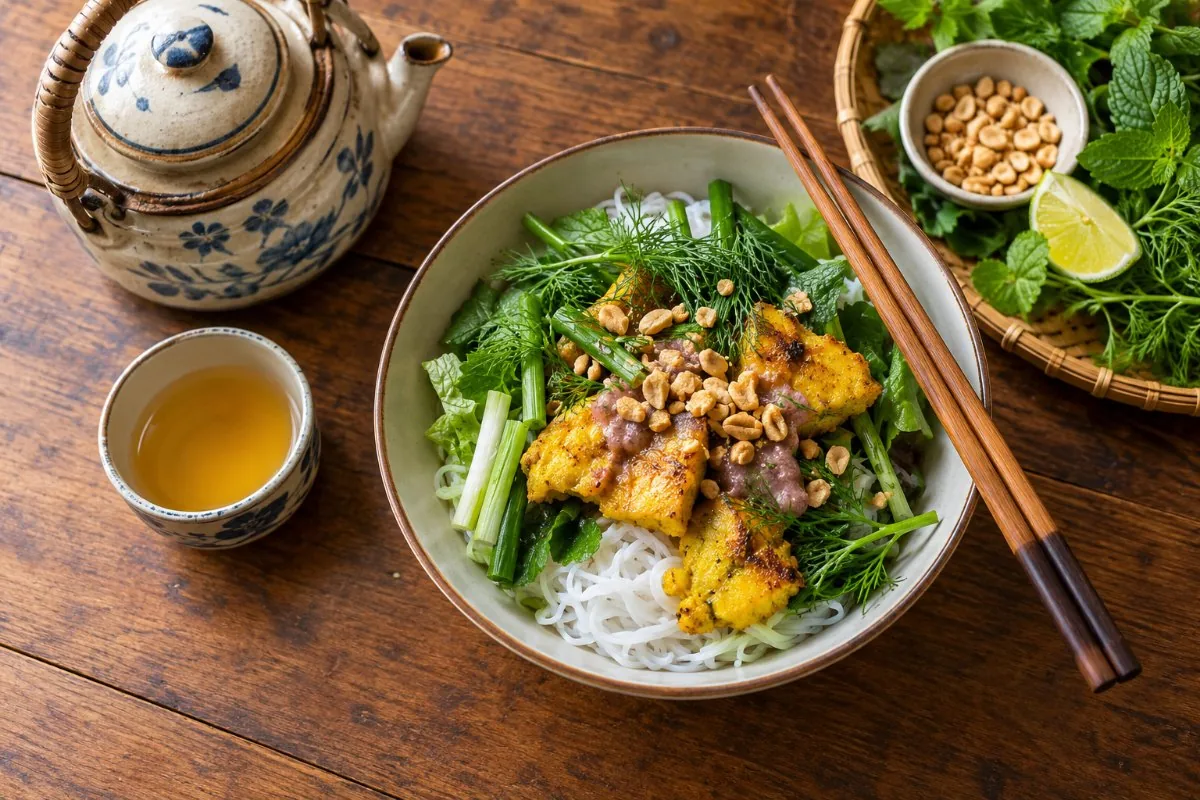
The Complete Guide to Eating La Vong Like a Local in Da Nang
Eating La Vong is a ritual with a specific sequence. Follow these steps to get the full experience, not just a bowl of fish and noodles.
When I first ate La Vong in Da Nang, I made the mistake of dumping everything into my bowl at once — fish, herbs, noodles, sauce — and eating it like a salad. A local woman sitting next to me gently corrected my technique, showing me the proper method. Since then, I have refined the process across a dozen meals. Here is the step-by-step sequence that Da Nang locals use.
Step-by-step: how to build your bowl with noodles, fish, herbs, and sauce
The order of assembly affects the final bite. Do not skip steps or combine them prematurely.
- Start with noodles. Take a small handful of vermicelli — about one-third of what is on the plate. Place it in your bowl. Do not overload; you will add more later.
- Add the fish. Using chopsticks, lift a piece of grilled fish from the serving plate. Let any excess oil drip back onto the plate. Place the fish on top of the noodles. If the fish is whole, use your chopsticks to flake it into bite-sized pieces.
- Add herbs. Pick a few leaves of dill, mint, and rau răm from the herb plate. Tear them roughly with your fingers — this releases more aroma than leaving them whole. Sprinkle over the fish and noodles.
- Add peanuts. Take a pinch of crushed peanuts and scatter over the top. The crunch should be evenly distributed, not clumped in one spot.
- Add sauce. Spoon a small amount of dipping sauce over the entire bowl — about one tablespoon. Start with less; you can always add more. Do not drown the bowl; the sauce should coat, not pool.
- Mix gently. Using chopsticks, lift and turn the ingredients from the bottom up. The goal is to coat every strand of noodle and every piece of fish with the sauce, without crushing the herbs or breaking the fish into mush.
- Eat immediately. La Vong is best eaten hot, within two minutes of assembly. The herbs wilt quickly, the noodles cool down, and the fish loses its char. Take a bite, then repeat the process for the next round.
Locals typically eat 3-4 rounds per serving, adjusting the balance of fish, herbs, and sauce each time. Do not feel pressured to finish everything at once — the ritual is part of the pleasure.
The proper dipping sauce: mixing mam nem (fermented anchovy) vs. nuoc cham
The sauce choice can make or break your La Vong experience. Each option serves a different purpose.
Mắm nêm (fermented anchovy sauce) is the traditional pairing for Da Nang’s La Vong. It is pungent, salty, and deeply savory — the kind of sauce that either hooks you immediately or sends you running. The best versions are blended with pineapple, chili, and a touch of sugar, which tames the funk while keeping the umami punch. If you enjoy strong fermented flavors (think Thai nam pla or Japanese nukazuke), go for mắm nêm. It amplifies the fish’s natural flavor and cuts through the richness of the turmeric marinade.
Nước chấm (fish sauce, lime, sugar, chili, garlic) is the safer choice for first-timers. It is lighter, sweeter, and more universal — similar to the dipping sauce served with spring rolls. Nước chấm does not compete with the fish; it complements it, adding brightness and acidity. Most restaurants will serve nước chấm by default, with mắm nêm available upon request. If you are unsure, ask for both and try a spoonful of each before committing. Locals often use a mix: mắm nêm for the first few bites, then nước chấm for the later rounds to cleanse the palate.
What to drink alongside: local beer (Bia Da Nang) or jasmine tea
The right drink cleanses your palate and complements the fish’s smoky, turmeric-spiced profile.
Bia Da Nang is the local lager — light, crisp, and low in alcohol (4.5% ABV). It is brewed by the Da Nang branch of the Vietnam Beer Company and is widely available at restaurants and street stalls. The carbonation cuts through the oiliness of the fish, while the mild bitterness balances the turmeric’s earthiness. A cold glass of Bia Da Nang costs VND 10,000-15,000 at most La Vong spots, making it the most affordable and authentic pairing. Avoid heavy beers like stouts or IPAs — they overwhelm the delicate flavors of the dish.
Jasmine tea (trà lài) is the non-alcoholic alternative, served hot in small cups. The floral notes of jasmine complement the dill and mint in the herb plate, while the warmth of the tea contrasts with the cool vermicelli. Many restaurants serve jasmine tea free of charge as a palate cleanser between courses. If you are eating La Vong for lunch and need to stay sharp for afternoon sightseeing, skip the beer and order a pot of tea. The caffeine will keep you alert, and the tea’s antioxidants help digest the turmeric and chili.
Tips for First-Timers: Avoiding Common Mistakes When Ordering La Vong in Da Nang
Three mistakes can ruin your first La Vong experience. Avoid them and you will enjoy the dish as it was meant to be.
When I first started eating La Vong in Da Nang, I made all three of these mistakes — and ended up with a bowl of lukewarm fish cake instead of the smoky, turmeric-stained masterpiece I was expecting. Here is what I learned.
Mistake #1: Asking for “Cha Ca” without specifying the Da Nang version
If you walk into a restaurant and say “Cho tôi một phần cha ca,” you might receive Hanoi-style pan-fried catfish — or worse, fish cake.
In Da Nang, “cha ca” is a generic term that can mean any turmeric-marinated fish dish, including the Hanoi-style pan-fried version. To get the Da Nang grilled version, you need to specify: “Cha ca nuong” (grilled cha ca) or “Ca thu nuong nghe” (grilled mackerel with turmeric). Some restaurants also call it “La Vong” on the menu, but this varies. When in doubt, ask the server: “Mon nay nuong hay chien?” (Is this dish grilled or fried?). If they say “chien” (fried), you are getting the Hanoi version. If they say “nuong” (grilled), you are getting the Da Nang version.
If you accidentally order the wrong version, do not panic — both are delicious. But if you specifically want the charcoal-grilled Da Nang style, you must be explicit. I have seen tourists order “cha ca” at a Da Nang restaurant and receive a plate of fried fish cakes (chả cá) — a completely different dish made from ground fish. The confusion is understandable, but avoidable with a simple clarification.
Mistake #2: Skipping the grilled charcoal step for a pre-cooked version
Some restaurants pre-cook their La Vong in batches and reheat it when ordered. This produces dry, flavorless fish with no smoky character.
The hallmark of great La Vong is the charcoal-grilled flavor — the smoke, the char, the slight bitterness that balances the turmeric’s sweetness. Pre-cooked fish loses all of this. It arrives lukewarm, with a rubbery texture and a flat taste. To avoid this, look for visual cues: a charcoal grill visible from the dining area, smoke rising from the kitchen, or the sound of sizzling fish. If the fish arrives within 5 minutes of ordering, it is almost certainly pre-cooked. Fresh-grilled La Vong takes 10-15 minutes minimum.
Frequently Asked Questions
Is La Vong in Da Nang the same as the Hanoi original?
No. The Da Nang version uses different fish (mackerel or scad instead of hemibagrus), a charcoal grilling method instead of pan-frying, and incorporates central Vietnamese spices like chili paste. The Hanoi original is milder, oilier, and cooked tableside in a skillet.
What fish is traditionally used for Da Nang’s La Vong?
Da Nang restaurants typically use mackerel (cá thu) or scad (cá ngừa). These local fish have firm flesh that holds up well to charcoal grilling and absorbs the turmeric marinade effectively. Some upscale spots use imported hemibagrus to replicate the Hanoi version.
How much does a serving of La Vong cost in Da Nang in 2026?
Prices range from VND 80,000 at local spots like Bep Hen to VND 250,000 at upscale restaurants like Madam Lan. The average price for a quality serving with noodles, herbs, and dipping sauce is around VND 120,000 to VND 180,000.
Can I find vegetarian versions of La Vong in Da Nang?
Vegetarian versions are rare. Some Buddhist restaurants in Da Nang substitute fish with fried tofu or king oyster mushrooms, marinated in the same turmeric and dill mixture. Quan Chay Nang Tam on Hoang Dieu Street occasionally offers a vegetarian La Vong-style dish, but call ahead to confirm.
What’s the best time of day to eat La Vong in Da Nang?
Lunch (11:30 AM to 1:30 PM) and dinner (6:00 PM to 8:00 PM) are the best times. The fish is freshest at lunch, while dinner offers a more atmospheric experience with the charcoal grills glowing in the evening. Avoid late-night dining — most La Vong spots close by 9:00 PM.
Next Steps
Da Nang’s La Vong is a regional masterpiece that deserves a spot on every food traveler’s itinerary. The five restaurants listed here cover the full spectrum — from Bep Hen’s alleyway charcoal grill to Cha Ca Thang Long’s Hanoi-style pan-fry. Your next step is to pick one based on your budget and preferred style, then follow the local eating sequence: noodles first, fish on top, herbs and peanuts, sauce to finish. Do not order “Cha Ca” without specifying the grilled version, and always check that the fish is cooked fresh.
For more Da Nang food recommendations, explore our guides to late-night eats and breakfast dishes to build a complete culinary itinerary.
Related on this site
Part of our guide to what to eat in Da Nang.