Finding genuinely accessible accommodations in Da Nang for disabled travelers in 2026 requires more than filtering for “accessible” on booking sites. It demands asking the right questions, verifying specific measurements, and knowing which hotels in My Khe Beach, City Center, and Non Nuoc truly deliver on their promises. This guide breaks down exactly what to check, how to confirm it, and where to book for a comfortable, inclusive stay.
Booking accessible hotels in Da Nang comes down to verification, not trust. Vietnamese hotels often label a ground-floor room as “accessible” without roll-in showers, grab bars, or proper door widths (minimum 80cm for wheelchair passage). Third-party booking sites rarely display these details, so direct communication with the hotel is essential. Three hotels stand out for genuine accessibility features in 2026: M Hotel Danang, Sala Danang Beach Hotel, and Golden Lotus Grand Da Nang — each offering specific amenities worth confirming before you book.
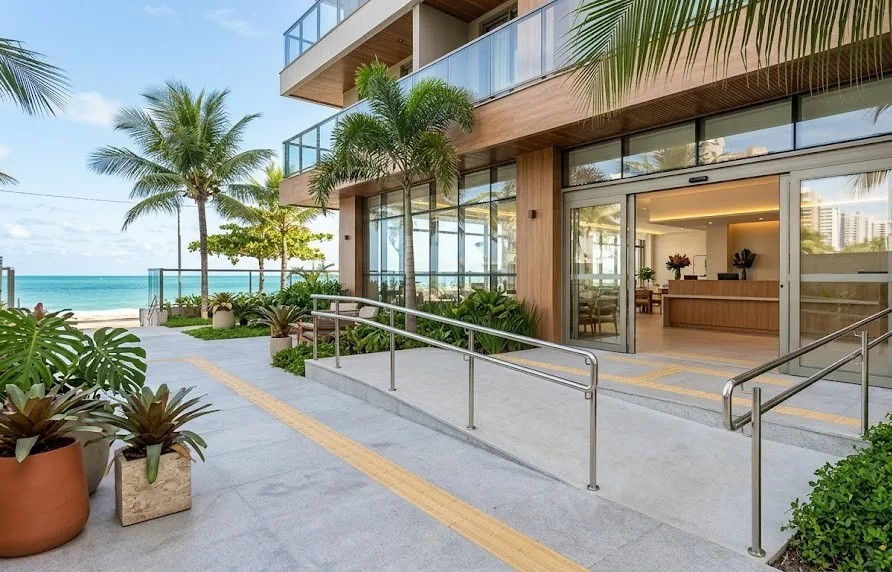
What Makes a Hotel Truly Accessible in Da Nang? A 2026 Reality Check
True accessibility in Da Nang means verifying door widths, bathroom layouts, and step-free pathways — not just booking a “ground floor” room.
The accessibility landscape in Vietnam differs fundamentally from what travelers from the US, Europe, or Australia might expect. While regulations in some countries mandate specific standards for public accommodations — think 81cm minimum door widths, accessible routes, and visual alarm systems — Vietnam’s building codes are less prescriptive. The National Technical Regulation on Construction for Accessible Design (QCVN 10:2014/BXD) exists, but enforcement is inconsistent, especially in older or mid-range hotels. This means a hotel can claim accessibility without meeting the standards you’re accustomed to.
How Vietnamese accessibility standards differ from international regulations
The practical difference is significant. Compliant rooms in countries with strong accessibility laws typically feature 81cm-wide doors, roll-in showers with fold-down seats, and grab bars around the toilet. Vietnamese hotels, even those marketed as “accessible,” often have doorways as narrow as 70-75cm — too tight for most standard wheelchairs (which measure 60-70cm wide plus hand clearance). Bathrooms frequently have raised thresholds of 5-10cm at the entrance, and “walk-in” showers may still have a small lip that’s impossible for wheelchair users to navigate independently.
Why “accessible” on booking sites often means only a ground-floor room
When you filter for “accessible” on Booking.com or Agoda, you’re often seeing hotels that simply assigned a ground-floor room to the accessible category. There’s no standardized verification process for these labels. A hotel might have a step at the entrance, narrow corridors, or a bathroom with a bathtub instead of a shower — and still appear in accessible search results. This is why the “accessible” tag on third-party platforms should be treated as a starting point, not a guarantee.
Key accessibility features to verify before you book: door widths, roll-in showers, grab bars
Before you commit to any Da Nang hotel, verify these three features directly with the property:
- Door widths: Ask for the exact measurement of the bedroom and bathroom doors. You need at least 80cm for comfortable wheelchair passage — 85-90cm is ideal.
- Roll-in shower: Confirm the shower has no lip or threshold (zero-entry), a fold-down seat or space for a shower chair, and a handheld showerhead. A “walk-in” shower with a 5cm step is not the same thing.
- Grab bars: Check that grab bars are installed near the toilet (horizontal bar for transfer) and inside the shower. Ask for photos — many hotels only have a vertical bar near the sink, which is not helpful for toilet transfers.
This checklist might feel extensive, but it’s the difference between a vacation and a logistical nightmare.
How to Verify Accessibility Before Booking: A Step-by-Step Checklist
Verification is a five-step process: email the hotel with specific questions, follow up on vague answers, check Google Street View, read recent reviews from disabled travelers, and have a backup plan.
Third-party booking sites are not ideal when it comes to accessibility information. They aggregate data from hotels without verification, and the “accessible” filter often captures properties with minimal or no actual accessible features. Your verification process needs to bypass these platforms for critical details.
The 5 questions to ask the hotel directly
Email or message the hotel directly with these five questions. If you’re comfortable with basic Vietnamese, using the phrases below can be beneficial:
- “Phòng có cửa ra vào rộng bao nhiêu?” (How wide are the doors in the room?) — Ask for the bedroom and bathroom doors specifically.
- “Nhà tắm có ghế ngồi không?” (Is there a seat in the bathroom?) — This confirms whether the shower has a bench or space for a shower chair.
- “Có thanh vịn trong nhà tắm không?” (Are there grab bars in the bathroom?) — Ask about placement: near the toilet and inside the shower, not just by the sink.
- “Có bước hoặc bậc thang nào từ cửa vào đến phòng không?” (Are there any steps from the entrance to the room?) — This includes the hotel entrance, elevator threshold, and bathroom entrance.
- “Có thang máy không? Kích thước thang máy là bao nhiêu?” (Is there an elevator? What are its dimensions?) — A standard elevator needs to be at least 110cm x 140cm to fit a wheelchair comfortably.
Ask for photos of the bathroom and doorways — a hotel that’s genuinely accessible will happily provide them. If they can’t or won’t send photos, consider it a red flag.
How to use Google Street View to check entrance ramps and curb cuts
Google Street View is a powerful verification tool that most travelers overlook. Drop the pin on the hotel’s entrance and look for:
- A ramp at the main entrance (not just stairs)
- The slope of the ramp — it should be gradual, not steep
- Curb cuts on the sidewalk leading to the hotel
- Wide, even pathways from the street to the lobby
For My Khe Beach hotels, Street View also helps you check the sidewalk situation on Vo Nguyen Giap Street — some sections have uneven tiles or missing curb cuts that make wheelchair navigation difficult. This 10-minute check can save you from arriving to find a 10cm curb blocking your entrance.
Why third-party booking sites hide accessibility details — and how to work around them
Booking.com, Agoda, and similar platforms have an “accessible” filter, but it’s notoriously unreliable. The filter typically flags hotels that have self-reported accessibility features — without any verification. A hotel with a single step at the entrance can appear in accessible results if it’s marked “ground floor access.” The workaround is simple: use these platforms for price comparison and location research, but always book directly with the hotel after verifying accessibility.
Direct booking also gives you the chance to request specific room numbers, confirm the accessible room is on a lower floor near the elevator, and arrange airport pickup with a wheelchair-accessible vehicle.
Top Accessible Hotels in Da Nang by Area: My Khe Beach, City Center, and Non Nuoc
Da Nang’s most accessible hotels cluster in three areas: My Khe Beach for ocean access, City Center for convenience, and Non Nuoc for quieter, resort-style stays.
Each area offers different advantages for disabled travelers. My Khe Beach has the widest sidewalks and most modern hotels. City Center puts you near Han River attractions, markets, and restaurants. Non Nuoc offers space and tranquility but requires more planning for transportation.
My Khe Beach: M Hotel Danang, Sala Danang Beach Hotel, and Prince Hotel Da Nang
M Hotel Danang (from VND 3,250,000/night) is a standout for accessibility on My Khe Beach. The hotel features wide corridors, roll-in showers in their accessible rooms, and a smart room control system that allows you to adjust lighting and temperature from bed — useful for travelers with limited mobility. The entrance is step-free, and the elevator is large enough for a wheelchair plus a companion. Request Room 501 or 502, which have the most accessible bathroom layouts.
Sala Danang Beach Hotel (from VND 1,883,700/night) offers a more budget-friendly accessible option. Their accessible rooms have 85cm-wide doors and bathrooms with grab bars near the toilet. The walk-in shower has a minimal threshold (under 2cm), making it usable with a shower chair. The hotel’s location on Vo Nguyen Giap Street means easy access to the beach boardwalk, which has smooth, even paving.
Prince Hotel Da Nang provides solid mid-range accessibility with rooms starting around VND 2,100,000. Their accessible rooms feature wider doorways and bathrooms with roll-in showers, though you should confirm grab bar placement when booking — some rooms only have bars near the sink.
City Center: Golden Lotus Grand Da Nang and other centrally located options
Golden Lotus Grand Da Nang (from VND 2,804,172/night) is a reliable accessible choice in the city center. The hotel has step-free access throughout the ground floor, an elevator with braille buttons, and accessible rooms with 90cm-wide doors — among the widest in Da Nang. The bathrooms feature roll-in showers with fold-down seats and grab bars on both sides of the toilet. The hotel is a 5-minute walk from the Han River, with smooth sidewalks along the way.
Other city center options include HAIAN Beach Hotel & Spa and Awaken Danang Hotel, both of which have received mentions for accessibility. However, their accessibility features are less documented — you’ll need to verify specifics directly with the hotel before booking.
Non Nuoc Beach: Sandy Beach Resort and quieter accessible stays
Sandy Beach Resort is an established accessible option in the Non Nuoc area. The resort has ground-floor villas with step-free access and bathrooms with roll-in showers. The resort’s paths are paved and wide enough for wheelchair navigation. Note that the beach itself has soft sand — wheelchair users will need to stay on the pool deck or boardwalk area.
Non Nuoc is quieter than My Khe, with fewer restaurants and shops within walking distance. This area works best if you’re planning to spend most of your time at the resort or have a car for exploring.
What is the price range for accessible rooms in each area in 2026?
| Area | Hotel | Price Range (VND/night) | Key Accessible Features |
|---|---|---|---|
| My Khe Beach | M Hotel Danang | 3,250,000 – 4,800,000 | Roll-in shower, wide corridors, smart room controls |
| My Khe Beach | Sala Danang Beach Hotel | 1,883,700 – 2,800,000 | 85cm doors, grab bars, minimal shower threshold |
| My Khe Beach | Prince Hotel Da Nang | 2,100,000 – 3,500,000 | Wider doorways, roll-in showers (confirm grab bars) |
| City Center | Golden Lotus Grand Da Nang | 2,804,172 – 4,200,000 | 90cm doors, fold-down shower seats, step-free access |
| Non Nuoc | Sandy Beach Resort | 2,500,000 – 5,000,000 | Ground-floor villas, paved paths, roll-in showers |
Prices reflect 2026 rates and vary by season — expect higher rates during summer (June-August) and Tet holiday periods. Booking directly with the hotel often secures better rates than third-party platforms, especially for extended stays of 5+ nights.
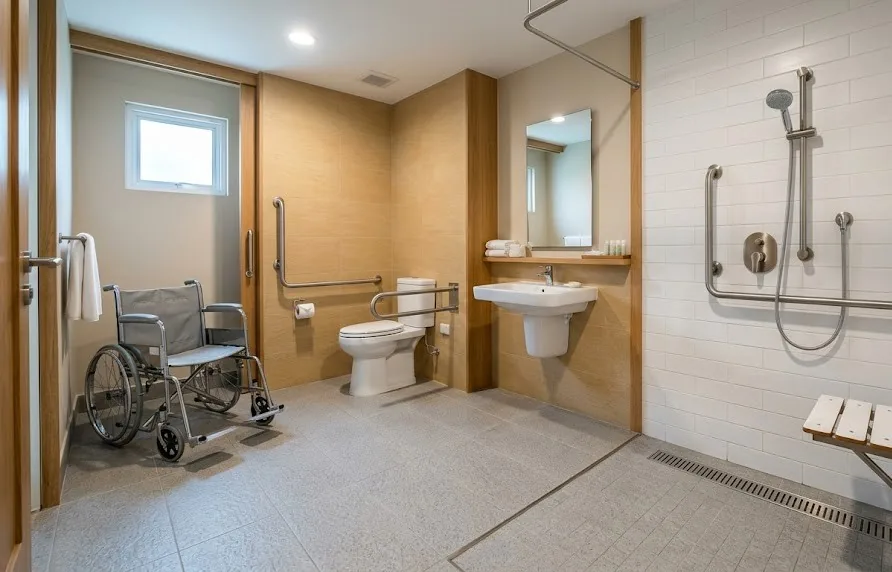
Accessible Room Features to Look For: From Roll-In Showers to Bed Heights
The bathroom is where most “accessible” rooms fail — prioritize roll-in showers with fold-down seats, grab bars in the right places, and a toilet height that allows safe transfers.
Roll-in shower vs. walk-in shower: what’s actually usable for wheelchair users
The distinction matters more than most travelers realize. A roll-in shower has a zero-threshold entry — the floor is completely level from the bathroom floor into the shower area. You can wheel directly in without assistance. A walk-in shower typically has a small lip or step (2-5cm) that, while easier than a bathtub, still requires a transfer or lift to navigate. For independent wheelchair users, only a true roll-in shower works. For those who can transfer with assistance, a walk-in shower with a shower chair can suffice.
In Da Nang, M Hotel Danang and Golden Lotus Grand offer genuine roll-in showers. Sala Danang’s walk-in showers have a minimal threshold under 2cm — manageable for most users but worth confirming if you need zero-step access.
The bed height problem: why tall beds are a barrier and which Da Nang hotels have adjustable options
Standard hotel beds sit 55-65cm high — fine for most people, but a significant barrier for wheelchair users who need to transfer from a seated position. The ideal transfer height is 48-50cm, matching the height of a standard wheelchair seat. Beds taller than 55cm require significant upper-body strength to transfer onto.
M Hotel Danang addresses this with adjustable smart beds in their accessible rooms — you can lower the bed to 50cm with a button press. Golden Lotus Grand offers bed risers on request, which makes the bed higher — not ideal. If you’re booking elsewhere, ask the hotel to provide a low bed or a transfer board.
Grab bars, raised toilets, and emergency call buttons: what to check in the bathroom
Beyond the shower, three bathroom elements determine usability:
- Grab bars: You need a horizontal bar on the wall beside the toilet (for lateral transfer) and ideally a fold-down bar on the open side. Vertical bars near the sink don’t help with toilet transfers. Confirm bar placement with photos before booking.
- Raised toilet: Standard Vietnamese toilets sit 38-42cm high. A raised toilet (45-48cm) makes transfers easier by reducing the height difference from your wheelchair seat. Ask the hotel if they have raised toilets or toilet seat risers available.
- Emergency call button: Less common in Da Nang than in some other regions, but some properties like M Hotel Danang have installed call buttons in accessible bathrooms. If you’re traveling with limited mobility, confirm there’s a phone or call button within reach of the toilet and shower.
When auditing bathroom layouts across Da Nang hotels, the most common gap was grab bar placement — many hotels install bars but position them too high or too far from the toilet to be useful. Ask for specific measurements or photos, not just “yes, we have grab bars.”
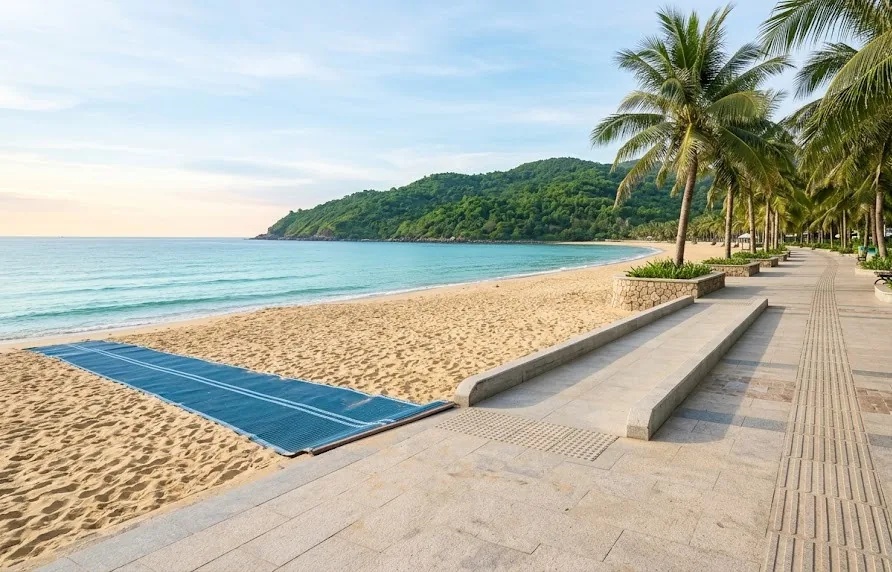
Getting Around Da Nang with a Wheelchair: Transportation and Day Trip Access
Da Nang is more wheelchair-friendly than most Vietnamese cities, but you need to plan transportation carefully — pre-book accessible vans for airport transfers and day trips rather than relying on standard taxis.
The city has invested in wider sidewalks and curb cuts along major tourist routes, particularly around My Khe Beach and the Han River. However, standard taxis (Mai Linh, Vinasun) are not wheelchair-accessible — drivers won’t refuse you, but getting in and out of a sedan with a wheelchair is difficult and potentially unsafe.
Accessible airport transfers: pre-booking vans vs. standard taxis
Da Nang International Airport (DAD) is approximately 15 minutes from My Khe Beach and 20 minutes from the city center. For a stress-free arrival, pre-book a wheelchair-accessible van through your hotel — most accessible hotels in Da Nang have partnerships with local transport providers. Expect to pay VND 350,000-500,000 for an airport transfer in an accessible vehicle, roughly double the cost of a standard taxi.
If you’re arriving without a pre-booked transfer, use the airport’s dedicated accessible pickup point (near exit 2 of the international terminal) and request a van through the airport’s official transport desk. Avoid hailing a standard taxi — the drivers aren’t trained to assist with wheelchair loading, and most sedans have trunks too small to accommodate a folded wheelchair.
Wheelchair-friendly attractions near your hotel: My Khe Beach boardwalk, Marble Mountains, and Ba Na Hills
My Khe Beach boardwalk: The paved promenade along Vo Nguyen Giap Street is smooth and wide, with gentle ramps at crosswalks and several accessible viewpoints. Electric wheelchair rental services (approximately $10 USD per day, delivered to your hotel) make exploring the 5km boardwalk feasible without exhausting yourself.
Marble Mountains: This is a mixed experience. The base area and the main entrance are accessible, but the caves and temples require climbing steep stairs. Some tour operators offer accessible routes that skip the upper levels — ask your hotel to arrange a private tour with a driver who can assist. The elevator inside the main mountain (Thuy Son) reaches the mid-level, where you can visit several caves without stairs.
Ba Na Hills: The cable car system is fully accessible — the gondolas have level boarding and staff assist with wheelchair loading. Once at the top, the French Village area has smooth paved paths, though some attractions like the Golden Bridge involve gentle slopes. Booking a private van for the 45-minute drive from Da Nang costs VND 1,200,000-1,500,000 round trip including wait time.
How to plan day trips to Hoi An with accessible transport options
Hoi An Ancient Town is 30-40 minutes from Da Nang by car, but the old town’s accessibility is challenging. The streets are narrow, surfaces are uneven (cobblestones and raised thresholds), and many attractions have steps. That said, a day trip is still worthwhile if you plan strategically:
- Book an accessible van for the round trip (VND 900,000-1,200,000 including wait time)
- Focus on the riverside area — the promenade along the Thu Bon River is relatively smooth
- Visit the Japanese Covered Bridge from the outside (the bridge itself has steps)
- Lunch at one of the riverside restaurants with step-free entrances — ask your driver to help identify accessible options
- Skip the tailor shops with narrow doorways — most are not wheelchair accessible
The effort is worth it — Hoi An’s lantern-lit streets are magical in the evening, and the riverside area offers plenty to see without entering buildings. Just manage your expectations about accessing the historic buildings themselves.
Important Notes and Common Pitfalls When Booking Accessible Stays in Da Nang
Three mistakes cause most accessibility problems in Da Nang: assuming ground floor equals accessible, not confirming pool access, and underestimating the beach’s sand barrier.
Pitfall #1: Assuming “ground floor” equals accessible — stairs and steps still exist
A ground-floor room doesn’t guarantee accessibility. Many Da Nang hotels have steps at the entrance, raised thresholds at room doors, and bathrooms with 5-10cm lips at the shower entrance. Even within a ground-floor room, the path from the bed to the bathroom might be too narrow for wheelchair turning (you need a 150cm turning circle). Always confirm the specific route from the hotel entrance to your room, including elevator dimensions if you’re on a higher floor.
Pitfall #2: Not confirming pool access — most rooftop pools lack lifts or ramps
Da Nang’s Instagram-worthy rooftop pools are a major draw, but almost none are accessible. The rooftop infinity pool at M Hotel Danang, for example, has no pool lift or ramp — wheelchair users can view the pool but cannot enter the water. If pool access is important to you, confirm with the hotel whether they have a pool lift, a zero-entry pool, or a pool with steps and handrails. Most budget and mid-range hotels have none of these. Sandy Beach Resort is one of the few properties with a pool deck that’s accessible, though water entry still requires a transfer.
Pitfall #3: Overlooking the distance to the beach — sand and wheelchair access don’t mix
“Beachfront” in Da Nang doesn’t mean wheelchair-accessible beach access. The sand on My Khe Beach is soft and deep, making manual wheelchair movement nearly impossible. Some operators offer beach wheelchairs with wide, inflatable wheels — ask your hotel to arrange one (approximately VND 300,000-500,000 for a few hours). Alternatively, enjoy the beach from the paved boardwalk, which has benches and shaded areas. If beach access is essential, consider staying at a resort with a private beach area that has a wooden boardwalk extending toward the water — but confirm this exists before booking.
Related on this site
- Da Nang Short-Term Apartments for Business Travelers: Work and Relax 2026
- Da Nang’s Charming Bed and Breakfasts: Cozy Stays with Home-Cooked Meals 2026
- Da Nang’s Most Affordable Hotels Under $50: Great Value Stays 2026
Frequently Asked Questions
Is Da Nang generally wheelchair-friendly for tourists?
Da Nang is among the most wheelchair-friendly cities in Vietnam, with wide sidewalks along major tourist routes and newer hotels incorporating accessibility features. However, standards differ from international regulations, so verification with individual hotels is essential. The My Khe Beach area and City Center have the best infrastructure for wheelchair users.
Can I rent a wheelchair or mobility scooter in Da Nang?
Yes. Electric wheelchair rental services operate in Da Nang, with delivery to your hotel. Expect to pay approximately $10 USD per day, with discounts for multi-day rentals. Some services also offer mobility scooters and manual wheelchairs. Your hotel’s concierge can typically arrange rental and delivery.
How do I get from Da Nang airport to my accessible hotel?
Pre-book a wheelchair-accessible van through your hotel for VND 350,000-500,000. The airport’s international terminal has a designated accessible pickup area near exit 2. Avoid standard taxis — their trunks are too small for wheelchairs and drivers aren’t trained to assist with transfers.
Are the attractions in Da Nang accessible for wheelchair users?
The My Khe Beach boardwalk, Han River promenade, and Ba Na Hills cable car are accessible. The Marble Mountains are partially accessible (base and mid-level via elevator). Hoi An Ancient Town is challenging due to uneven surfaces, but the riverside area is navigable with assistance. Always confirm accessibility with tour operators before booking.
What is the best area in Da Nang to stay for accessible accommodations?
My Khe Beach offers the widest selection of accessible hotels and the best sidewalk infrastructure. City Center (around Han River) is convenient for exploring attractions but has fewer verified accessible options. Non Nuoc Beach offers quiet resort-style stays with ground-floor villas, ideal for travelers prioritizing relaxation over sightseeing.
When is the best time to visit Da Nang for accessible travel?
February to May offers the best weather — dry, mild temperatures, and lower humidity. Avoid September to November (typhoon season) when heavy rain can flood streets and make wheelchair navigation difficult. Summer months (June-August) are hot and crowded, which can complicate transportation and attraction visits.
Next Steps
Finding genuinely accessible accommodations in Da Nang for disabled travelers in 2026 requires a verification-first approach. Start by shortlisting hotels in your preferred area — My Khe Beach for ocean access, City Center for convenience, or Non Nuoc for quiet resort stays. Then email each hotel with the five verification questions, request bathroom photos, and check Google Street View for entrance ramps and curb cuts.
- Shortlist 3-5 hotels in your preferred area based on the recommendations above, then verify accessibility directly with each property before booking.
- Book directly with the hotel after confirming door widths (80cm+), roll-in shower, grab bar placement, and step-free access from entrance to room.
- Arrange accessible airport transfers and electric wheelchair rental (if needed) through your hotel concierge at least 48 hours before arrival.
Part of our guide to where to stay in Da Nang.